- The paper presents a GPU-native design that bypasses CPU I/O, reducing latency by up to 39.8% and sustaining 3.2× higher IOPS.
- It integrates a GPU-centric NVMe-over-RDMA stack (GNoR) with a decentralized in-SSD engine (deEngine) for efficient metadata management and load balancing.
- Experimental evaluations show nearly linear scalability, 5–7× I/O speedup in key workloads, and a 31.1% reduction in end-to-end application time.
Emerging data-intensive workloads such as large-scale graph analytics, recommender systems, and LLM training/inference increasingly leverage GPU clusters connected to shared remote all-flash arrays (AFAs) for capacity, durability, and scalable data sharing. However, legacy GPU-AFA systems retain CPU-centric control planes and I/O orchestration, resulting in acute performance bottlenecks due to CPU-GPU synchronization, unnecessary I/O detours through host memory, amplified I/O traffic, and contention on centralized AFA engines. Despite evolving remote access, systems rely on the CPU for critical functions such as access control and metadata management, even when employing modern protocols like NVMe-over-RDMA (NoR) and hardware-accelerated target offload on NICs.
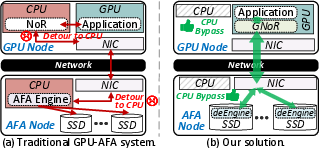
Figure 1: I/O path comparison of different GPU-AFA systems, highlighting CPU involvement in conventional systems versus direct GPU-to-AFA paths in GNStor.
Profiling reveals up to 79.1% throughput degradation and fundamentally limits the efficacy of high-throughput/low-latency GPU workloads with concurrent remote AFA accesses.
GNStor Architecture and Design Innovations
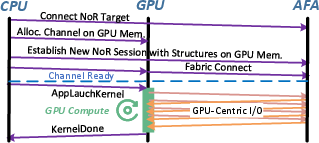
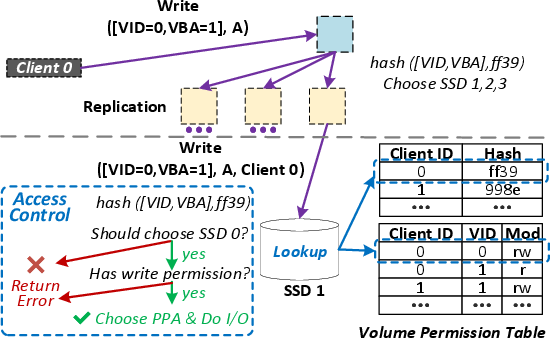
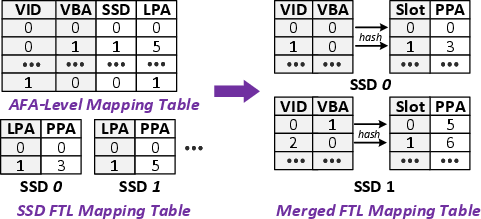
GNStor introduces a fundamentally GPU-native architecture, fully bypassing the CPU from the I/O datapath end-to-end, and efficiently decentralizing AFA functionality. The architecture consists of three primary components: GNoR (GPU-centric NVMe-over-RDMA software stack), deEngine (decentralized in-SSD AFA engine), and a lightweight CPU-resident GNStor daemon for infrequent management tasks.
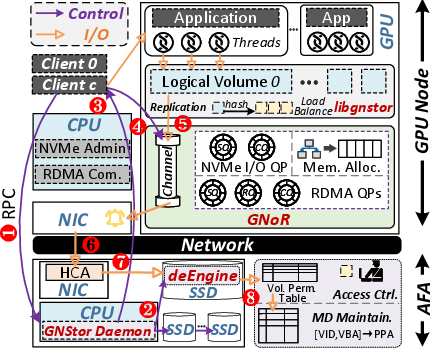
Figure 3: GNStor system architecture, illustrating GNoR and deEngine roles in enabling GPU-native, highly parallel I/O and decentralized metadata control.
GNoR: GPU-centric Remote NVMe Stack
GNoR re-architects the NVMe-over-RDMA stack to operate natively from GPU threads. Unlike CPU-oriented NoR implementations, GNoR exploits the SIMT model and GPU parallelism by:
GNStor decomposes and offloads AFA I/O-critical metadata and access control management from the centralized CPU engine into each SSD’s firmware (deEngine):
Batched I/O, Native API Support, and System Integration
GNStor adapts to the SIMT execution nature of GPUs with explicit batched I/O mechanisms that minimize divergence and leverage warp-level primitives. It exposes an expressive CUDA library (libgnstor), providing both synchronous and async APIs, as well as explicit batched submission, completion, and memory management primitives.
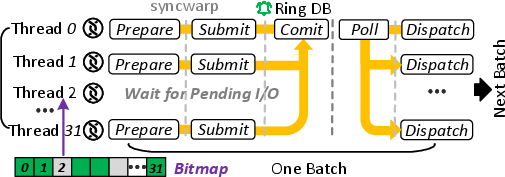
Figure 6: Batched I/O coordination and completion scheme across GPU warps using shared memory bitmaps and atomic queues.
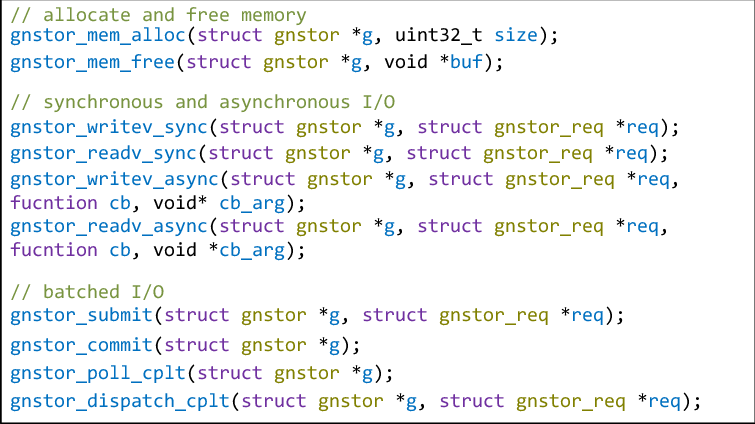
Figure 7: Subset of libgnstor APIs; direct GPU-side memory and I/O primitives facilitate integration into large-scale data pipelines.
Empirical Evaluation
Comprehensive microbenchmarks and application-level studies demonstrate the efficacy of GNStor.
- Microbenchmarks: GNStor sustains 3.2× higher IOPS versus CPU-centric designs on small I/O, and approaches the SSD/network hardware throughput limit in multi-client (32 clients, 4–5 SSD) configurations.
- Latency: Read and write latency are reduced by up to 39.8%, with consistent benefits across all I/O patterns.
- Scalability: Throughput scales linearly with both client and SSD count in the GPU-bypassed regime, strongly contrasting with scaling saturation in CPU-centric baselines.
- Ablation: deEngine accounts for up to 49.9% throughput gain via decentralized metadata, while GNoR achieves another ~49% gain by eliminating CPU orchestrator overhead.
- Application Case Studies: In representative tensor computing, data preprocessing, graph analytics, and LLM training workloads, GNStor reduces end-to-end application time by 31.1% (average), reaching 5–7× speedup in I/O-dominant tasks and maintains advantage as computation workload increases.
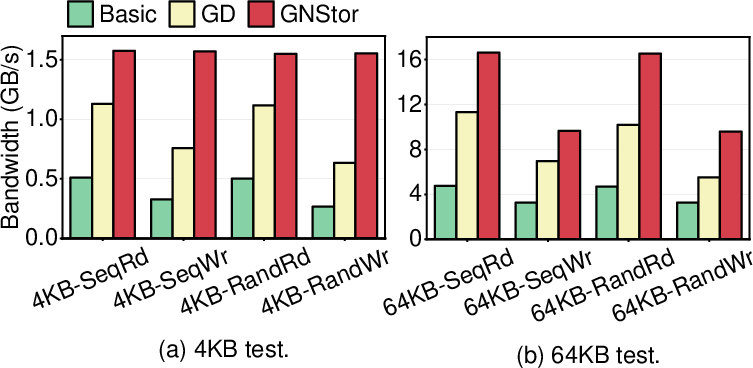
Figure 8: Throughput comparison on microbenchmarks across baseline, GPUDirect, and GNStor.
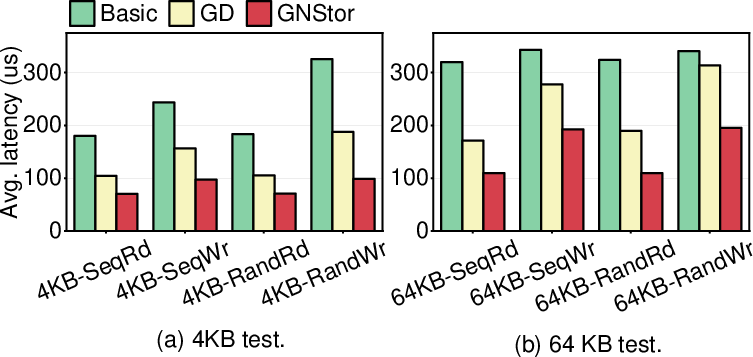
Figure 9: Latency comparison—GNStor consistently outperforms CPU-coordinated designs.
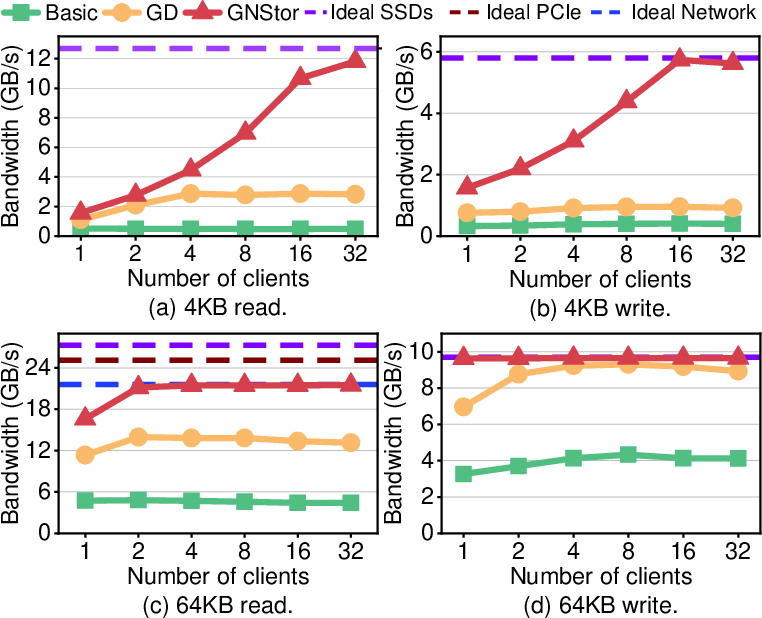
Figure 10: Scalability test—GNStor nearly saturates SSD and network throughput as client number grows.
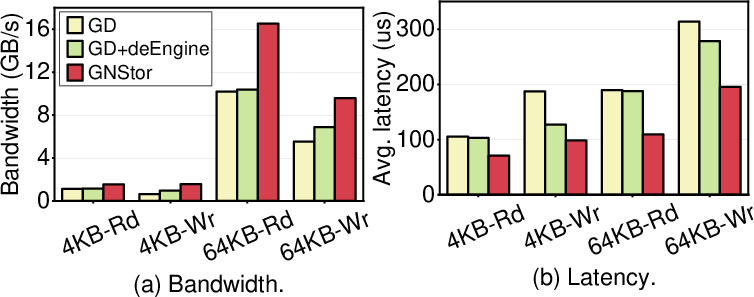
Figure 11: Ablation—isolating deEngine and GNoR contributions to overall throughput gain.
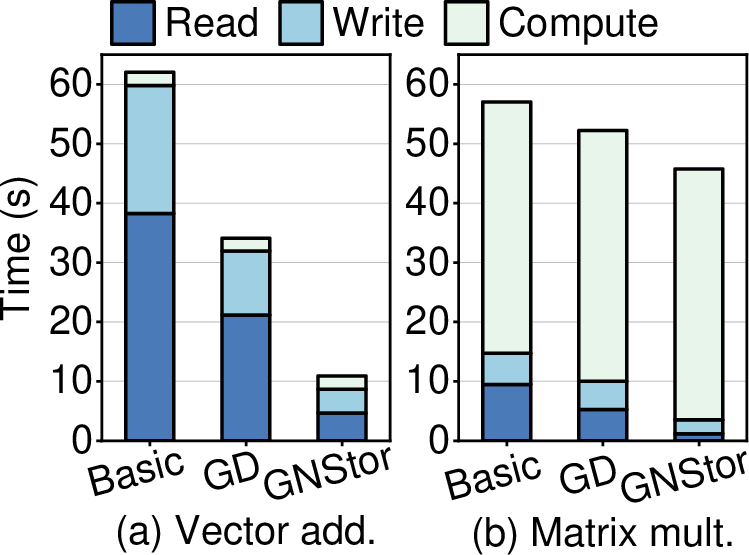
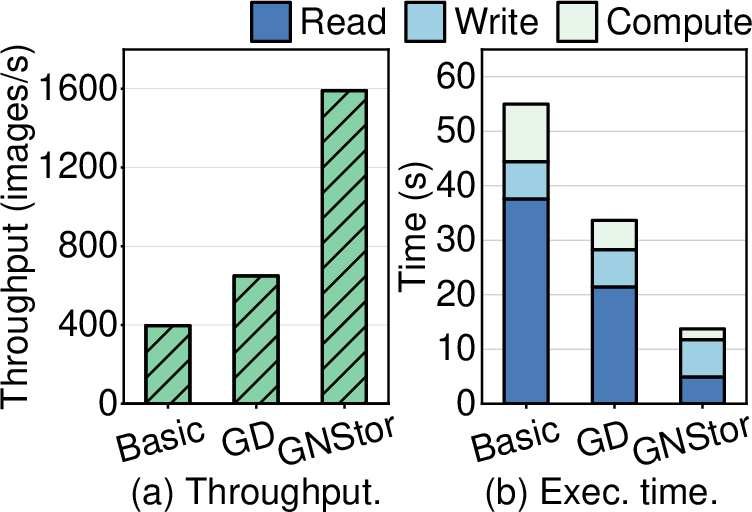
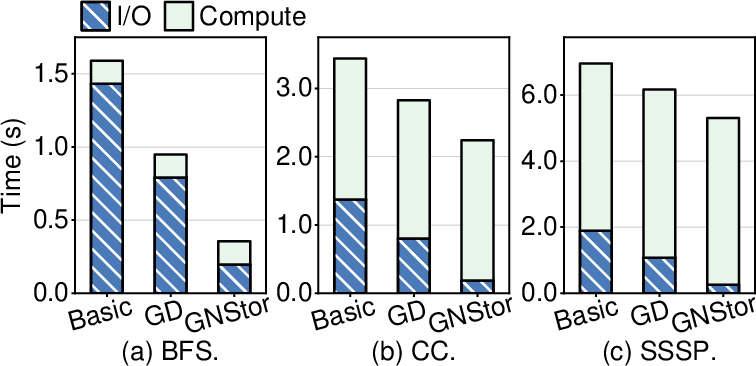
Figure 14: Application-level benefits in tensor/matrix computing, data preprocessing, and graph analytics workloads.
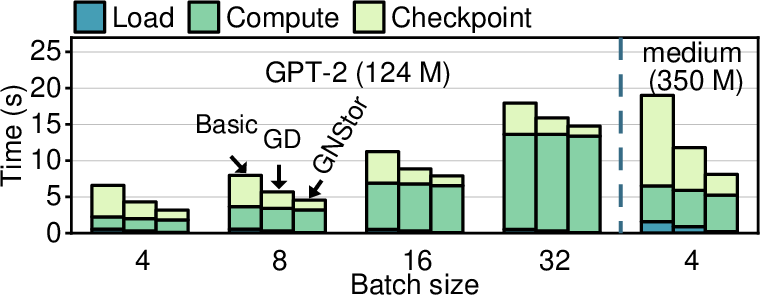
Figure 12: LLM (GPT-2) training: GNStor delivers superior overall and checkpoint I/O performance, amplifying runtime benefits with model size.
Implications and Future Directions
The GNStor design paradigm constitutes a key rethinking of storage architecture for exascale GPU-centric workloads. By decentralizing management into the device layer and utilizing native GPU parallelism for protocol orchestration, GNStor eliminates critical system bottlenecks. This approach not only improves hardware utilization but also informs the co-design of future SSD firmware, network adaptors, and system integration for large-scale, shared GPU infrastructure. The architectural principles outlined here (in-protocol partitioning, firmware-anchored metadata, and atomic-synchronized GPU data path) can be directly extended to composable datacenter fabrics, in-SSD compute (computational storage), and privacy-preserving trusted execution environments.
The primary deployment barrier is SSD firmware extensibility—a challenge acknowledged, but increasingly addressable with the proliferation of open SSD platforms and computational storage devices. The GNStor software stack (GNoR) remains portable and generalizable to diverse GPU/NIC vendors subject to adherence to SIMT and NoR target offload capability.
Conclusion
GNStor presents a holistic, GPU-native, high-performance remote AFA system achieving maximal I/O path efficiency and scalability by entirely removing the CPU from the I/O critical path and decentralizing control logic into SSD firmware. Experimental evidence demonstrates substantial throughput and latency improvements alongside productive, scalable multi-client operation for data- and compute-intensive GPU workloads. This architecture provides a template for next-generation composable storage in GPU-based intelligent systems.
Reference: "GNStor: Design of GPU-Native High-Performance Remote All-Flash Array" (2606.04908)