- The paper introduces a novel continuous c2 perturbation technique that optimizes AFDM waveforms, achieving a 4–5 dB PAPR reduction and significant autocorrelation sidelobe improvement.
- The proposed NMLS-SPG algorithm efficiently balances multi-objective constraints within a phase safety framework, ensuring backward-compatible implementation with no receiver modifications.
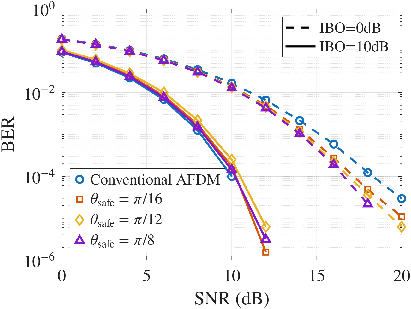
- Performance validation in ISAC scenarios demonstrates lowered BER under PA nonlinearity and enhanced detection sensitivity, enabling flexible trade-offs between sensing and communication.
Introduction and Motivation
Integrated Sensing and Communication (ISAC) presents stringent requirements for waveform design, necessitating simultaneous optimization of communication and sensing tasks in time-frequency dispersive environments. Affine Frequency Division Multiplexing (AFDM), with its inherent chirp-modulation, offers resilience in doubly selective channels but is constrained by large Peak-to-Average Power Ratio (PAPR) and imperfect autocorrelation sidelobes induced by random data symbols. These drawbacks impair performance under nonlinear power amplifier (PA) effects and hinder optimal auto/cross-correlation for sensing.
This work introduces a data-driven AFDM waveform optimization framework leveraging continuous subcarrier-wise perturbations of the pre-chirp parameter, c2, to address PAPR reduction and Weighted Integrated Sidelobe Level (WISL) minimization, both critical for robust ISAC performance. The formulation bypasses the need for side information or expanded receiver complexity, in contrast to codebook-based prior approaches.
System Architecture and c2-Perturbation Mechanism
Conventional AFDM encodes data symbols via pre- and post-chirp transformations parameterized by c1 and c2, with a Discrete Fourier Transform (DFT) front end. This design inherently disperses energy in the time-frequency domain, yet random symbol allocation leads to high PAPR and suboptimal autocorrelation—a challenge aggravated in practical PA-limited deployments.
The proposed scheme introduces subcarrier-specific perturbations Δc2,m, replacing scalar c2 with a vector c2,opt=c2+Δc2. This induces deterministic phase rotations θm=2πm2Δc2,m on each subcarrier, directly controlling the waveform envelope and autocorrelation sidelobes without modifying the conventional AFDM receiver. Critically, the receiver remains agnostic to these perturbations, and the implementation induces no protocol overhead.
Joint PAPR-WISL Optimization Framework
The core of the approach is a constrained multi-objective optimization:
Δc2minλ⋅JPAPRrefJPAPR(Δc2)+(1−λ)⋅JWISLrefJWISL(Δc2)
subject to per-subcarrier phase safety bounds c20, ensuring reliable detection under standard constellation decision geometry for QAM/PSK. The PAPR objective is regularized via a smooth log-sum-exp approximation, while the WISL incorporates both aperiodic and periodic autocorrelation structures, parameterized for ZP and chirp-periodic prefix (CPP) modes, respectively.
The phase constraint is derived from an analytical minimum phase distortion required for constellation region ambiguity, catering the design to arbitrary QAM configurations.
Algorithmic Solution: Non-Monotone Line-Search Spectral Projected Gradient
A Non-Monotone Line-Search Spectral Projected Gradient (NMLS-SPG) method, equipped with FFT-based structure exploitation, is proposed. Specific highlights:
- Closed-form gradients for both PAPR and WISL with respect to phase perturbations enable efficient first-order optimization.
- Projected updates in the phase domain ensure iterates always satisfy phase-safety constraints.
- Non-monotone line search (Grippo-Lampariello-Lucidi strategy) allows the algorithm to navigate complex non-convexity induced by the joint objective, maintaining aggressive spectral step sizes and fast convergence.
The computational complexity is dominated by a small multiple of FFT operations per iteration, maintaining practical feasibility even for moderate-to-large c21.
PAPR Reduction
The complementary cumulative distribution function (CCDF) results reveal a significant improvement in PAPR: for an aggressive phase budget (c22), approximately 4–5 dB reduction at a CCDF of c23 is achieved over both conventional AFDM and state-of-the-art codebook methods.
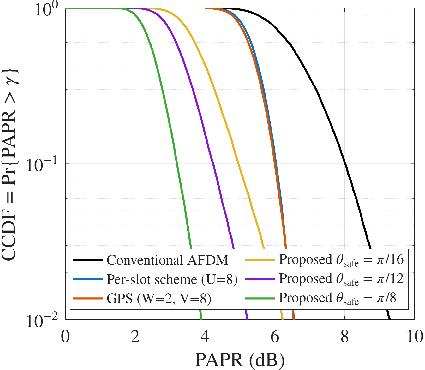
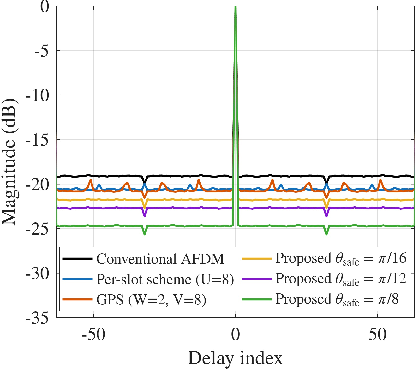
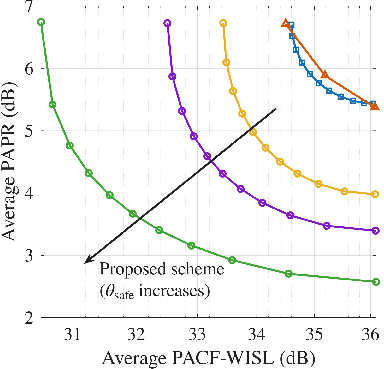
Figure 1: CCDF of PAPR demonstrating robust PAPR reduction as c24 increases, outperforming both GPS and per-slot codebook schemes.
BER under PA Nonlinearity
The framework demonstrates adaptive trade-off control:
Autocorrelation Sidelobe Suppression
Sidelobe floor decreases from approximately c26 dB (conventional AFDM) to c27 dB for the most relaxed phase constraint, validating WISL suppression and improved range-Doppler ambiguity characteristics, crucial for sensing in cluttered/rich-scatterer environments.
ISAC Trade-off and Pareto Frontier
Pareto analysis confirms that the optimized AFDM design strictly dominates prior GPS and per-slot schemes, offering a tunable and enlarged achievable region for joint communication and sensing objectives.
In dual-target scenarios, all c28-perturbed designs show improved probability of detection (c29) over conventional AFDM, with larger c20 expanding robustness, evidenced by approach to near-unity c21 at moderate SNRs.
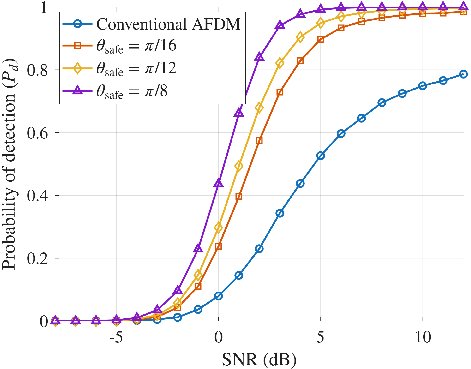
Figure 3: CFAR detection performance reveals enhanced detection sensitivity and robustness enabled by optimized c22 perturbations.
Theoretical and Practical Implications
- Unification of envelope and correlation shaping: The continuous c23 perturbation directly unifies waveform envelope control (PAPR) and autocorrelation shaping (WISL), offering degrees of freedom unavailable to discrete codebook methods.
- No protocol or receiver modifications: Full backward compatibility guarantees that both legacy systems and future ISAC devices benefit from enhanced waveform design without additional signaling or complexity.
- Phase-safety envelope as performance governor: The explicit characterization of phase-safety bounds provides a rigorous analytical tool for system designers, parametrizing the achievable ISAC trade-off space per modulation format.
- Generality and extensibility: The continuous optimization framework directly generalizes to other multicarrier waveforms (e.g., OTFS, generalized chirped schemes), offering an adaptable template for future ISAC waveform design.
Future Directions
Further work may include:
- Joint transceiver co-design: Incorporating receiver adaptation and active constellation shaping to exploit phase distortion, thus pushing BER and detection performance envelopes.
- Integration of deep learning: Developing learning-based surrogates or hybrid data-driven optimization for low-latency, real-time waveform adaptation in fast-varying environments.
- Hardware-in-the-loop validation: Assessing the impact of hardware impairments and quantization in implementation, as suggested in recent MIMO-AFDM hardware impairment studies (Sui et al., 1 Jan 2026).
Conclusion
The adaptive c24-perturbed AFDM waveform provides a principled, tractable, and high-performance approach to ISAC waveform optimization. The NMLS-SPG framework achieves significant reductions in PAPR and WISL, strictly dominating codebook-based designs and enabling tunable trade-offs across the communication-sensing spectrum. This methodology delineates a path for scalable, real-time adaptive waveform design critical for next-generation wireless networks.