- The paper introduces a novel method that prunes nearly 50% of endpoint interference to simulate quantum circuits with less than 10% accuracy loss on algorithms like Grover.
- It employs the Chemical Abstract Machine model to explicitly manage concurrent path aggregation, allowing early termination of interference computation.
- Empirical evaluations on Grover, Simon, and Shor circuits demonstrate trade-offs between computational savings and simulation fidelity, outlining both potential and limitations.
Approximate Quantum Circuit Simulation via Path-Sum Pruning
Overview
The paper "Half the Interference, Most of the Answer: Approximate Quantum Simulation via Path-Sum Pruning" (2606.01922) presents a novel framework for approximate classical simulation of quantum circuits. The approach interrogates the computational cost caused by quantum interference—specifically, the endpoint summations over Feynman paths—distinct from Hilbert space growth. By leveraging the Chemical Abstract Machine (ChAM) as an explicit concurrent computational model, the authors expose interference steps as schedulable, interruptible units, allowing early termination of path aggregation with minimal impact on output fidelity for circuits exhibiting strong amplitude concentration. Empirical validation covers standard quantum algorithms, with results suggesting that discarding nearly half of endpoint interference reactions often incurs less than 10% accuracy loss in output distributions.
Path-Sum Simulation and Interference as a Resource
Quantum circuit simulation is usually framed in terms of exponential Hilbert space growth: n qubits imply 2n-dimensional state vectors. However, the core computational bottleneck in many quantum algorithms derives from the necessity to aggregate over exponentially many computational histories (Feynman paths), where endpoint interference dictates the observable probability distribution. In the path-integral formalism, amplitude for an output is a weighted sum over all histories reaching that output. Crucially, algorithms such as Grover search and the Quantum Fourier Transform engineer circuits so that constructive interference is concentrated in a small number of measurement endpoints; destructive interference dominates elsewhere.
The introduced framework casts simulation as an explicit discrete path-sum computation, making the endpoint interference step—usually implicit in matrix-vector multiplication—an explicit, manipulable operation. In this setting, significant computational savings are possible by strategically pruning the aggregation process, especially when amplitude amplification has created a stark separation between target and background outputs.
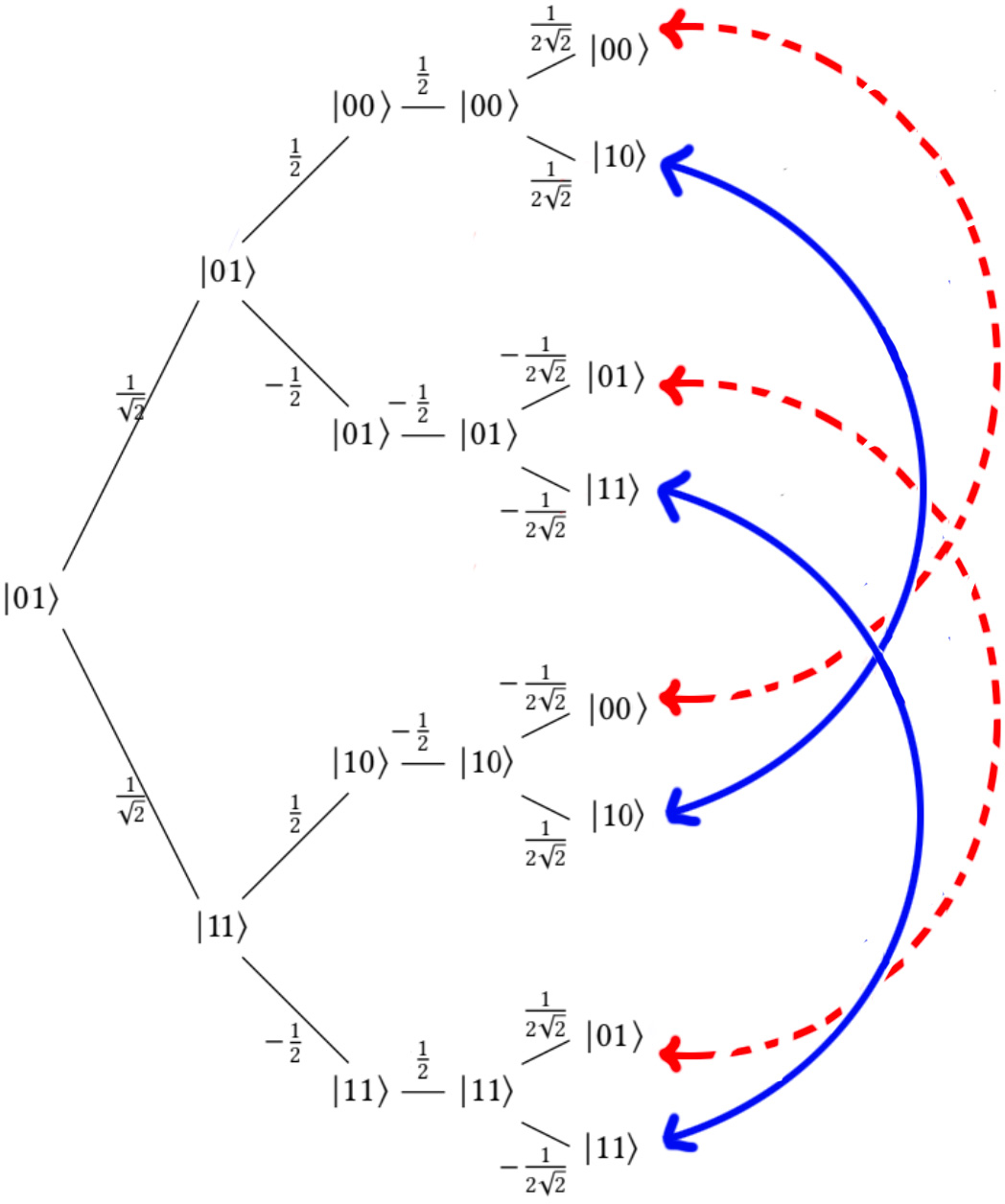
Figure 1: An abstract view of the ChAM model, where path contributions are managed as explicit, concurrent entities evolving according to local reaction rules.
ChAM Model: Explicit Concurrency for Path Aggregation
The Chemical Abstract Machine (ChAM) serves as the computational framework underpinning the simulation. Each partial path is modeled as a "molecule" carrying a basis state, circuit-depth label, and amplitude. Three ChAM reaction families encode:
- Time evolution: Applies circuit gates, evolving each molecule forward.
- Endpoint tagging: Marks molecules that reach the circuit's terminal layer, ready for aggregation.
- Interference aggregation: Combines all molecules sharing an endpoint basis state, performing amplitude-level addition (potentially resulting in cancellation or reinforcement).
Because endpoint aggregation is asynchronous and concurrent, aggregation can be interrupted at any stage, allowing for fine-grained and dynamic approximation. The core algorithm introduces a threshold τ: when the amplitude accumulated at any endpoint exceeds τ, the simulation halts, discards incomplete aggregation, and samples from the truncated distribution, after appropriate normalization.
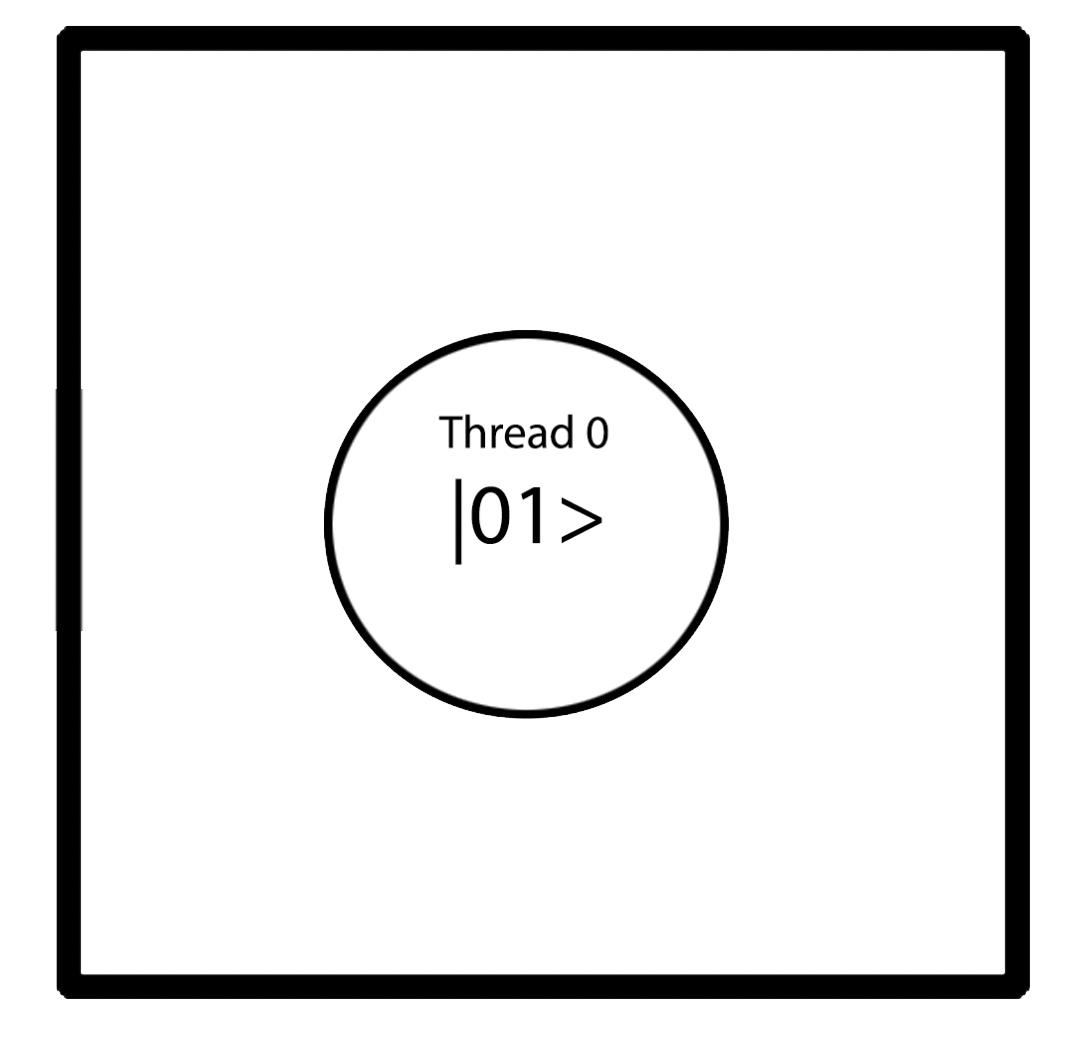
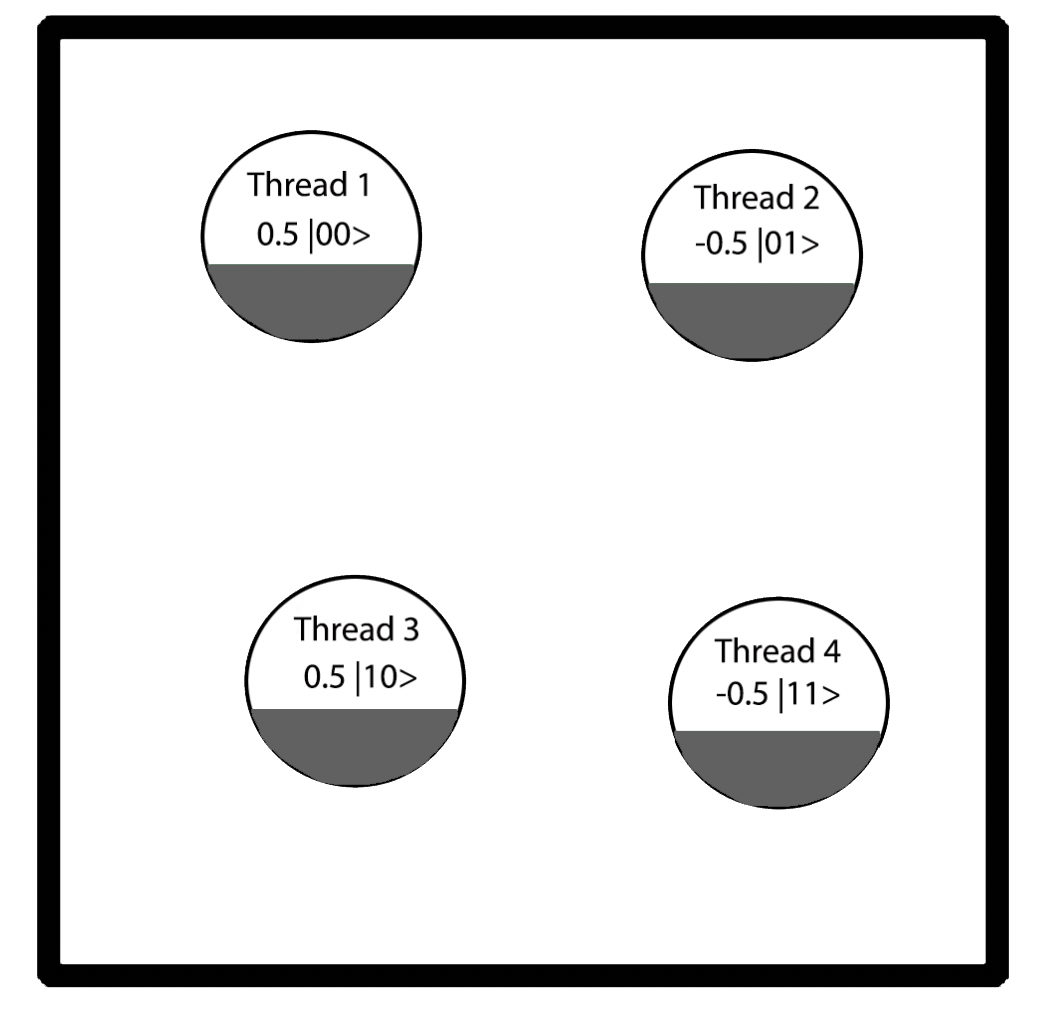
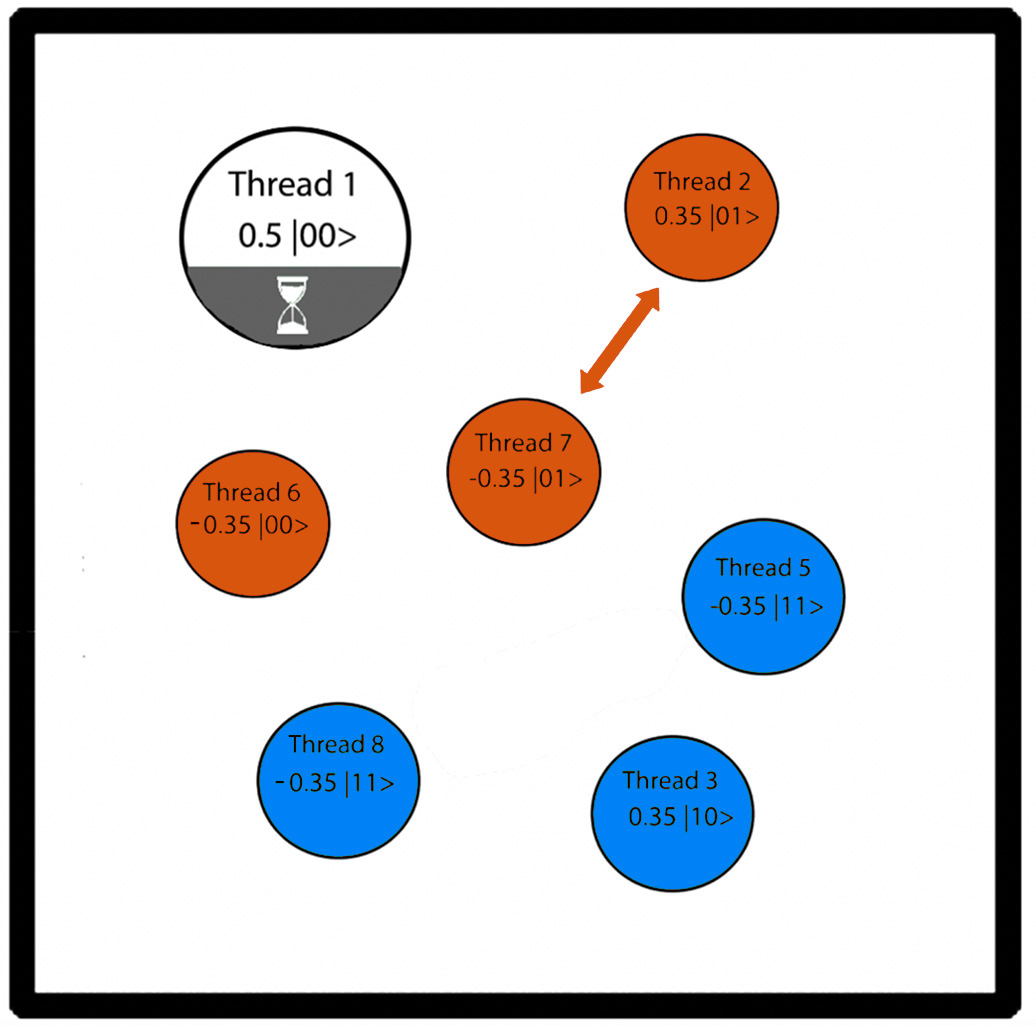
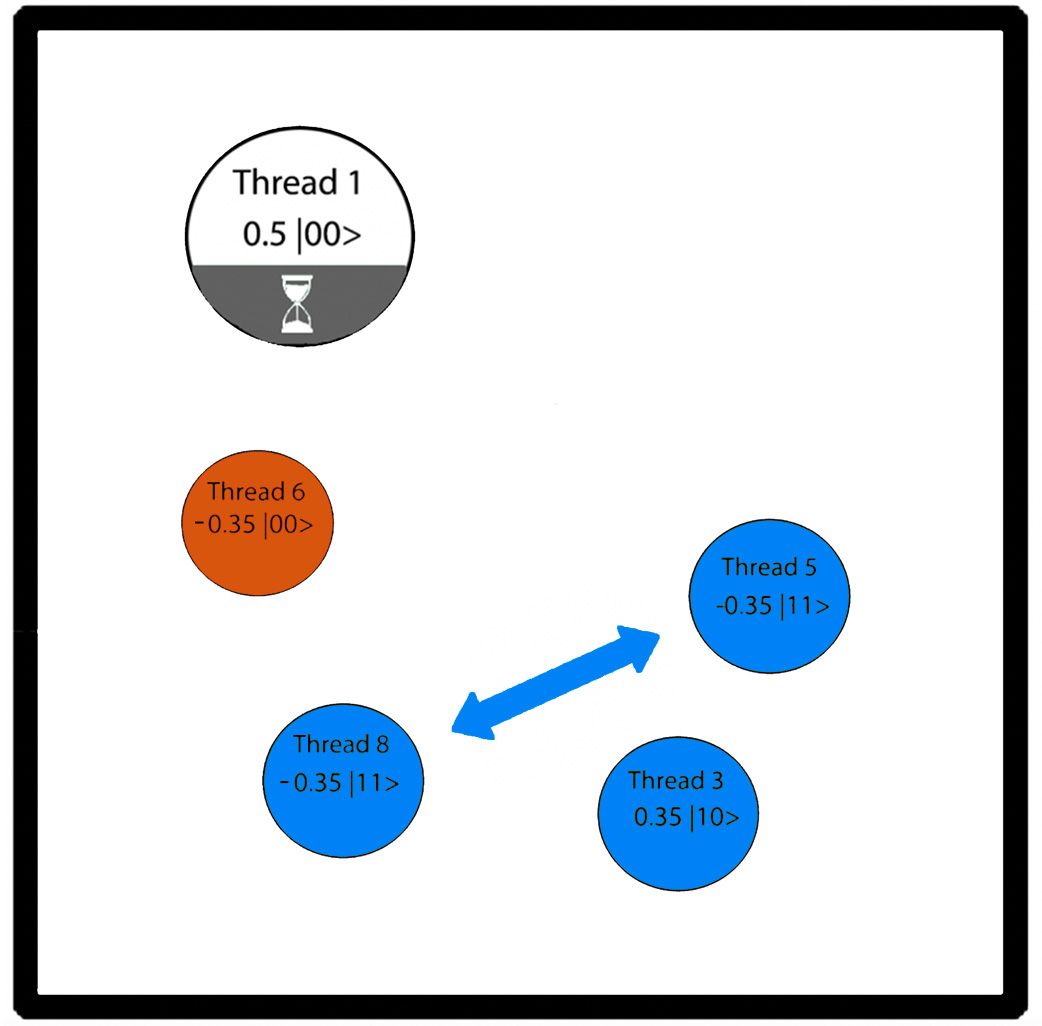
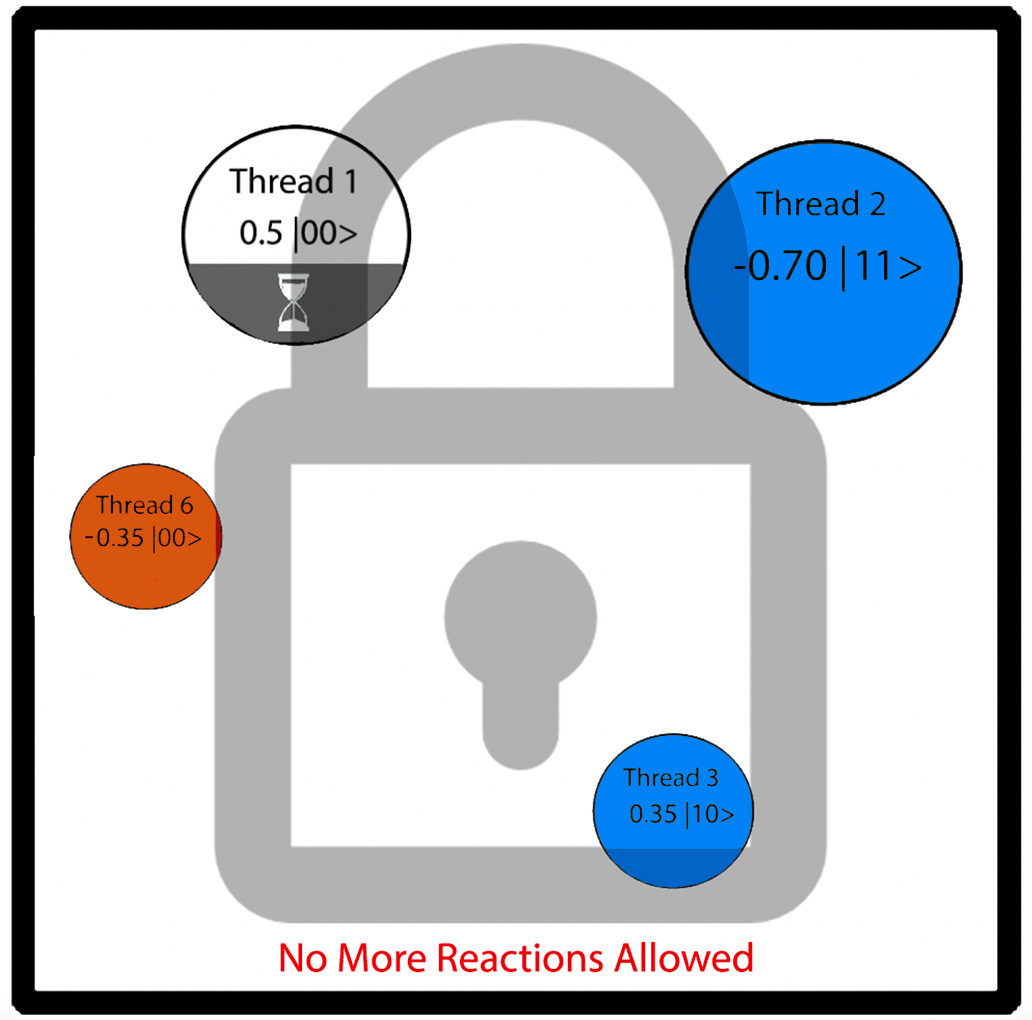
Figure 2: Progression of the ChAM-based chemical solution over the course of quantum interference, with both constructive and destructive aggregation visible.
Empirical Evaluation and Numerical Results
The framework is benchmarked on low- to moderate-width instances of the Deutsch-Jozsa, Grover, Simon, and Shor circuits. The method's performance is characterized by:
- The accuracy (correct or valid outputs) of the truncated simulation.
- The fraction of endpoint interference reactions omitted before halting.
The most significant findings for various circuits are as follows:
- Grover Search: For n=4–8 qubits, omitting approximately 50% of endpoint aggregation reactions (i.e., threshold τ∈[0.7,0.9] of final amplitude) preserves correct-output probabilities above 90–95%. Early selection (outputting the first high-amplitude endpoint) is effective, provided target amplitude separation exceeds the maximal background. Notably, reducing Grover iterations combines favorably with thresholding, enabling accurate simulation while skipping amplification steps.
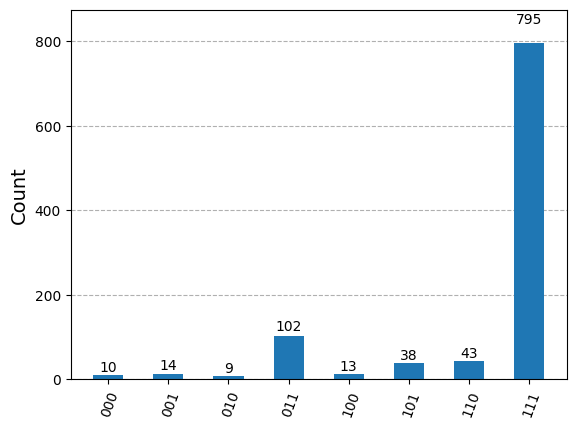
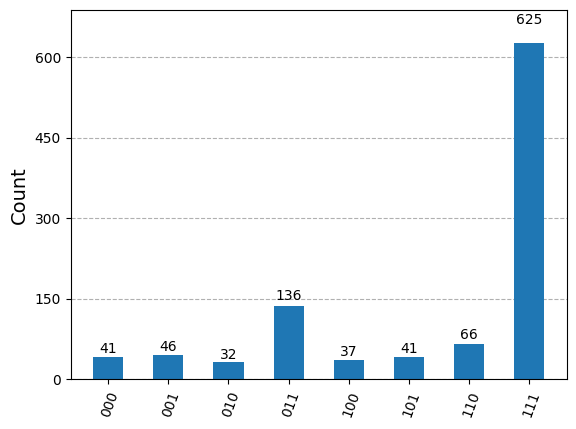
Figure 3: Output sampling counts for Grover's algorithm with tagged state ∣111⟩, illustrating amplitude amplification and the effect of varying the number of Grover iterations.
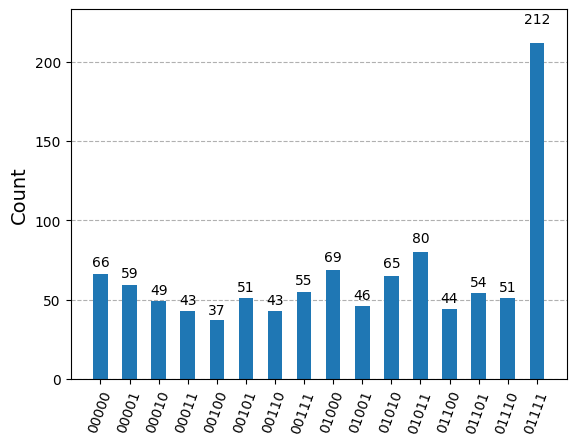
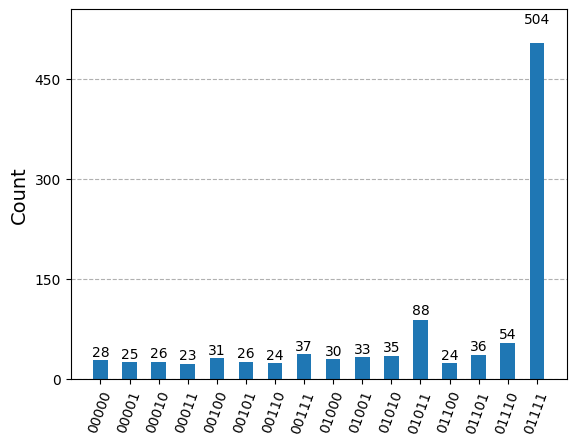
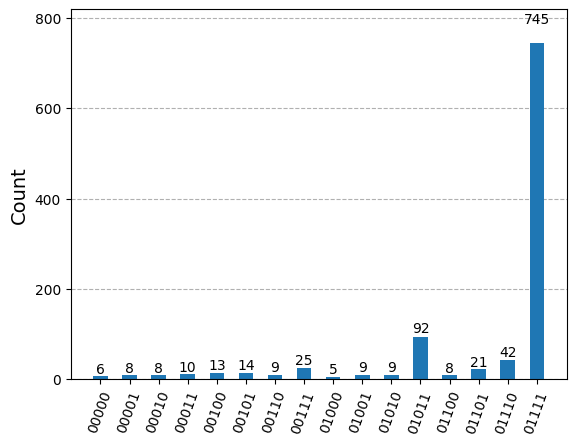
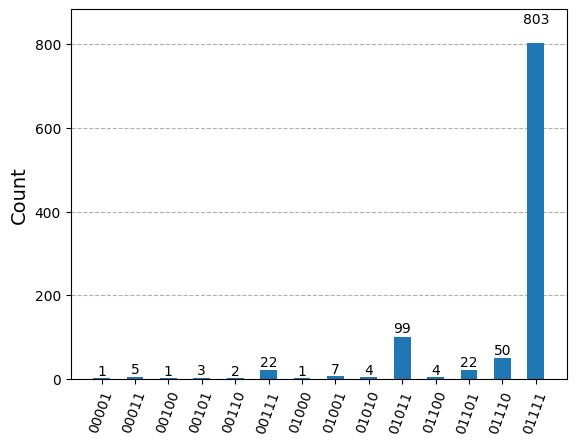
Figure 4: Output distribution for Grover's algorithm with marked state ∣0111⟩; increasing iterations sharpens amplitude separation, enhancing pruning efficacy.
- Simon's Algorithm: The endpoint amplitude gap is smaller due to output spreading across many valid results. Nevertheless, moderate thresholds still retain 70–95% accuracy in valid output capture, especially when multiple circuit instances are run concurrently to enable aggregation.
- Shor's Algorithm: Output amplitudes are broadly distributed among several endpoints without sharp separation. Here, significant early termination (i.e., aggressive pruning) results in substantial degradation of output accuracy, indicating that path-sum pruning is least effective for nearly uniform output distributions.
Algorithmic and Theoretical Implications
Path-sum pruning exposes the computational structure of endpoint interference, which often dominates the simulation cost for amplitude-amplification algorithms. The empirical evidence—particularly for Grover and Simon circuits—shows that this structure can be exploited: destructive interference tends to cancel out quickly, so most computational histories contribute little to the observable result and can be safely omitted after a target endpoint achieves a sufficient amplitude.
Martingale-based bounds are established for the probability of incorrectly terminating on a zero-contribution endpoint. These bounds are pessimistic compared to observed errors due to non-uniform thread execution in real implementations. The paper also discusses the impact of thread scheduling, symmetry exploitation within the execution tree, and the potential for "symmetric cuts"—entire path-set pruning strategies justified by the reflective structure of the computation tree—for further optimization.
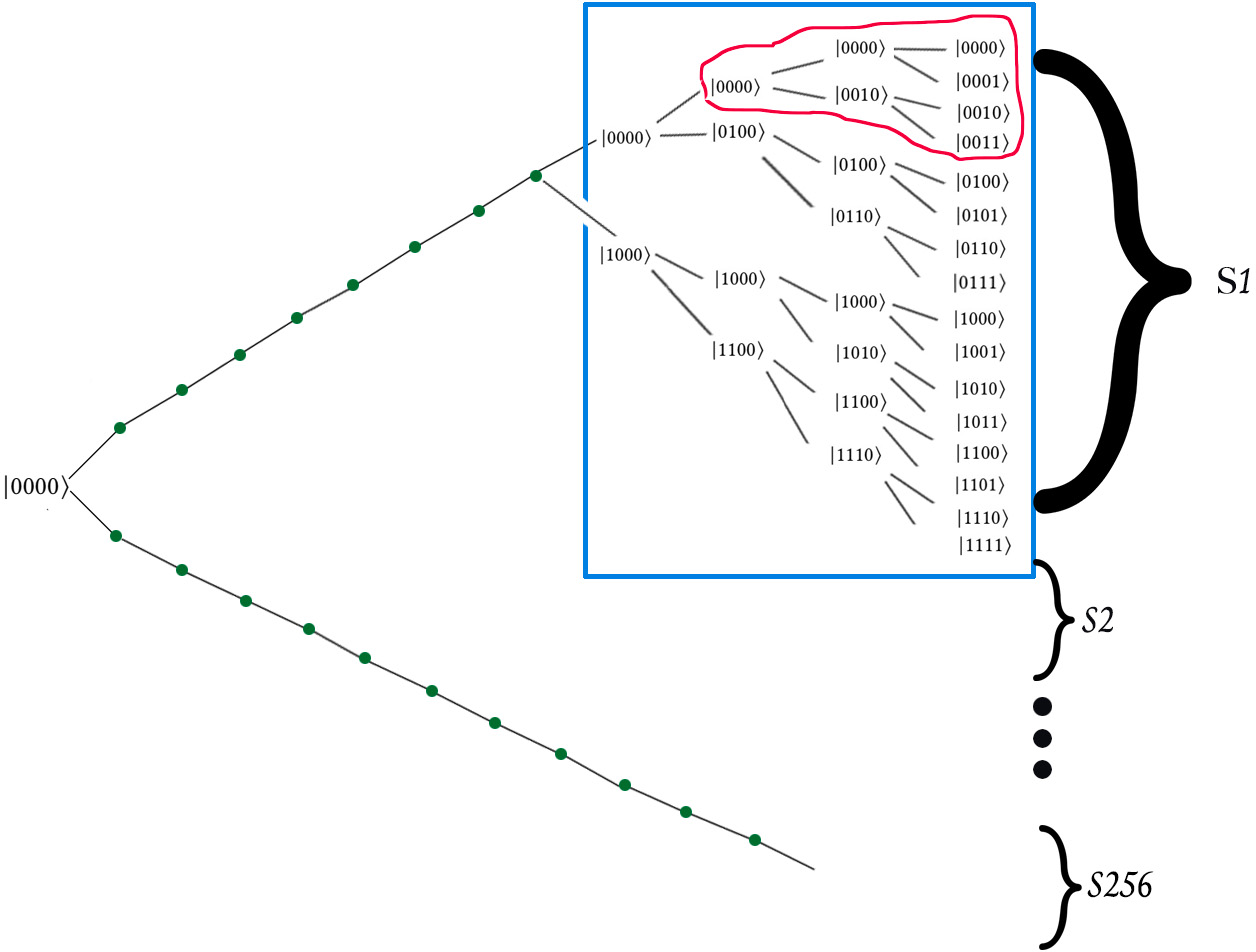
Figure 5: The symmetry structure in Grover’s execution tree. Blue rectangle: symmetric cut of an entire set; red circle: asymmetric cut pruning a single subpath.
Relation to Prior Simulation Techniques
This approach is orthogonal to existing optimization strategies in classical quantum simulation. While tensor networks, Clifford/near-Clifford heuristics, and hardware acceleration focus on memory and contraction order, path-sum pruning targets aggregation structure—specifically, when endpoint interference is an explicit, concurrent operation. It is complementary to path-integral and Pauli propagation algorithms, potentially integrating into hybrid simulation strategies that expose explicit endpoint aggregation (e.g., in tensor-network contractions or Pauli-branch enumerations).
Limitations and Prospects
The method retains exponential worst-case complexity and relies on the presence of amplitude gaps at final endpoints. Algorithms with flat probability output (e.g., Shor, certain random circuits) are not amenable to aggressive pruning. Furthermore, practical implementation accuracy is affected by concurrency and scheduling artifacts.
The methodological advancement is in reframing interference as a schedulable, approximable resource. Future work includes:
- Rigorous error analysis for circuit-specific classes.
- Integration of endpoint pruning with tensor network or Pauli propagation simulators.
- Development of deeper symmetric pruning strategies leveraging tree- or circuit-level invariance.
- Extension to open-system models and circuits with inherent noise.
Conclusion
Path-sum pruning, as implemented via the ChAM model, provides a principled mechanism for approximate classical quantum circuit simulation by treating endpoint interference as an explicit, tunable resource. Substantial portions of destructive interference arithmetic can be omitted with minimal degradation in output fidelity for key amplitude-concentrating quantum algorithms. This reframing invites further theoretical and practical refinement and has broader implications for the tractability of simulating quantum circuits exhibiting structured interference patterns.

