- The paper introduces a registry-bound LLM pipeline that extracts structured, evidence-linked trait records from diverse species using strict registry and schema enforcement.
- The methodology employs a closed-vocabulary registry and three-layer validation, achieving high confidence metrics such as 99% for numerical traits.
- Implications include scalable curation, enhanced auditability, and robust support for ecological modeling and regulatory applications.
Registry-Bound Evidence-Grounded LLM Trait Extraction Across Tropical Plants, Aquatic Species, and Exotic Pets
Introduction and Context
The manuscript introduces a registry-constrained LLM pipeline for extracting structured, evidence-linked trait records from the Tropical Species Encyclopedia—an expansive text corpus encompassing tropical plants, aquatic organisms, and exotic pet taxa. The methodology addresses major limitations in traditional trait database curation: high manual effort, modest coverage, and lack of traceability at scale. The pipeline automates trait extraction over 409,880 publishable species, culminating in 5,489,881 persisted trait records, each rigidly bound to a closed-vocabulary registry, per-row evidentiary quotes from substrate text, model-assigned confidence ratings, and strict version tracking. These mechanisms jointly deliver auditable, stratifiable outputs suitable for downstream computational, ecological, or regulatory applications.
Methodological Framework
Trait Registry and Pipeline Architecture
Traits are extracted in accordance with a formal 39-key registry that defines all admissible trait keys, their associated domains, and value types (enum, multi_enum, range, int, text). The registry is versioned and enforces both schema conformance and vocabulary closure, eliminating key- and value-level drift across LLM checkpoints. The extraction pipeline leverages Xiaomi MiMo mimo-v2.5, iteratively querying per-species substrate via an OpenAI-compatible API. Each run delivers structured outputs in the form of (trait_key, value, evidence_quote, evidence_section, ai_reasoning, confidence), admitting only cells conforming to registry-vocabulary and evidence grounding filters.
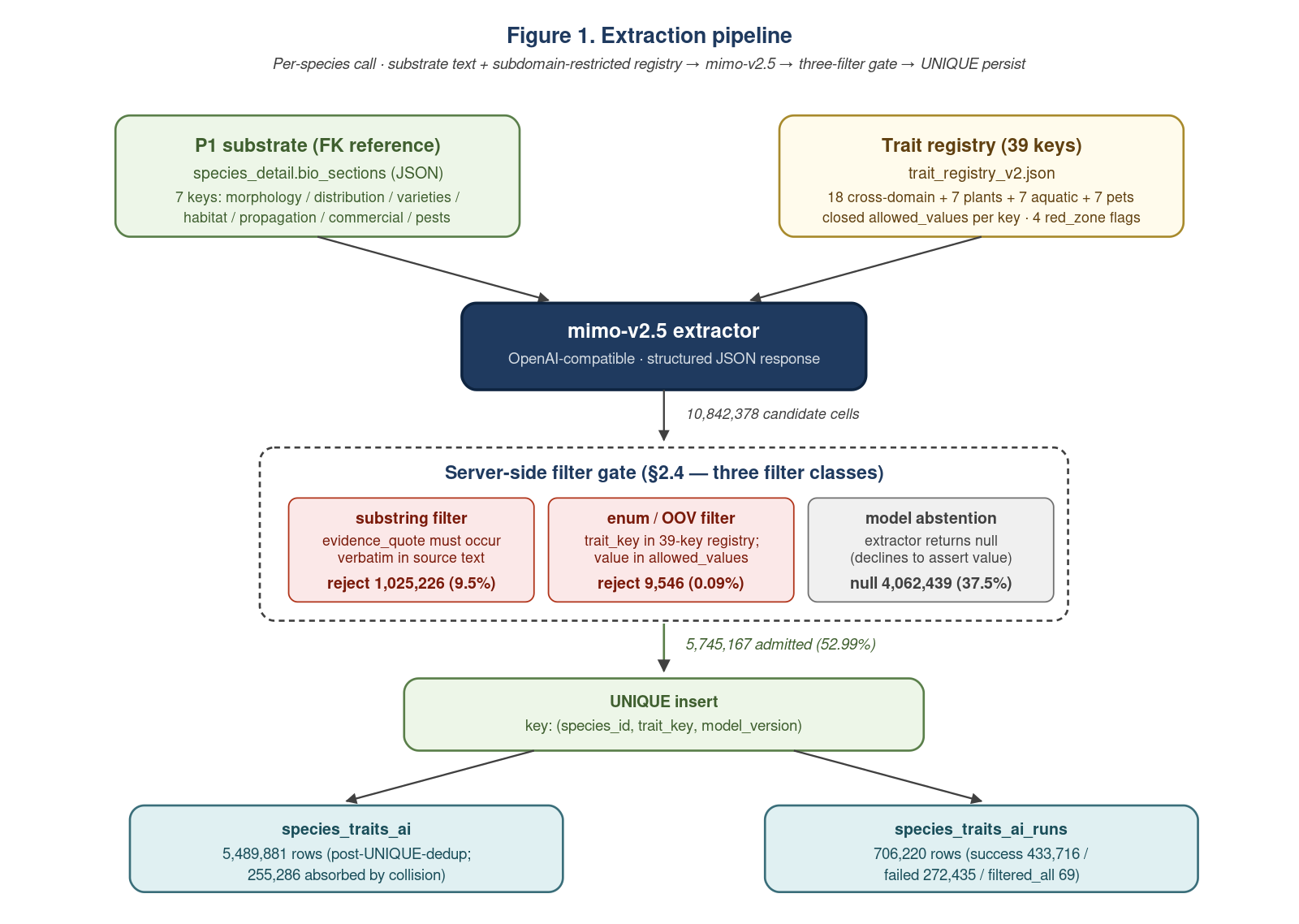
Figure 1: Extraction pipeline depicting stringent registry-bound input, substring-verification, and enum-conformance gates prior to trait persistence.
Admission Filters and Provenance Enforcement
Three critical filter classes mediate response admission: substring-verification (requiring verbatim provenance of evidence_quote within source bio_sections), registry-OOV/enum-conformance (rejecting any key or value outside the registry definition), and model abstention (explicit null return when extraction is unsupported by source evidence). These filters are transparently reported in per-run telemetry and ensure downstream consumers receive only structurally compliant, evidence-backed rows. Persisted rows retain granular provenance metadata, including the originating model/version, evidentiary quote/location, confidence label, and an admin review status field supporting future moderation.
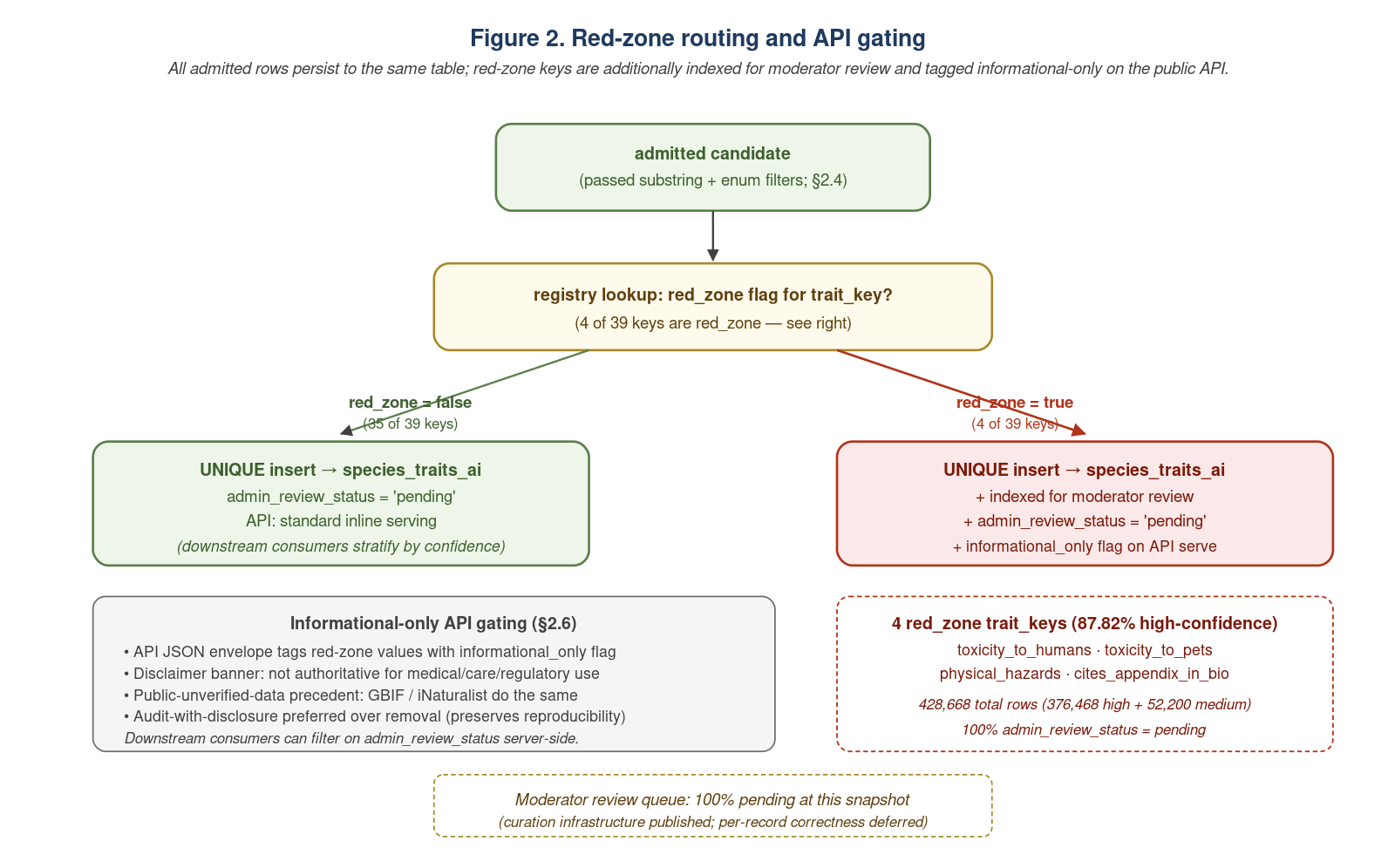
Figure 2: Red-zone routing creates indexed curation queues for safety-critical trait keys without altering trait persistence, prioritizing moderator review.
Substrate Specification and Domain Coverage
The extraction substrate is a large-scale, cross-domain text corpus generated upstream by a separate LLM (Qwen-family); coverage spans three domains—plants, aquatic, pets—with each species contributing seven canonical bio_sections. Traits are partitioned into universal and domain-specialized keys, supporting categorical and numeric values. Registries are designed for scalability, maintaining consistent value typing and facilitating multi-version historical tracking for longitudinal extraction comparisons.
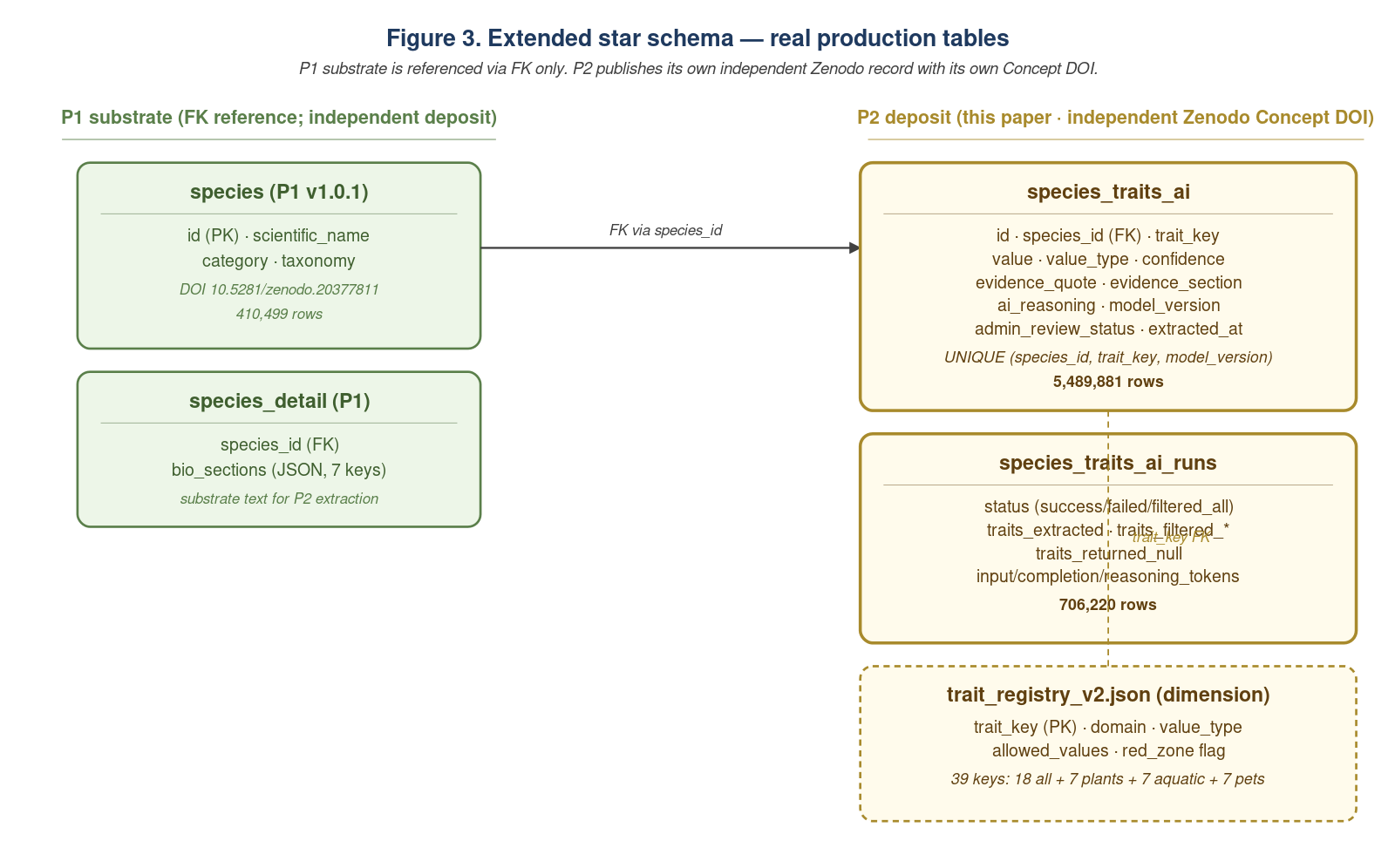
Figure 3: Extended star schema highlighting the relational attachment of trait tables to substrate via species ID, enabling modular versioning and auditability.
Validation Evidence and Empirical Results
Rigorous Validation Layers
Validation is organized into three orthogonal layers (Figure 4):
- Layer 1 (Quote-Provenance): Automated substring verification at population scale—90.12% of 5.43 million evidence-bearing rows have their evidence_quote as a verbatim substring (93.49% excluding design outliers).
- Layer 2 (Quote-Supports-Value): Manual semantic audit (n=100, non-red-zone, stratified confidence)—all rows classified as supporting asserted values, Wilson lower bound 96.30%.
- Layer 3 (Face Validity, Red-Zone): Manual stratified audit on red-zone traits (n=50)—100% acceptance, Wilson lower bound 92.86%.
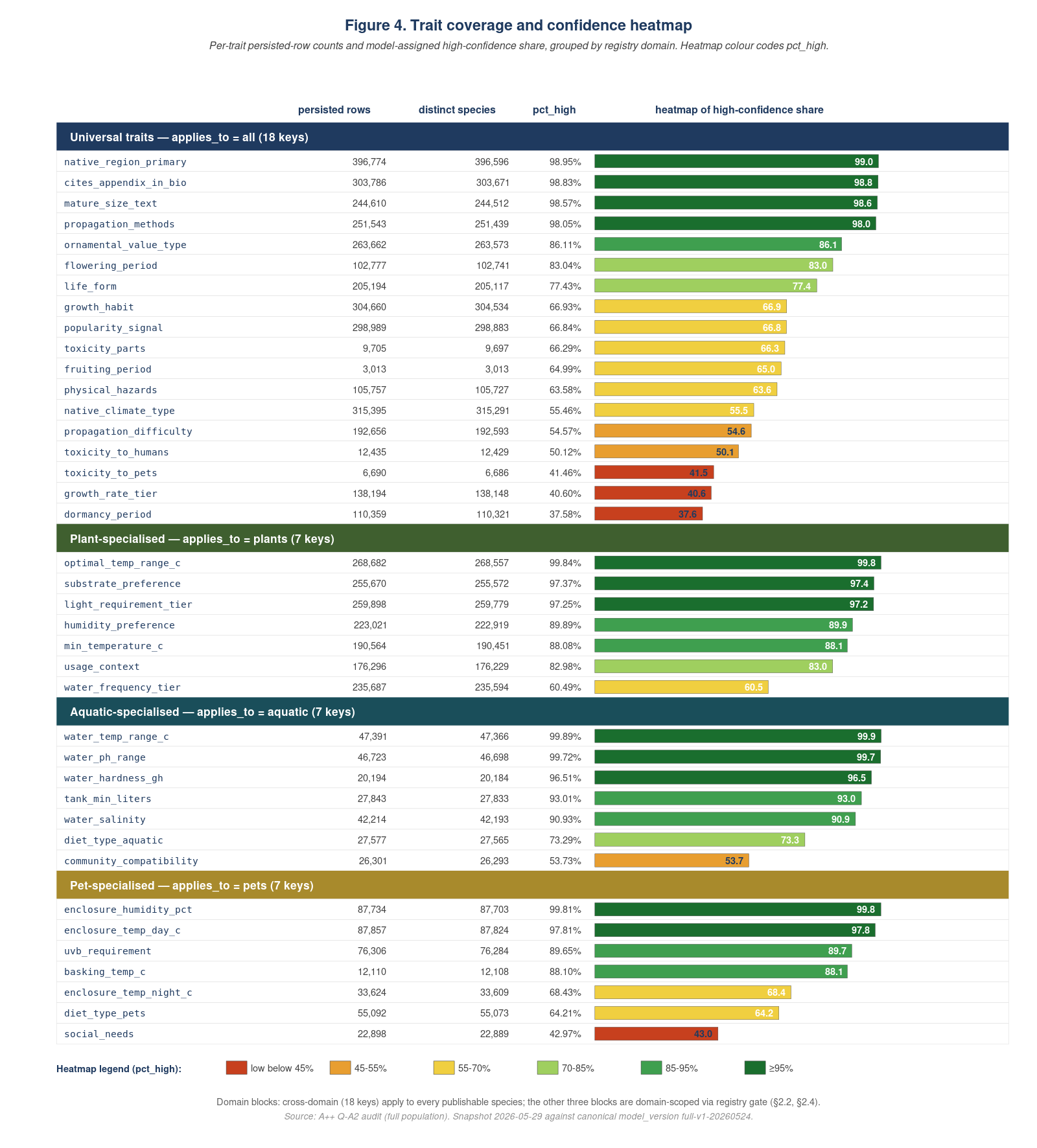
Figure 4: Three-layer validation schema—full corpus automation plus manual audits on both high-risk and typical trait keys.
Numerical Outcomes and Error Stratification
Aggregate admission statistics across all pipeline runs demonstrate strong operational characteristics:
- Model abstention is the dominant non-admission path (37.47%), markedly higher than rejection via substring (9.46%) or enum/OOV conformance (0.09%).
- Persisted trait rows achieve 81.57% high-confidence overall, with quantitative traits exceeding 99% and inference-heavy traits (toxicity, social needs) as low as 37.58%.
- Red-zone safety keys demonstrate elevated high-confidence rates (87.82%, 6.25pp above corpus mean), with substantial per-key variation.
- Multi-version preservation reveals run-to-run intra-family stability (73.5% identical values), with most divergences occurring in soft value fields (multi_enum, text) rather than categorical enums.
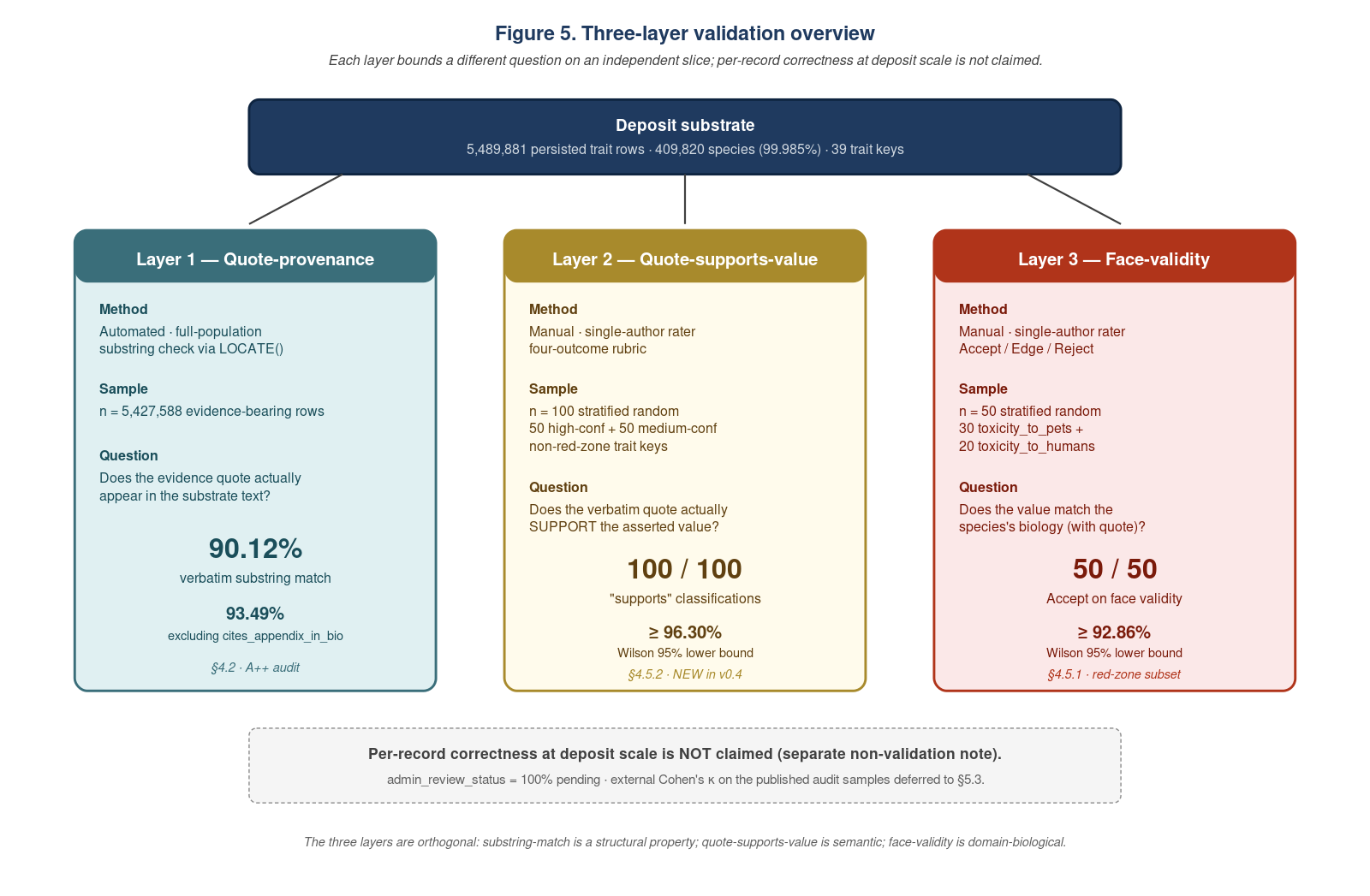
Figure 5: Per-trait coverage and confidence stratification, demonstrating strong high-confidence clustering on measurable/numeric descriptors and lower on subjective/inferential traits.
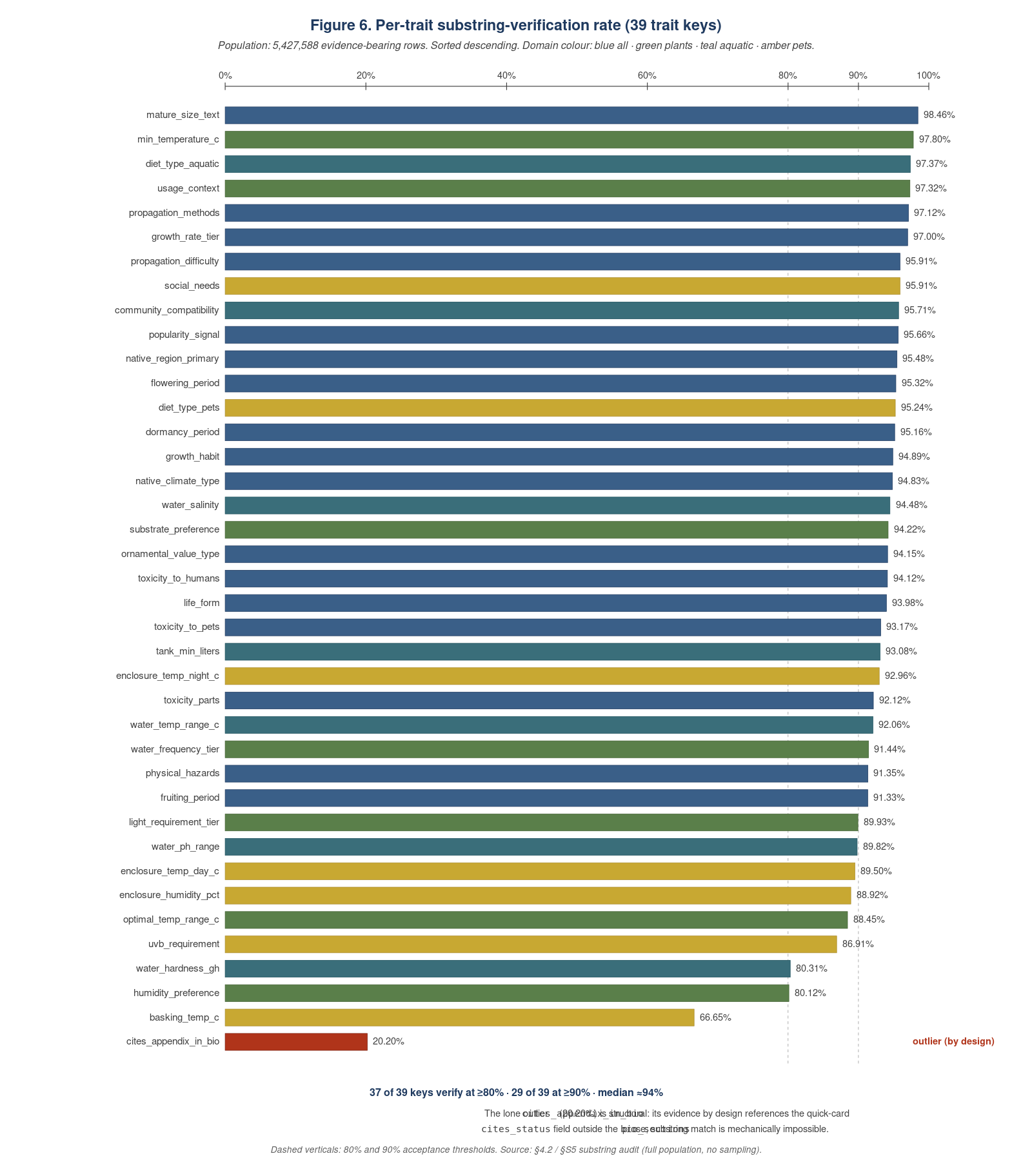
Figure 6: Substring-verification rate per trait key, with the median rate ≈94%; outliers correspond to registry design (quick-card sourced evidence).
Limitations and Deferred Validation
The deposit does not assert per-record correctness, does not compute Cohen’s κ, and does not address upstream substrate fidelity. Domain-expert review, cross-family extraction comparisons, and external overlap studies with curated trait databases are deferred to future releases. Curation infrastructure is published and ready but entirely pending at snapshot.
Implications and Future Directions
The registry-bound LLM pipeline substantiates a robust methodology for high-throughput, evidence-grounded trait extraction over heterogeneous substrate corpora. The auditable provenance mechanisms—registry gating, per-row evidence, confidence stratification, and multi-version preservation—enable reproducibility, downstream stratification, and post-hoc validation workflows, critical for facilitating open infrastructure in biodiversity informatics and regulatory contexts. Practical implications include scalable trait search/recommendation, algorithmic screening for safety-critical attributes, and structured support for ecological modeling in domains historically underserved by curated trait repositories.
Theoretically, the pipeline design foregrounds methodological rigor in LLM-mediated extraction, emphasizing the necessity of binding free-form generative outputs to strict closed-vocabulary schema with explicit evidentiary citation. The two-hop LLM architecture, coupled with full population substring-verification, serves as a blueprint for further extension to new domains and languages. Future development will focus on external calibration, expert domain reconciliation, trait ontology expansion, and generalization across LLM architectures, potentially integrating advanced cross-validation and probabilistic error stratification.
Conclusion
The paper delineates a scalable registry-bound extraction framework that yields evidence-grounded trait records with strong auditability and schema enforcement, addressing per-row provenance, confidence calibration, and rigorous admission filtering. The operational deployment covers a massive species corpus with high trait and evidentiary coverage, transparent validation layers, and stratifiable moderation queues for safety-critical traits. While per-record correctness awaits expert curation and external review, the framework establishes a methodological benchmark for extracting structured traits from LLM-generated and LLM-curated biodiversity corpora, facilitating downstream applications and future audit cycles.

