- The paper introduces SyNGLER, a two-stage generator that decouples latent embedding estimation from network reconstruction for efficient synthetic network generation.
- It employs both bootstrap-resampling and score-based diffusion to capture realistic local motifs and global spectral properties while reducing computational costs.
- Empirical results on diverse large-scale datasets demonstrate that SyNGLER outperforms traditional models in fidelity, scalability, and preservation of complex network characteristics.
Efficient Synthetic Network Generation via Latent Embedding Reconstruction
Introduction and Motivation
Synthetic network generation is a critical task for applications in privacy-preserving data release, network analysis benchmarking, and scientific discovery across fields such as social science, biology, and information systems. Existing neural graph generation models—autoregressive GNNs, deep diffusion models, and message-passing schemes—face practical limitations: they frequently overfit, fail to capture higher-order network characteristics, or incur prohibitive computational costs as network scale increases. Furthermore, they often marginalize explicit control over structural properties such as sparsity, degree heterogeneity, or community structure.
The paper "Efficient Synthetic Network Generation via Latent Embedding Reconstruction" (2606.00934) addresses these challenges by proposing SyNGLER: a two-stage, scalable network generator built upon low-dimensional latent space modeling. SyNGLER incorporates network-specific embeddings with a generative model in the latent space, aiming for highly efficient training and sampling, theoretical generation consistency, and strong empirical fidelity to observed network statistics.
SyNGLER Framework
Pipeline Overview
SyNGLER consists of three principal steps:
- Latent space embedding: Fit a likelihood-based latent space model to extract low-dimensional node embeddings and degree parameters from a single observed adjacency matrix.
- Latent distribution modeling: Train a distribution-free generative model (either resampling-based or diffusion-based) on these embeddings to capture their distribution in latent space.
- Network synthesis: Sample latent vectors from the generative model and decode a synthetic network using the fitted latent space model.
This modular two-stage construction preserves key network properties while being computationally lightweight. The schematic pipeline is illustrated as follows:
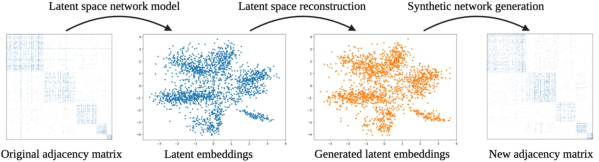
Figure 1: Illustration of the SyNGLER pipeline using the YouTube dataset: observed adjacency, learned embeddings, synthetic latent samples, and reconstructed network.
Latent Space Modeling
The latent space model associates each node i with a vector zi∈Rr and degree parameter αi, using the probabilistic edge formation model
$A_{ij} \,\middle|\, \Phi \sim p(\cdot \mid z_i^\top z_j + \alpha_i + \alpha_j + \rho_n),$
where ρn controls global sparsity. The framework subsumes stochastic block models, degree-corrected models, Chung–Lu, and random dot product graphs as special cases, with link functions chosen according to the edge type (Bernoulli/logistic for binary, Gaussian for weighted edges).
Embedding estimation leverages projected gradient descent with practical identifiability constraints. For large-scale, sparse binary networks, the model ensures edge probabilities vanish at rate exp(ρn) for appropriate sparsity regimes.
Latent Distribution Generator
Two generative mechanisms are considered:
- Resampling (SyNG-R): Draws node embeddings by bootstrap-resampling from the empirical distribution of learned node embeddings, ideal for preserving empirical local patterns.
- Score-based diffusion (SyNG-D): Trains a score-based generative model using stochastic differential equations (diffusion) to sample novel embeddings, allowing extrapolation beyond empirical observations and fostering synthetic diversity.
Diffusion operates in the embedding space rather than the adjacency space, addressing overfitting and low-rank structure by leveraging a tractable, continuous latent space.
Extension to Attributed Networks
SyNGLER-Attr extends the methodology to attributed graphs by jointly modeling the latent embedding and attribute structure, enabling the generation of both graph topology and node attributes. This is achieved with multivariate regression and factor decomposition to capture attribute-network structure dependencies.
Theoretical Guarantees
The paper provides a rigorous decomposition of the Kullback-Leibler divergence between the distributions of real and synthetic networks:
n21DKL(PA∥PA~A)=Eρ+EΦ+Egen,
where:
- Eρ quantifies error from mismatched global sparsity estimation,
- EΦ is the embedding distribution misspecification (controlled by latent model estimation),
- Egen is the generative model approximation error in latent space.
Sharp asymptotic rates for all terms are established under sparse regimes (zi∈Rr0), showing that under mild smoothness and identifiability assumptions, SyNGLER achieves consistent generation of both edge and motif distributions. Fixed-order motif densities (e.g., triangles) in the synthetic graphs converge to those of the true model.
Empirical Evaluation
Structural Fidelity
Experiments on both simulated data (across various zi∈Rr1 regimes and sparsity conditions) and four large real-world networks (Yelp, YouTube, DBLP, PolBlogs) show that SyNGLER consistently outperforms classical and neural baselines (VGAE, GRAN, EDGE, GraphMaker, CELL, etc.) in matching statistics such as triangle density, clustering coefficient, eigenvalue spectra, degree distributions, graphlet frequencies, and orbit densities. SyNGLER is unique in preserving both local (small motifs) and global (spectral) properties with low computational burden.
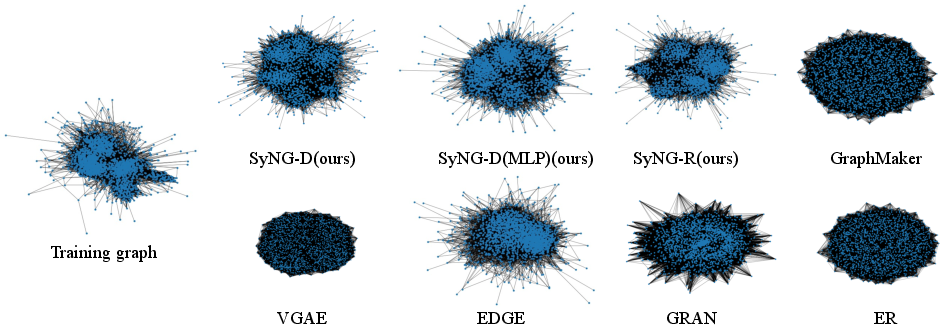
Figure 2: Visualization of synthetic networks generated by different methods on YouTube, highlighting community and structural fidelity.
In quantitative benchmarks, both resampling and diffusion variants of SyNGLER achieve minimum root-mean-square error and bias across motif and spectral metrics. The score-based diffusion model variant (SyNG-D) offers superior diversity and scalability, especially for graphs with richer latent structures or when sampling new node behaviors is essential.
Higher-Order Structure and Visualization
SyNGLER excels at preserving induced motifs, orbit-based graphlets, and joint motif distributions, validated by both statistical distances and layout-based visual inspection:
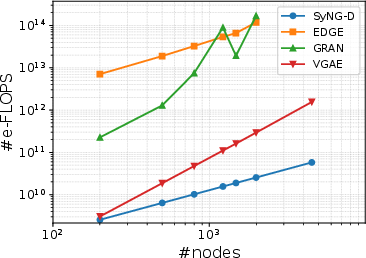
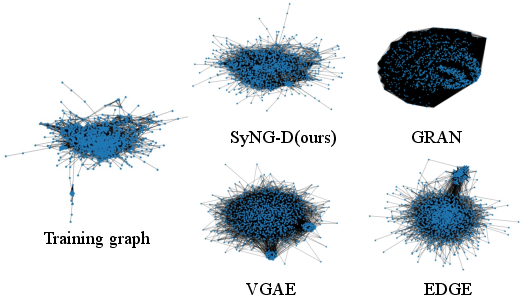
Figure 3: Left: Computational efficiency scaling (e-FLOPS) versus network size. Right: Visualizations of synthetic graphs on the DBLP dataset.
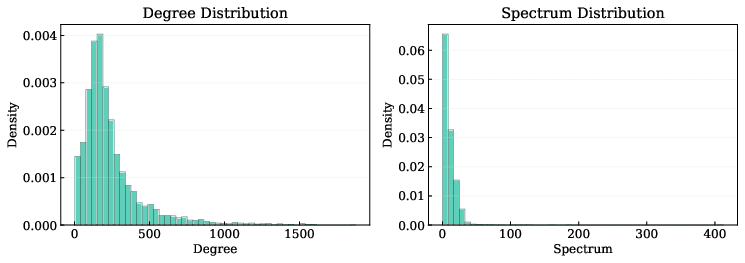
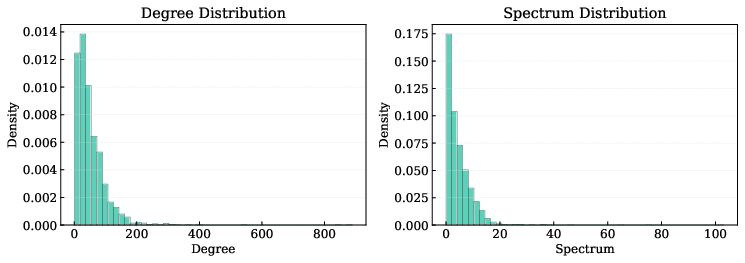
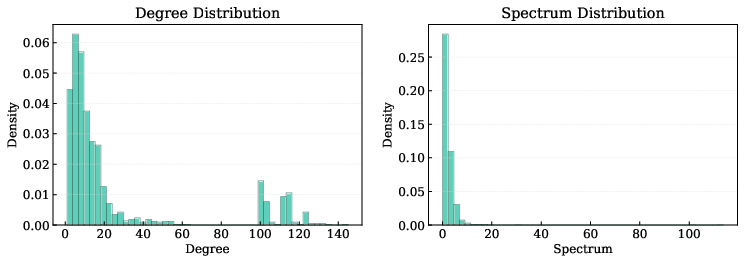
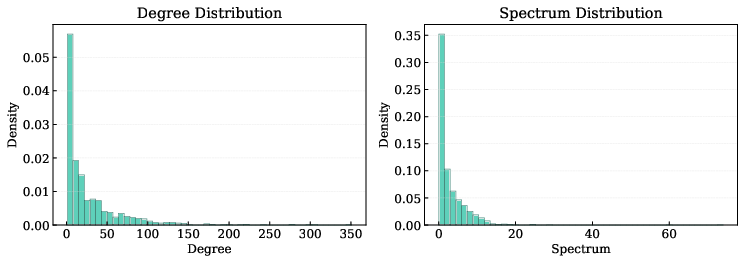
Figure 4: Summary statistics for the Yelp dataset, demonstrating preservation of degree and clustering distributions.
Downstream ML Utility
ML utility is assessed by training graph neural link predictors (e.g., GCN, GAE) on synthetic and real networks and evaluating test performance on held-out genuine data. SyNGLER achieves utility ratios near 1, indicating near-optimal preservation of discriminative information needed for ML tasks.
Efficiency and Scalability
SyNGLER dramatically lowers computational cost compared to deep generative models, with e-FLOPS and wall-clock time nearly constant as graph size grows, while competing methods exhibit superlinear scaling. On million-node synthetic SBMs, SyNGLER reconstructs community interaction matrices and spectral structure accurately with tractable computational resources.
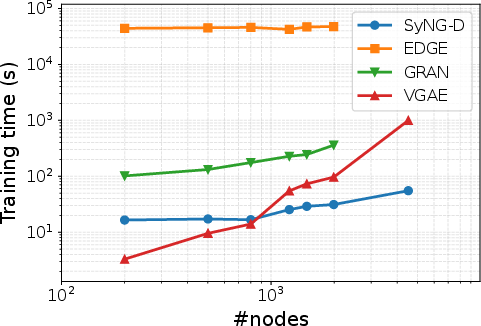
Figure 5: Wall-clock training time for different methods as dataset size increases; SyNGLER scales most favorably.
Visualization of Large-Scale and Attributed Generation
SyNGLER accommodates networks with both extreme size and complex attribute structure. For million-node blockmodels, latent block structures and community-level adjacency patterns are recovered:
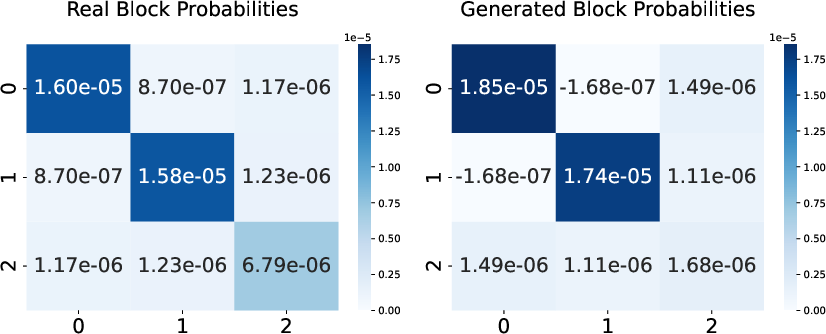
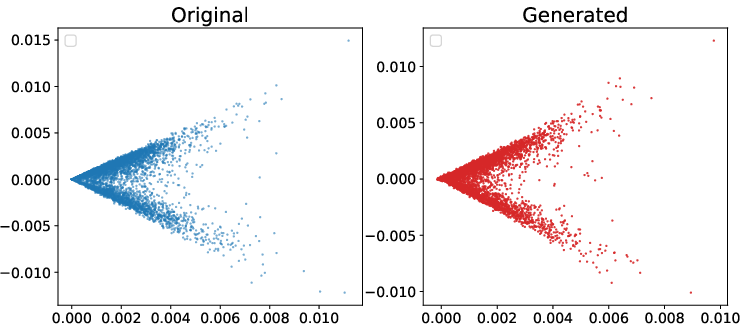
Figure 6: Estimated zi∈Rr2 block interaction matrix from one-million-node synthetic network matches the true SBM parameters.
SyNGLER supports flexible visualization layouts:
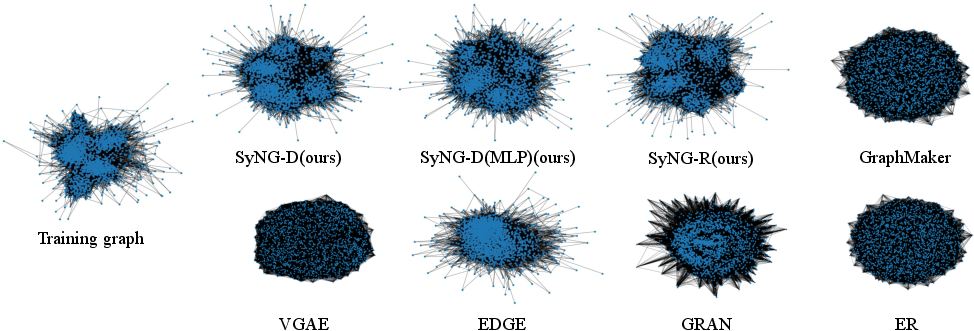
Figure 7: Spring layout visualization highlights community structure in synthetic networks.
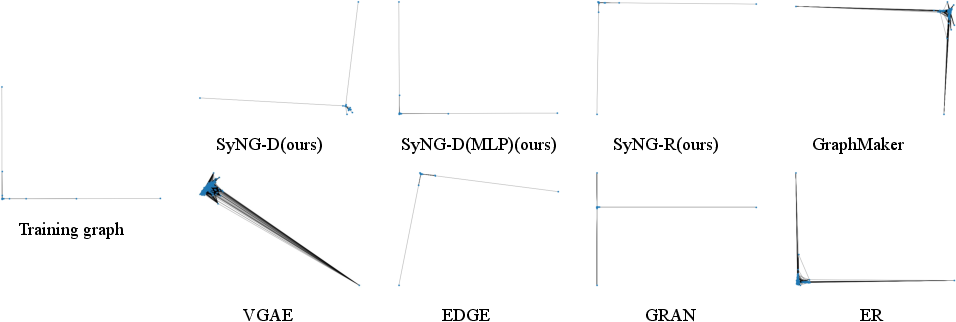
Figure 8: Spectral layout visualization further reveals global connectivity patterns.
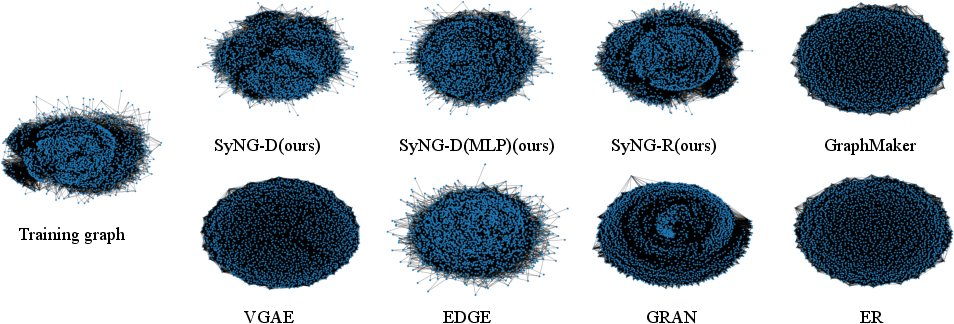
Figure 9: Kamada-Kawai layout visualization for qualitative graph comparison.
Implications, Limitations, and Future Directions
Practical Advantages: SyNGLER's explicit latent space modeling provides interpretable, scalable, and modular synthetic network generators. Its theoretical consistency and clear error decomposition distinguish it from unconstrained neural methods. Additionally, the framework's design naturally enables attribute and conditional structure extensions.
Limitations: The two-stage design may restrict performance in fully end-to-end optimization contexts, and does not, by itself, ensure formal privacy guarantees. Application in privacy-sensitive settings requires further integration with differential privacy or auditing tools.
Future Work: Potential directions include:
- Conditional/fair graph generation with richer supervision or constraints.
- Extensions to directed, dynamic, multiplex, and multilayer networks.
- Developing privacy-preserving synthetic generation frameworks with measurable privacy risk and controlled attribute-structure tradeoffs.
- End-to-end joint learning combining latent inference and generative stages.
Conclusion
SyNGLER establishes a general, efficient, and theoretically grounded principle for synthetic network generation: decouple structure learning and generation in a low-dimensional latent space. This approach robustly preserves both local motif and global structural properties, scales to massive graphs, and attains competitive or superior accuracy and utility relative to conventional neural and statistical baselines. The combination of latent space likelihood modeling with lightweight generative sampling offers a principled template for future developments in interpretable, scalable, and practical graph data synthesis.

