- The paper introduces a quantum theory of photonic time crystals and demonstrates how temporal boundaries trigger Bogoliubov mixing leading to photon-pair creation.
- It employs a Floquet–Bloch framework to reveal quasifrequency bands and momentum gaps, distinguishing between stable oscillatory regimes and exponential quantum amplification.
- The study connects light–matter interactions with realistic platform considerations, setting clear research pathways for quantum photonics applications.
Quantum Photonic Time Crystals: From Temporal Boundaries to Floquet Light-Matter Interactions
Introduction and Theoretical Structure
The reviewed paper, "Quantum Photonic Time Crystals: From Temporal Boundaries to Floquet Light-Matter Interactions" (2605.30850), presents a comprehensive and technically rigorous synthesis of quantum aspects of photonic time crystals (PTCs), distinguishing between their temporal boundary origins and their Floquet-driven band structure. The paper systematically builds the quantum theory starting from temporal interfaces—where Bogoliubov mode mixing induces photon-pair creation—and culminates in a detailed framework for light–matter interactions in Floquet-engineered temporal media.
A salient organizational element is the conceptual hierarchy, which traces the progression from a single temporal boundary (elementary Bogoliubov scatterer) to the periodic modulation and ensuing Floquet problem, with associated quasifrequency bands, momentum gaps, and SU(1,1) amplification in the momentum gap regime.
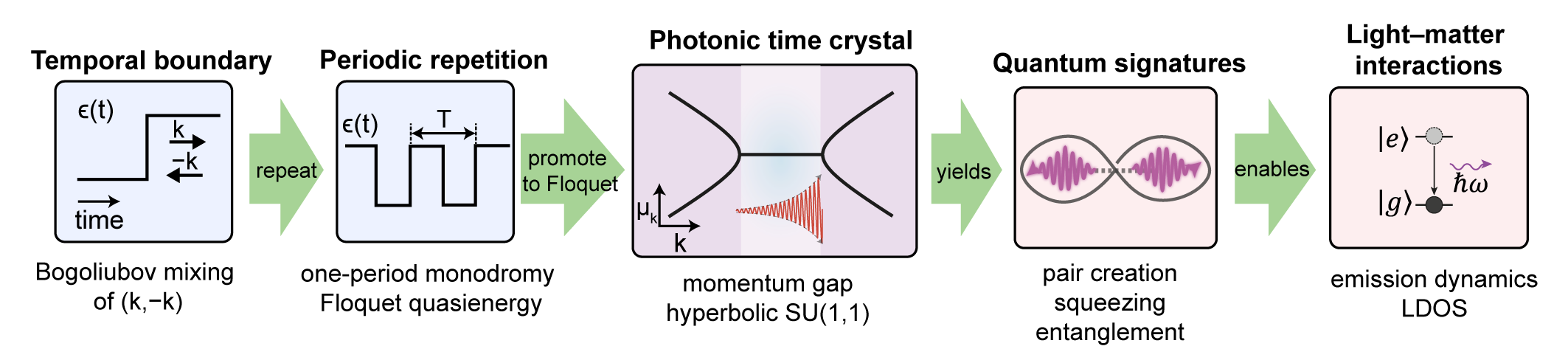
Figure 1: Conceptual hierarchy of quantum PTCs, illustrating the transition from temporal boundaries to periodic Floquet band structure and the emergence of characteristic quantum signatures.
This approach relates the core phenomena—pair creation, squeezing, and nonclassical correlations—to the underlying algebraic structure and establishes their physical realization in experimentally accessible platforms.
Temporal Boundaries and Bogoliubov Mixing
The quantum problem is first isolated to a single temporal boundary in a homogeneous, non-dispersive medium. In this setting, Maxwell boundary conditions enforce that the dynamics is closed within each (k,−k) sector, with mode operators related via a Bogoliubov transformation characterized by coefficients satisfying the SU(1,1) relation A2−B2=1. Vacuum in the pre-jump basis becomes a two-mode squeezed vacuum in the post-jump basis, and all subsequent dynamics is encapsulated in this quadratic Bogoliubov framework.
When extending to spatially inhomogeneous or cavity settings, the clean two-mode reduction breaks and multimode mixing emerges: a temporal boundary generally couples nonorthogonal cavity eigenmodes, requiring a symplectic multimode Bogoliubov analysis.
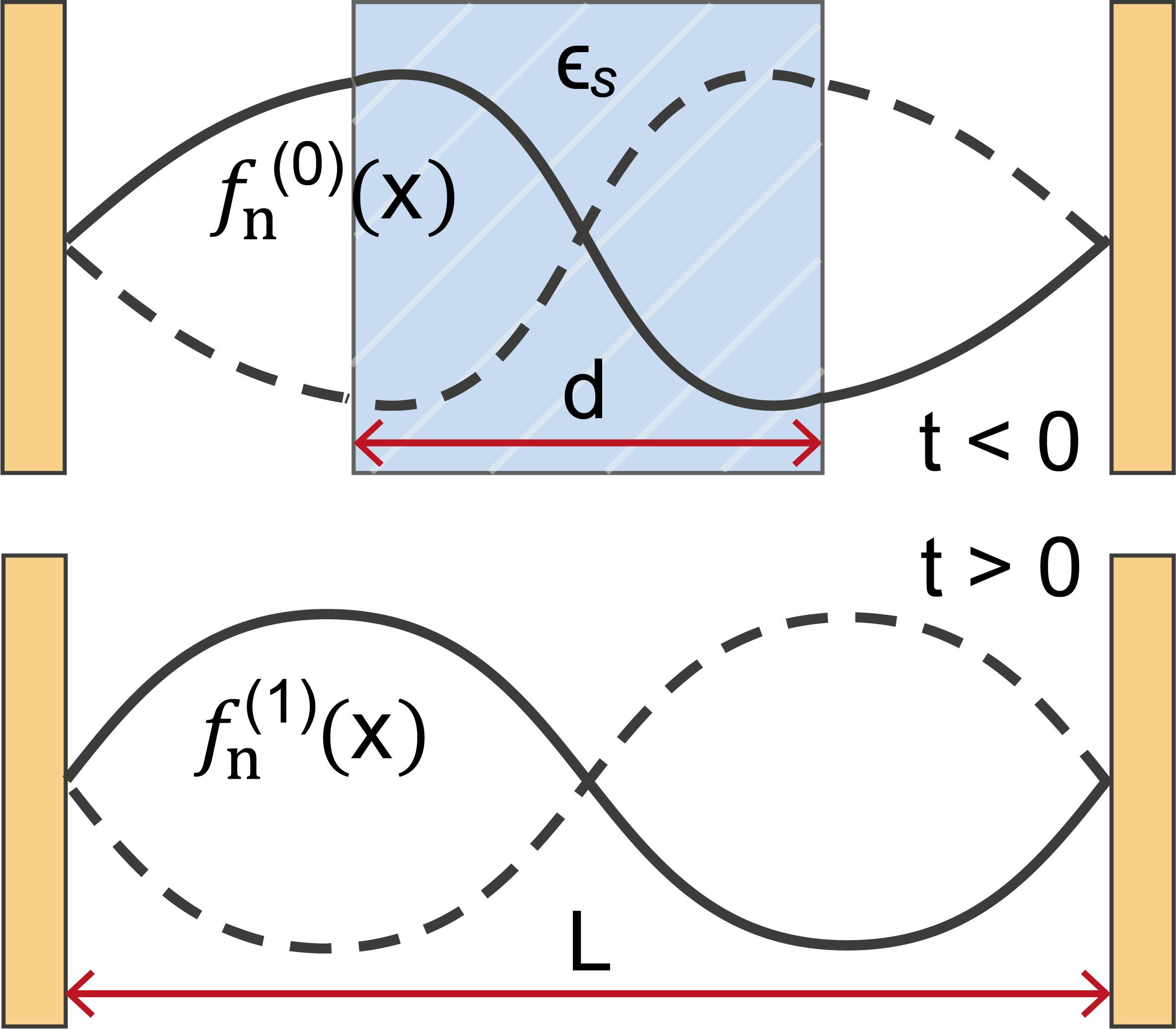
Figure 2: Multimode mixing scenario for abrupt dielectric removal in a cavity; temporal boundaries induce nontrivial intermode Bogoliubov couplings.
This distinction between homogeneous and inhomogeneous implementations underpins the organization of mode structure for quantum vacuum amplification across both regimes.
Floquet Band Structure and Quantum Amplification
Moving to periodically modulated PTCs, the paper reformulates the problem in terms of momentum-resolved Floquet–Bloch theory. Temporal periodicity leads to a monodromy (transfer) matrix whose eigenvalues specify quasifrequency bands and parametric instability windows (momentum gaps). The Floquet quasifrequency spectral features, especially the boundary between real and complex branches, rigorously delineate the band and exponentially amplified regimes.
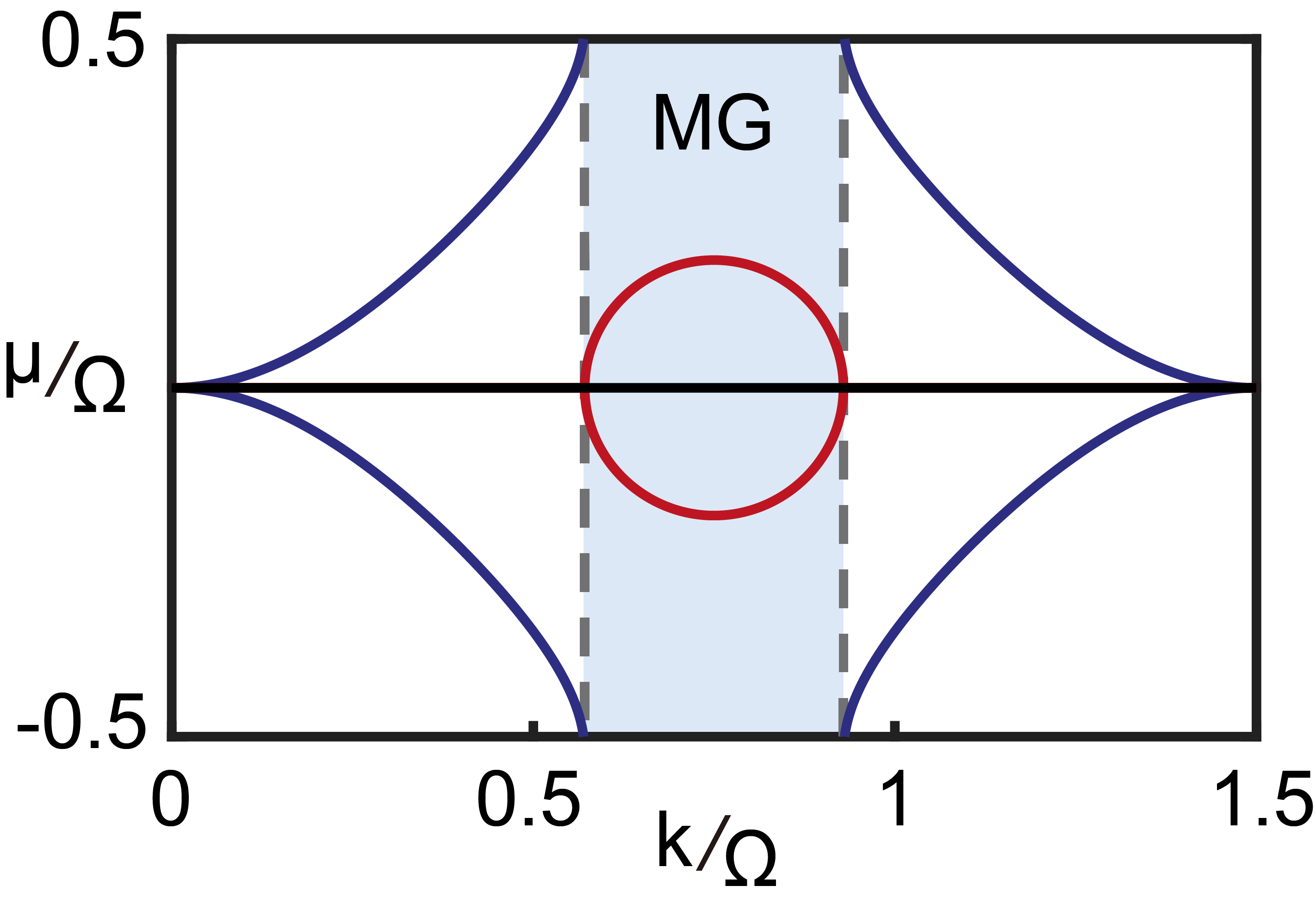
Figure 3: Floquet quasifrequency spectrum demonstrates band/gap separation; the imaginary part of the quasifrequency identifies the instability (amplification) window.
The quantum dynamics in the PTC is precisely constructed in a fixed Nambu basis, with the (k,–k) sector described by operator-valued two-mode Bogoliubov equations. In the band regime, all pair-sector probabilities and photon populations remain bounded and oscillatory; within the gap, they grow exponentially with the number of modulation periods, in direct correspondence with classical parametric amplification and non-Hermitian transfer-matrix theory.
Quantum Observables and Floquet Dynamics
The most direct quantum observables are vacuum-seeded photon number, pair-correlation statistics, and two-mode squeezing parameters, all of which manifest distinct behavior in band, gap-edge, and momentum-gap regions. The explicit stroboscopic quantum evolution, illustrated in the stepwise PTC model, robustly demonstrates the distinction: oscillatory and bounded pair-sector probabilities in the stable regime, and strong exponential enhancement in the unstable region.
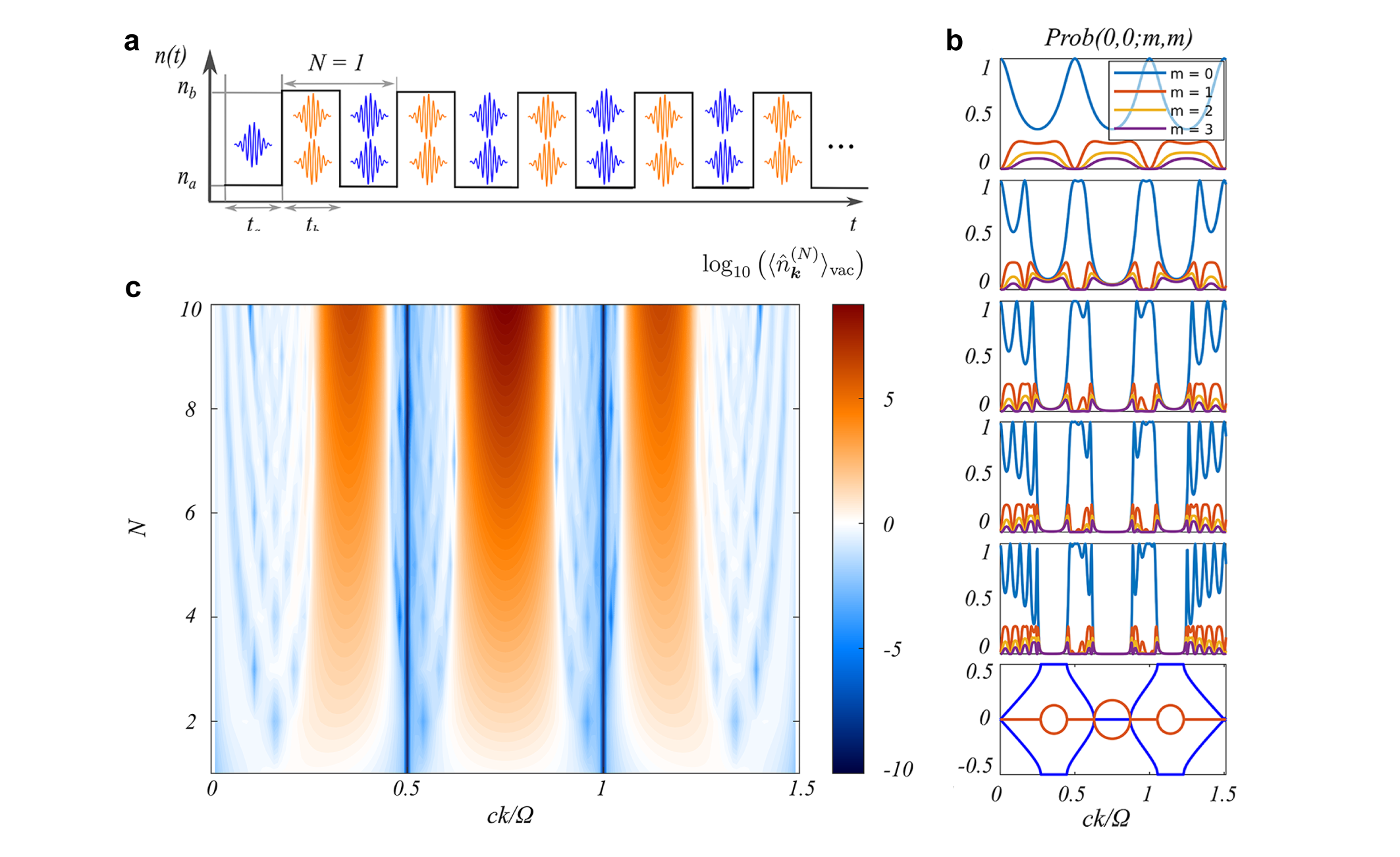
Figure 4: Quantum signatures in the stepwise PTC—pair-sector transition probabilities and mean photon number—capture exponential growth in the gap regime and bounded oscillatory behavior in the bands.
The critical experimental threshold for observing quantum signatures is vacuum-seeded correlated emission, as opposed to classical field amplification or technical noise gain.
Relation to the Dynamical Casimir Effect and Parametric Amplification
The review contextualizes quantum PTCs within the broader framework of dynamical Casimir effect (DCE) and parametric amplification. It is emphasized that while both DCE and PTCs share the algebra of Bogoliubov mixing, their organizing constraints are distinct: DCE focuses on discrete cavity/circuit modes with parametric resonance, whereas quantum PTCs leverage spatial translation invariance and Floquet band/gap selection in a bulk continuum.
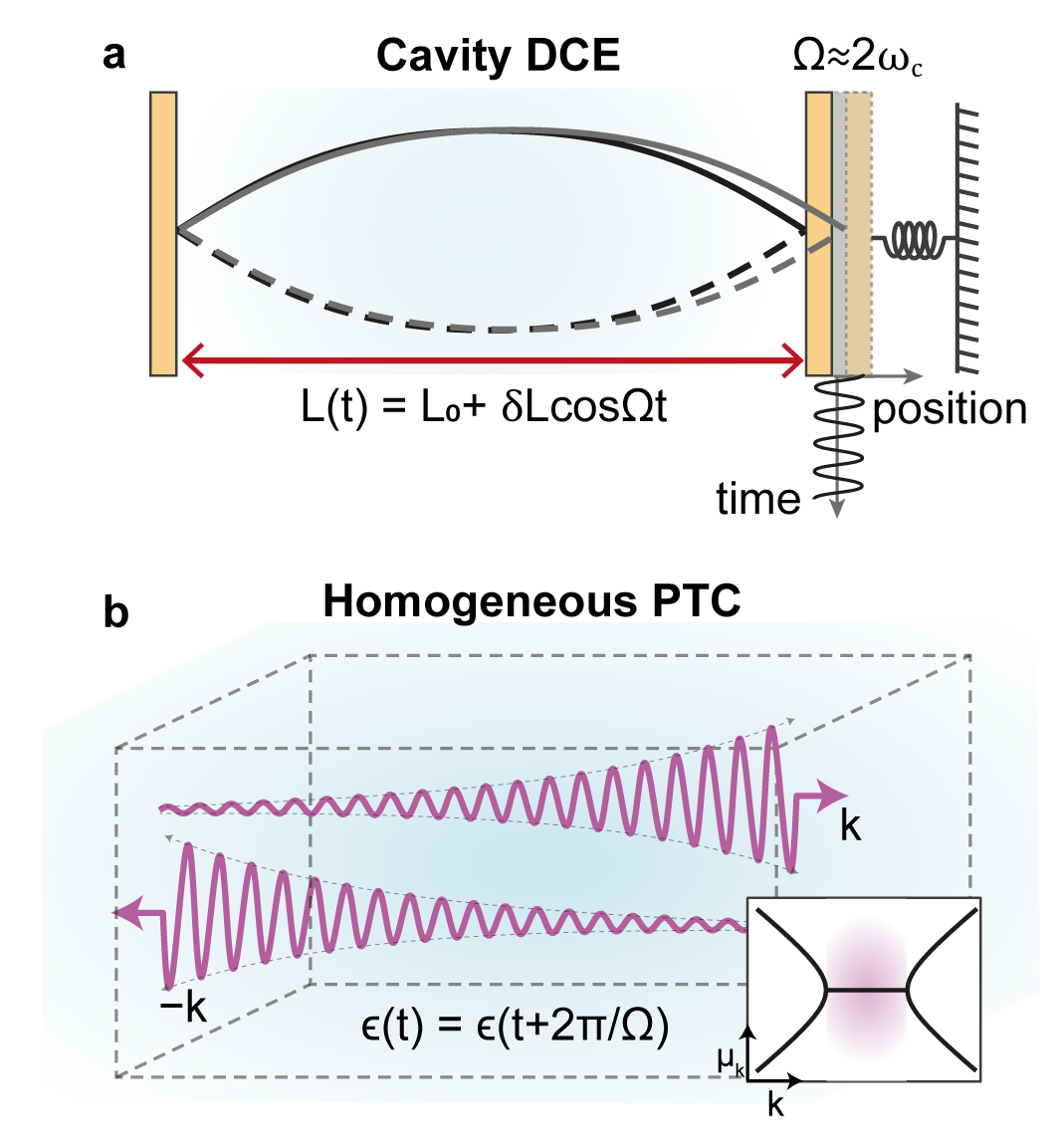
Figure 5: Contrast between cavity-based DCE (discrete mode/channel selection) and homogeneous bulk PTC (momentum-gap selection and Floquet band structure).
Amplification in quantum PTCs is not tied to single resonances, but arises across all wavevectors within the momentum gap, fundamentally altering the spectral structure and the statistical properties of vacuum-generated photons.
Extensions: Light–Matter Interaction, LDOS, and Synthetic-Space Models
The paper extends its analysis to light–matter coupling and nonclassical emission phenomena. PTC-induced modification of the electromagnetic LDOS, changes in spontaneous emission rates, and the introduction of non-equilibrium excitation channels are analyzed using Floquet Green-function approaches. Quantum models that couple two-level atoms to PTCs reveal nonequilibrium localization–delocalization transitions in synthetic space; these manifest as a breakdown of coherent Rabi oscillations and transfer of population into mixed states in the atomic subsystem.
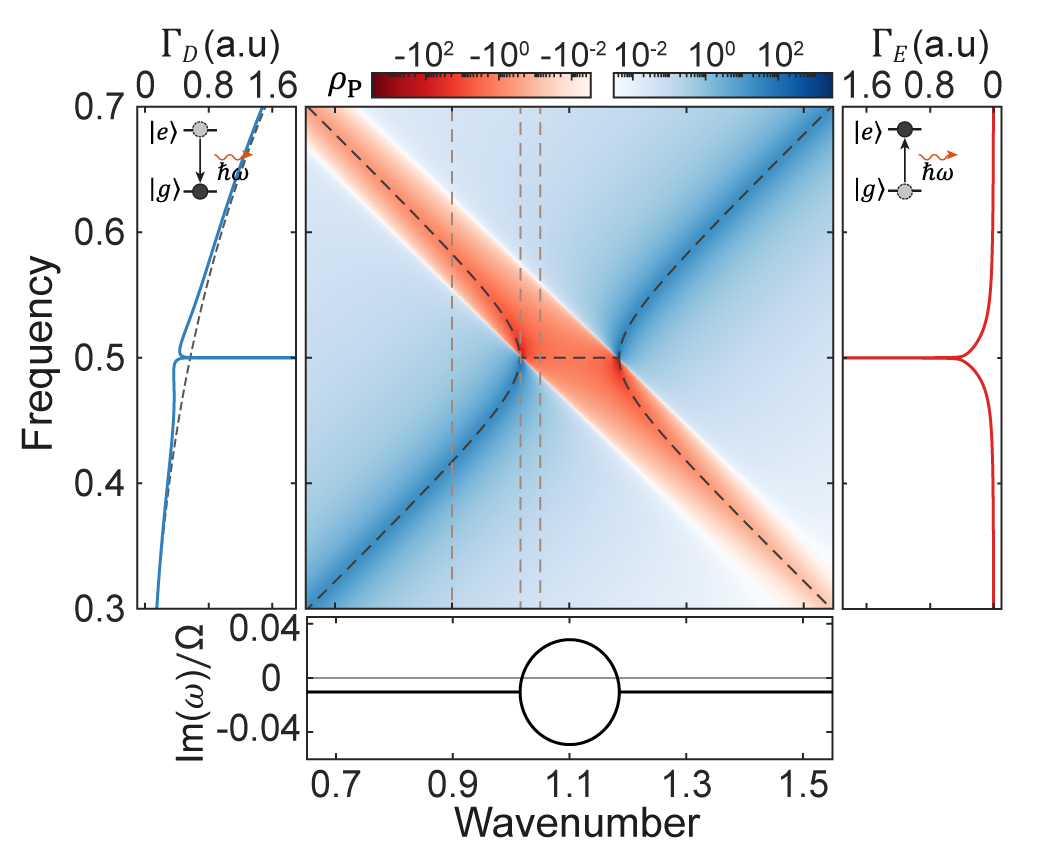
Figure 6: Momentum-resolved LDOS and emission response for a PTC indicates both decay and excitation channels, where the sign of the kDOS delineates the physical process.
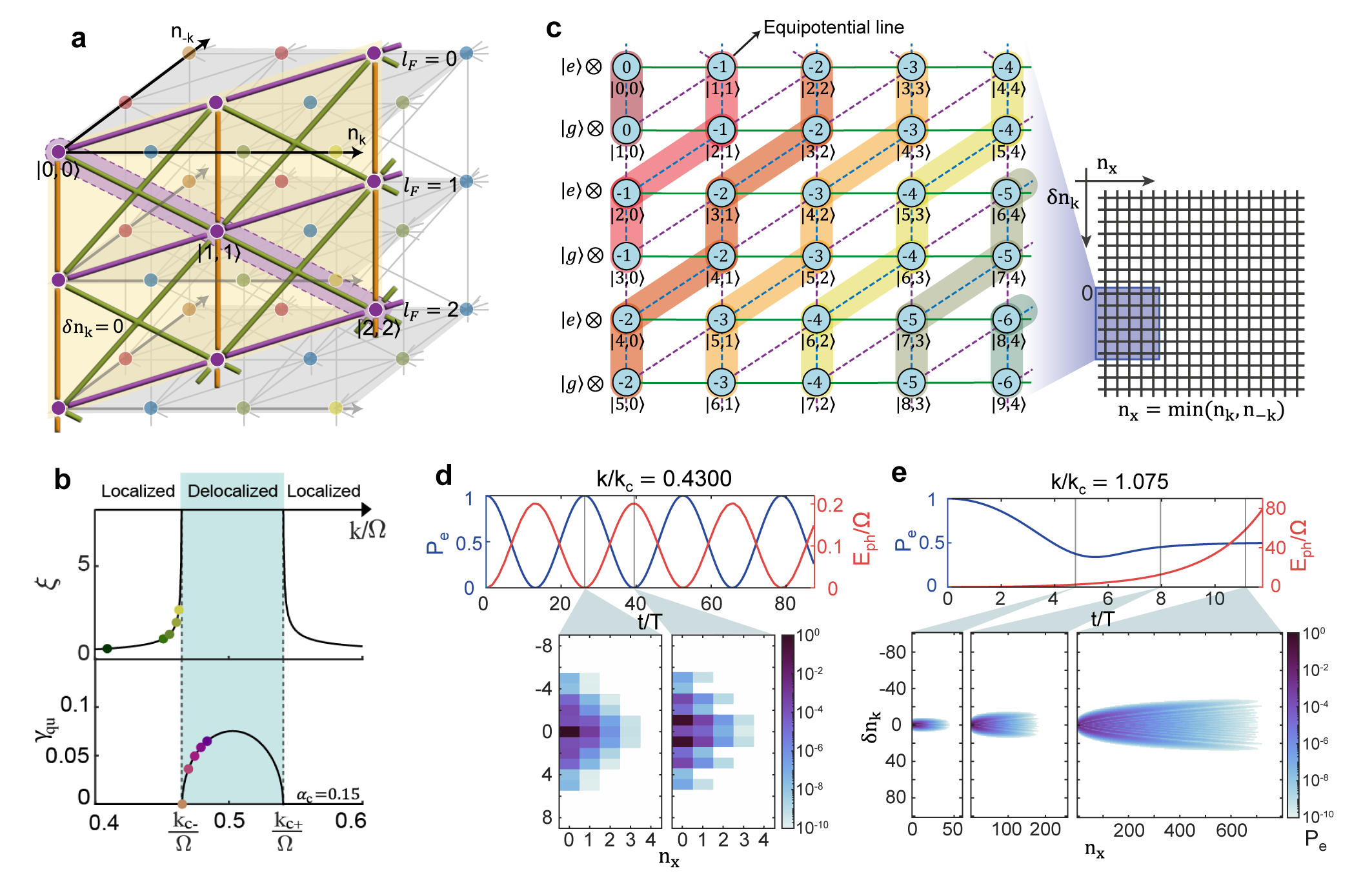
Figure 7: Synthetic-space description of atom-PTC coupled dynamics; localization and delocalization in synthetic photonic wires tie directly to the band/gap regime of the underlying Floquet structure.
Moreover, experimentally tractable platforms—microwave resonator arrays, time-modulated metasurfaces, and LC resonator networks—are already verifying the band/gap features and LDOS predictions at a classical level, but quantum vacuum emission remains an open frontier.
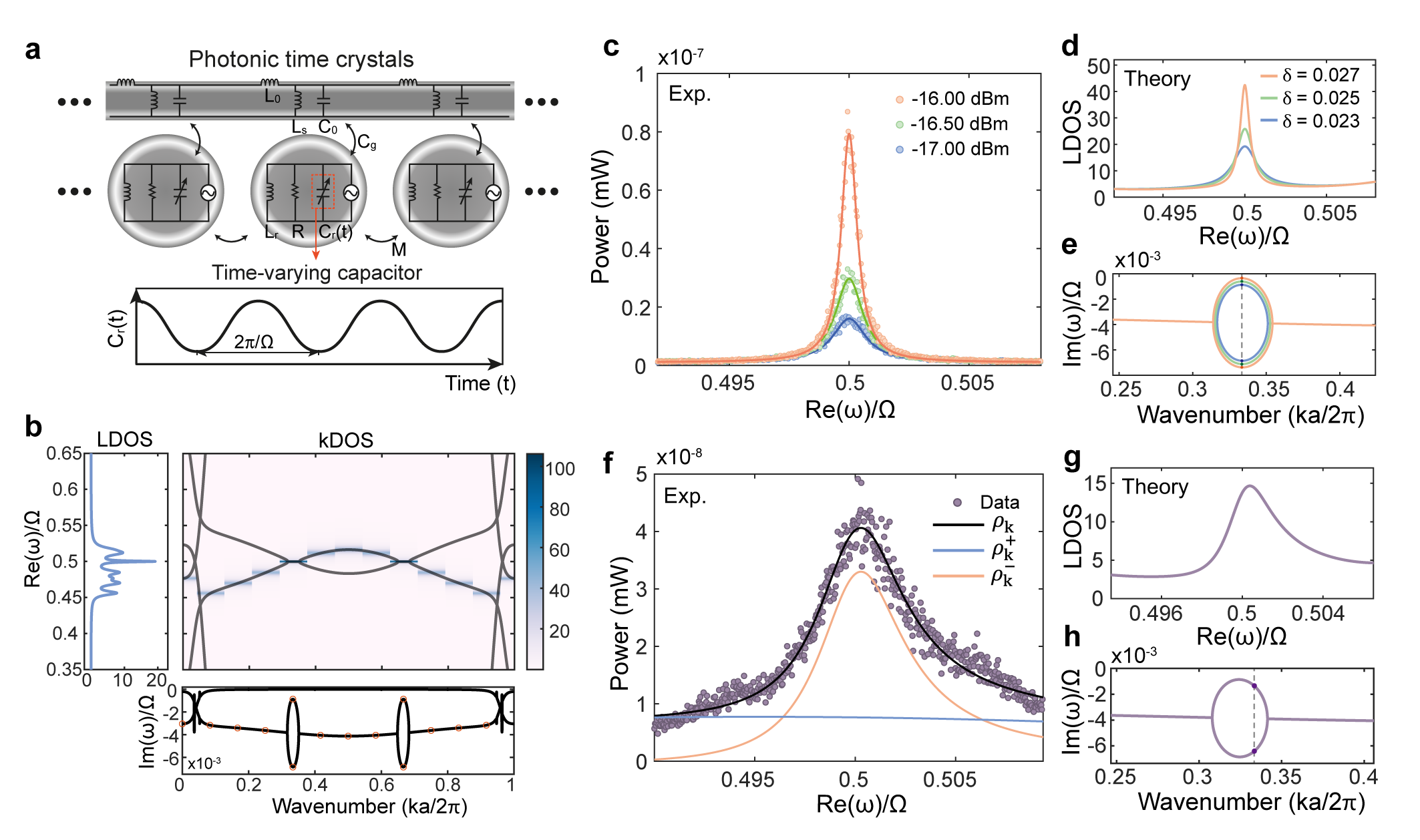
Figure 8: LDOS and kDOS measurements in modulated LC-resonator experiments confirm the classical predictions for PTC momentum gaps and band-edge signatures.
Beyond Idealized Models: Dispersion, Openness, and Material Realism
The review addresses the limitations of the ideal, lossless, non-dispersive quantum PTC model and surveys recent theoretical and platform-specific advances that incorporate dispersion, loss reservoirs, openness, material non-idealities, and structured (finite) geometries. Generalizations to operator scattering theory, quasinormal-mode formalism for Floquet media, and macroscopic QED in time-varying environments are discussed. Especially, it is highlighted that quantum treatment of realistic implementations must account for environmental reservoirs, spatiotemporal inhomogeneities, and frequency-dependent response for rigorous connection to physical observables, transition rates, and output noise and spectra.
Conclusion
This paper delivers a precise and systematic quantum theoretical framework for photonic time crystals, unifying Bogoliubov-based temporal boundary physics, Floquet band structure, and quantum light–matter interaction theory. The significance of the momentum-gap regime for quantum vacuum amplification and squeezing is unambiguously delineated. The review sets a clear agenda for experimental progress, emphasizing the distinction between classical amplification and genuinely quantum vacuum effects. The extension to realistic, open, and dispersive platforms is identified as the dominant theoretical and practical frontier.
This work establishes the algebraic and physical structure required for future quantum photonics applications based on temporal modulation, including momentum-resolved quantum amplification, temporal-frequency multimode resource generation, and modulation-engineered synthetic space light–matter control. Direct quantum observation of correlated vacuum emission and squeezing in PTCs, and the extension to strongly dispersive, lossy, or open systems, are explicit trajectories for subsequent development.