- The paper presents a bidirectional extension to IGHA* (Bi-IGHA*) that mitigates frozen vertex barriers and reduces unnecessary expansions in planning.
- It employs coordinated forward and backward searches with a near-meet function to ensure monotonic cost improvement and finite termination.
- Empirical evaluations demonstrate order-of-magnitude speedup and robust performance across various high-dimensional kinodynamic environments.
Bidirectional Incremental Generalized Hybrid A*
Introduction
The paper "Bidirectional Incremental Generalized Hybrid A*" (2605.30647) presents Bi-IGHA*, a bidirectional extension to Incremental Generalized Hybrid A* (IGHA*) for efficient kinodynamic planning in high-dimensional, unstructured environments where motion primitive precomputation is infeasible. The approach targets situations—such as high-speed off-road autonomy and aerial robotics—where state-dependent dynamics, terrain, and friction require online planning with computationally expensive forward models. Unidirectional methods like Hybrid A* and IGHA* suffer from coupling between state-space discretization and tree exploration. IGHA* introduces incremental resolution refinement, but encounter "frozen vertex barriers," where locally suboptimal yet dominant vertices conceal promising candidates at each discretization level. Bi-IGHA* runs two anti-parallel IGHA* searches with coordinated information sharing to mitigate these barriers and provide strong efficiency gains.
Background: Unidirectional IGHA* and Frozen Vertex Barrier
IGHA* performs anytime search by incrementally refining state discretization, freezing vertices that are locally dominated but potentially relevant in subsequent refinements. This mechanism avoids the tradeoff between computational burden and pruning critical solutions, but comes at a cost: frozen vertices prevent paths to the goal from being discovered at coarse resolutions, forcing unnecessary expansion of misaligned nodes and higher computational expenditure on further refinements. The phenomenon is illustrated in the initial progression for IGHA*, where a planner misses the goal region due to a frozen critical vertex and only discovers a valid path after substantial resolution refinement and increased expansions.
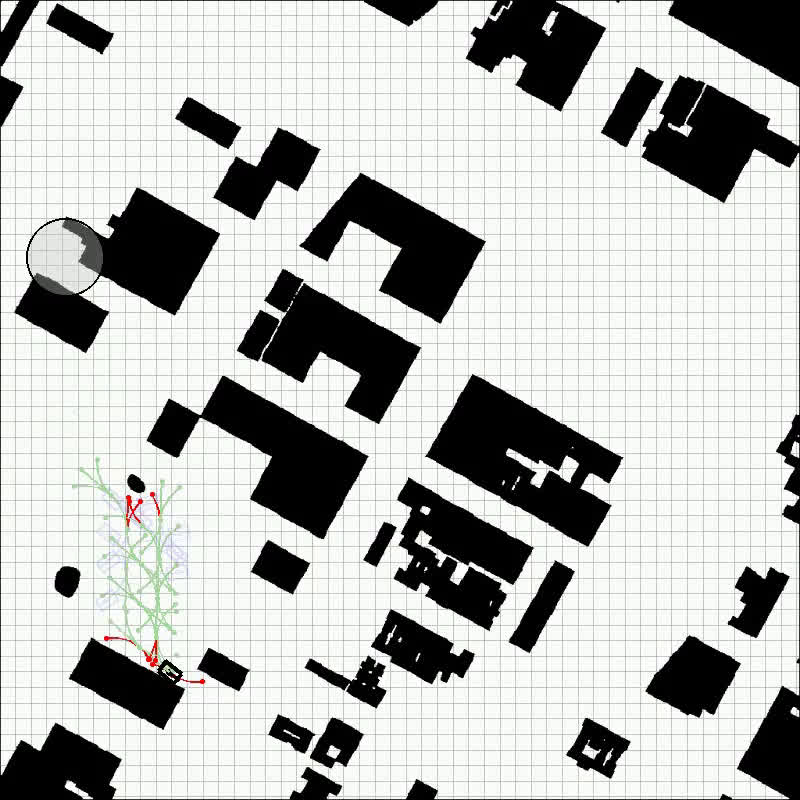
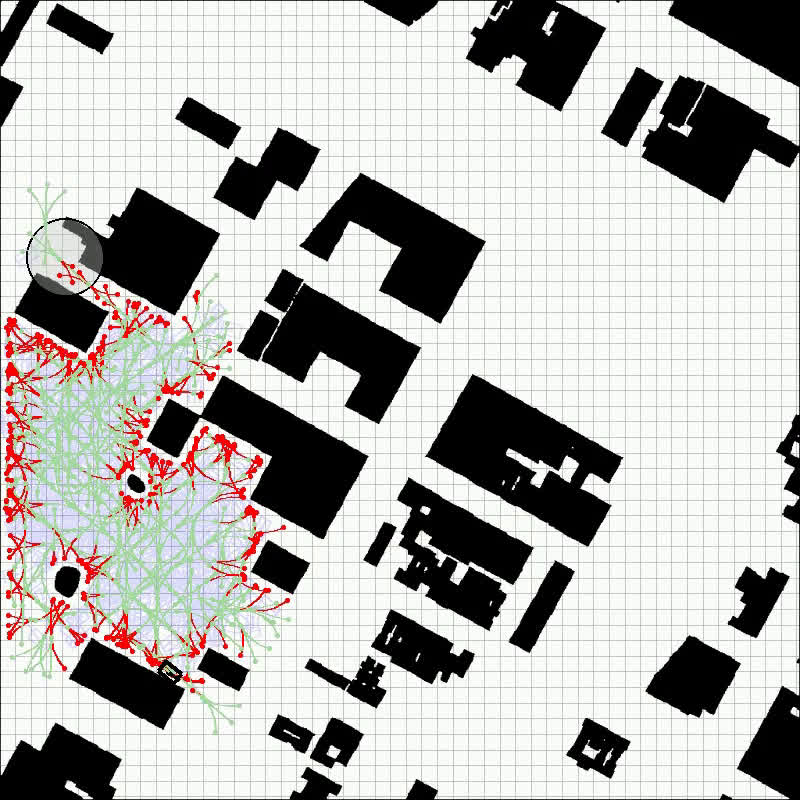
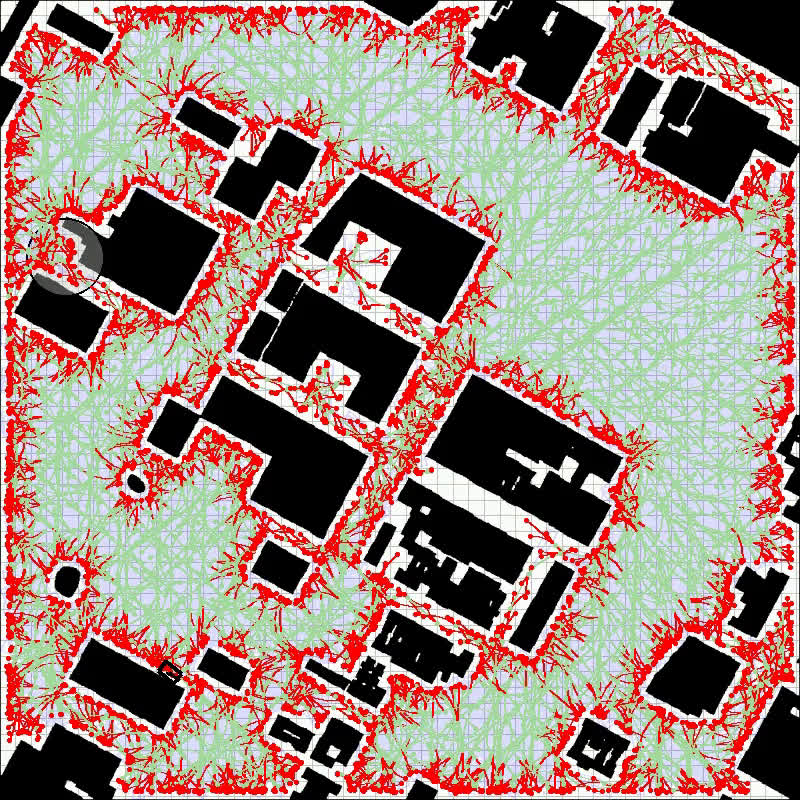
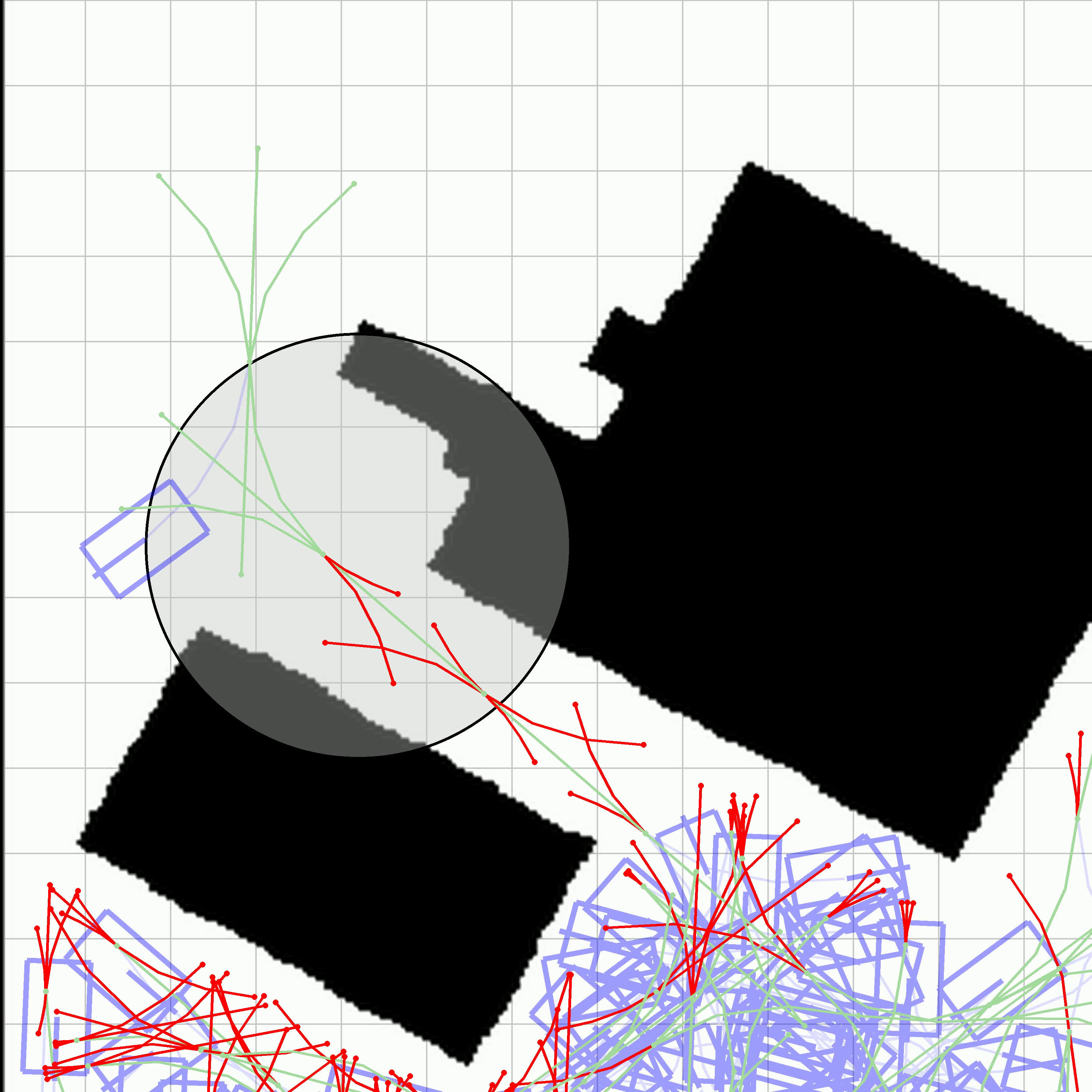
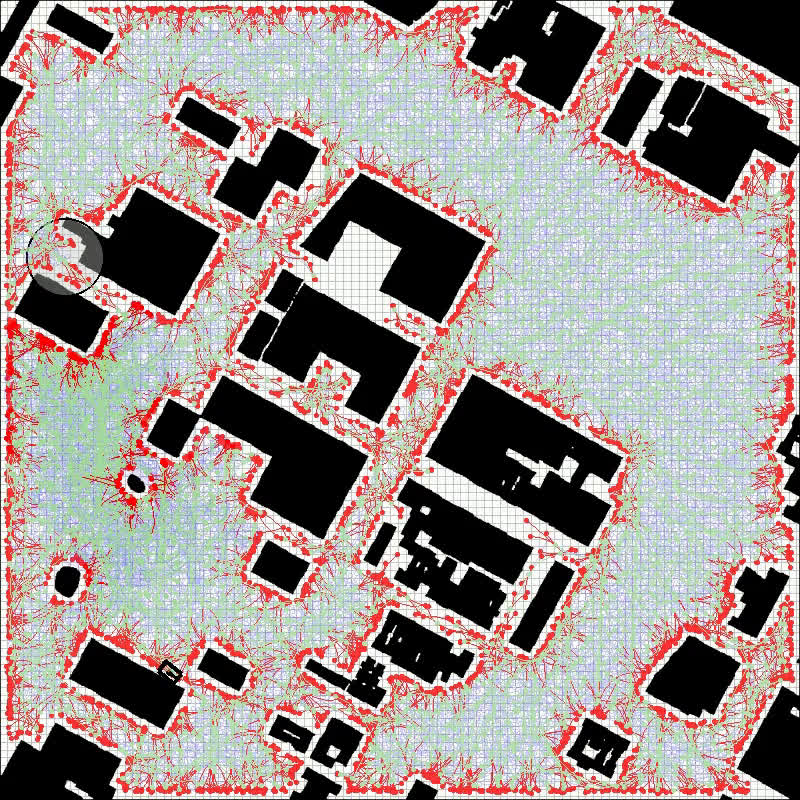
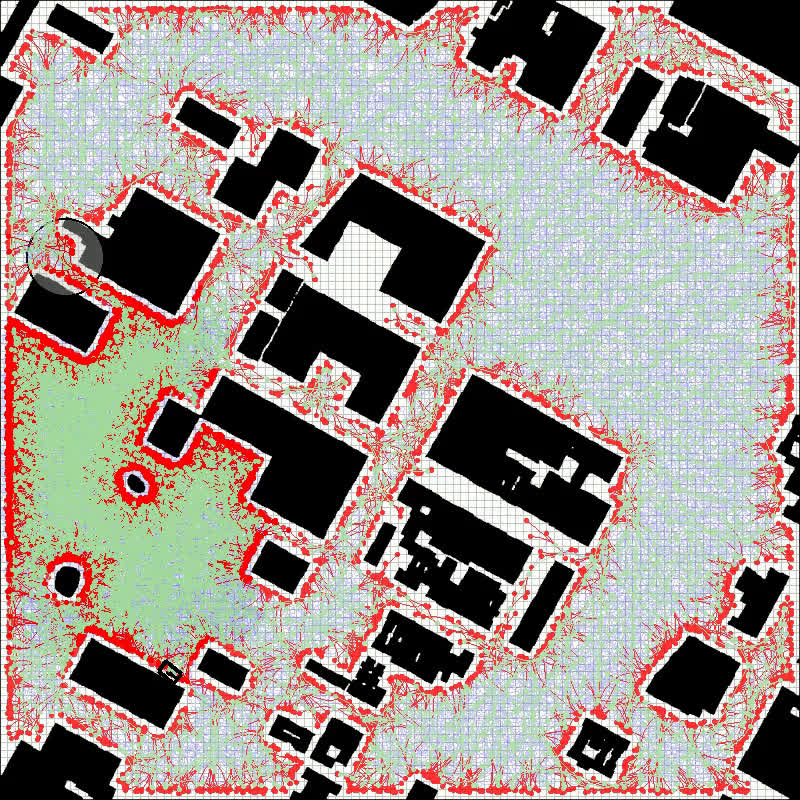
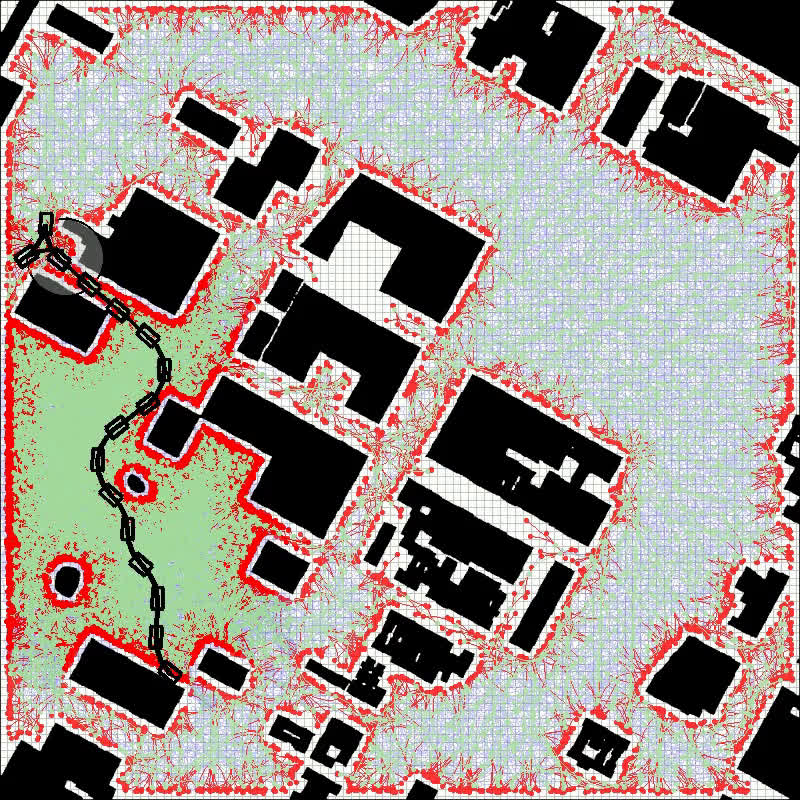
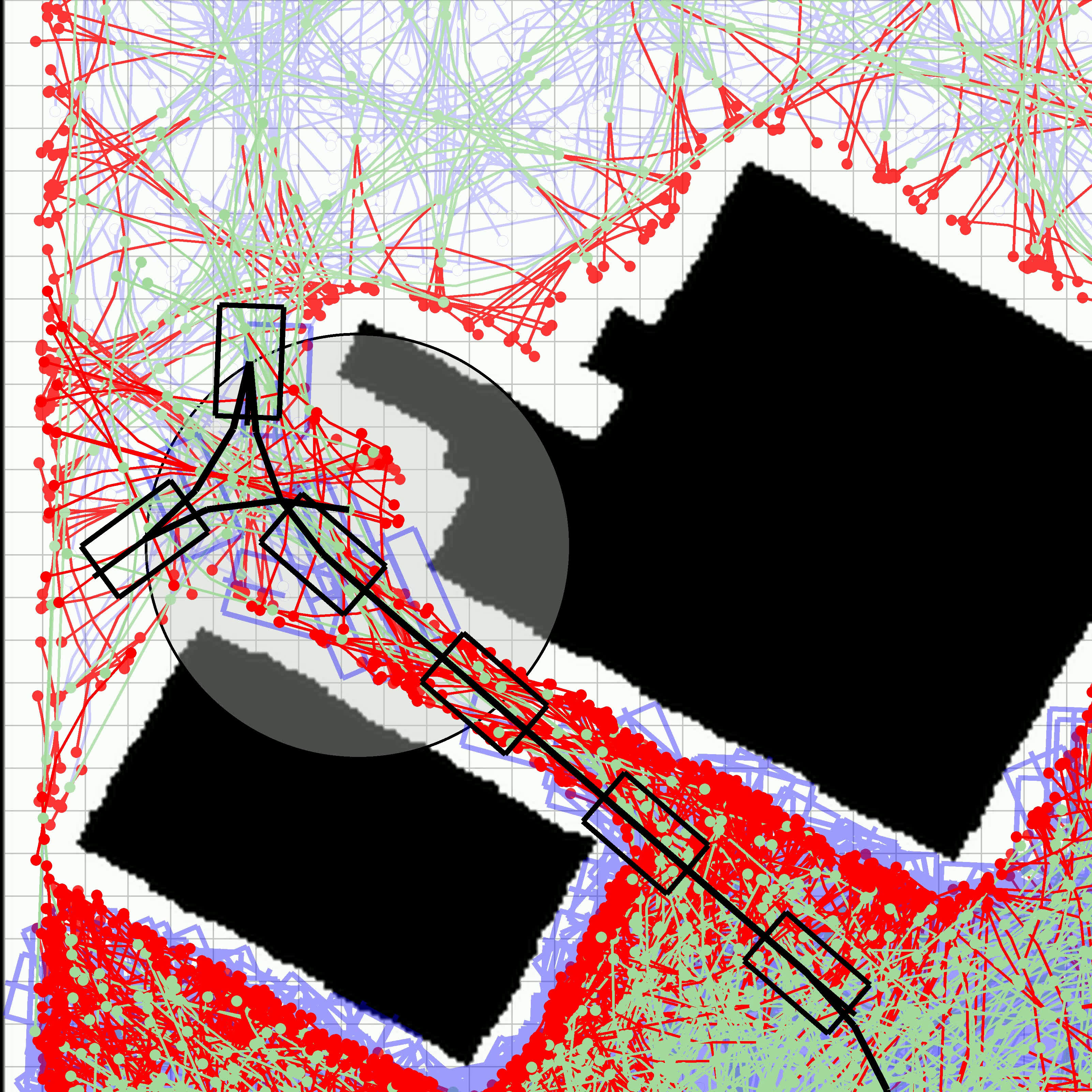
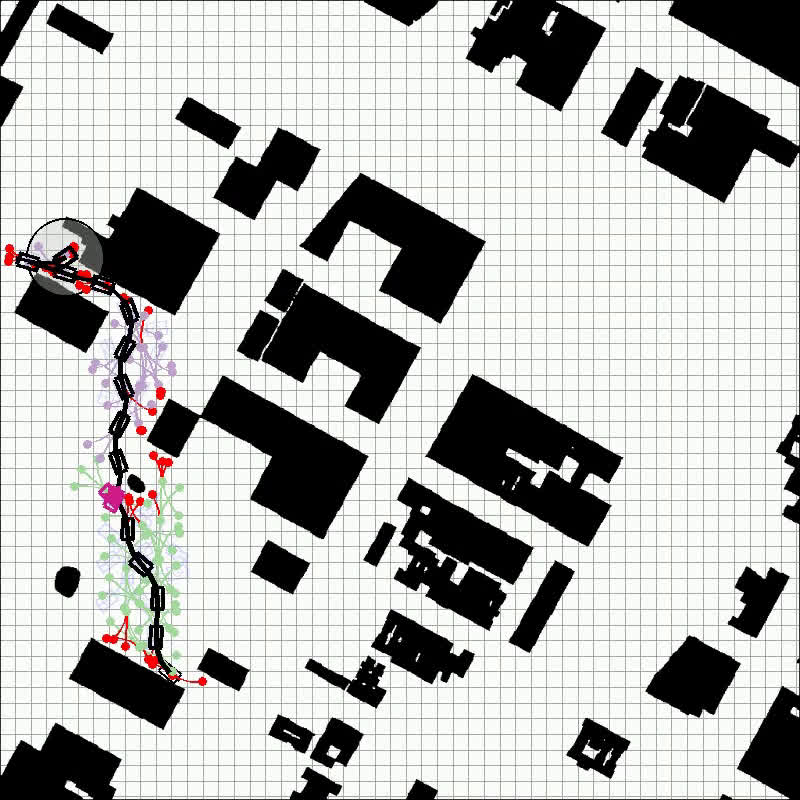
Figure 1: IGHA
search starts, freezing a vertex near the solution, leading to excessive expansions.*
Bi-IGHA*: Bidirectional Design and Algorithm
Bi-IGHA* operates two synchronized IGHA* search processes: one forward from the start set, one backward from the goal set. Both maintain independent resolution sequences and priority queues, exchanging information to (i) update branch-and-bound costs and (ii) detect "near-meets"—states within a local controllability radius (RLCR) between the two trees. Upon a near-meet, the algorithm stitches together partial forward and backward paths, computes the associated cost, and updates the global best path solution if monotonic improvement is achieved. The approach preserves IGHA*'s theoretical guarantees on monotonic cost improvement and termination, while leveraging bidirectionality to overcome the frozen-vertex barrier.
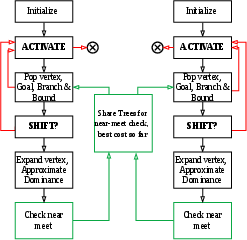
Figure 2: Bi-IGHA
runs two anti-parallel IGHA* searches with information sharing, checking for near-meets between the trees.*
Bi-IGHA* maintains the following properties given admissible heuristics, finite branching, and strictly positive edge costs:
- Monotonic Cost Improvement: The best solution cost is strictly non-increasing; each new path via a near-meet or direct expansion can only improve or match prior solutions.
- Finite Termination: With at least one solution found, the search terminates in a finite number of expansions due to bounded branching and cost.
- Bidirectional Mitigation: The structural separation between forward-only and bidirectional search is formalized via planning instances where IGHA* encounters Ω(∑iMi) expansion blowup due to multiple frozen bottlenecks, while Bi-IGHA* reduces this to O(1) extra expansions with timely near-meets.
Empirical Evaluation and Numerical Results
The paper reports extensive experimentation on kinematic and kinodynamic planning in R3, R4, and R6 state spaces. Bi-IGHA* consistently achieves equivalent or superior solution quality at lower resolution levels, requiring significantly fewer expansions than IGHA*.
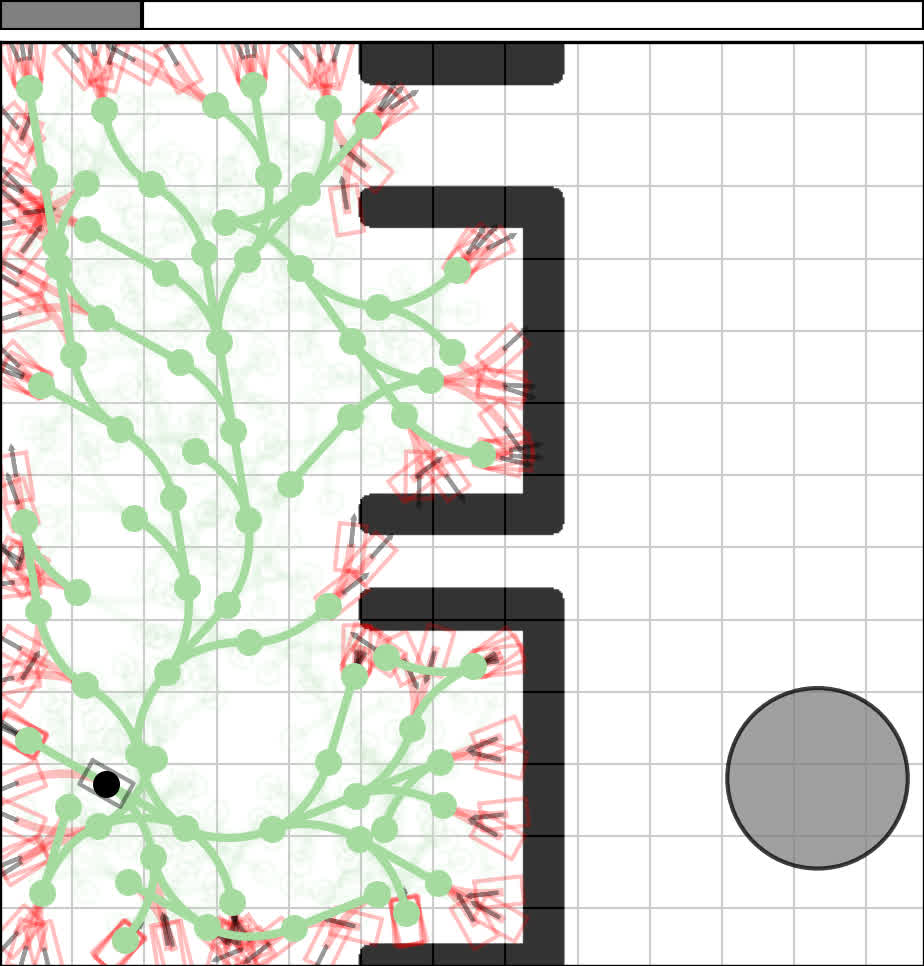
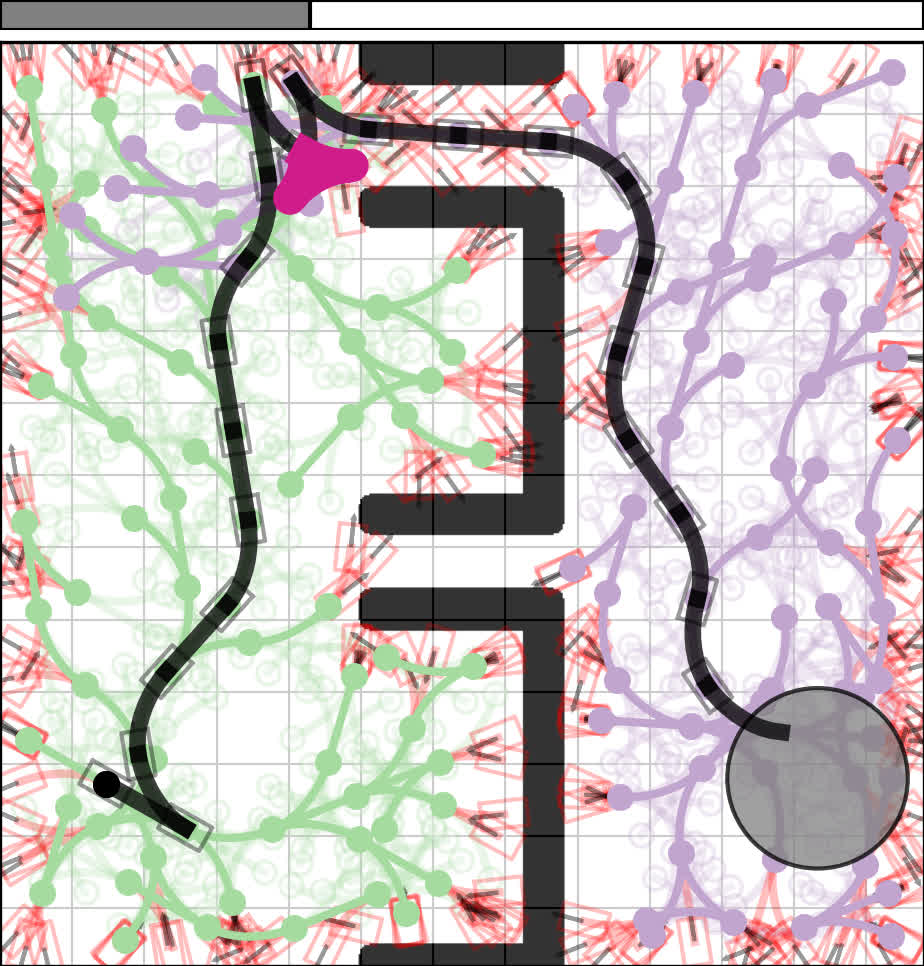
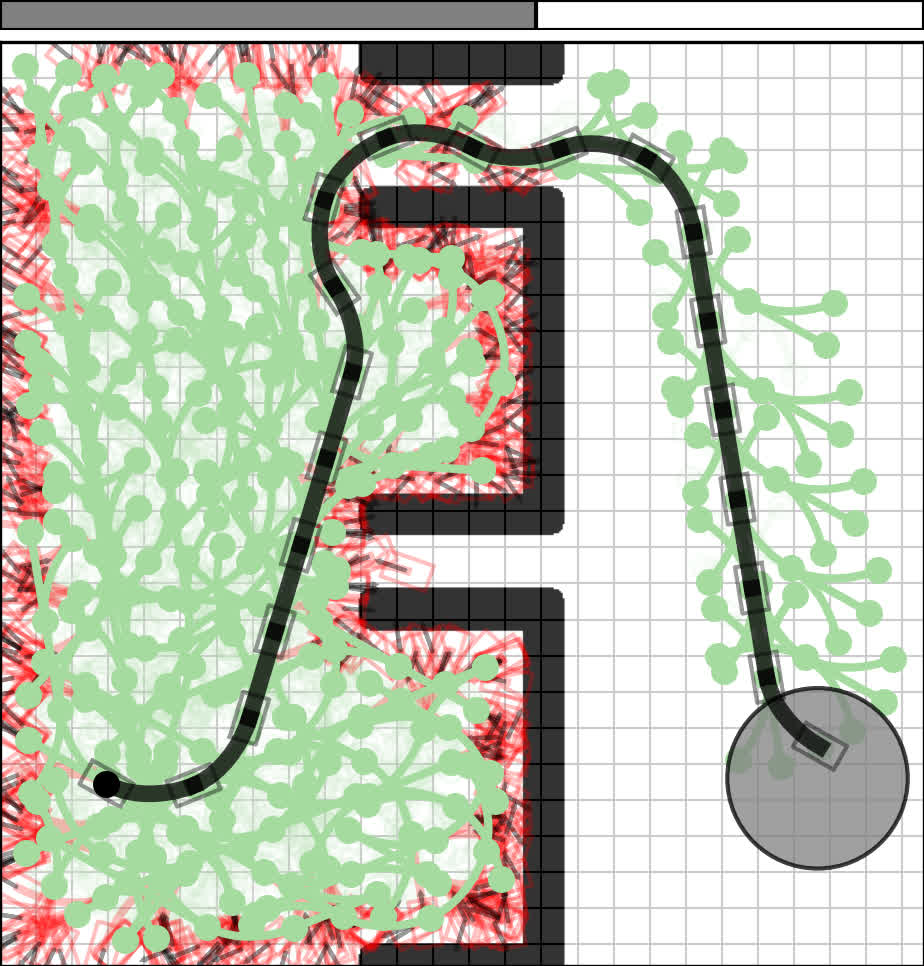
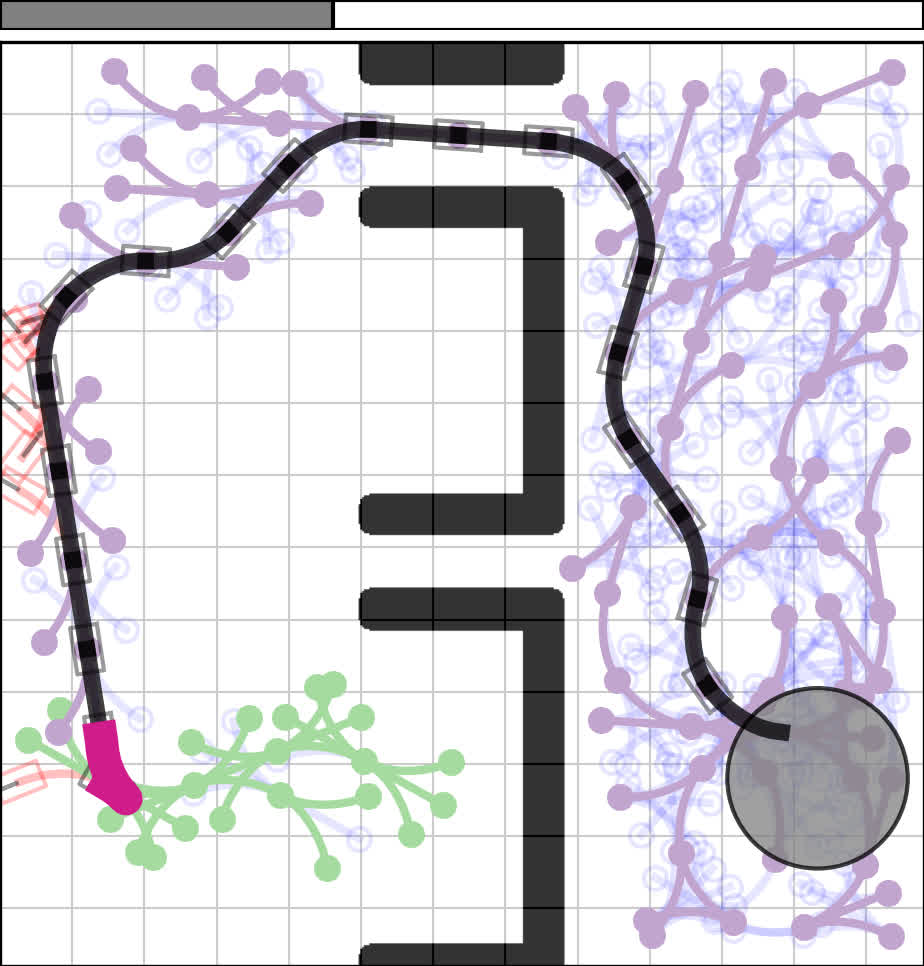
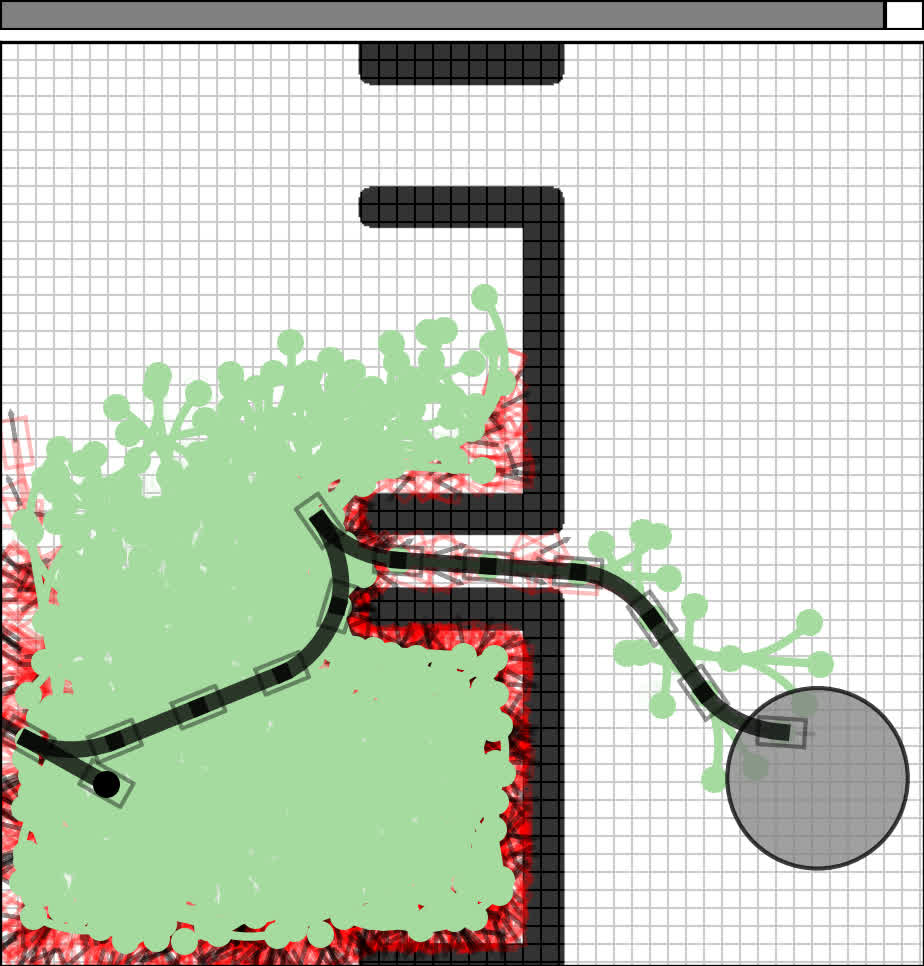
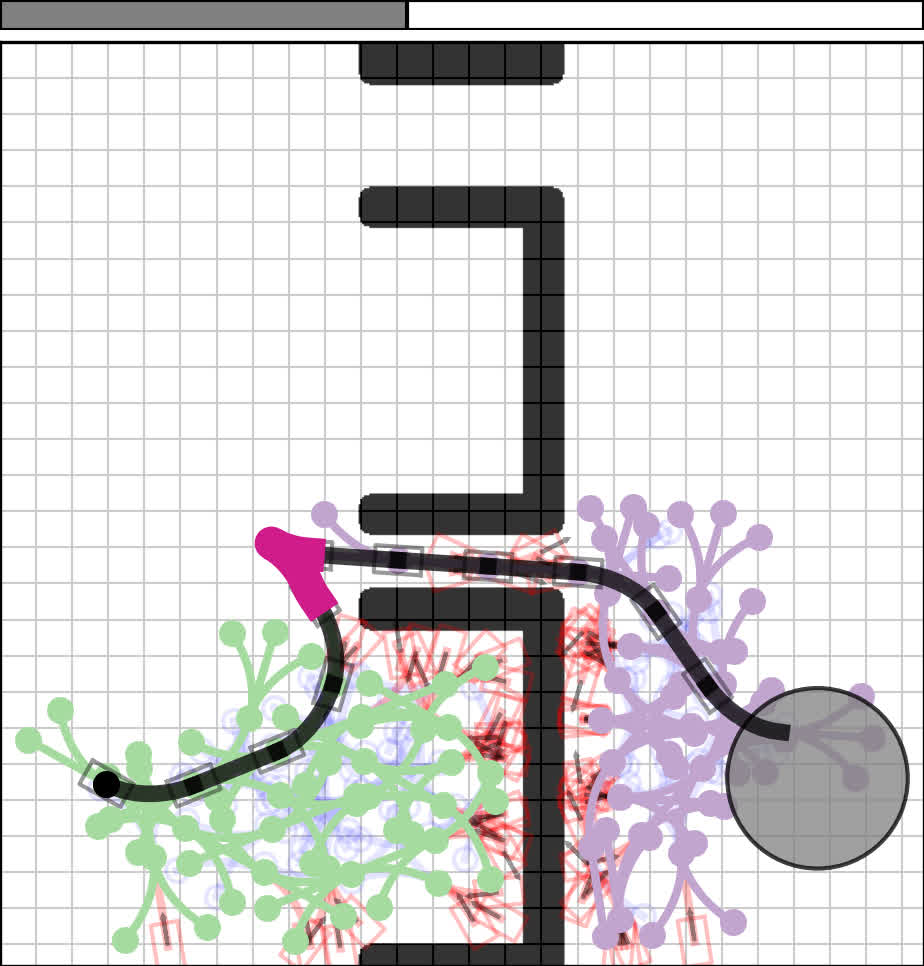
Figure 3: Bi-IGHA
attains equivalent solutions at lower discretization levels vs. unidirectional IGHA*, manifesting bidirectional mitigation.*
Quantitatively, Bi-IGHA* achieves order-of-magnitude speedup relative to IGHA*, with empirical probability p^(Speedup>1) exceeding 0.5 for both first-found and best-cost solutions. As the controllability radius RLCR increases, the likelihood and magnitude of speedup improve.
An unexpected phenomenon is highlighted: measured effective branching factor B∗ for Bi-IGHA* sometimes exceeds unity, contradicting conventional bidirectional search theory, due to structural difference and bidirectional mitigation of frozen vertex effects.
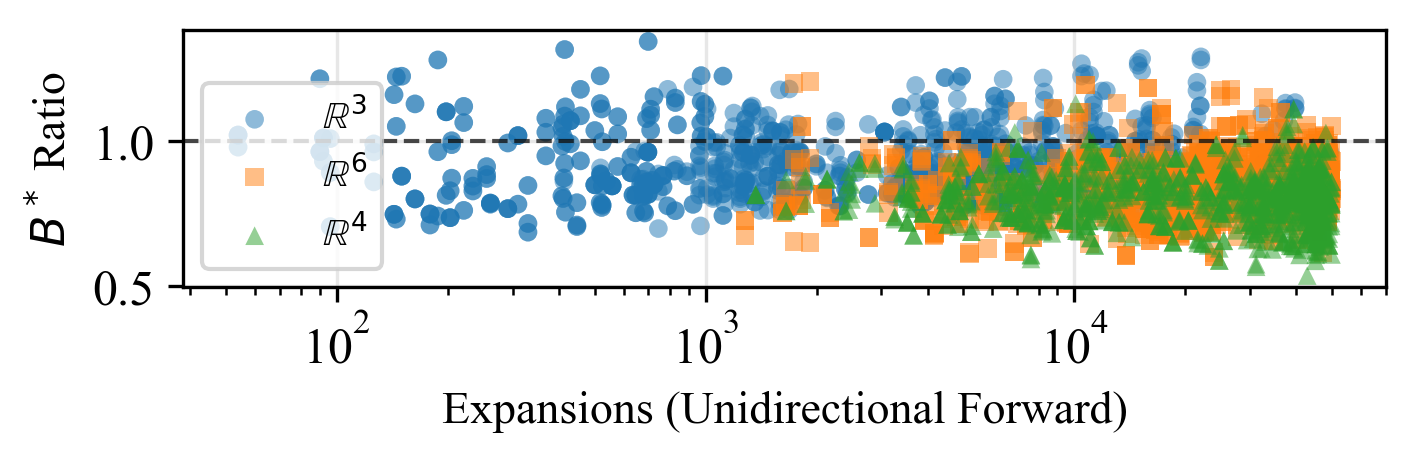
Figure 4: B∗ scatter plot for Bi-IGHA
vs. IGHA*; bidirectional mitigation enables
Ω(∑iMi)0.*
Further empirical results show Bi-IGHA* consistently finds solutions at lower levels than IGHA*, both in first and best path cost scenarios. Mission-critical closed-loop evaluations using a kinodynamic car and Model Predictive Path Integral (MPPI) controller on challenging off-road maps demonstrate that Bi-IGHA* maintains high playback success and cost metrics under tight computational budgets, outperforming IGHA* in reliability and solution quality.
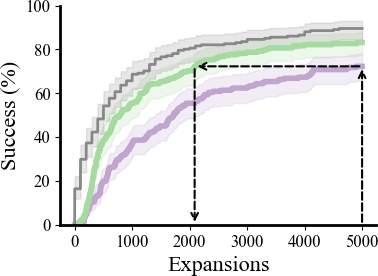
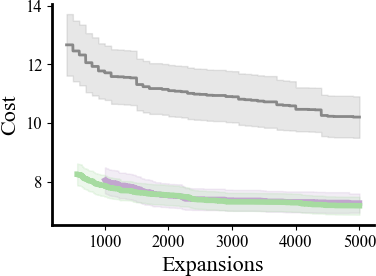
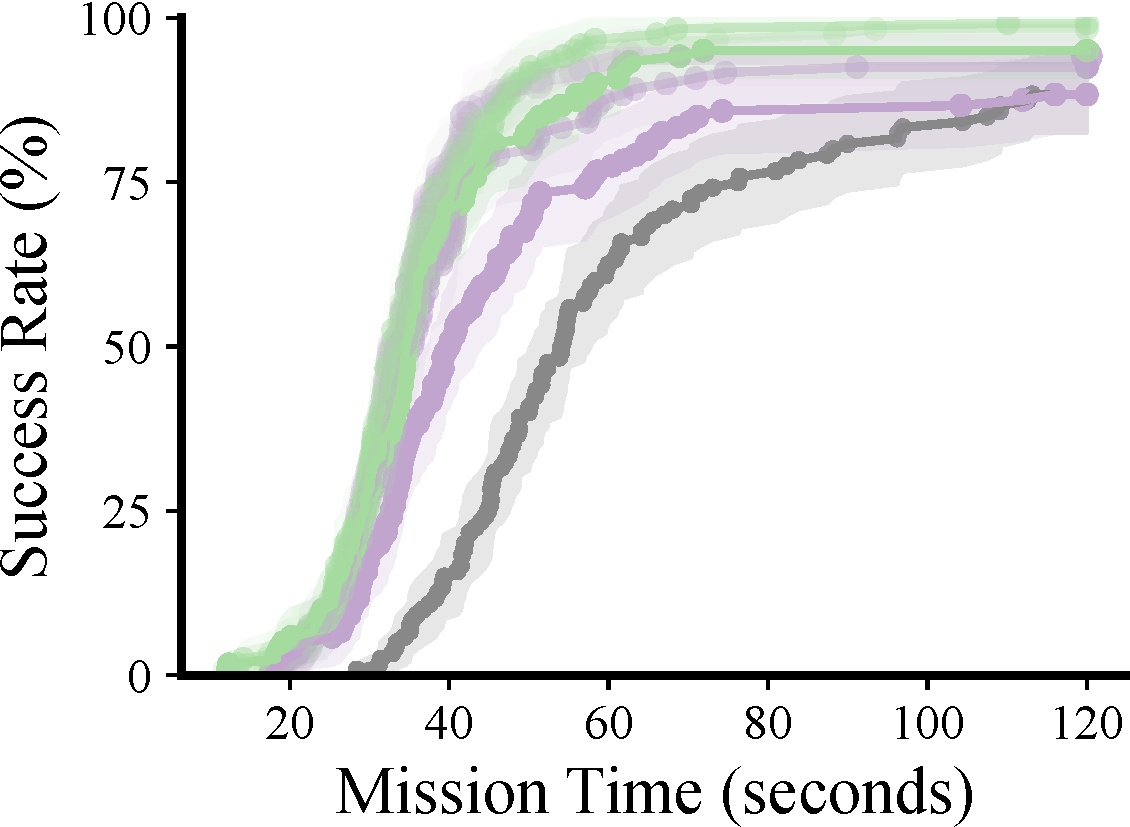
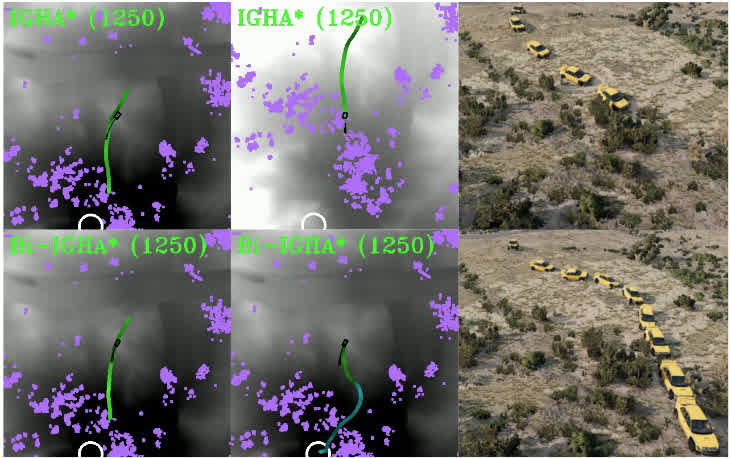
Figure 5: Playback success rate in closed-loop settings, demonstrating Bi-IGHA
's robustness under constrained expansions.*
Practical and Theoretical Implications
Bi-IGHA* offers a framework for anytime kinodynamic planning suitable for dynamic, high-dimensional environments where precomputed state lattices are invalidated by changing terrain or geometry. The approach is theoretically grounded, algorithmically simple, and empirically robust, delivering substantial efficiency improvements without compromising solution quality or guarantees.
The reliance on a blackbox NearMeet function—detecting and connecting trajectory segments within Ω(∑iMi)1—is flexible, allowing integration with domain-specific connection verification (e.g., local trajectory optimization, collision checking). The independence of resolution sequences for each tree further enhances adaptability to heterogeneous search spaces.
The bidirectional mitigation of the frozen vertex barrier suggests broader applicability for incremental search frameworks in domains affected by local suboptimality masking, and implies that bidirectional coordination can fundamentally alter search complexity in high-dimensional settings.
Future Directions
Areas for future research include:
- Improved NearMeet implementation leveraging more nuanced local connection verification and adaptive radius selection.
- Asymmetric expansion rates or strategy between forward and backward trees to enhance search efficiency or reliability.
- Integration with sampling-based and learned heuristic methods for greater scalability in especially complex environments.
- Extending bidirectional incremental frameworks to multiobjective or stochastic planning where local dominance conditions may vary dynamically.
Conclusion
Bi-IGHA* delivers a principled, efficient solution to high-dimensional kinodynamic motion planning by generalizing IGHA* to the bidirectional setting and providing mitigation against resolution-induced frozen vertex barriers. Empirical results validate strong speedup, consistent solution quality, and robust closed-loop applicability. The framework's design, guarantees, and adaptability position it as a valuable tool for planning under complex dynamics and evolving environmental constraints.