- The paper presents the explicit construction of an n=3 gravitational instanton using a 4-soliton transformation and detailed rod structure analysis.
- It employs algebraic symmetry conditions to ensure asymptotic flatness, vanishing NUT charge, and regularity of the solution.
- Numerical and analytical characterizations confirm non-Hermitian geometry and reveal topological features analogous to connected sums of complex projective spaces.
New Asymptotically Flat Toric Gravitational Instanton: Explicit Construction and Properties
Background and Motivations
Gravitational instantons are complete, non-singular, positive-definite solutions to the vacuum Einstein equations, and are central to the Euclidean path-integral formulation of quantum gravity. Asymptotically flat (AF) gravitational instantons form a special subclass characterized by cubic volume growth and a boundary at infinity homeomorphic to S1×S2. Historically, only the Euclidean Kerr instanton (with the Schwarzschild case as a degenerate limit) was known, leading to conjectures of uniqueness. The discovery of the Chen–Teo instanton challenged this assumption, revealing the non-uniqueness and sparking renewed study into the class of AF instantons.
The rod structure formalism, based on U(1)×U(1) isometry, provides a systematic classification of toric gravitational instantons. Recent work proves that the Kerr and Chen–Teo instantons are the first two in an infinite sequence of AF toric gravitational instantons indexed by a parameter n [Li & Sun, (Li et al., 21 Jul 2025)]. However, explicit constructions beyond n=2 had been lacking prior to this work.
Construction via Euclidean Double Kerr-NUT Solution
This paper constructs the n=3 case, yielding a new two-parameter AF toric gravitational instanton with four turning points in its rod structure. The construction is based on the Euclidean double Kerr–NUT solution, obtained through a 4-soliton transformation on Euclidean flat space using the inverse scattering method of Belinski and Zakharov. The explicit metric is provided in terms of Weyl–Papapetrou coordinates, with seven physical parameters arising from soliton positions (zk) and Belinski–Zakharov parameters (Ck).
Rod structure analysis reveals five rods separated by four turning points (z1,…,z4). Direction vectors ℓk for each rod are written as explicit functions of the parameters (see Eqn. (rod vectors) and below). To ensure asymptotic flatness and regularity, two key symmetry conditions are imposed:
- Vanishing NUT Charge: ℓ1=ℓ5.
- Equality of Horizon Surface Gravities/Angular Velocities: U(1)×U(1)0.
These are satisfied by explicit algebraic constraints among the parameters, notably U(1)×U(1)1, U(1)×U(1)2, U(1)×U(1)3, and U(1)×U(1)4. Additional regularity is enforced by requiring the rod vectors satisfy U(1)×U(1)5 (analogous to Taub-bolt instanton structure), leading to an implicit fifth-order polynomial constraint on U(1)×U(1)6 and U(1)×U(1)7, numerically solved for U(1)×U(1)8.

Figure 1: The rod structure of the Euclidean double Kerr-NUT solution, detailing the sequence of rods and their associated vectors, essential to classifying the instanton's topology.
Analytical and Numerical Characterization
The parameter space is primarily controlled by U(1)×U(1)9, with n0 as a scaling freedom. Numerical plots demonstrate the dependence of the internal parameters—n1 and the ratio n2—on n3, verifying the parameter range and regularity of the solution. As n4, the solution degenerates into the Taub-bolt instanton with negative NUT charge; as n5 and n6, the instanton becomes flat space.
Singularity analysis is performed numerically, confirming that n7 and n8 remain positive-definite everywhere except at turning points (where the latter vanishes), ensuring absence of curvature singularities.
Topological and Geometric Implications
The rod structure, after identification along infinity, matches that of n9, i.e., the connected sum of complex projective plane and its orientation reversal, minus a circle n=20. Euler number n=21 and Hirzebruch signature n=22 follow directly from rod analysis and match known topologies.
A crucial property is that the solution is the first explicit example of a Ricci-flat gravitational instanton that is not Hermitian, disproving earlier conjectures restricting AF instantons to Hermitian geometry [Aksteiner et al., (Aksteiner et al., 2023)]. Results from Li and Sun (Li et al., 21 Jul 2025) theoretically affirm that non-Hermitian AF toric instantons exist when the number of turning points exceeds three.
Practical and Theoretical Implications
From a quantum gravity standpoint, AF gravitational instantons contribute to path integrals, affecting partition function calculations in the grand canonical ensemble with fixed temperature and angular velocity. Given their explicit construction, such instantons can be used in precise semiclassical analyses and to compute corrections to quantum gravity amplitudes.
Further, the success of the inverse scattering method in constructing the Chen–Teo (n=23) and the current (n=24) instantons suggests scalability to higher n=25 via multi-soliton transformations—although the complexity grows rapidly. The explicit features and topology provide a bridge to twistor theory, topological invariants, and classification efforts within differential geometry.
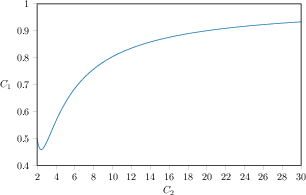
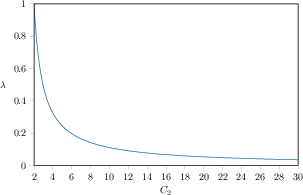
Figure 2: Parameter dependence plots showing (a) n=26 vs. n=27 and (b) n=28 vs. n=29, numerically verifying the structure of the solution space and regularity conditions.
Conclusion
This work provides the explicit metric and classification for the third member of an infinite sequence of AF toric gravitational instantons, characterized by four turning points and non-Hermitian geometry. The construction demonstrates intricate algebraic and topological properties, setting the stage for advanced exploration in quantum gravity and differential geometry. Future developments may include further explicit constructions for higher n=30, analytic study of moduli spaces, and applications in semiclassical gravitational path integrals.