- The paper demonstrates that strong turbulence creates extended filament networks that enhance cold gas mass inflow by 2–3 orders of magnitude at meso-scales.
- It employs GPU-accelerated 3D hydrodynamic simulations with AMR to track the transition from halo condensation to parsec-scale SMBH feeding with high temporal variability.
- Results reveal that while large-scale turbulence causes diverse inflow rates, SMBH accretion converges at micro-scales, supporting maintenance-mode feedback.
Chaotic Cold Accretion Variability and Kinematics in Turbulent Group-Scale Halos
Introduction
The paper "BlackHoleWeather -- Chaotic cold accretion across the meso-scale: Variability and kinematics" (2605.27504) presents a comprehensive numerical investigation into the multiscale physics of supermassive black hole (SMBH) accretion in turbulent, stratified group-scale halos. The framework is rooted in the Chaotic Cold Accretion (CCA) paradigm, where multiphase gas condensation and stochastic feeding dominate the accretion process, mediated by turbulence-driven density perturbations. Through high-resolution GPU-accelerated 3D hydrodynamic simulations with adaptive mesh refinement (AMR), the authors probe the transition from halo precipitation to parsec-scale inflow, quantifying temporal variability, spatial transport, and kinematic structure under different turbulence regimes.
Multiphase Gas Morphologies and Turbulence Impact
The simulations employ hot halos in hydrostatic equilibrium with radiative cooling, turbulence driven via an Ornstein-Uhlenbeck process, and a radially resolved grid covering tens of kpc to sub-pc scales. Two turbulence regimes are considered: strong (M∼0.4) and weak (M∼0.15).
The results show that turbulence strength profoundly influences the morphology of multiphase gas. Strong stirring (stormy regime) sustains extended, fragmented filament networks, enhancing cold gas mass by $2-3$ orders of magnitude and amplifying inflow at kpc and meso-scales. Weaker turbulence (rainy regime) yields a more centrally concentrated, less fragmented cold component (Figure 1).
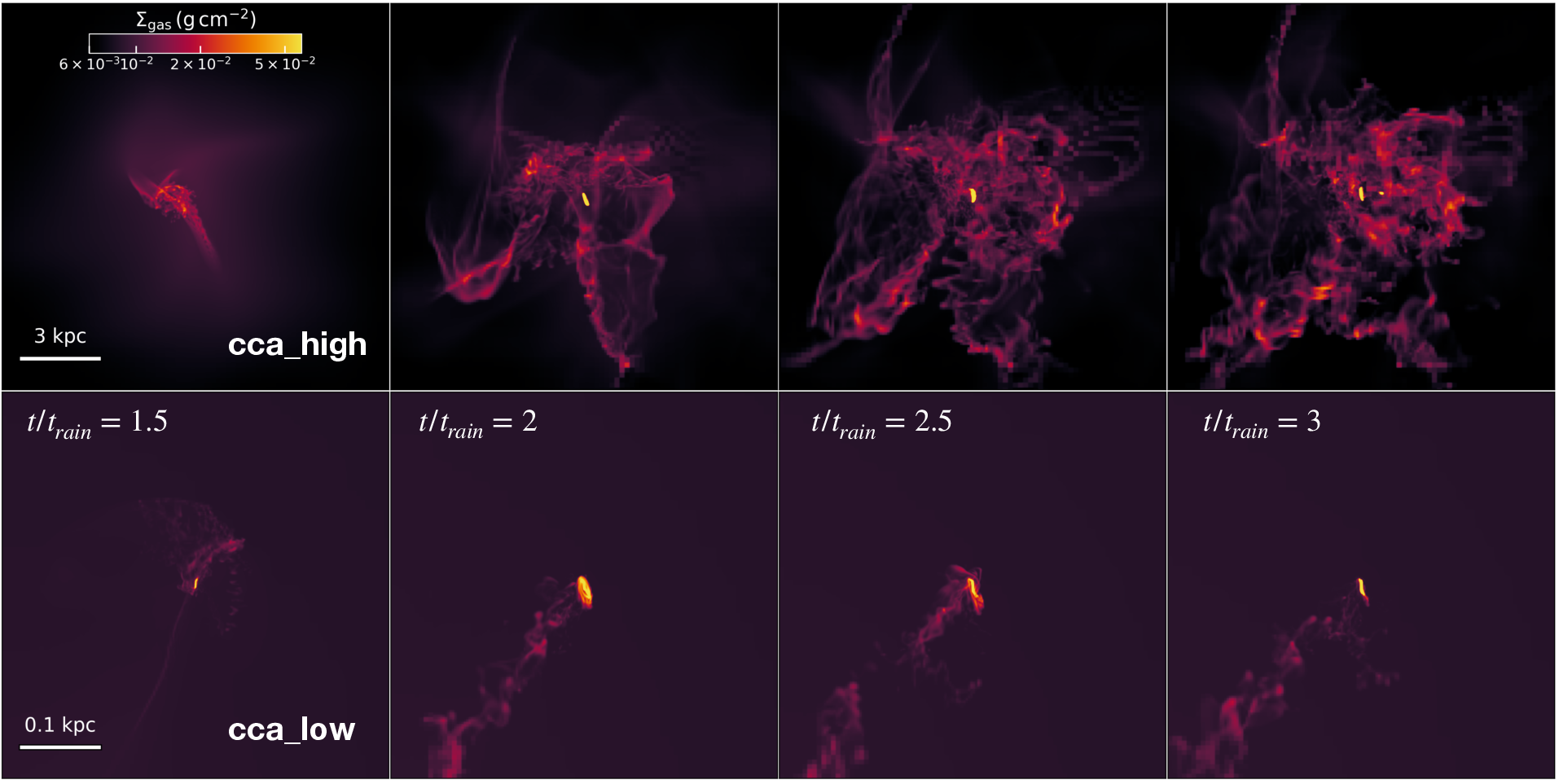
Figure 1: Evolution of projected gas surface density Σgas in stormy/strong and rainy/weak turbulence regimes, illustrating the extent and fragmentation of multiphase structures.
Radial Inflow Structure and Mass Transport
A central finding is the scale-dependent structure of CCA: strong turbulence produces a meso-scale inflow enhancement at $0.1-1$ kpc, reflecting efficient, chaotic radial transport. However, despite order-of-magnitude divergences in cold inflow at larger scales, SMBH accretion rates converge at the smallest radii, indicating that accretion is regulated primarily by local meso-scale processes.
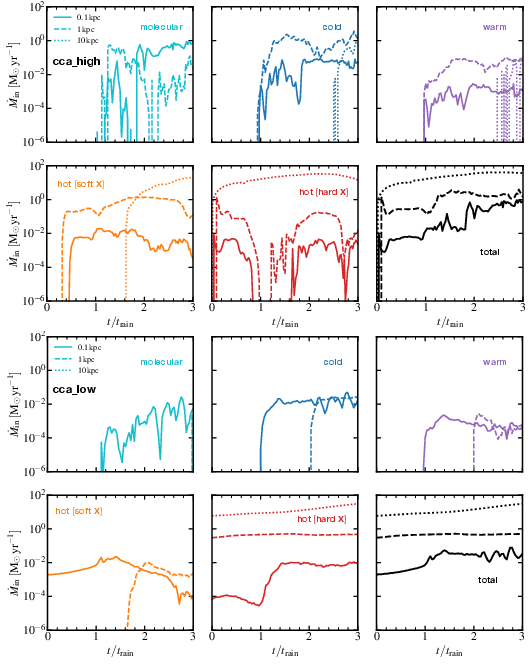
Figure 2: Multiphase mass inflow rates at various radii and phases, showcasing enhanced meso-scale inflow in the stormy regime and more centrally concentrated transport in the rainy regime.
The average mass inflow rates as a function of radius highlight the meso-scale bump in the stormy case, a key diagnostic differentiating between turbulent regimes (Figure 3).
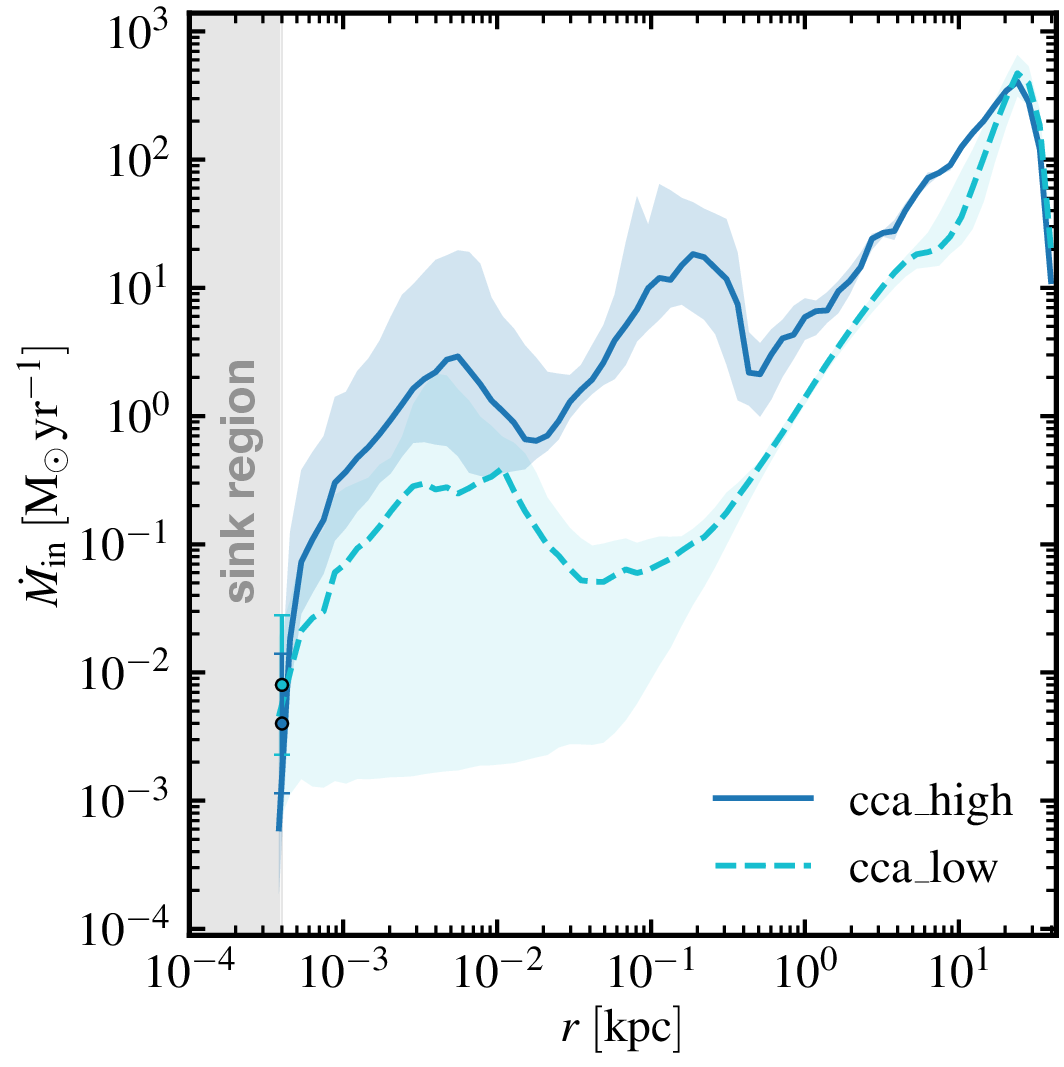
Figure 3: Radial profiles of mass inflow rate in stormy (solid) and rainy (dashed) CCA, with shaded regions indicating 1σ temporal dispersion and the sink region marked.
SMBH Accretion Variability and Statistical Properties
Both turbulence-driven and cooling-driven runs display accretion rates strongly super-Bondi, with pronounced burstiness and multi-dex variability driven by chaotic interactions among cold clumps and filaments (Figure 4).
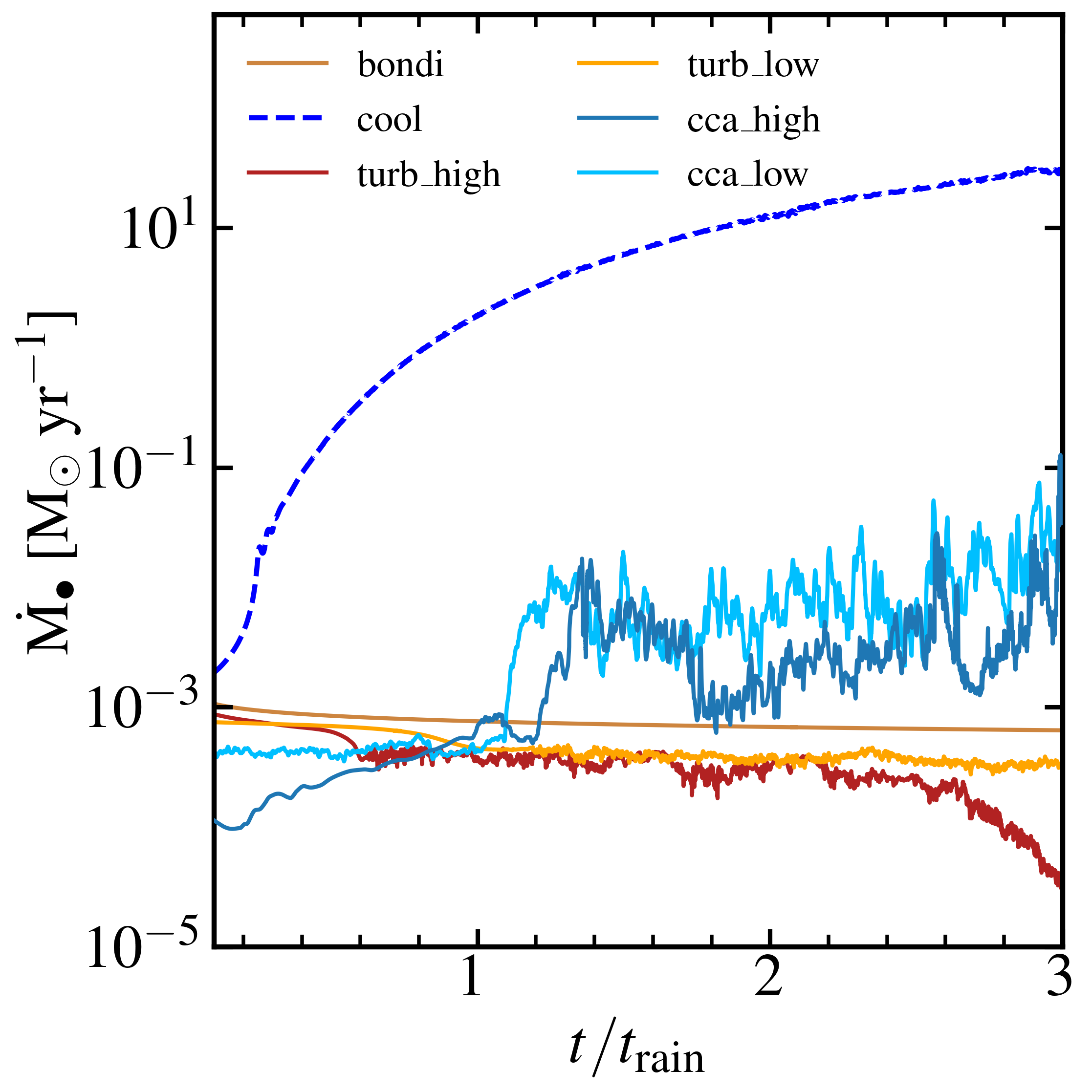
Figure 4: SMBH accretion rate M∙˙ over normalised time, comparing stormy/rainy CCA and control runs, demonstrating chaotic high-amplitude variability in CCA.
The Eddington-normalised accretion rate λ=M˙∙/M˙Edd peaks at low values (∼ few ×10−4), consistent with maintenance/radio-mode feedback and supported by broad distribution tails extending towards higher M∼0.150 (Figure 5).
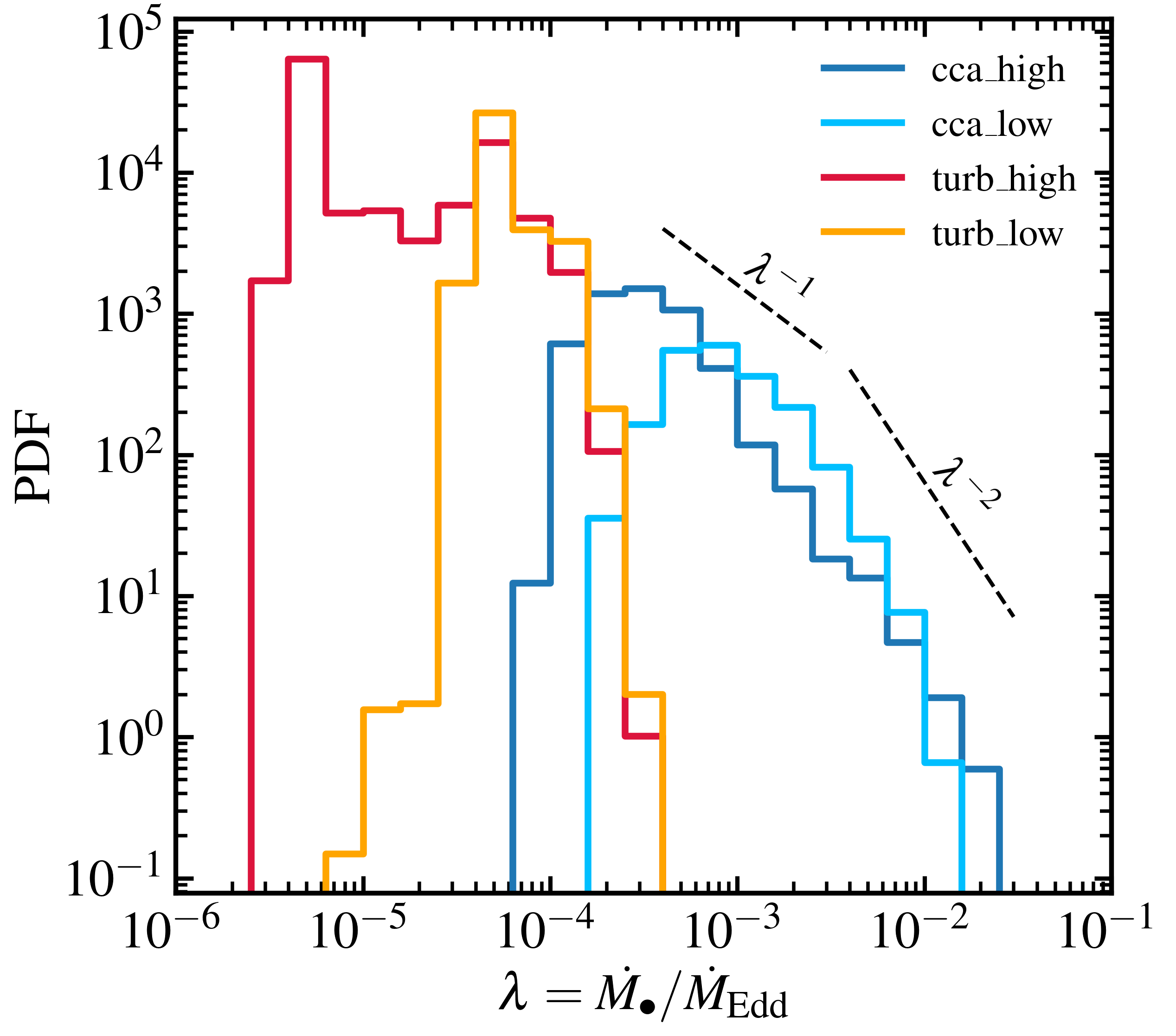
Figure 5: PDFs of Eddington-normalised accretion rates across CCA and turbulence-only runs, indicating predominantly low-accretion states with power-law high-M∼0.151 tails.
Temporal Power Spectra: Pink and Red Noise Signatures
The accretion rate power spectral densities (PSD) follow broken power laws, with pink-noise (M∼0.152) scaling on long timescales and red-noise (M∼0.153) decay at short timescales, with physically interpretable breaks correlating to parsec-scale dynamical times (Figure 6). The stormy regime preserves pink-noise behaviour to higher frequencies, signifying more persistent temporal correlations, whereas the rainy regime dampens short-timescale variability due to efficient mixing.
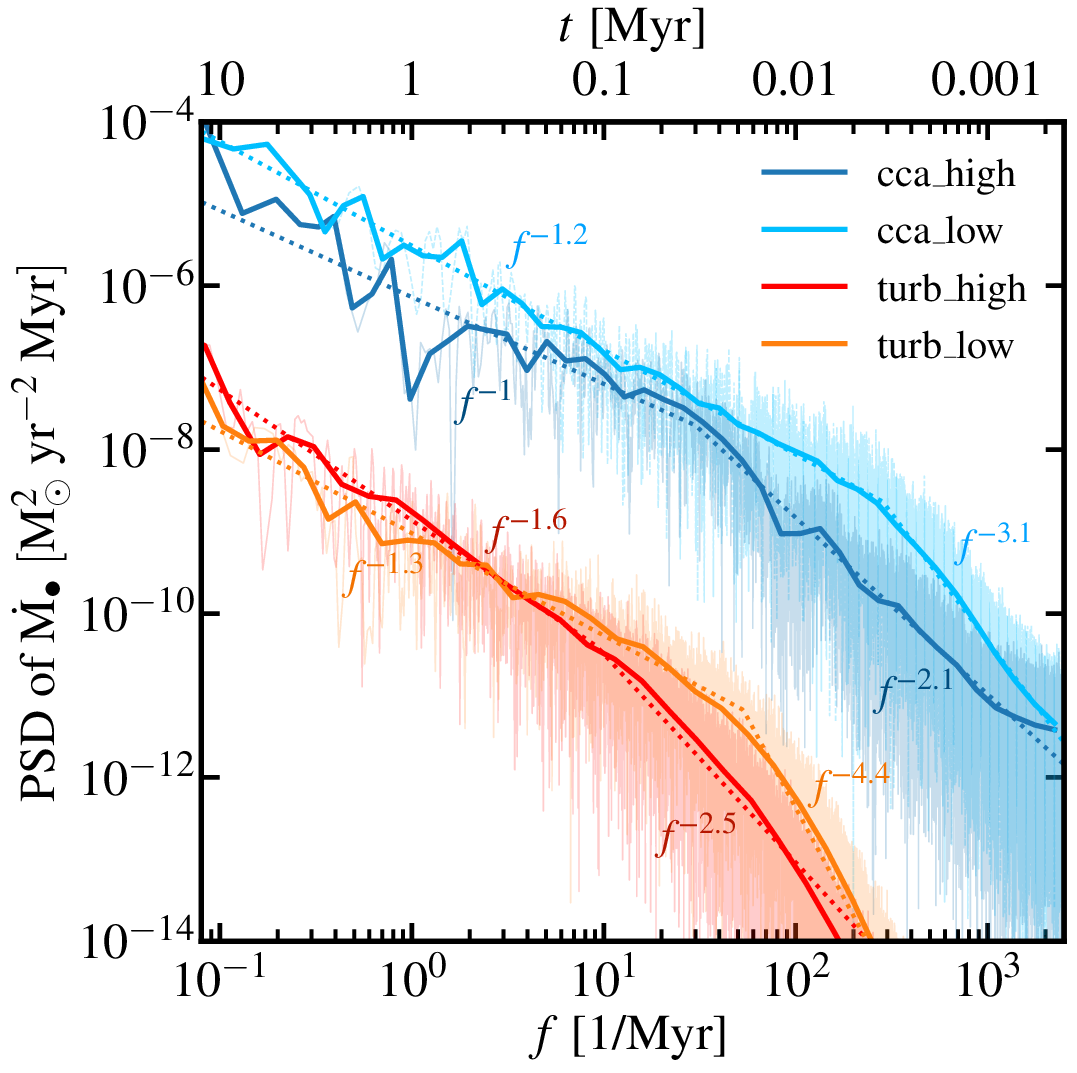
Figure 6: Power spectral density of SMBH accretion rates for stormy/rainy CCA and turbulence-only scenarios, illustrating pink-red noise transitions and break frequencies tied to meso/micro-scale dynamics.
Thermodynamic and Kinematic CCA Diagnostics
The M∼0.154-ratio (M∼0.155) provides a turbulence-based condensation criterion, identifying the soft X-ray phase as the primary gateway for multiphase formation. Stormy weather maintains M∼0.156 over broad radial ranges, enabling extended condensation; rainy weather restricts this behaviour to central regions (Figure 7).
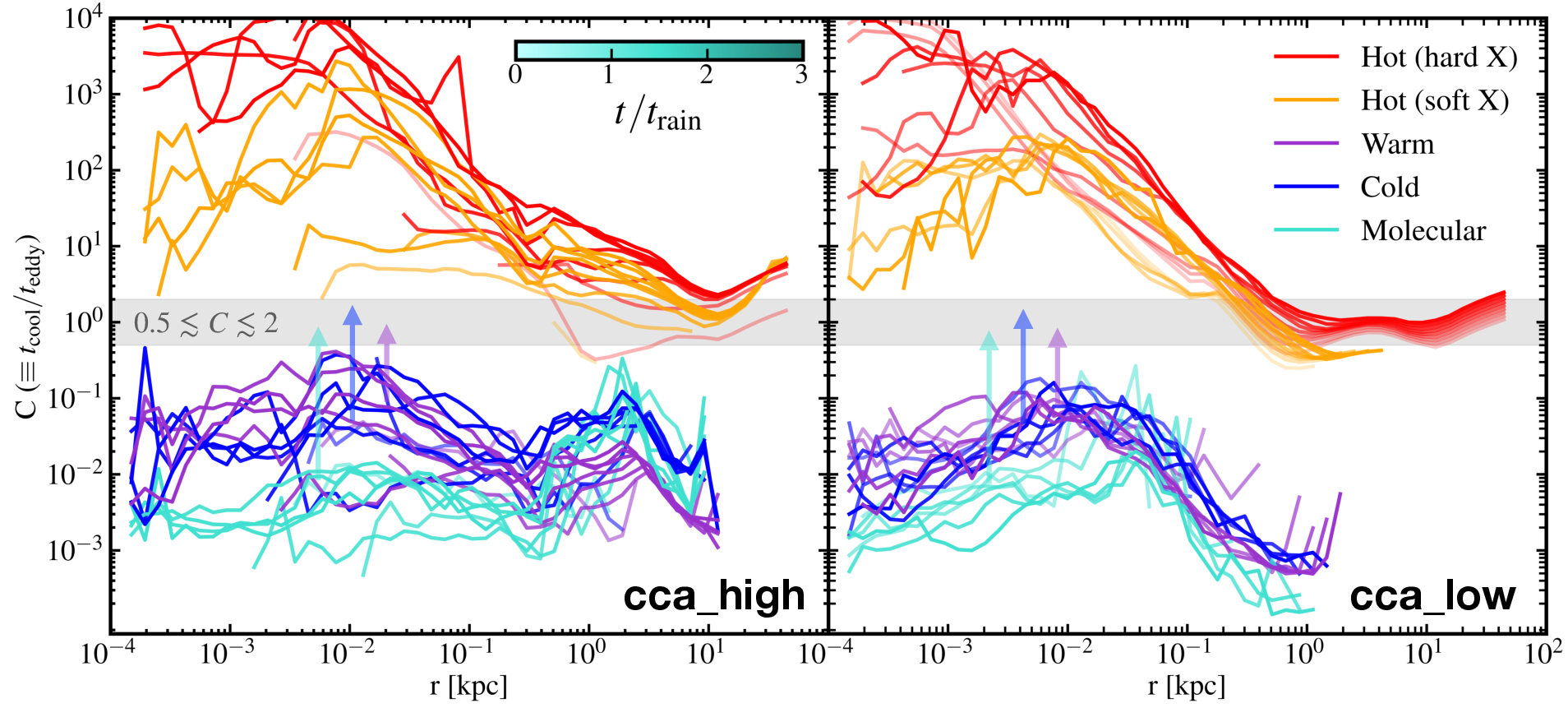
Figure 7: Radial profiles of M∼0.157-ratio across gas phases in both turbulence regimes; condensation is most efficient where soft X-ray gas occupies M∼0.158 band.
K-plots (line-shift vs. line-broadening) serve as robust diagnostics for CCA-driven phase coupling. The stormy regime develops broad, overlapping kinematic loci across meso-scales, while rainy weather yields more stratified, compact kinematics, effectively discriminating between feeding modes (Figure 8).
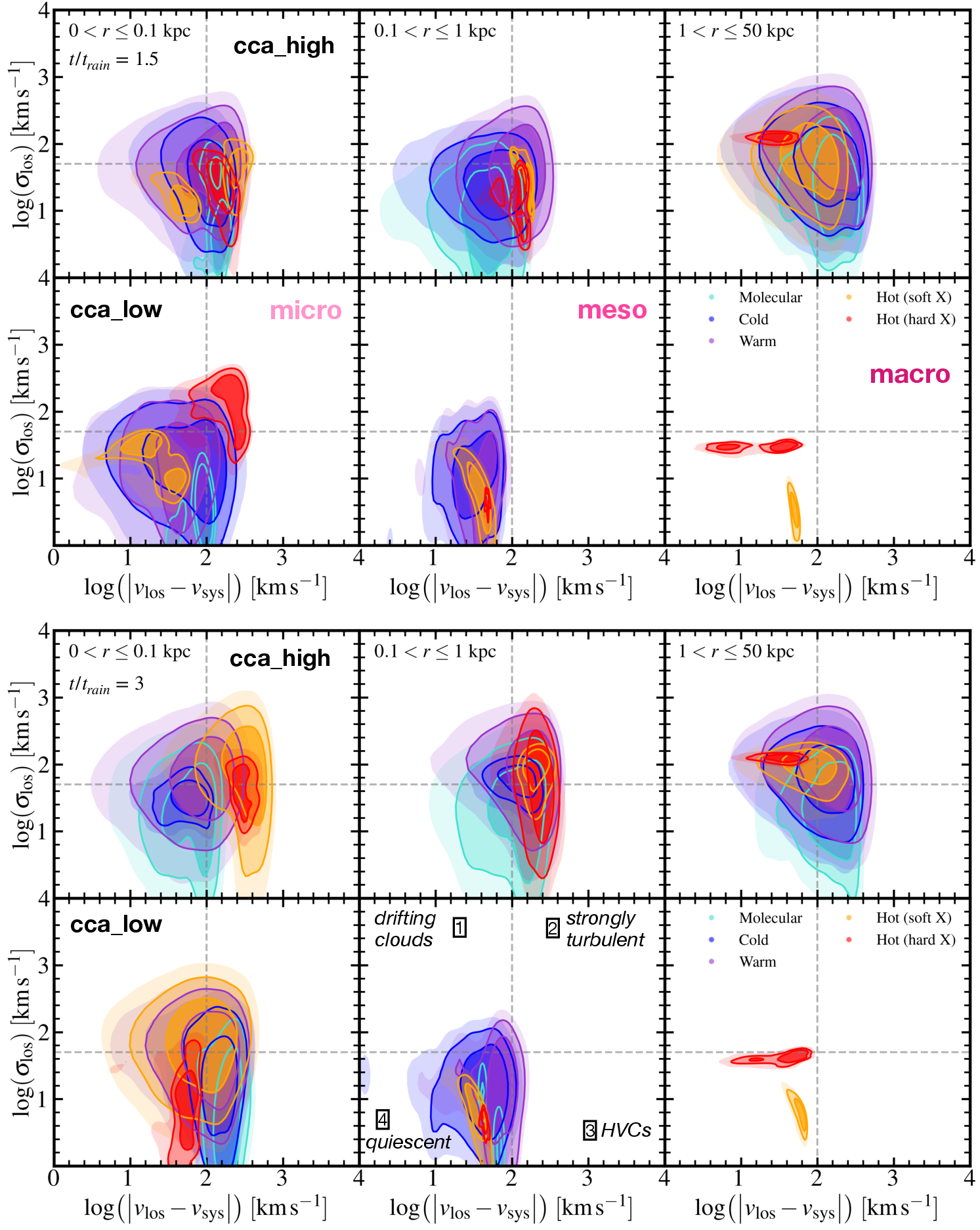
Figure 8: Multi-scale k-plots of gas phases, highlighting broad multiphase coupling in stormy conditions and quiescent, ordered kinematics in rainy regimes.
Observational Implications and Comparisons
Consistent with the CCA paradigm, multi-wavelength observations of group and cluster cores increasingly reveal extended, multiphase filamentary structures, broad velocity dispersions, and spatial/kinematic coupling between hot, warm, and cold phases. The M∼0.159-ratio and k-plot metrics, validated here, are directly applicable to IFU, X-ray, and millimeter spectroscopy, facilitating empirical discrimination between condensation-driven fueling and quiescent accretion. The maintenance-mode accretion with super-Bondi rates and low Eddington ratios naturally reconciles energetic AGN feedback with the prevalence of low-radiative-efficiency systems in the local universe.
Conclusion
This study establishes the meso-scale as the critical bridge in CCA-driven SMBH feeding, mediating spatial transport, temporal variability, and kinematic signatures. Turbulence regulates not only the spatial extent and fragmentation of the multiphase medium but also the damping and coherence of accretion variability. While strong turbulence promotes stormy, extended rain and fragmentation, both regimes ultimately converge to locally regulated (maintenance-mode) feeding at micro-scales. The theoretical and observational diagnostics presented constitute a powerful, unified framework for disentangling the physics of multiphase accretion and AGN self-regulation in realistic, stratified environments.
Future work, including explicit AGN feedback and jet-driven stirring, promises to refine our quantitative understanding of multiphase feeding and variability, with direct ramifications for designing and interpreting multi-wavelength observations of galactic nuclei and cluster cores.

