- The paper demonstrates how AGN jets regulate chaotic cold accretion by altering multiphase gas condensation and stimulating SMBH fueling.
- It employs GPU-accelerated AthenaPK simulations with static mesh refinement to resolve sub-pc gas dynamics over a 100 kpc domain.
- Results reveal that turbulence amplitude governs precipitation morphology, marking transitions between stormy, rainy, and cloudy AGN feedback states.
Jet-Regulated Chaotic Cold Accretion Across the Meso Scale: Advances in Morphology and Thermodynamics
Introduction
The role of mechanical AGN feedback in setting the baryon cycle around supermassive black holes (SMBHs) remains a pivotal challenge in galaxy-group and cluster evolution theory. The "BlackHoleWeather" framework aims to unify the physical description of SMBH accretion and feedback from sub-pc accretion disk scales to group environments, focusing on how jets mediate the chaotic cold accretion (CCA) cycle across the meso scale. This work presents a comprehensive investigation of jet-regulated CCA, emphasizing how turbulence and jet-driven processes reconfigure multiphase gas morphology, thermodynamics, and black hole fueling, thereby advancing the understanding of AGN feedback in realistic multiphase atmospheres (2605.27503).
Simulation Methodology and Physical Prescriptions
The simulations employ AthenaPK, leveraging GPU-accelerated hydrodynamics to resolve ten static mesh refinement levels over a 100kpc box, achieving sub-pc resolution sufficient to model gas dynamics well below the Bondi radius. The initial conditions represent a hot stratified group atmosphere subject to two distinctive turbulence regimes: "high-turb" (M∼0.4) and "low-turb" (M∼0.15), allowing controlled study of turbulence-amplitude effects. Feedback is implemented as a mass-loaded, kinetic, collimated jet self-regulated by the SMBH sink accretion rate. The jet injection zone at the simulation center and its coupling to the ambient medium are explicitly resolved.
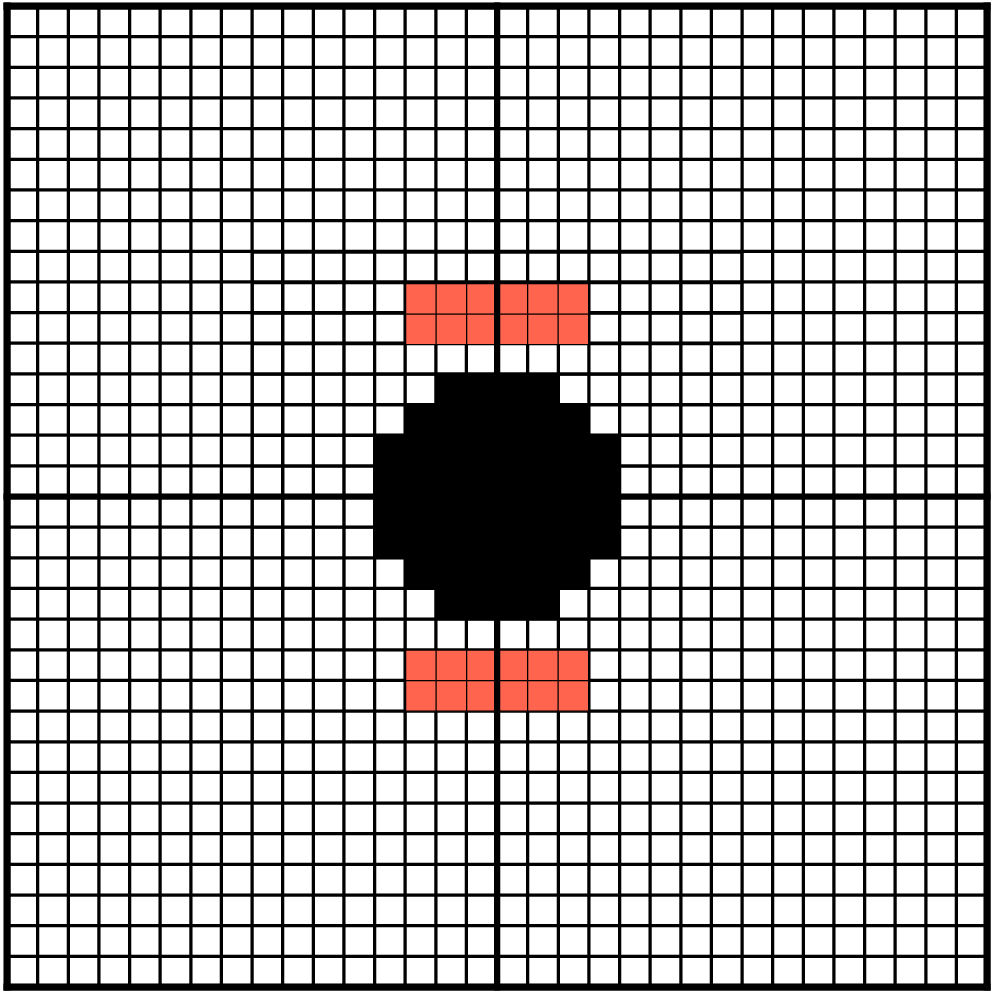
Figure 1: Static mesh refinement grid at the center, indicating the sink region (black) and jet injection zone (orange) at maximum resolution.
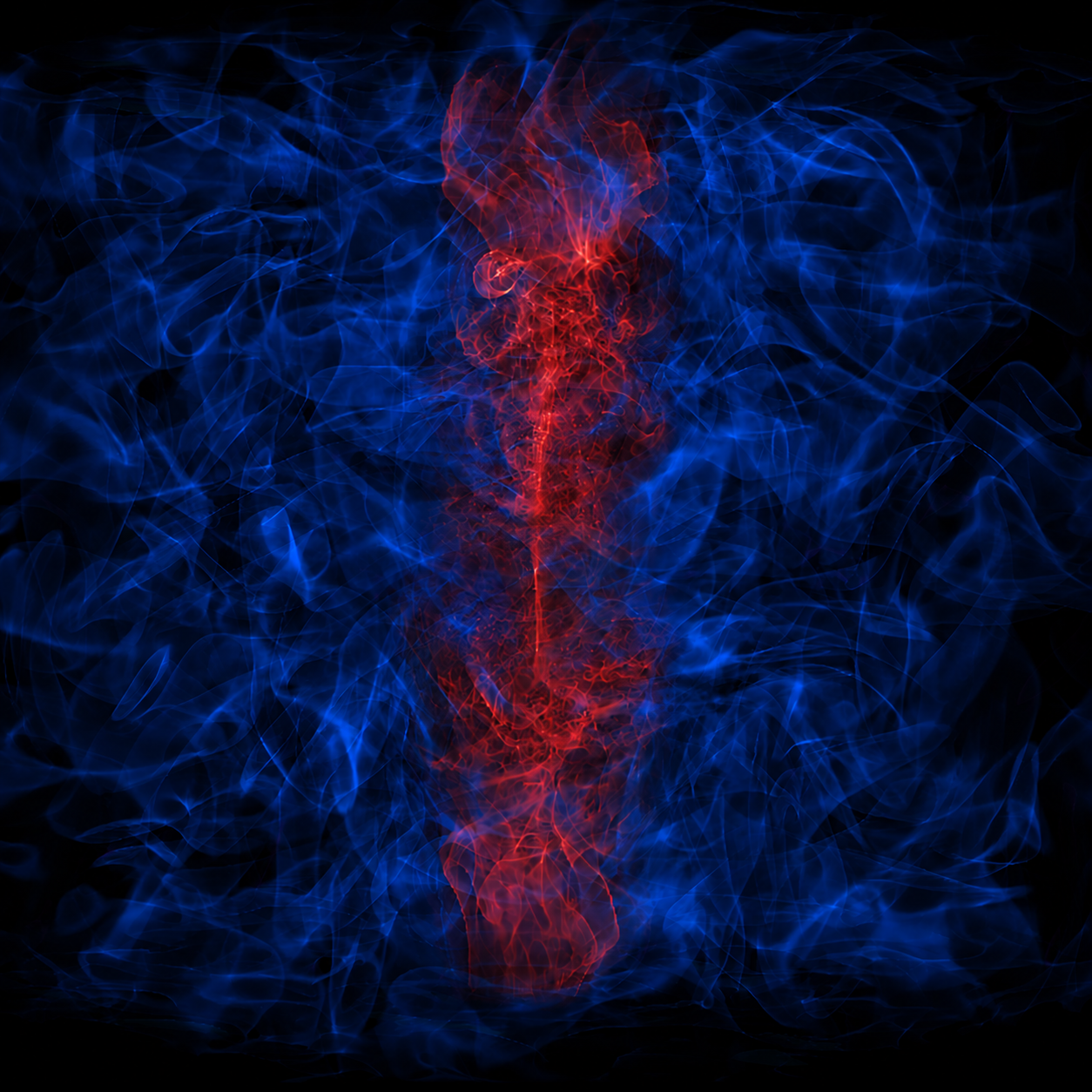
Figure 2: Volume rendering of the central jet; blue = ambient turbulent gas, red = jet-entrained material, white = jet core.
Boundary conditions, cooling, and gravity are handled as detailed in the companion non-AGN baseline studies (B26a), and magnetic fields are excluded in the present work for clarity. The simulation design allows robust direct tracing of how AGN jets nonlinearly reorganize the condensation cascade in different turbulence regimes.
Morphological Impact of Jet-Regulated AGN Feedback
CCA morphology exhibits pronounced differences between turbulence regimes and as a consequence of jet feedback. Multiscale projections reveal that jet-driven feedback does not simply heat or evacuate the central region but radically alters the condensation topology via compression, shear, turbulent mixing, and entrainment.
- High-Turbulence Regime: Condensation occurs later (train≃16 Myr), develops as an extended, filamentary, highly fragmented network reaching several kpc, and transitions toward a cloud-dominated state with low central accretion efficiency. The jet inflates a broad, porous cocoon, with hot, rarefied plasma dominating the jet cone and multiphase structures enhanced along the jet-ambient interface.
- Low-Turbulence Regime: Condensation begins earlier (train≃9 Myr), remains more centrally concentrated, and forms a dense, long-lived cold reservoir. The jet produces a more regular, contained cocoon, with the multiphase medium retaining greater coherence and supporting sustained central SMBH fueling.
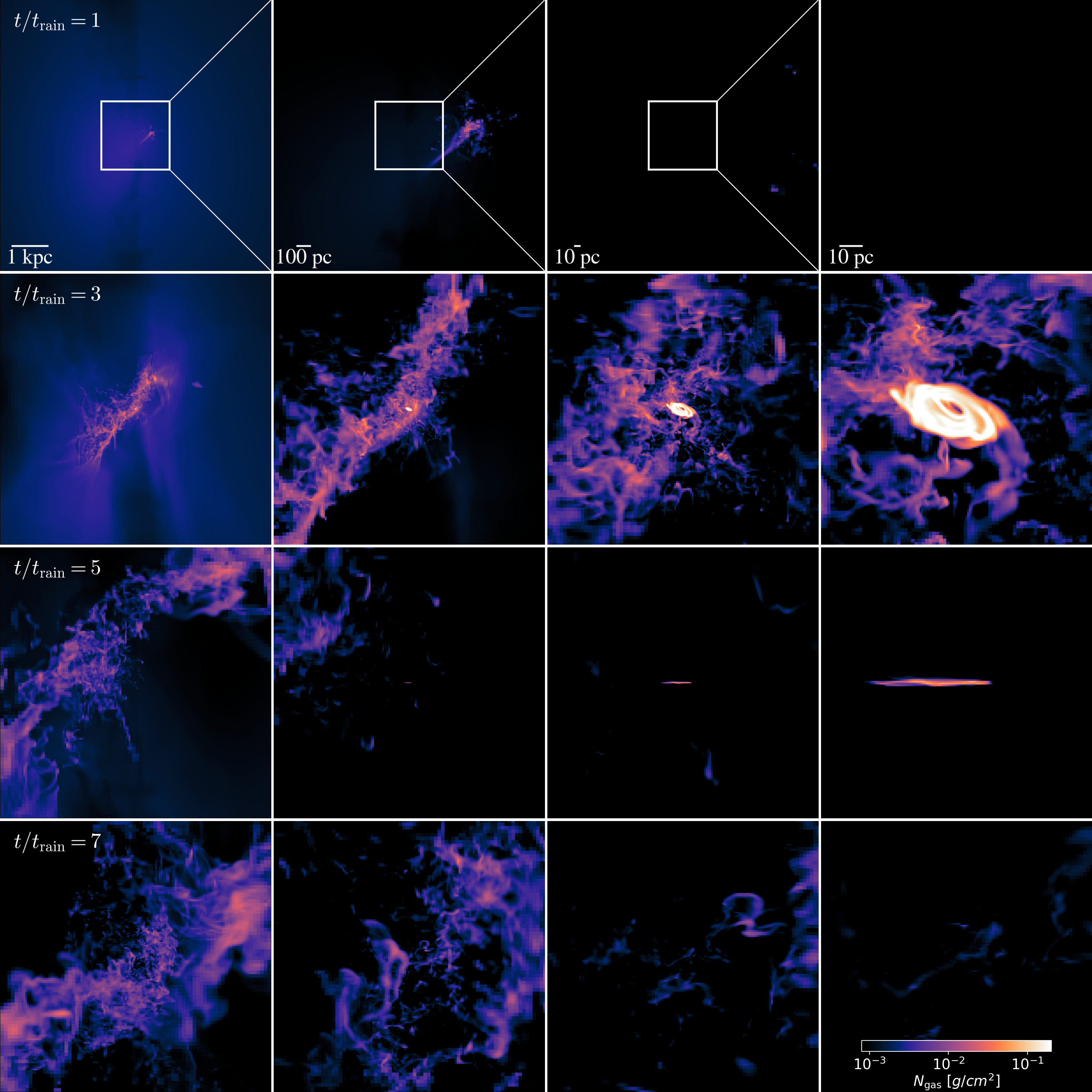
Figure 3: Gas density projection zoom-cascades for the high-turb run, illustrating filamentary multiphase structure across scales and times.
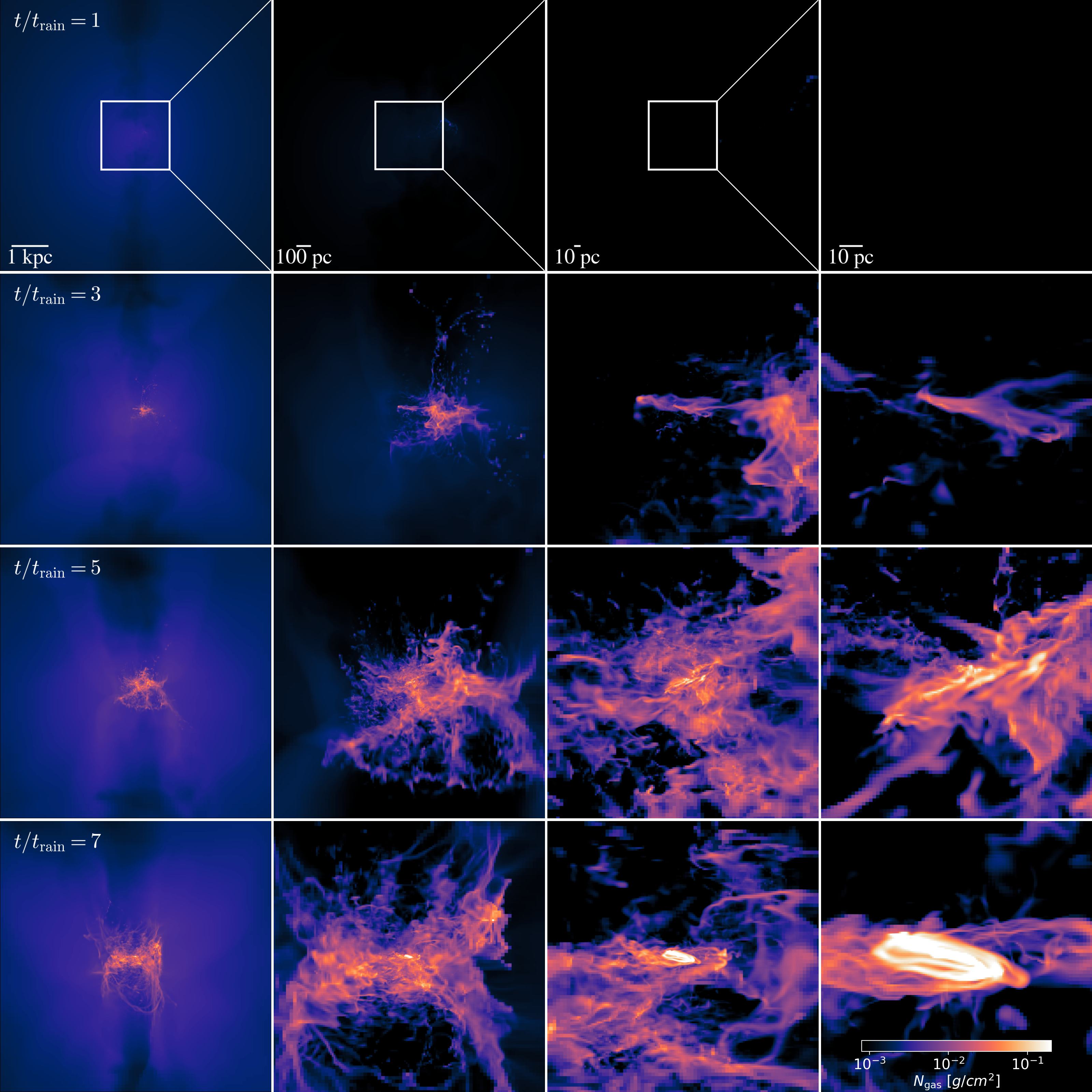
Figure 4: Same as Figure 3, low-turb run, showing concentrated, centrally retained cold gas.
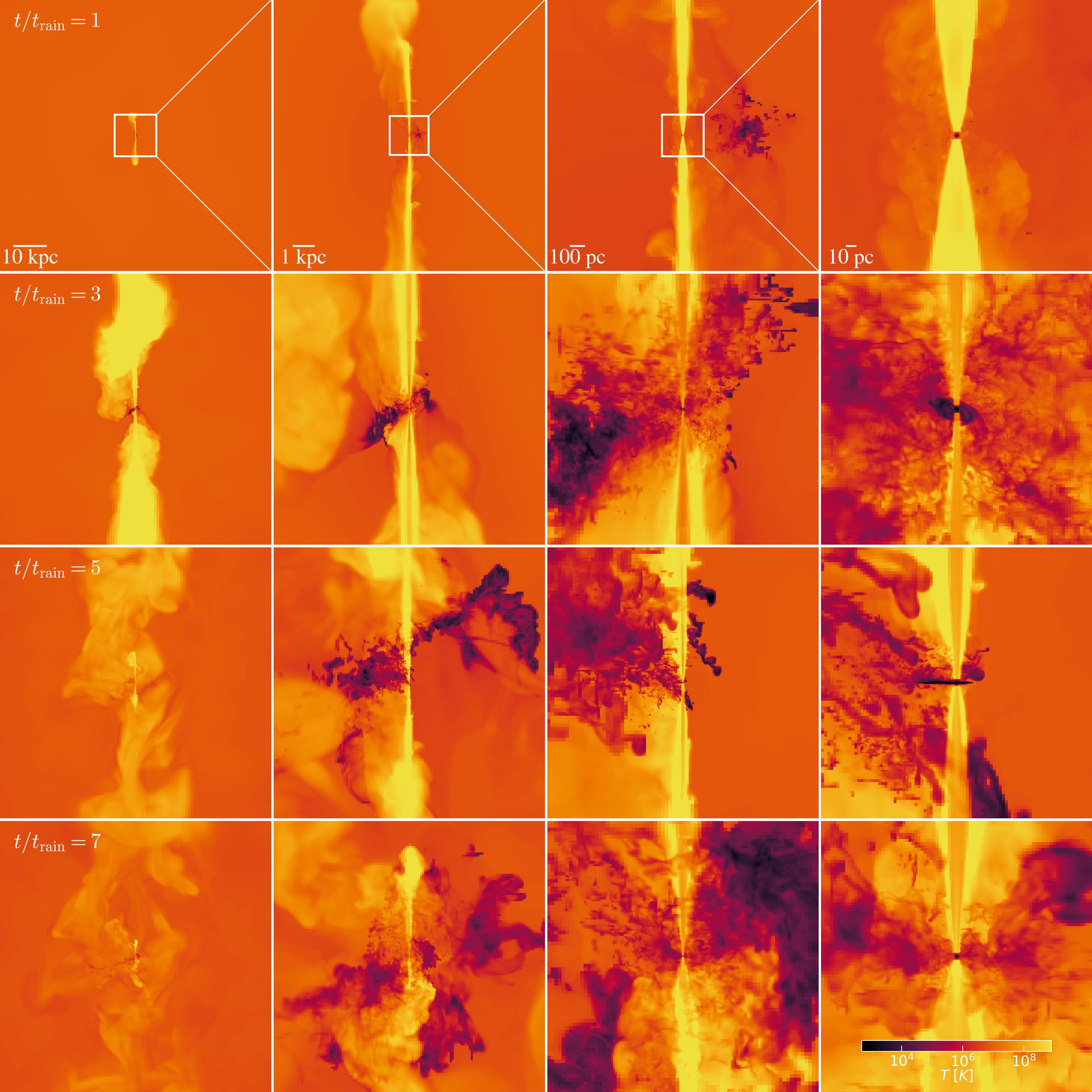
Figure 5: Gas temperature projections for high-turb (see text for phase assignment).
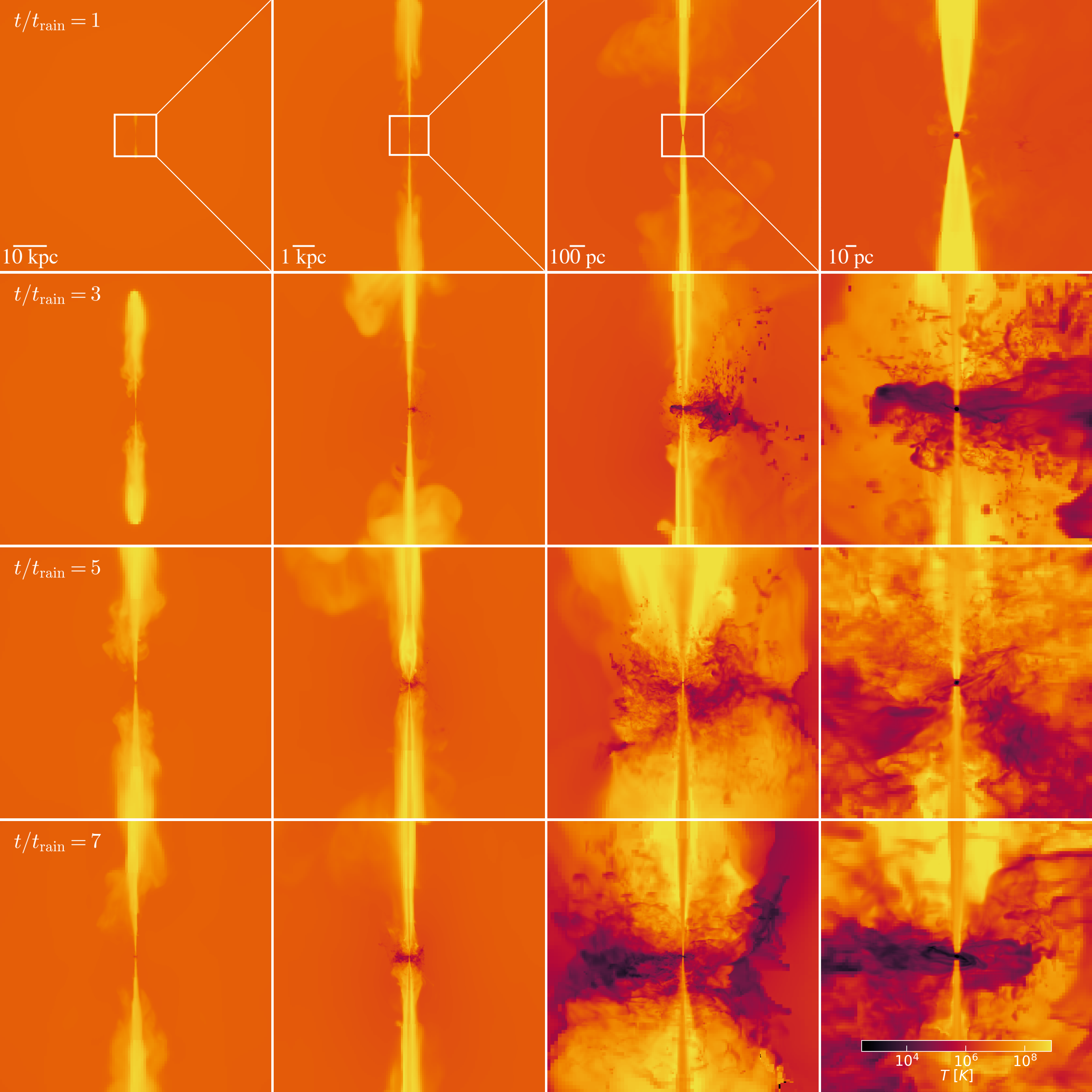
Figure 6: Gas temperature projections for low-turb.
The jet-regulated CCA cycle thus produces strongly anisotropic and time-variable multiphase morphologies determined by the interplay between ambient turbulence and jet-driven feedback.
Multiphase Thermodynamics and Statistical Diagnostics
Radial phase profiles, phase-separated PDFs, and density–temperature diagrams are used to dissect the internal thermodynamic state and turbulence-induced phase structure.
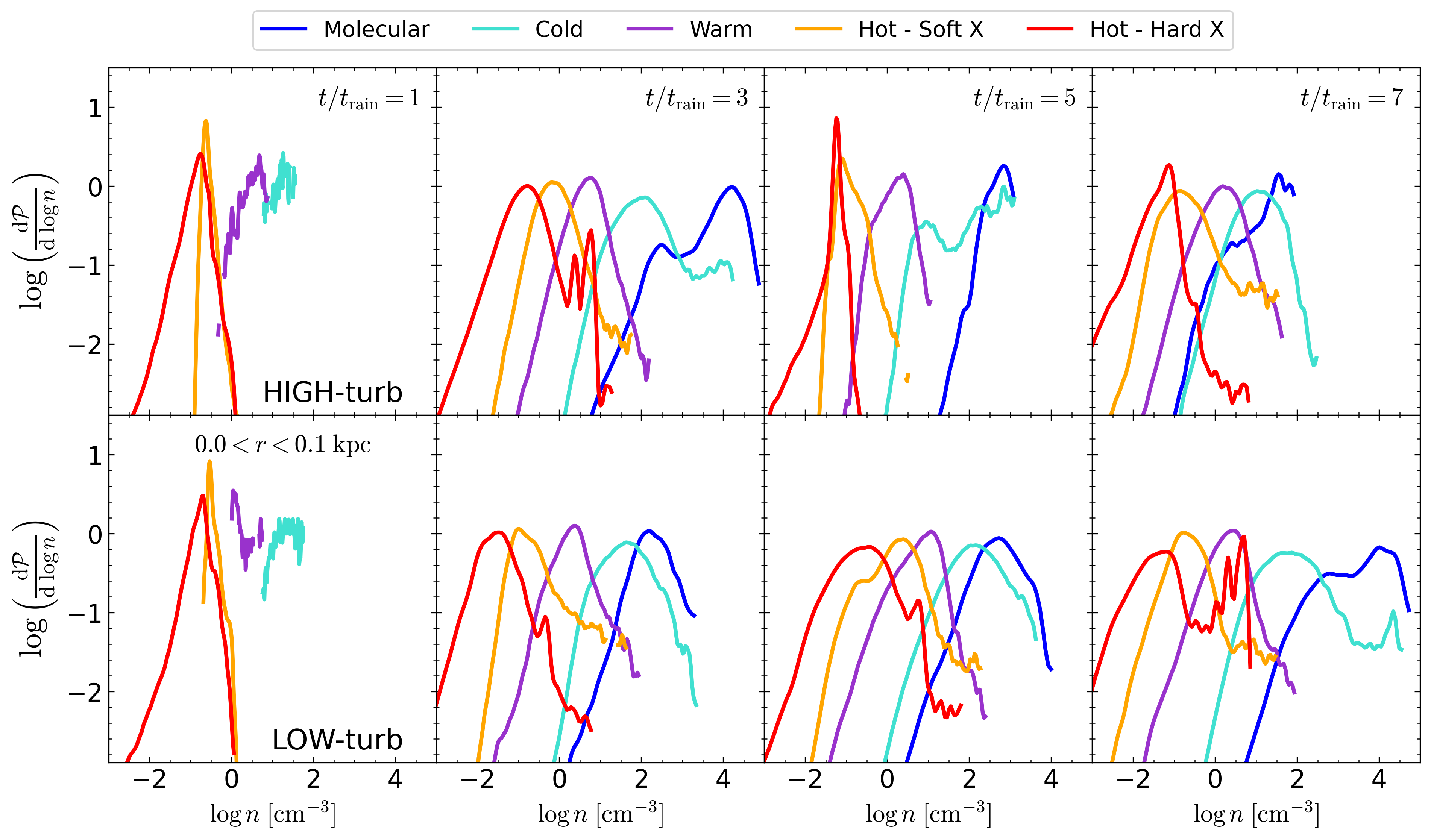
- Outside the jet channel, both runs develop multiphase atmospheres with phase stratification and strong temporal variability in density and temperature, particularly at r<0.1 kpc.
- In the jet cone, cold and molecular gas are suppressed, and the region is dominated by hot, low-density plasma.
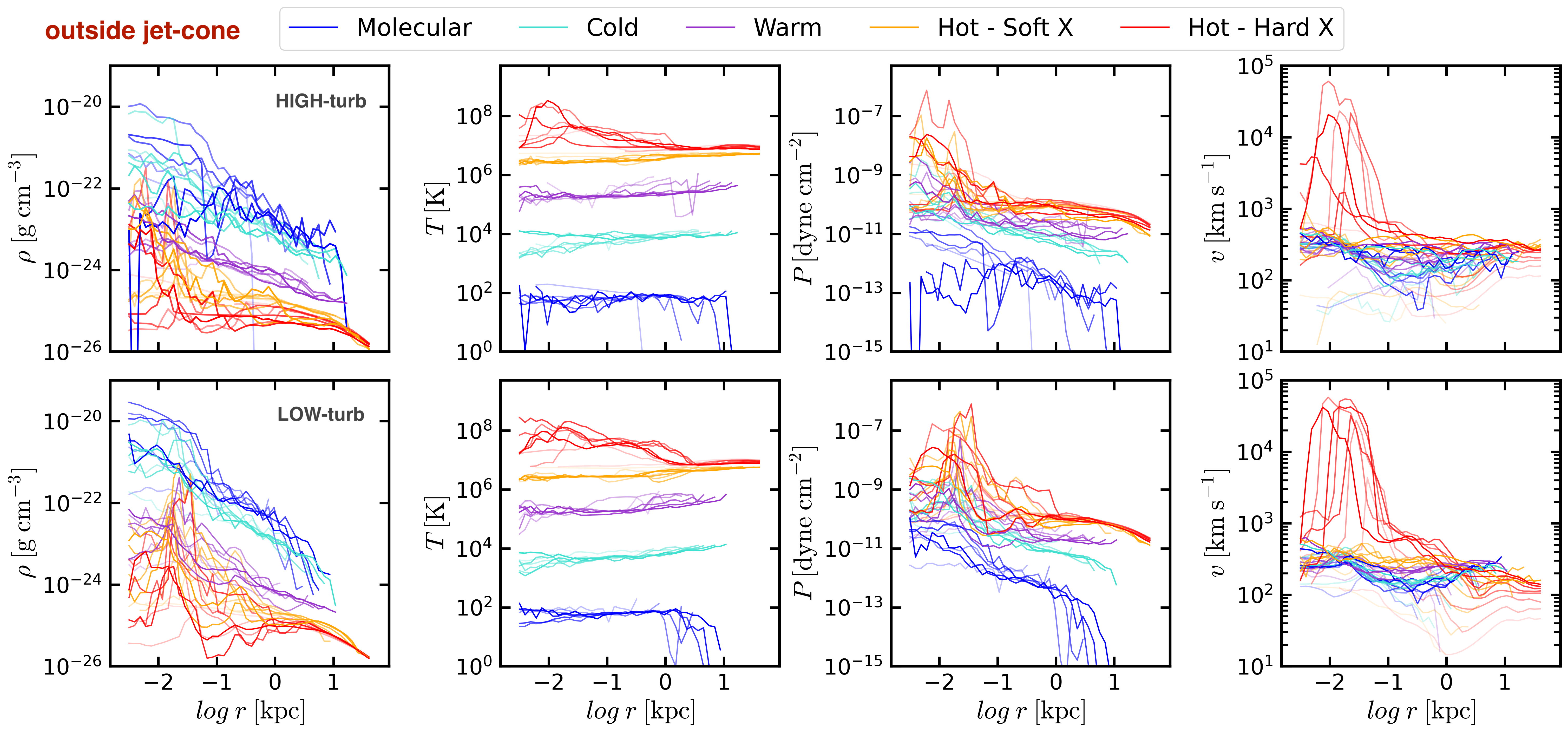
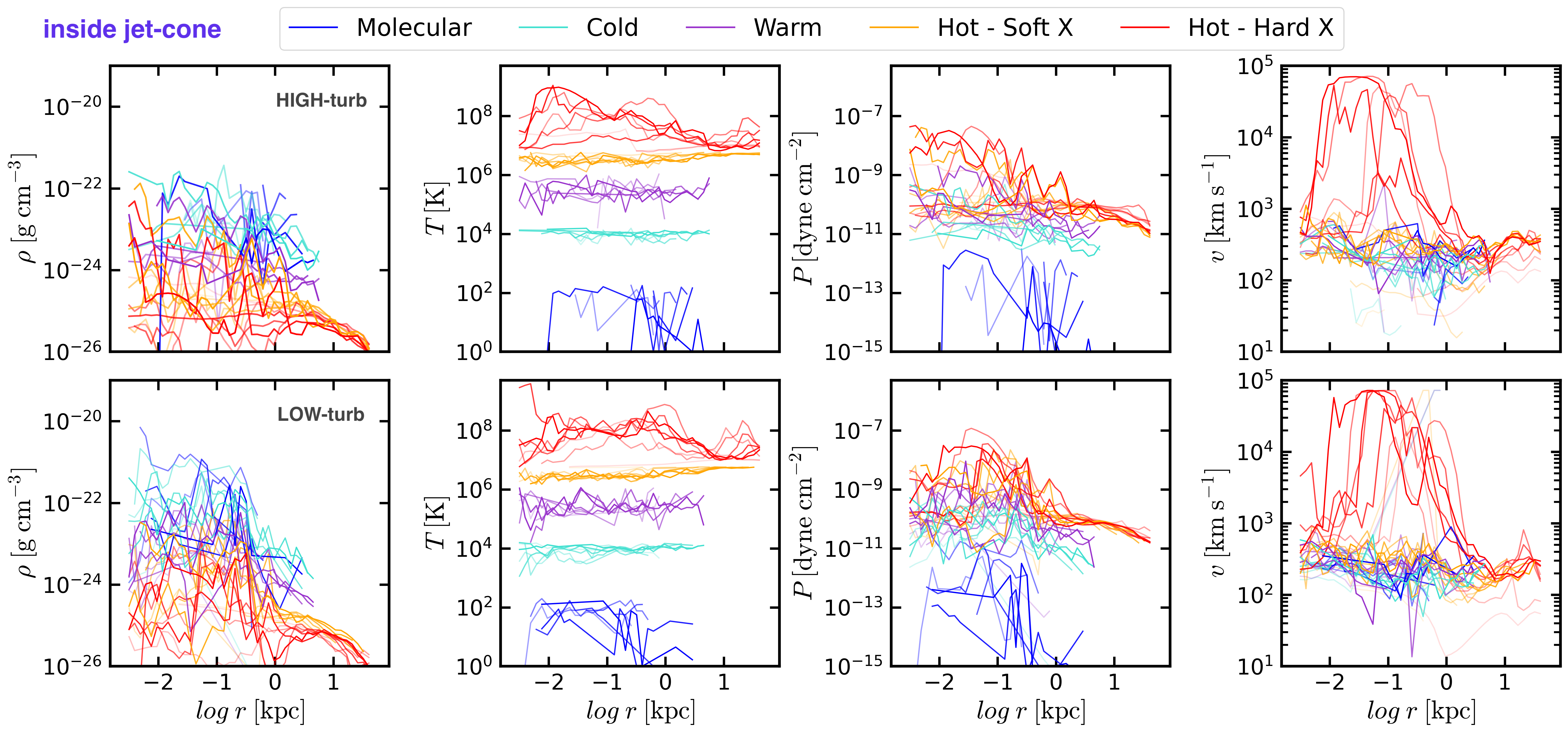
Figure 7: Radial profiles of gas density, temperature, pressure, and velocity (outside/inside jet cone), for both turbulence regimes, illustrating separation between hot intra-cone channel and multiphase extra-cone atmosphere.
Number-density PDFs reveal:
Phase diagrams and radial mass budgets confirm that, whereas the high-turb case achieves a temporally extended, radially broad precipitation, the low-turb case shows more localized, compact condensation, with the presence and distribution of multiphase gas directly tracking the variance in turbulence.
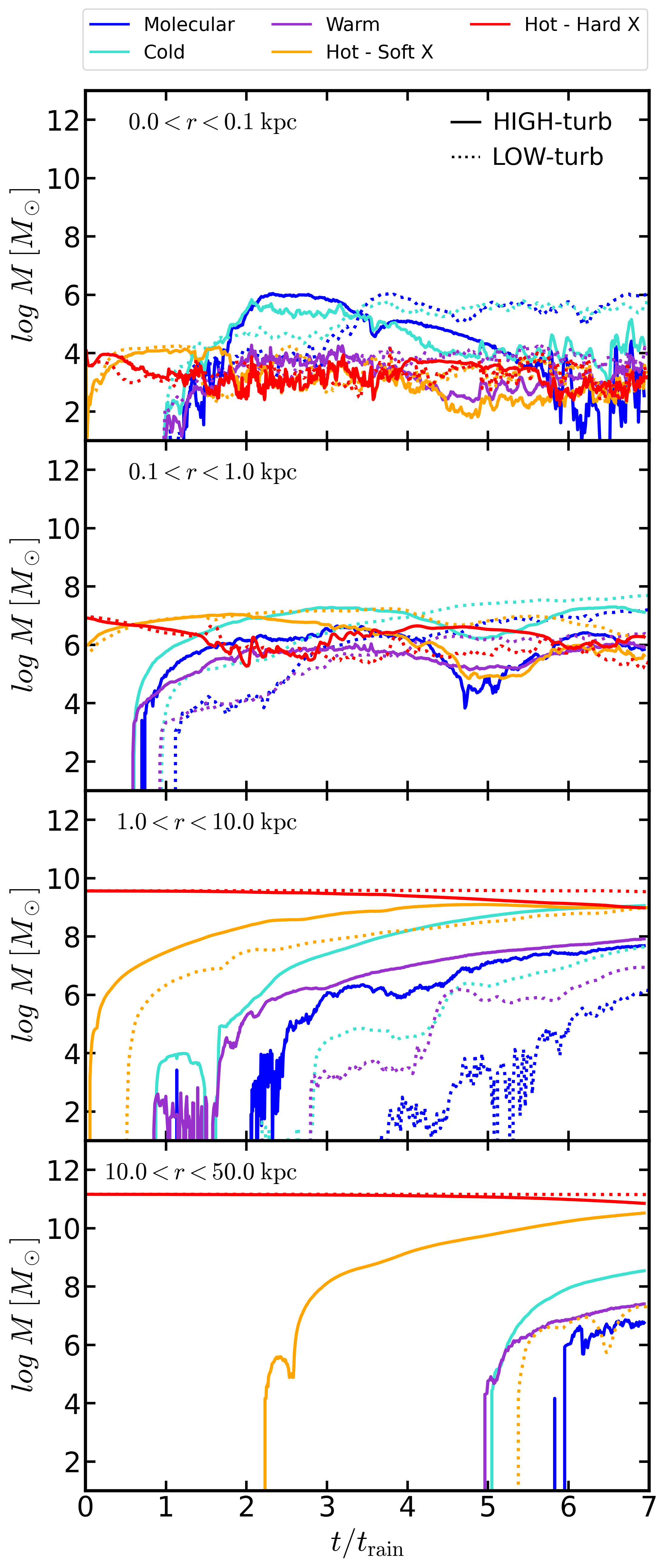
Figure 9: Phase-resolved mass evolution in micro-to-macro radial bins, highlighting distinct regimes of phase buildup and depletion in the two runs.
AGN Feeding: Accretion Histories and Duty Cycles
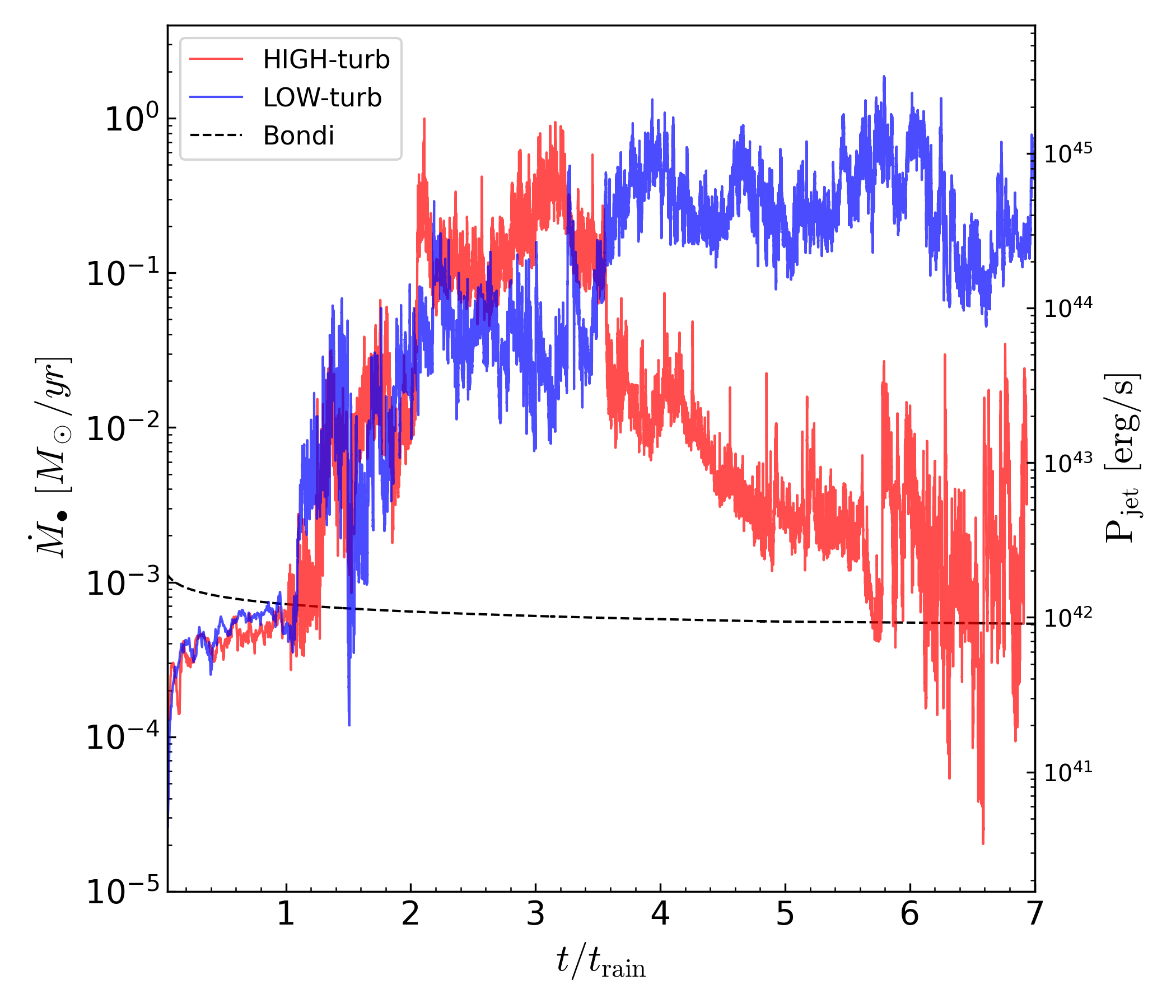
The simulations report robust accretion rates onto the SMBH sink particle. Regardless of jet presence, once condensation and CCA rain begin, the accretion rate exceeds the Bondi prediction by orders of magnitude.
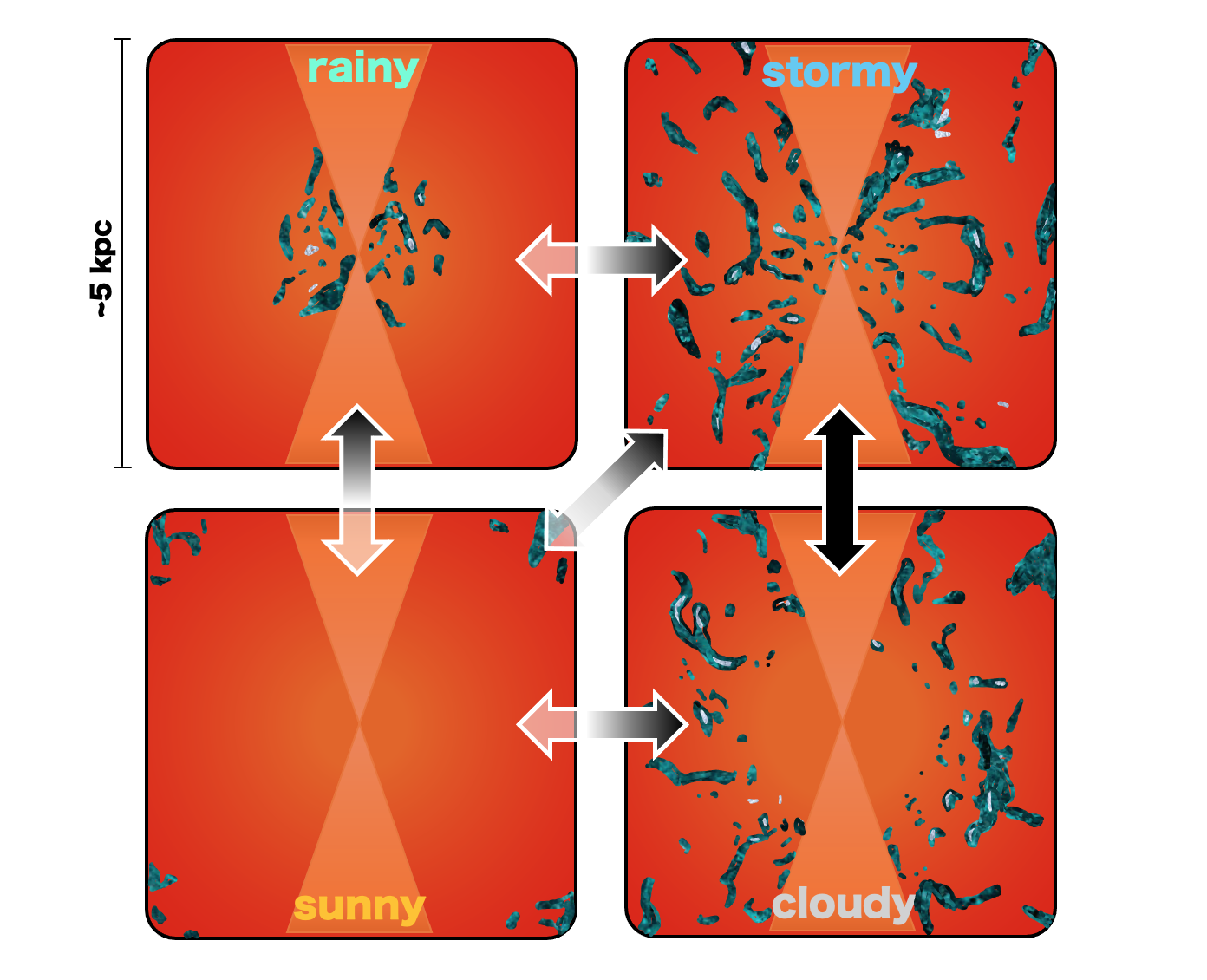
Weather Taxonomy: From Sunny, to Stormy, Rainy, and Cloudy
A physically motivated phenomenological framework emerges: AGN feedback regimes can be operationally classified based on multiphase morphology, thermodynamic statistics, and fueling diagnostics.
Physical Implications and Future Prospects
These findings reinforce and extend the chaotic cold accretion paradigm:
- Jet feedback does not quench multiphase condensation, but imprints strong anisotropy, modifies the precipitation geometry, and regulates dense gas delivery via turbulence-dependent pathways.
- The meso scale acts as a key processing layer, with turbulence amplitude controlling the persistence and morphology of multiphase gas, while jet-driven mixing and compression stimulate extended radial condensation in sufficiently turbulent halos.
- Theoretical models and cosmological simulations must incorporate this feedback–fueling coupling across multiple scales/phases to correctly predict SMBH growth and IGrM/ICM evolution [Gaspari2017, Wittor & Gaspari 2020].
These results suggest critical observable diagnostics for future X-ray/radio facilities (e.g., XRISM, Athena), including the spatial extent, morphological diversity, and phase distribution of filaments and clouds around group-dominant galaxies. Jet-driven turbulence amplitude, geometry, and variability can now be seen as principal determinants of feedback impact in massive galaxies.
Areas for extension include: time-dependent jet orientation, magnetic fields (see Fournier et al. 2024), AGN wind coupling, and cosmological boundary conditions. Future research must address the detailed coupling mechanisms at the Bondi and horizon scales to further unify the AGN feedback cycle.
Conclusion
The "BlackHoleWeather" simulations provide a comprehensive analysis of jet-regulated chaotic cold accretion in group atmospheres, demonstrating that AGN jets reorganize rather than erase multiphase condensation, giving rise to a sequence of distinct "weather" states. Turbulence amplitude is identified as a fundamental control parameter, modulating the onset, spatial extent, and thermodynamic distribution of cold accretion; jet–atmosphere coupling drives a cycle in which AGN feedback, condensation, and SMBH feeding are inherently linked across the meso scale. These results furnish critical constraints for physically motivated AGN feedback implementations in galaxy evolution models and offer extensive predictions for multiphase diagnostics in current and next-generation observatories.