- The paper demonstrates that advanced LLMs achieve near-perfect accuracy in solving classical mechanics and quantum mechanics problems, while addressing challenges in electromagnetism.
- The study employs comprehensive benchmarks and multimodal evaluations to track generational improvements in both automated problem solving and grading reliability.
- The findings indicate that while LLMs effectively automate technical assessments in physics, challenges in partial-credit evaluation still require further methodological refinements.
LLMs in Physics Education: Architecture, Benchmarking, and Evaluative Implications
Background and Motivation
The proliferation of advanced LLMs has fundamentally altered the landscape of academic instruction and assessment in undergraduate physics education, expanding both the technical and pedagogical horizon. Prior work revealed substantial progress in NLP tasks but also illuminated key deficiencies—including unreliable multi-step mathematical reasoning and hallucination phenomena in earlier model architectures. The post-2022 escalation in LLM releases, notably with ChatGPT-3.5, led to emergent reasoning abilities, shifting focus to high-stakes applications such as university-level physics examinations.
Motivated by concerns about AI-facilitated learning, student autonomy, and institutional adaptation, this paper systematically evaluates frontier LLM performance across three domains: Classical Mechanics (CM), Electromagnetism (EM), and Quantum Mechanics (QM). It investigates model proficiency as both automated solvers and assessors, leveraging rigorous human-marking baselines and bespoke multimodal benchmarks.
Methodological Approach
Three complementary studies—Performance Benchmark 1 (PB1), Performance Benchmark 2 (PB2), and a Multimodal (MM) evaluation—were conducted to capture both temporal and architectural advances. Each study used a diagnostic pipeline: solution generation, human grading, and LLM-based assessment, parsed across chronologically and architecturally diverse model cohorts (OpenAI, Google, DeepSeek).
Model queries were prompted via template interfaces Figure 1, imposing strict persona and Chain-of-Thought (CoT) constraints. Solution-generation datasets were meticulously constructed, with both text-based and diagram-intensive modules to probe spatial reasoning bottlenecks. Evaluation protocols isolated context windows to control for haloing and attention degradation phenomena, thereby maximizing evaluative fidelity.
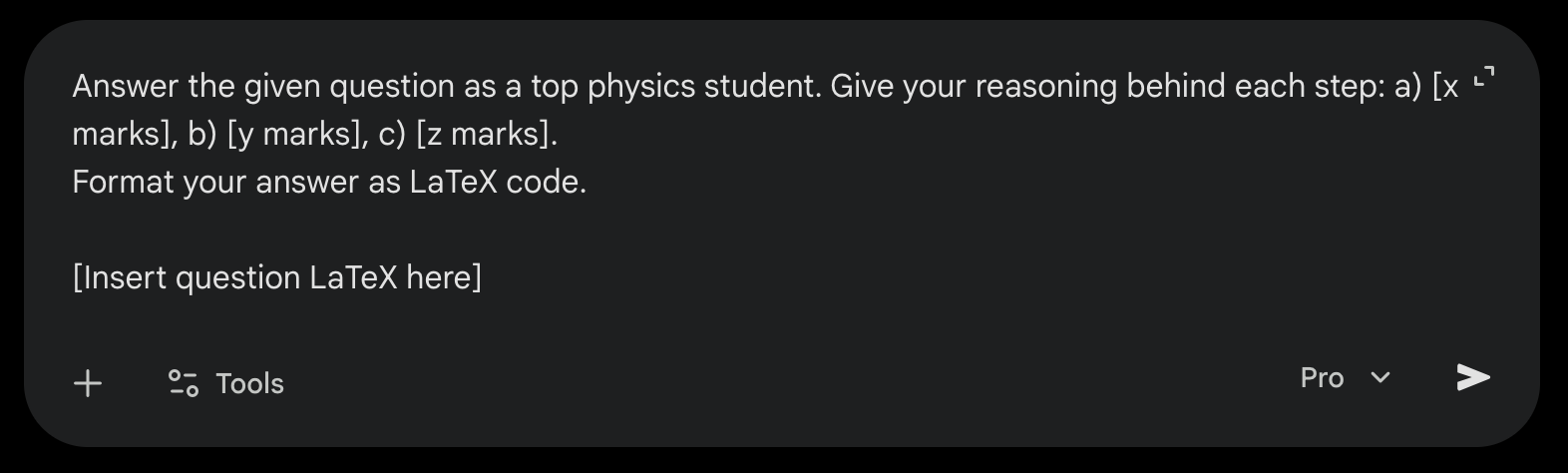
Figure 1: Template prompt inputted into the Gemini web interface, enforcing architectural and persona constraints.
Benchmarking Results: Solution Generation
PB1: Generational Scaling and Modal Vulnerability
Bar chart analysis (Figures 2–4) demonstrates a generational, architecture-driven trajectory toward higher accuracy and lower variance in CM and QM. Generation 1 models achieved baseline proficiency (∼85%), while Generation 3 architectures approached benchmark saturation (∼99%) with sharply minimized standard errors. However, EM remained the weakest domain, constrained by spatial reasoning deficits and diagrammatic interpretation failures; e.g., text-hallucination led to catastrophic errors in circuit topology.
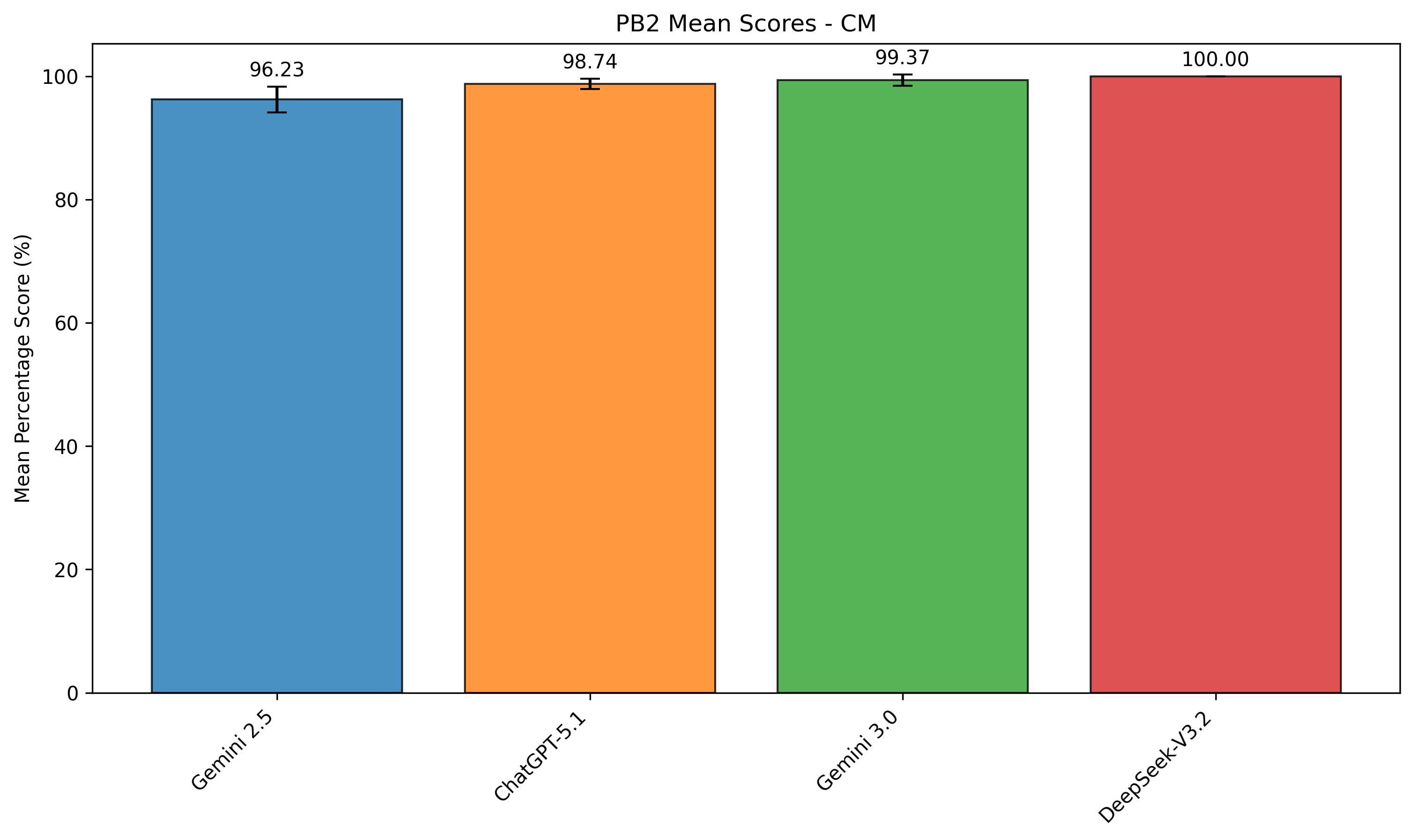
Figure 2: Mean percentage scores achieved by each model in CM, highlighting generational improvements.
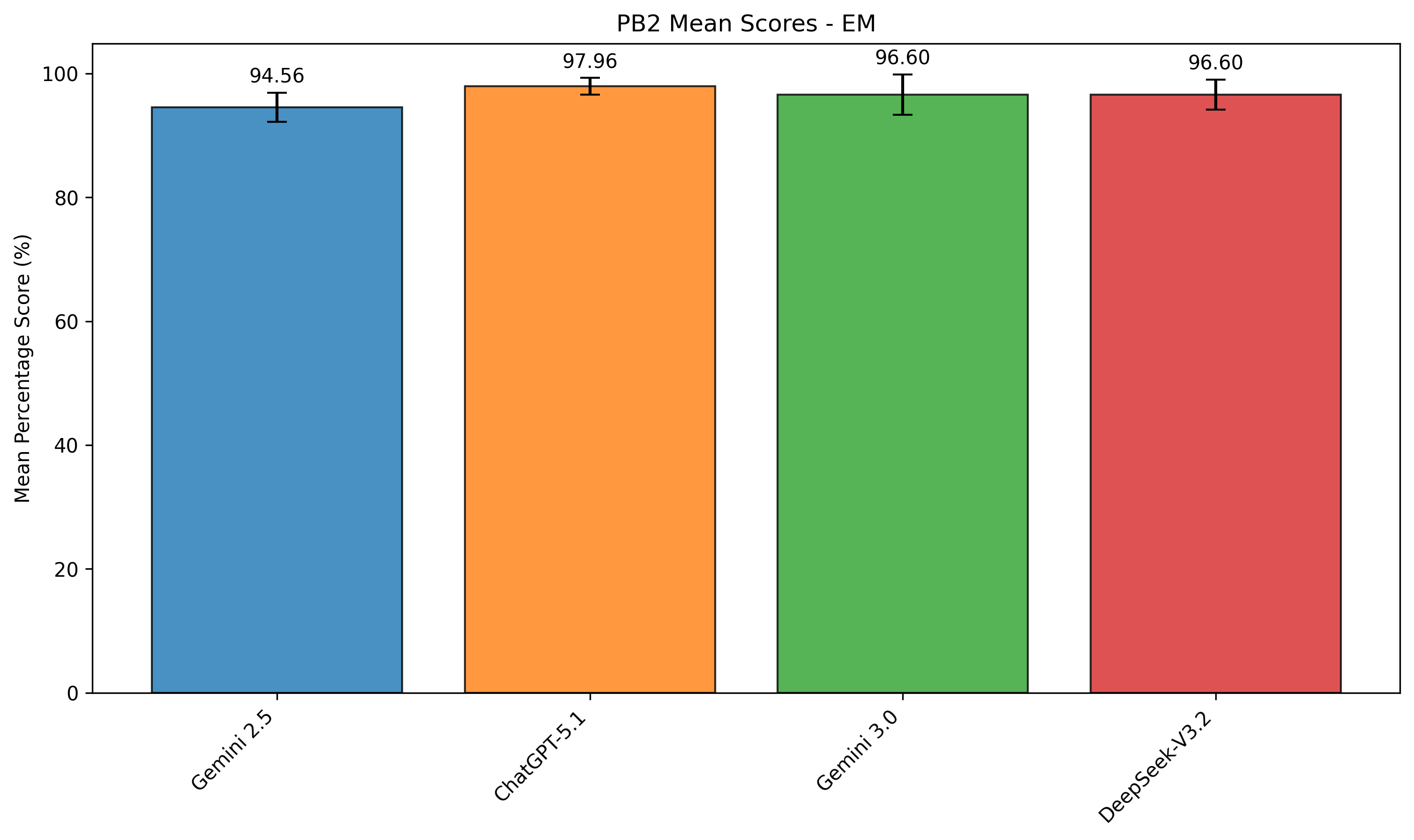
Figure 3: Mean percentage scores achieved by each model in EM, exposing persistent spatial reasoning setbacks.
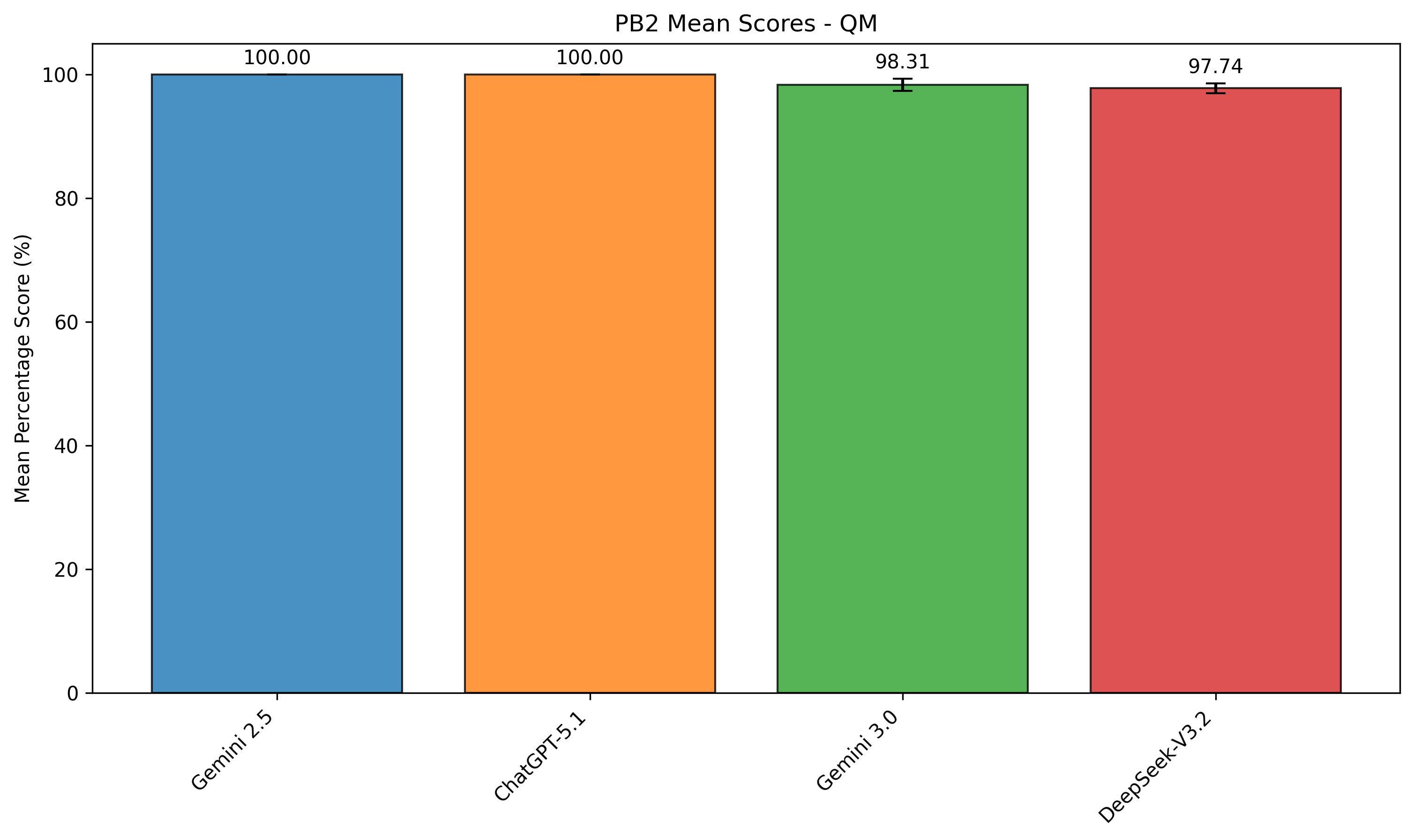
Figure 4: Mean percentage scores achieved by each model in QM, indicating early saturation via symbolic alignment.
Heat-map analyses for each subject (Figures 5–7) accentuate structural bottlenecks and heuristics in EM and CM, with EM Q5 notably unsolvable until Gen 3 multimodal advancements. QM's alignment with LLM syntactic architecture led to rapid benchmark saturation.
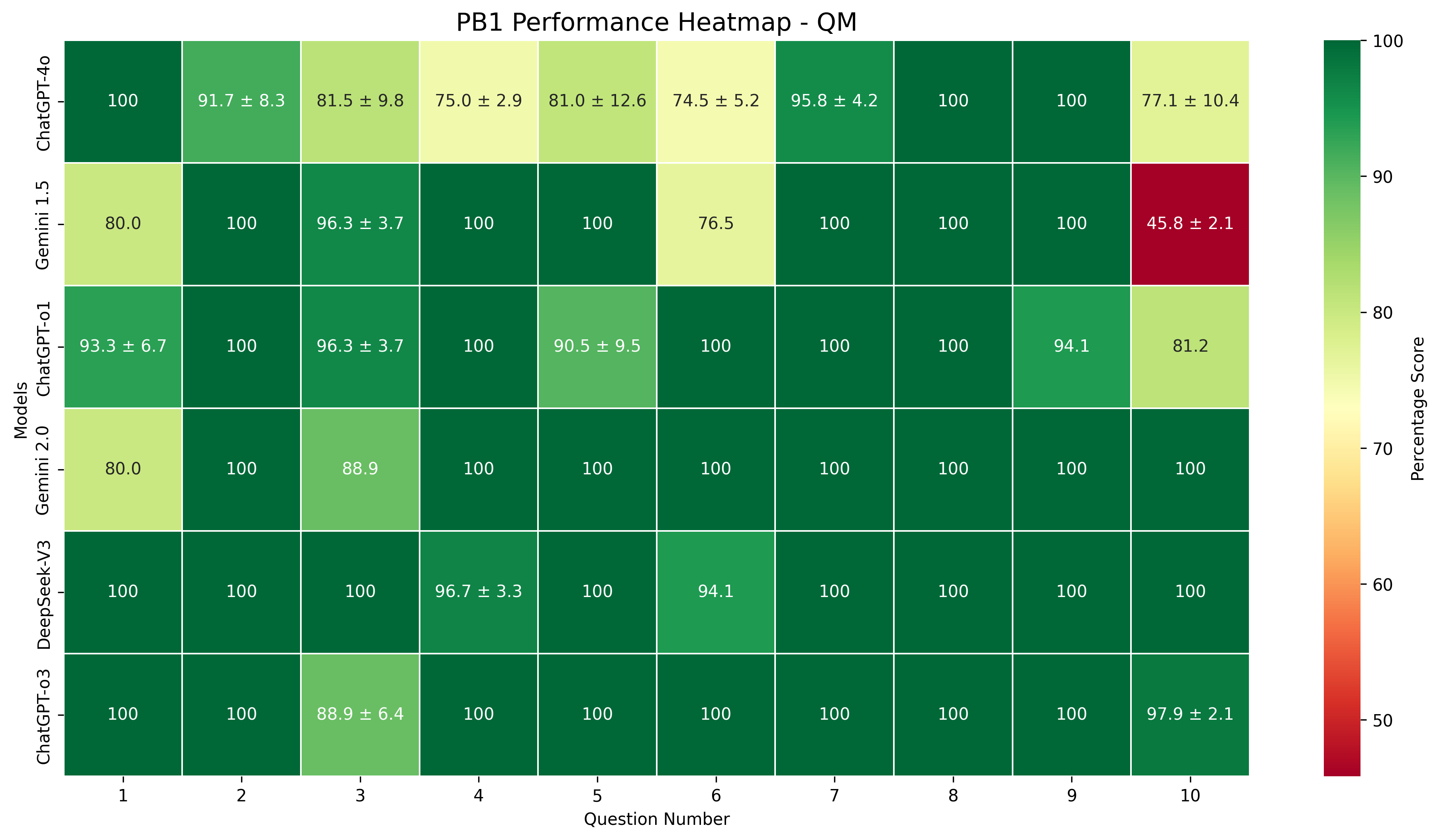
Figure 5: Heat map showing model performance in QM, approaching the benchmark ceiling.
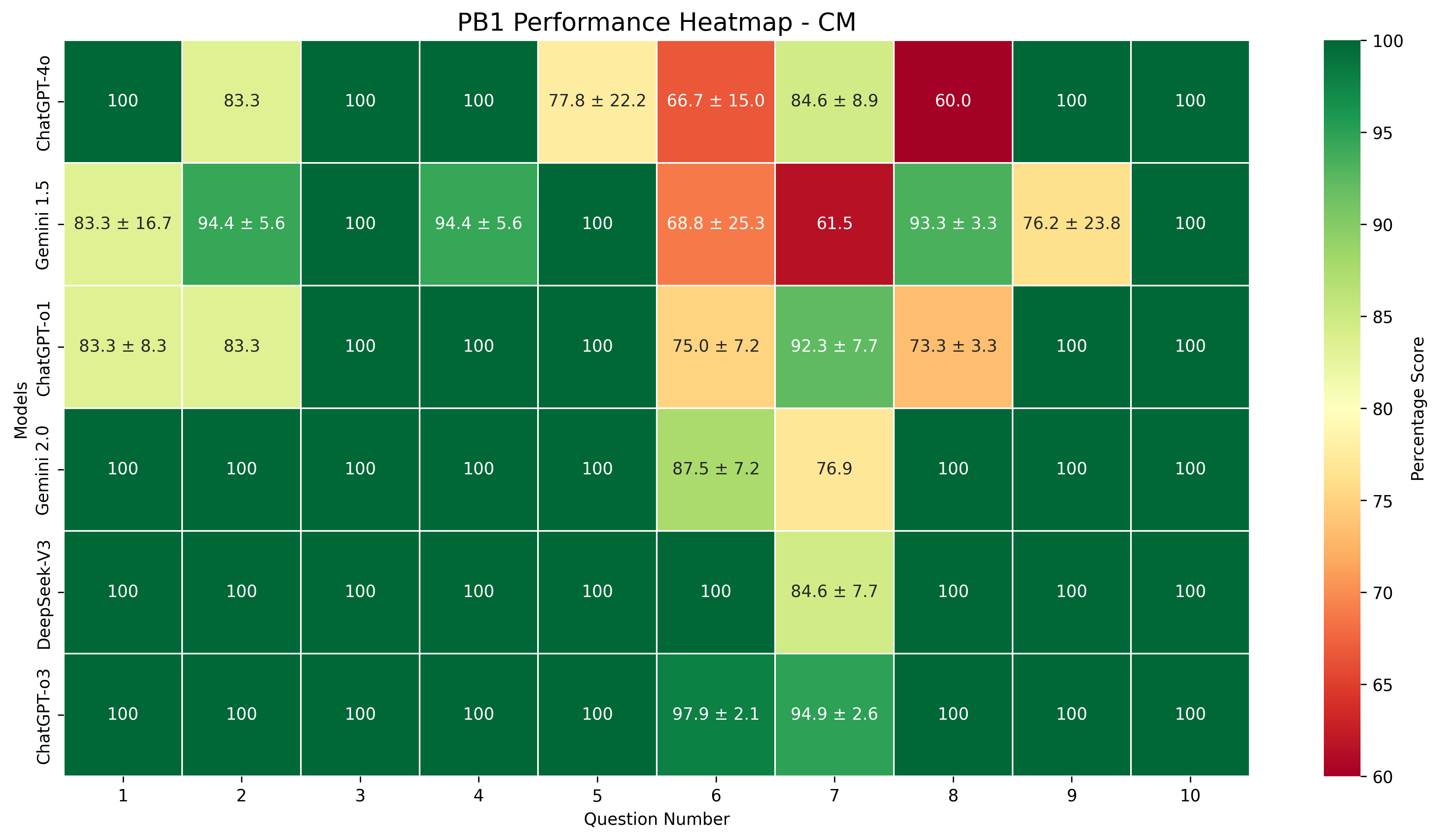
Figure 6: Heat map showing model performance in CM, marking the elimination of setup bottlenecks.
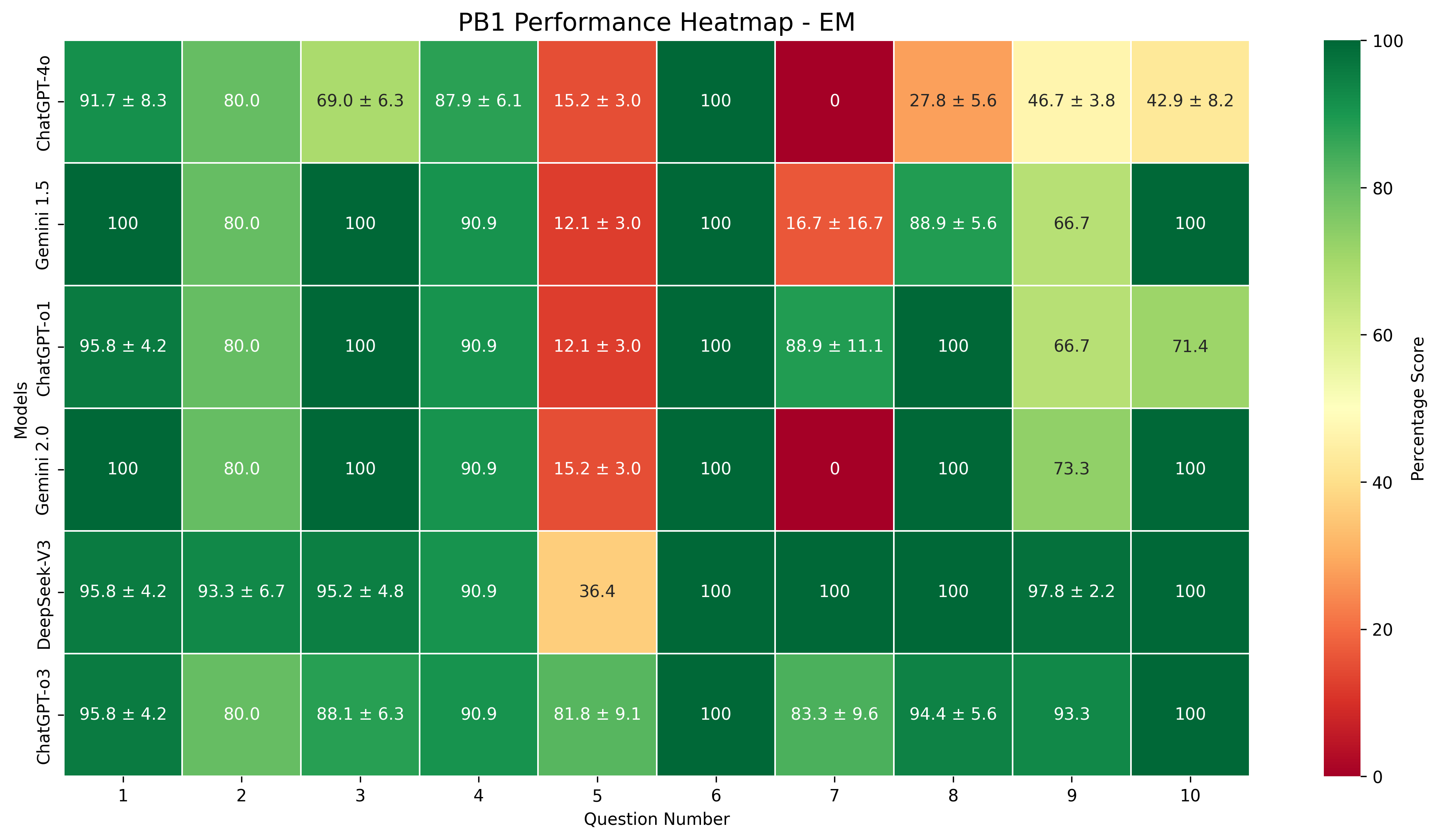
Figure 7: Heat map showing model performance in EM, underscoring spatial reasoning cold spots.
PB2: Frontier Model Proficiency
PB2 (Figures 8–10) validated that contemporary models (ChatGPT-5.1, Gemini 3.0 Pro, DeepSeek-V3.2) achieved nearly perfect mean scores and reduced standard errors in CM, QM, and EM. This indicates benchmark saturation in text-based reasoning, with diminishing returns for further architectural scaling on these sets. Notably, EM still featured localized failures in spatial tasks Figure 8, but these were substantially mitigated compared to earlier cohorts.
Figure 9: Averaged percentage scores for QM across Gen 4 and Gen 5 models, exhibiting benchmark saturation.
Figure 10: Averaged percentage scores for CM across Gen 4 and Gen 5 models, confirming elimination of setup barriers.
Figure 11: Averaged percentage scores for EM across Gen 4 and Gen 5 models, with spatial bottlenecks mostly resolved.
Multimodal Evaluation (MM): Spatial and Diagrammatic Reasoning
MM study results (Figures 14–19) indicate a definitive architectural leap in spatial and visual reasoning. Gemini 3.0 Pro and ChatGPT-5.1 demonstrated flawless or near-flawless performance in visual grounding tasks and topological diagram interpretation. EM circuit analysis saw the transition from text-hallucination to accurate visual topography (Figures 14, 15, 19). CM and QM multimodal tasks (Figures 16, 18) revealed that Gen 5 architectures now reliably extract and act upon diagrammatic and node-based information, resolving prior reasoning cliffs.
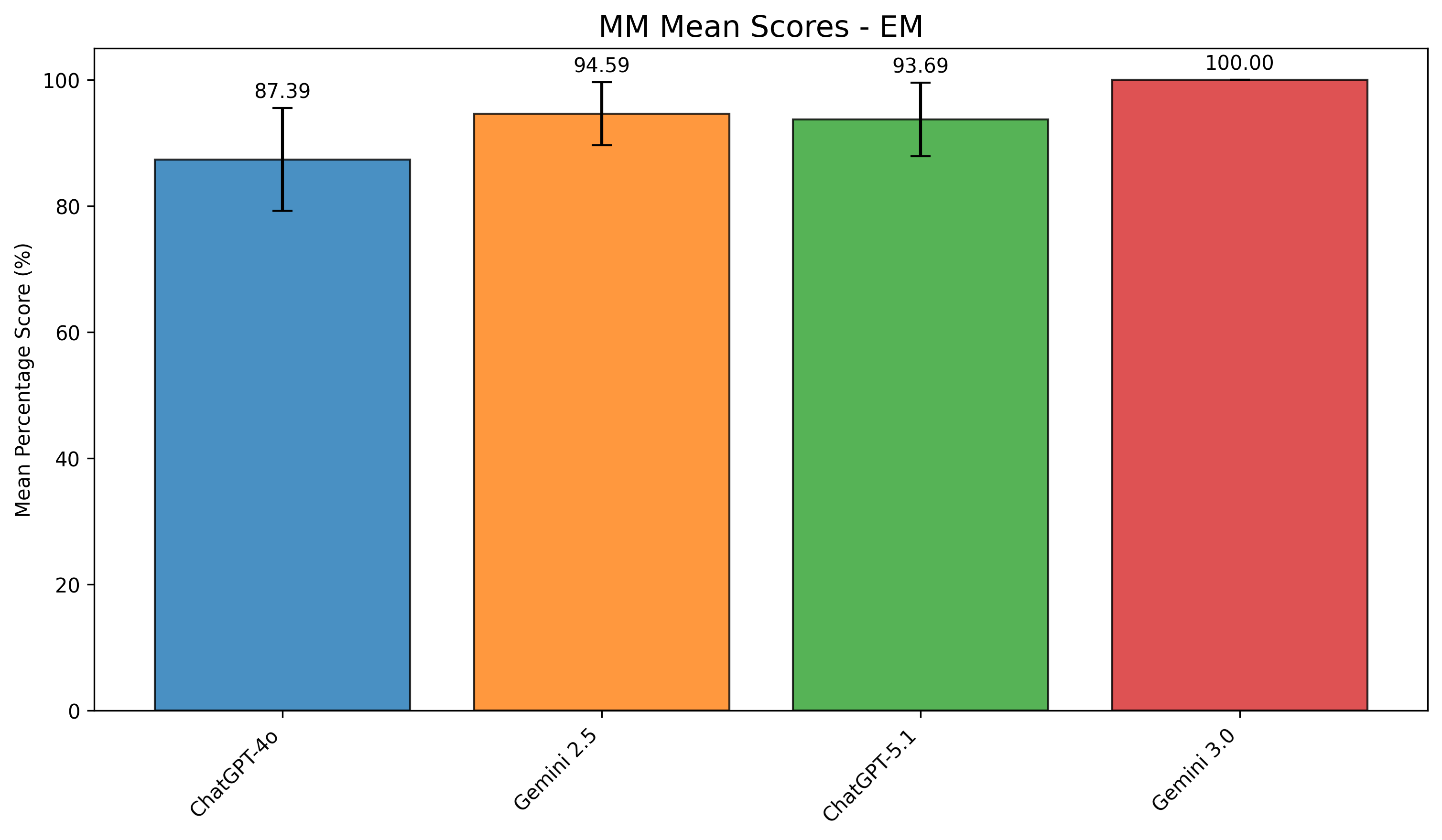
Figure 12: Multimodal performance in EM: models transition from text-hallucination to visual topography.
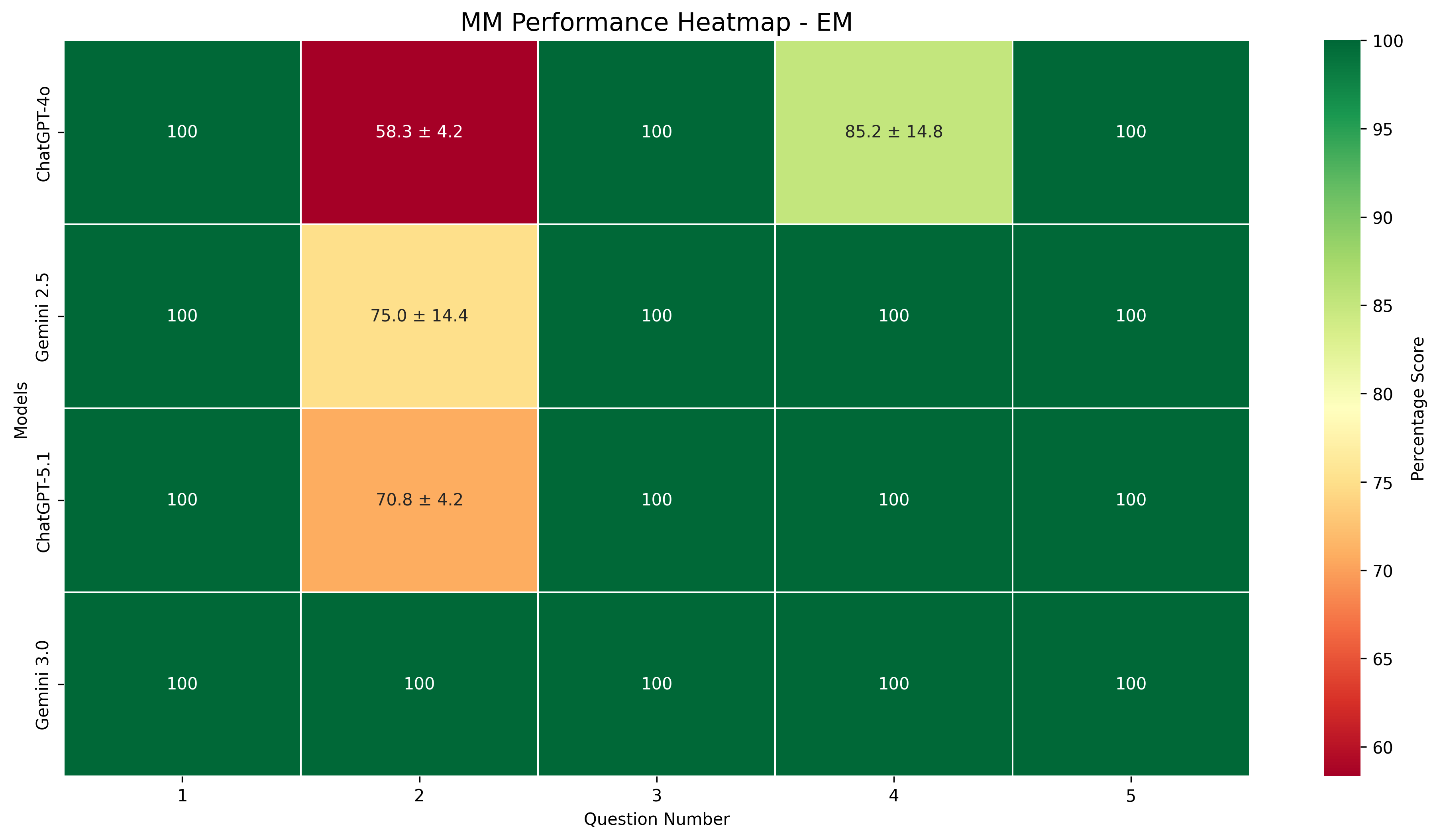
Figure 13: Multimodal performance in EM: heat-map showing spatial accuracy.
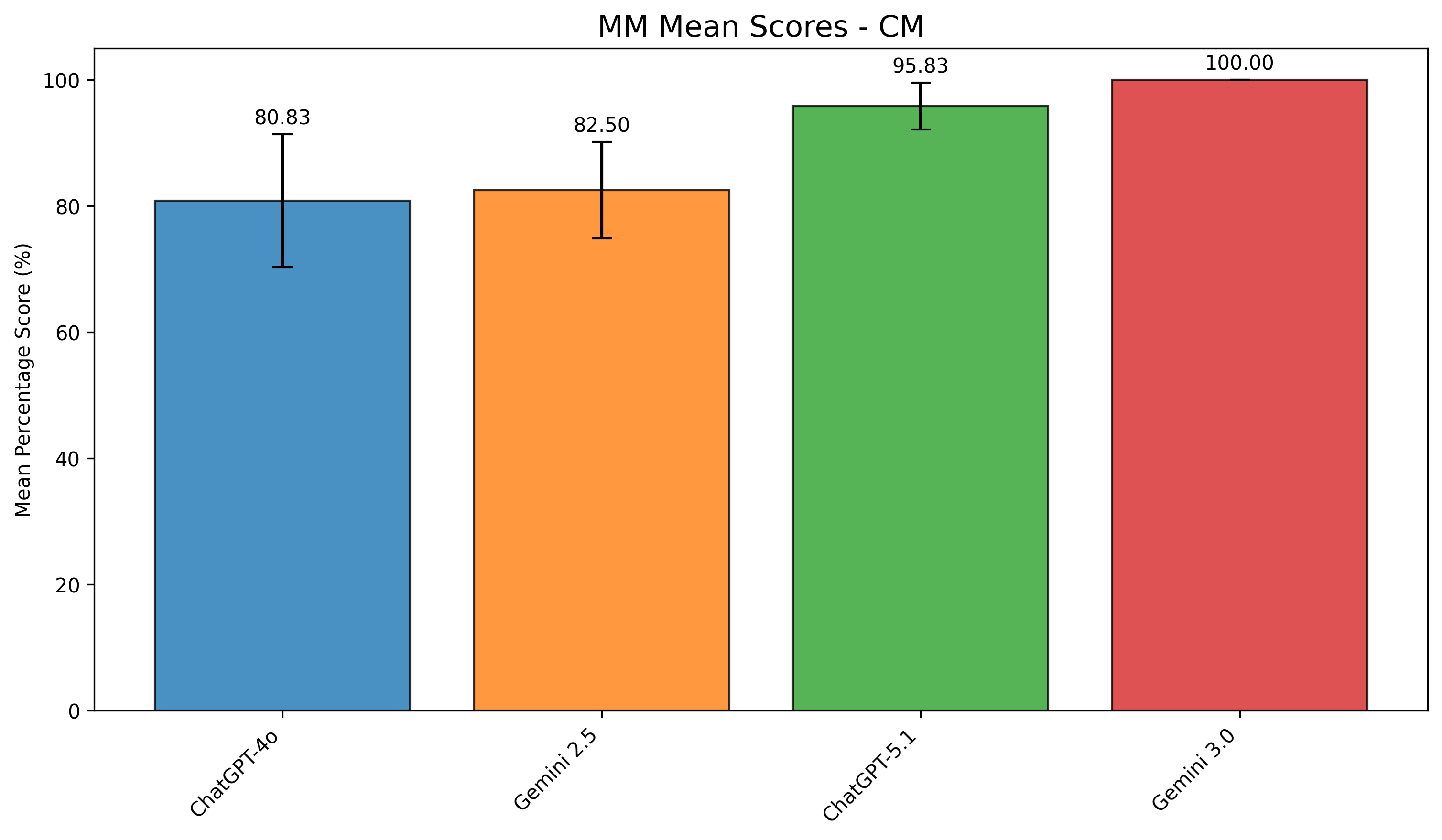
Figure 14: Multimodal performance in CM: visual grounding of free-body diagrams.
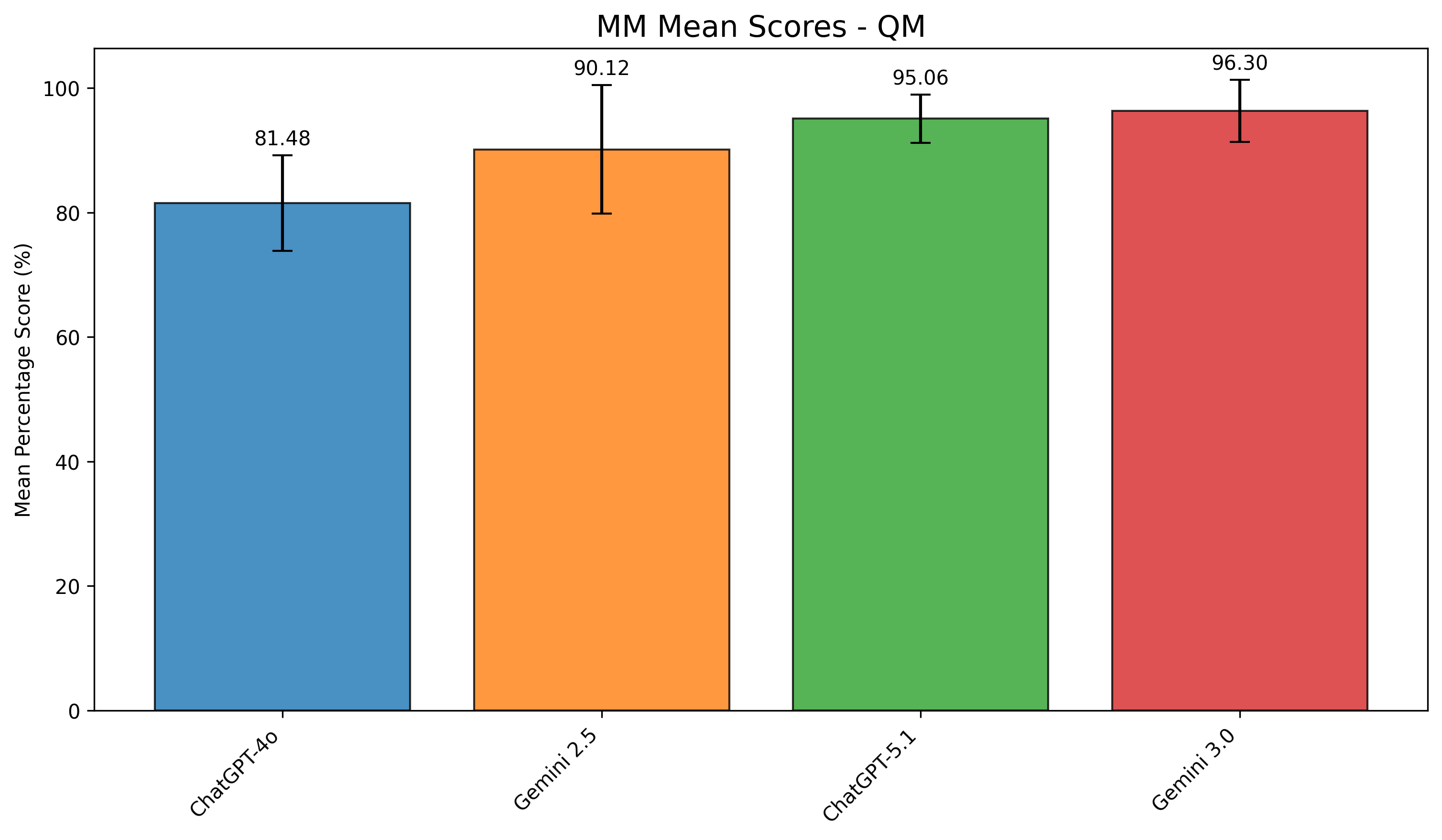
Figure 15: Multimodal performance in QM: topological mapping of Feynman diagrams.
PB1: Grading Reliability and Systemic Biases
Early architectures were unreliable graders, heavily affected by batch-grading positional biases ("halo effect", "lost in the middle"), yielding compressed and inflated marks. Regression analyses Figure 16 show shallow gradients and high intercepts, indicating poor sensitivity to rubric complexity and a tendency to avoid low marks. Deviation heat-map Figure 17 highlights over-marking in domains where spatial reasoning was weakest.
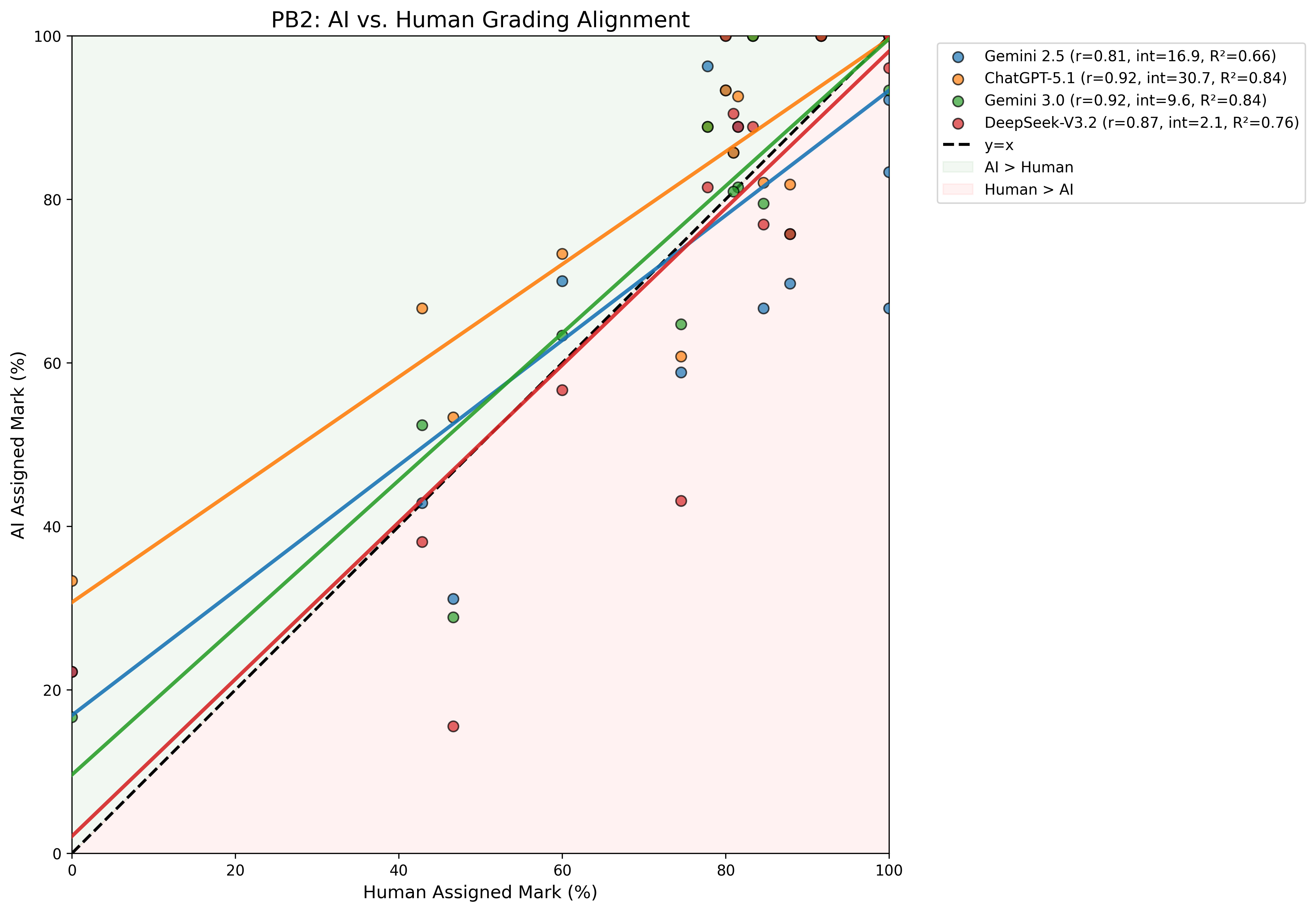
Figure 16: Linear Regression of Model Alignment (Individual Grading, P2) for Gen 4 and Gen 5 models.
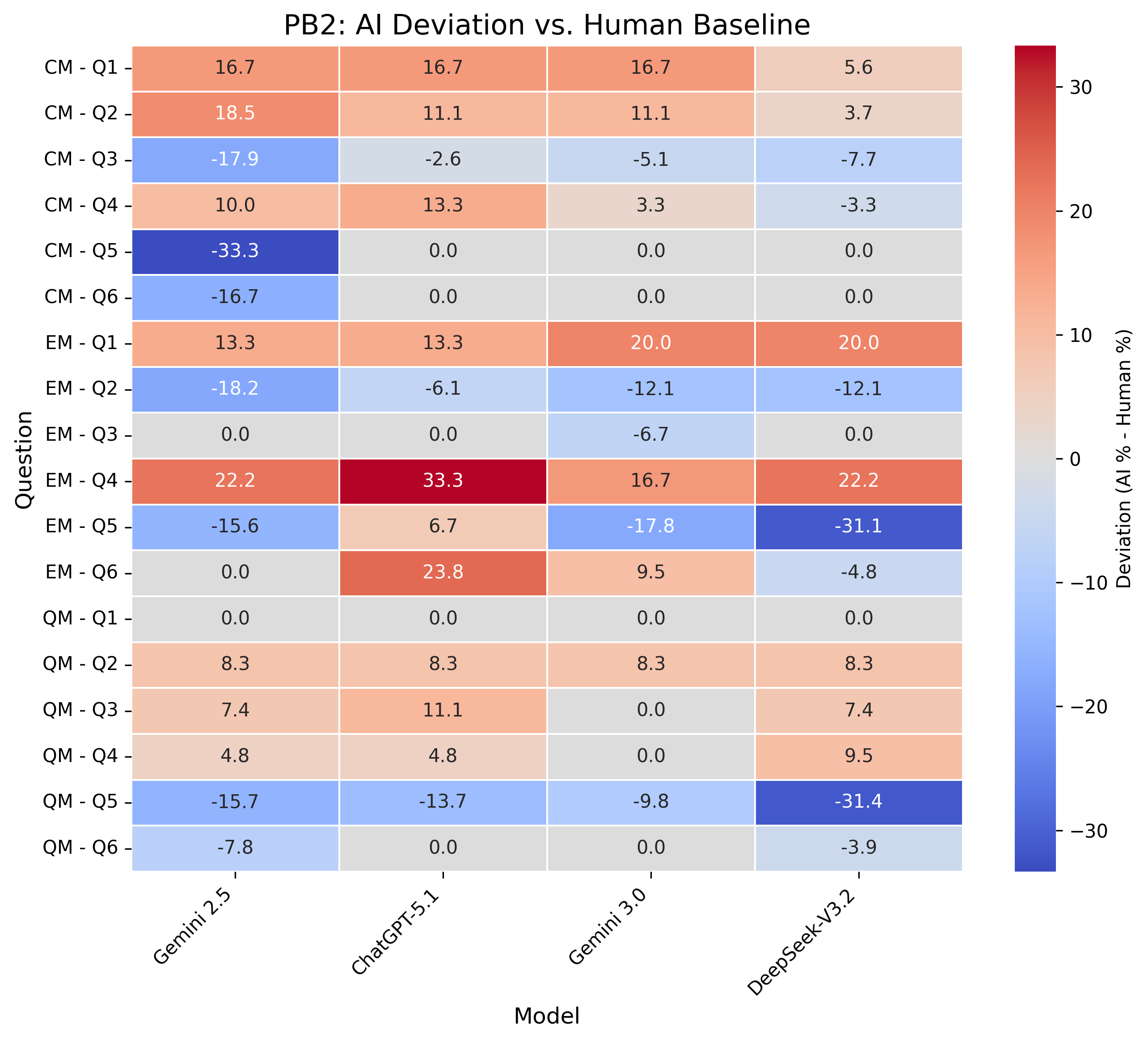
Figure 17: AI Deviation vs. Human Baseline per Question (P2), emphasizing improvement and emergence of under-marking zones.
PB2, MM: Improved Alignment and Persistent Partial-Credit Challenges
Isolated grading context in PB2 led to dramatic statistical alignment with human graders. Gemini 3.0 Pro and DeepSeek-V3.2 exhibited near-ideal regression (y=x), robust variance tracking, and lower Mean Absolute Errors. Yet, Model floor effects persisted in ChatGPT-5.1, signifying residual marking leniency.
MM-handwritten grading analysis Figure 18 showed low error for perfect solutions but elevated error for partial-credit assessment, especially in EM. This exposes the persistent challenge of evaluating incomplete student reasoning, which remains the primary evaluative bottleneck even in contemporary multimodal architectures.
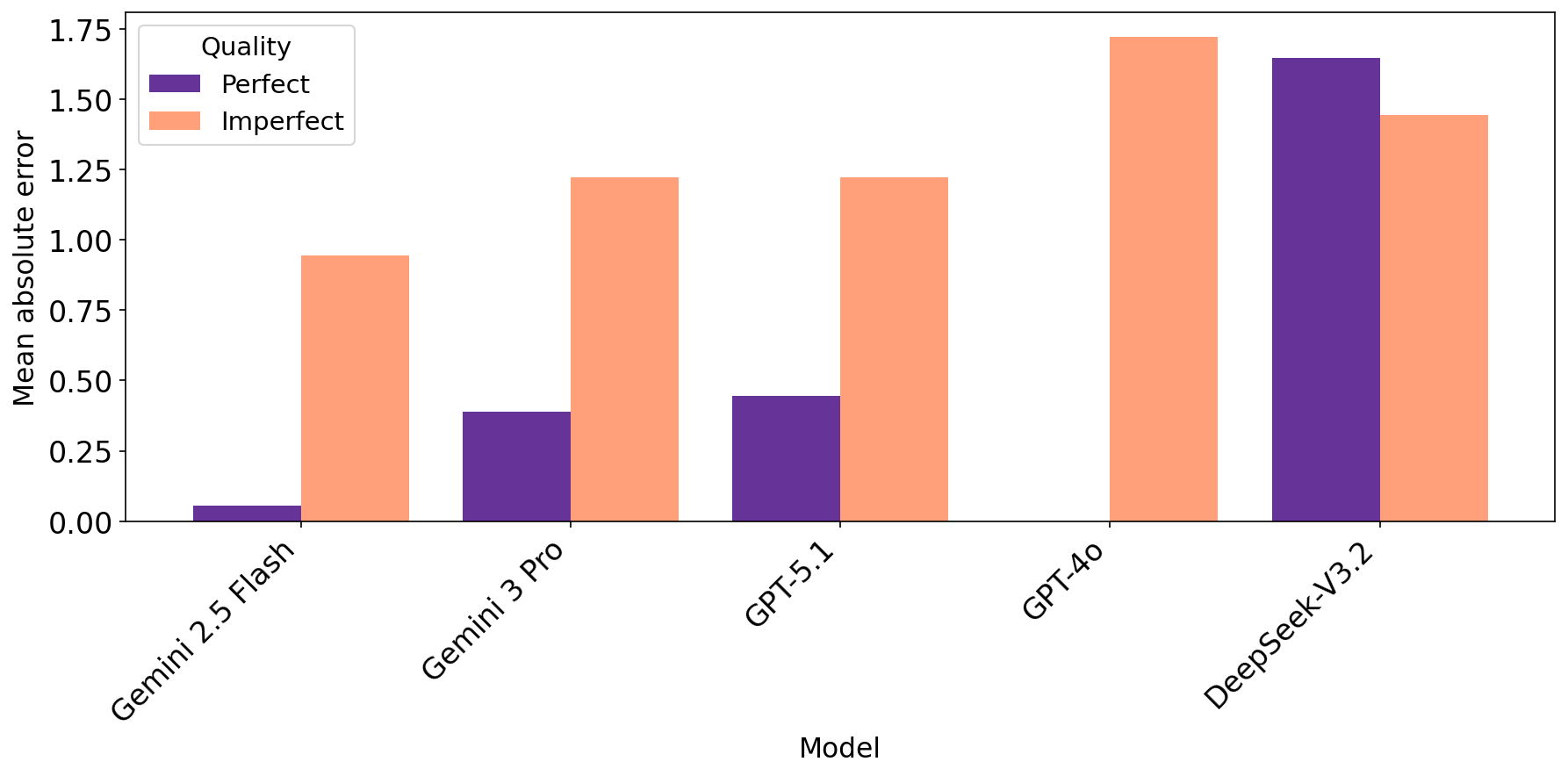
Figure 18: Mean absolute grading error across models for perfect and imperfect handwritten physics solutions, highlighting partial-credit assessment limitations.
Implications and Future Outlook
The results substantiate that current frontier LLMs are functionally reliable as autonomous problem solvers and evaluators in undergraduate physics education, provided benchmarks are sufficiently aligned with their architectural strengths. Native multimodal integration has largely resolved spatial reasoning limitations, markedly improving diagram interpretation and grading robustness. Theoretical implications include a redefinition of the cognitive boundaries between human and machine in technical domains, and practical ramifications span scalable instructional support and expedited feedback cycles.
However, persistent limitations in partial-credit assessment, especially when dealing with incomplete or heuristic-driven student solutions, delimit the scope of unsupervised automation. These are not solely transcription-related but fundamentally tied to reasoning-based evaluation under uncertainty, an issue that will likely require architectural advances in reasoning supervision and context-aware logic tracking.
Future development trajectories should focus on:
- Dynamic rubric adaptation and context-sensitive grading, using hybrid neural-symbolic architectures.
- Enhanced VCoT pipelines for robust, high-fidelity multimodal reasoning.
- Benchmark diversification to avoid ceiling effects and capture emergent capabilities, especially in edge-case spatial phenomena.
Continued integration of LLMs in educational settings will necessitate rigorous training, institutional oversight, and periodic benchmarking to adapt to model evolution and ensure evaluative consistency commensurate with human grading standards.
Conclusion
LLMs have achieved robust proficiency in undergraduate-level physics instruction and automated assessment, especially with the advent of multimodal architectures. While benchmark saturation is evident for text-based and visually grounded solution generation, substantial challenges persist in nuanced partial-credit evaluation. As these models integrate deeper into academic workflows, their utility is contingent on supervised deployment and continual methodological refinement. Further research is warranted to address evaluative ambiguities and to evolve model reasoning toward true cognitive autonomy (2605.23660).