- The paper presents a novel tri-module architecture combining data augmentation, conditional diffusion refinement, and semantic screening for robust 3D avatar reconstruction from monocular video.
- It employs Gaussian perturbations and a one-step diffusion process to expand pose and view coverage, significantly boosting metrics like PSNR and LPIPS.
- The examiner module uses a dual-branch semantic similarity network to filter out low-quality reconstructions, ensuring high fidelity and stability in avatar synthesis.
TrioMan: A Tri-Module Data Augmentation Pipeline for Monocular 3D Human Avatar Reconstruction
Introduction
"Generator-Refiner-Examiner: A Tri-Module Data Augmentation Framework for 3D Human Avatar Learning from Monocular Videos" (2605.23555) presents TrioMan, a modular architecture aiming to improve photorealistic, animatable 3D human avatar reconstruction from monocular video. Unlike multi-view systems, monocular video capture suffers from insufficient pose and view coverage, leading to incomplete geometric and appearance modeling. Recent 3D Gaussian Splatting (3DGS) techniques, especially in human reconstruction, have amplified efficiency and expressiveness for single-view pipelines. However, existing works (e.g., [3DGaussian], [moon2024exavatar], [hu2024gaussianavatar], [guo2025vid2avatar]) inadequately address the subject-specificity and diversity needed for robust generalization, particularly in rare or novel poses.
The TrioMan framework introduces three synergistic modules: (i) Generator for data diversity, (ii) Refiner for synthetic-real alignment, and (iii) Examiner for quality gating, thereby systematically mitigating data scarcity, detail loss, and artifact propagation in monocular settings.
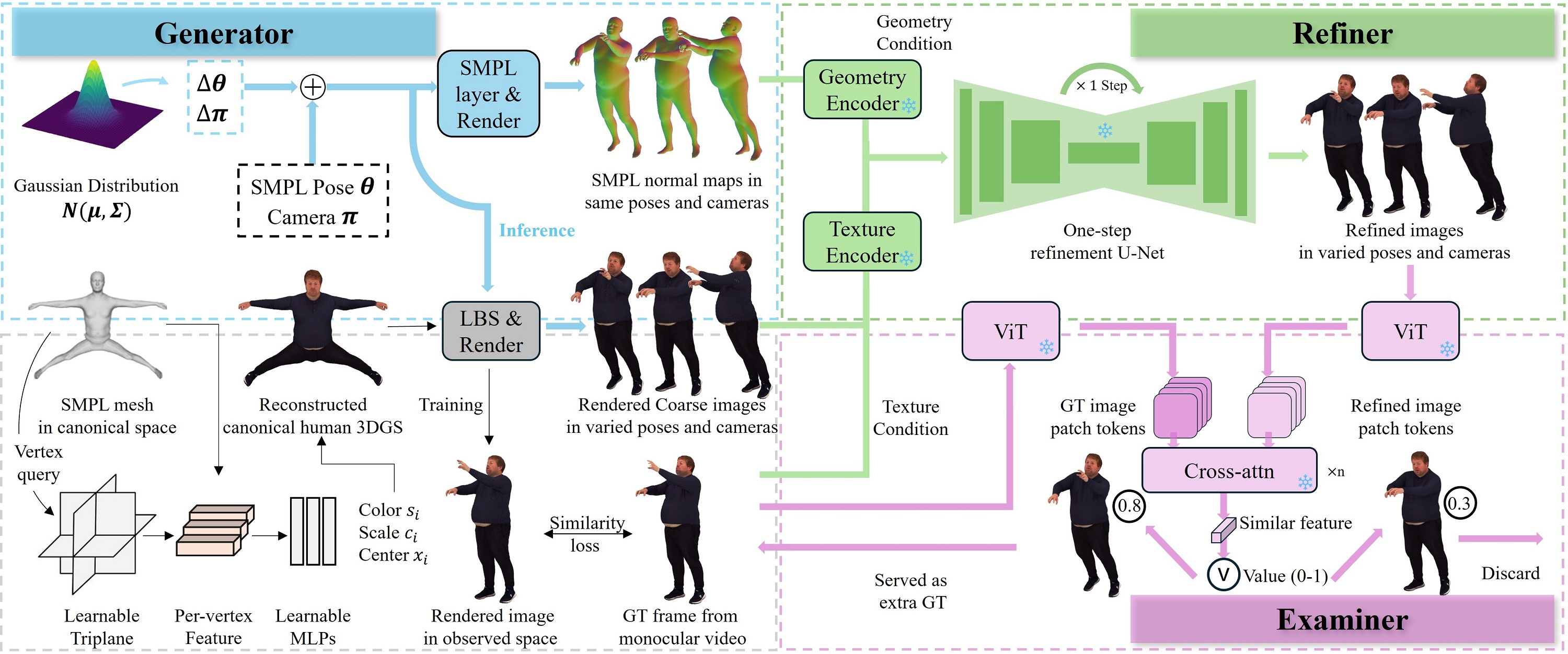
Figure 1: TrioMan architecture—Generator augments pose/camera, Refiner denoises coarse frames with one-step diffusion, Examiner ensures sample fidelity.
Methodological Framework
Baseline
TrioMan builds upon ExAvatar-style SMPL-X-driven 3DGS pipelines. Fitted SMPL parameters from RGB video frames guide LBS-driven canonical 3D Gaussian deformation, optimized through triplane-MLP architectures.
Generator: Sampling Distributional Augmentations
The Generator module samples perturbations from independent Gaussian distributions over both SMPL pose and camera extrinsics, producing out-of-distribution pose-view combinations. These sampled parameters are used to deform the canonical 3DGS avatar, yielding coarse frames that expand training coverage beyond the limitations of the input monocular stream.
Refiner: Conditional Diffusion Correction
Refiner transforms coarse Generator outputs into photorealistic images using a one-step diffusion process with U-Net backbone. It operates in the VAE latent space, conditioned on (i) geometry information—SMPL normal maps of the posed mesh, and (ii) texture priors from temporally adjacent ground-truth frames. This dual-conditioning reduces hallucination, enforces geometric consistency, and facilitates high-fidelity detail restoration.
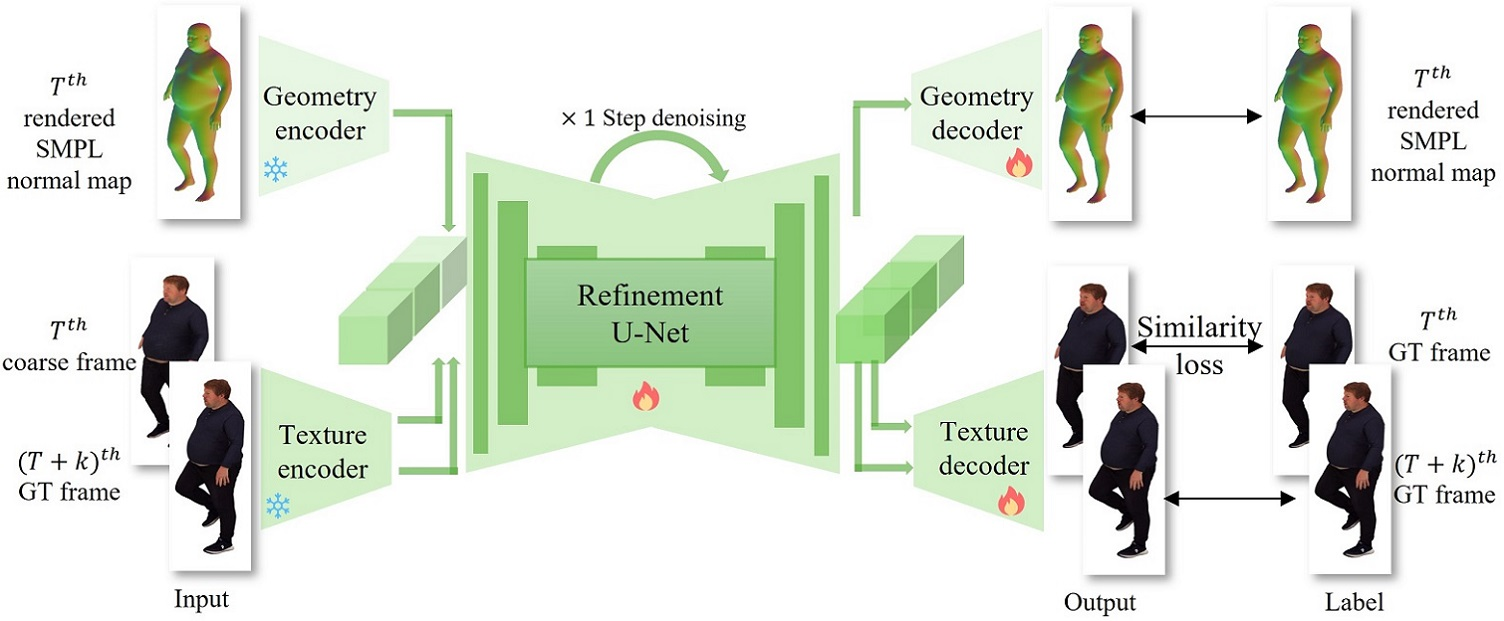
Figure 2: Refiner as single-step denoising conditional on geometry and texture for frame-wise photorealism.
Examiner: Dual-Branch Quality Assurance
Owing to stochasticity in conditional denoising, not all refined frames are reliable as pseudo ground truth (GT). The Examiner module, a dual-branch semantic similarity network based on ViT and channel-attention, compares refined outputs with genuine video frames. It assigns a confidence score and probabilistically selects only those highly aligned with subject semantics and detail consistency for downstream avatar optimization.
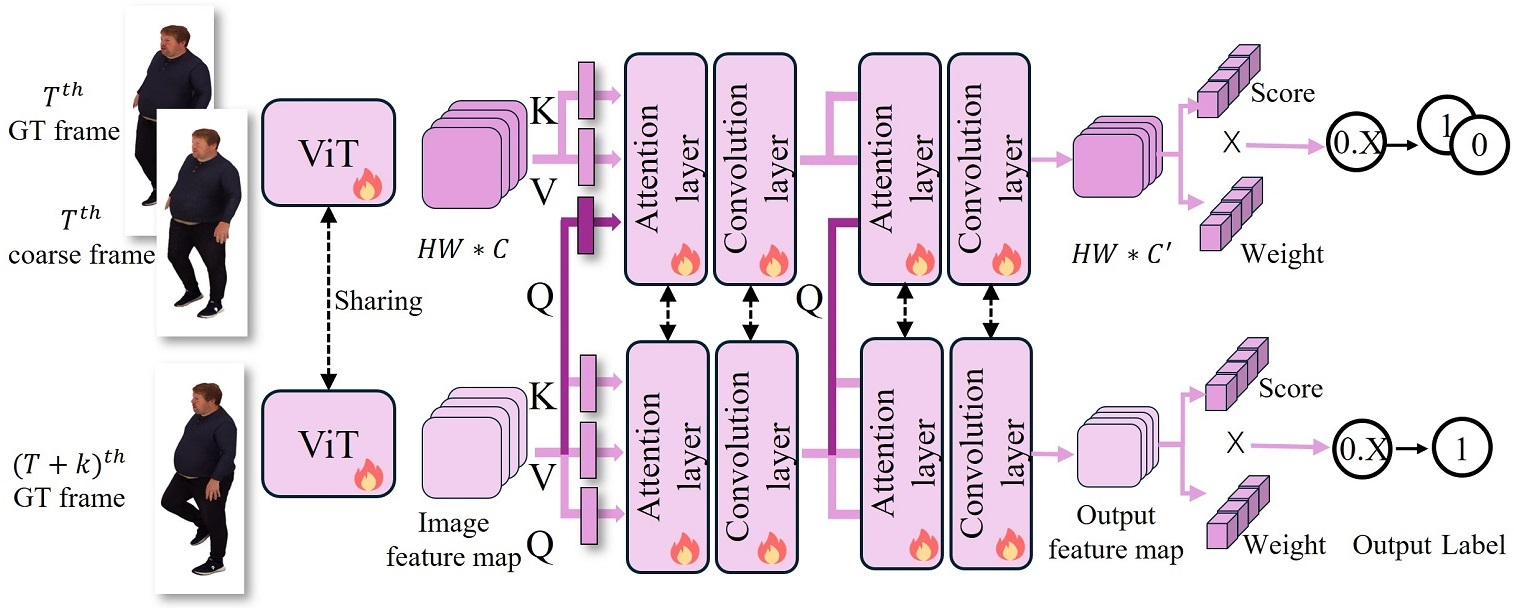
Figure 3: Examiner uses cross-attention between refined and GT frames to score detail consistency and authenticity.
Experiments and Results
Datasets and Metrics
Evaluations are performed on X-Humans [shen2023xavatar] and NeuMan [jiang2022neuman], adhering to prior splits. Metrics include PSNR, SSIM, and LPIPS, using ground-truth frames for supervision and test.
On X-Humans subject 00028, TrioMan exceeds ExAvatar by +2.46 PSNR and 0.004 SSIM, with a notable LPIPS reduction. On NeuMan, +0.62 PSNR over previous SOTA is achieved. These gains are statistically robust across all reported subjects.
Qualitative Analysis
Compared with competing SOTA (ExAvatar, GaussianAvatar, Vid2Avatar-Pro, MonoCloth, PriorAvatar), TrioMan reduces facial and clothing artifacts, reconstructs fine wrinkles, and improves spatial coherence under out-of-distribution motions and views.
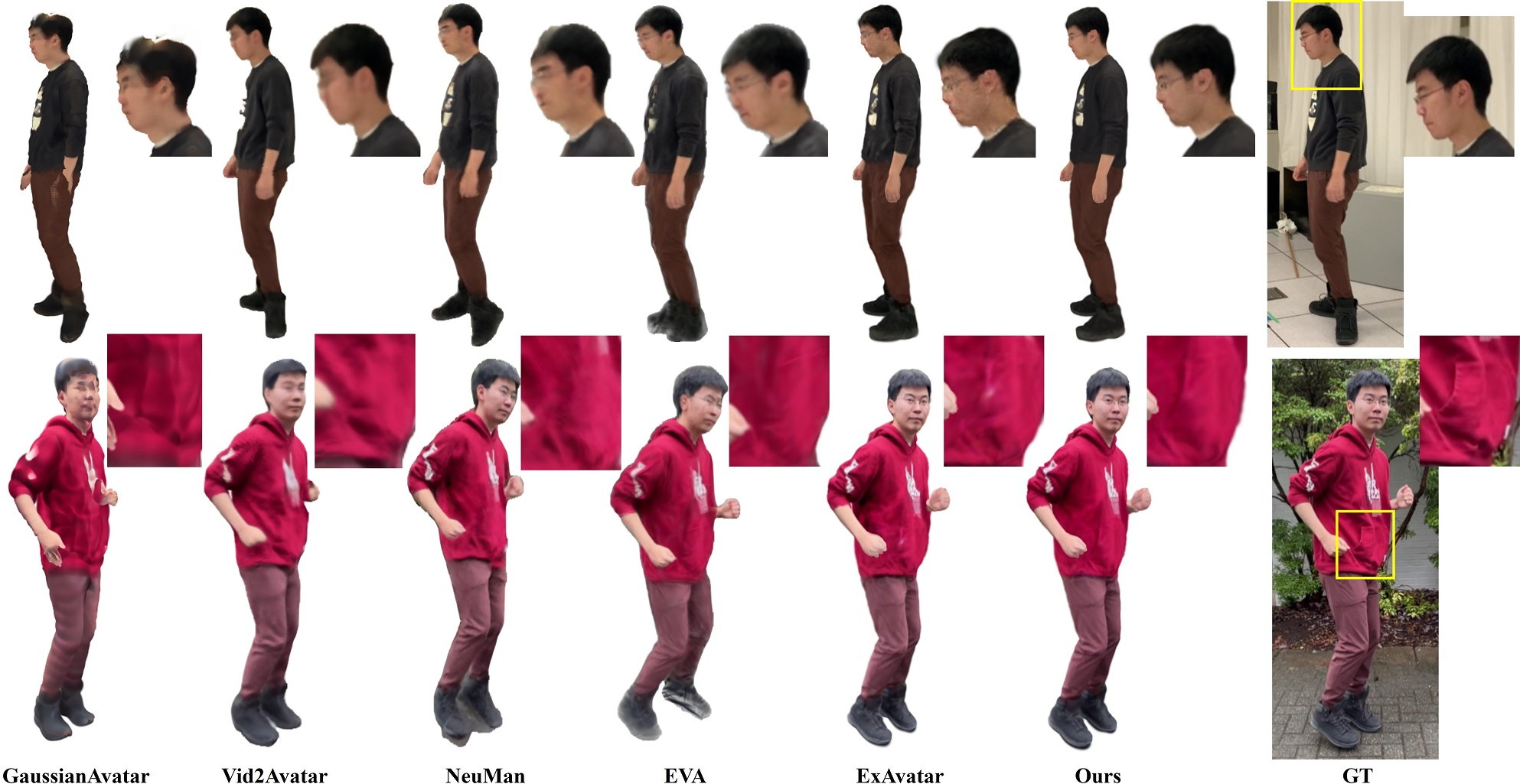
Figure 4: Qualitative performance on NeuMan—TrioMan reconstructs facial side-profiles and clothing details more accurately than previous methods.
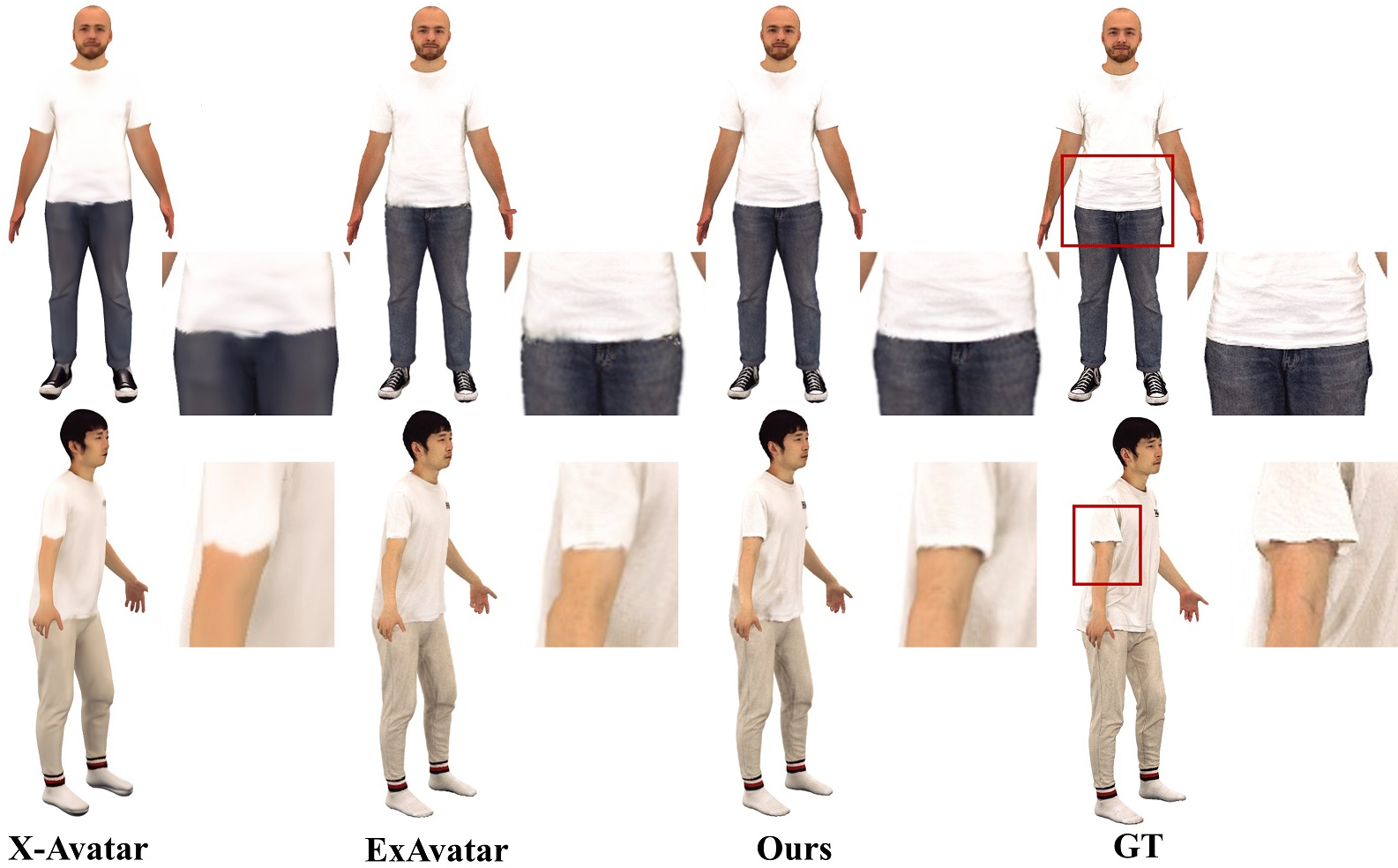
Figure 5: X-Human reconstructions—superior recovery of wrinkles, fabric structure, and edge delineation.
Module Ablations
Systematic ablation demonstrates monotonic improvement with each module addition:
- Generator increases pose/view generalization.
- Refiner (with texture and geometry conditioning) further reduces error and artifacts; unconditioned diffusion degrades performance via random detail perturbation.
- Examiner filters out stochastic or misaligned pseudo GTs, stabilizing convergence and output reliability.
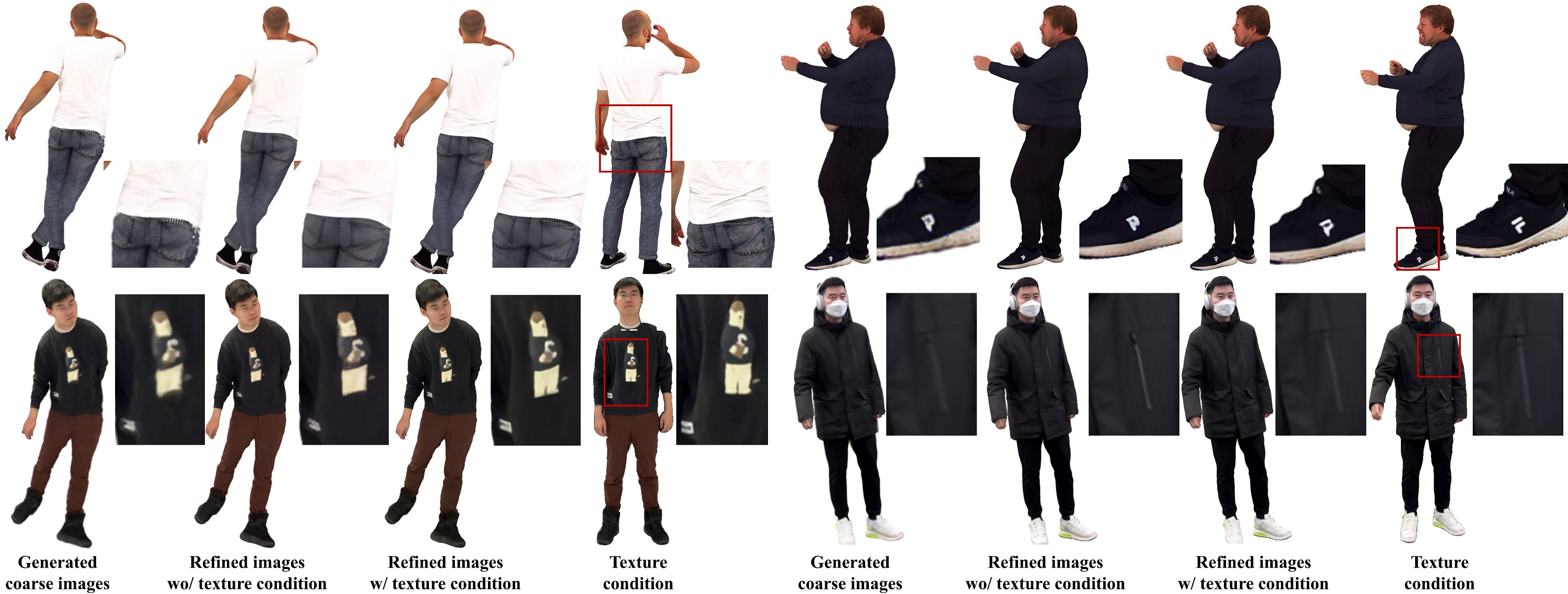
Figure 6: Refiner ablation—texture condition prevents hallucinations; geometric cues improve hand/finger fidelity.
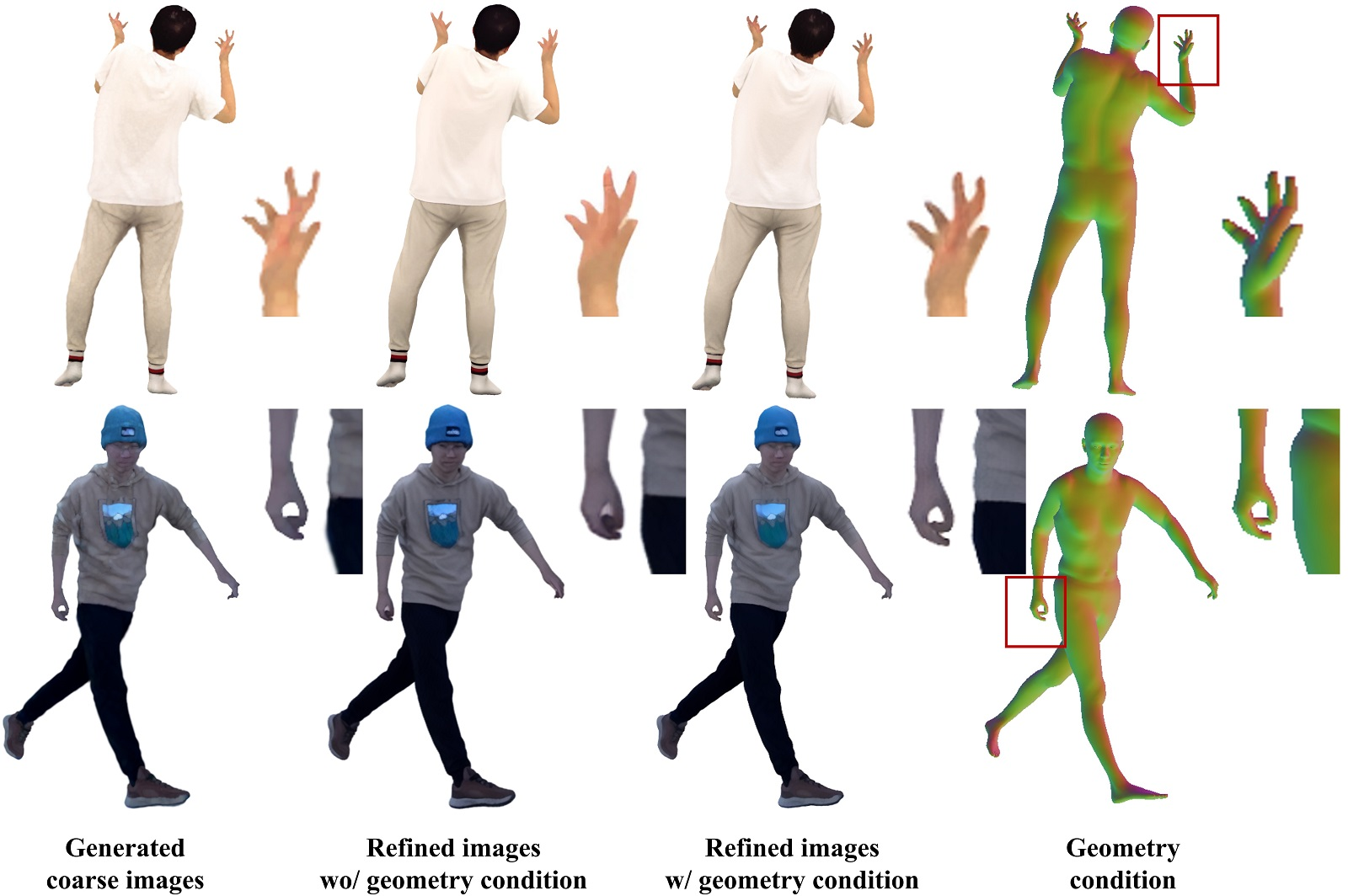
Figure 7: Geometry condition ablation—enhanced reconstruction of hand articulation and local surface features.
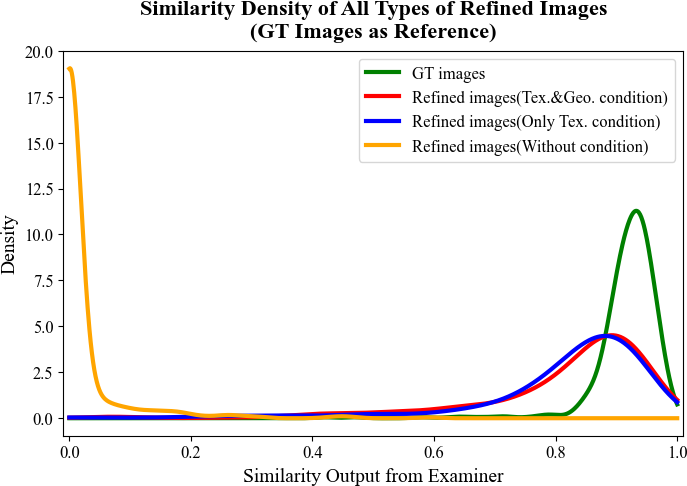
Figure 8: Examiner visualization—high similarity for GT-refined matches, low for unconditioned or hallucinated samples.
Implications and Future Directions
Practical Impact
By endowing single-video 3DGS pipelines with robust synthetic augmentation and selective pseudo supervision, TrioMan enables effective data-efficient subject-specific avatar modeling. The conditional one-step diffusion refiner sidesteps expensive multi-step denoising used in score-based generative models, supporting real-time or online pipeline integration. Integration of semantic examiner gating ensures that noisy or hallucinated updates do not contaminate the learning trajectory—an underpinning crucial for scalable user-facing applications (e.g., VR/AR, telepresence, digital fashion).
Theoretical Advances
TrioMan's modularization decouples distribution expansion, synthetic-real correction, and data curation, suggesting that future monocular pipelines should treat these problems independently. This modularity positions the framework well for future plug-and-play substitution (e.g., learned parameterized priors in the Generator, multi-modal conditioning in the Refiner, or CLIP-based examiners).
Research Outlook
Potential directions include semi-supervised extension leveraging weak constraints from large-scale multi-person datasets, adaptive prior learning for the Generator, or reinforcement learning-based sample curation in the Examiner. Incorporation of text or audio conditioning remains a practical research avenue, enabling more expressive and controllable avatars.
Conclusion
TrioMan demonstrates a systematic solution to the essential bottleneck of monocular 3D human avatar reconstruction: data scarcity, detail loss, and quality assurance. The tri-module design—sample diversity via Gaussian perturbation, rapid conditional denoising, and dual-branch semantic curation—yields statistically significant improvements over prior SOTA, both perceptually and numerically (2605.23555). These advances materially advance the field towards data-efficient, subject-personalized, photorealistic 3D avatar synthesis from minimal input.