- The paper introduces a novel Parametric Prior Mapping framework that integrates context-aware parametric priors with a push-forward mapping to enhance non-stationary time series forecasting.
- The methodology leverages a hybrid KDE-NLL and MSE objective to ensure robust uncertainty calibration and demonstrates superior performance on dynamic benchmarks.
- Empirical results reveal up to 31.2% CRPS and 44.3% QICE reductions, along with significant inference speedup compared to state-of-the-art diffusion models.
Parametric Prior Mapping Framework for Non-stationary Probabilistic Time Series Forecasting
Motivation and Background
Accurate probabilistic multivariate time series (MTS) forecasting in non-stationary regimes demands models capable of both expressive distribution modeling and robust uncertainty quantification. Conventional parametric approaches, such as DeepAR, offer efficient inductive bias and scalable likelihood estimation but exhibit structural rigidity that hampers their ability to adapt to dynamically evolving phenomena, e.g., nonstationary variance during traffic rush hours (Figure 1).
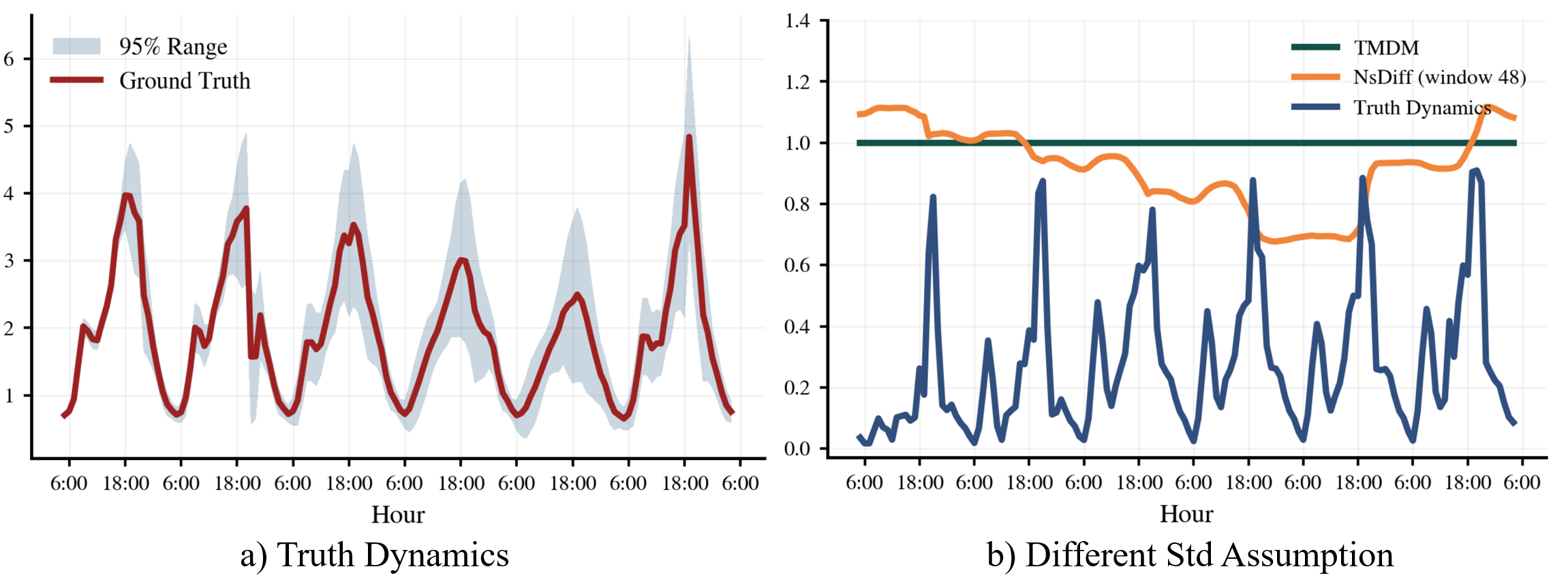
Figure 1: Source distribution comparisons on the Traffic dataset, demonstrating baseline prior misspecification during non-stationary periods.
Recent advances in deep generative models—diffusion, flow-based, and variational schemes—have improved predictive flexibility, but their reliance on uninformed or heuristically defined priors limits practical modeling fidelity under finite data and computational constraints. For example, mechanisms in TMDM and NsDiff attempt to approximate non-stationary uncertainty via sliding-window estimation or manual endpoint specification, but these remain suboptimal. Theoretical literature suggests that the structure of the latent prior in conditional generative modeling directly impacts the reachability and expressivity of complex target distributions, especially in regimes of limited sample support.
Framework: Parametric Prior Mapping (PPM)
PPM synthesizes parametric prior construction and deep generative modeling via a push-forward architecture. It encodes historical context, produces a context-aware parametric prior (diagonal Gaussian or other reparameterizable forms), then pushes this prior through a non-linear learnable mapping for flexible sample generation. Training proceeds via a hybrid KDE-NLL plus mean MSE objective, stabilizing both distributional calibration and point-wise accuracy. The core pipeline is illustrated below.
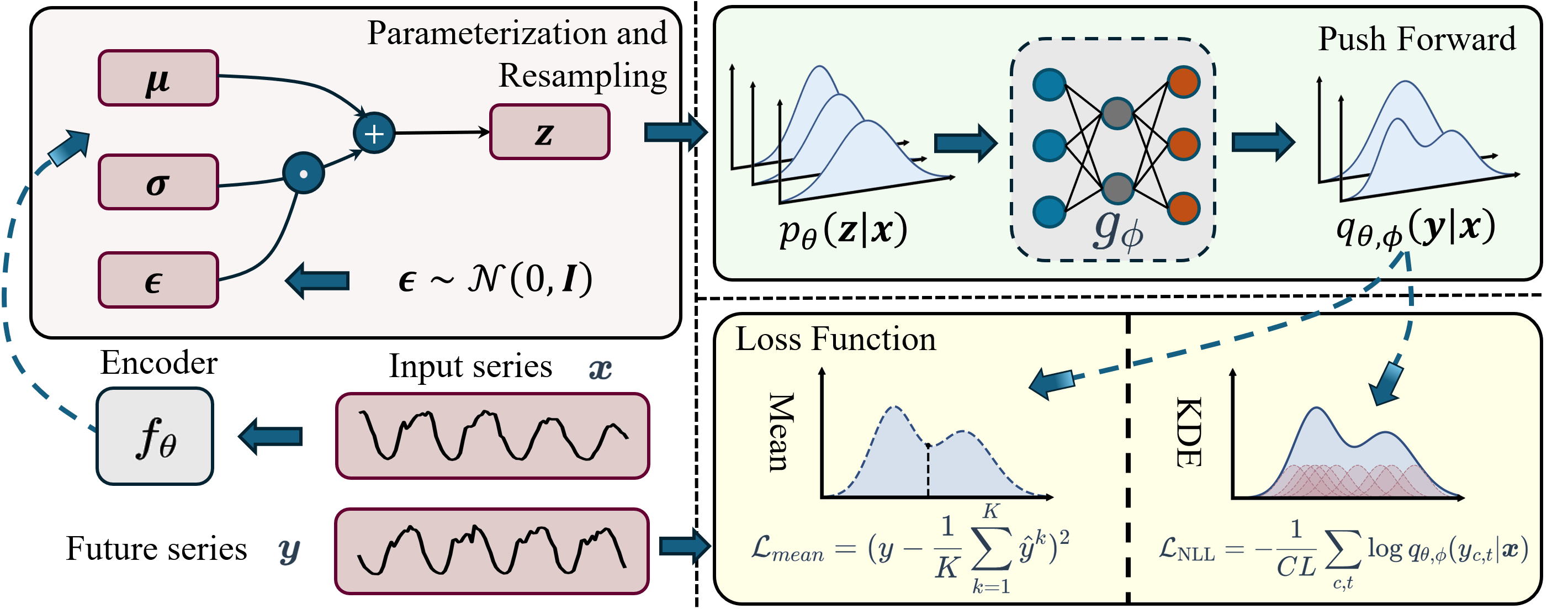
Figure 2: The three-stage PPM training workflow: prior estimation, push-forward sample generation, and KDE-based density estimation with hybrid optimization.
PPM is backbone-agnostic at the prior construction stage, although experiments use MLP for computational efficiency. The push-forward map gϕ leverages an over-complete latent space to induce rich conditional distributions, realized by a simple two-layer MLP. This architectural reduction in transport complexity enables fast parallel inference and minimizes overfitting.
Theoretical Properties
PPM rigorously quantifies the trade-off between smoothing bias and finite-sample stochasticity in KDE-based NLL estimation. A finite-(K,h) error bound demonstrates consistency of the objective with explicit convergence guarantees as the sample count K increases and the bandwidth parameter h decreases.
The push-forward parameterization exhibits universal approximation density in W1, i.e., for any ground-truth conditional law with finite first moment, there exists a mapping achieving arbitrary distributional closeness. The combined gradient structure—responsibility-weighted KDE with dense mean anchor—enables winner-take-all distribution shaping and stable trajectory anchoring across non-stationary regimes, counteracting training instability under small h or insufficient sample coverage.
Empirical Evaluation
Experiments span seven real-world benchmarks: ETTh1, ETTh2, ETTm1, ETTm2, Electricity, Traffic, and Weather, with significant non-stationary structure. Evaluations include CRPS and QICE for distributional metrics, and MSE/MAE for point estimation. PPM achieves up to 31.2% CRPS reduction and 44.3% QICE reduction versus the best baseline, with large gains on highly dynamic datasets (Traffic, ETTm1).
PPM consistently outperforms diffusion-based and classical parametric forecasts in both uncertainty calibration and mean accuracy. Notably, inference efficiency is enhanced by 2× to 100× over diffusion models due to the elimination of iterative denoising chains, as shown below.
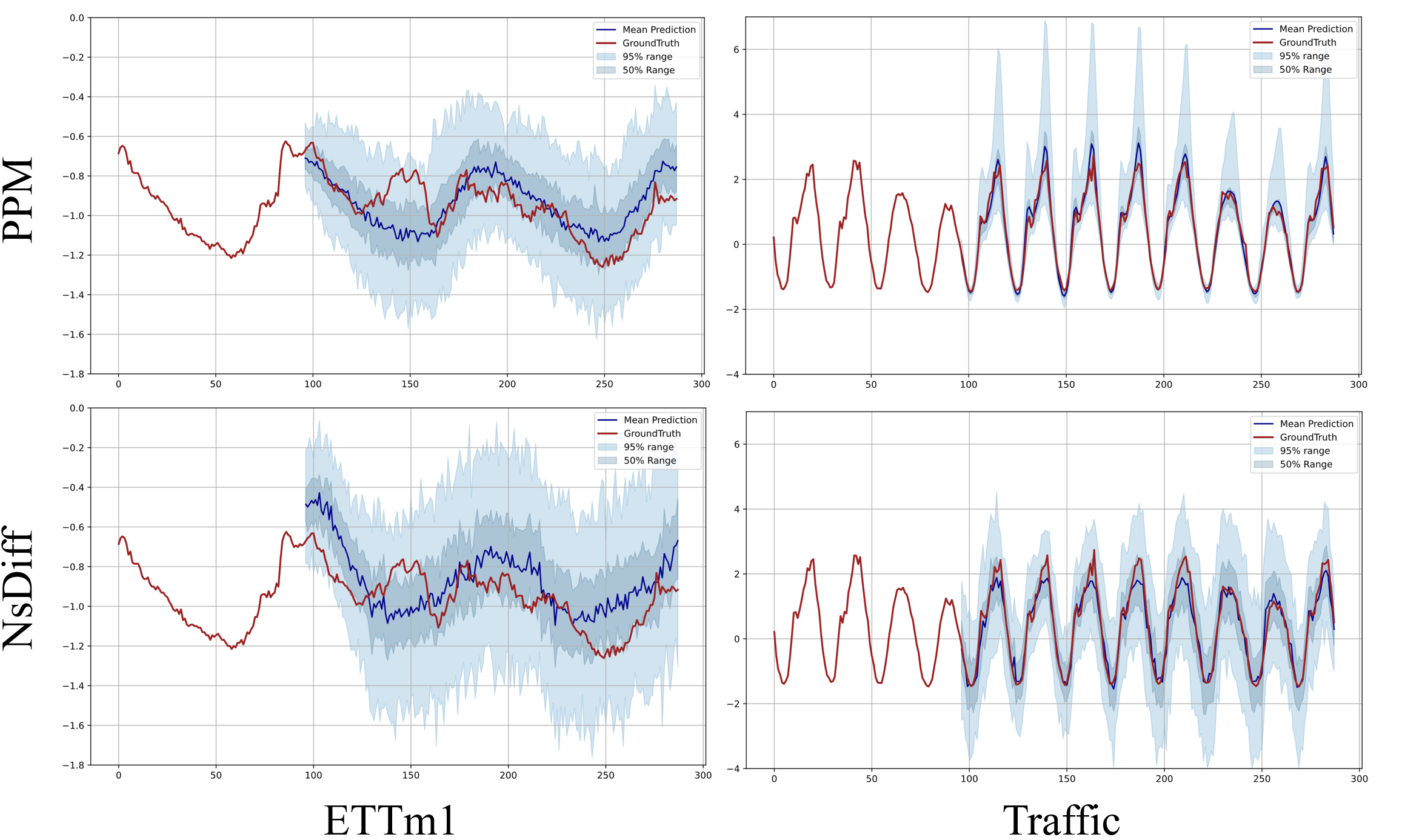
Figure 3: PPM vs. NsDiff interval estimates on ETTm1 and Traffic, showing superior adaptation to time-varying uncertainty.
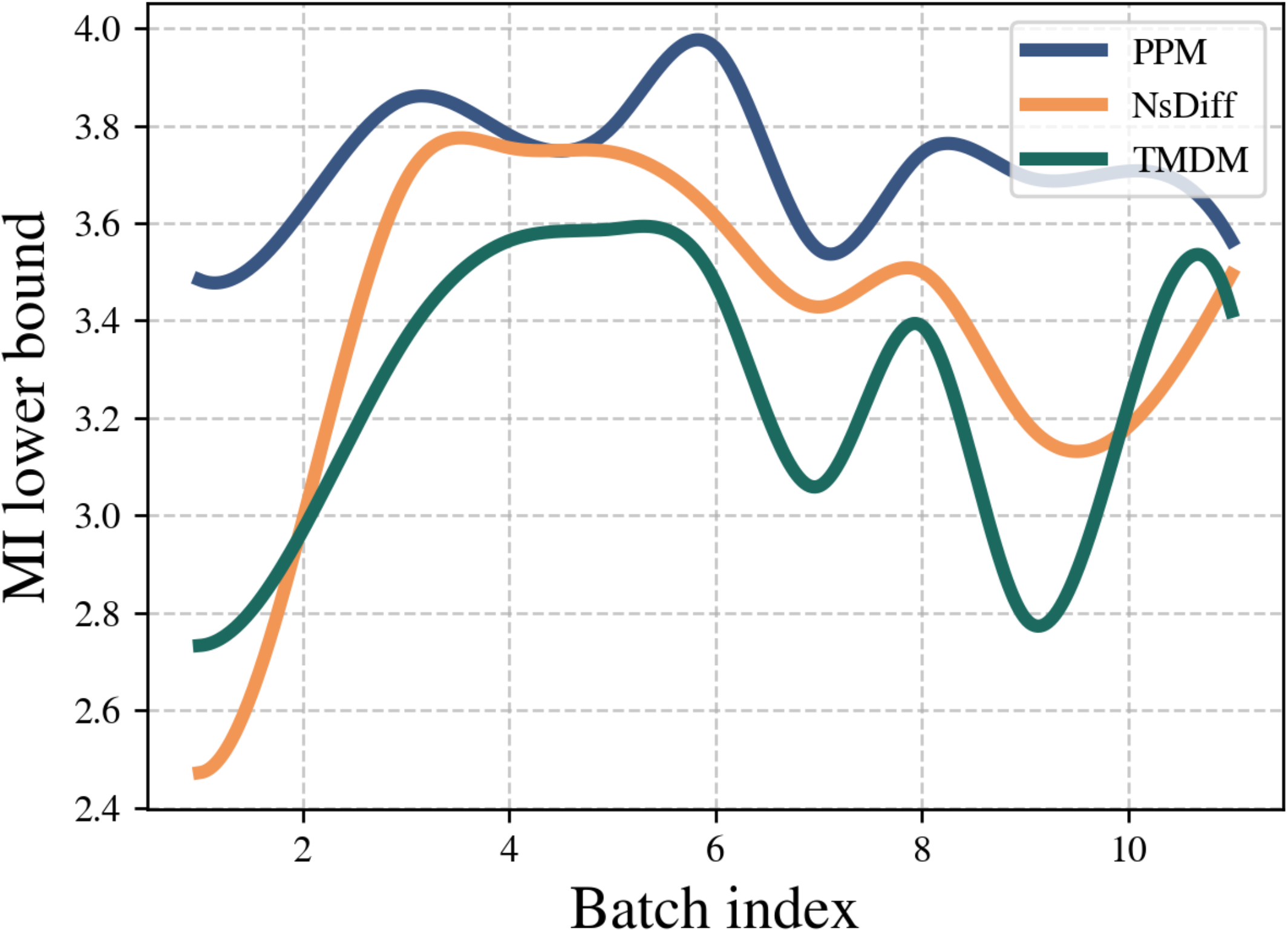
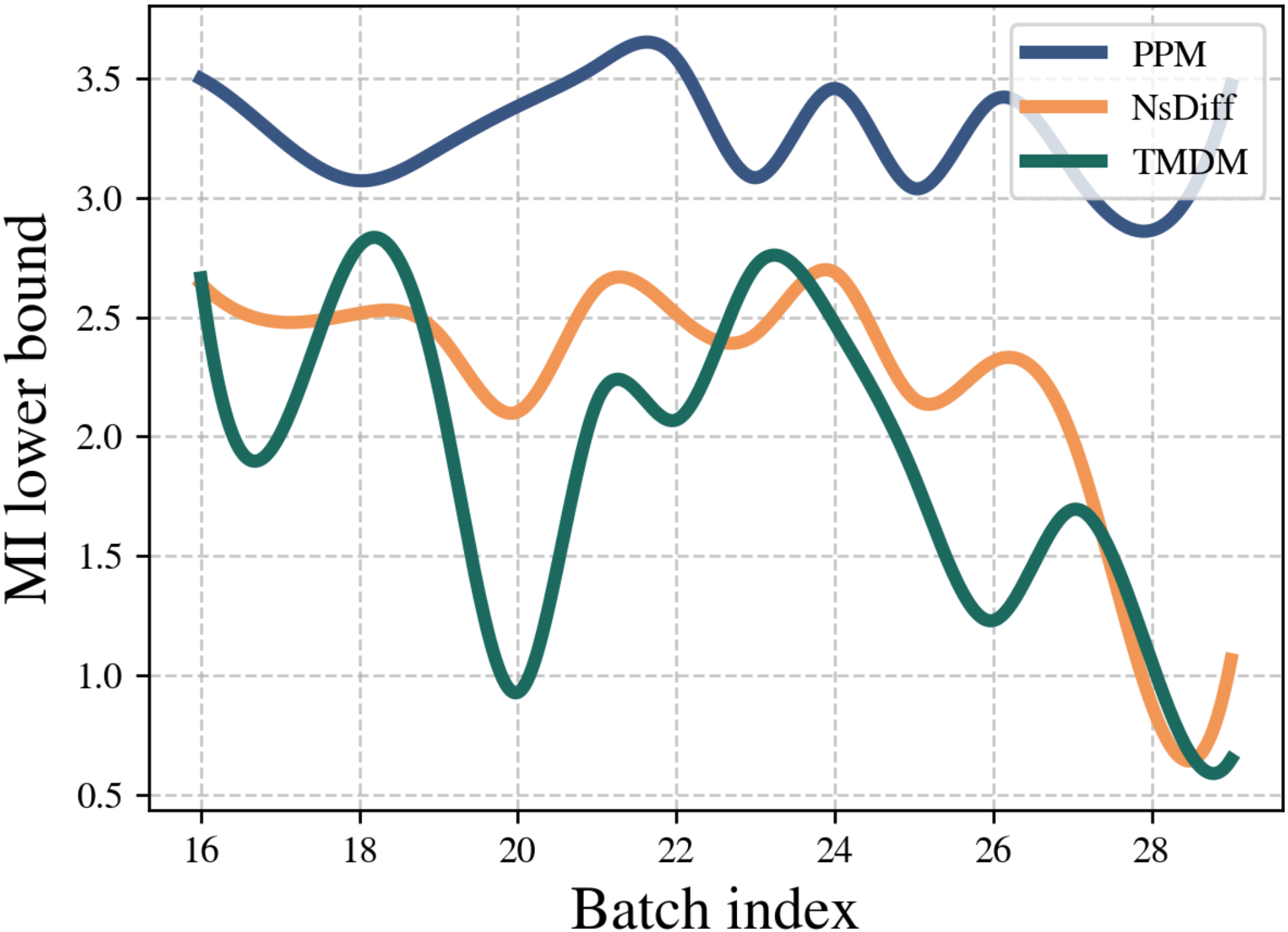
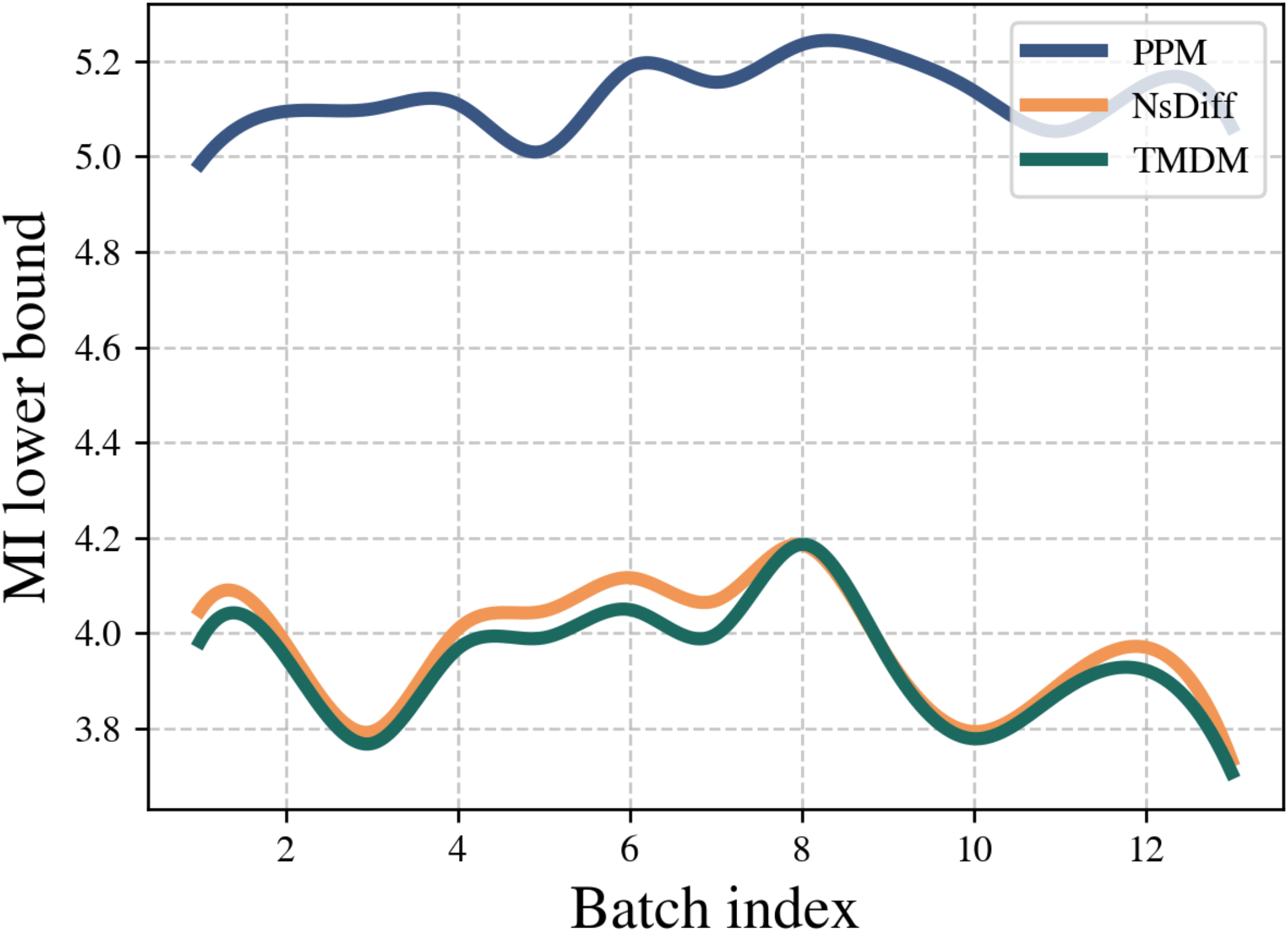
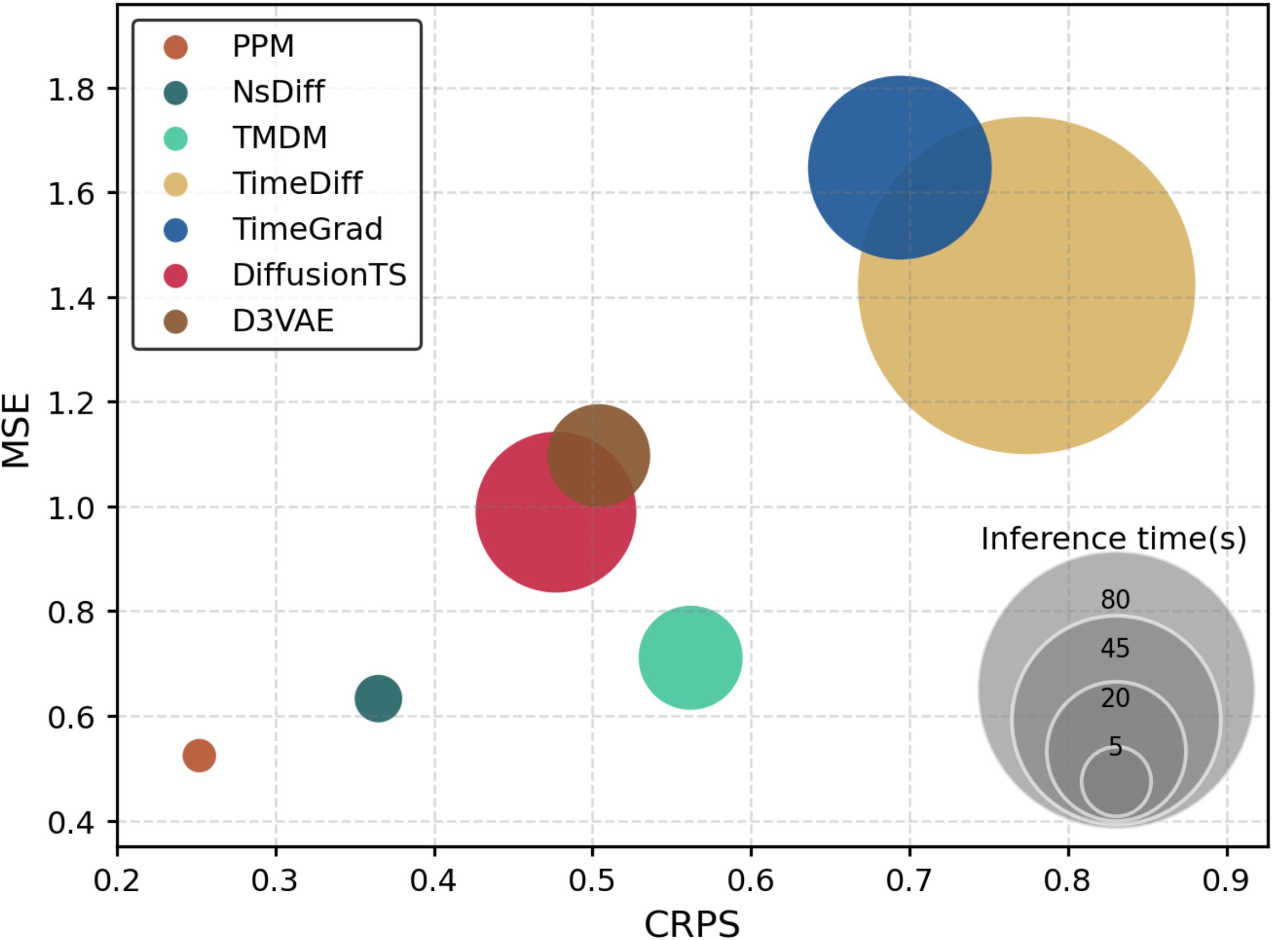
Figure 4: Inference time comparison on Traffic (batch size=1), highlighting PPM's efficiency advantage over sequential diffusion forecasters.
Ablation studies verify robustness to prior family, information retention in latent z, and the efficacy of end-to-end training. Mutual information analysis demonstrates improved conditional information preservation in the prior, particularly in complex settings.
Sample count K, bandwidth (K,h)0, and loss coefficient (K,h)1 analyses confirm broad hyperparameter stability, with moderate (K,h)2 and (K,h)3 yielding optimal calibration.
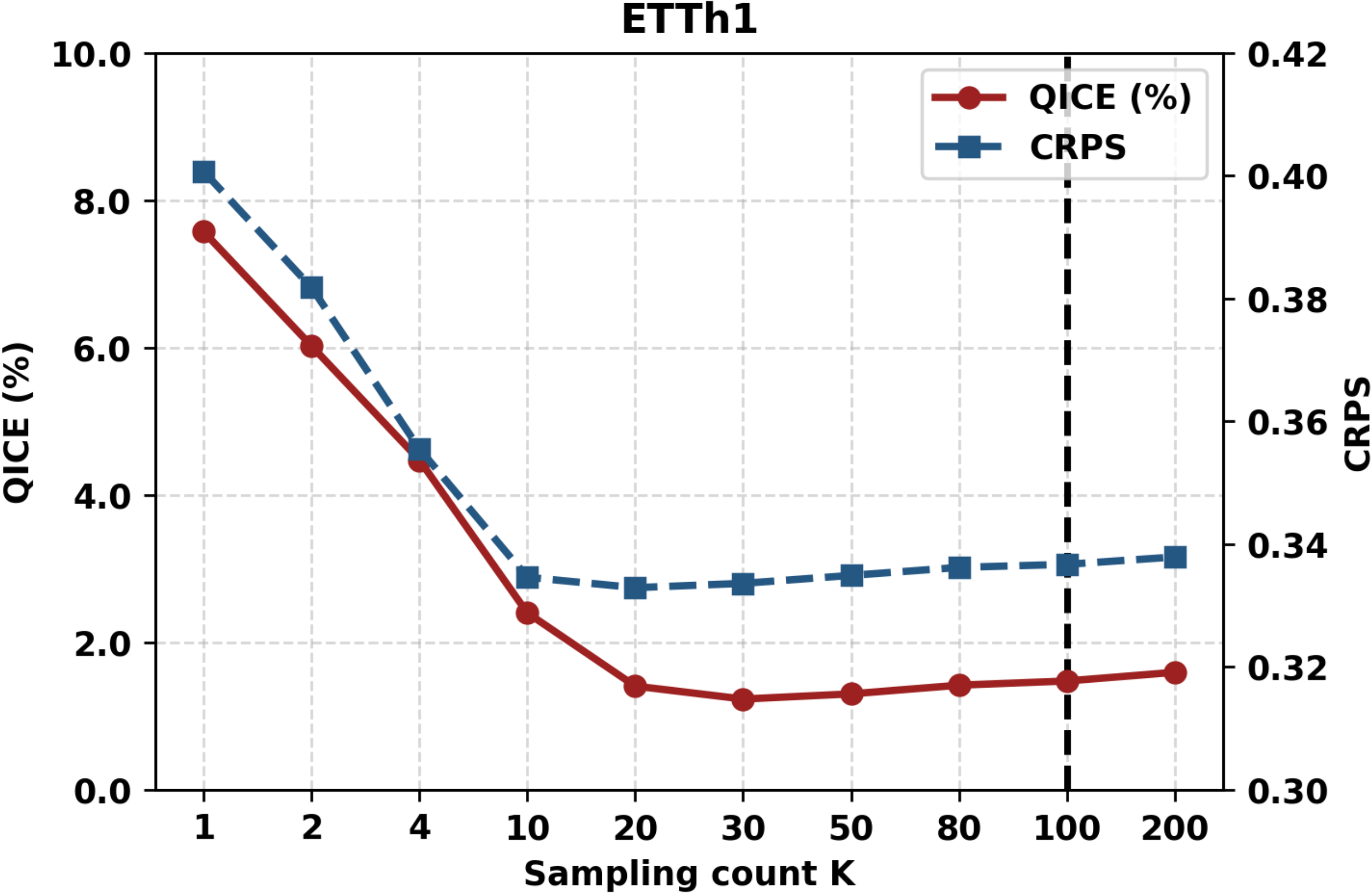
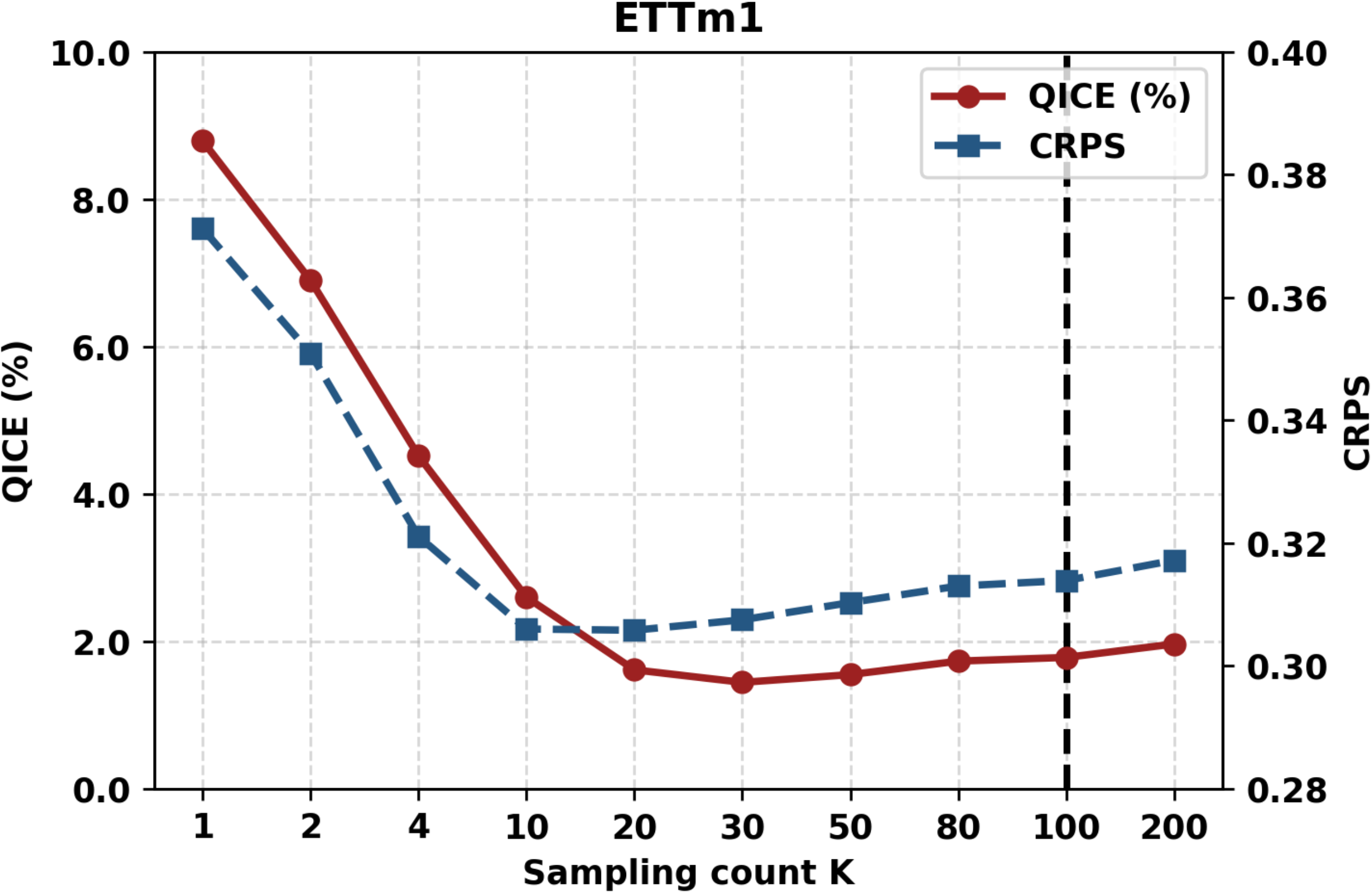
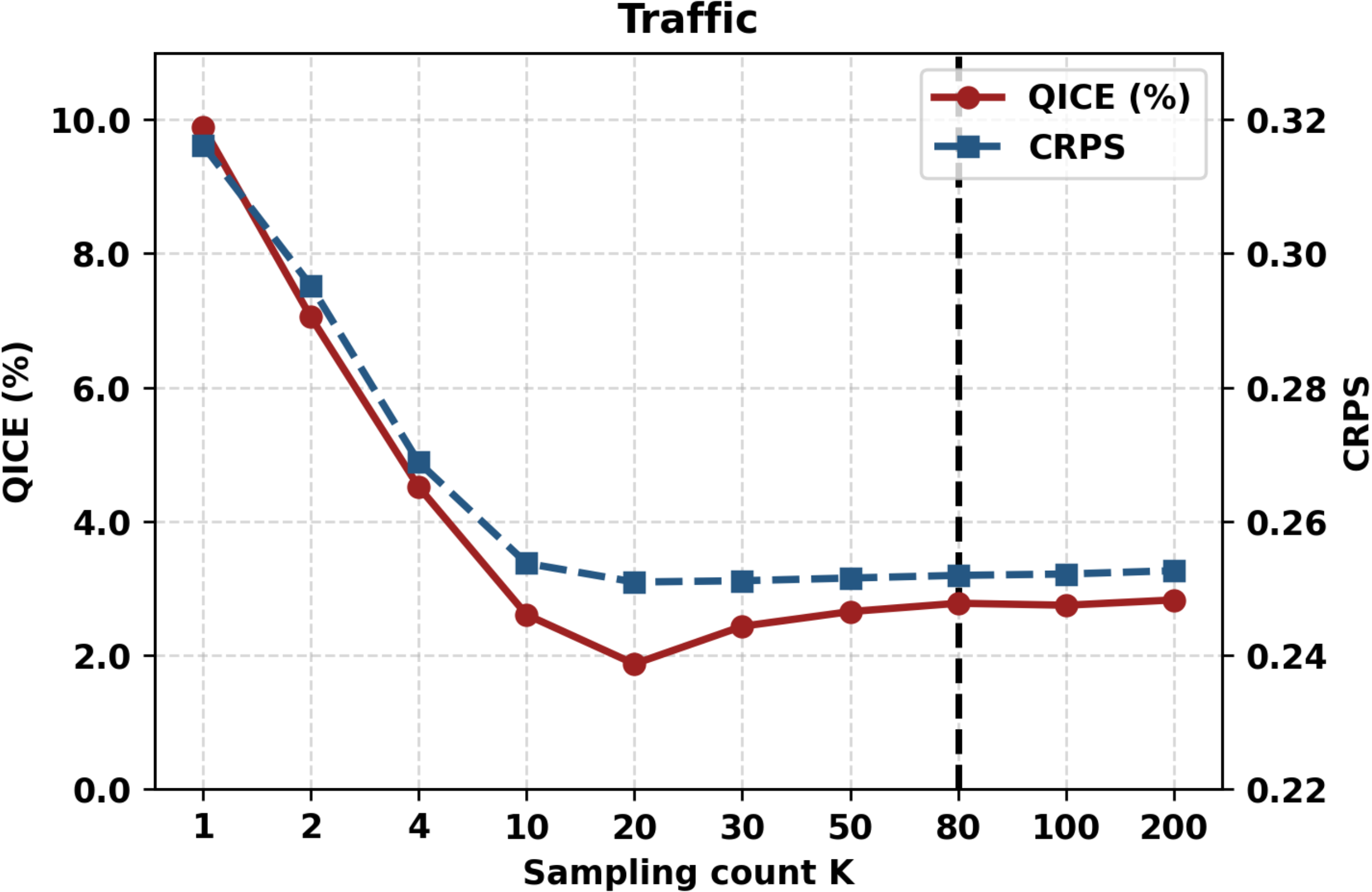
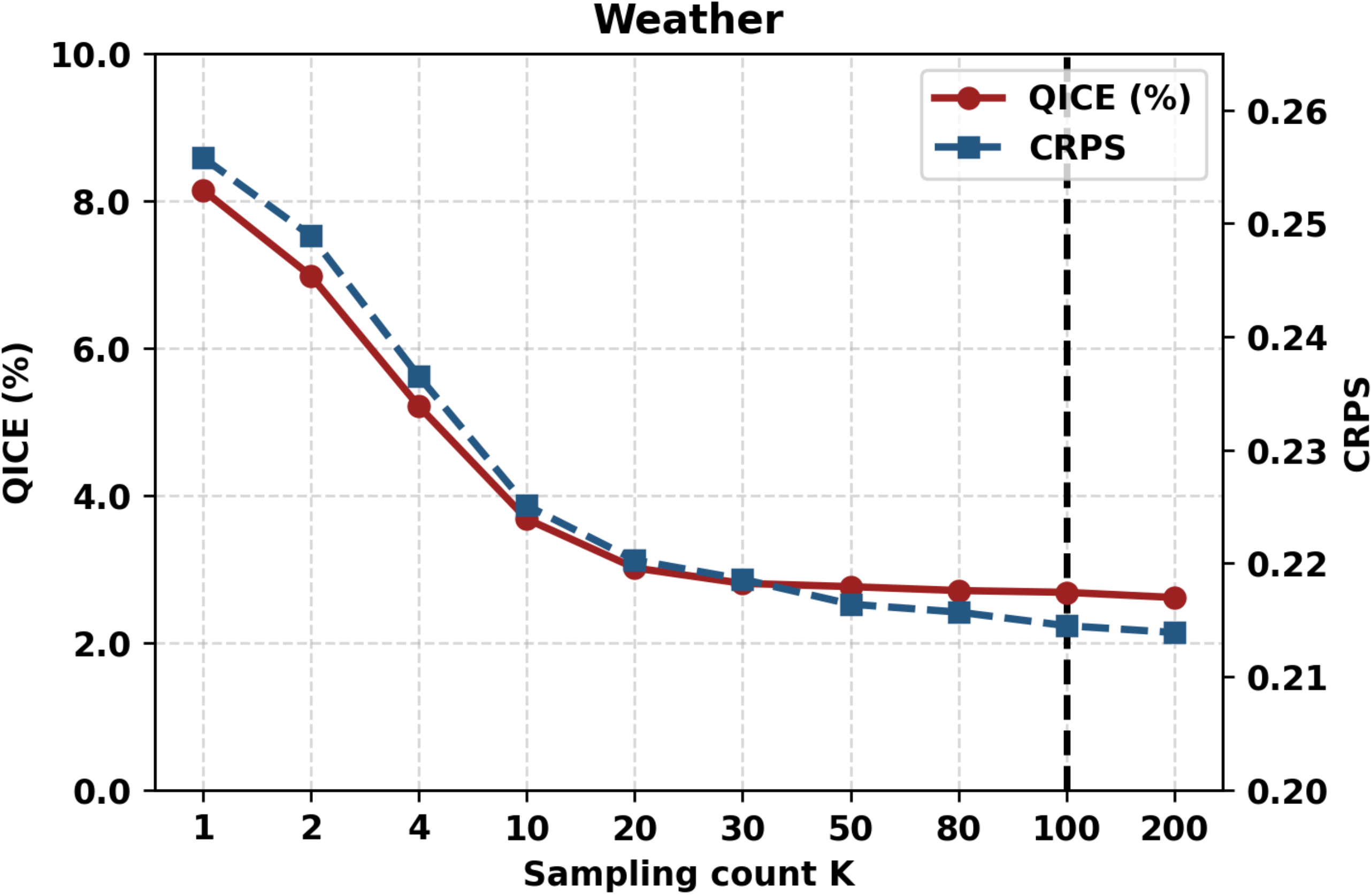
Figure 5: Sampling count (K,h)4 sensitivity analysis for QICE and CRPS.
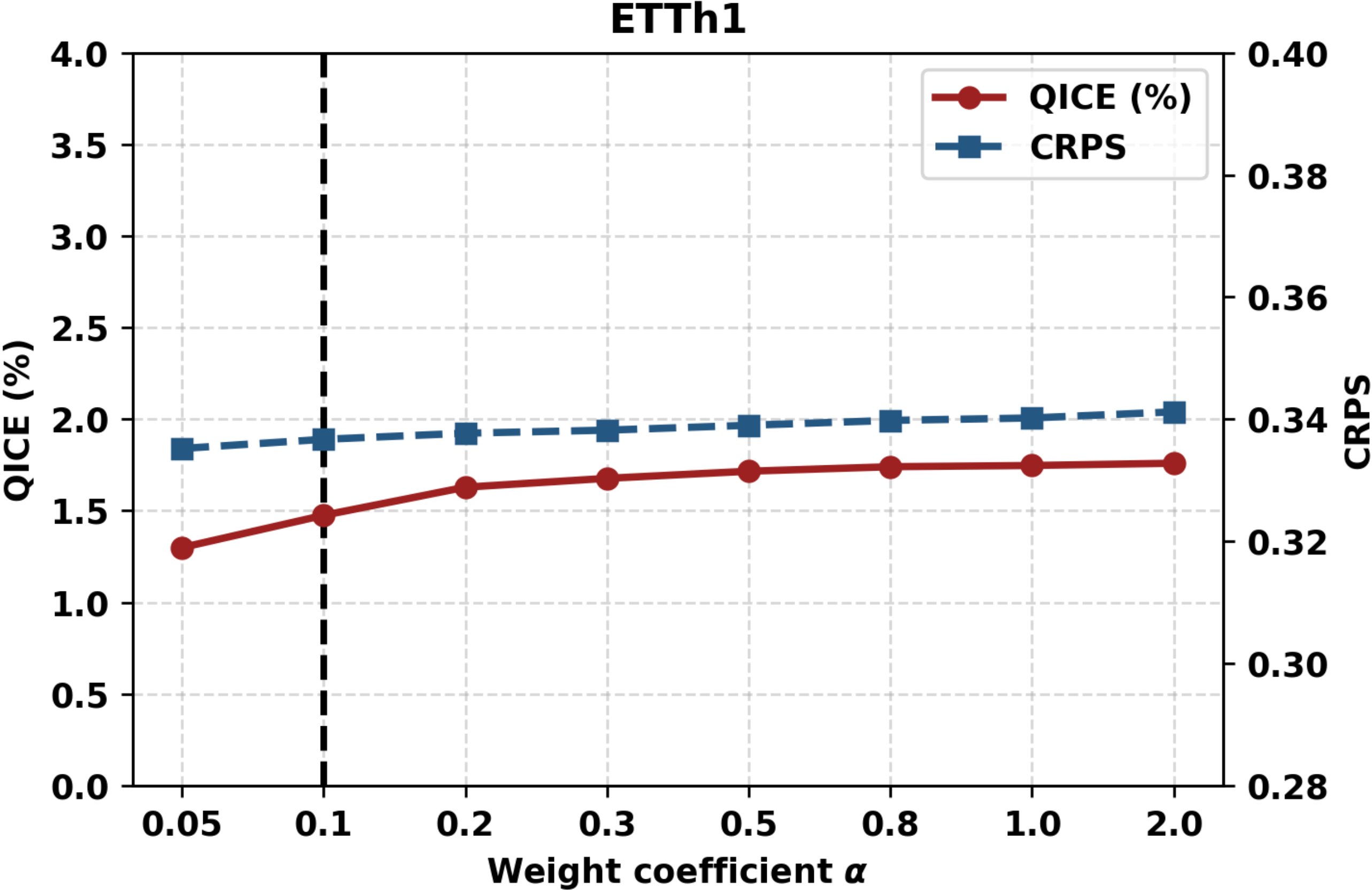
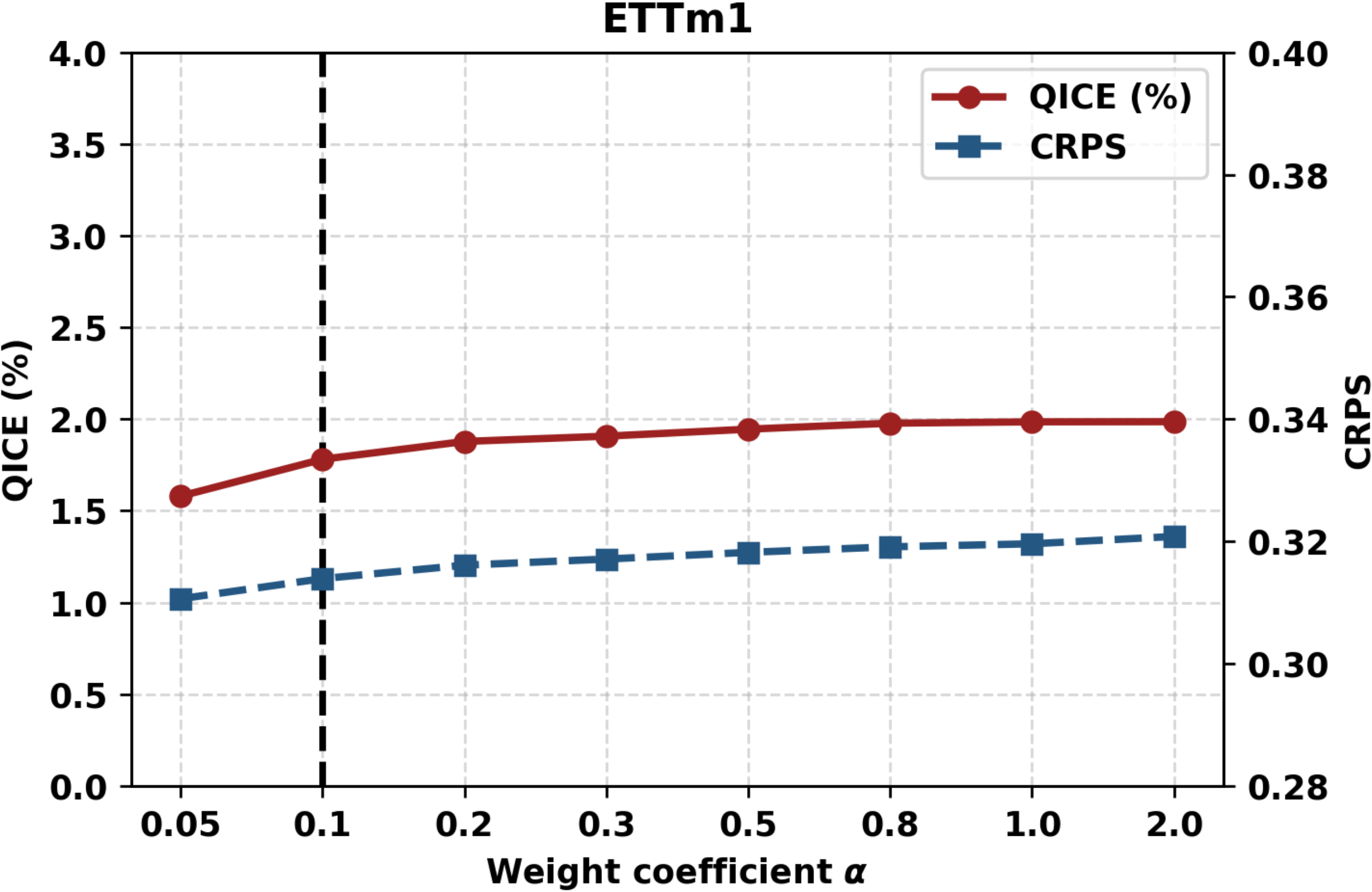
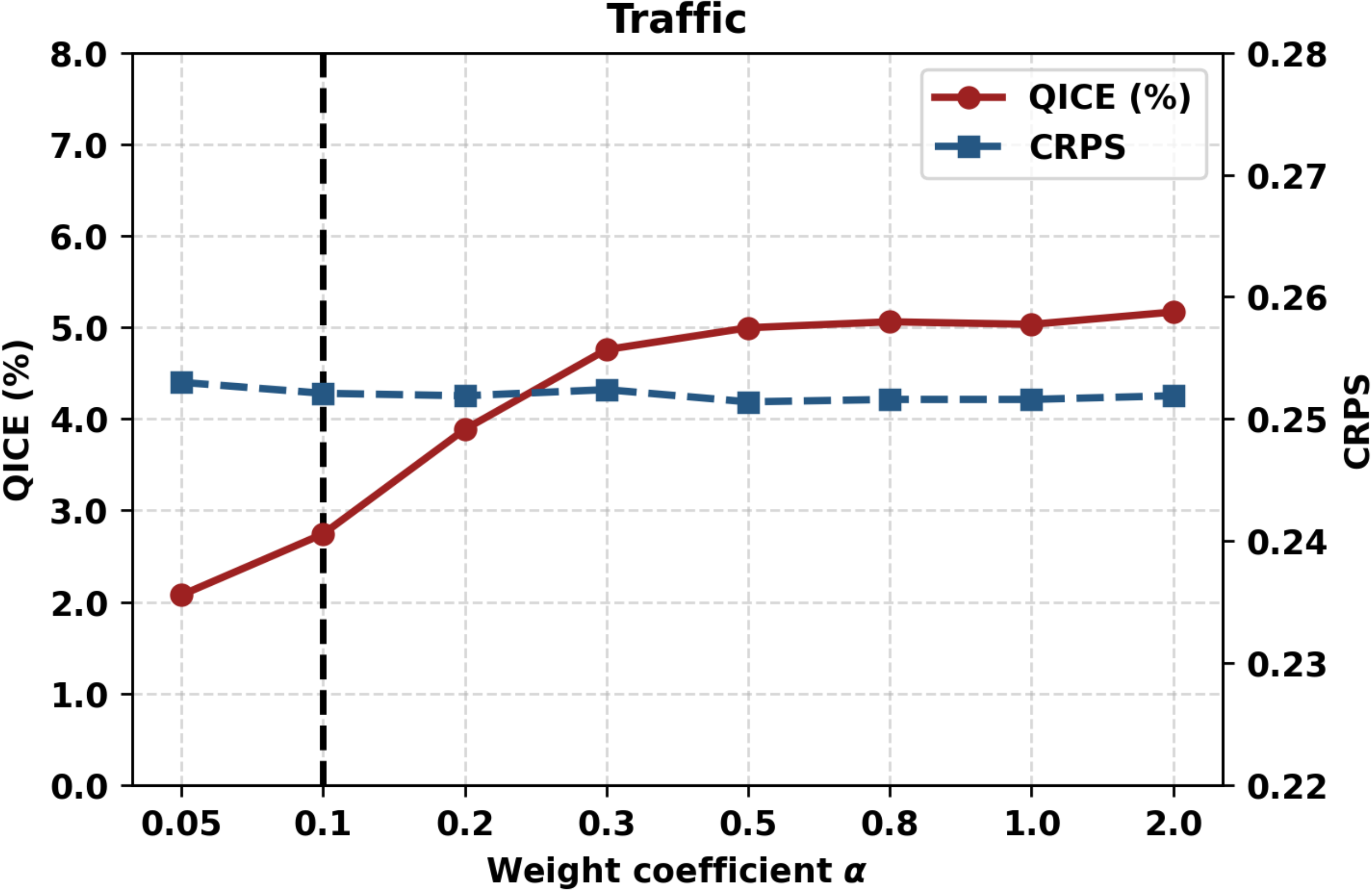
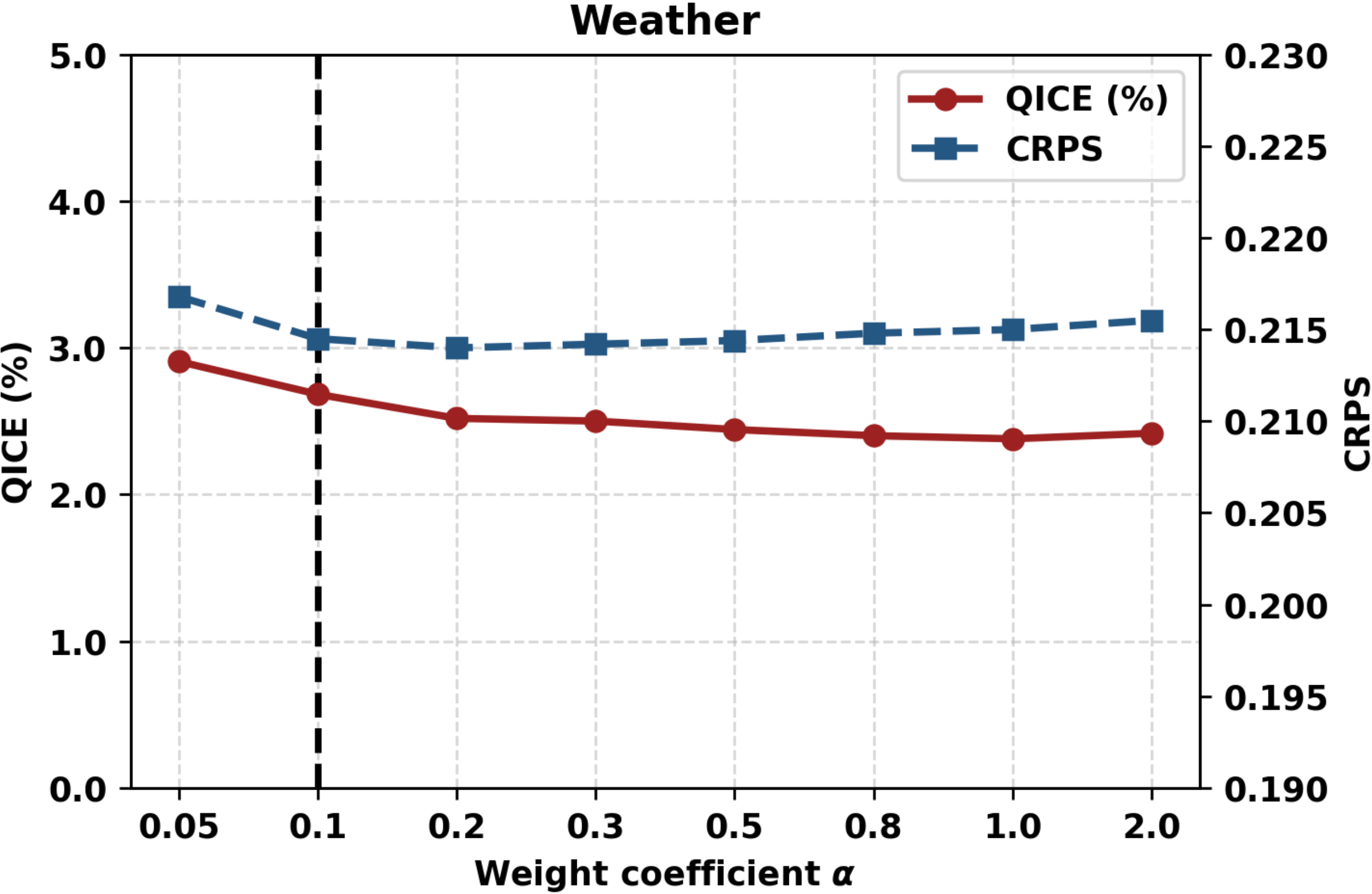
Figure 6: Loss weighting coefficient (K,h)5 sensitivity; metrics remain stable across a wide range.
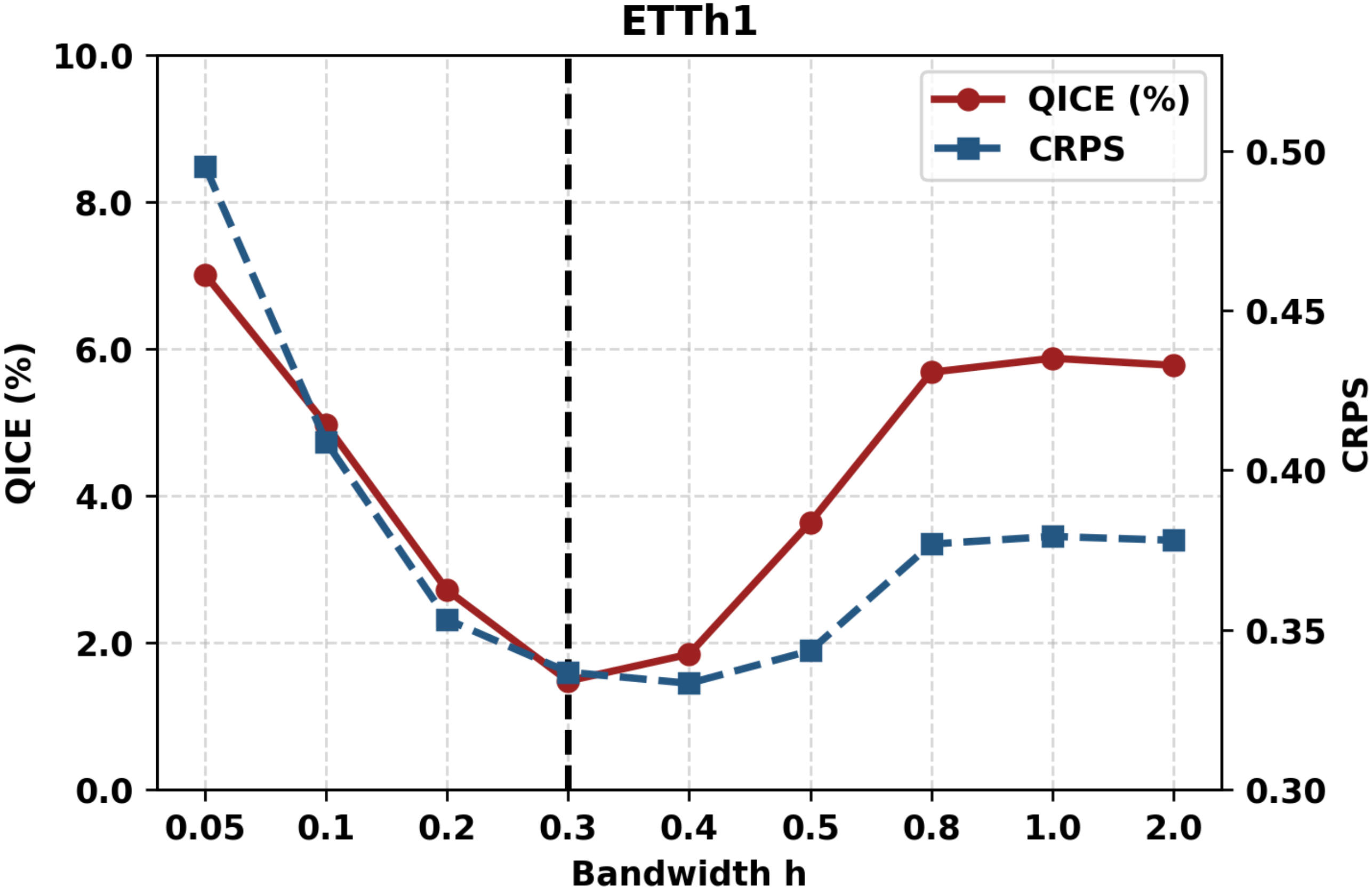
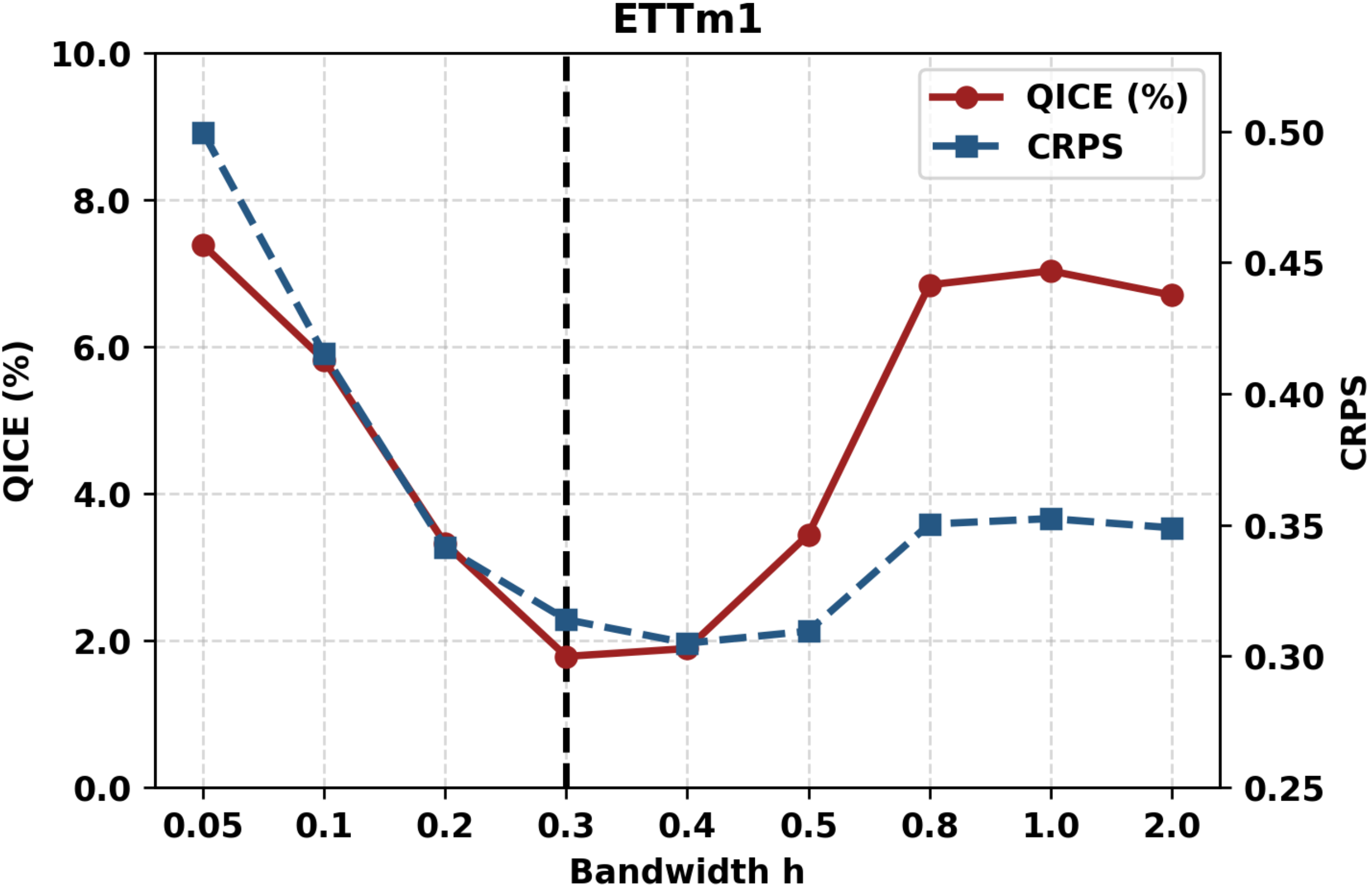
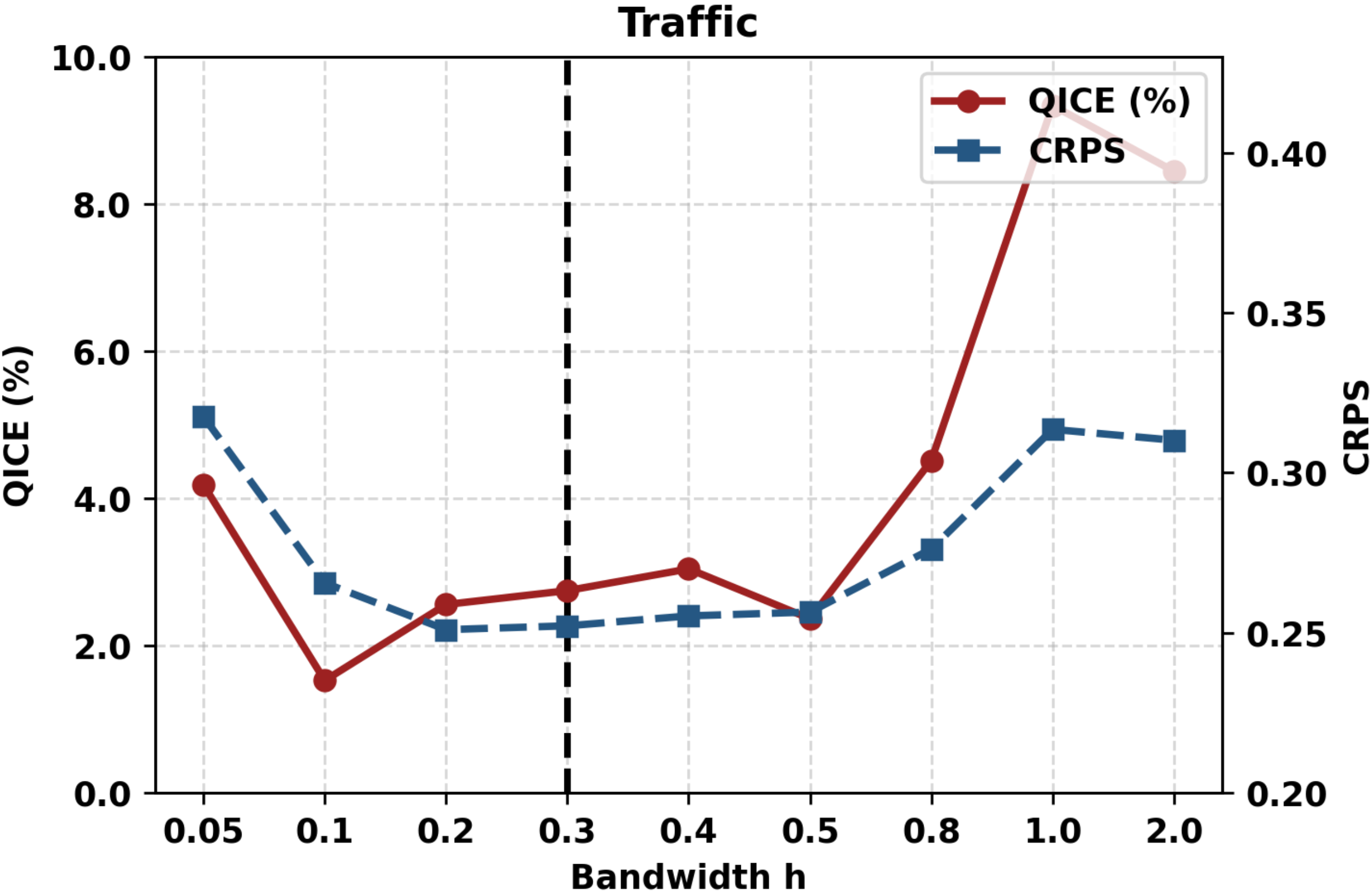
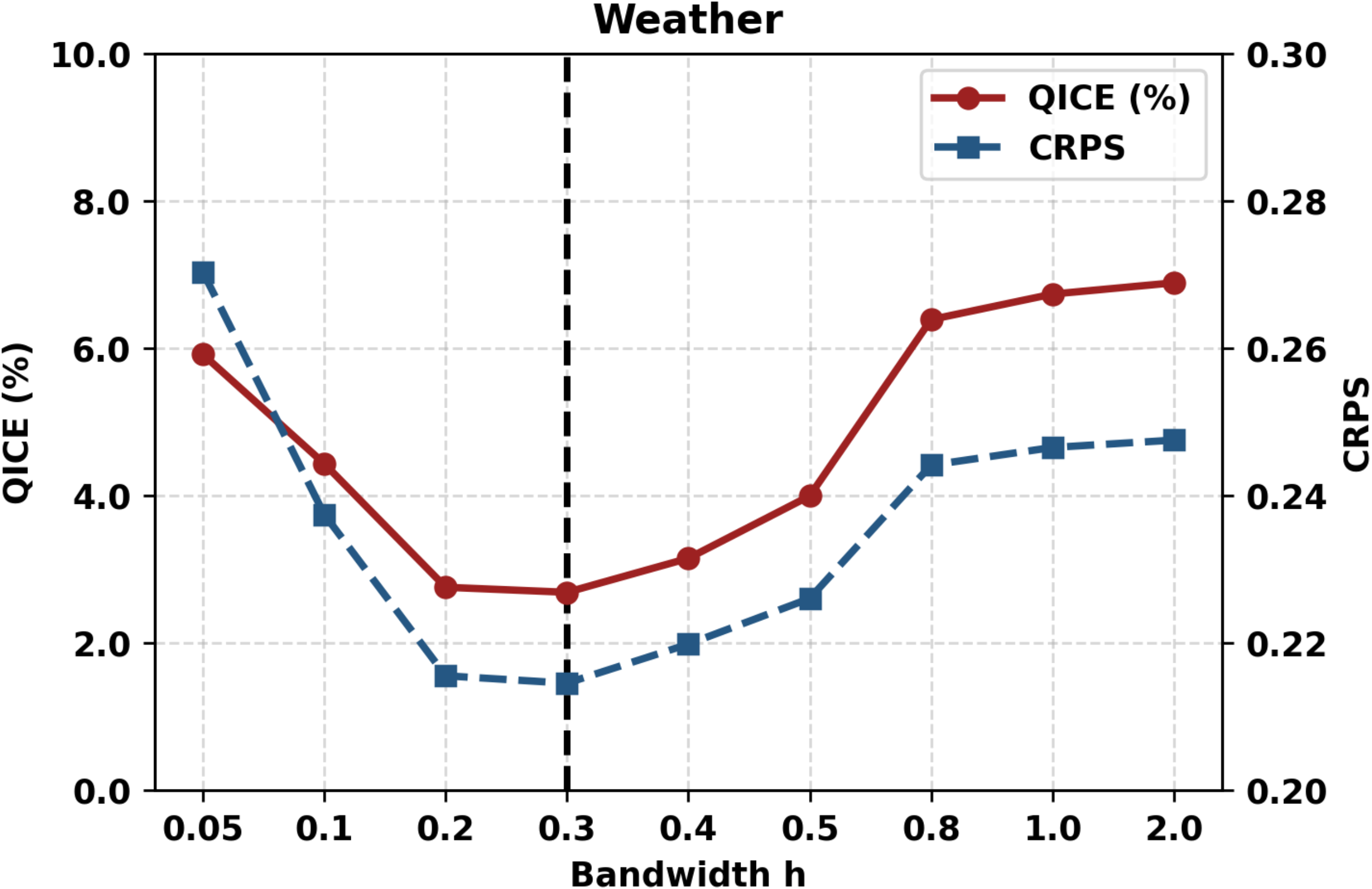
Figure 7: Bandwidth (K,h)6 sensitivity; moderate (K,h)7 suppresses spiking and improves calibration.
Qualitative forecast visualizations further demonstrate PPM's capacity to model sharp transitions and complex stochasticity across ETTh1, ETTm1, Traffic, Weather, and Electricity.
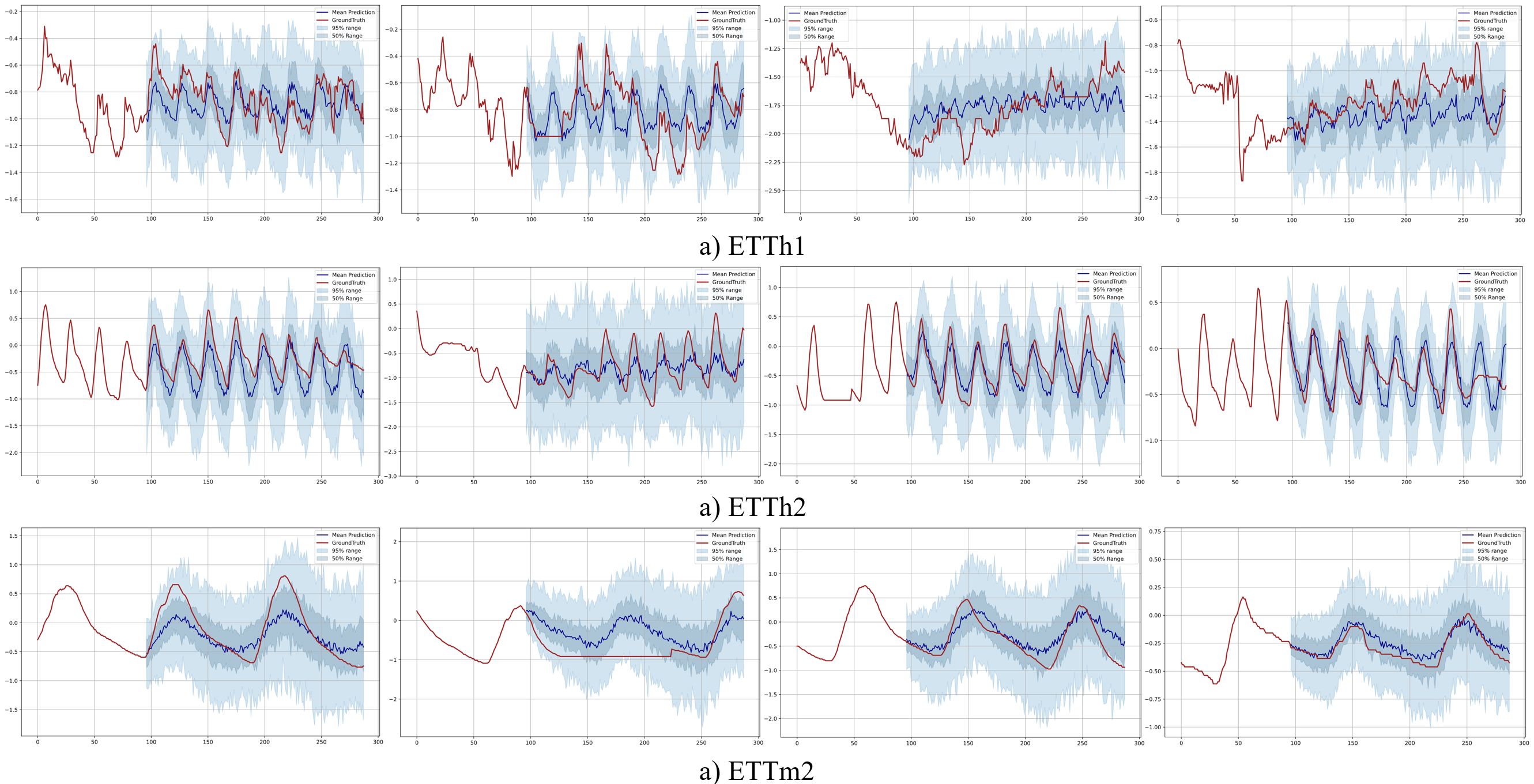
Figure 8: Visualization of predictive intervals for ETT datasets.
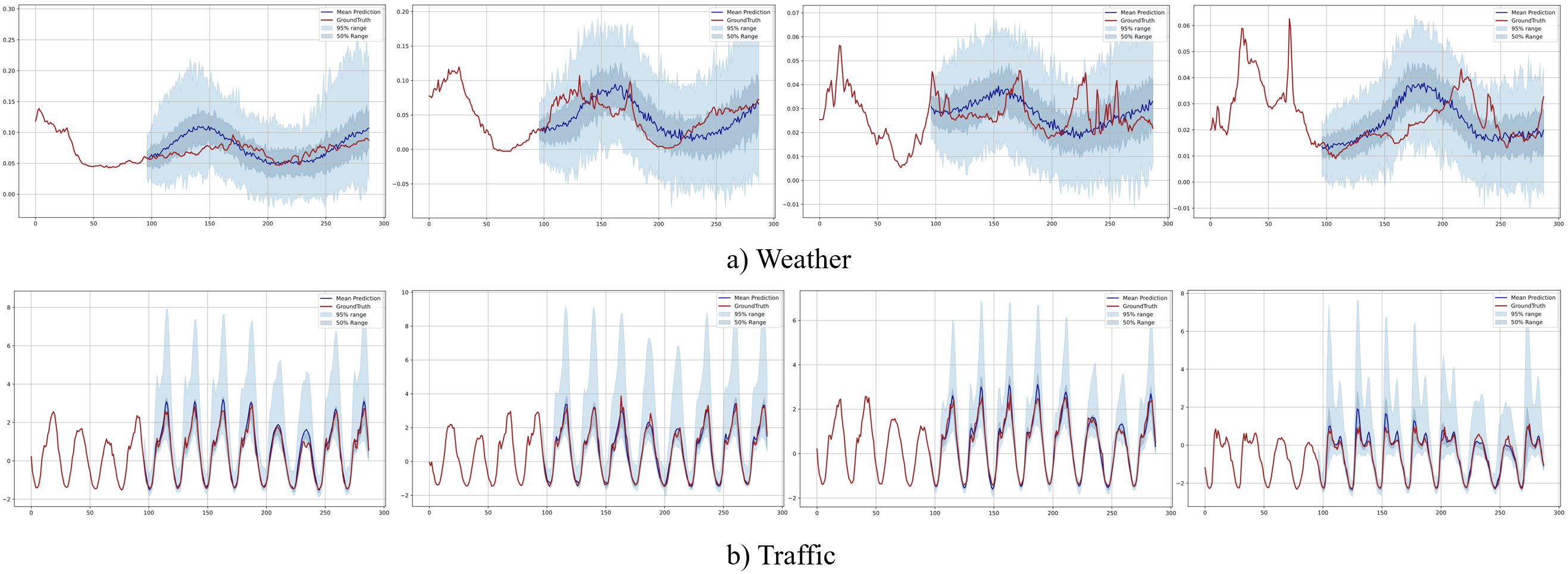
Figure 9: Visualization of prediction for Weather and Traffic datasets.
Practical and Theoretical Implications
PPM's synergy of parametric inductive bias and generative expressivity addresses the critical challenge of calibrating uncertainty in non-stationary time series. The framework is scalable, fast, and achieves substantial performance improvements in dense temporal forecasting, making it applicable to real-time decision systems in weather, finance, and transportation.
Theoretically, the kernel-smoothed, sample-based approach balances distributional sharpness and gradient stability, supporting further developments in learning objectives (proper scoring rules, adaptive KDE), joint label distribution modeling (energy score, variogram score), and optimal transport-based generative paradigms.
Conclusion
Parametric Prior Mapping establishes a robust, efficient methodology for non-stationary probabilistic forecasting, integrating adaptive parametric prior design and sample-based generative modeling. Empirical results validate its superiority in both accuracy and uncertainty calibration, with substantial gains in computational efficiency. Future directions include adaptive density estimators, label joint modeling, and broader deployment in high-frequency domains.
(2605.23402)

