Two asymptotically flat spinning black holes balanced by their self-interacting, synchronised scalar hair
Published 19 May 2026 in gr-qc and hep-th | (2605.20374v1)
Abstract: Asymptotically flat balanced configurations of two spinning black holes with synchronised scalar hair (2sBHs) are possible (arXiv:2305.15467). These are constructed within a generalized Bach-Weyl framework and arise from two spinning boson stars (2sBSs) by placing a horizon at the center of each component. Here, we investigate the effects of quartic scalar self-interactions on this family of solutions, comprising the 2sBSs, the 2sBHs, and an intermediate configuration--single spinning black hole with quadrupolar scalar hair (1sBHs). For 2sBSs, the additional repulsive force introduced by the self-interactions drives a topological transition of the ergoregion, from a single torus to a double torus, in the strong-gravity regime. For 1sBHs, as the self-interaction coupling strength increases, the solutions become "hairier" but their horizons cannot become heavier; moreover, the self-interactions broaden the regime in which an analytical effective model accurately describes these solutions. For 2sBHs, increasing the coupling reshapes the bifurcation structure of the solution sequences and, as in the 1sBH case, repulsive self-interactions cannot make the horizons heavier; horizons carrying a larger mass fraction are obtained only when attractive self-interactions are considered.
The paper constructs equilibrium two black hole binaries balanced purely by synchronized, self-interacting scalar hair, extending classical vacuum and non-interacting models.
Detailed numerical analysis shows that the quartic self-interaction increases total ADM mass while keeping the horizon mass bounded by the Hod point.
The work provides a rigorous framework for multi-black-hole systems and suggests potential astrophysical implications, including dark matter scenarios.
Two Asymptotically Flat Spinning Black Holes Balanced by Their Self-Interacting, Synchronized Scalar Hair
Overview
The paper "Two asymptotically flat spinning black holes balanced by their self-interacting, synchronised scalar hair" (2605.20374) systematically constructs and analyzes stationary, asymptotically flat black hole binaries (2sBHs) in general relativity, balanced not by external fields or charges but by a synchronised, self-interacting complex scalar field. The scalar field is endowed with a quartic (repulsive) self-interaction, and the solutions are generalizations of previously discovered vacuum and non-self-interacting configurations. Three main classes are discussed: horizonless two-spinning boson stars (2sBSs), single black holes with quadrupolar scalar hair (1sBHs), and the primary focus, two black holes in equilibrium sustained purely by the scalar field (2sBHs).
Theoretical and Model Foundations
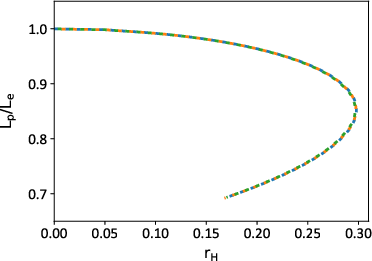
Model Setup
The action considered is that of the Einstein-Klein-Gordon system with a complex scalar field Ψ:
S=∫d4x−g(16πGR−gμνΨ,μ∗Ψ,ν−U(∣Ψ∣2))
where the potential is
U(∣Ψ∣2)=μ2∣Ψ∣2+λ∣Ψ∣4,
with scalar mass μ and quartic self-coupling λ>0. The synchronisation condition (ω=mΩH) ensures the existence of stationary, non-trivial solutions even with event horizons.
Properties of Two Spinning Boson Stars (2sBSs)
The 2sBSs act as the solitonic, horizonless backgrounds for the construction of 2sBHs. These configurations, composed of two rotating, out-of-phase scalar “lumps” along a common axis, are analyzed in detail for the effects of the quartic self-interaction.
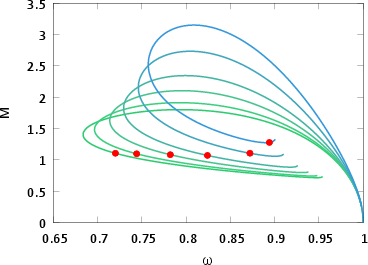
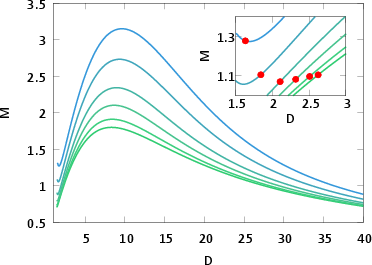
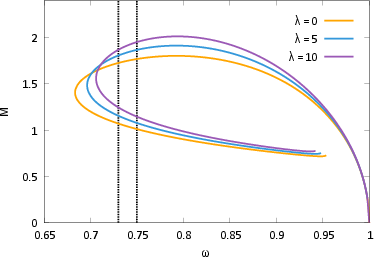
Figure 1: ADM mass vs. frequency (left panel) and proper distance vs. ADM mass (right panel) for 2sBSs for various λ. Red points denote the onset of ergoregions; ergoregions only exist for sufficiently small separations.
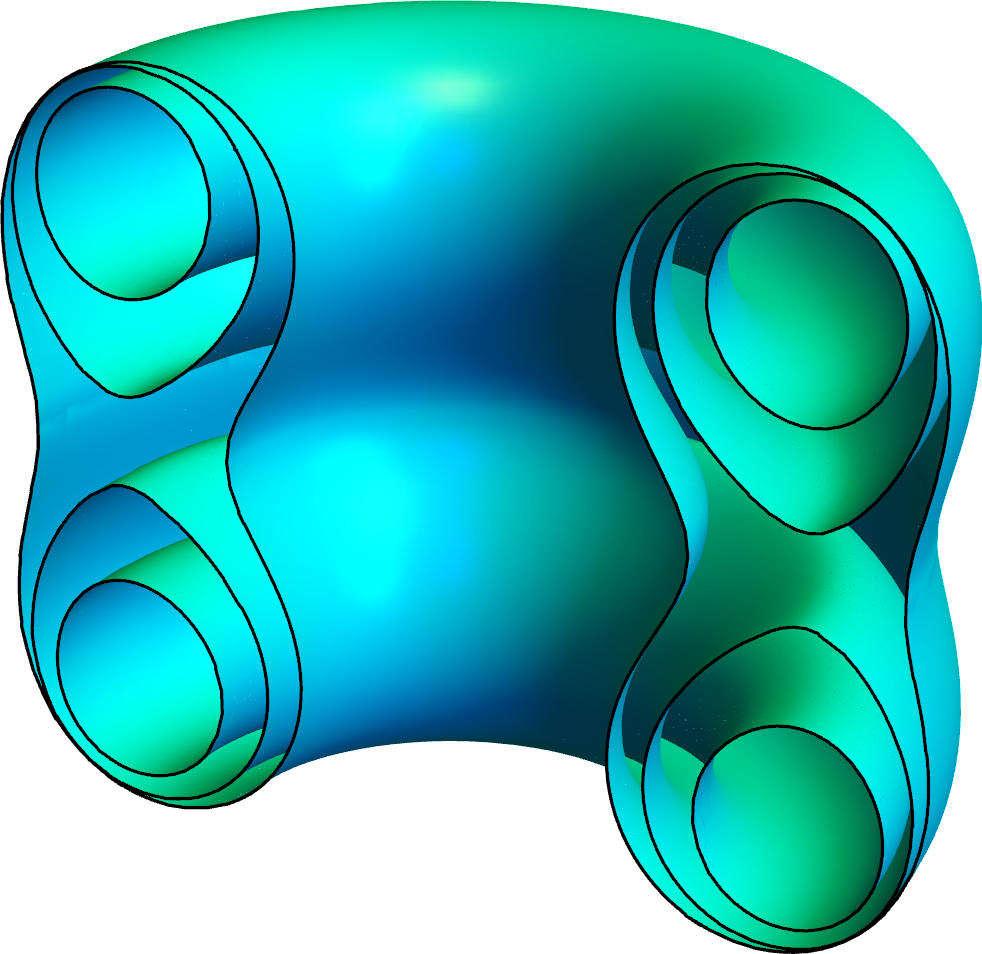
The quartic self-interaction increases the maximal ADM mass attainable at fixed frequency and enlarges the size of the 2sBS, confirming the repulsive role of the interaction. Ergoregions appear only in the strong-gravity regime where the lumps are closely separated; as λ grows, ergoregions experience topological transitions.
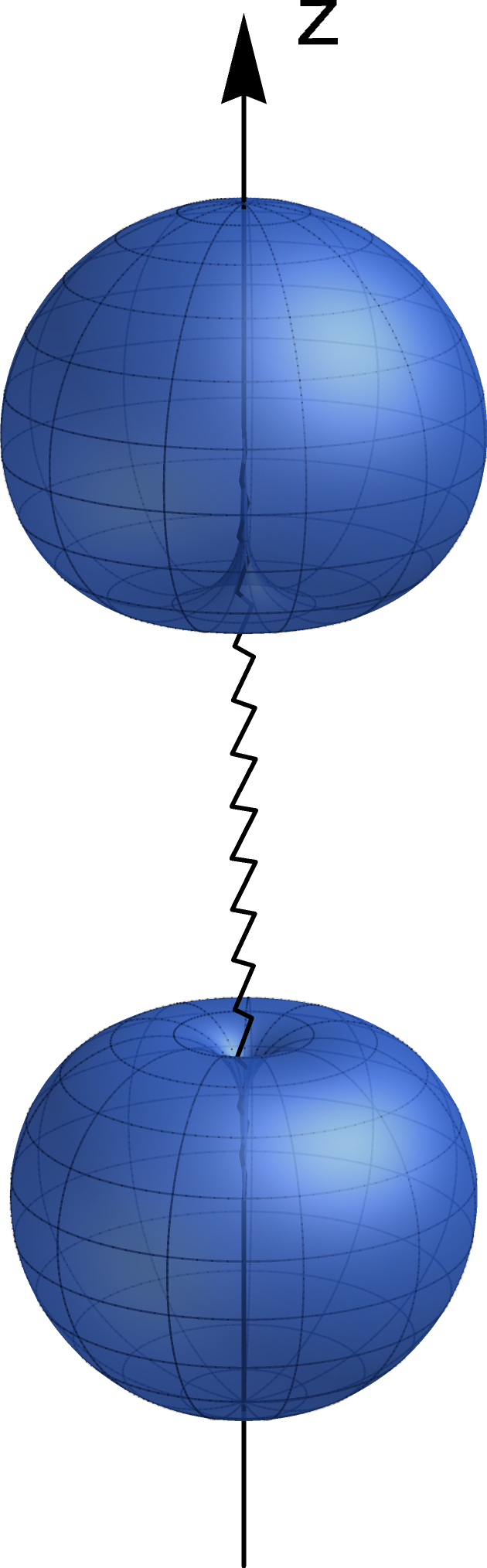
Figure 2: Ergosurfaces for 2sBSs at fixed ω and increasing λ, illustrating transition from a single torus to a double torus.
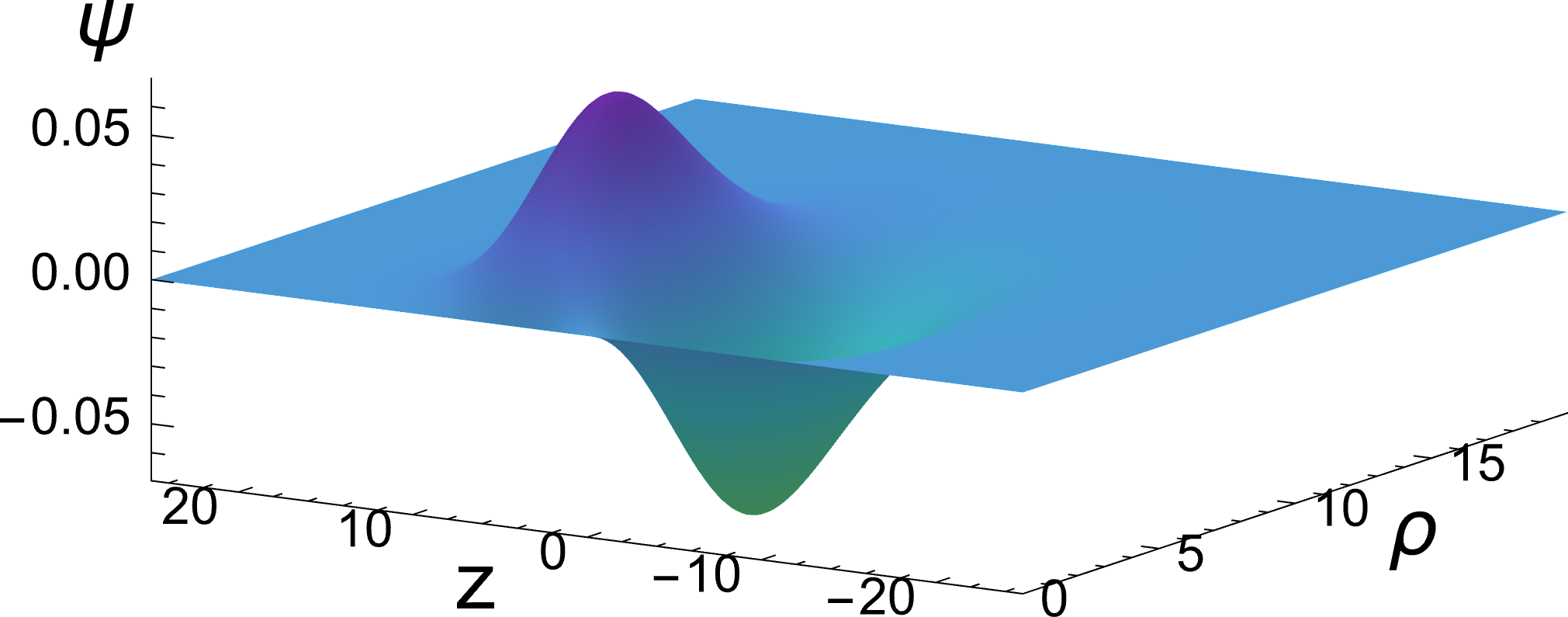
The matter distribution, energy density, and spacetime deformation are visualized as well:
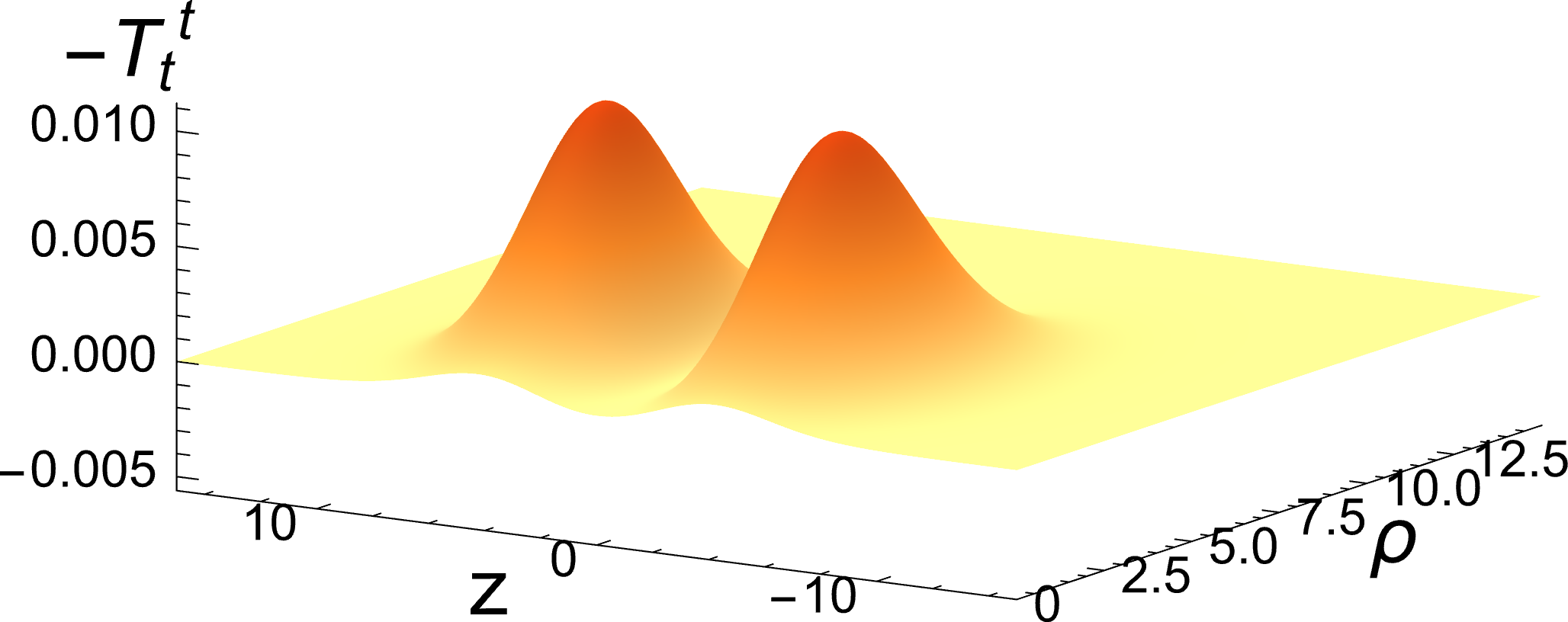
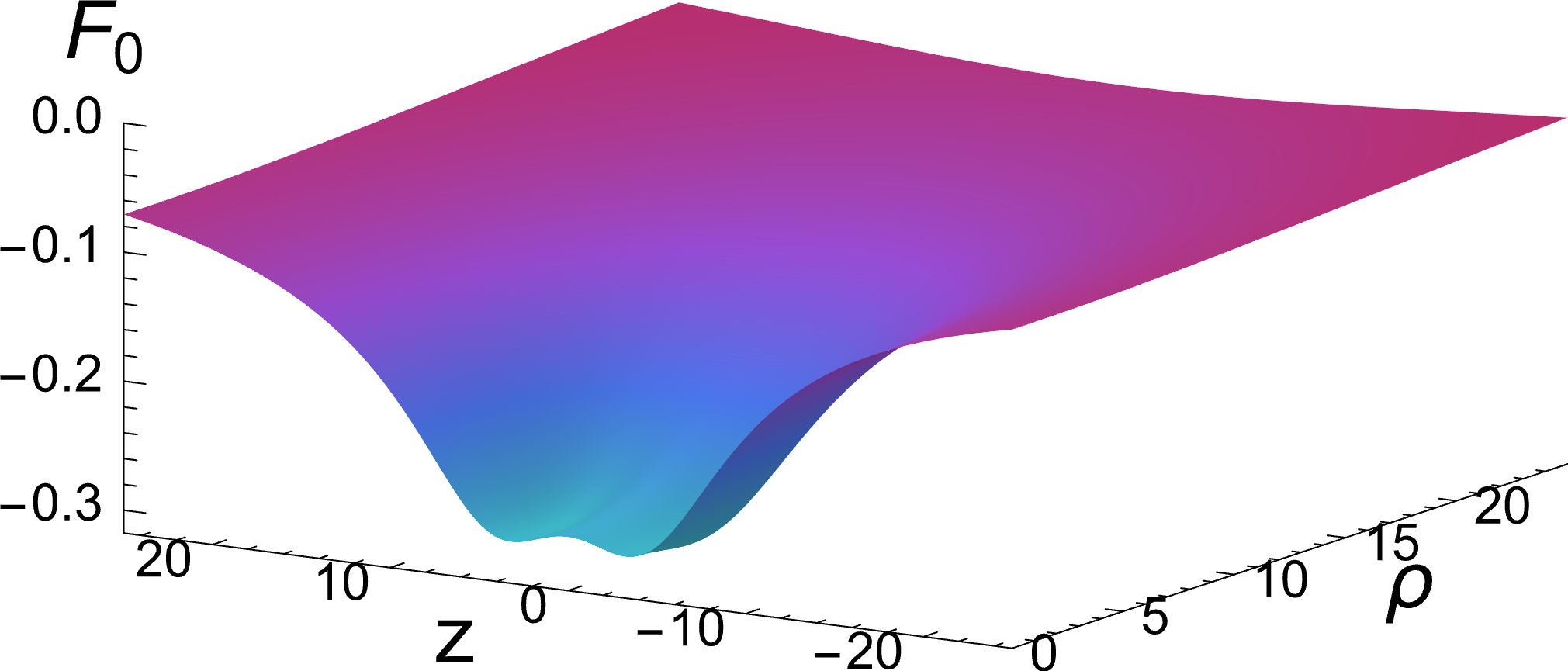
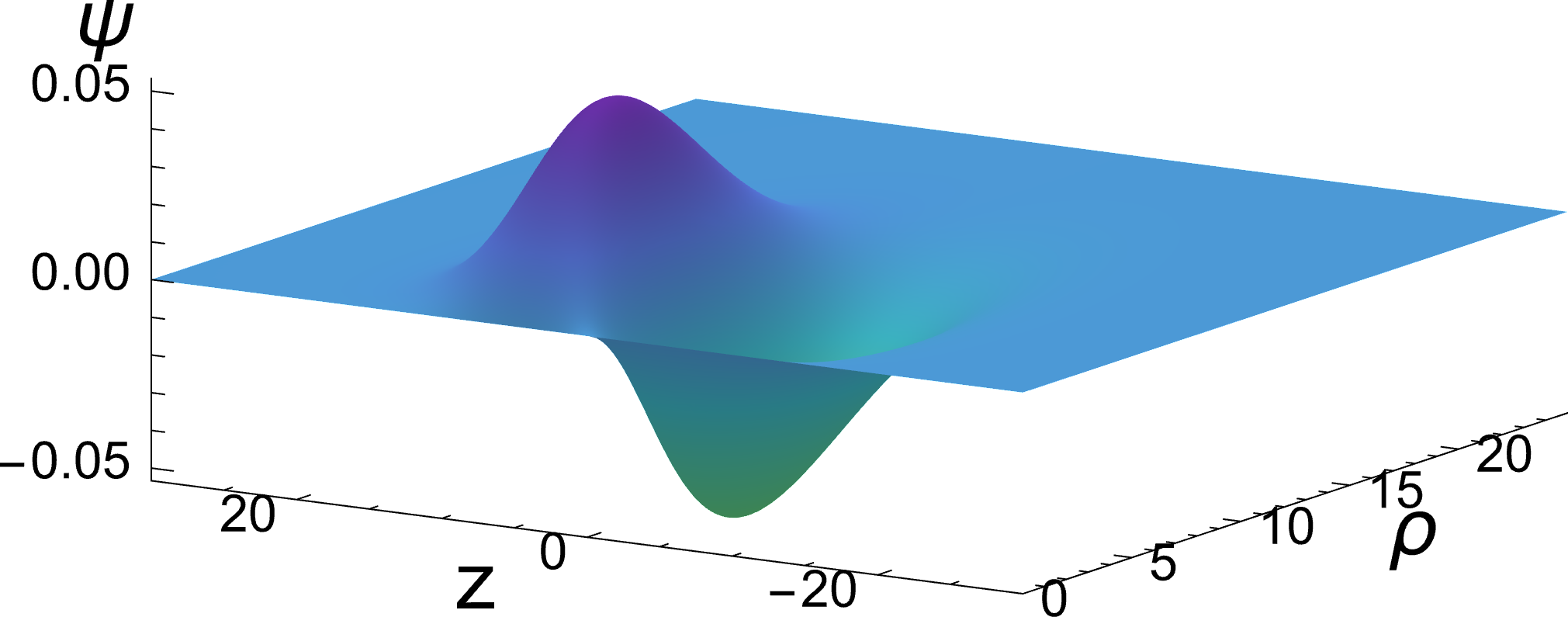
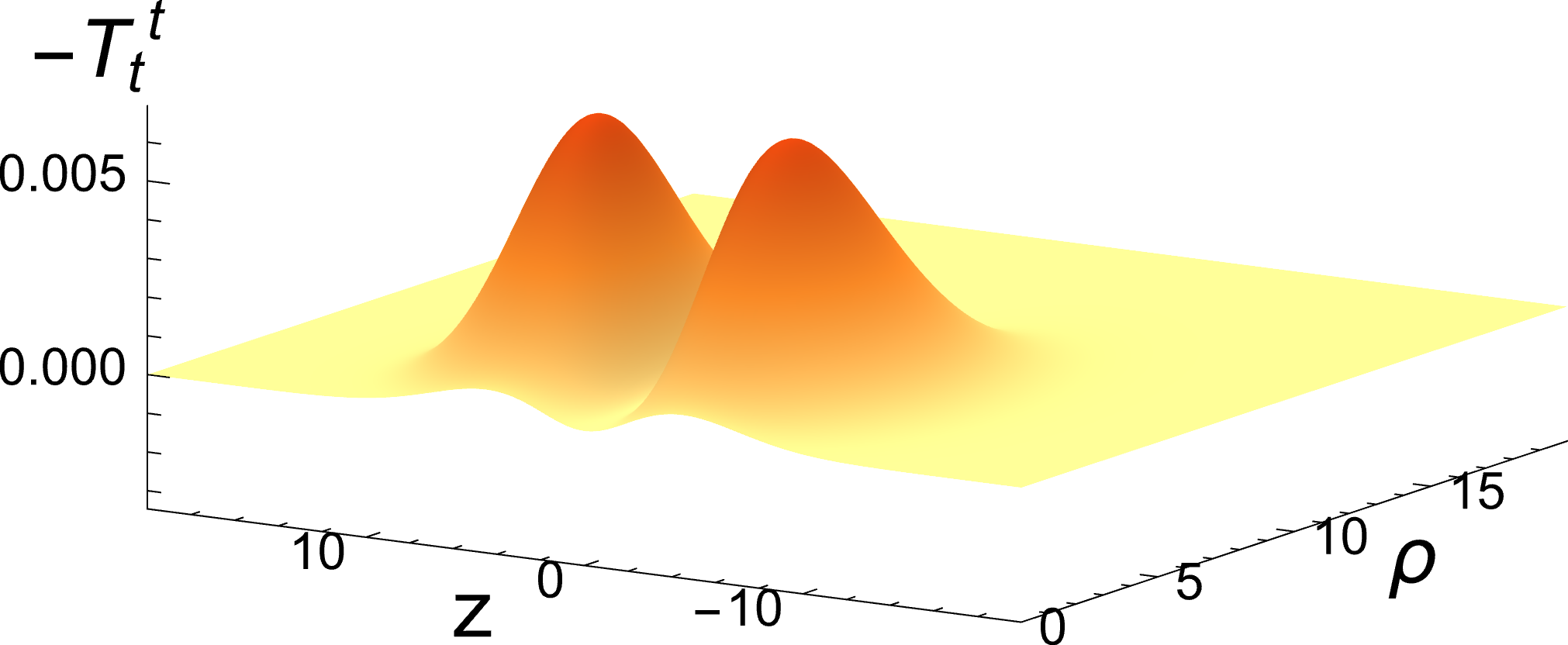
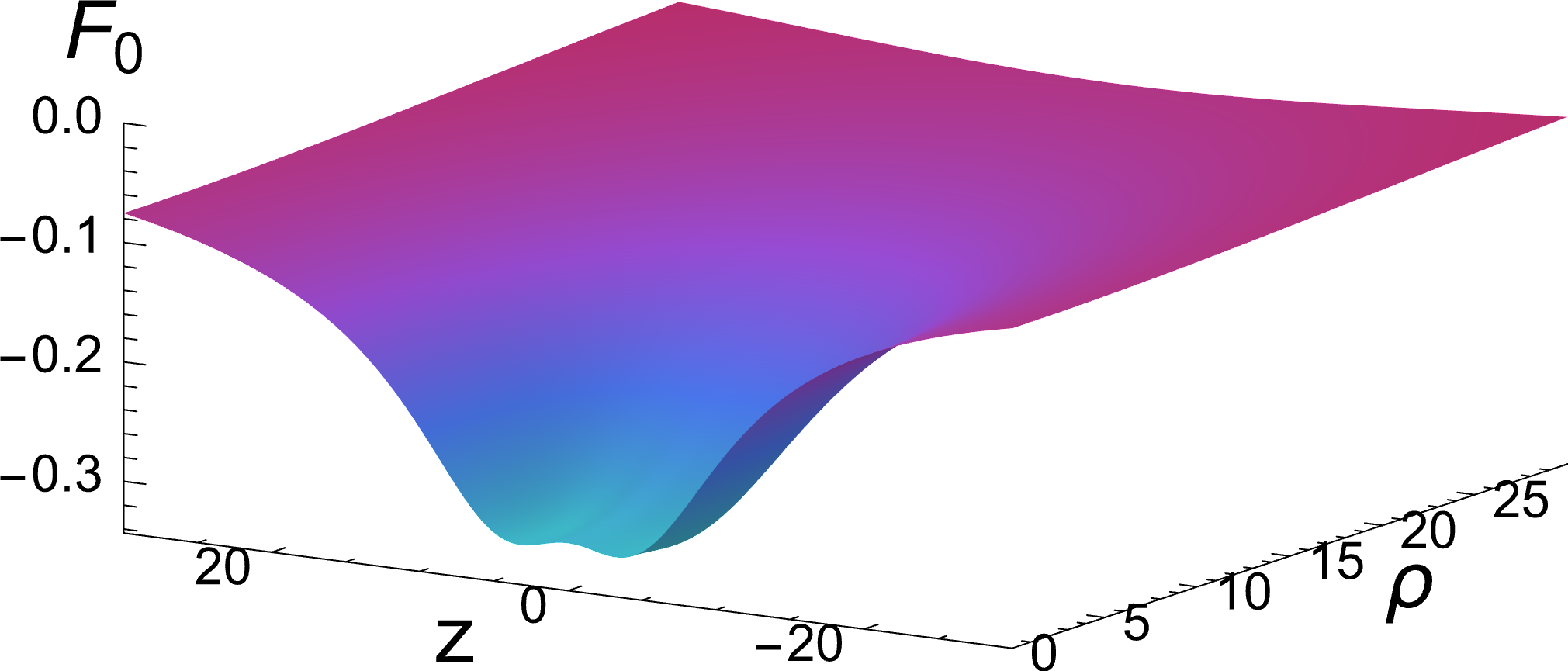
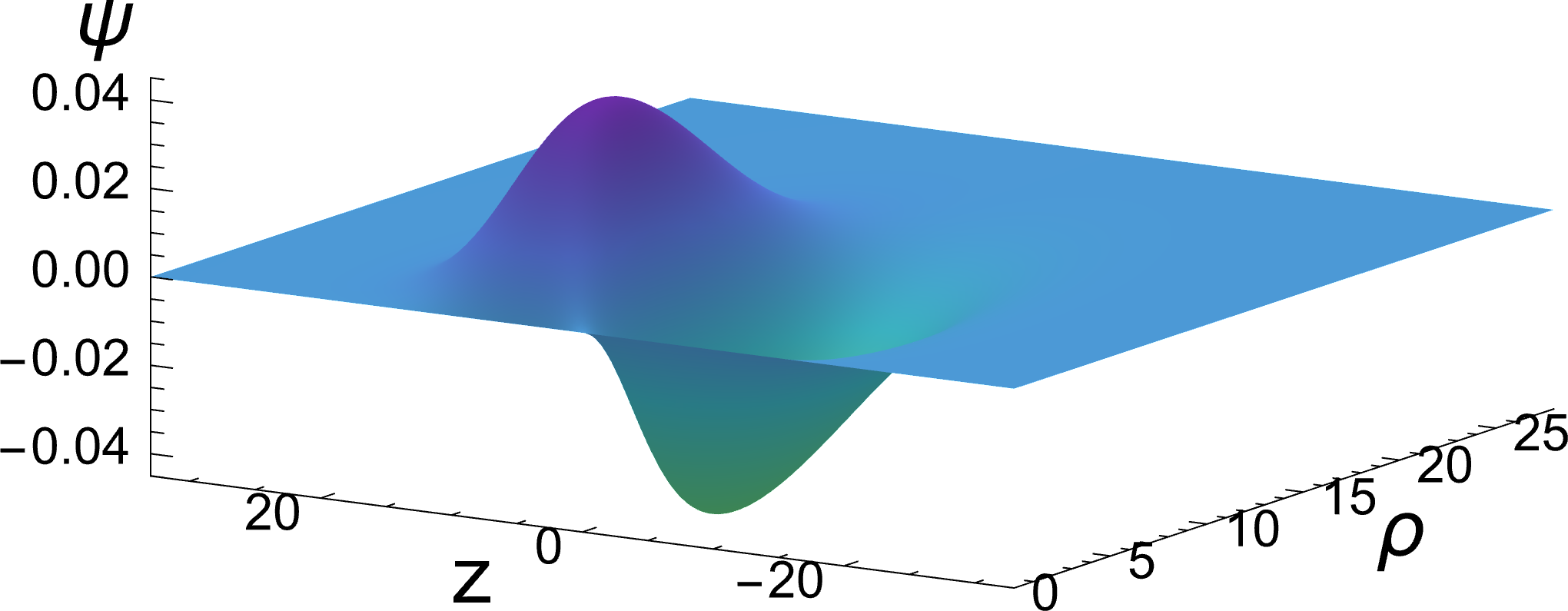
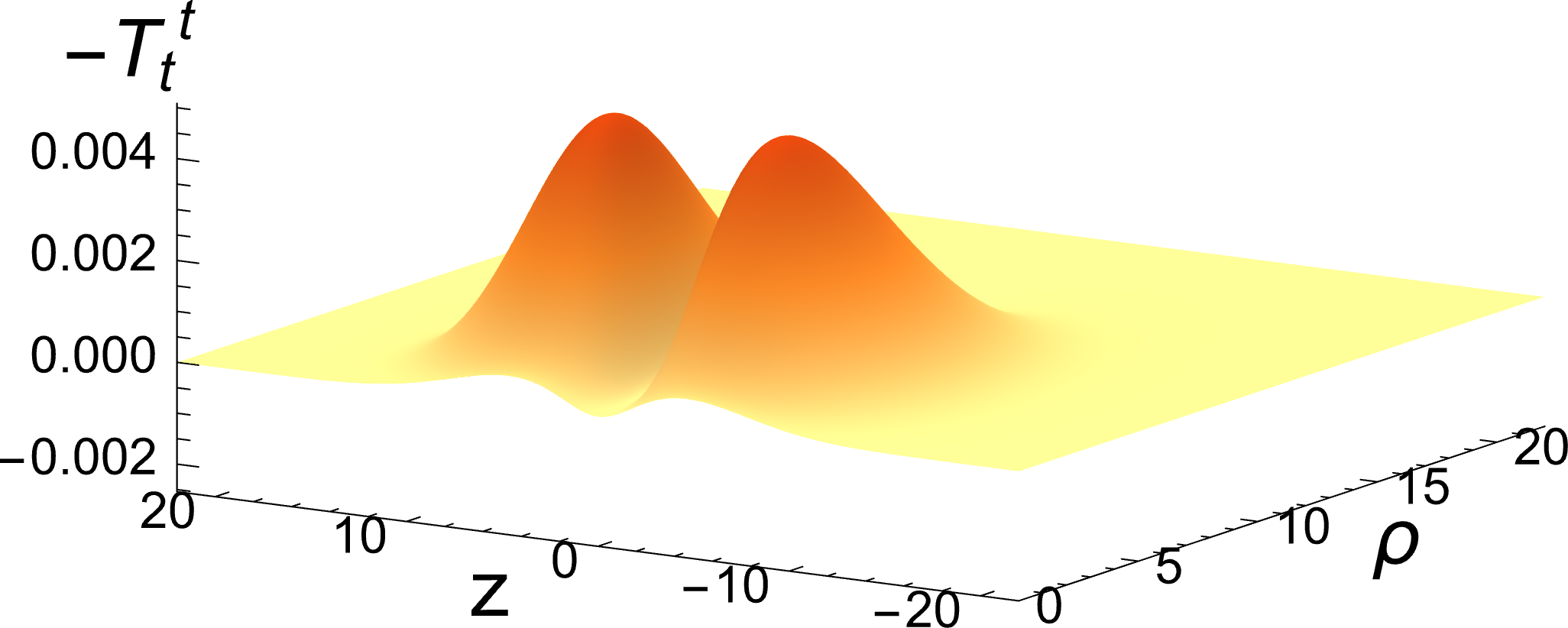
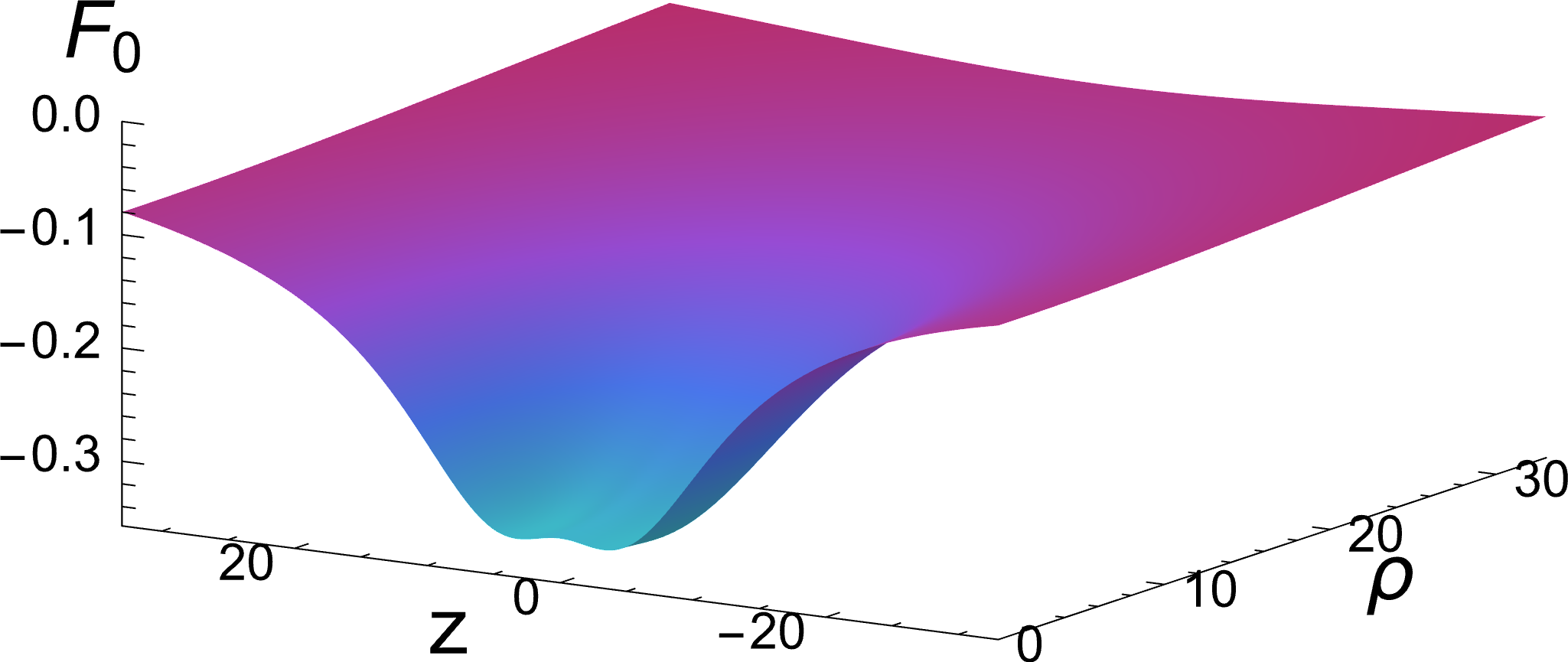
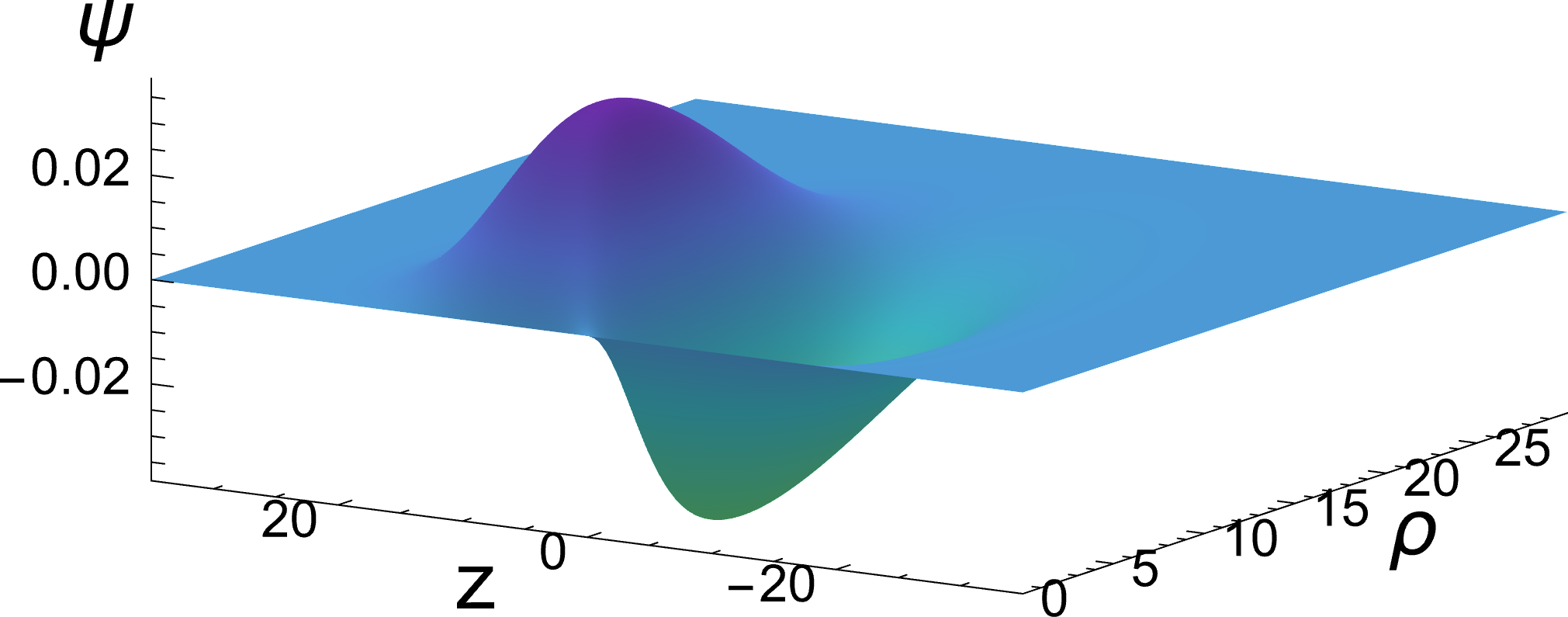
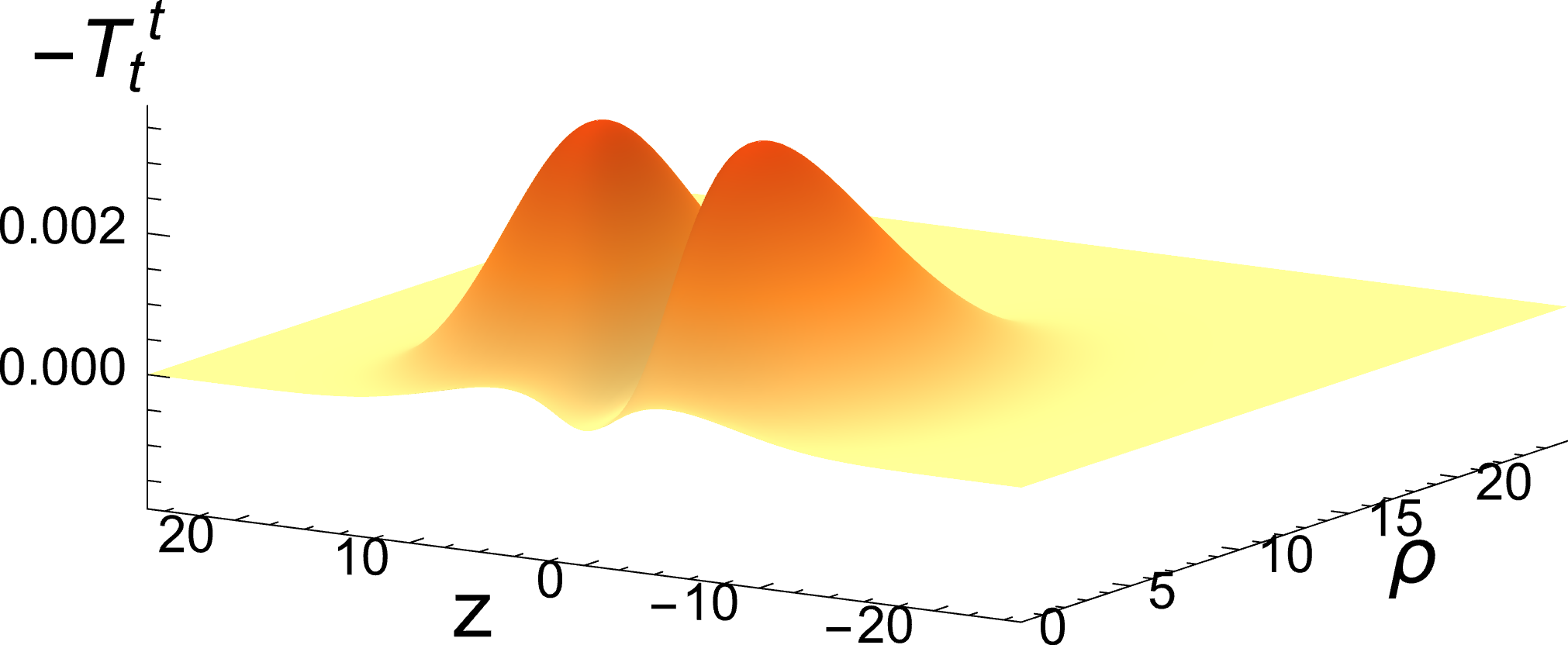
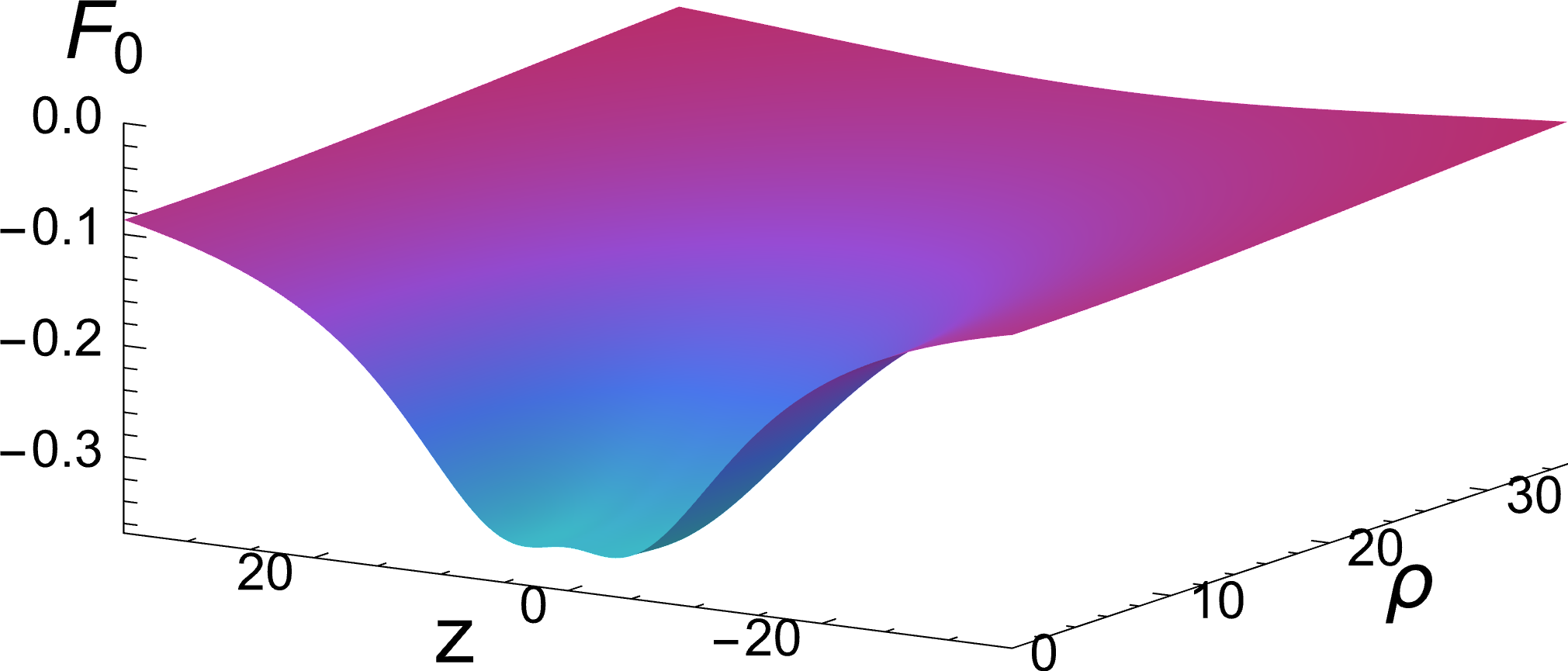
Figure 3: Scalar amplitude S=∫d4x−g(16πGR−gμνΨ,μ∗Ψ,ν−U(∣Ψ∣2))0, energy density S=∫d4x−g(16πGR−gμνΨ,μ∗Ψ,ν−U(∣Ψ∣2))1, and metric function S=∫d4x−g(16πGR−gμνΨ,μ∗Ψ,ν−U(∣Ψ∣2))2 for S=∫d4x−g(16πGR−gμνΨ,μ∗Ψ,ν−U(∣Ψ∣2))3 and varying S=∫d4x−g(16πGR−gμνΨ,μ∗Ψ,ν−U(∣Ψ∣2))4. Self-interactions dilute the field and distribute energy more widely.
Single Hairy Kerr Black Holes (1sBHs) and the Hairiness vs. Heaviness Paradigm
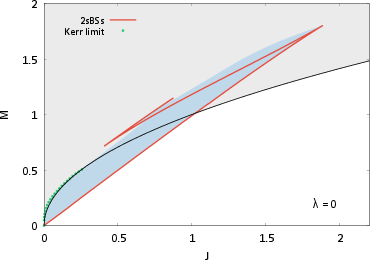
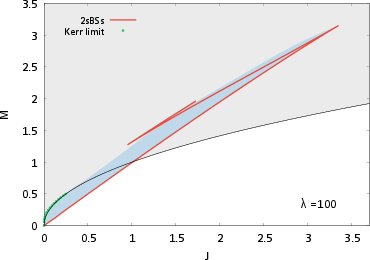
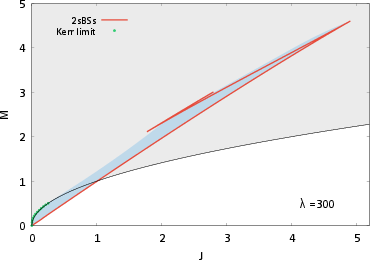
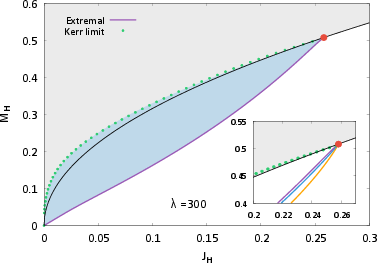
1sBHs are constructed by embedding a horizon at the center of a 2sBS. The domain of existence is sharply characterized by boundaries defined by extremal black holes, the boson star curve, and the existence line.
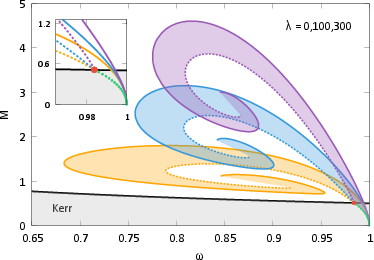
Figure 4: Domain of existence of 1sBHs for S=∫d4x−g(16πGR−gμνΨ,μ∗Ψ,ν−U(∣Ψ∣2))5. Hod point is marked with red dot.
Notably, the increase in S=∫d4x−g(16πGR−gμνΨ,μ∗Ψ,ν−U(∣Ψ∣2))6 expands the mass range of solutions but does not increase the horizon mass S=∫d4x−g(16πGR−gμνΨ,μ∗Ψ,ν−U(∣Ψ∣2))7 beyond the so-called Hod point—the horizon cannot get “heavier,” but the entire configuration can get “hairier” (larger total ADM mass). This generalizes the "hairier but not heavier" result previously established for the fundamental scalar hair [Herdeiro et al., Phys. Rev. D 92, 084059 (2015)].
Figure 5: ADM mass vs. angular momentum (top/bottom left), horizon mass vs. horizon angular momentum (bottom right); horizon quantities remain bounded by the Hod point for all S=∫d4x−g(16πGR−gμνΨ,μ∗Ψ,ν−U(∣Ψ∣2))8.
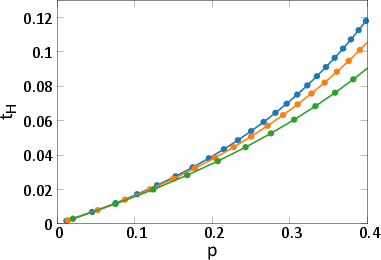
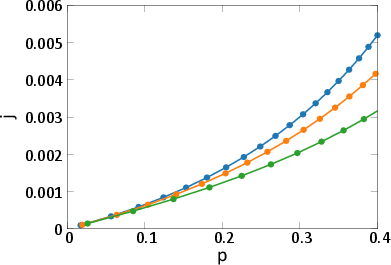
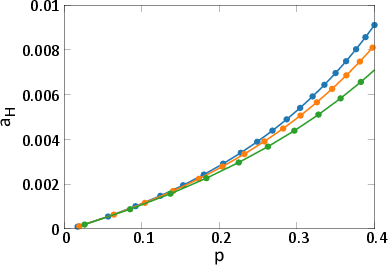
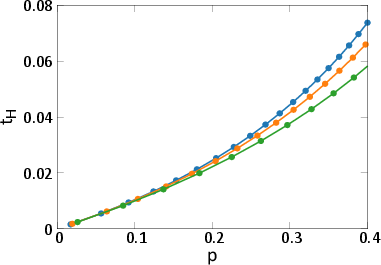
Horizon deformation ratios and the impact of S=∫d4x−g(16πGR−gμνΨ,μ∗Ψ,ν−U(∣Ψ∣2))9 are also quantitated:
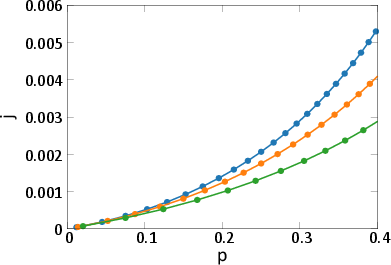
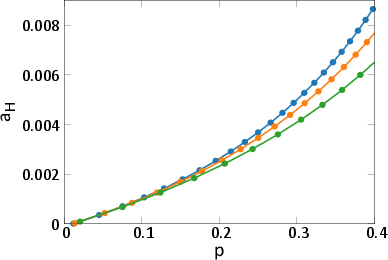
Figure 6: Horizon deformation U(∣Ψ∣2)=μ2∣Ψ∣2+λ∣Ψ∣4,0 as a function of U(∣Ψ∣2)=μ2∣Ψ∣2+λ∣Ψ∣4,1, illustrating reduced deformation at higher U(∣Ψ∣2)=μ2∣Ψ∣2+λ∣Ψ∣4,2 and low U(∣Ψ∣2)=μ2∣Ψ∣2+λ∣Ψ∣4,3.
An analytic effective model is compared with full numerical results, showing that the effective description remains highly accurate for small scalar energy fractions, with self-interactions enhancing the accuracy at higher “hairiness”.
Figure 7: Relative errors for key physical quantities as function of scalar mass fraction U(∣Ψ∣2)=μ2∣Ψ∣2+λ∣Ψ∣4,4; errors remain U(∣Ψ∣2)=μ2∣Ψ∣2+λ∣Ψ∣4,5 for U(∣Ψ∣2)=μ2∣Ψ∣2+λ∣Ψ∣4,6 across all U(∣Ψ∣2)=μ2∣Ψ∣2+λ∣Ψ∣4,7.
Double Spinning Hairy Black Holes (2sBHs): Construction, Existence, and Balance
The primary achievement of the work is the construction of 2sBHs in true equilibrium—two spinning black holes along a common axis, balanced without conical singularities by the scalar field. The authors generalize the Bach-Weyl double black hole metric, introduce a suitable coordinate system, and detail a robust numerical scheme to find equilibrium solutions, guided by the vanishing of conical deficits or excesses.
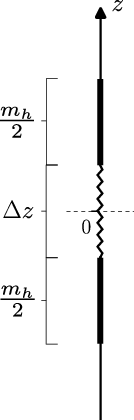
Figure 8: Rod structure and geometric visualization of the Bach-Weyl metric, showing coordinates and distribution of horizons and struts.
The solution space for 2sBHs is mapped as a function of frequency, self-coupling, and horizon separation.
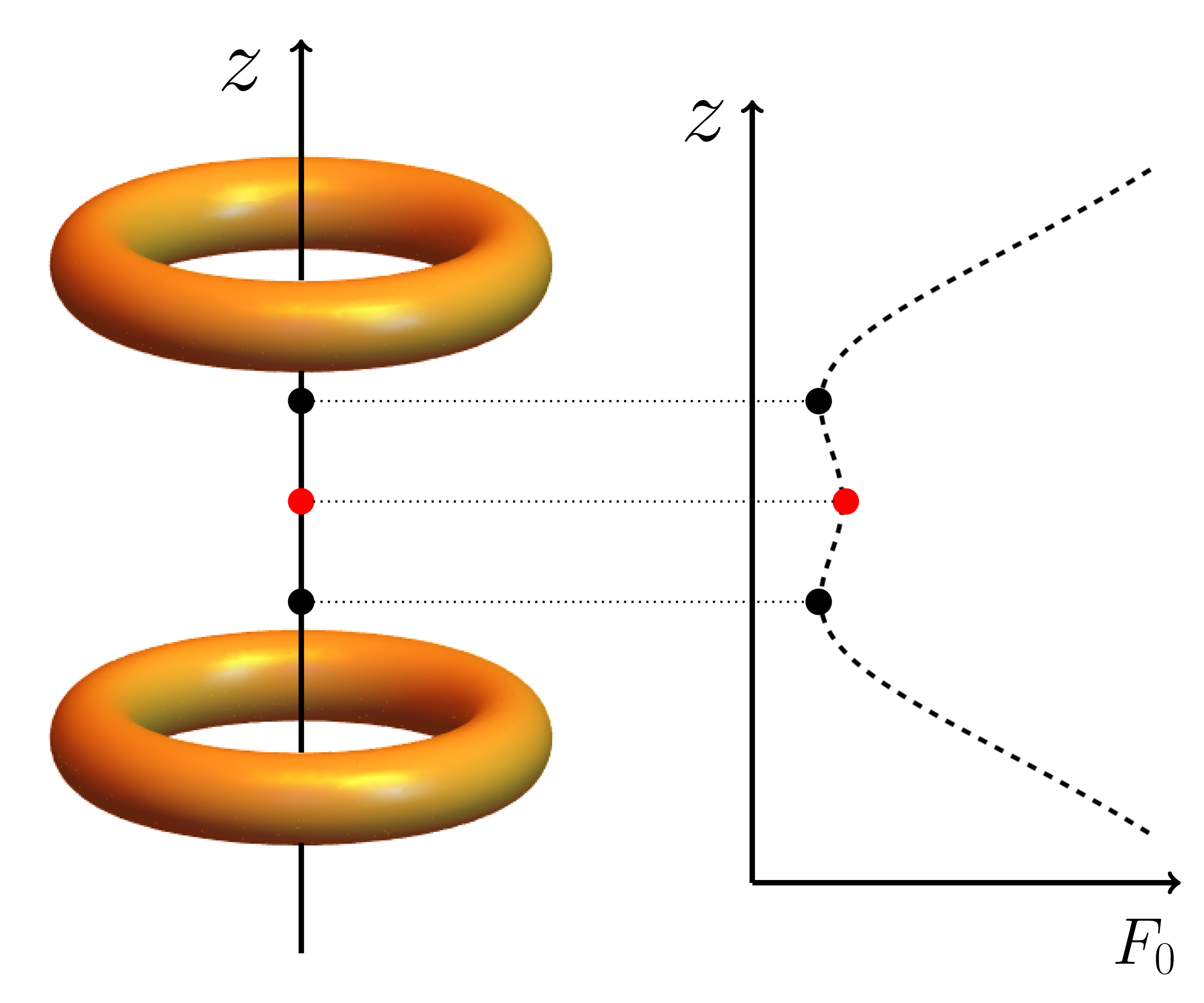
Figure 9: ADM mass vs. frequency for 2sBSs; equilibrium points (local minima and maxima of U(∣Ψ∣2)=μ2∣Ψ∣2+λ∣Ψ∣4,8) along the axis identified for horizon placement, distinguishing between stable and unstable equilibrium.
Equilibrium 2sBH branches are classified into types according to the nature of the equilibrium points from which their horizons emerge. The solution branches are thoroughly explored as a function of proper separation U(∣Ψ∣2)=μ2∣Ψ∣2+λ∣Ψ∣4,9:
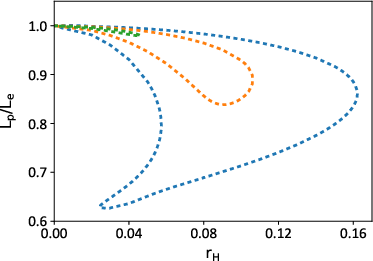
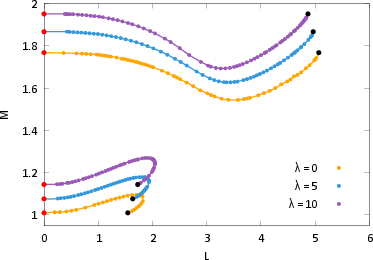
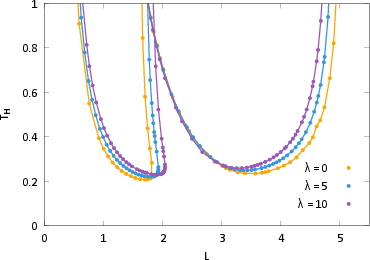
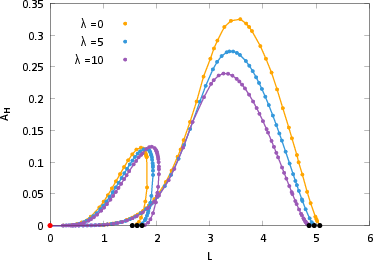
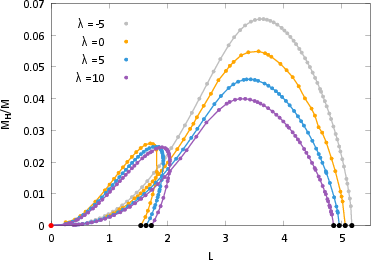
Figure 10: ADM mass, Hawking temperature, horizon area, and μ0 versus horizon separation μ1 for μ2 and μ3.
Key findings:
ADM mass of 2sBHs strictly increases with μ4 at fixed μ5 and μ6.
As in 1sBHs, horizons remain "light": μ7 is a few percent at most, and cannot exceed the non-interacting bound.
Increasing μ8 can merge or split solution branches, altering bifurcation structure.
Negative self-interaction (attractive) would allow heavier horizons, but at the cost of losing boundedness from below for the potential.
Practical and Theoretical Implications
The work demonstrates the viability of constructing stationary, asymptotically flat black hole binaries in equilibrium, entirely maintained by matter-field (scalar) interactions rather than struts, strings, or electromagnetic charges. The mechanism is robust under moderate self-interaction, and the generalization to other matter sources (e.g., Proca fields) or to more complex configurations is direct but computationally nontrivial.
No evidence is found for equilibrium branches with horizon masses exceeding those allowed in the non-interacting case, regardless of the coupling μ9, firmly establishing the "hairier but not heavier" property in both single and double black hole systems.
Comparison with the Majumdar-Papapetrou and analogous electrovacuum systems underlines the uniqueness of the scalar field mechanism for equilibrium, especially for spinning configurations.
Future Directions
Several natural extensions are proposed:
Extension to vector field (Proca) hair.
Analysis of dynamics and (in)stabilities of 2sBHs under perturbations.
Exploration of physical signatures (e.g., gravitational wave phenomenology, electromagnetic counterparts).
Direct comparison with multi-black-hole solutions in other theories (Einstein-Maxwell, Einstein-Maxwell-dilaton).
Given the rapid theoretical development of hairy black hole physics and the potential astrophysical relevance (e.g., dark matter scenarios), these equilibrium black hole binaries offer a novel window into non-vacuum strong gravity.
Conclusion
This work establishes a detailed, technically rigorous construction of two spinning black holes in equilibrium, supported entirely by a synchronised self-interacting scalar field. The study elucidates both the quantitative and qualitative effects of quartic self-interactions, consistently confirming that while self-interactions can increase total mass and “hairiness,” the horizon (“heaviness”) remains bounded, independent of coupling strength. The methods and results advance the understanding of equilibrium black hole binaries and lay groundwork for further explorations of strong gravity coupled to ultralight fields (2605.20374).