- The paper establishes a full analytic framework using Calogero interactions to precisely control correlation-sector qubits via twisted-light driven transitions.
- It details how twisted light induces robust selection rules, enabling both single and two-qubit gates on quantum dots with MHz-scale operations.
- The approach provides explicit gate parameters and optical readout methods that bridge correlated-electron theory and practical quantum computing.
Twisted-Light Control of Many-Body States in Quantum Dots for Scalable Quantum Computing
Overview
The work "Twisted light generates robust many-body states for practical quantum computing" (2605.19873) presents a highly formal treatment of how twisted light (TL) can be leveraged to selectively generate, manipulate, and read out correlation-sector states in magnetized quantum dots (QDs). The authors establish a full analytic framework—primarily in the exactly solvable Calogero (1/r2) interaction limit—for encoding and controlling qubits within the ground-state ladder of a two-electron (and by extension, three-electron) dot. The scheme exploits optical orbital angular momentum (OAM) selection rules to access internal states immune to standard dipole transitions, introducing a photonic control layer for scalable quantum information processing.
Twisted-Light Coupling to Correlation Sectors
Twisted light, carrying nonzero OAM, drives transitions forbidden under the standard (Kohn's theorem-protected) dipolar channel. The ground and low-lying excited states of two interacting electrons in a parabolic QD, under a perpendicular B-field, separate into relative and center-of-mass coordinates. TL directly couples to the relative sector; the selection rule is Δ∣m∣=±(l+σ), with m the relative angular momentum, l OAM, and σ the helicity.
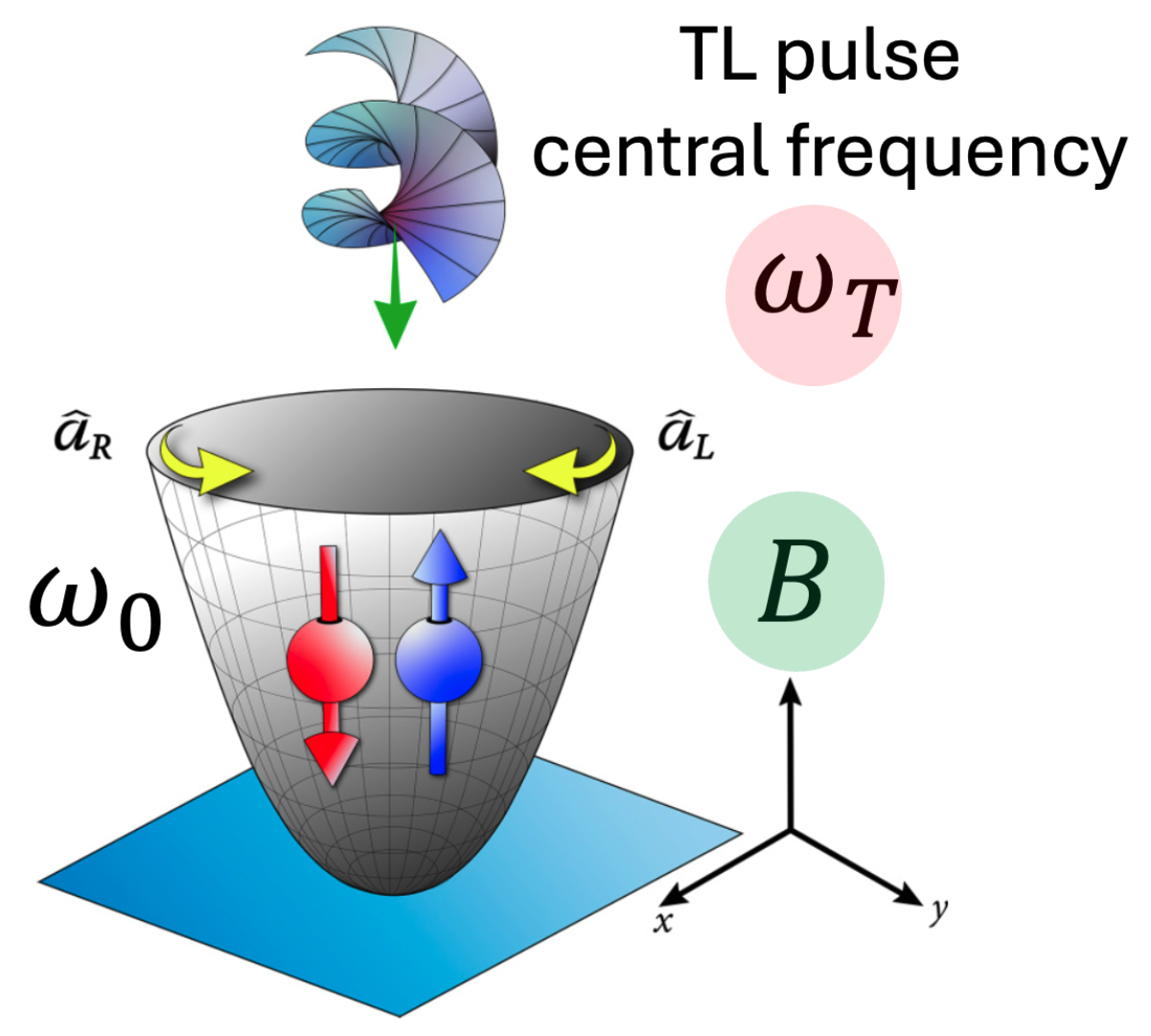
Figure 1: Schematic—TL pulse on two-electron QD under B, acting via chiral ladder operators on relative motion.
Correlation-sector ground states form a sequence of odd angular momenta (e.g., ∣m∣=1,3,5,…), analogous to "finite-N Laughlin" states, each characterized by sharp correlation holes and spatial structure. These sector energies and eigenstates are analytic in the Calogero limit and preserved qualitatively for realistic (Coulomb or screened) interactions.
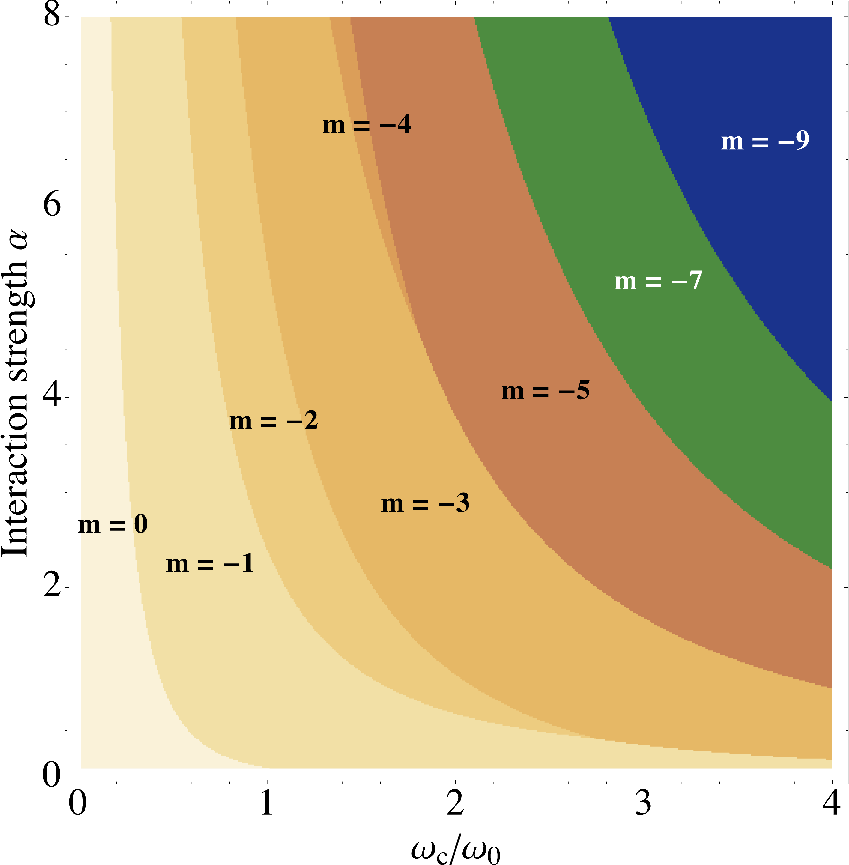
Figure 2: Sector map as a function of reduced magnetic field and interaction strength. Sharp sector boundaries encode points of rapid ground-state reconfiguration.
Calogero Analytics: Explicit Gate Parameters
The 1/r2 interaction enables closed-form solutions for both the spectrum and all TL-driven matrix elements. The authors provide expressions for eigenstates, energy gaps, and TL-induced transitions. The analytic form of the Rabi frequency and qubit energy splitting enables protocol design without reliance on brute-force numerics.
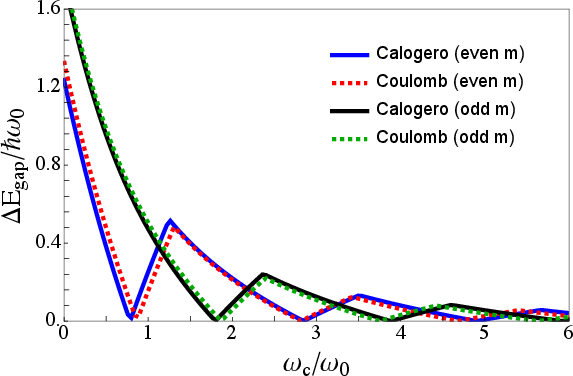
Figure 3: Reduced low-energy gap showing robust sector structure and close agreement between Calogero and Coulomb interactions.
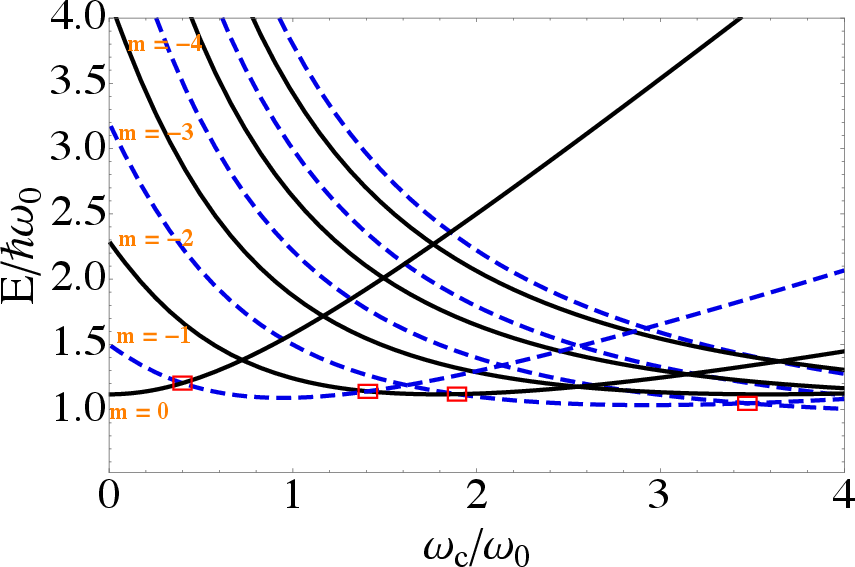
Figure 4: Level crossings in the correlated spectrum. Sector boundaries and field-driven transitions align precisely with analytically predicted selection rules.
Qubit Encoding, Gates, and Readout
The qubit is encoded in two correlation sectors (e.g., B0). TL pulses resonant with correlated transitions implement B1 rotations (control via pulse area and matrix element), while free evolution accumulates sector-dependent phases (B2 gate, controlled by analytically known energy splitting).
Readout is optical: the same TL selection rules yield correlation-sensitive spectroscopic lines, allowing projective discrimination via spectral fingerprinting.
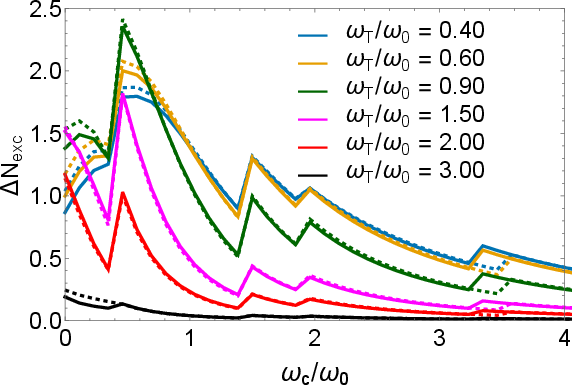
Figure 5: TL absorption tracks sector-resolved transitions, offering a direct readout proxy for correlation-sector populations.
Leakage and Robustness
The spectrum is inherently anharmonic in B3, so leakage to nearby unwanted sectors can be suppressed by optimizing pulse bandwidth and interaction parameter B4. Symmetry constraints further suppress cross-couplings outside the designed B5 ladder.
Two-Qubit Gates via State-Dependent Coupling
Adjacent dots are coupled via the charge-distribution-dependent inter-dot Coulomb interaction. Since B6 differs for each sector, a B7-type two-qubit gate is naturally implemented at leading multipole order. The authors furnish analytic estimates for entangling rates, showing MHz-scale gates are accessible at realistic dot separations.
They also discuss, in detail, B8-type exchange gates that operate between product states such as B9 and Δ∣m∣=±(l+σ)0, leveraging analytic coupled-dot results from the exact Calogero class. This admits both capacitive (Δ∣m∣=±(l+σ)1) and exchange (Δ∣m∣=±(l+σ)2) gates, with explicit analytic control.
Multi-Qubit and Topological Generalization
Three-body QDs inherit the structure: the Calogero and Δ∣m∣=±(l+σ)3 expansion solutions provide explicit normal modes (breathing, shape) and predict "magic-number" sequences (e.g., Δ∣m∣=±(l+σ)4 for Δ∣m∣=±(l+σ)5 fermions). TL with Δ∣m∣=±(l+σ)6 can, in principle, create single-quasihole states (e.g., for Δ∣m∣=±(l+σ)7, an Δ∣m∣=±(l+σ)8 TL pulse populates the Δ∣m∣=±(l+σ)9 sector directly), laying the groundwork for addressing topological excitations (quasiholes, anyonic configurations).
The SU(1,1) dynamical group structure is leveraged for systematic analytic state construction and understanding both selection rules and transition strengths as the Hilbert space grows.
Practical and Theoretical Implications
- Write/Read/Scale: The TL protocol unifies the writing, reading, and spatial addressing of correlation-sector qubits in a photonic layer, with mode and position selectivity set by a spatial light modulator.
- Scalability Constraints: The optical addressing is ultimately limited by THz diffraction, requiring near-field or structured-photonic engineering for dense arrays; these are plausible within current META technology.
- Gate Fidelity and Noise: The dominant decoherence is quadrupolar charge noise; dephasing times are expected to mirror those of small-dot charge qubits (i.e., challenging but not prohibitive), and device engineering (smaller m0, increased m1, lower noise) is key. High-fidelity Rabi control is secured if m2.
Experimental Relevance
All key energy scales, magnetic fields, and OAM requirements fall within parameters already realized in semiconductor QD, THz, and vortex-beam platforms. The analytic protocol allows not only full calibration via TL spectroscopy but also portable design rules for devices with realistic interactions.
Conclusion
This framework establishes twisted light as an operationally complete control primitive for robustly addressing, manipulating, and diagnosing correlation-sector qubits in quantum dots. The m3 Calogero limit supplies explicit analytic gate models, and the architecture contains an explicit design path to topologically nontrivial states at m4. The combination of symmetry-selective TL transitions, closed-form gate parameters, and the intrinsic robustness of interaction-defined sectors makes this proposal a rigorous bridge between correlated-electron theory and hardware-level quantum information processing.