- The paper demonstrates that dynamically formed eccentric BBHs emit multi-harmonic gravitational waves that challenge standard circular templates.
- Rigorous population synthesis and waveform modeling reveal distinct detection prospects in both mHz and Hz bands, with eccentricity influencing chirp mass estimates.
- The study underscores the need for eccentric-specific analysis tools to mitigate confusion noise from unresolved harmonics in future GW observatories.
Eccentric Stellar-mass Binary Black Holes in the LISA and LIGO Era: Population, Detection, and Data Analysis
Overview and Context
The paper "Eccentric Stellar-mass Binary Black Holes: Population, Detectability, and Waveform Analysis in the LISA and LIGO Era" (2605.15265) conducts a systematic investigation of the astrophysical population, gravitational-wave (GW) signatures, and data analysis challenges posed by eccentric stellar-mass binary black holes (BBHs). These systems arise predominantly in dynamical environments such as globular clusters (GCs), galactic nuclei (GNs), and the galactic field, where interactions drive binaries to high eccentricity. The analysis spans realistic population modeling, numerical waveform validation, and the implications for both space-based (LISA) and ground-based (LIGO/Virgo/KAGRA) observatories.
The study provides an open-source simulated catalog of dynamically-formed BBHs—explicitly considering field, GN, and GC channels—and introduces the LISA Eccentricity Astrophysics Package (LEAP) for further community use.
Physical Properties of Eccentric BBHs in the mHz GW Band
A defining property of dynamically-formed stellar-mass BBHs is the high orbital eccentricity retained by a substantial fraction of sources before gravitational radiation circularizes their orbits. Eccentric binaries exhibit GW emission dominated by bursts at pericenter, with the waveform structure and characteristic strain differing substantially from circular binaries.
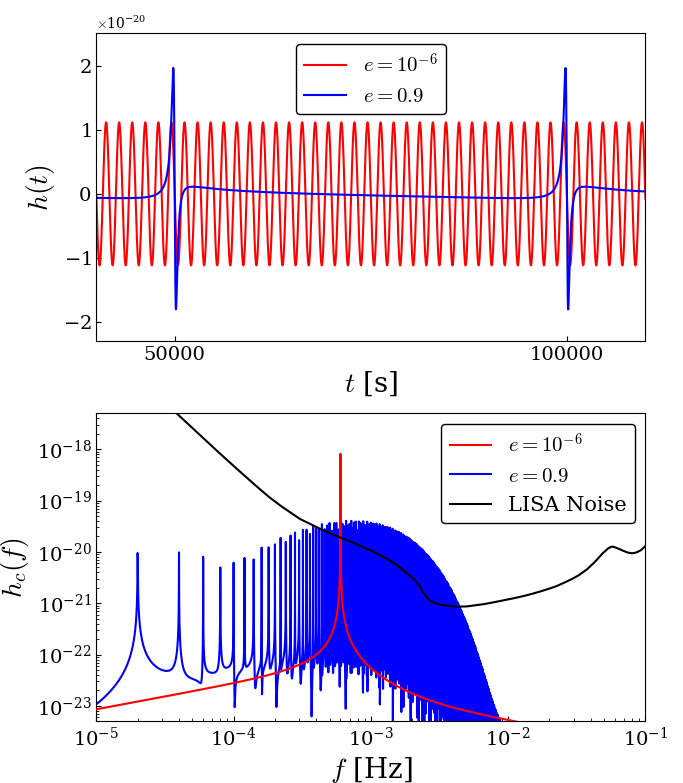
Figure 1: GW waveforms and characteristic strains for BBHs of varying eccentricities; eccentric systems emit repeated GW bursts during pericenter.
Unlike circular BBHs, eccentric sources radiate GW energy into a broad set of harmonics, each with distinct spectral content. Consequently, modeling and interpreting their GW signature in the mHz regime demands careful treatment of the harmonic structure.
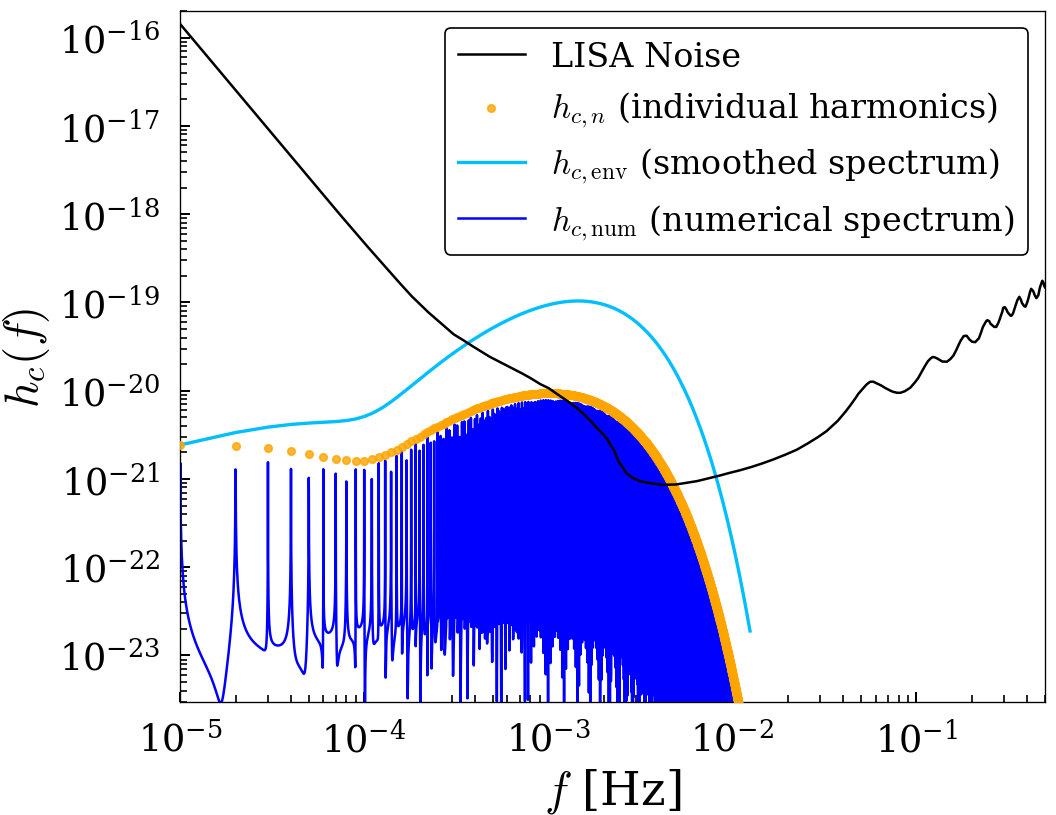
Figure 2: Comparison of characteristic strain representations for a single eccentric BBH, illustrating how individual harmonics, the smoothed spectral envelope, and the numerical spectrum diverge, especially at high eccentricity.
Population Synthesis and Properties in the Milky Way
The mock BBH catalog incorporates three dominant dynamical formation channels, each leading to distinct parameter regimes:
- Galactic Field fly-by binaries: Wide, extremely eccentric (e≳0.999) sources formed through fly-by-induced angular momentum perturbations.
- Galactic Nucleus (GN): Binaries experiencing secular eccentricity excitation via the eccentric Kozai-Lidov (EKL) mechanism in SMBH-dominated centers.
- Globular Clusters (GCs): In-cluster and ejected populations from dense N-body star cluster evolution.
Each BBH is assigned orbital parameters based on detailed dynamical modeling and population synthesis, yielding a Milky Way ensemble with both wide/highly eccentric and tight/more circular binaries.
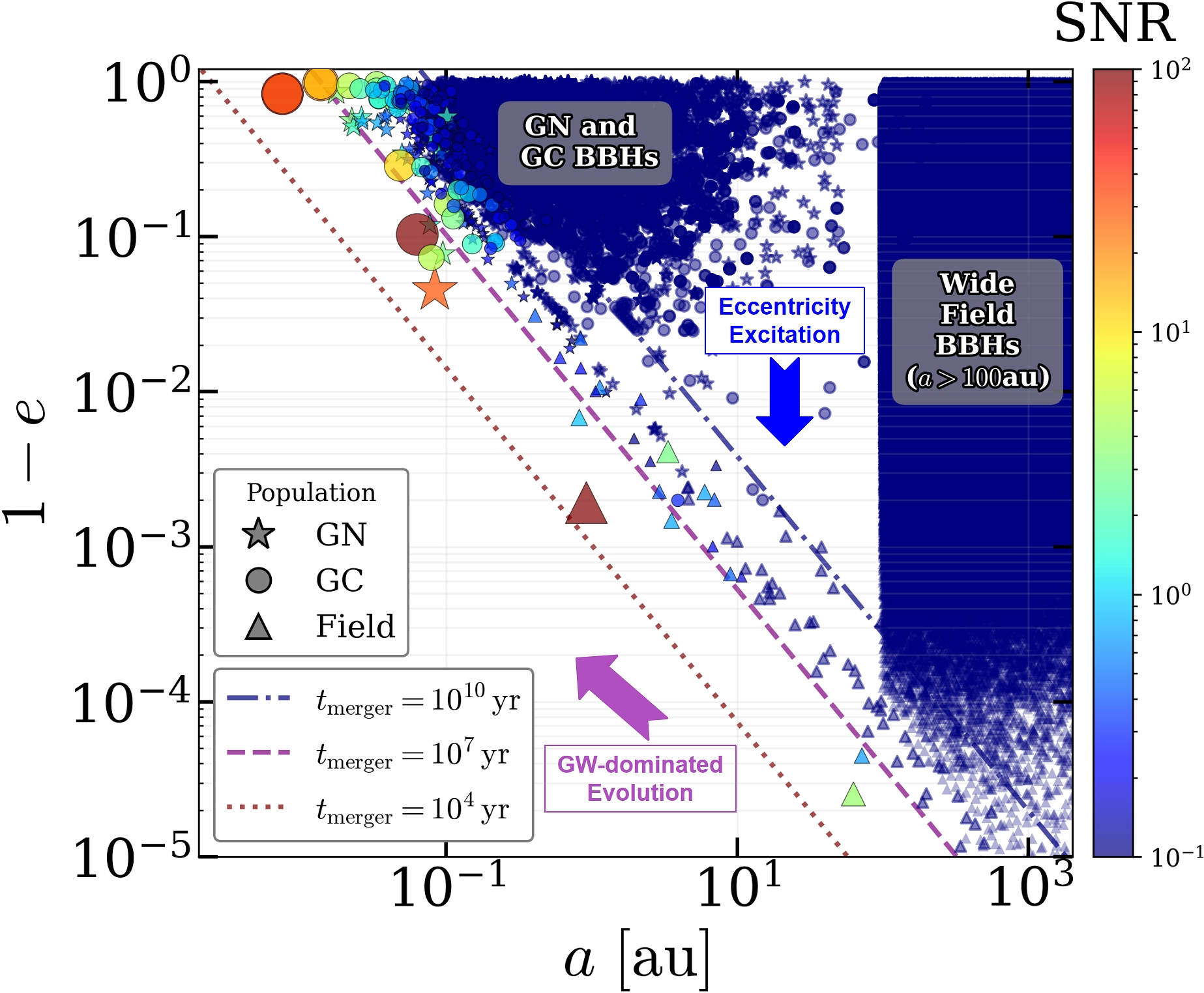
Figure 3: Mock realization showing the (a,1−e) distribution of BBHs in the Milky Way, colored and sized by predicted LISA SNR, with formation channels and evolutionary pathways indicated.
Key quantitative results from the population synthesis include:
- For a 10-year LISA mission, the expected number of MW BBHs with SNR>1,3,8,20,50 is approximately 36,13,4.7,2.3,1.0, respectively.
- The majority of these detectable systems have merger timescales tmerger∼107 years, clustering along nearly the same contours as equal-SNR lines in parameter space.
Detection prospects are dominated by long-lived, highly eccentric Milky Way systems at close proximity, while compact, quasi-circular sources dominate at greater distances.
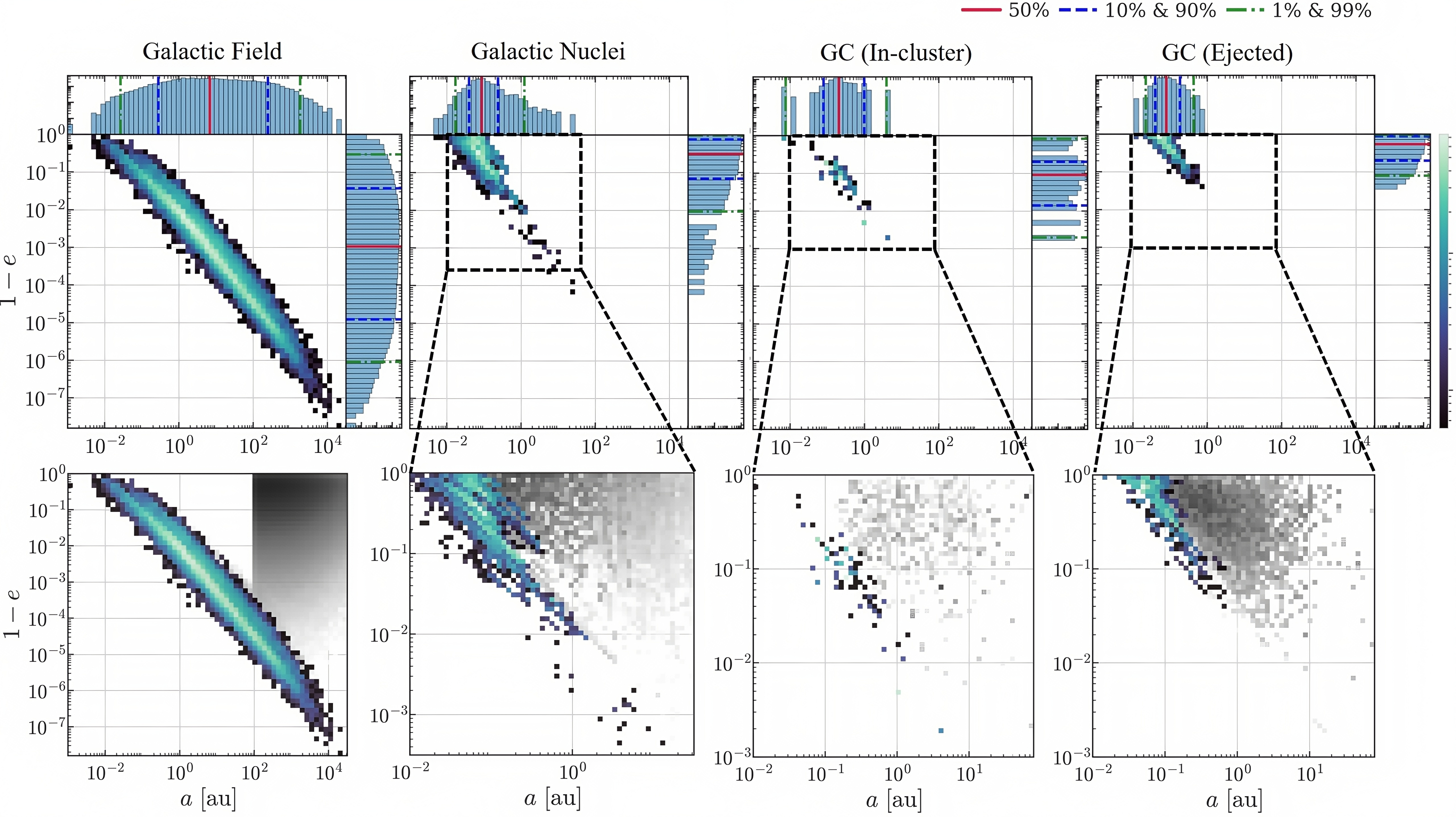
Figure 4: Orbital parameter distributions by channel reveal distinct trends—field sources peak at larger semimajor axes and e∼1, while GC ejected populations are more compact and less eccentric.
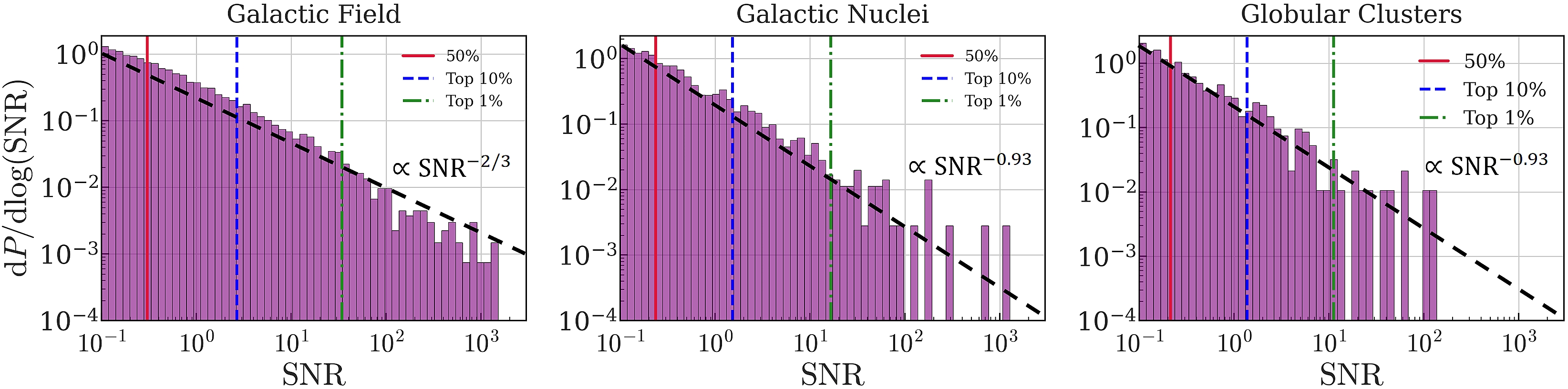
Figure 5: SNR distribution histograms per channel demonstrate power-law tails with slopes set by the underlying dynamical and GW evolution; field sources follow a shallower SNR−2/3, GCs and GN sources a steeper SNR−0.93.
Projections Beyond the Milky Way
The statistical analysis is generalized to cosmological distances:
- The GW merger rate for the dynamically-formed BBH population is Γ∼9 Gpc−3yr−1.
- The total number of extragalactic mHz BBHs with N0 is N1; for more robust detection thresholds (N2), this drops to N3 due to the signal attenuation with distance.
Merger eccentricities at LIGO frequencies vary by formation channel; field fly-by and GC in-cluster channels preferentially retain high N4 at 10 Hz, while GN and GC ejected channels are largely circularized when entering the LVK band.
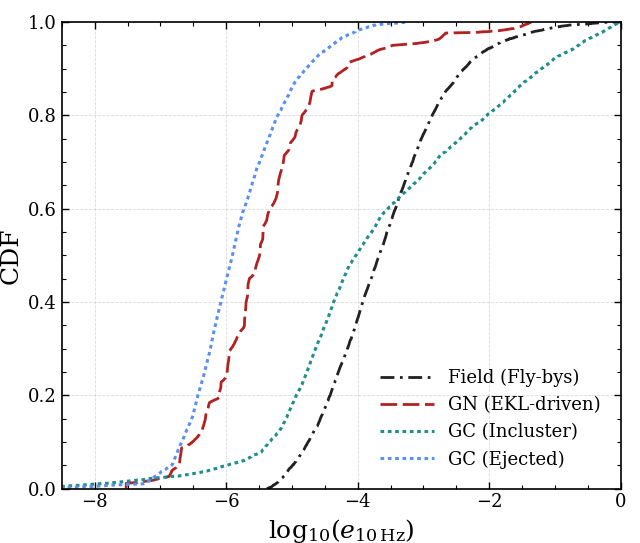
Figure 6: Cumulative eccentricity distributions at N5 Hz by formation channel, showing that field and GC in-cluster pathways can produce LIGO-band mergers with measurable eccentricities, in contrast to GN and GC ejected populations.
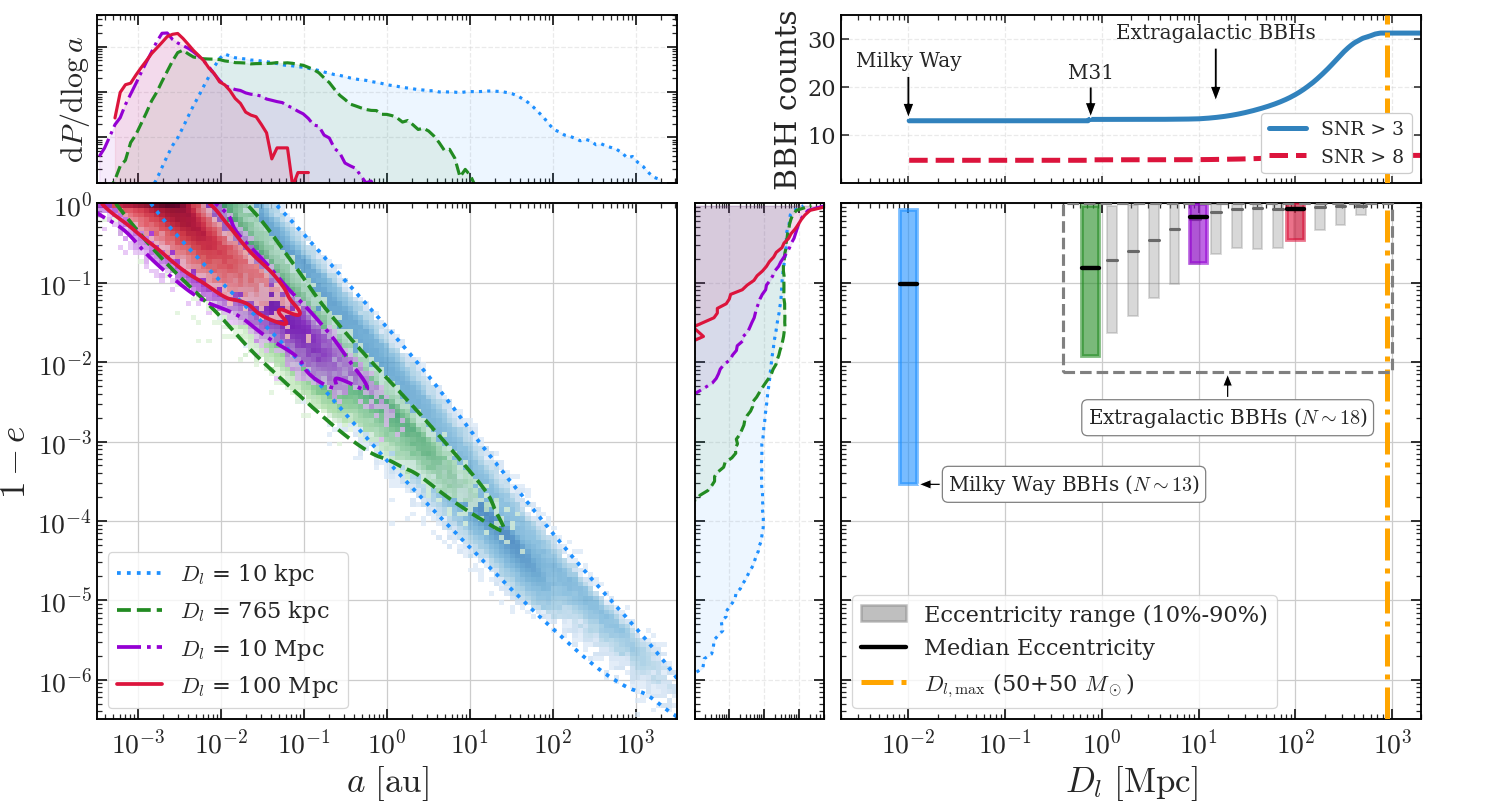
Figure 7: Detection parameter spaces as a function of luminosity distance; at larger distances only tighter, more circular, and shorter-lived BBHs remain above threshold, with the transition visible in marginalized N6 and N7 distributions.
Multi-harmonic Signal Structure and Global Fit Confusion
Eccentric sources' broad harmonic content leads to potential confusion and bias in LISA data analysis. Individual harmonics above the detection threshold can be mistakenly identified as lower-mass quasi-circular signals, biasing chirp mass inference and complicating the disentanglement of the true astrophysical population.
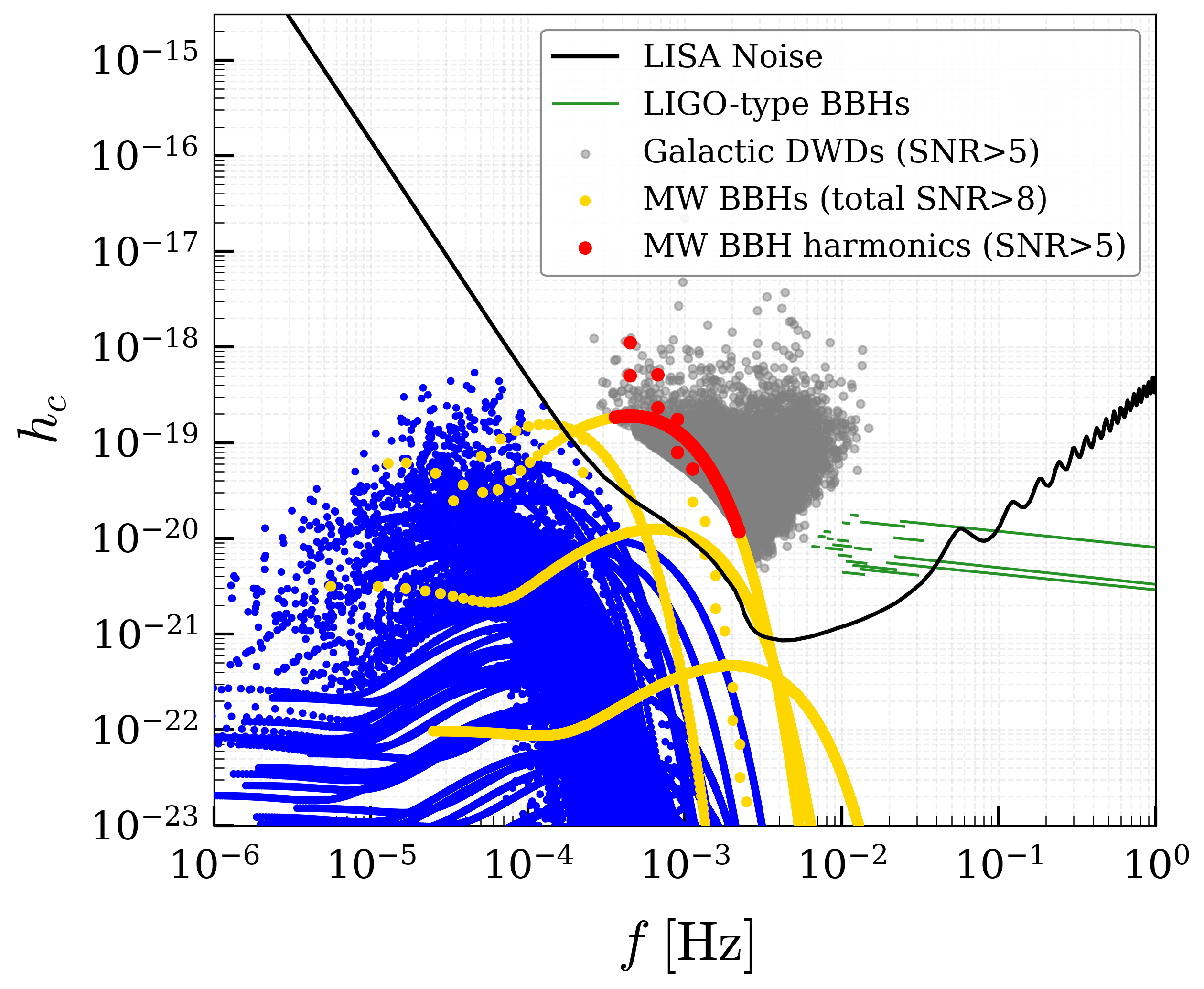
Figure 8: Individual GW harmonics from eccentric BBHs in a Milky Way realization, color-coded by SNR; multiple detectable harmonics per eccentric system are evident, especially at high SNR.
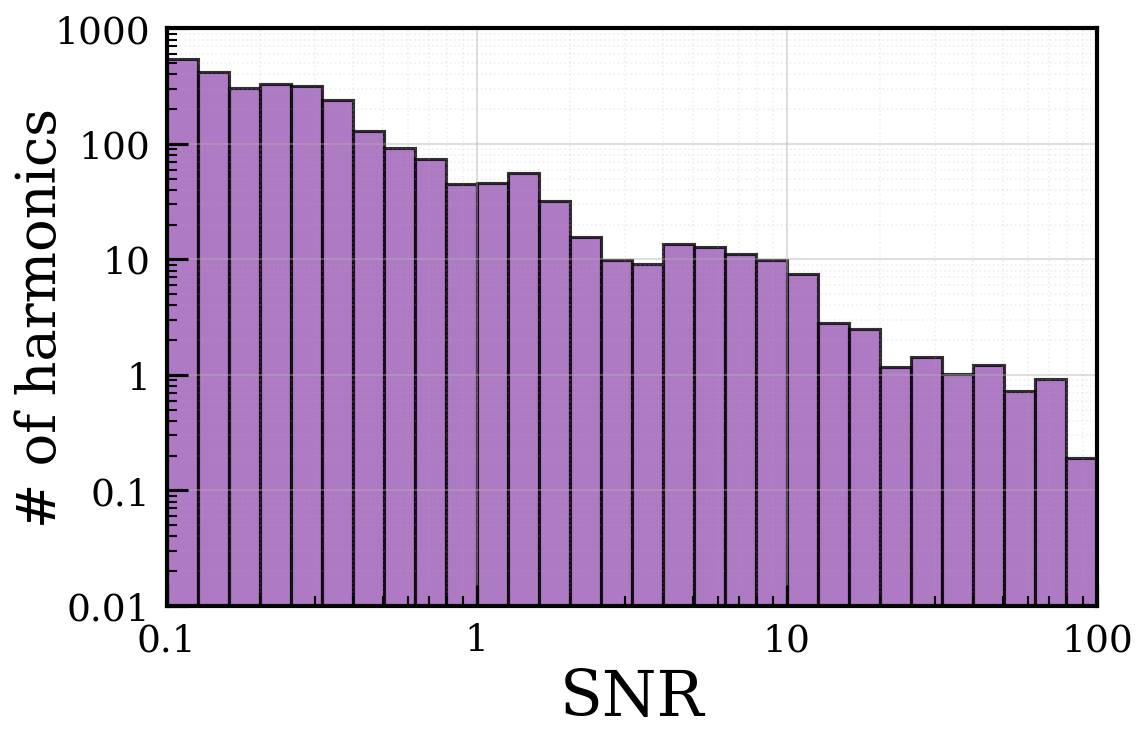
Figure 9: Histogram showing that for a 10-yr LISA run, hundreds of harmonics from few eccentric BBHs are individually resolvable, but sub-threshold harmonics are far more numerous, presenting a significant data analysis challenge.
The analysis demonstrates that the apparent chirp mass inferred from fitting a single high-N8 harmonic to a circular template can be substantially biased below the true underlying mass. As N9, the apparent mass can approach zero, emphasizing the need for eccentric template sets in the LISA global fit pipeline.
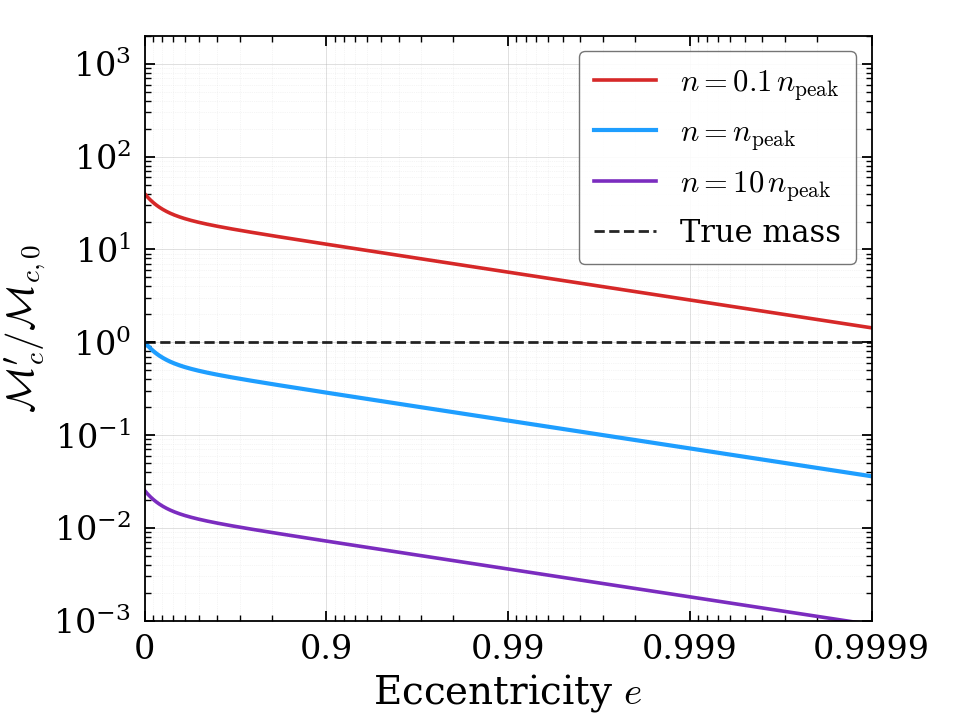
Figure 10: Ratio of apparent to true chirp mass as a function of eccentricity for the peak harmonic—mass is systematically underestimated in the high-eccentricity regime.
Incoherently summing unresolved harmonics and burst sources leads to a stochastic GW background that can compete with LISA instrument noise, particularly if MW and extragalactic populations are combined.
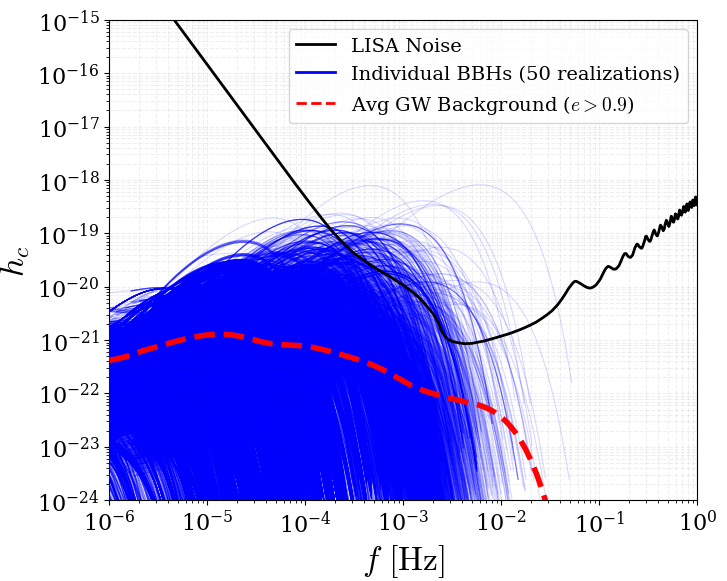
Figure 11: The aggregate GW background from highly eccentric BBHs in the Milky Way closely matches the mHz sensitivity floor of LISA, implying a significant confusion foreground if not modeled and subtracted robustly.
Accurate detection and parameter inference for highly eccentric BBHs in the mHz regime depends on reliable waveform modeling. The authors perform detailed numerical comparisons of post-Newtonian (PN) waveform families (2PN vs. 3PN) as a function of eccentricity, pericenter distance, total mass, and frequency.
Findings include:
- For (a,1−e)0 and (a,1−e)1 mHz, PN waveforms converge to sufficient accuracy for LISA data analysis (i.e., overlaps (a,1−e)2 for SNR (a,1−e)3).
- For higher-frequency or more massive binaries (especially IMBH or SMBH systems), the convergence regime shifts below the LISA band, requiring other modeling approaches such as post-Minkowskian or numerical relativity.
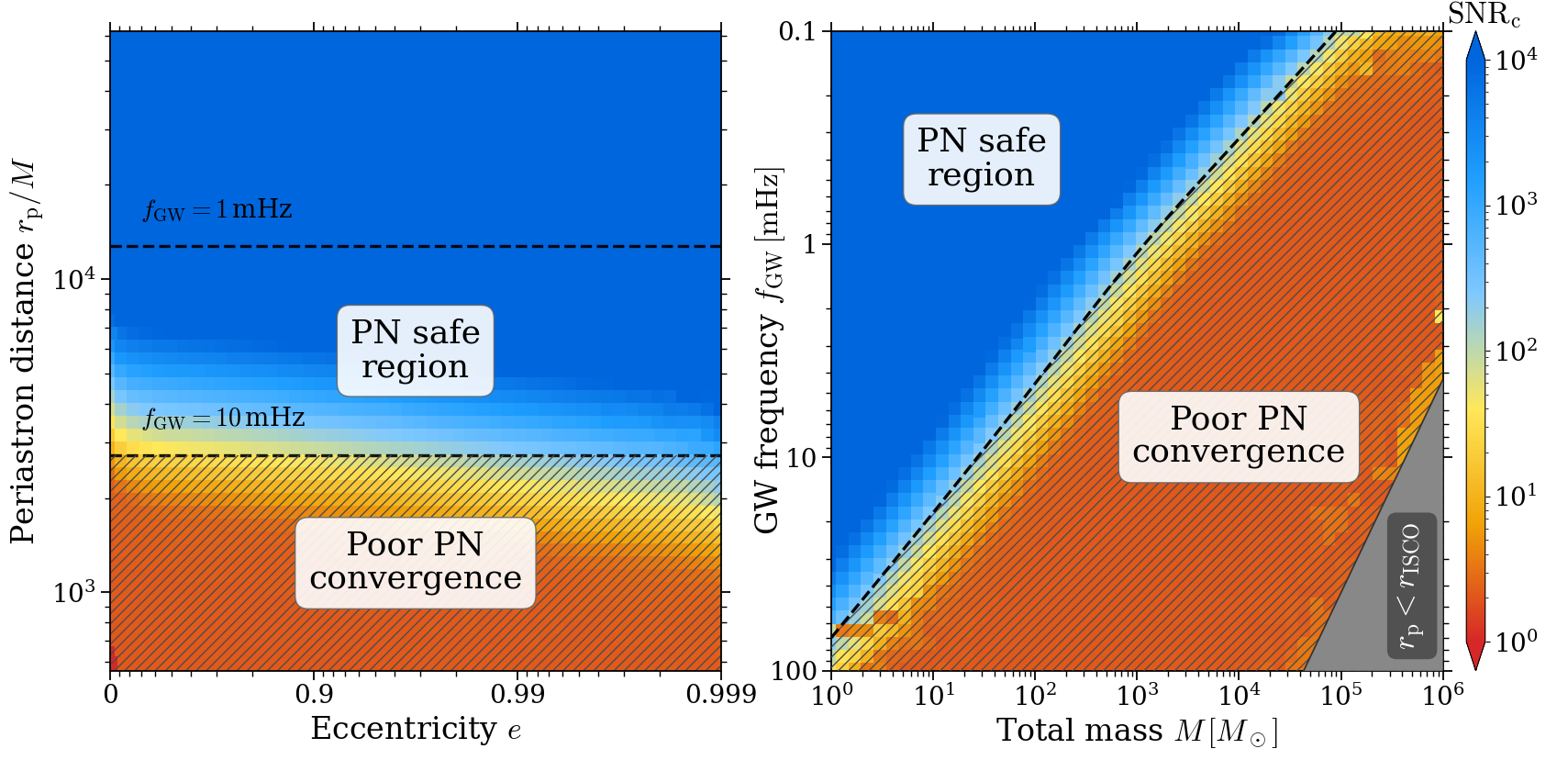
Figure 12: PN convergence in (a,1−e)4 and (a,1−e)5 spaces; 3PN waveforms are reliable for stellar-mass BBHs in LISA’s band, with breakdowns only at high masses or frequencies.
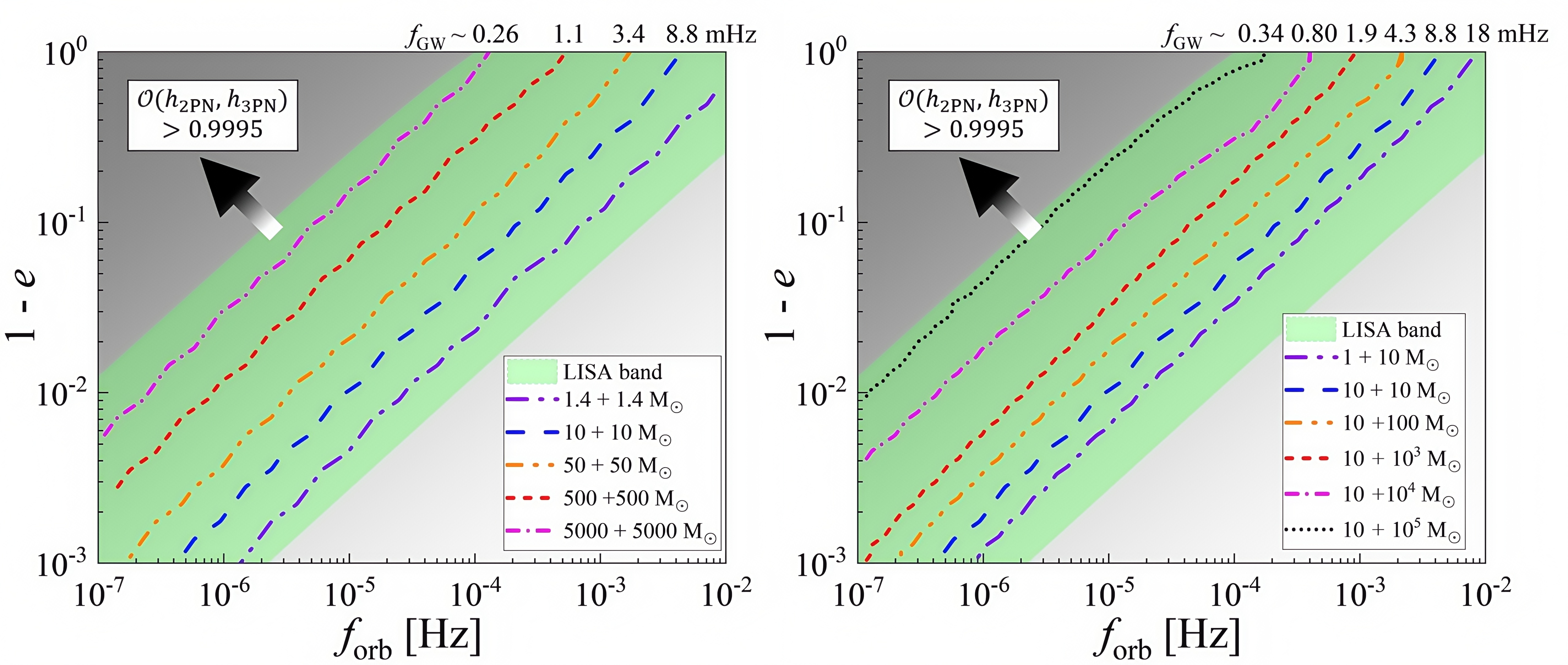
Figure 13: Validity contours of PN waveforms for several mass configurations across (a,1−e)6; the domain of safe PN applicability (SNR(a,1−e)7) shrinks as mass increases, but encompasses most of the mHz parameter space for stellar-mass BBHs.
Implications and Future Prospects
The paper presents several strong claims:
- Eccentric BBHs—particularly those formed dynamically—will be a prevalent and detectable source class for space-based GW observatories, with dozens expected in the Milky Way within LISA sensitivity and hundreds contributing at low SNR from extragalactic distances.
- Harmonic confusion and mass bias are unavoidable if analysis is performed with only circular templates, directly impacting astrophysical inference and necessitating fully eccentric search frameworks.
- Eccentricity-stimulated GW bursts comprise an astrophysical foreground that can rival instrumental noise at mHz frequencies.
- PN waveform models are robust for most expected stellar-mass BBH signals in the LISA band, but care must be taken for high-mass or high-frequency sources.
Further developments are warranted in global fit infrastructure to handle the multi-harmonic and burst character of eccentric BBH signals, as well as extending waveform modeling for more extreme parameter regimes.
Conclusion
This work rigorously establishes that eccentric stellar-mass BBHs, particularly those originating from dynamical channels, will provide a significant and complex population of GW sources in the mHz regime, challenging current data analysis paradigms. Numerical results indicate that the number of detectable systems in the Milky Way is orders of magnitude higher than previously assumed for circular-only searches. Eccentricity not only shapes the GW waveform but introduces data analysis pathologies, including significant degenerate harmonics and background confusion noise.
The publication of a simulated BBH catalog and open-source tools (LEAP) positions the community to conduct more realistic detection studies and global-fit pipeline development, essential for LISA and future mHz GW observatories. Future work should focus on robust extraction of highly eccentric burst signals, improved harmonics disentanglement, and theoretical developments in waveform modeling to cope with the diversity of the BBH parameter space anticipated in the milli-Hertz GW era.