Published 14 May 2026 in quant-ph and cs.CR | (2605.14325v1)
Abstract: As quantum computers become available through multi-tenant cloud platforms, ensuring privacy against adversaries sharing the same quantum processing unit becomes critical. We introduce and explore \emph{covert quantum computing}, a new concept that ensures an adversary with access to all other quantum computational units (QCUs) of a quantum computer cannot detect computation on the subset that they cannot access. Analogous to covert communication, we employ information theory. However, since here the adversary controls the systems used for detection, we require a richer framework for covertness analysis that accounts for the use of quantum memories and adaptive operations. Thus, we adopt the \emph{quantum-strategy} framework used in quantum game theory and memory channel discrimination. Current quantum computers use planar graph circuit layouts and typically assume nearest-neighbor crosstalk. We derive discrete isoperimetric inequalities to show that, for an $n$-qubit circuit under this model, only $\mathcal{O}(\sqrt{n})$ border qubits provide detection information to the adversary. We then explore this scaling law on IQM's 54-qubit \emph{Emerald} processor and IBM's 156-qubit \emph{ibm_fez} machine employing the Heron 2 architecture. We implement Ramsey experiments on qubits not used in computation, and detect nearest-neighbor crosstalk, as expected. However, we also observe long-range coupling effects beyond the border qubits, revealing a side channel that the adversary can exploit. We hypothesize that this long-range crosstalk is induced by leakage from the drive and control lines. Beyond weakening covertness, it exposes co-tenants to both adversarial and unintended crosstalk and degrades circuits that span spatially distributed qubits, motivating further work on spatial isolation and crosstalk characterization.
The paper introduces a covert quantum computing framework that leverages quantum game theory to obscure computation from adversaries.
It presents detailed noise analysis and circuit layout assessments using discrete isoperimetric inequalities to reveal O(√n) border qubit scaling.
Experiments on superconducting architectures demonstrate the viability of covert computation by quantifying crosstalk and validating detection thresholds.
Toward Covert Quantum Computing
Introduction to Covert Quantum Computing
Covert quantum computing is introduced as a novel paradigm to ensure privacy in multi-tenant quantum computing environments. With quantum computers increasingly accessible through cloud platforms, the risk of potential adversaries detecting computations executed on shared quantum processing units (QPUs) becomes significant. Unlike classical secure computation paradigms, covert quantum computing aims to conceal the occurrence of computations from adversaries. This framework is inspired by the principles of covert communication, where communication transpires with a low probability of detection. In the quantum domain, an adversary with access to a comprehensive array of quantum memories and adaptive operations challenges the formulation of covert computing, necessitating a robust theoretical underpinning to protect computations.
Given the intrinsic properties of quantum systems, the quantum-strategy framework from quantum game theory is adopted to characterize and analyze covert quantum computing. This framework allows for a comprehensive description of adversary strategies that include operations on accessible quantum computational units (QCUs) and associated reference systems.
Emerging challenges in privacy preservation on current quantum computers are scrutinized by employing planar graph circuit layouts and considering effects such as nearest-neighbor crosstalk. The exploration details a discrete isoperimetric inequality approach, revealing that only O(n) border qubits provide detectable information, thus scaling laws are investigated within the IQM's 54-qubit and IBM's 156-qubit machines. The results demonstrate detectable nearest-neighbor crosstalk and unexpected long-range coupling beyond border qubits.
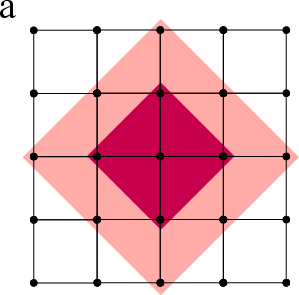
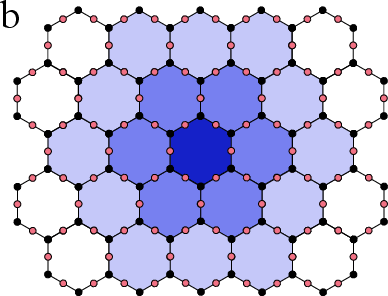
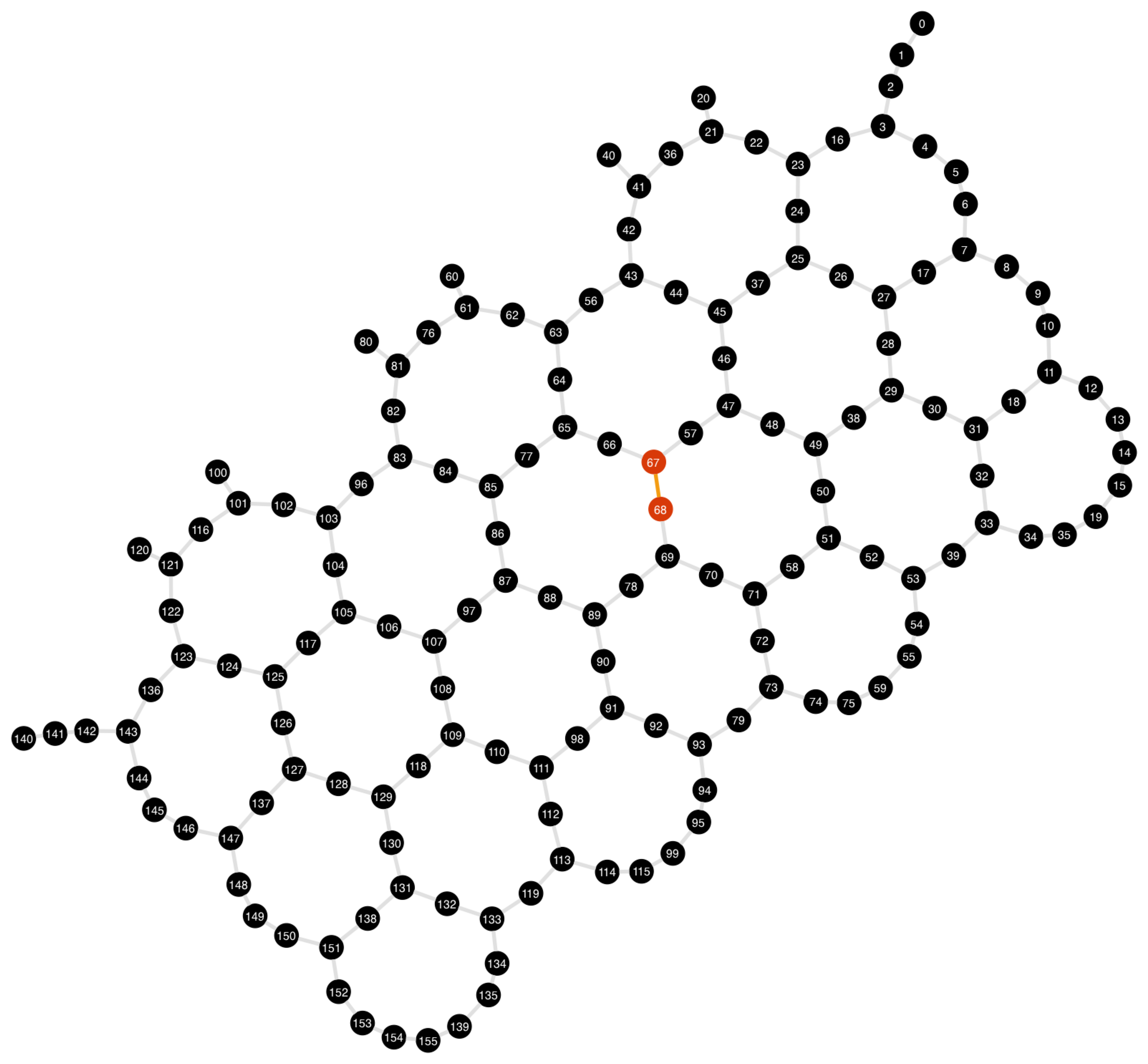
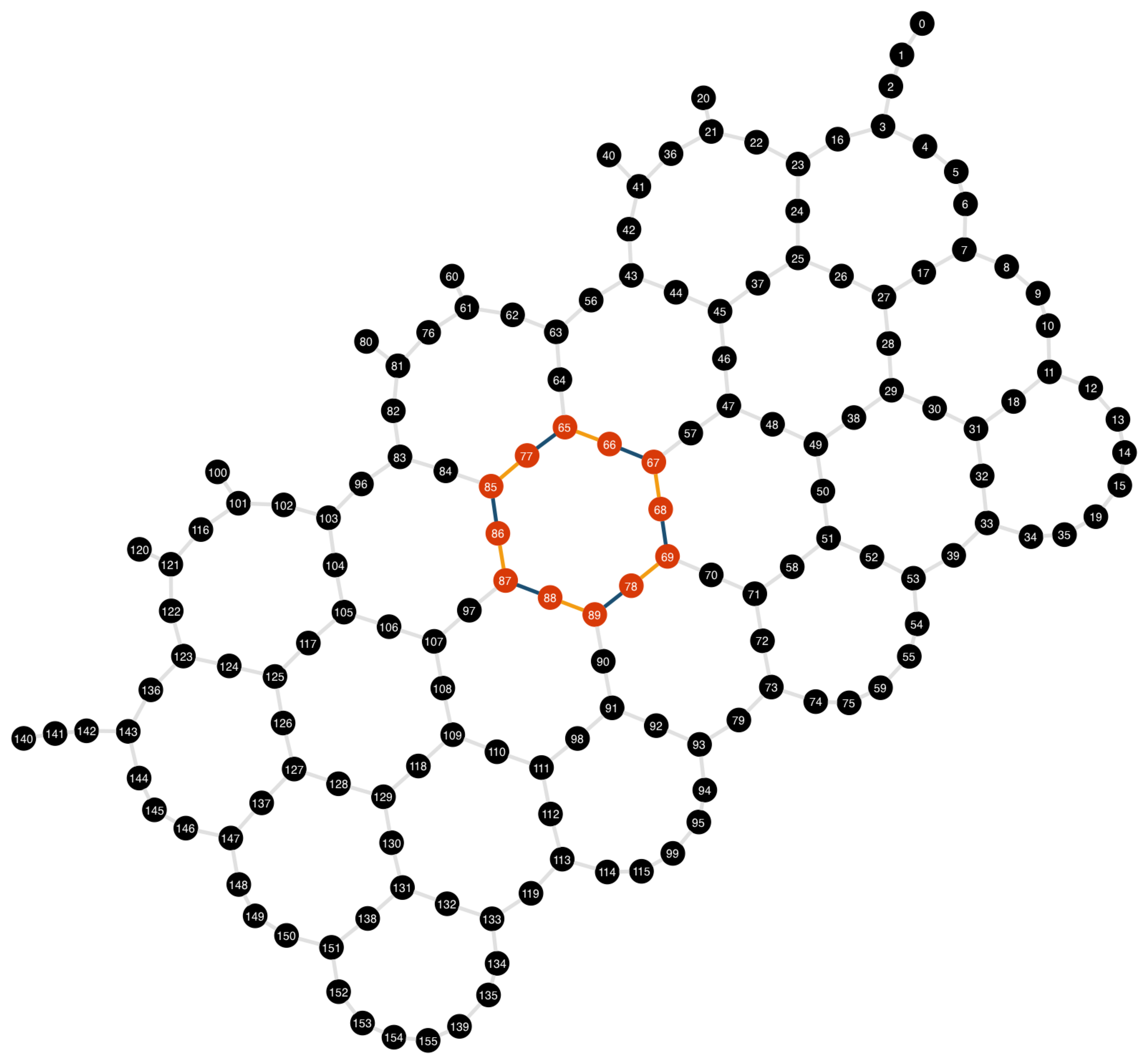
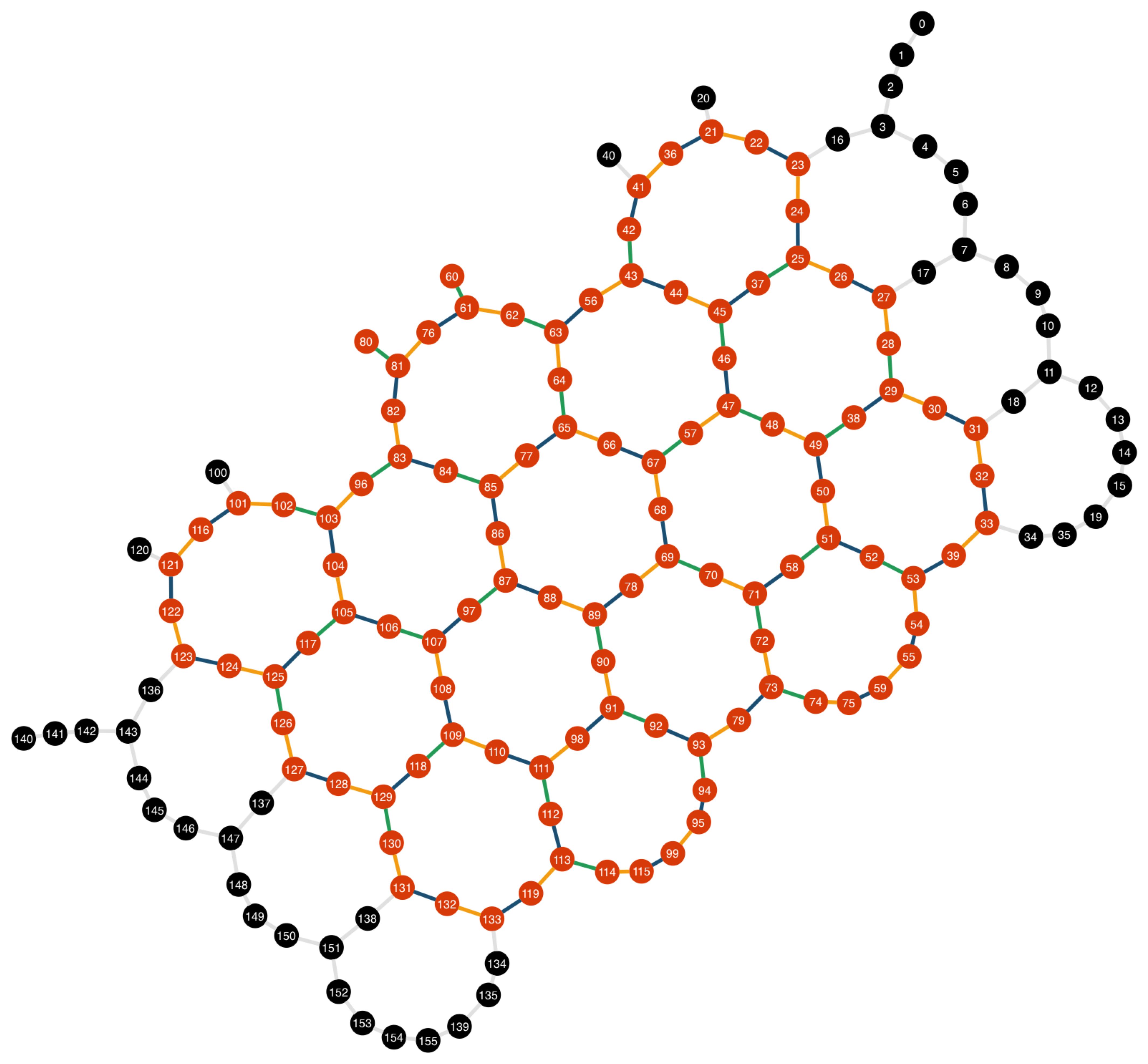
Figure 1: The square lattice is shown optimizing the vertex-isoperimetric inequality, and the heavy-hex lattice demonstrates disk-construction vertex subsets.
Covert Quantum Computing Framework
Diamond-Norm Distance and Reliability
Central to the covert quantum computing framework is the diamond-norm distance, which quantifies the distinguishability of quantum channels and informs the separability between Alice's idling process and active computation as perceived by Warden Willie. Reliable quantum computation is characterized by utilizing quantum instruments that encapsulate unitary evolutions and completely positive trace-preserving (CPTP) mappings.
Covertness Criteria
The covertness definition hinges on the assumption that an adversary, possessing access to a quantum memory and adaptive strategies, attempts to discern computation from idling. The quantum-strategy framework, operationally equivalent to quantum combs and testers, offers a detailed perspective on handling memory channel scenarios. The adversary's detection task is mathematically expressed with Willie's error probability formulated to secure operations as covert.
Experimental Validation on Superconducting Architectures
Spectator Qubits and Crosstalk Noise Analysis
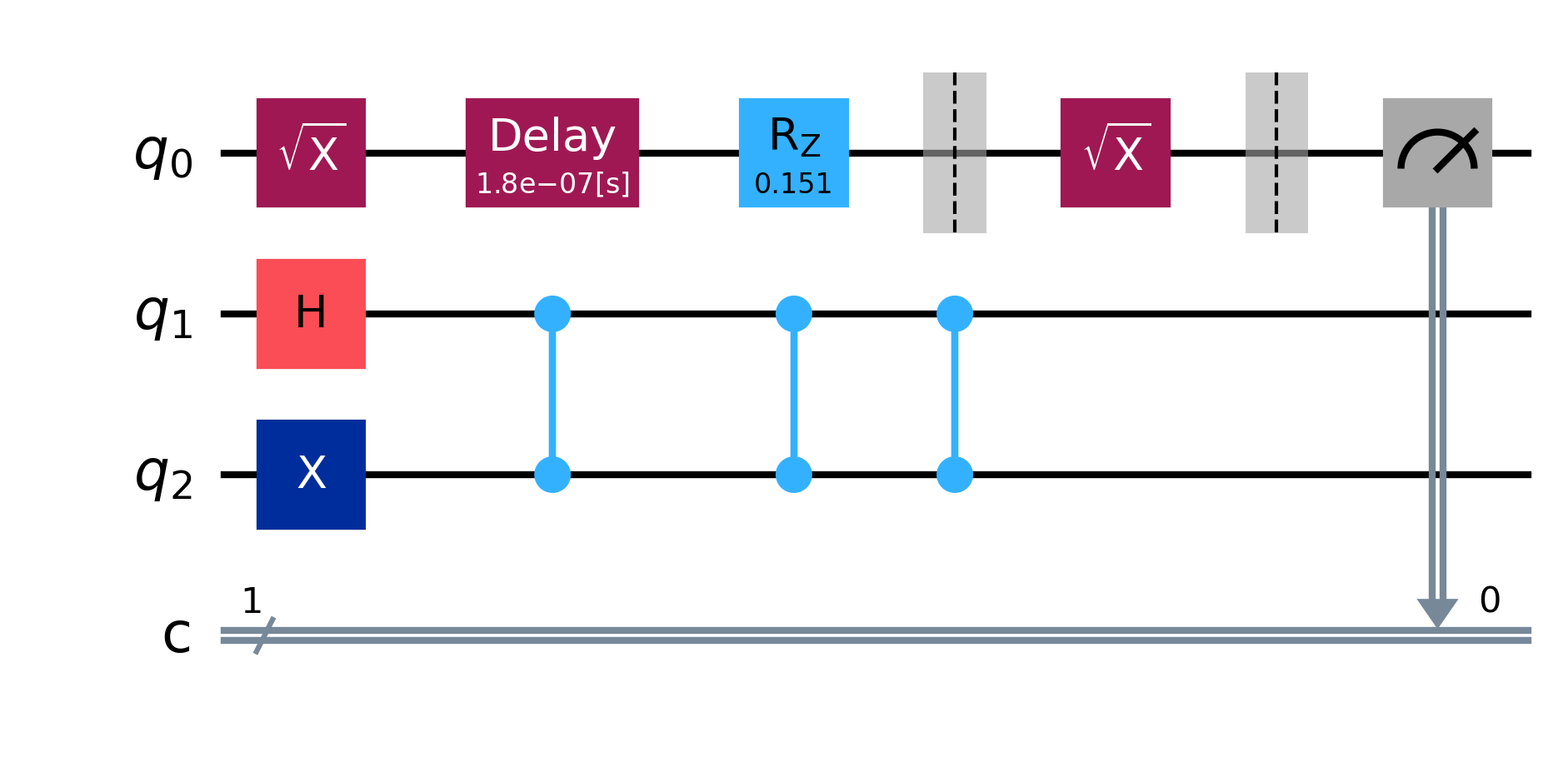
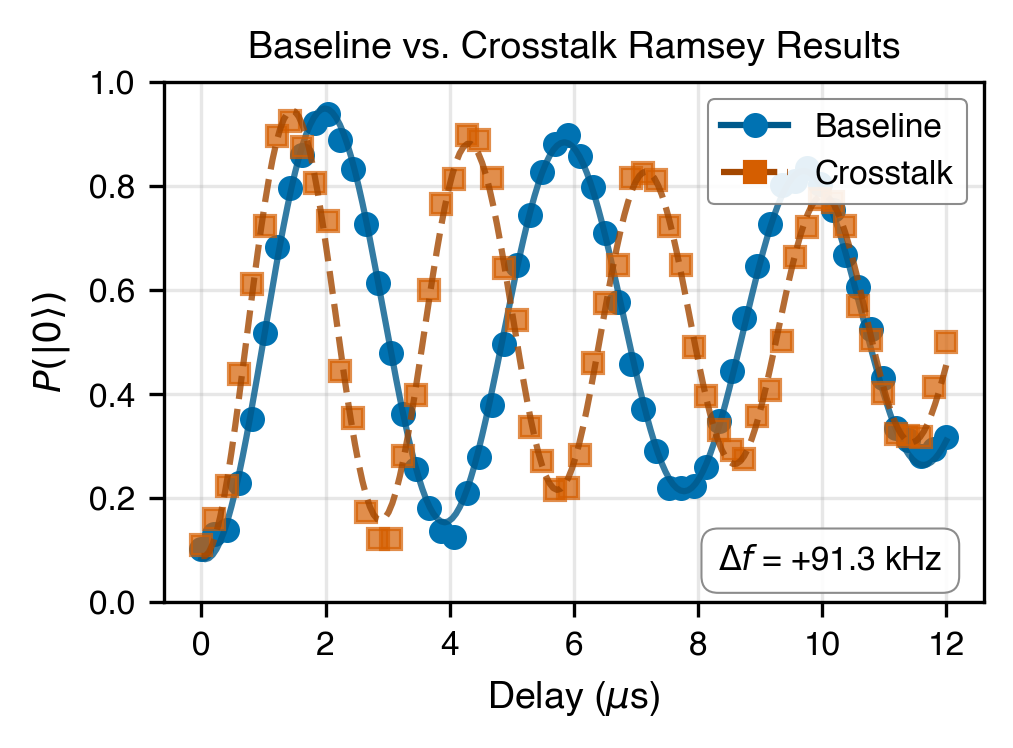
Spectator qubits, utilized for detecting noise deviations and crosstalk, play a pivotal role in the experimental analysis. The correlation between active CZ gates on superconducting qubits and frequency shift in spectators provides a quantitative proof of concepts. Crosstalk is predominantly due to residual ZZ coupling in the gated environment, providing reliable indicators for covert computation validation.
Square-Root Law and Isoperimetric Inequalities
The discrete isoperimetric inequalities applied to square and heavy-hex grids demonstrate O(n) scaling for border qubits necessary for covert assurance. These mathematical assertions validate that covert placement on heavy-hex grids can optimize computational concealment.
Experimental Results
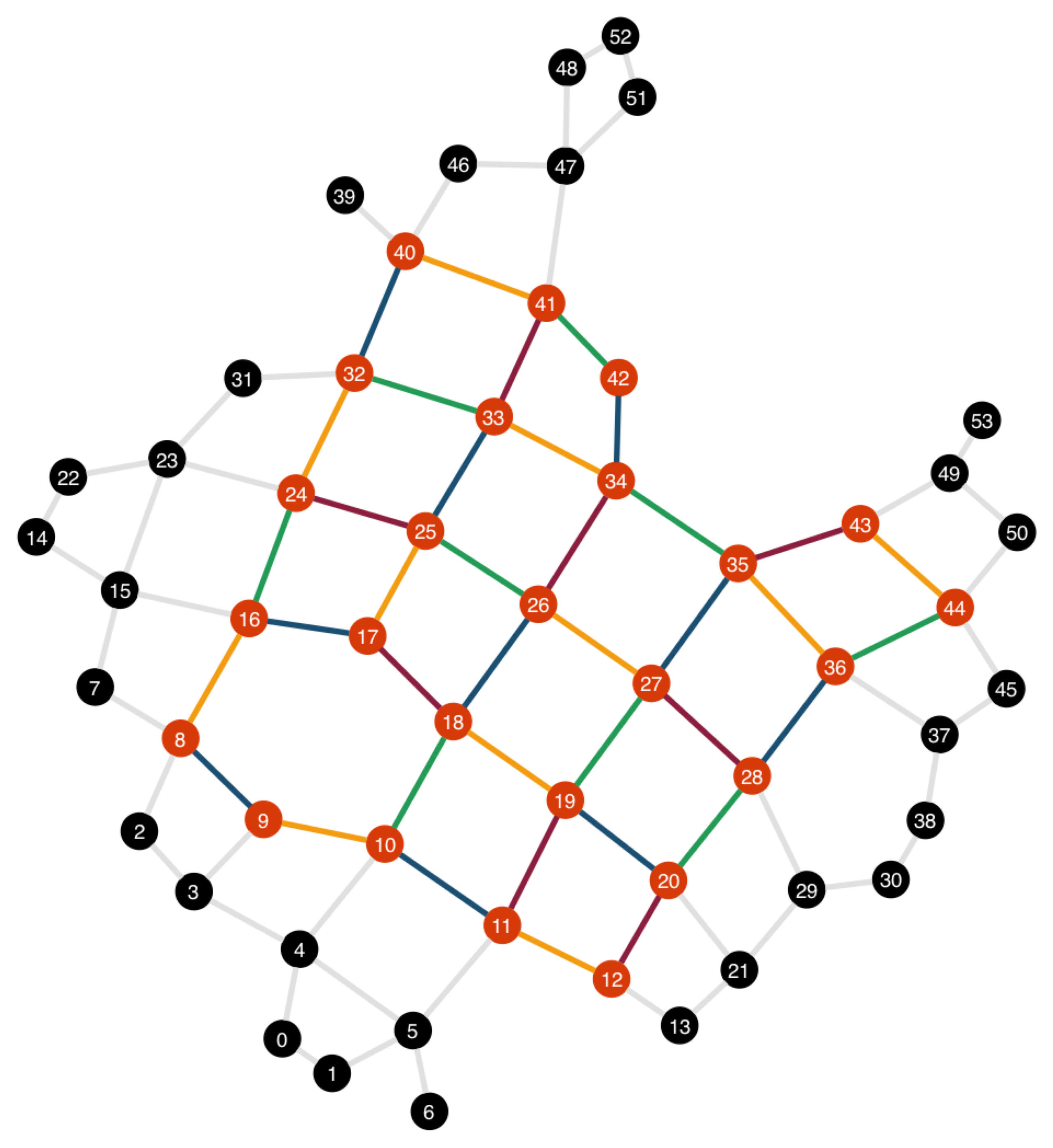
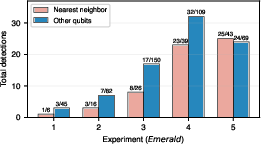
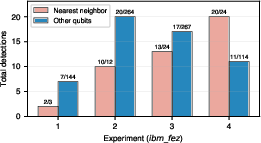
Emerald and ibm_fez processors are utilized to validate covert placement and observe crosstalk within diversified grid layouts. The experiments confirm that nearest-neighbor crosstalk adheres to modeling predictions, but also highlight the presence of non-local couplings that potentially expand Willie's detections beyond anticipated borders.
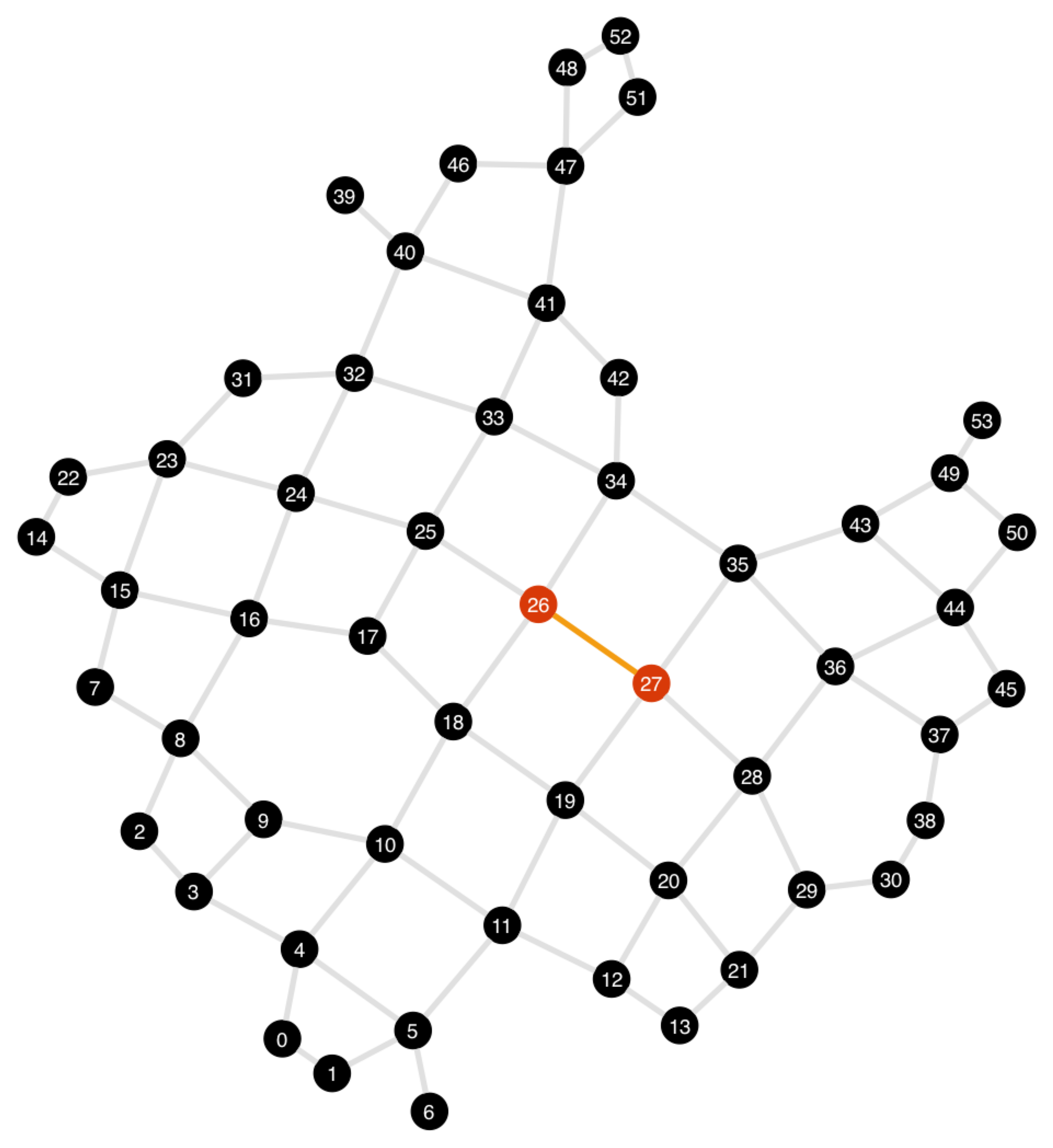
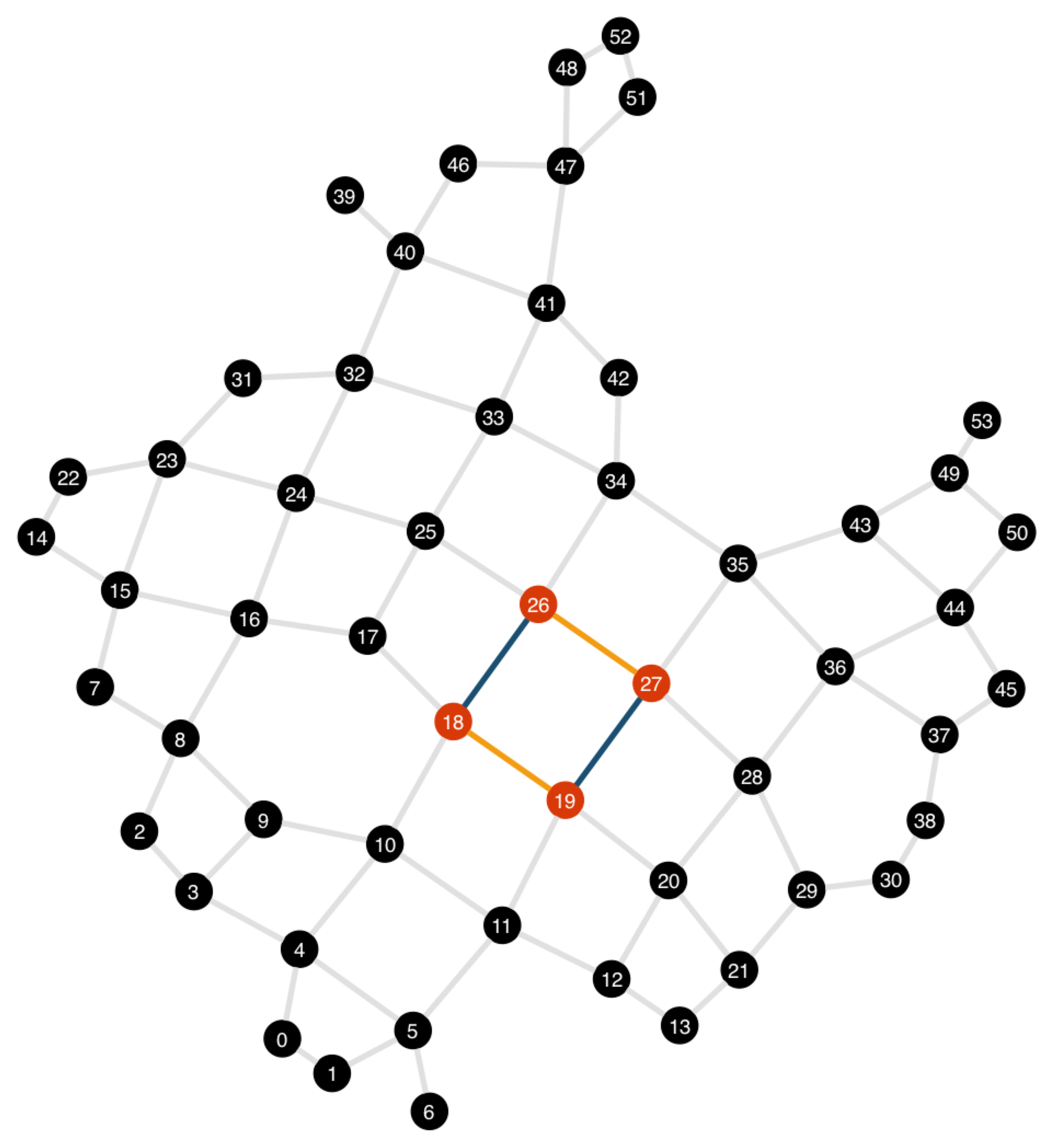
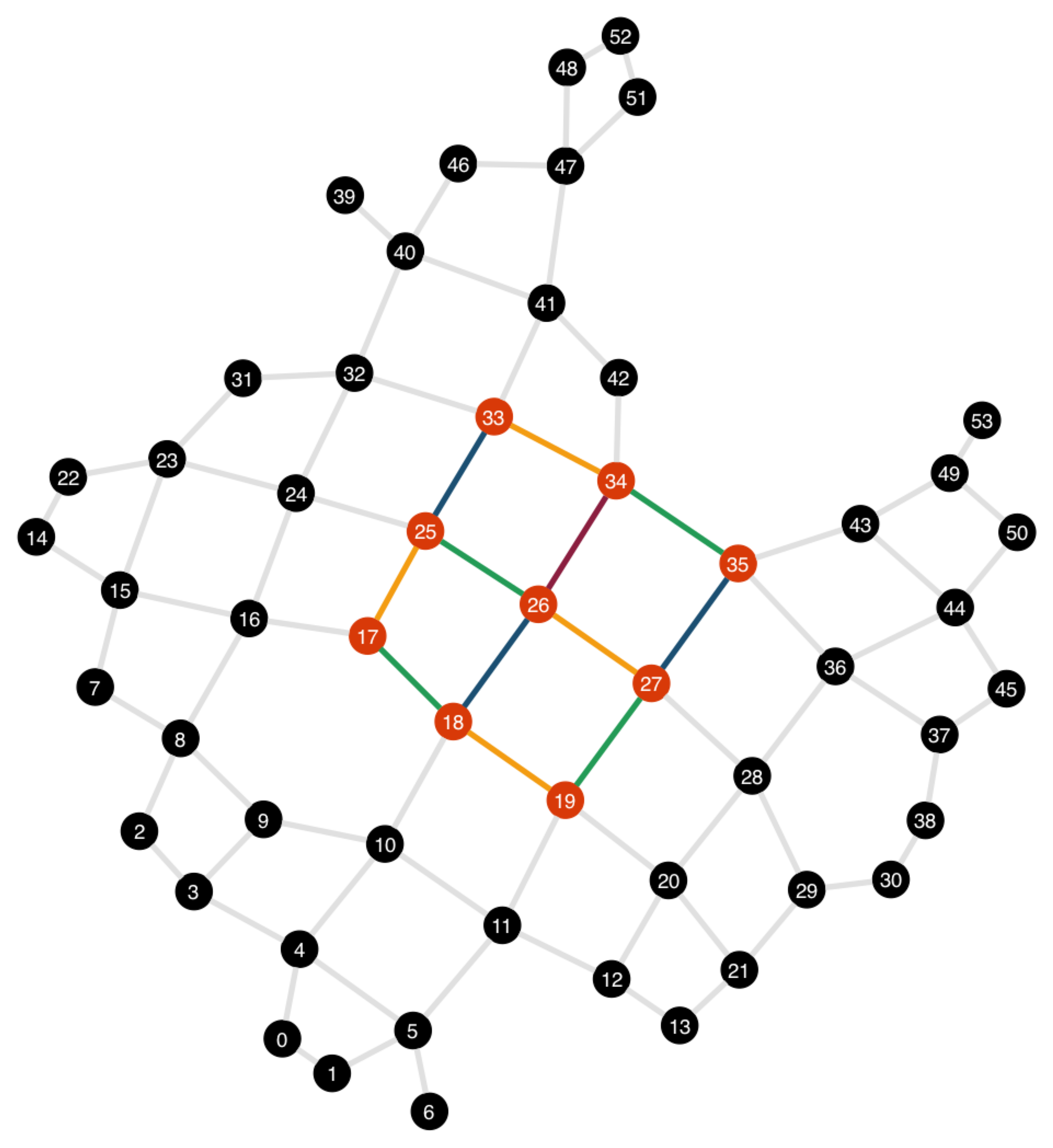
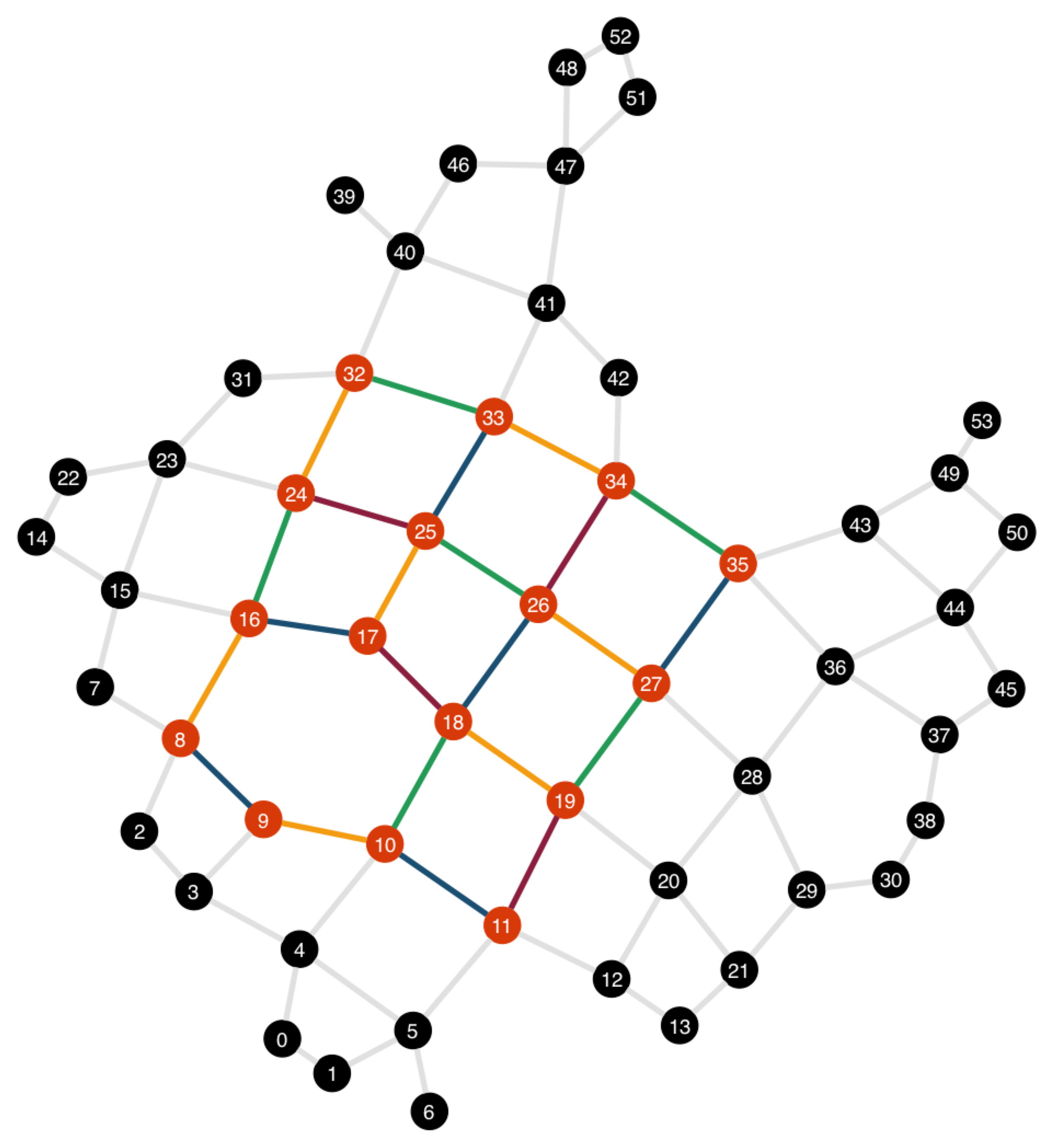
Figure 2: Ramsey experiment layouts for various qubits demonstrating differential detection counts.
Figure 3: Ramsey experiment results showing frequency shifts due to crosstalk detection.
Conclusion
Covert quantum computing offers an important security dimension for QPUs by theoretically grounding privacy preservation within computational tasks. The approaches outlined necessitate further exploration in noise characterization, adaptation of strategies beyond nearest-neighbor confines, and broader quantum architecture implications. Future work promises to extend these investigations across alternative computing paradigms and refine the noise models to fortify covertness in quantum computing. The foundational insights contribute significantly in aligning quantum error suppression techniques with emerging covert computing protocols.
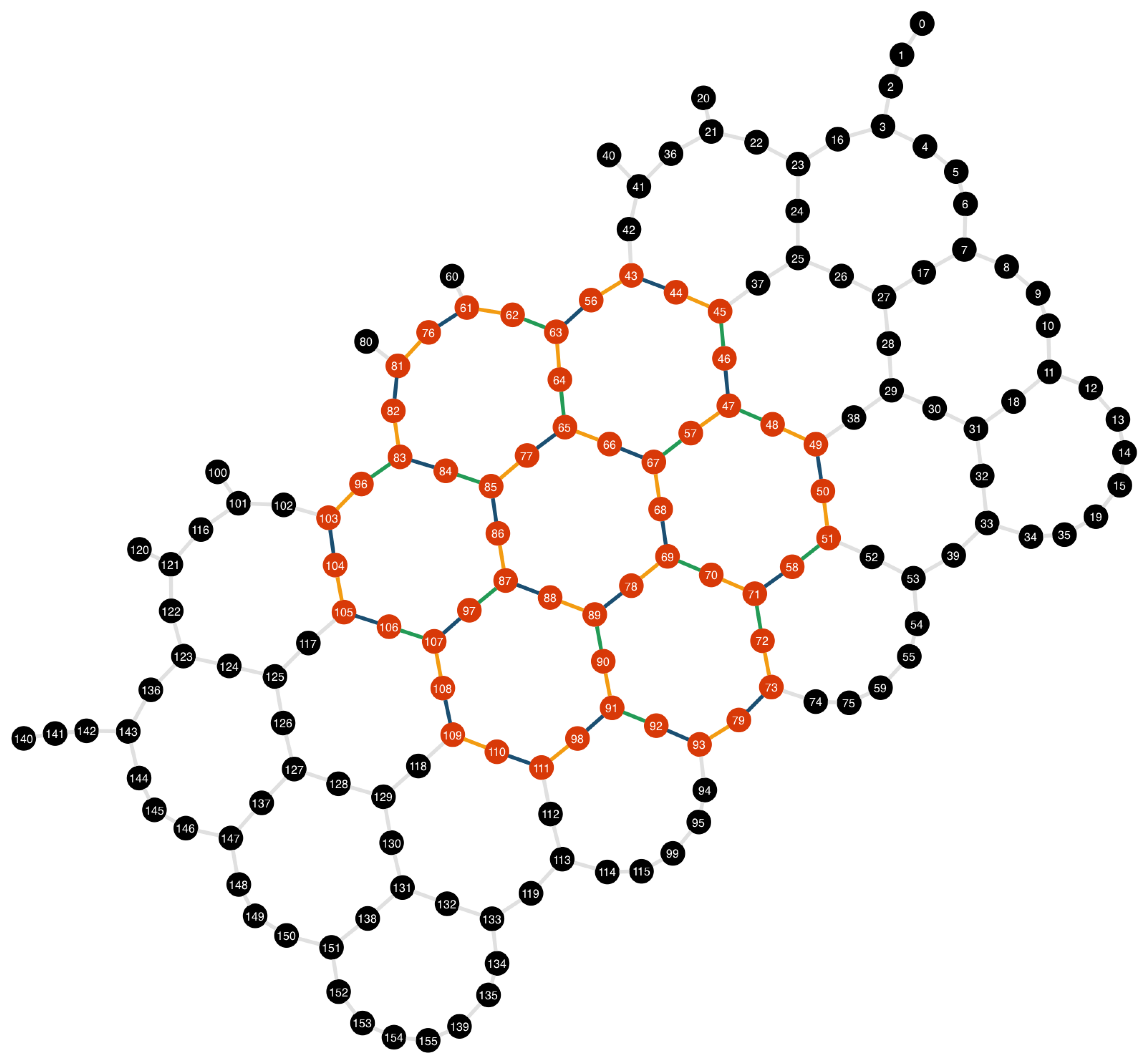
Figure 4: Aggregate detection trends of frequency shifts reveal underlying consistency in observed crosstalk across setups.
Figure 5: ibm_fez, detection threshold characterization reinforces scalability and sensitivity relationships in covert strategies.
“Emergent Mind helps me see which AI papers have caught fire online.”
Philip
Creator, AI Explained on YouTube
Sign up for free to explore the frontiers of research
Discover trending papers, chat with arXiv, and track the latest research shaping the future of science and technology.Discover trending papers, chat with arXiv, and more.