- The paper introduces the SWAP Attack, demonstrating how adversaries exploit qubit crosstalk in multi-tenant quantum clouds to disrupt computations.
- The active mode leverages indirect connectivity to execute CNOT gates, reducing quantum output accuracy by up to 81.62%.
- The passive mode uses a minimal listening circuit to extract circuit details with 100% prediction accuracy of specific quantum states.
SWAP Attack: Stealthy Side-Channel Attack on Multi-Tenant Quantum Cloud System
Introduction
The paper introduces a novel side-channel attack known as the SWAP Attack, targeting multi-tenant quantum cloud systems. The proposed attack leverages crosstalk phenomena to compromise the integrity of quantum computations. Specifically, the attack exploits the SWAP path between qubits, manifesting in both active and passive modes. This work revisits quantum crosstalk, highlighting its repercussions on shared quantum devices and challenging existing defenses that rely on maintaining topological separation between circuits.
Active SWAP Attack
The active SWAP attack enables adversaries to disrupt quantum computations remotely. By exploiting crosstalk arising from specific SWAP paths, an attacker can execute a CNOT gate to influence a victim's quantum circuit, such as when running Grover's Algorithm, without being in proximity. The attack effectiveness is demonstrated through a decrease in output accuracy, wherein strategic qubit positioning can reduce accuracy by up to 81.62%.

Figure 1: Active SWAP Attack Flow.
The active attack emphasizes granular control, capable of inducing errors with varying degrees of severity—ranging from minor to critical disruptions. The attack's stealth is attributed to its reliance on indirect connectivity rather than physical adjacency, thereby challenging traditional defense methods based on circuit separation.
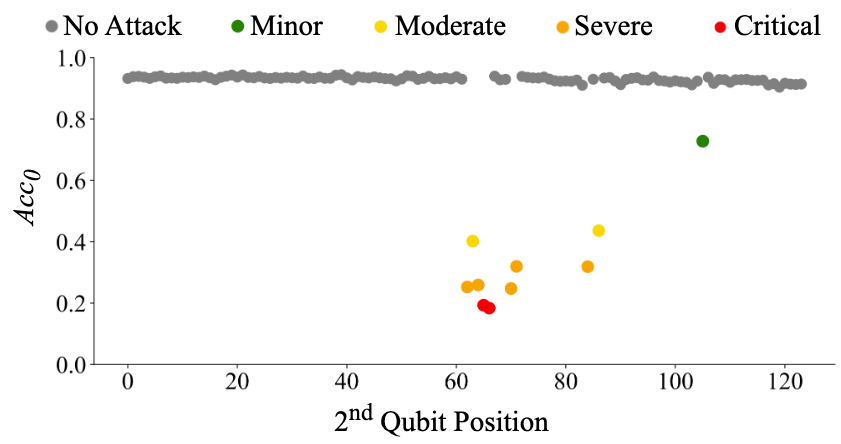
Figure 2: The Output Accuracy, Acc0 of Victim Circuit Estimation Across Different Qubit Positions.
Passive SWAP Attack
The passive SWAP attack focuses on extracting sensitive information by utilizing a minimal circuit to capture crosstalk-induced signatures. Even with a circuit comprising only 6.25% of the victim's resources, adversaries can achieve 100% accuracy in predicting attributes such as circuit size and specific quantum states. The attack underscores the vulnerabilities associated with improper qubit allocation in shared environments.

Figure 3: Passive SWAP Attack Flow.
The methodological rigor involves constructing a listening circuit designed to detect deviations in expected outcomes attributed to the victim's operations. Experimentation on IBM's quantum devices validates the attack's viability, using controlled configurations to foster repeatability and reliability.
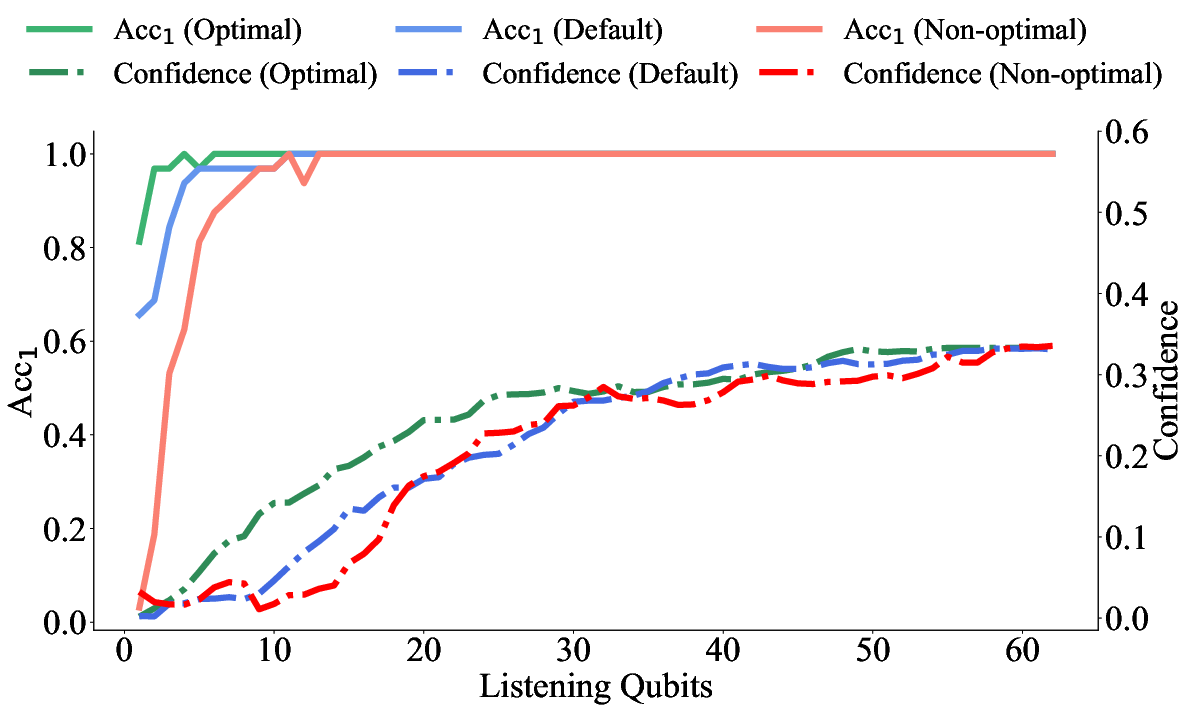
Figure 4: Tradeoff Between Listening Size, Acc1, and Confidence in Experiment 3.
Implications and Future Work
The SWAP Attack presents significant implications for quantum cloud security, prompting reevaluation of current isolation strategies. By exploiting quantum device architecture's inherent crosstalk, the attack circumvents traditional defensive measures, advocating for enhanced security protocols. It reveals the inadequacy of extant threat models and underscores the need for robust qubit allocation policies mitigating crosstalk susceptibility.
Future directions might explore migration of attack methodologies to other quantum computing platforms like IQM Garnet on AWS BraKet. Additionally, deepening the theoretical understanding of non-local quantum interactions could yield insights into crosstalk mitigation strategies, thus fortifying quantum cloud infrastructure against similar intrusion vectors.
Conclusion
The study of the SWAP-based side-channel attack illuminates critical vulnerabilities within multi-tenant quantum cloud systems. Active and passive modes highlight both operational interference and information leakage, underscoring the need for more sophisticated, scalable security measures. As the frontiers of quantum computing rapidly advance, ensuring the integrity and confidentiality of quantum operations becomes paramount.

