- The paper establishes explicit thresholds for zeros on the unit circle arc based on δ=m/ℓ, showing a linear decrease and eventual absence as δ increases.
- It employs contour integration and residue calculus to derive precise analytic lower bounds, with numerical verification up to k=600,000.
- The study reveals a transition of zeros from the arc to a logarithmic Szegő curve, offering insights for both holomorphic and weakly holomorphic modular forms.
Summary of "The variation of zeros of the Miller basis" (2605.09731)
Introduction and Historical Context
The paper investigates the distribution of zeros for elements of the Miller basis in spaces of holomorphic and weakly holomorphic modular forms of level one and even weight. Building upon classic results such as those of Rankin and Swinnerton-Dyer on the Eisenstein series, where zeros are restricted to a certain arc ("A") of the unit circle, the authors seek a unified characterization across the whole Miller basis. The Miller basis is parametrized by gk,m=qm+O(qℓ+1), with ℓ+1=dim(Mk) and 0≤m≤ℓ.
Main Results: Thresholds and Zero Distribution
A principal contribution is the explicit connection of zeros' locations to the parameter δ=m/ℓ. The authors derive analytic lower bounds for the proportion of zeros on the arc A as k→∞, with sharp, numerically verified thresholds:
- For δ<0.6194, all non-elliptic zeros lie on A.
- For 0.6194≤δ<0.9546, the number of zeros on gk,m=qm+O(qℓ+1)0 decreases linearly.
- For gk,m=qm+O(qℓ+1)1, no zeros are present on gk,m=qm+O(qℓ+1)2.
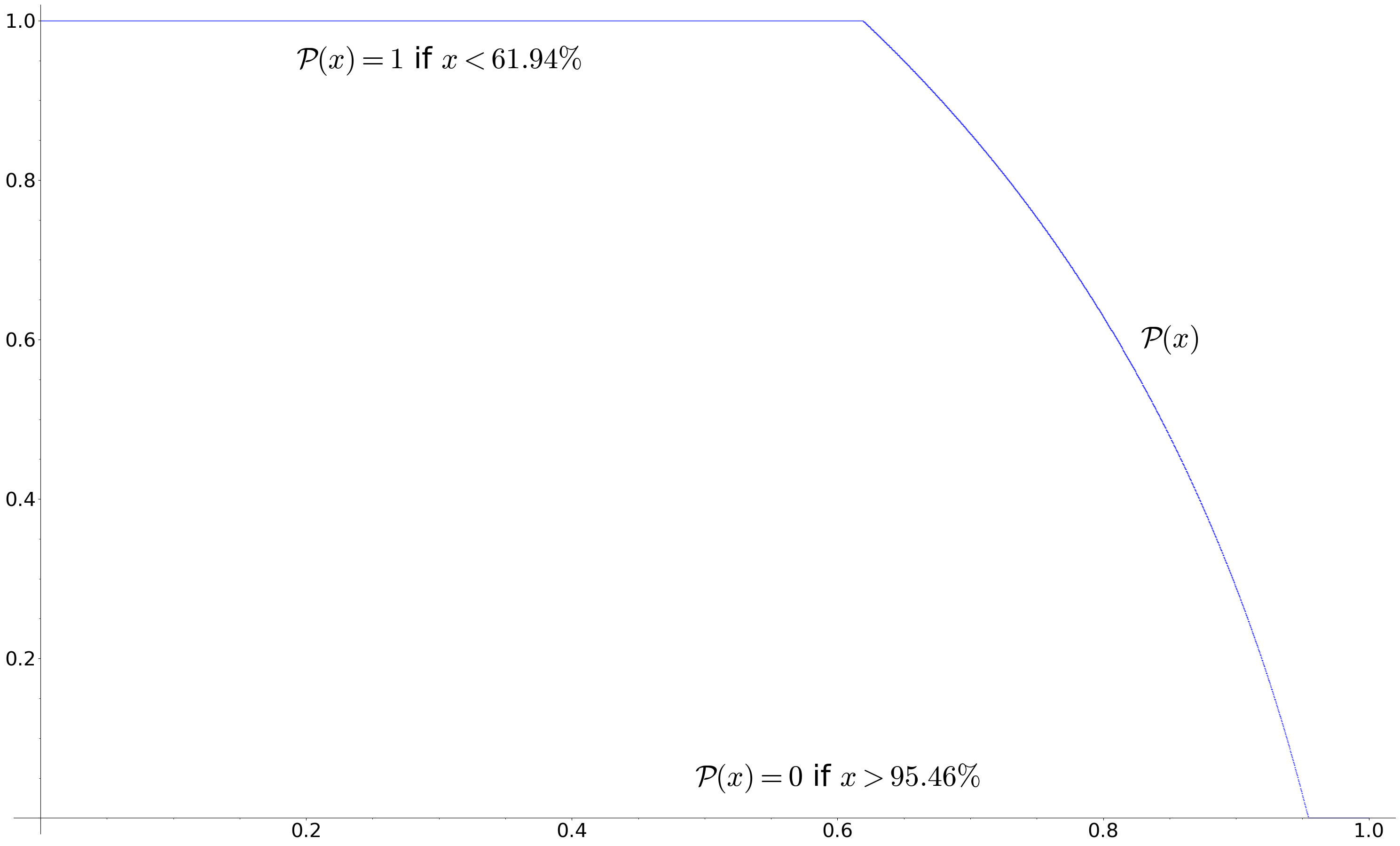
Figure 1: Lower bound gk,m=qm+O(qℓ+1)3 for the proportion of roots on gk,m=qm+O(qℓ+1)4 as a function of gk,m=qm+O(qℓ+1)5.
These thresholds are derived via technical estimates and verified in extensive computations up to gk,m=qm+O(qℓ+1)6, demonstrating precise quantitative agreement. This framework extends to weakly holomorphic modular forms, but with shifted thresholds for gk,m=qm+O(qℓ+1)7 due to the negative weight regime.
Connection to the Logarithmic Szegő Curve
The authors exhibit a novel phenomenon: as gk,m=qm+O(qℓ+1)8 approaches 1, zeros transition from gk,m=qm+O(qℓ+1)9 to a logarithmic variant of the classical Szegő curve. The limiting curve, ℓ+1=dim(Mk)0, is defined through normalization and a logarithmic shift dependent on ℓ+1=dim(Mk)1. The roots of Miller basis elements asymptotically approach ℓ+1=dim(Mk)2 under the condition that ℓ+1=dim(Mk)3 grows slowly relative to ℓ+1=dim(Mk)4. This curve is explicitly connected to the Szegő curve ℓ+1=dim(Mk)5, with intercepts governed by the Lambert ℓ+1=dim(Mk)6 function.
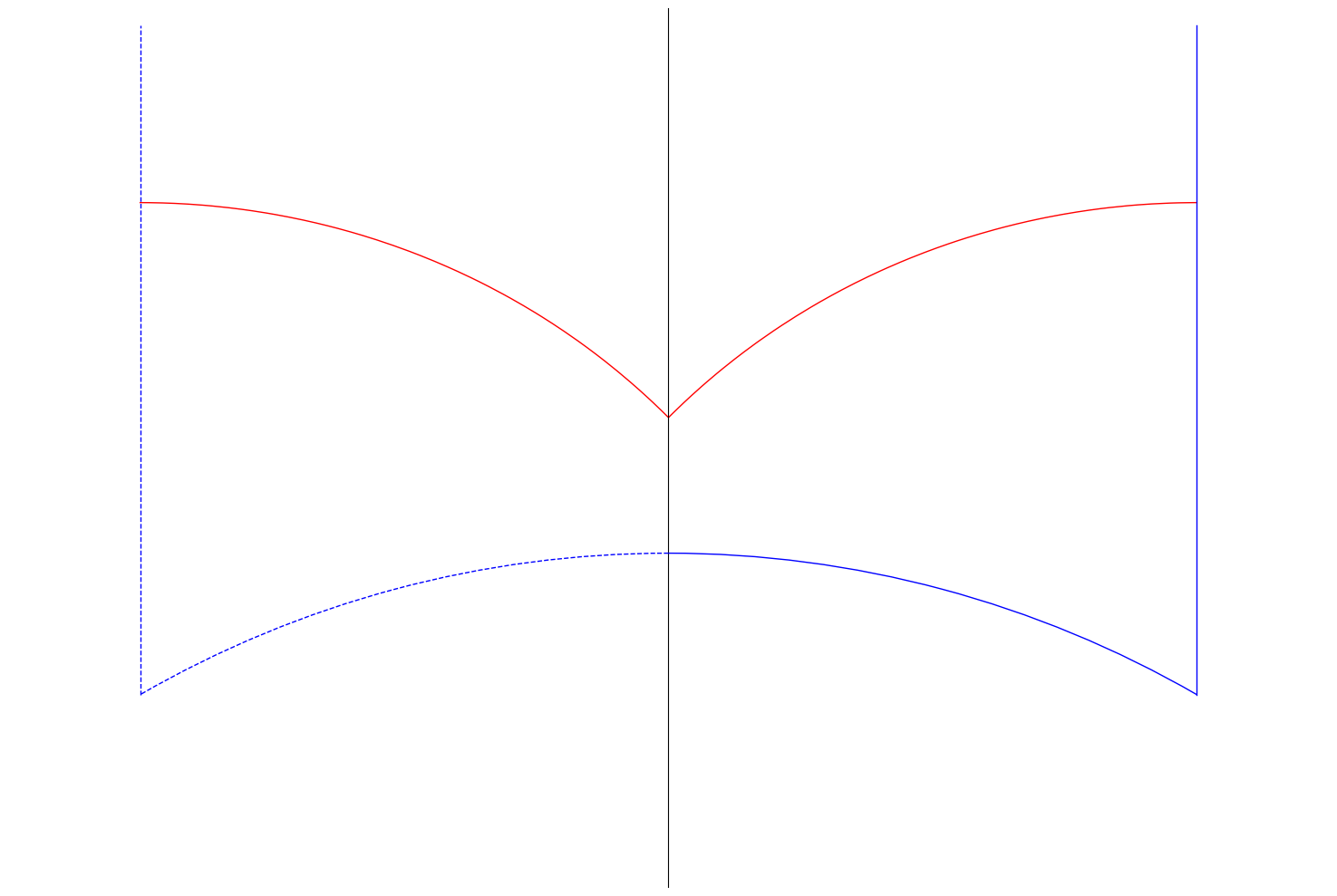
Figure 2: The Szegő curve ℓ+1=dim(Mk)7 visualized in the complex plane.
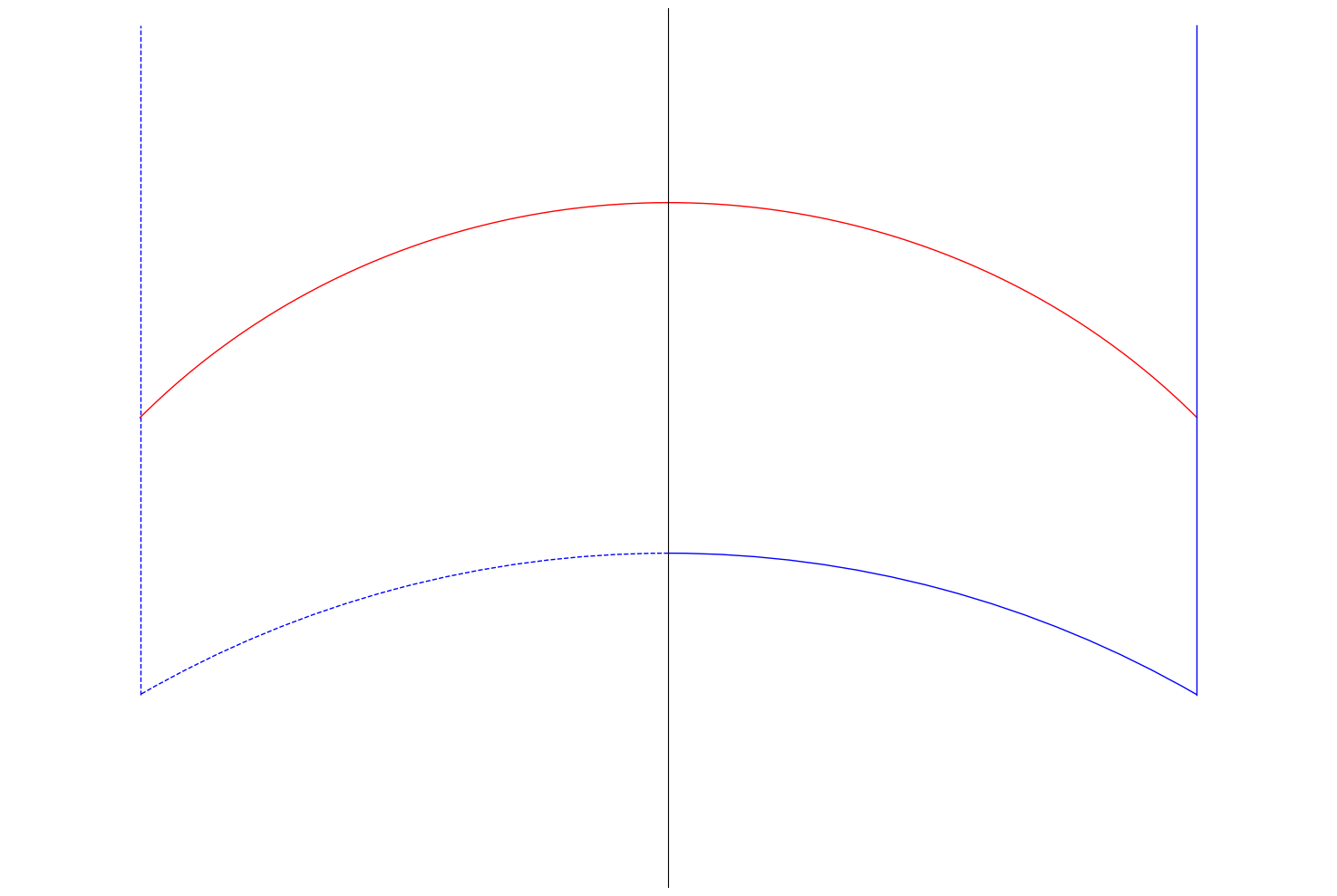
Figure 3: Asymptotic location of zeros as ℓ+1=dim(Mk)8, showcasing the shift from the unit arc to ℓ+1=dim(Mk)9.
The authors formulate and partially prove a conjecture: for each 0≤m≤ℓ0, the zeros asymptotically lie on the union of 0≤m≤ℓ1 and 0≤m≤ℓ2—the upper hull is denoted 0≤m≤ℓ3. Sharp analytical and computational cutoffs are derived for the regime transitions.
Technical Framework: Integral Representation and Approximation
A substantial technical portion is dedicated to approximating 0≤m≤ℓ4 and its real-valued arc rescaling. The authors leverage contour integration and residue calculus, isolating principal contributions and rigorously bounding error terms. The principal technical lemma demonstrates that for fixed 0≤m≤ℓ5 in the integration contour, the error term in approximating 0≤m≤ℓ6 by a cosine function is negligibly small for 0≤m≤ℓ7 below certain explicit bounds. This enables precise counting and equidistribution results for zeros on subarcs.
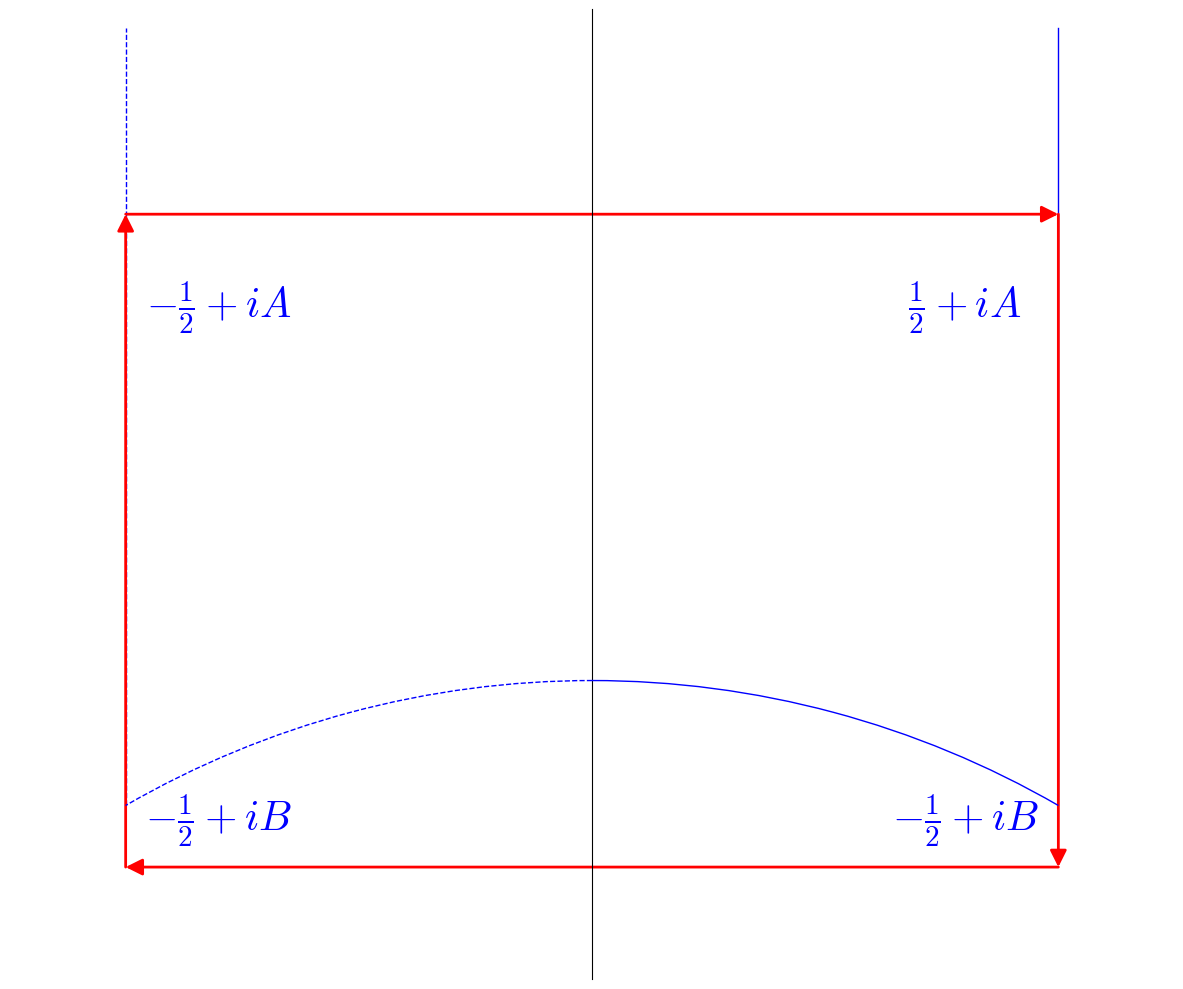
Figure 4: Contour of integration used for residue computations.
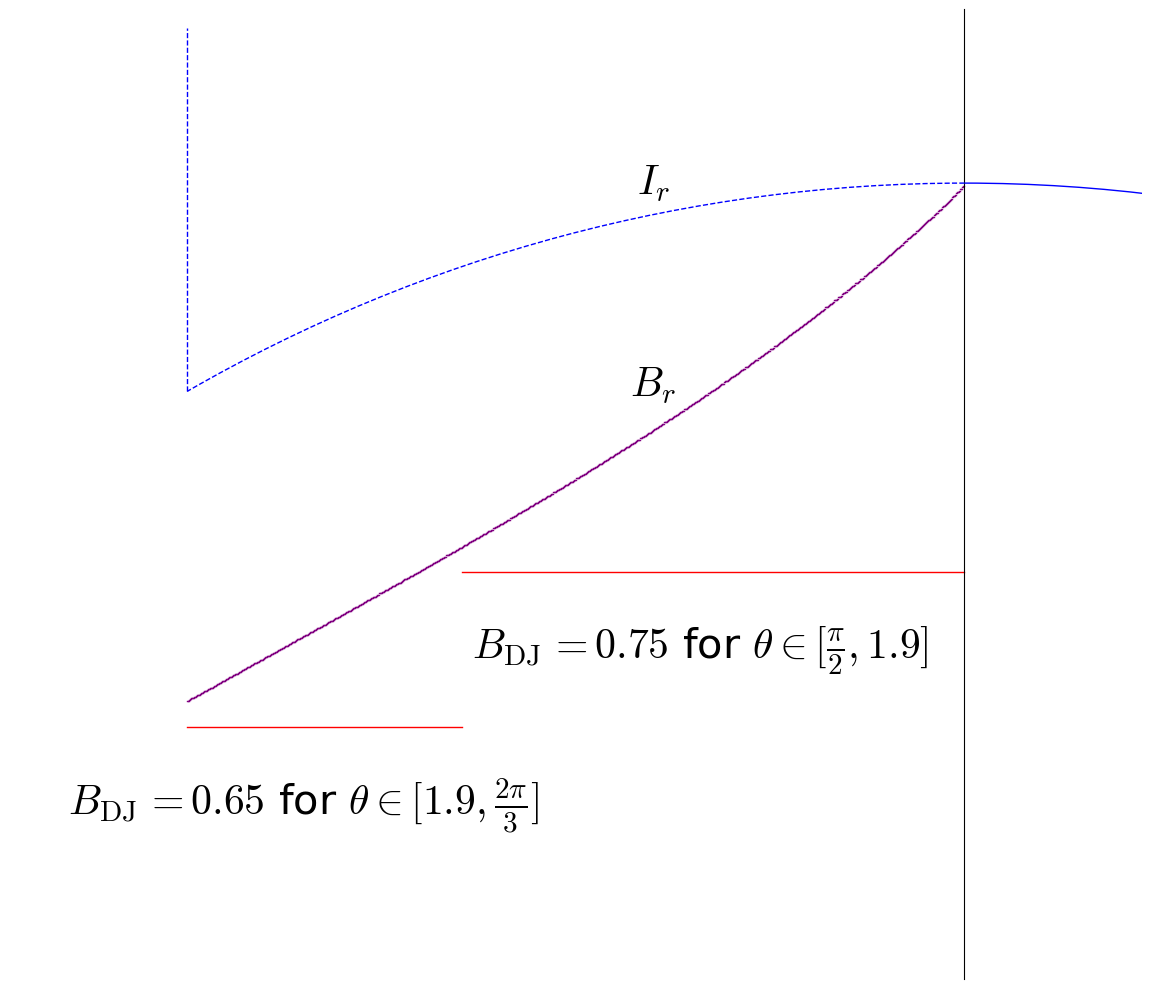
Figure 5: Optimal choice of 0≤m≤ℓ8 for arcs 0≤m≤ℓ9, illustrating contour parameter dependence and improvement over prior methods.
Through subdivision and parameter optimization, the authors employ SageMath for fine-grained numerical maximization of these bounds, yielding piecewise linear threshold functions.
Theoretical Implications: Faber Polynomial Analysis
For regime δ=m/ℓ0 fixed (or slowly growing), zeros' locations are analyzed via the underlying Faber polynomials associated to Miller basis elements. Approximation results utilize Stirling's formula, showing that for δ=m/ℓ1, the Faber polynomial behaves similarly to a truncated exponential polynomial, whose zeros are controlled by the Szegő curve. When δ=m/ℓ2 is much smaller than δ=m/ℓ3 (or δ=m/ℓ4 for negative weights), all zeros are pushed away from δ=m/ℓ5 toward δ=m/ℓ6.
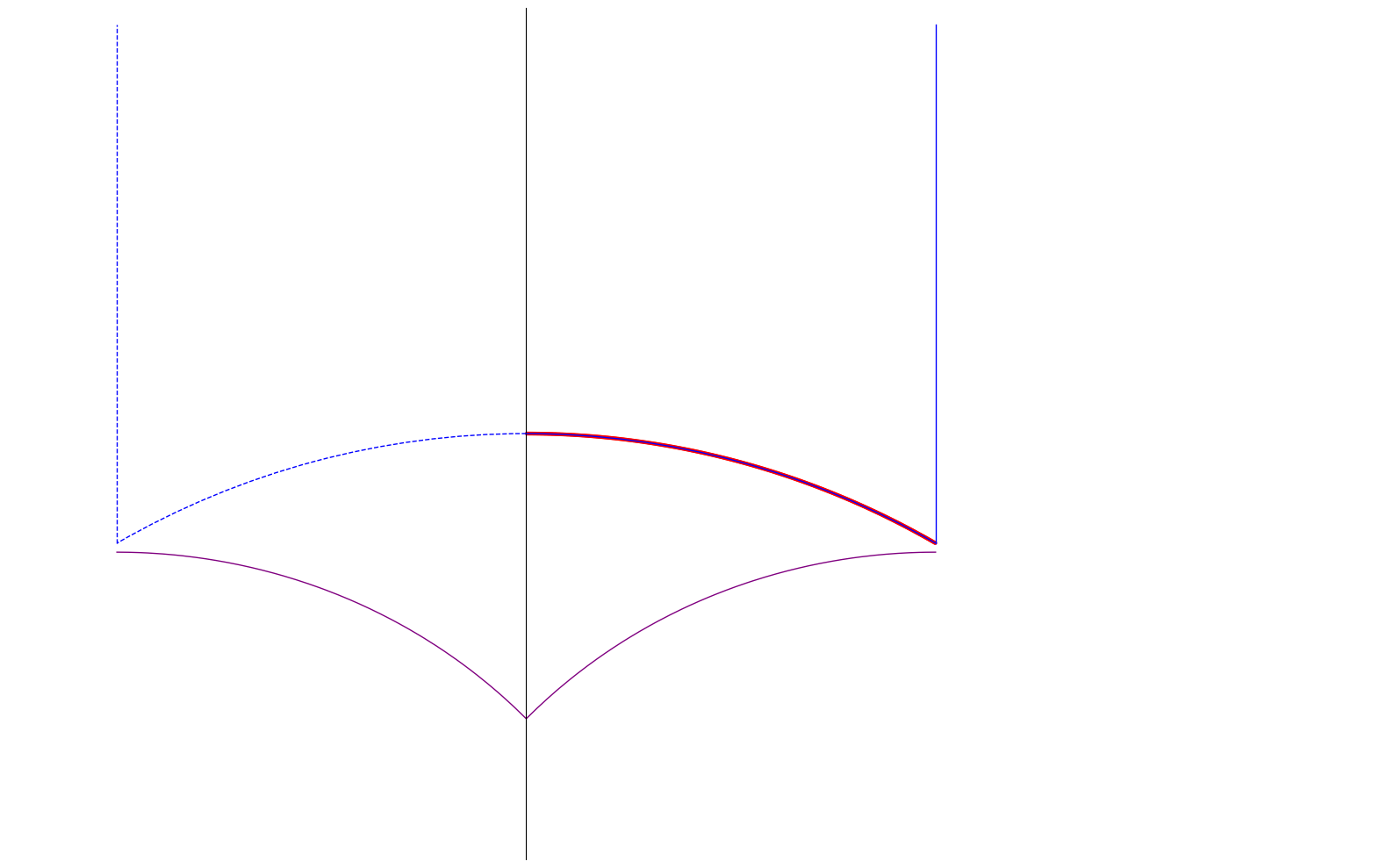
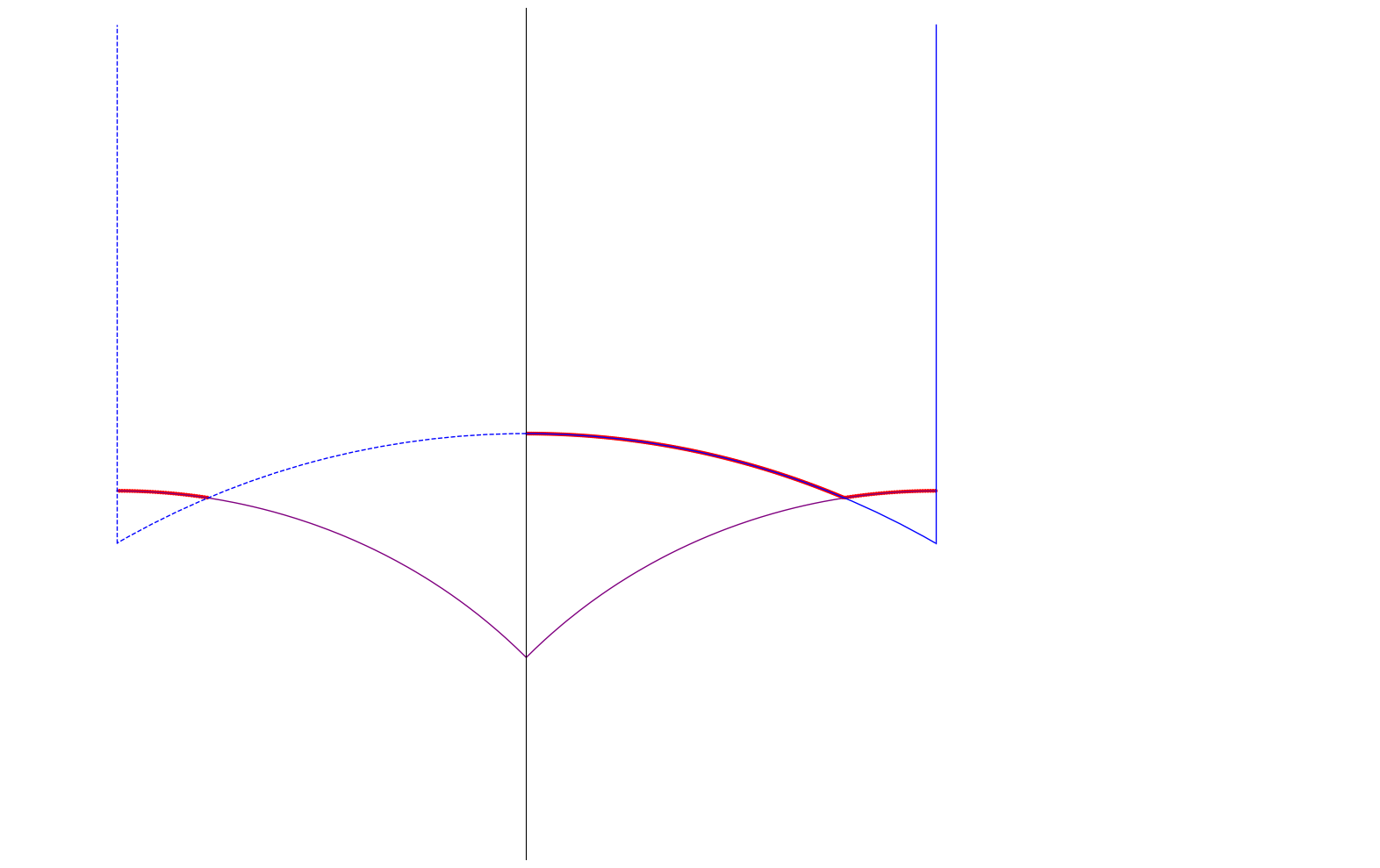
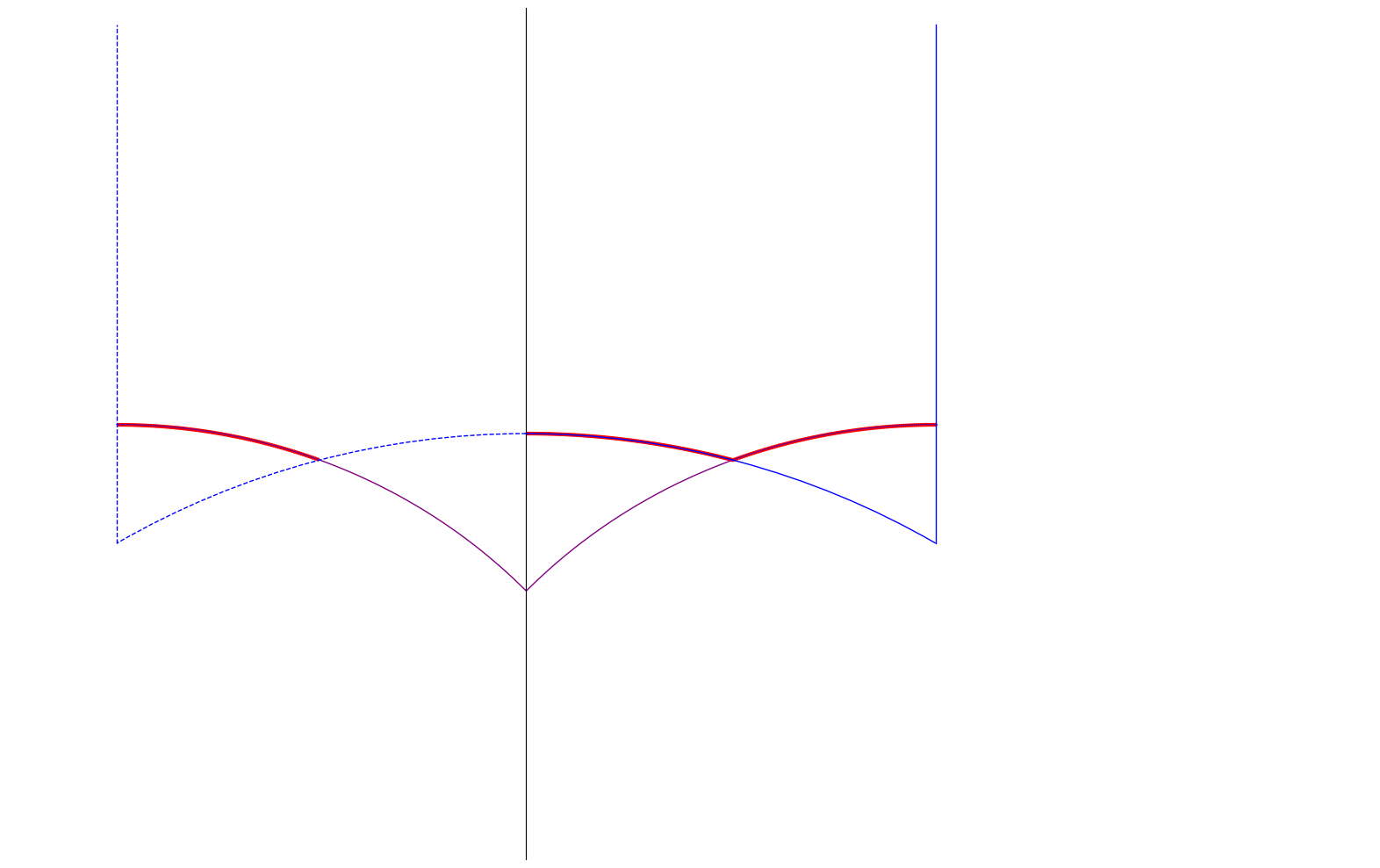
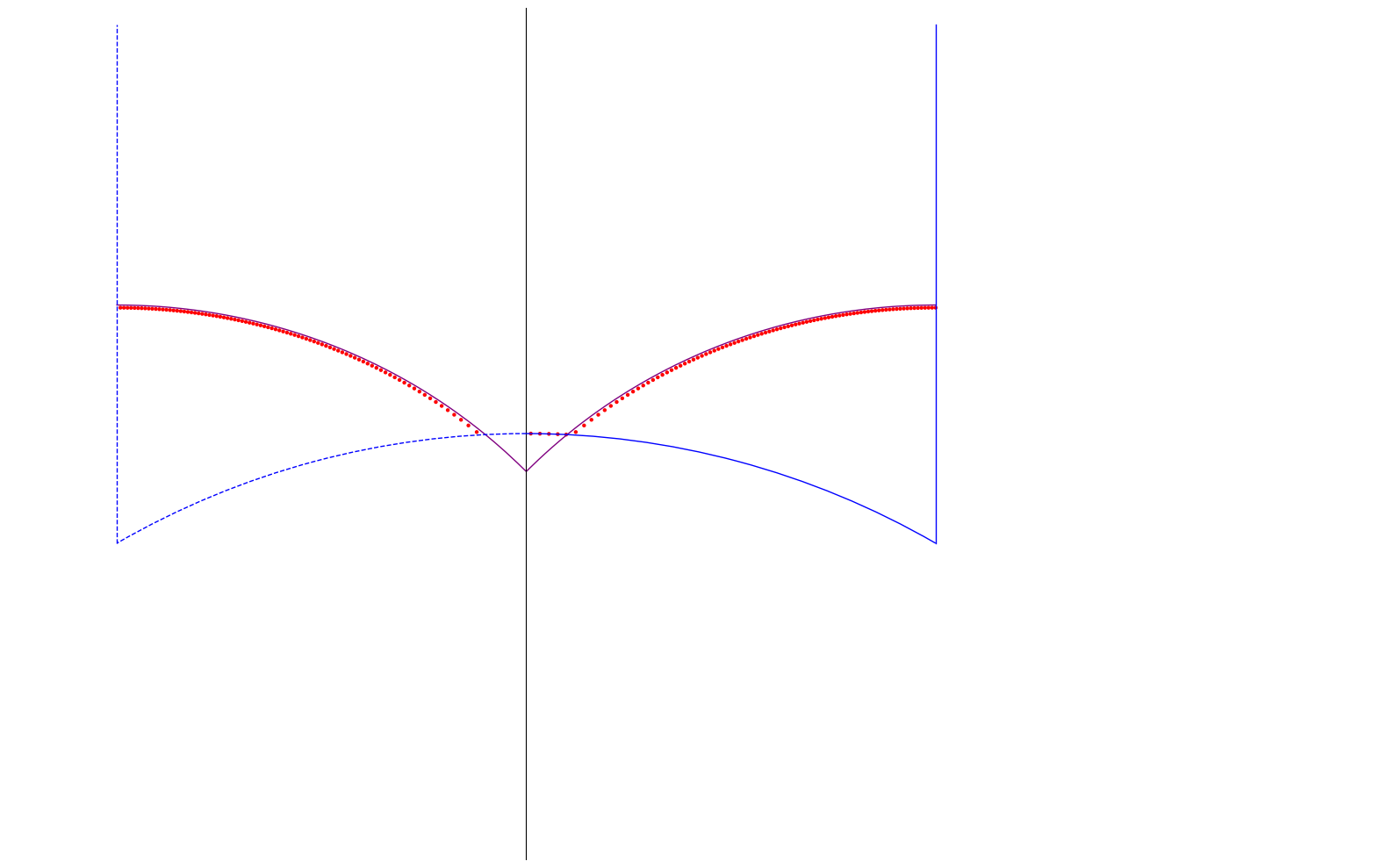
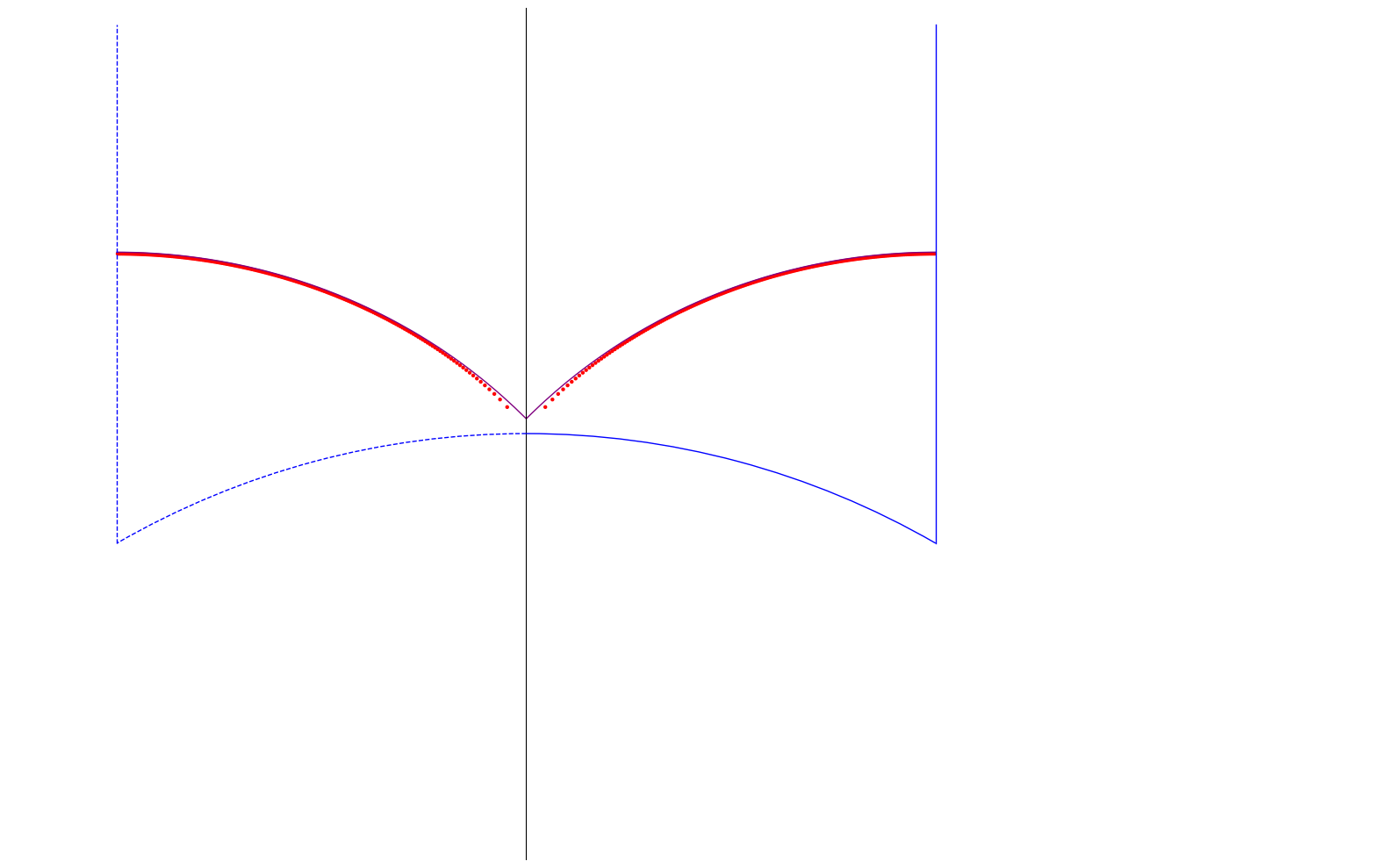
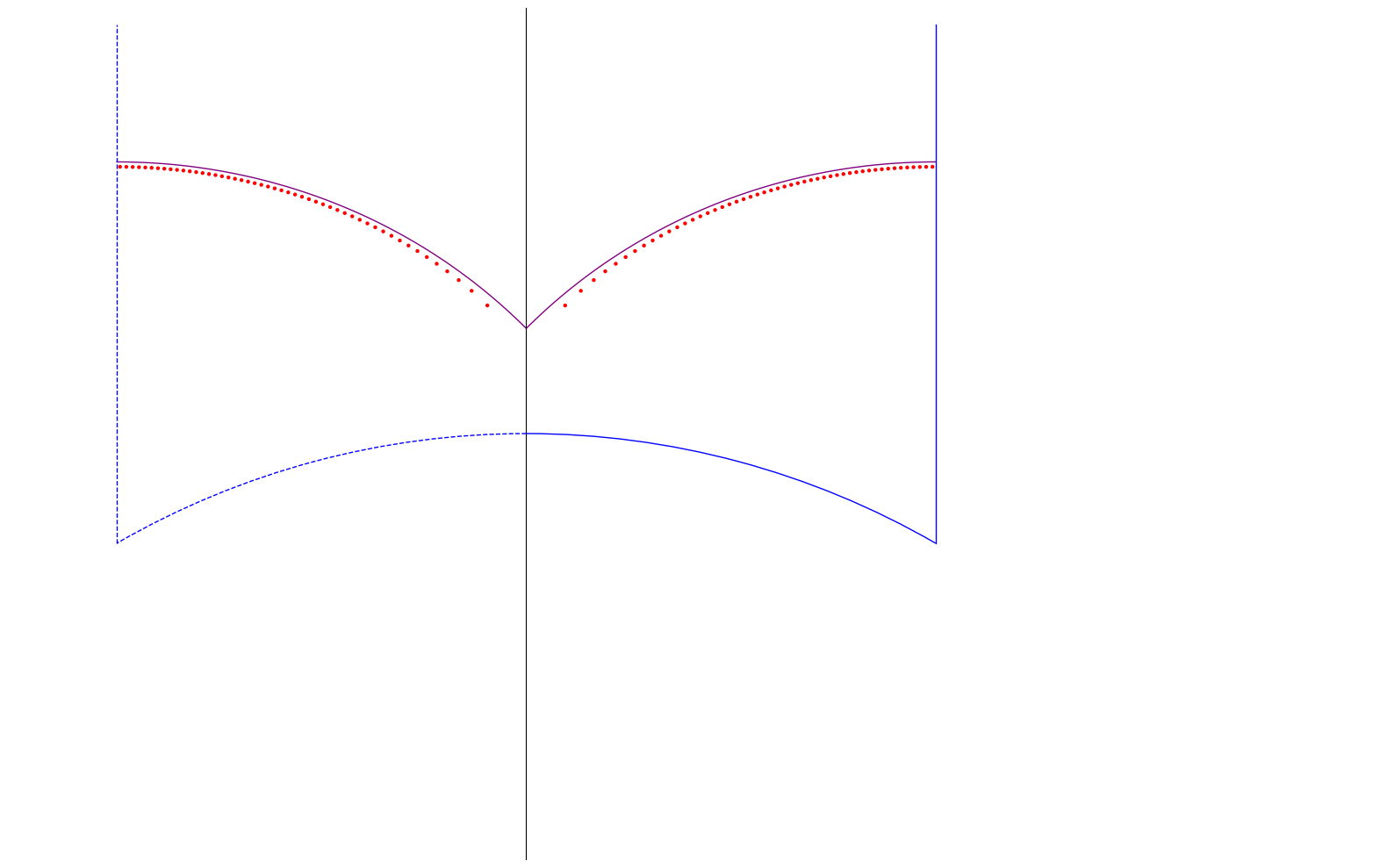
Figure 6: Roots of Miller forms and δ=m/ℓ7 for several intermediate values of δ=m/ℓ8.
Empirical Conjecture and Visualization
Numerical experiments underpin a general conjecture: zeros of δ=m/ℓ9 always lie on A0, interpolating between the arc and the Szegő curve, with regime boundaries dictated by explicit analytic formulas. A series of figures demonstrates the empirical transition across A1.
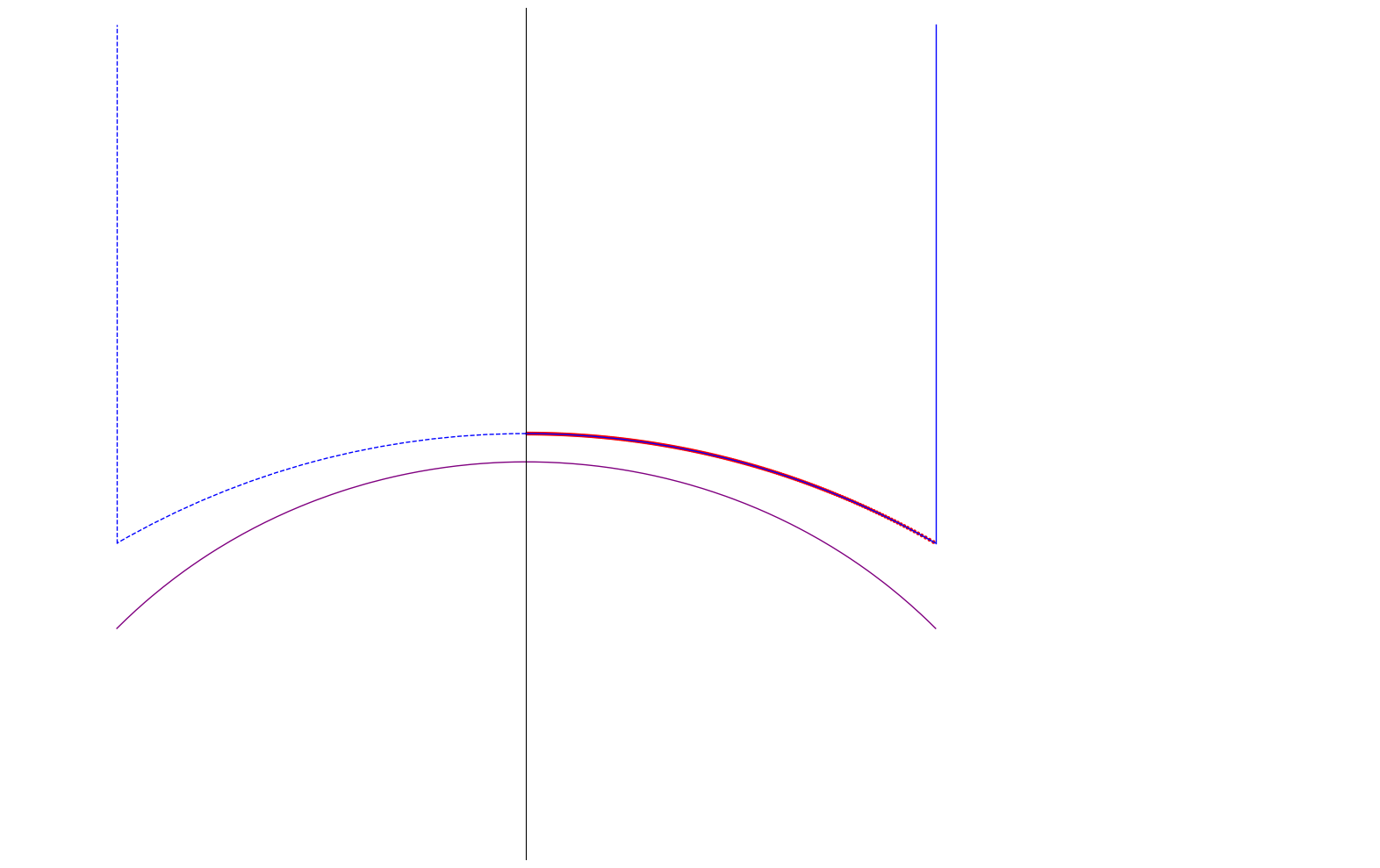
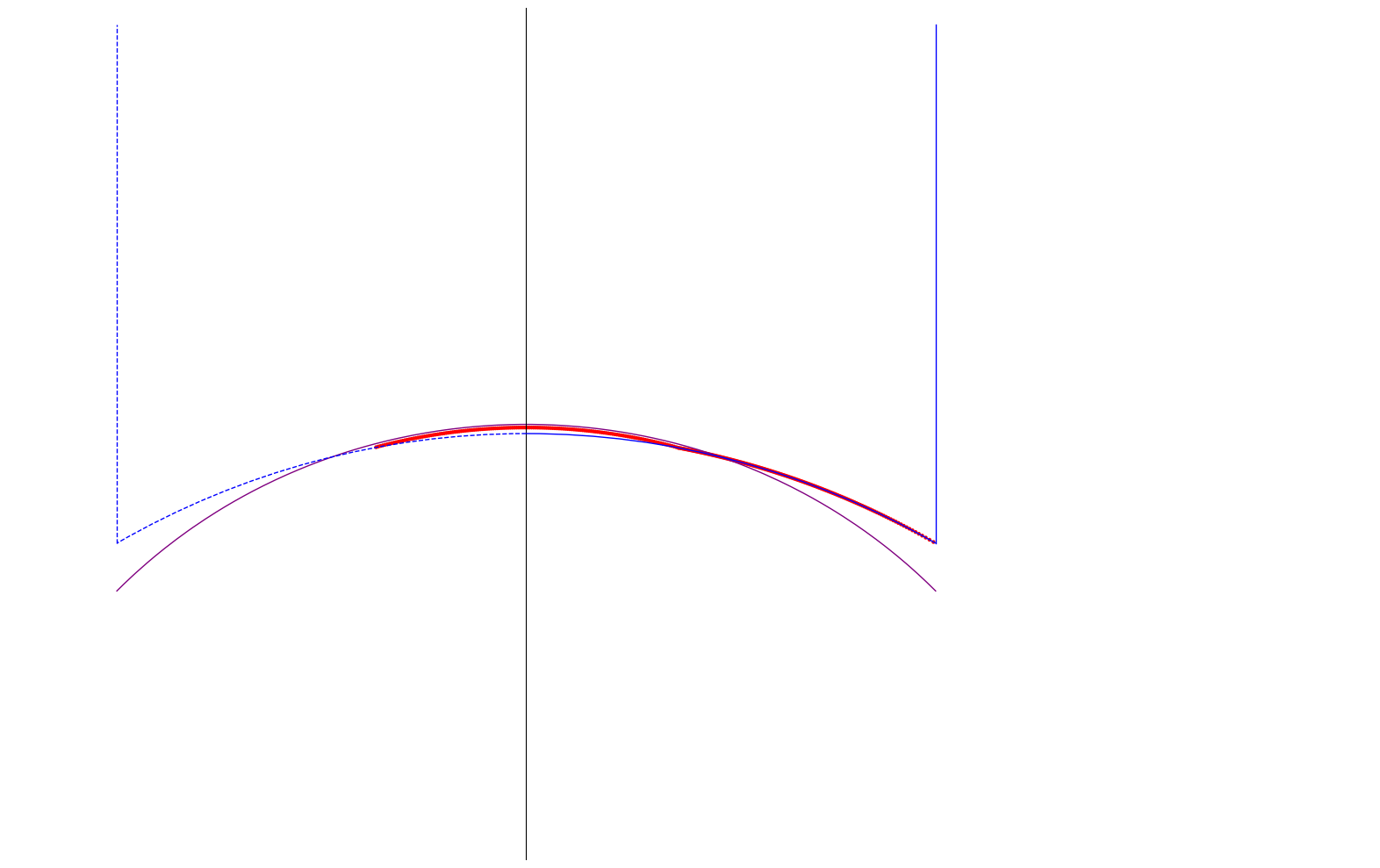
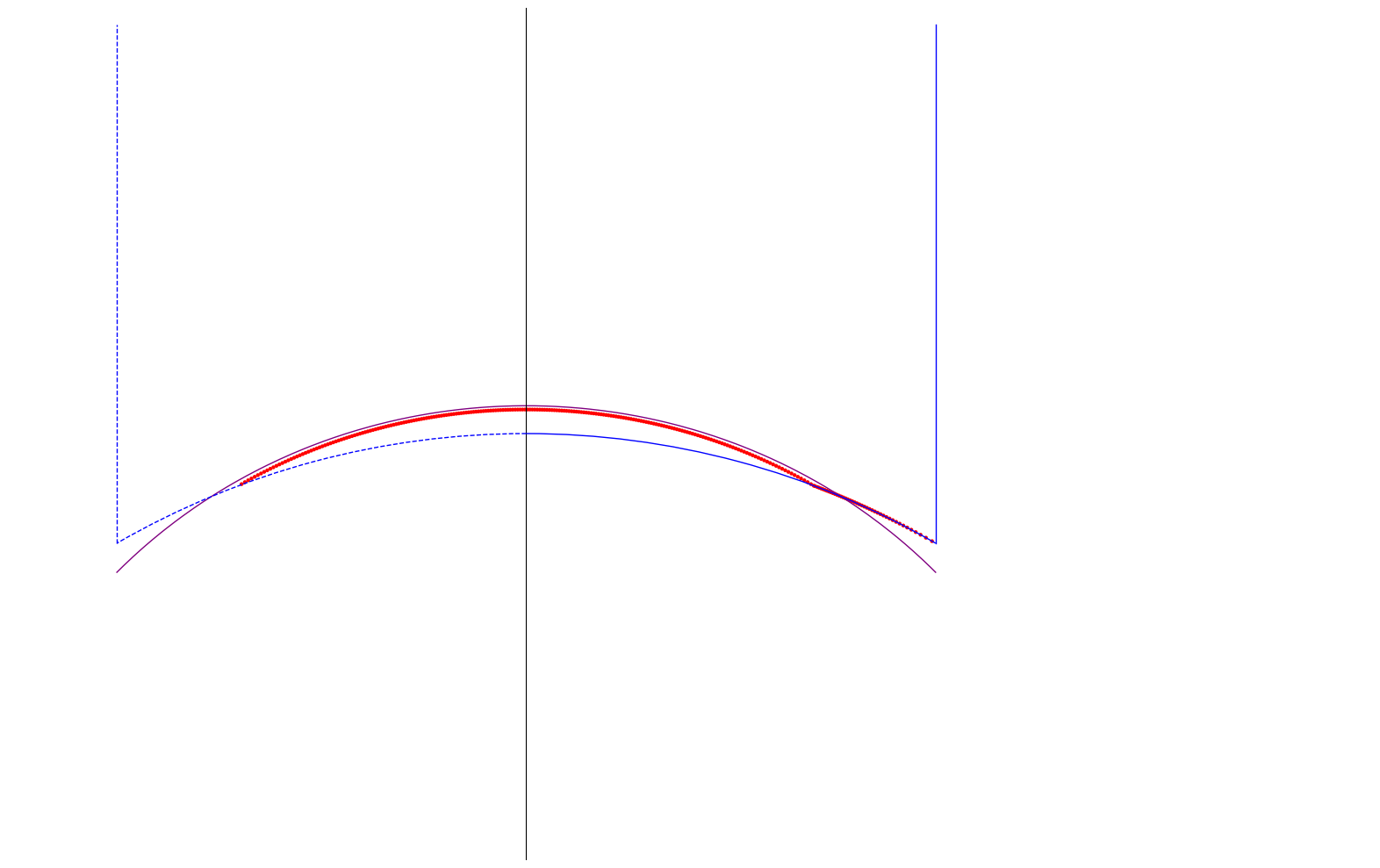
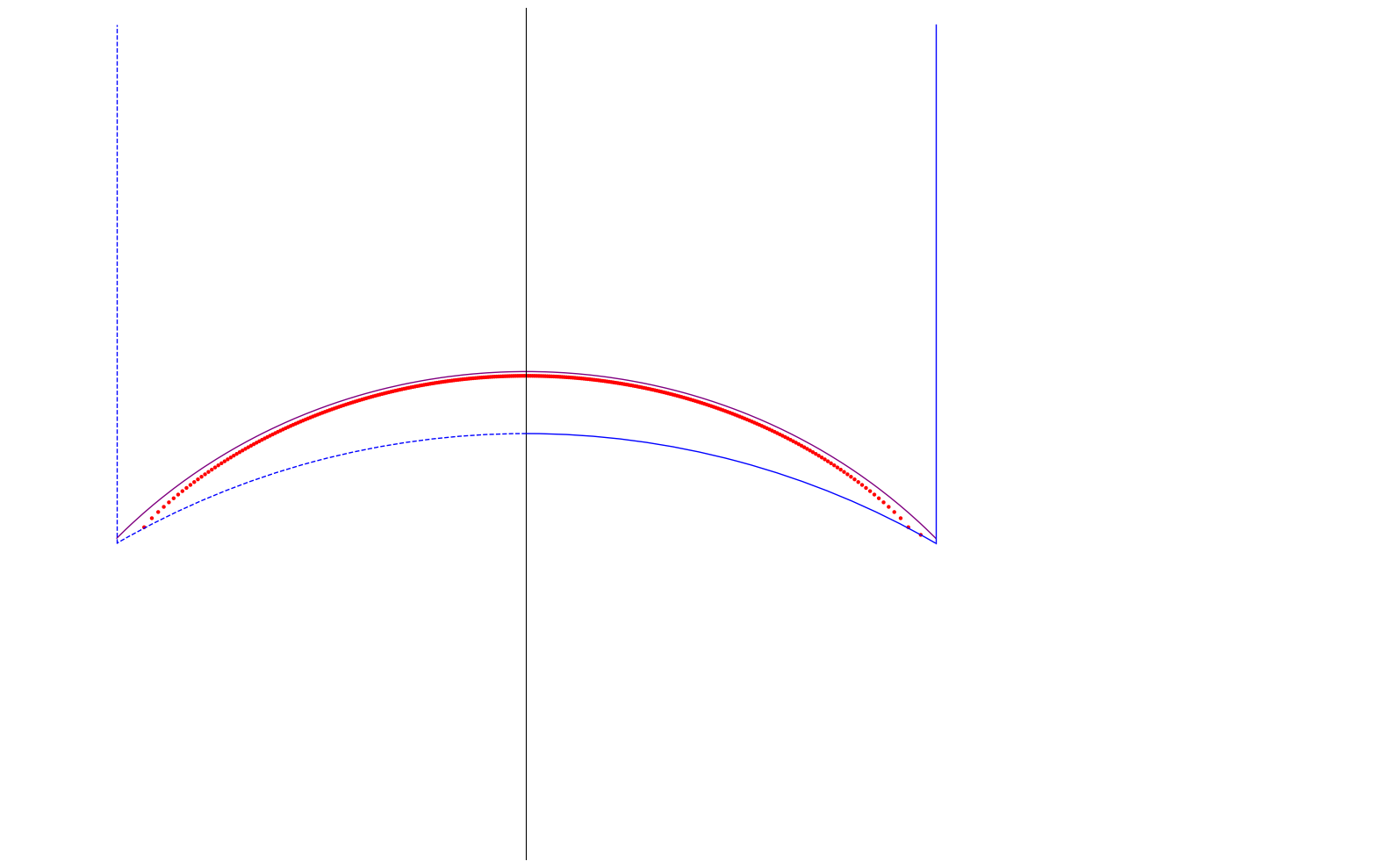
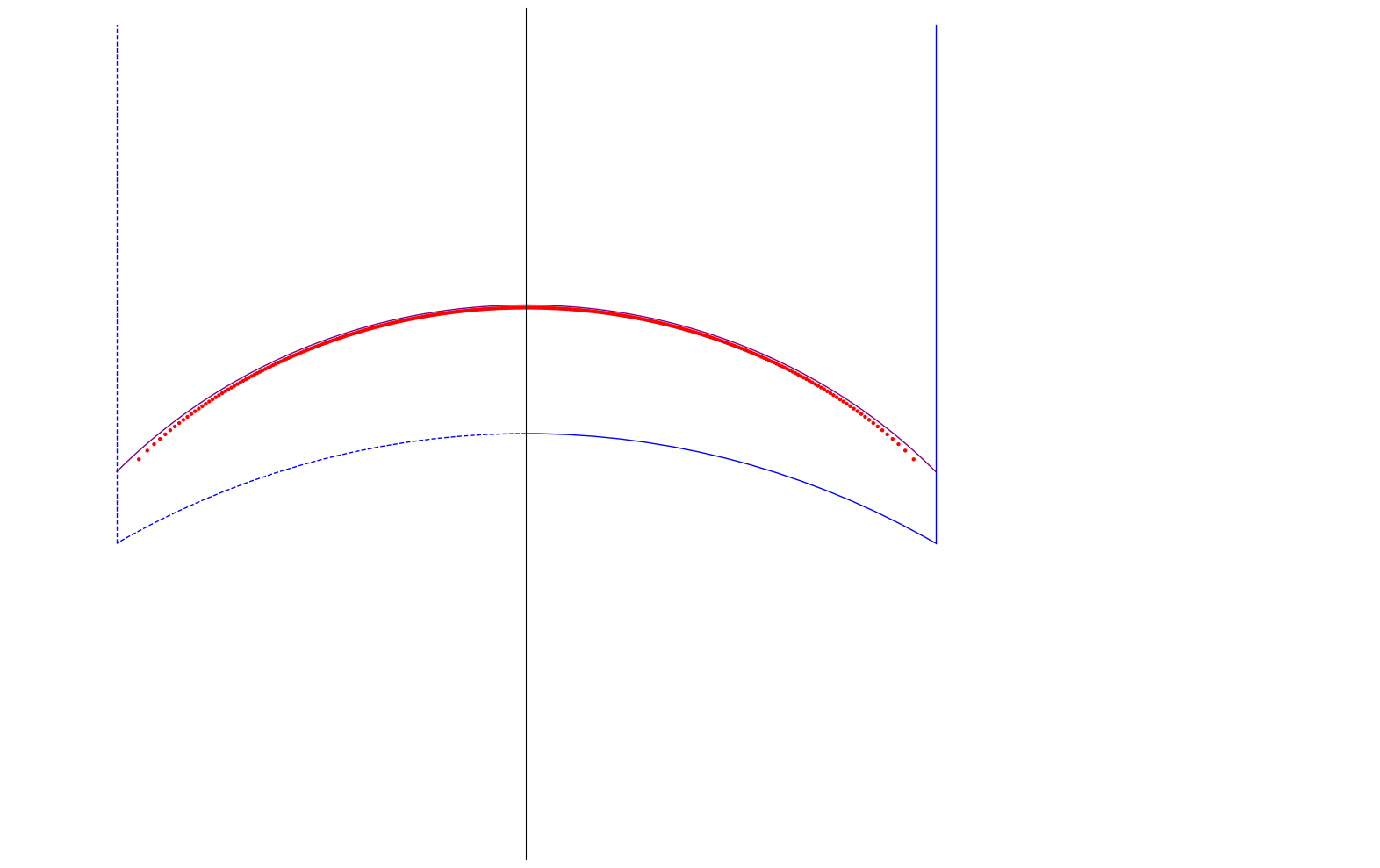
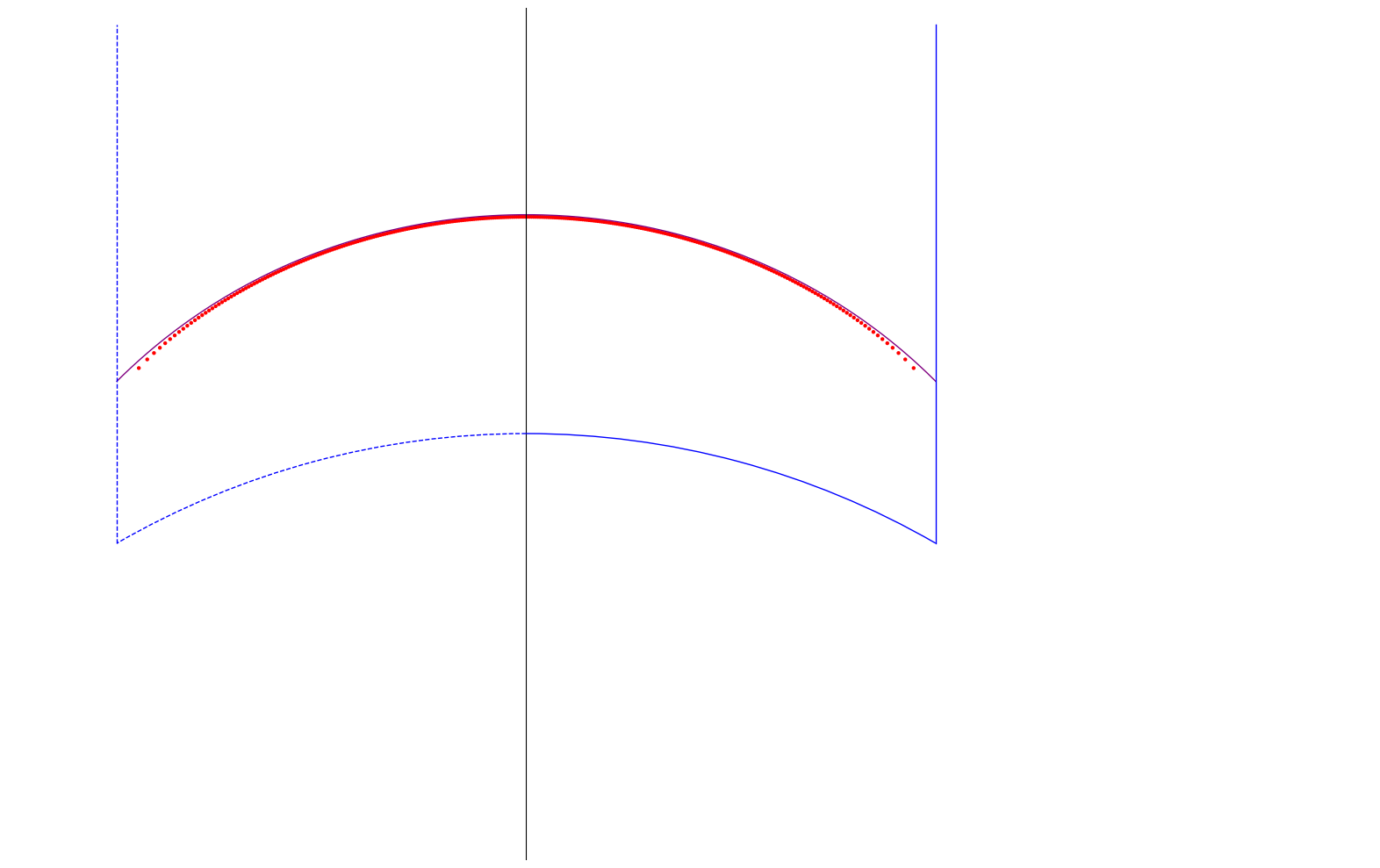
Figure 7: Roots and A2 for A3 in weakly holomorphic Miller forms.
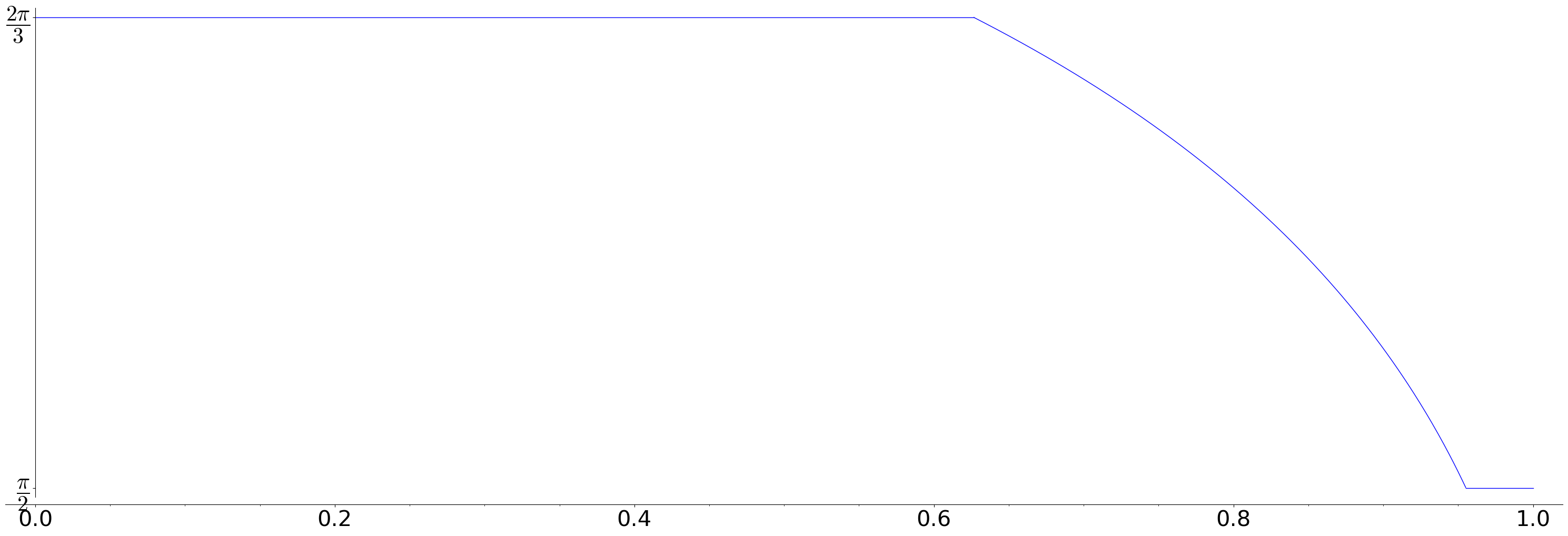
Figure 8: Conjectural value of A4, describing the arc segment containing zeros as A5 increases toward the critical regime.
Bounds on Zeros' Height and Location
When A6 grows larger than A7, the authors derive general upper bounds for the imaginary part of zeros, showing that all zeros lie in a region A8 (with A9), based on coefficient growth rates of Faber polynomials.
Algebraic Zeros: Explicit Classification
A fine-grained classification of algebraic zeros is achieved for Miller forms in the regime k→∞0. By symbolic computation and comparison with the Hilbert class polynomials of imaginary quadratic fields, the authors enumerate all Miller forms with non-elliptic algebraic zeros; all such zeros arise only for k→∞1 and correspond to special values of the k→∞2-invariant for fields of class number one.
Practical and Theoretical Implications
The results provide an intricate mapping of zero variation for modular form bases, with significant implications for transcendence theory, arithmetic geometry, and computational aspects of modular forms. The explicit threshold formulas and conjectural curves offer predictive insight for both holomorphic and weakly holomorphic regimes and give precise guidance for algorithmic verification and symbolic computation.
On the theoretical side, the sophisticated connection to the Szegő curve, both classical and logarithmic, hints at deep spectral phenomena in modular forms and their associated spaces. Practically, the results provide efficient algorithms for locating modular form zeros, critical for computational number theory and elliptic curve applications.
Speculative Outlook
Further research will likely explore:
- Rigorous proofs of the empirical conjecture for intermediate k→∞3 regimes.
- Extensions to higher-level modular forms and other canonical bases.
- Investigation into spectral or geometric interpretations of the Szegő limit phenomenon.
- Exploitation in arithmetic applications where explicit zero location is required, such as CM point computations and rationality/transcendence questions.
Conclusion
The paper offers a comprehensive analytic, computational, and conjectural framework for the variation of zeros of the Miller basis in modular forms, precisely characterizing regime-dependent localization. By connecting zero distribution to explicit thresholds in k→∞4 and the Szegő curve, the authors advance both the theory and practical computation of modular forms and lay a foundation for further explorations into spectral and arithmetic modular phenomena.