- The paper reports a two-step dissipation protocol that achieves accelerated relaxation compared to conventional single-step methods.
- It employs the dissipative Jaynes-Cummings model to analyze dynamics, highlighting regimes of Purcell enhancement and transitions at exceptional points.
- Robust parameter regimes are demonstrated, showing resilience against detuning and finite decay while enabling potential applications like rapid qubit reset.
Summary of "Pontus-Mpemba effect in cavity quantum electrodynamics"
The study delineates a minimal and experimentally viable realization of the quantum Pontus-Mpemba effect (PME) in cavity QED systems using the dissipative Jaynes-Cummings model. PME is a counterintuitive phenomenon where a quantum system relaxes faster via a two-step protocol than through ordinary single-step relaxation under constant dissipation, with identical initial conditions. This research uncovers the physical origin, robustness, and parameter requirements for PME in the context of atom-photon ensembles coupled to lossy cavities, and discusses implications for quantum thermodynamics and state engineering.
Dissipative Jaynes-Cummings Framework
The theoretical foundation rests upon the Jaynes-Cummings Hamiltonian with cavity photon loss, focusing on the N=1 excitation sector. The Hilbert space comprises the atomic excited and ground states and the cavity field states up to one photon. Dissipation entails photon loss at rate κ and atomic spontaneous emission at rate γ, with the Lindblad master equation governing the reduced density matrix evolution.
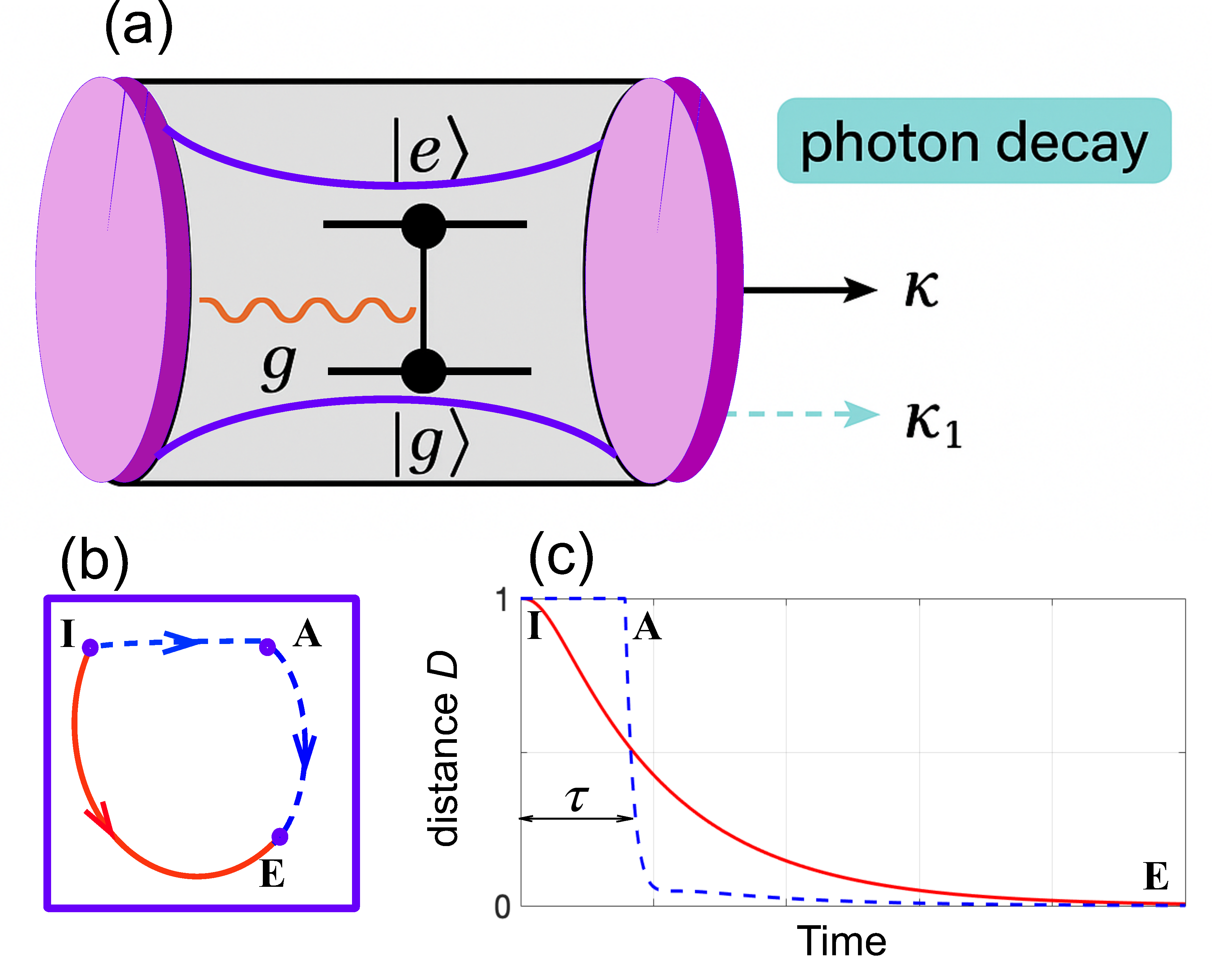
Figure 1: Schematic of the dissipative Jaynes-Cummings model and a depiction of trajectories, showing PME as faster relaxation via a two-step protocol.
Analysis reveals two distinct regimes: weak-coupling (κ≪g) produces damped, coherent vacuum Rabi oscillations, while strong-coupling (κ≫g) manifests Purcell-enhanced exponential decay. Critical spectral features such as exceptional points (κ/g=4) demarcate dynamical transitions.
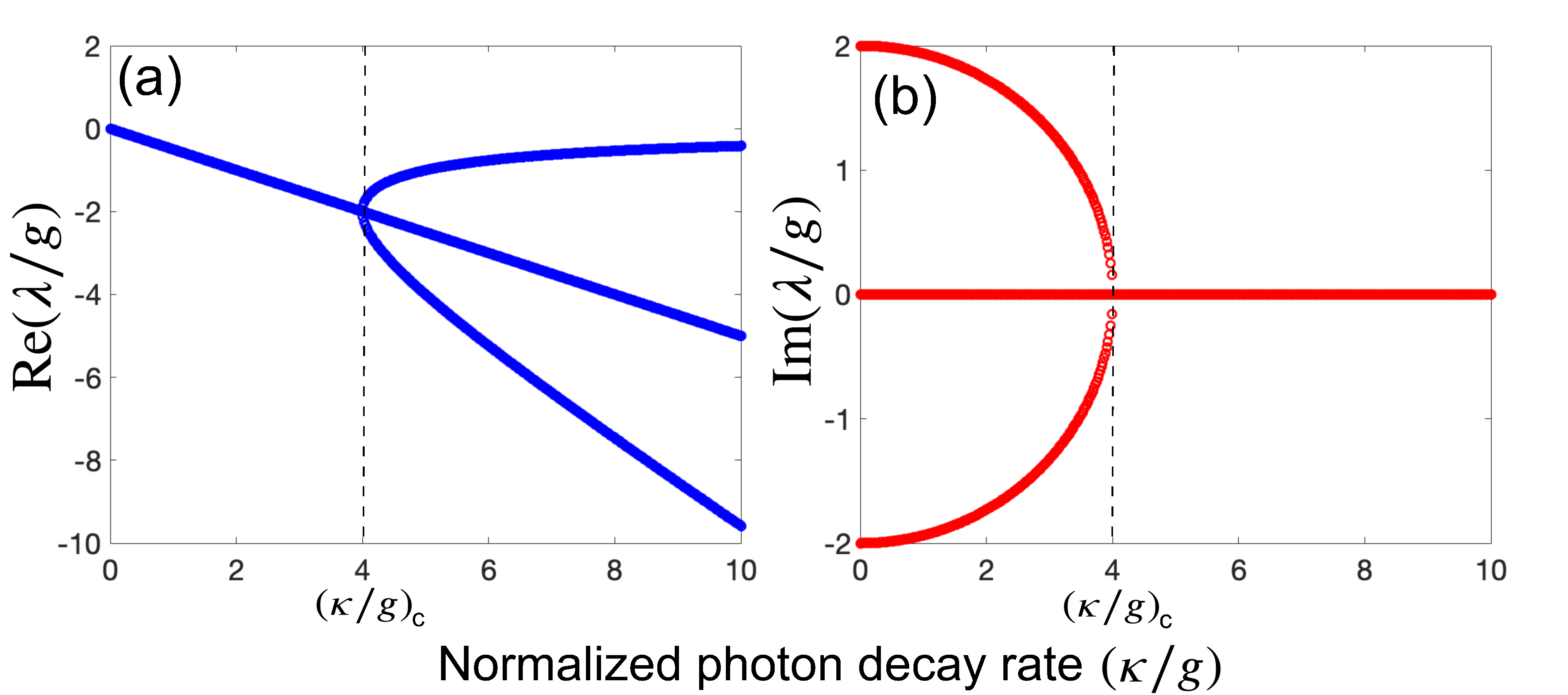
Figure 2: Real and imaginary parts of dynamical matrix eigenvalues versus normalized cavity loss, illustrating transition at the exceptional point.
Quantum Pontus-Mpemba Protocol and Relaxation Dynamics
The PME protocol introduces a dynamical cavity dissipation, initially with low loss (κ1≪g) for time τ, then abruptly raised (κ≫g). This switching coherently transfers the atom's excitation to the cavity photon mode, populating fast-relaxing Liouvillian modes. The subsequent high-loss stage rapidly dissipates these modes, outpacing the standard single-step protocol where the initial state overlaps predominantly with slow-decaying modes.
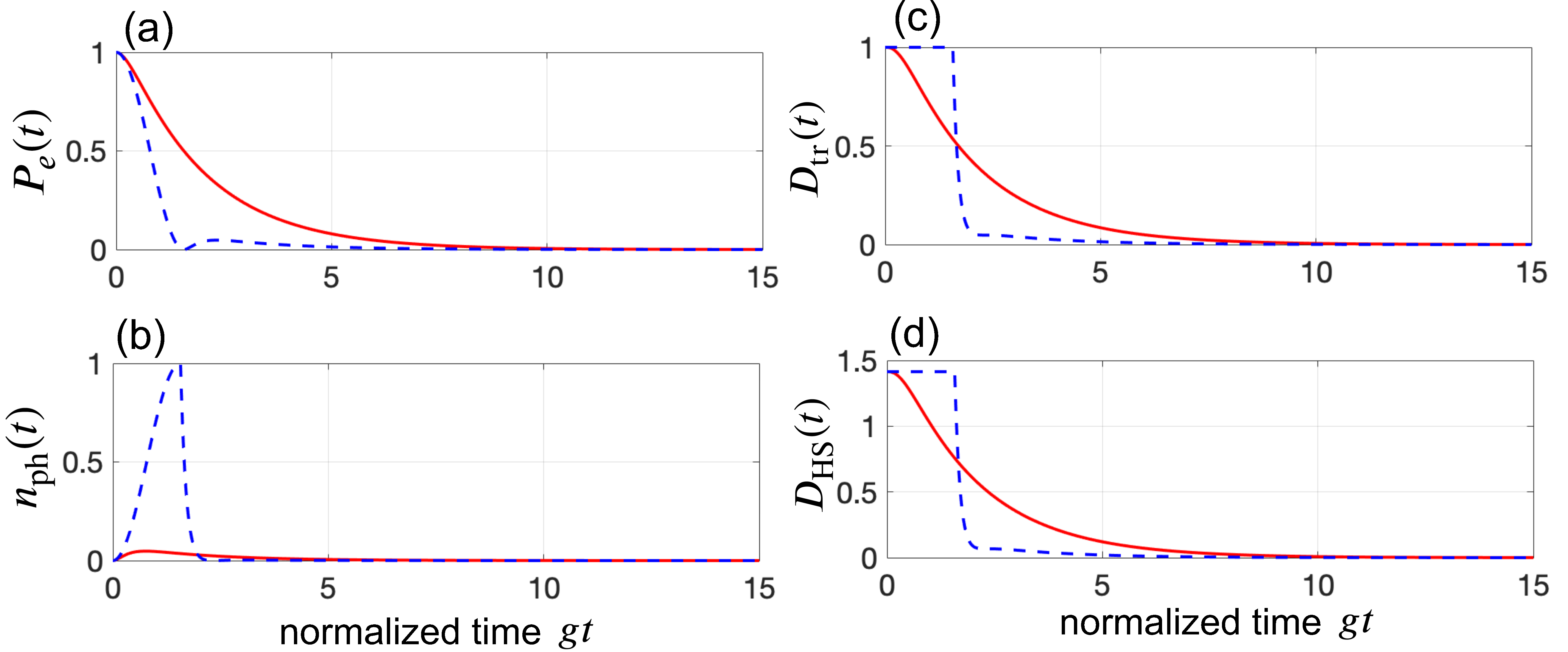
Figure 3: Atomic population, photon number, and equilibrium distances for both protocols, demonstrating accelerated relaxation in the two-step PME scheme.
Numerical results show non-monotonic, expedited relaxation under the PME protocol, confirmed by reductions in trace and Hilbert-Schmidt distances to equilibrium.
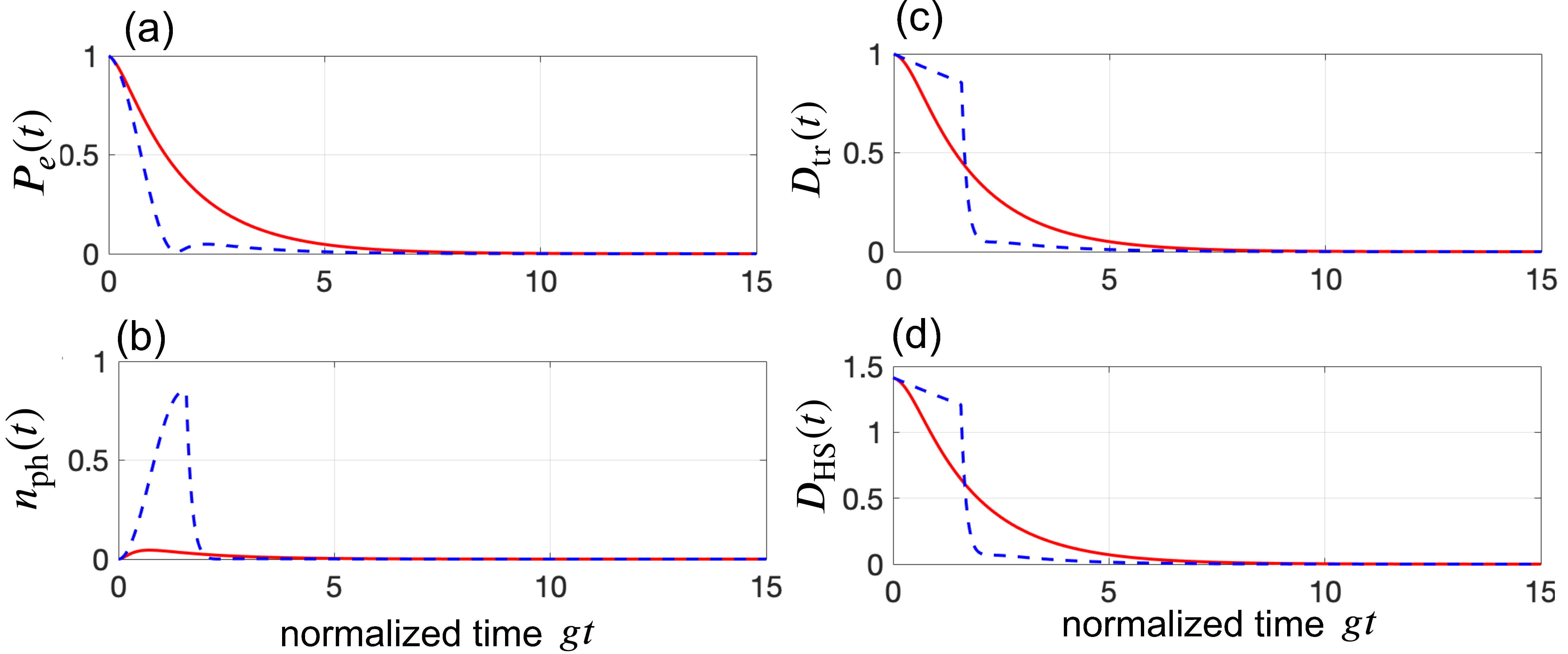
Figure 4: PME persistence under finite atomic decay and detuning, emphasizing robustness.
Parameter Robustness and Observability
The effect is not contingent on fine-tuned resonance. PME persists across a broad parameter space, including nonzero detuning, moderate spontaneous emission, and imperfect timing.
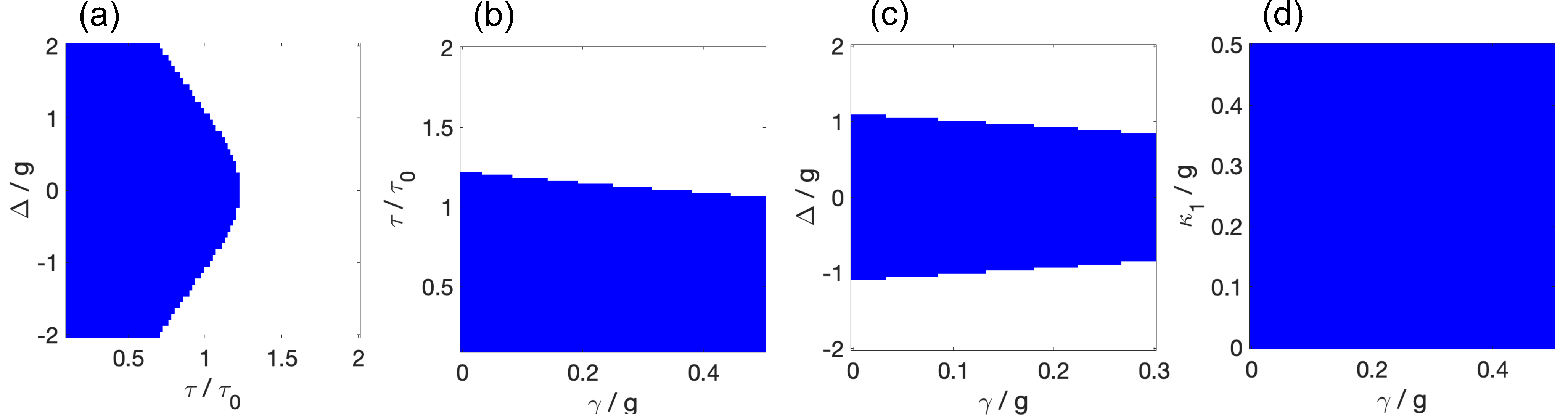
Figure 5: Phase diagrams highlighting PME domains in the space of switching time, detuning, and loss rates.
Moreover, the protocol generalizes to initial states with multiple excitations (N>1), with coherent transfer to cavity photon subspaces and subsequent fast decay.
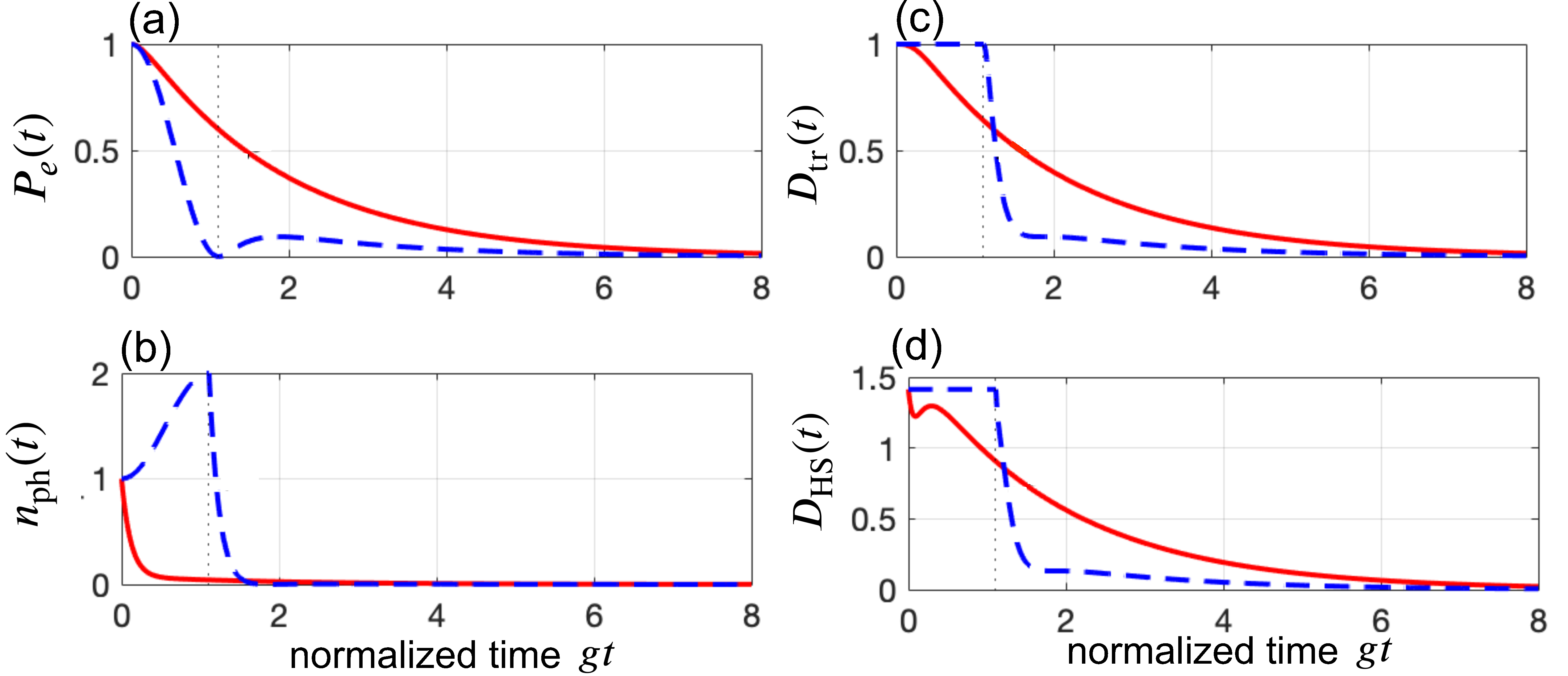
Figure 6: PME for two excitation initial states (κ0), with switching at κ1.
The effect is resilient against finite thermal backgrounds.
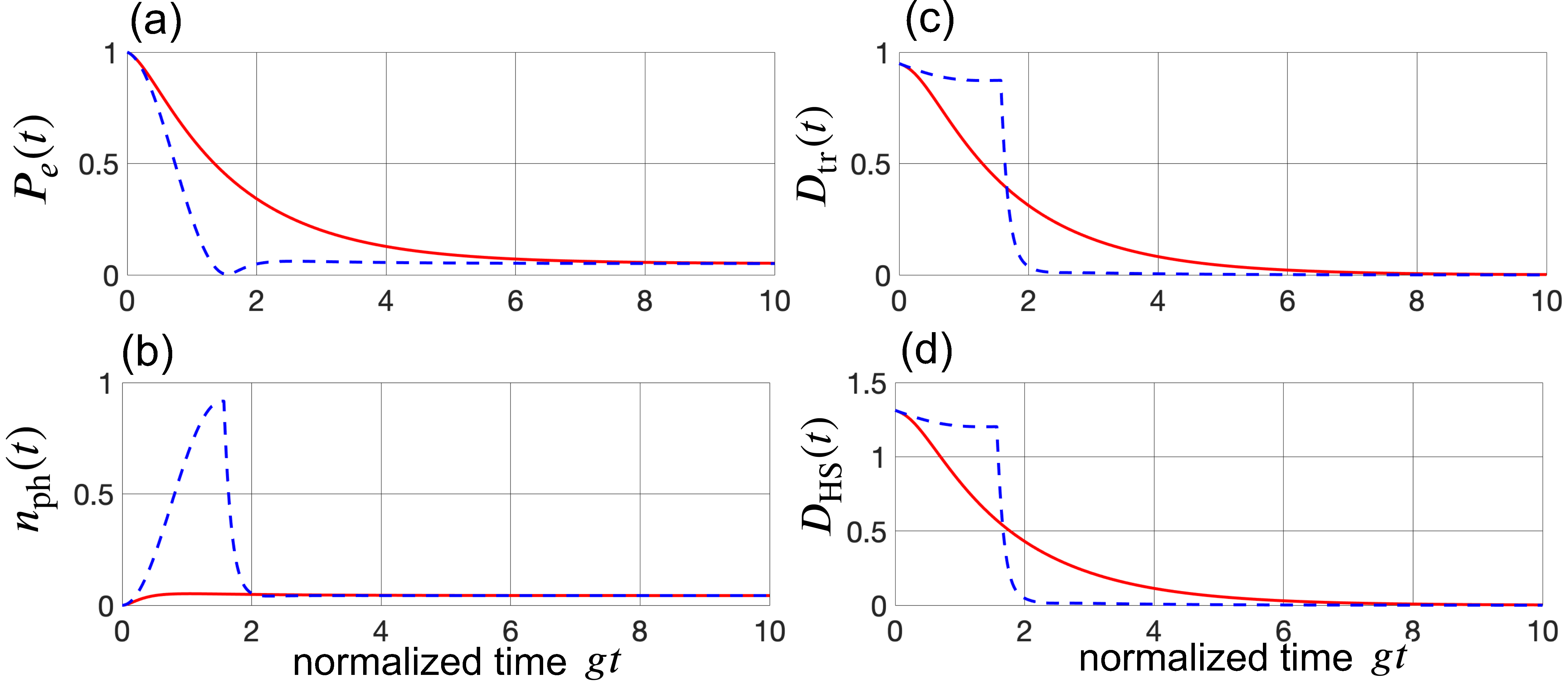
Figure 7: PME in presence of finite thermal photon and atomic populations, showing negligible impact on protocol efficacy.
Implications and Experimental Prospects
The PME's operational mechanism—spectral engineering via Liouvillian mode selection and dissipation manipulation—offers new routes for optimized relaxation in quantum systems. Potential applications include rapid qubit reset, efficient quantum state preparation, and thermodynamic control. Circuit QED and cavity QED platforms, with tunable loss engineering and real-time dissipation control, are well-suited for experimental validation, capitalizing on rapid dissipation switching and negligible unwanted emission channels.
Theoretical extension to dispersive regimes, multi-excitation, and non-Markovian reservoirs will deepen the understanding of PME. Further exploration in many-body and hybrid architectures could reveal enhanced collective effects and more intricate relaxation shortcuts.
Conclusion
The study establishes the Jaynes-Cummings cavity system as a minimal and robust platform to realize the quantum Pontus-Mpemba effect via a two-step dissipation protocol. By exploiting spectral structure and temporary coherent dynamics, this approach achieves accelerated relaxation beyond classical or monotonic quantum thermalization. The PME embodies a mechanistic foundation for practical and theoretical advances in non-equilibrium quantum control, with feasible experimental realization using current quantum optical and superconducting architectures (2605.05827).

