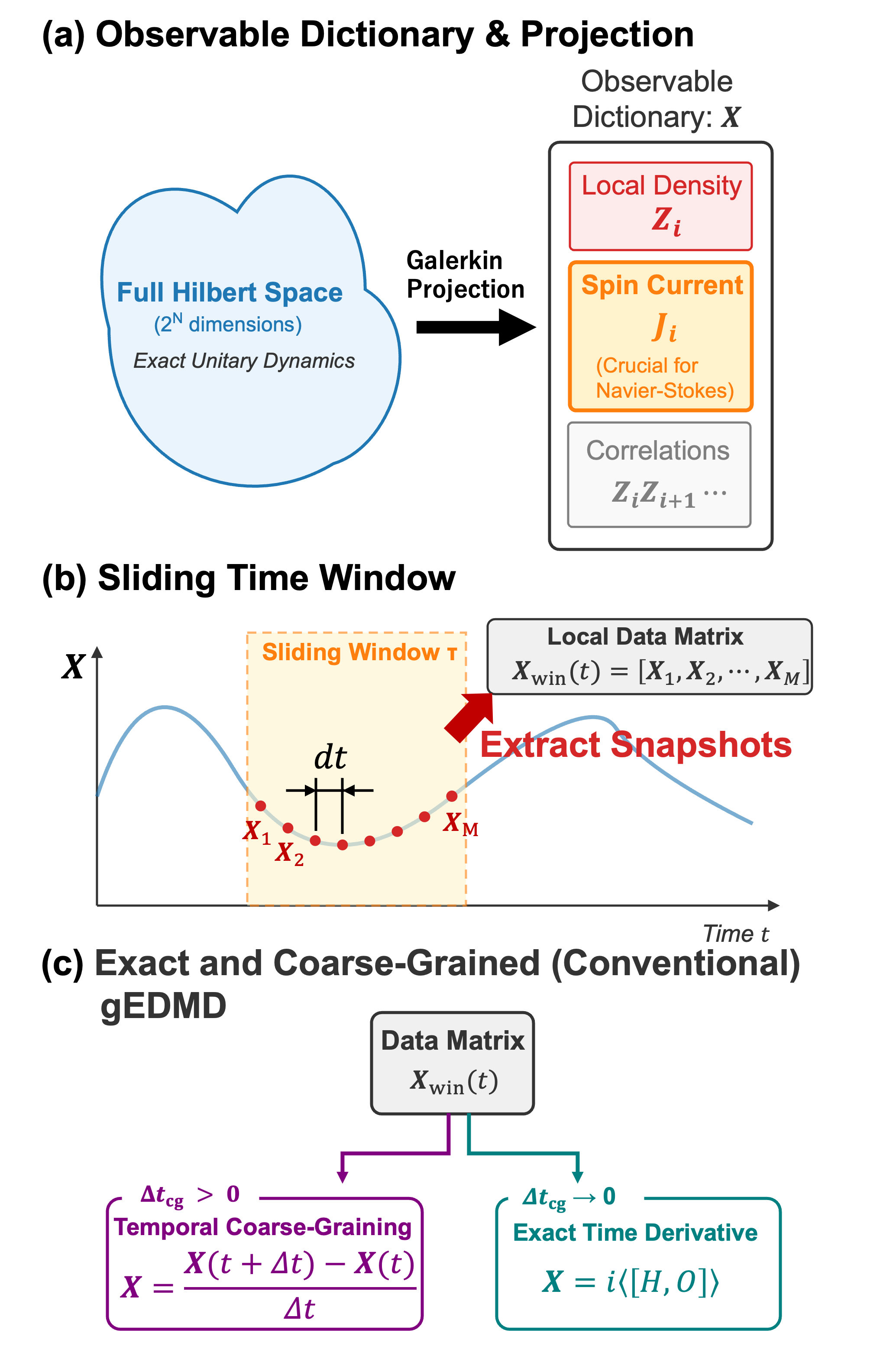
- The paper introduces a novel data-driven method to extract the Liouvillian operator and demonstrate how temporal coarse-graining induces macroscopic friction in quantum spin chains.
- It uses a generalized Extended Dynamic Mode Decomposition integrated with the Mori–Zwanzig formalism to quantitatively link microscopic reversible dynamics to emergent hydrodynamic coefficients.
- The results underscore that irreversibility and dissipation are observer-dependent phenomena emerging through finite temporal coarse-graining and reduced observable spaces.
Data-Driven Elucidation of Macroscopic Friction Emergence in Quantum Spin Chains
Overview
This paper presents a rigorous, data-driven methodology for uncovering how irreversible, macroscopic hydrodynamic phenomena—specifically friction and viscosity—emerge from the strictly reversible, unitary dynamics of isolated quantum spin chains. Leveraging a generalized Extended Dynamic Mode Decomposition (gEDMD) framework integrated with the Mori-Zwanzig formalism, the work systematically analyzes the role of both spatial and temporal coarse-graining. The approach provides direct, quantitative access to the Navier-Stokes hydrodynamic coefficients across scales, revealing that macroscopic dissipation is fundamentally contingent on observer-imposed temporal coarse-graining rather than being a basic property of the underlying quantum dynamics.
Methodology: Liouvillian Extraction via gEDMD and Coarse-Graining
The core methodological advance is the use of gEDMD to extract the effective Liouvillian operator from time-evolving expectation values of an explicitly constructed observable dictionary. This dictionary notably includes both local spin densities and spin currents, enabling explicit mapping onto generalized Navier-Stokes-type dynamics. The method operates with two temporal paradigms:
This dichotomy provides a systematic platform to directly probe the origin and scaling of emergent hydrodynamic coefficients.
Validation: Complete and Projected Observable Spaces
The theoretical and numerical validation is performed on small quantum chains, leveraging the ability to construct a complete observable basis. Using a complete space (all Pauli strings), the extracted Liouvillian spectrum is shown to be purely imaginary, reflecting exact reversibility and absence of dissipation in the closed system.
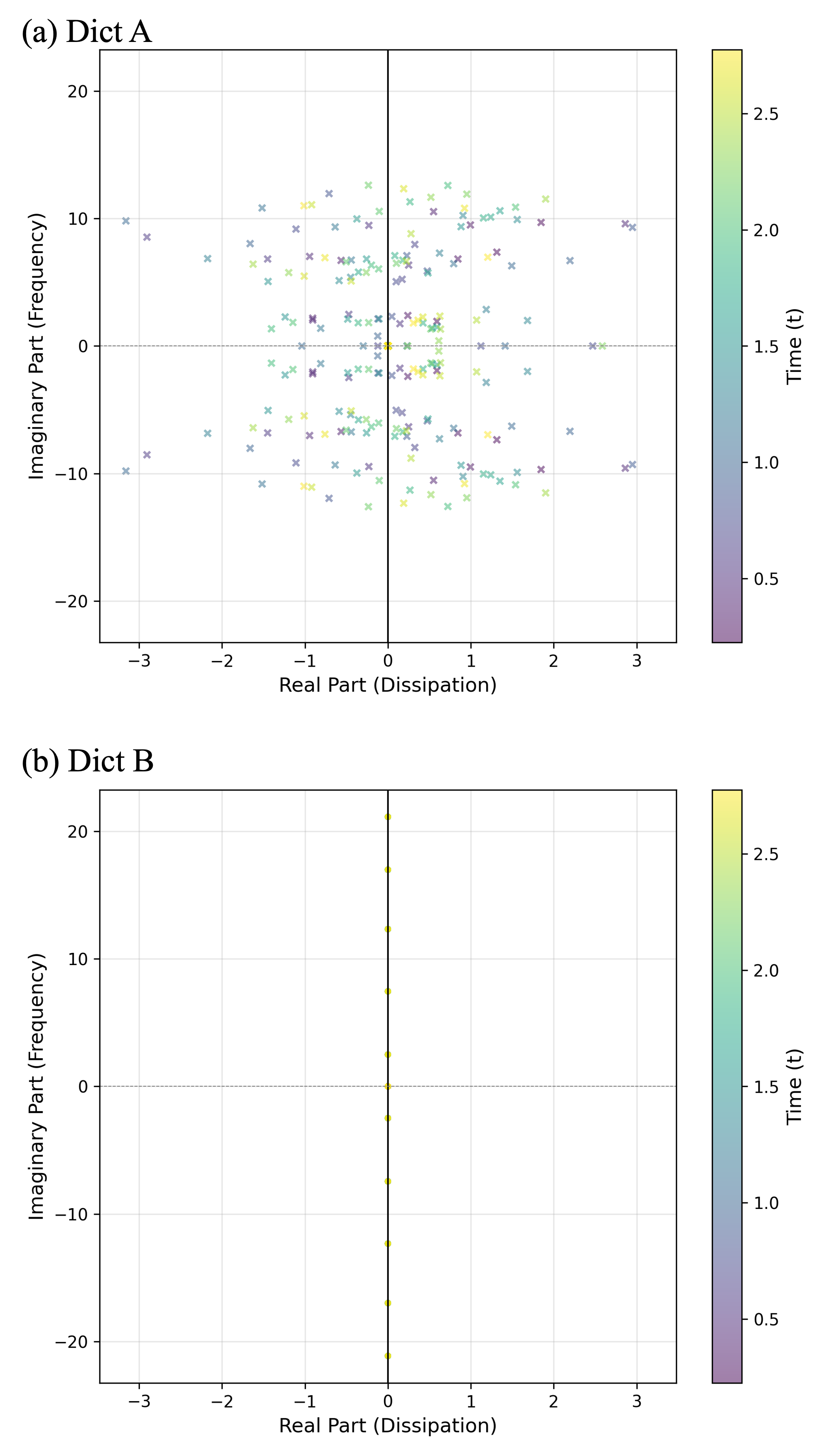
Figure 2: Liouvillian spectrum spreads with incomplete (projected) dictionaries, while completeness confines eigenvalues strictly to the imaginary axis.
In contrast, projecting onto a reduced macroscopic observable set leads to eigenvalues acquiring non-zero real components, representing apparent dissipation and amplification artifacts due to information passing between observed and unobserved degrees of freedom. Application of finite temporal coarse-graining further broadens the spectrum into the left half-plane, quantitatively demonstrating the physical and mathematical origins of macroscopic friction and irreversibility.
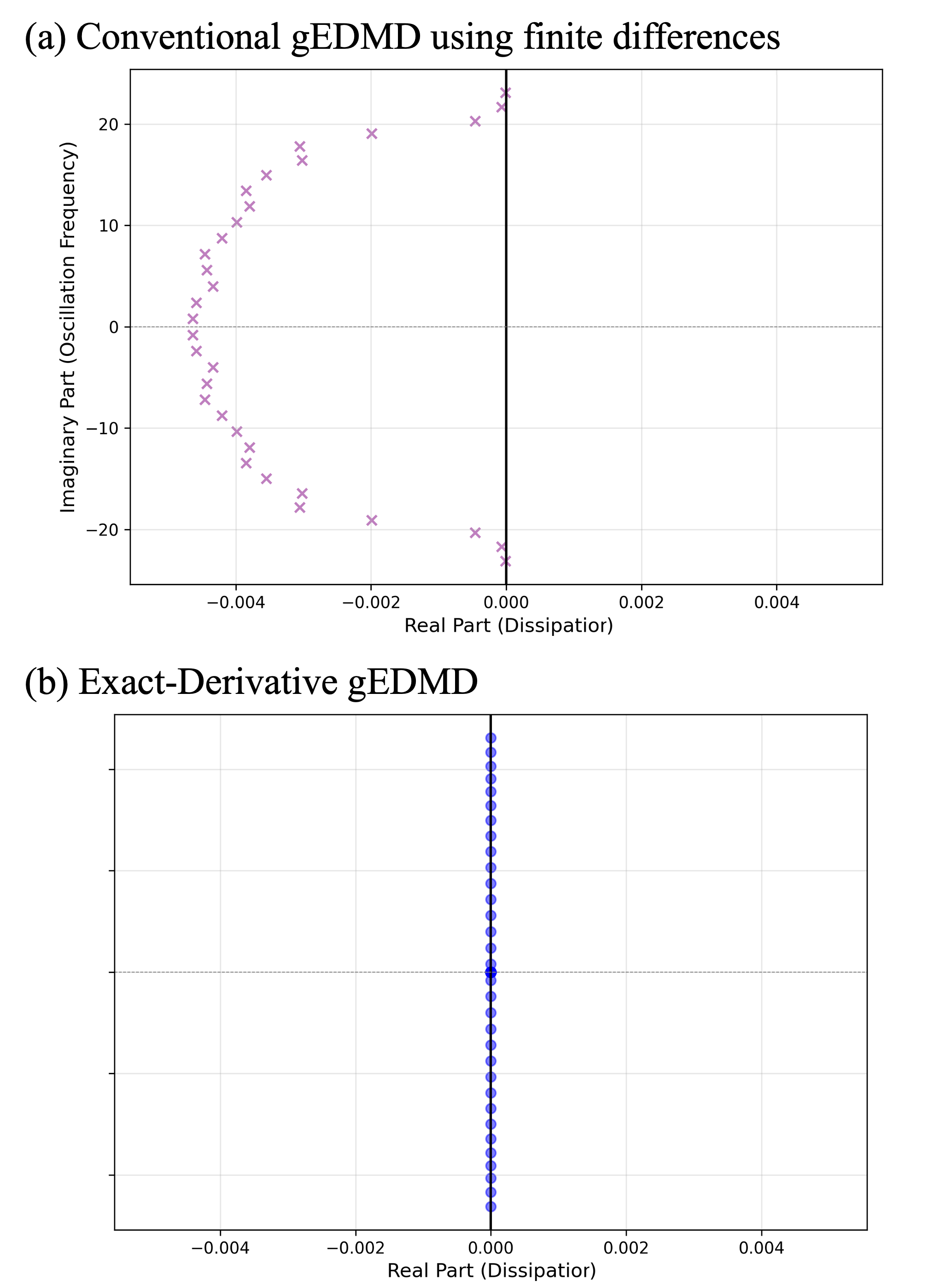
Figure 3: Dissipation emerges in the Liouvillian spectrum through finite temporal coarse-graining, but is absent in the exact-derivative limit.
Genesis of Macroscopic Dissipation: System-Environment Decomposition
By partitioning the spin chain into a system and environment and employing quench protocols that abruptly activate coupling, the study visualizes the precise transfer and decoherence of information. Liouvillian spectral analysis reveals that macroscopic dissipation coincides with tracing out environmental degrees of freedom, and is captured only within projected observable subspaces.
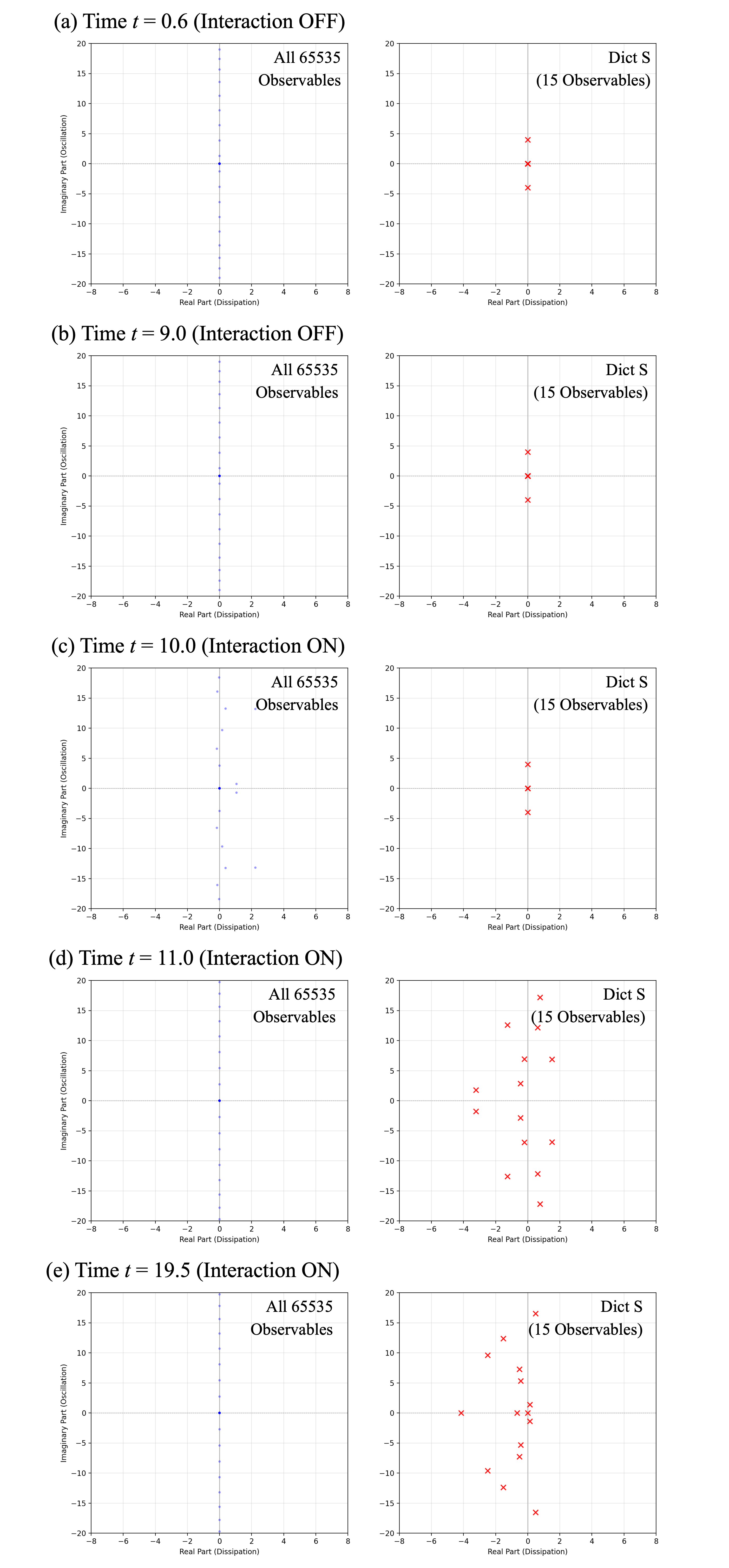
Figure 4: Decoherence in the 8-qubit quench visualized via spectrum scattering after subsystem-environment contact.
In larger systems, the macroscopic observable dictionary (serving as a pointer) mediates the flow and dissipation of quantum information, acting as a bridge between the system and environment.
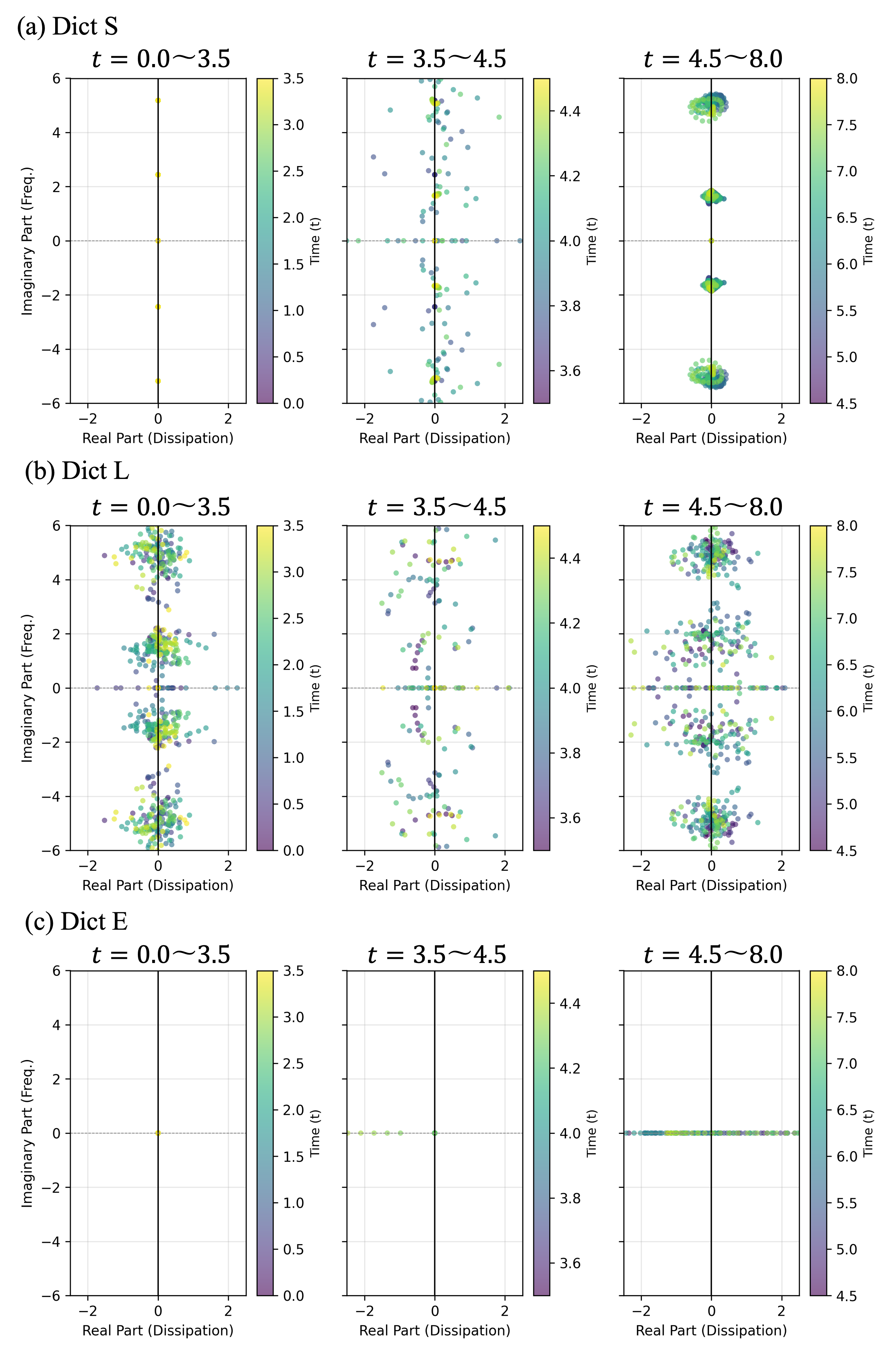
Figure 5: Spectral distribution reflecting bidirectional information flow in the 20-qubit system—the pointer observable basis mediates both absorption (dissipation) and reamplification (echoes).
The onset of dissipation is tracked dynamically, with the Liouvillian trace quantifying the rate of phase-space volume contraction and information loss immediately following environment coupling.
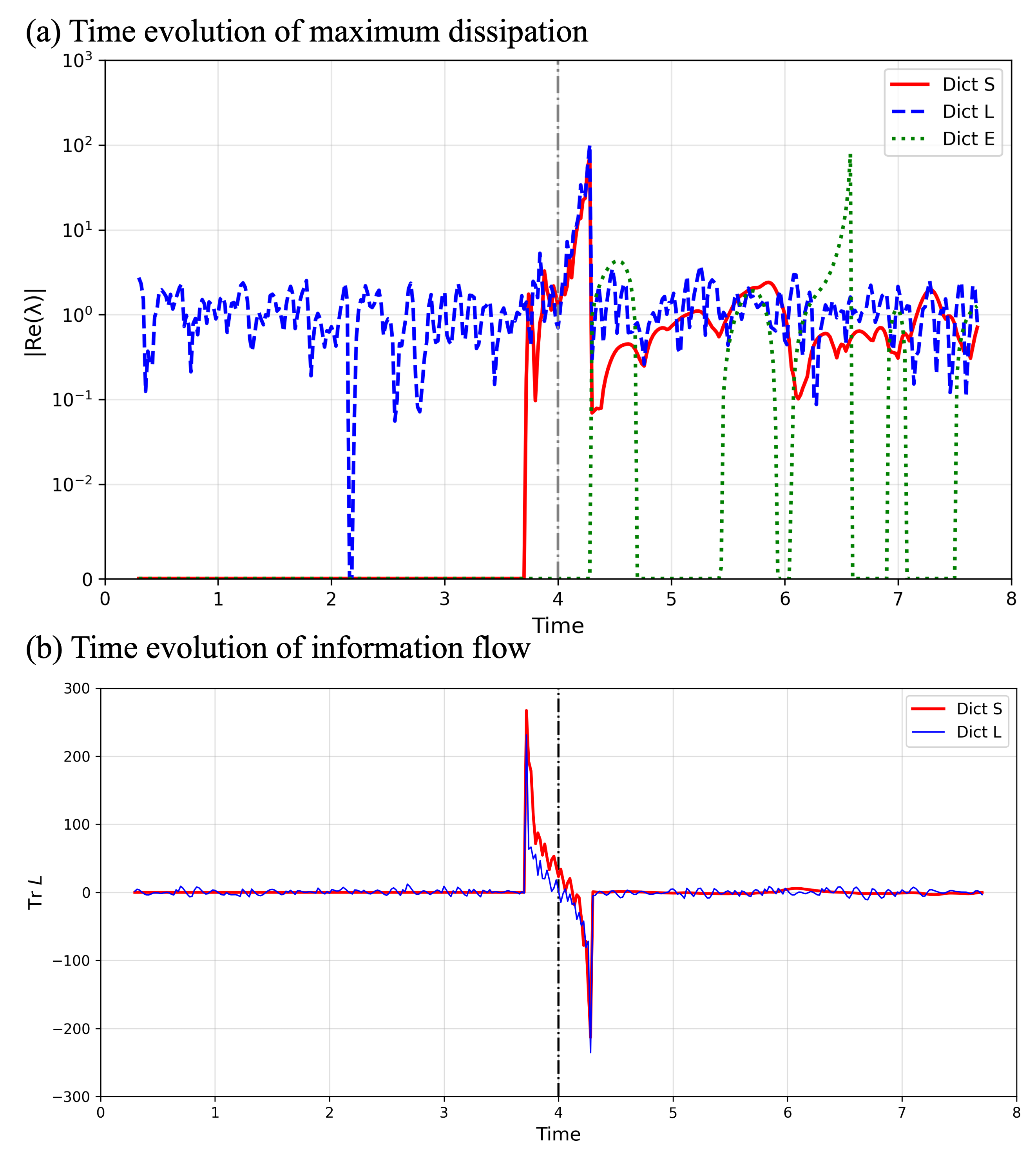
Figure 6: Temporal evolution of dissipation shows synchronized information outflow from the system and influx to the macroscopic pointer at the quench.
Hydrodynamic Coefficients Across Temporal Scales
Utilizing an expanded dictionary inclusive of composite correlations and a large ensemble average for statistical robustness, the authors extract local elasticity (c2), friction (γ), and viscosity (ν) as explicit matrix elements of the Liouvillian. In the exact-derivative (unitary) limit, c2 is robustly determined, but both γ and ν fluctuate rapidly around zero—indicative of strict reversibility and absence of dissipation.
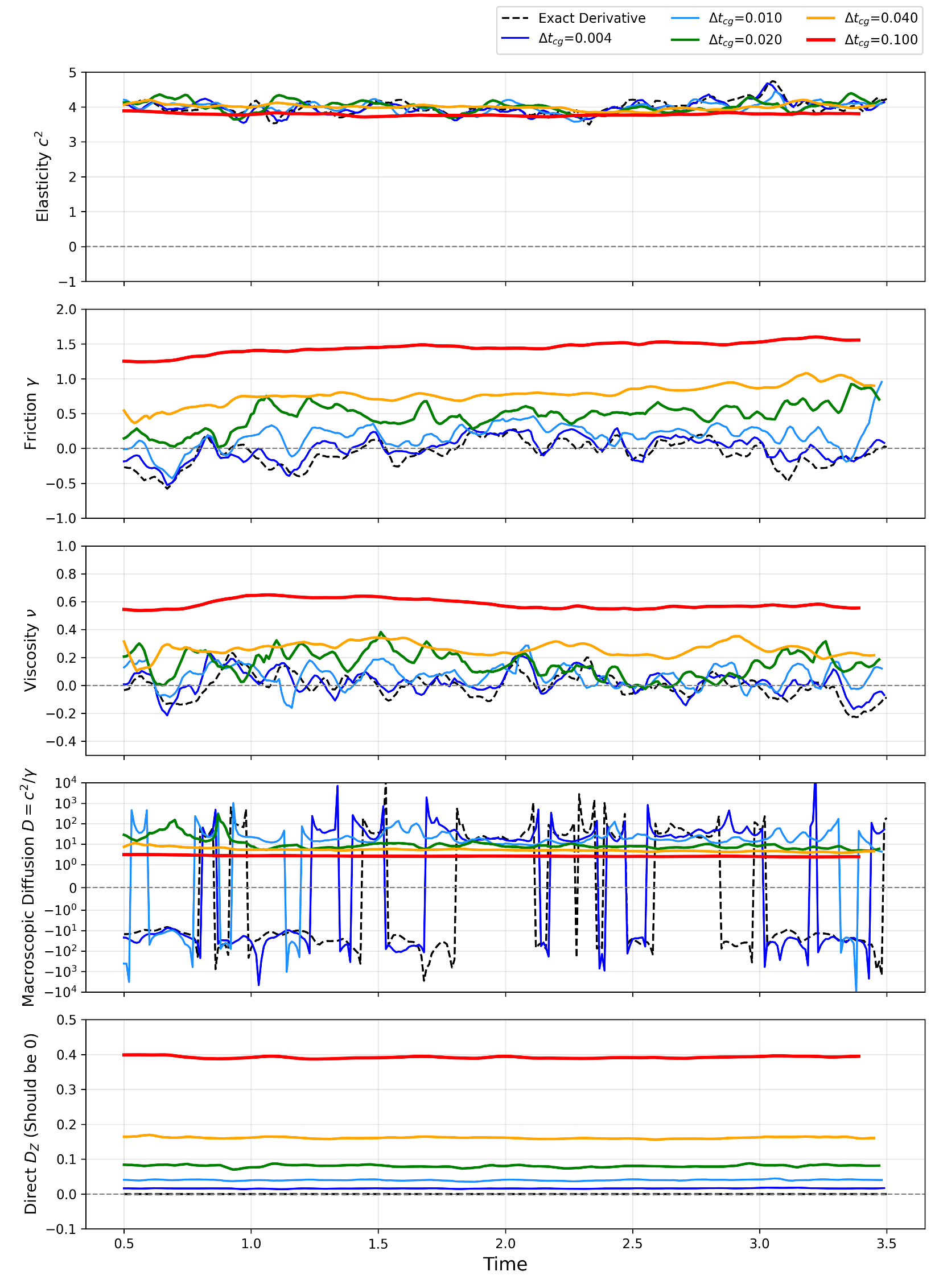
Figure 7: Hydrodynamic coefficients exhibit zero net dissipation without temporal coarse-graining; only elasticity remains robust.
Introducing a finite coarse-graining time, a sharp crossover is observed: both friction and viscosity transition from zero to strictly positive values, marking the emergence of irreversible macroscopic hydrodynamics at a characteristic intermediate timescale.
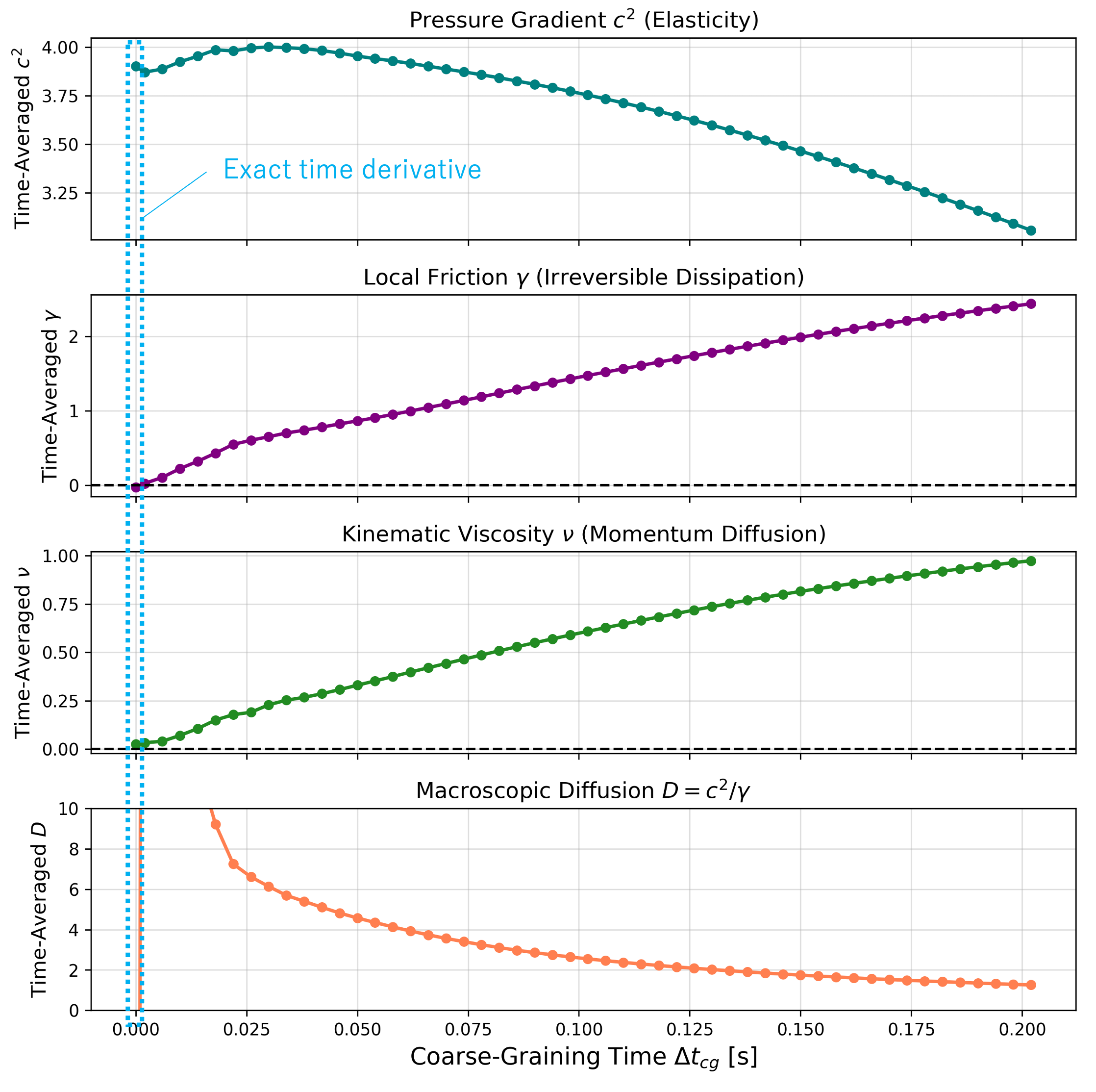
Figure 8: Macroscopic dissipation (friction, viscosity, and diffusion) emerges sharply at a finite crossover time Δtcg≈0.025; over-coarse-graining destroys fluidity.
Spatial profiles further confirm that friction and diffusion become uniformly positive only under optimal coarse-graining, while the exact derivative profile lacks stable dissipation across the chain.
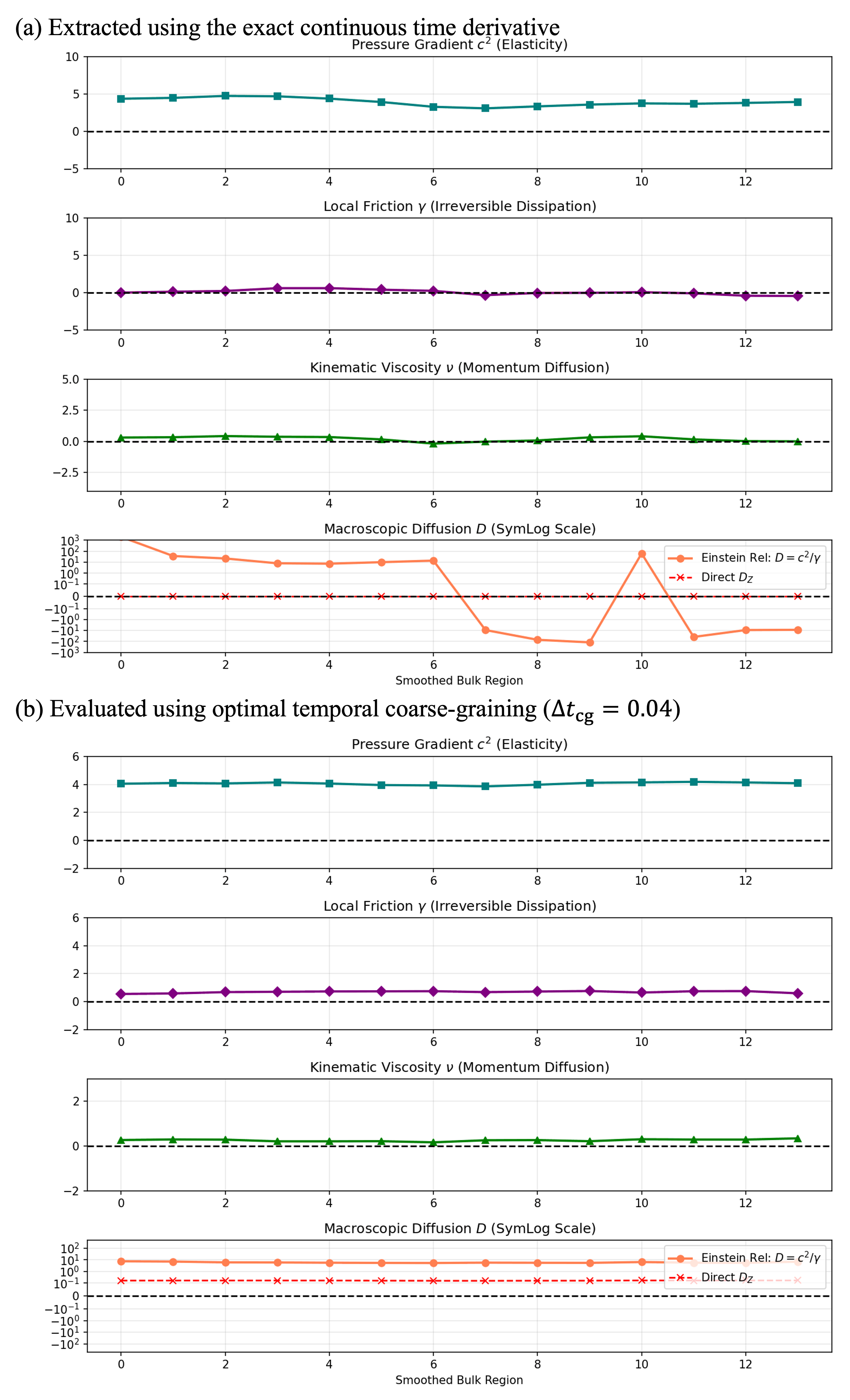
Figure 9: Spatial profiles show that stable bulk friction and diffusion only develop under temporal coarse-graining, not in the exact-derivative limit.
Importantly, the direct density-to-density diffusion rate extracted remains zero in all regimes, rigorously preserving microscopic conservation, and emphasizing the necessity of current (momentum) mediation for hydrodynamic relaxation.
Implications and Future Prospects
The results decisively demonstrate that macroscopic friction and viscosity in isolated quantum systems are not intrinsic microscopic properties but are emergent—directly contingent on the observer’s temporal resolution. This has substantive implications:
- Fundamental statistical mechanics: Validates that hydrodynamic irreversibility and dissipation emerge only with appropriate coarse-graining, and that the classical fluid regime exists as a transient, scale-dependent window.
- Numerical modeling of transport: Highlights the limitations of direct density-diffusion fits and the importance of constructing and analyzing both spin density and current observables for faithful hydrodynamic description.
- Quantum statistical epistemology: Reinforces that the assignment of dissipative coefficients is not simply ambiguous or subjective, but physically grounded in operator projection and timescale separation; in macroscopic systems, this separation is vast, but remains sharply manifested in mesoscale quantum chains.
Future research can explore the scaling of this crossover with system size, integrability breaking, and entanglement structure, and generalize the extraction technique to more complex many-body platforms and non-stationary protocols. The explicit demonstration of dissipation as an emergent, observer-dependent phenomenon has wide implications for quantum thermodynamics, nonequilibrium dynamics, and the construction of effective theories in open quantum systems.
Conclusion
Through a combined gEDMD and Mori-Zwanzig approach, the paper rigorously resolves the paradox of macroscopic irreversibility emerging from reversible microscopic quantum dynamics. Macroscopic friction in isolated quantum spin chains is shown to be a fundamentally emergent property, realized only through temporal coarse-graining by the observer. This work establishes a framework for extracting hydrodynamic coefficients directly from exact unitary dynamics and provides clear numerical and theoretical benchmarks for future explorations of transport, thermalization, and dissipation in complex quantum systems.