- The paper introduces a dynamic, loss-based weighting mechanism that uniformly disrupts both vulnerable and resistant deepfake models.
- It integrates dual-branch optimization by combining deep feature enhancement with an adaptive equilibrium mechanism.
- Experimental results demonstrate near-universal efficacy across CelebA, LFW, and FF++ while achieving superior efficiency over static methods.
Adaptive Equilibrium for Generalized Interruption in DeepFake Models
Introduction and Motivation
Deepfake generation has achieved alarming photorealism driven by powerful facial attribute editors spanning architectural paradigms (StarGAN, AttGAN, AGGAN, HiSD). While passive detection is necessary, it cannot preempt forgery, creating a research imperative for active defense strategies that interrupt deepfake synthesis at inference time. Universal interruption using adversarial perturbations—crafted to degrade outputs across multiple models—emerges as a scalable solution. However, existing static weighting approaches struggle to address architectural heterogeneity, resulting in an interruption imbalance: vulnerable models dominate the gradient, while resistant networks are insufficiently disrupted.
Adaptive Equilibrium Framework: Methodological Advances
The Adaptive Equilibrium Framework (AEF) introduces a dynamic, real-time loss-based weighting mechanism designed to achieve a uniform interruption effect against an ensemble of diverse deepfake architectures. Rather than averaging gradients, AEF continuously tunes the contribution of each model in the global objective according to exponential moving average (EMA) feedback, effectively allocating more optimization capacity toward models that are historically most resistant to disruption.
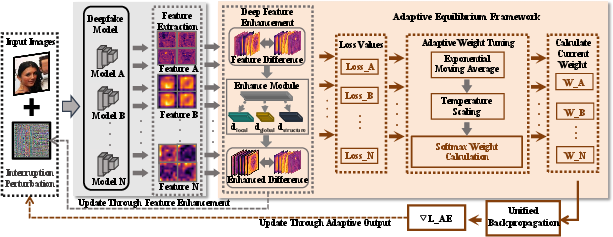
Figure 1: Illustration of the proposed Adaptive Equilibrium Framework.
The AEF consists of two principal components:
- Deep Feature Enhancement (DFE): This branch explicitly decomposes feature discrepancies between adversarial and clean samples into local pattern, global statistic, and structural semantic components. It disrupts instance normalization statistics (for style-guided generators), global mean and variance (for attribute-conditioned networks), and channel-wise self-attention maps (for attention-based architectures). Instead of exponential amplification (as in TSDF), AEF maximizes L2-normed discrepancies for compatibility with adaptive weighting.
- Adaptive Equilibrium Mechanism: For each model, a composite loss balances end-to-end and feature-level objectives, with weights λ controlling the contributions. EMA tracks the historical difficulty per model. A temperature-controlled softmax over EMA-smoothed losses computes adaptive weights, dynamically increasing attention on models least affected by current perturbations. All model losses are aggregated using these adaptive weights, and the perturbation update is guided by the resulting global gradient.
This dual-branch optimization converges to an “adversarial equilibrium,” prioritizing uniform effectiveness rather than average-case success, and fundamentally resolving the optimization conflicts induced by architectural diversity.
Experimental Results: Efficacy, Robustness, and Analysis
Comprehensive experiments were conducted on CelebA, LFW, and FF++ (original), evaluating AEF against leading interruption baselines (CMUA, FOUND, DWT, TSDF). Metrics include SRmask (successful interruption rate), L2mask (mean output distance), FID, SSIM, and PSNR. AEF demonstrates consistently superior interruption balance:
- On the CelebA dataset, AEF yields SRmask 99.88% (average across models), surpassing all baselines and maintaining SRmask above 99.5% even for classically robust architectures (e.g., HiSD, AttGAN).
- Robustness generalizes to LFW and FF++, with SRmask 99.62% and 99.61% respectively, indicating reliable cross-dataset performance and transferability.
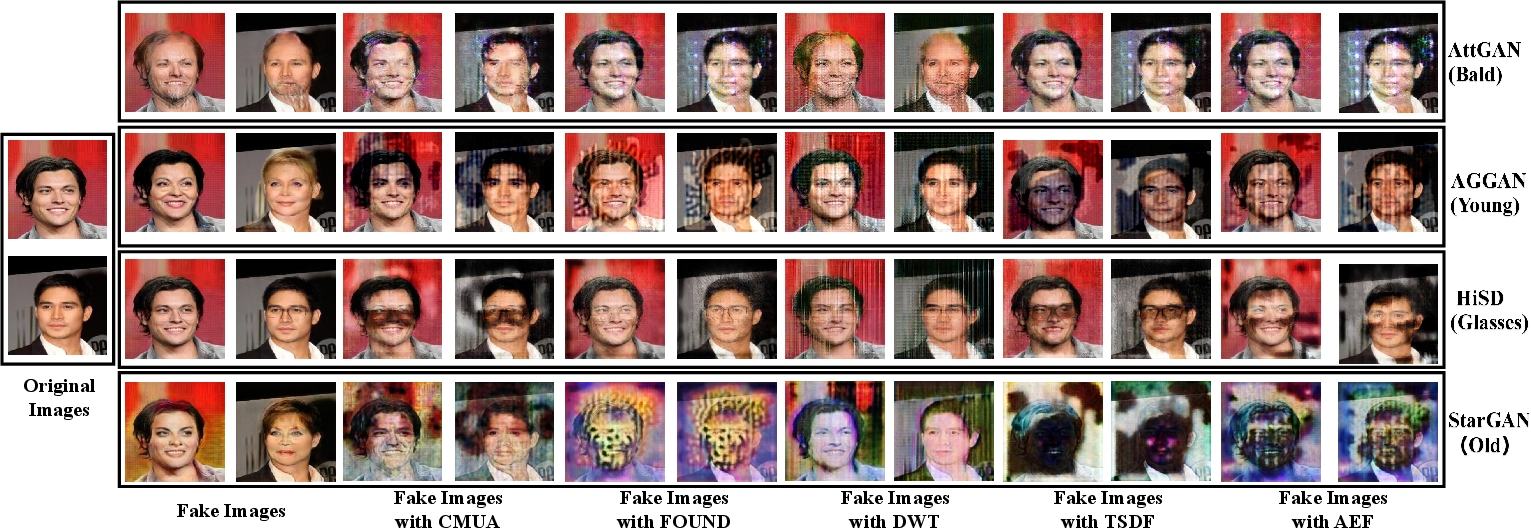
Figure 2: Qualitative analysis illustrating the structural destruction achieved by AEF on the CelebA dataset compared to baselines.
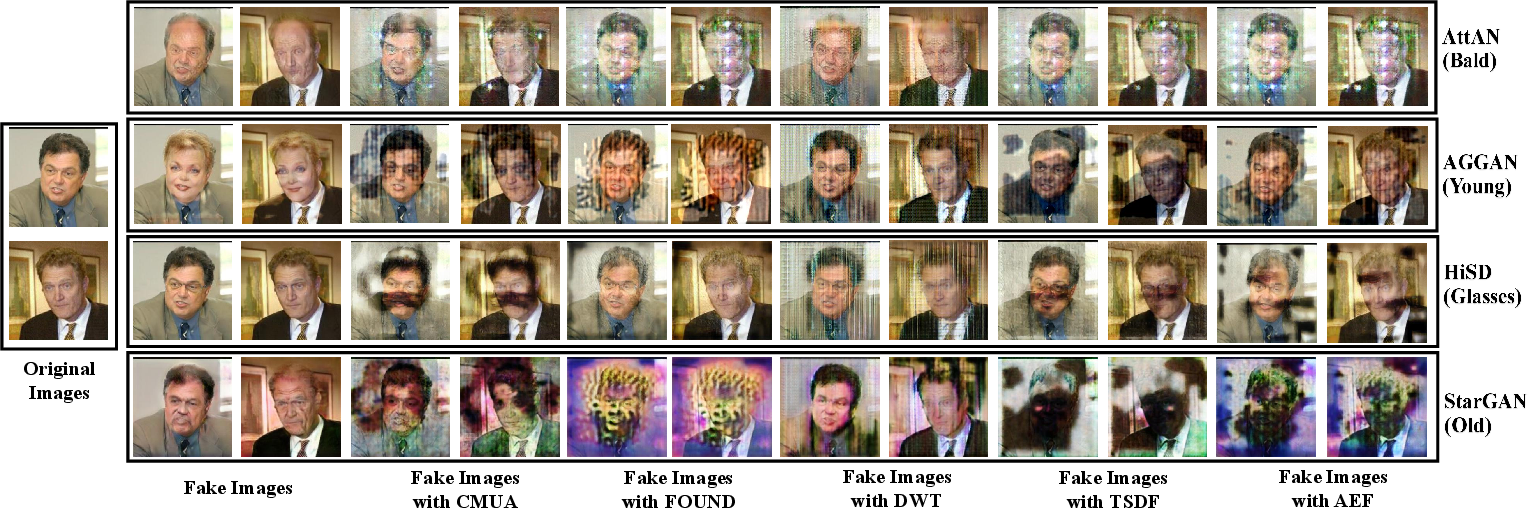
Figure 3: AEF induces substantial structural destruction on LFW, corroborating generalization beyond the training distribution.
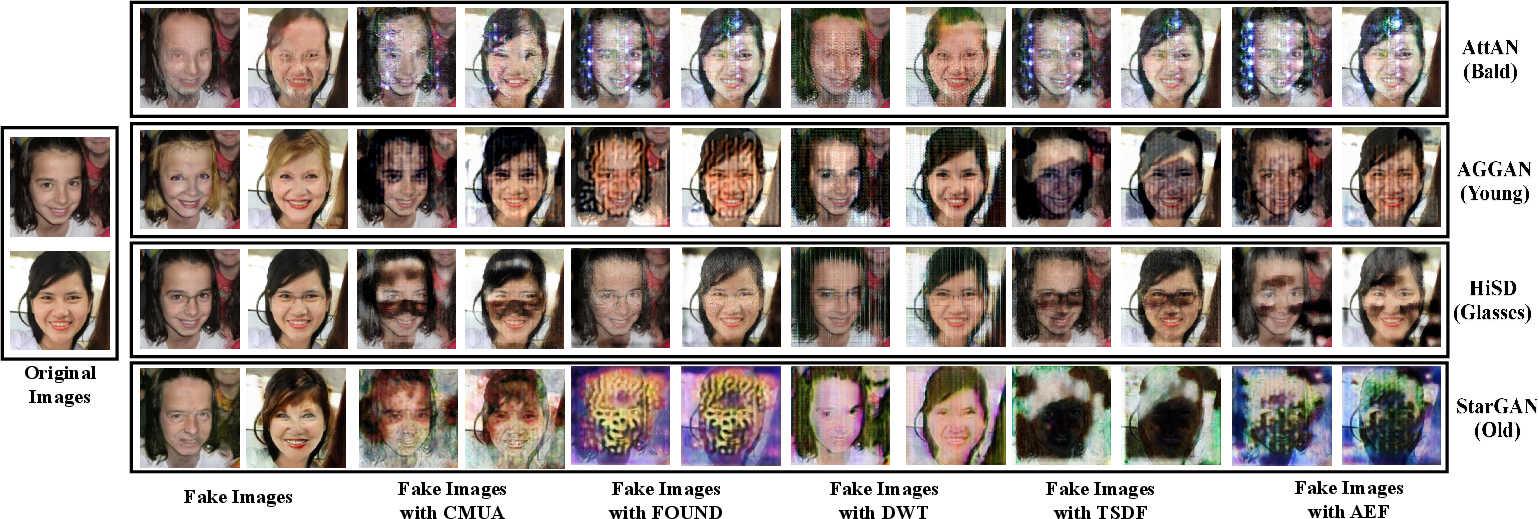
Figure 4: On FF++O, AEF continues to generate widespread semantic corruption across network architectures.
Qualitative results confirm that baseline methods typically induce superficial color or grid artifacts, whereas AEF produces pronounced structural degradation and feature fragmentation, even in unconstrained settings.
Ablation and Hyperparameter Studies
Ablations substantiate the centrality of adaptive weighting: replacing AEF’s dynamic mechanism with static averaging markedly decreases both average interruption efficacy and uniformity across models (SRmask drops to 97.28%). The feature shift hyperparameter α shows non-monotonic behavior, with maximal efficacy at α=0.8. Softmax temperature T critically governs the equilibrium: T=0.1 achieves near-perfect uniformity (SRmask 99.88%, minimum standard deviation) by sharply focusing updates on resistant models. Higher SRmask0 relaxes concentration, increasing disruption in easy targets but reducing global consistency.
Efficiency and Imperceptibility
AEF realizes a notable computational efficiency advantage, reducing universal perturbation optimization time to 0.23 hours on an RTX 4090, substantially outpacing both FOUND and CMUA. Perturbations remain visually inconspicuous, retaining high SSIM (0.91 on CelebA) and PSNR, and minimally degrading downstream task utility (face recognition and anti-spoofing).
Black-Box (Hold-Out) and Transferability Evaluations
AEF exhibits robust hold-out performance: models excluded from white-box ensemble are disrupted more strongly than with any previous method, reflecting superior transferability and generalization equilibrium. Single-model black-box transfer (e.g., training on StarGAN, evaluating on HiSD) highlights that while cross-architecture transfer remains challenging, AEF consistently outperforms baselines in maintaining destructive efficacy, particularly by maximizing representational divergence in the latent space.
Theoretical and Practical Implications
By targeting architectural diversity with dynamic, loss-driven perturbation weighting, AEF moves universal interruption beyond limitations of gradient averaging, marking a transition from “average-case disruption” to “universal, equilibrium-driven degradation.” This has significant practical implications for the deployment of resilient active defenses against rapidly evolving deepfake synthesis, regardless of the black-box or white-box status of underlying generators. On the theoretical side, this work opens a path toward adversarial methods that dynamically track, diagnose, and counteract the moving targets of ensemble generative models, offering a paradigm for transfer-oriented active defenses that do not overfit to the weaknesses of the easiest targets.
Conclusion
The Adaptive Equilibrium Framework establishes a systematic, efficient, and universal approach to interrupting deepfake generation in multi-architecture settings. Its core innovation—dynamic, real-time loss-driven weighting—addresses fundamental optimization bottlenecks in current universal adversarial perturbation schemes, equalizing interruption efficacy across both susceptible and resistant models. Extensive experiments validate its consistent superiority in effectiveness, imperceptibility, generalization, and computational efficiency. Future research may expand this paradigm to the disruptive defense of foundation models and complex multimodal generators, leveraging adaptive equilibrium dynamics for yet broader classes of generative model architectures.

