- The paper presents a quadratic reformulation framework (QCE) that converts rational-like nonlinearities into quadratic forms, yielding energy-stable numerical schemes for CH equations.
- The paper applies the QCE method to both isotropic and anisotropic CH models, demonstrating exact energy dissipation, second-order temporal accuracy, and faithful reproduction of phase separation dynamics.
- The paper outlines the potential to extend quadratic reformulation to complex anisotropies and Hamiltonian PDEs, paving the way for enhanced multiscale simulations in materials science.
Energy Stable Auxiliary Variable Method for Cahn–Hilliard Equations
The paper introduces a quadratic reformulation theory for rational-like functions to develop energy-stable numerical schemes for the Cahn–Hilliard (CH) equation. The key innovation is the Quadratic Conservation Elevation (QCE) method, which combines the Scalar Auxiliary Variable (SAV) framework with the implicit midpoint rule. Rational-like energy functionals, which often appear in phase-field models, are quadraticized by augmenting the variable space with suitable auxiliary variables. The theoretical treatment establishes that any rational-like nonlinear function can be embedded in a higher-dimensional space to yield a quadratic equivalent, using a dimension-raising transformation and enforcing Casimir-type invariants.
This reformulation allows one to construct energy-preserving and energy-dissipative schemes that maintain exact consistency with the original continuous energy structure, overcoming limitations seen in prior SAV and IEQ approaches, which modify the energy and sometimes lose fidelity to the dissipative law. Notably, the QCE method extends structure-preserving geometric integration to rational-like (not just polynomial) invariants, even for complicated anisotropic CH models with orientation-dependent interfacial energy.
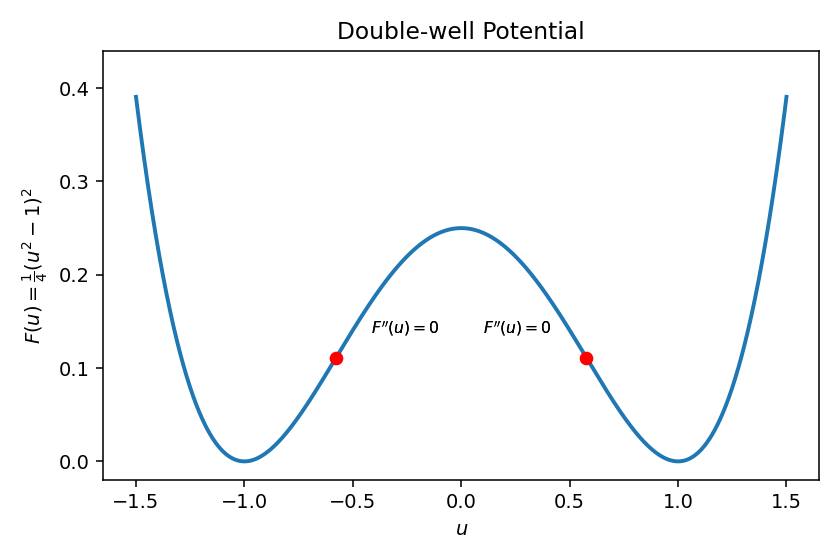
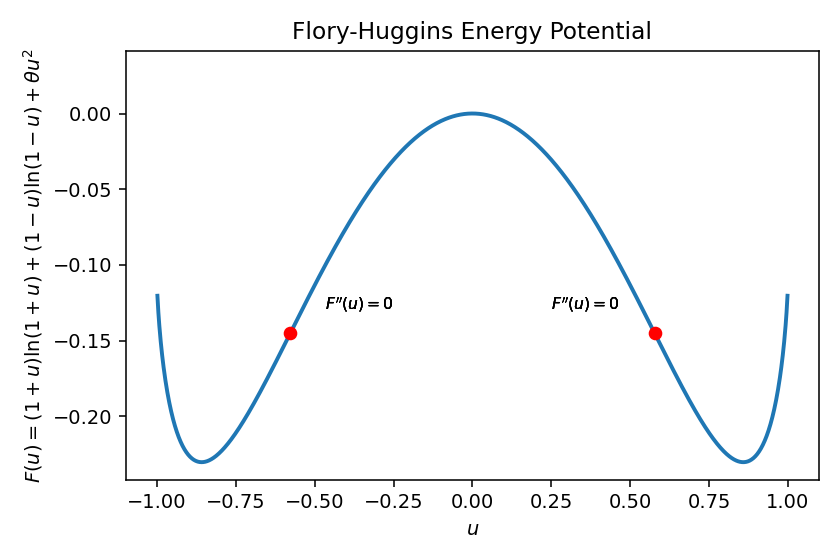
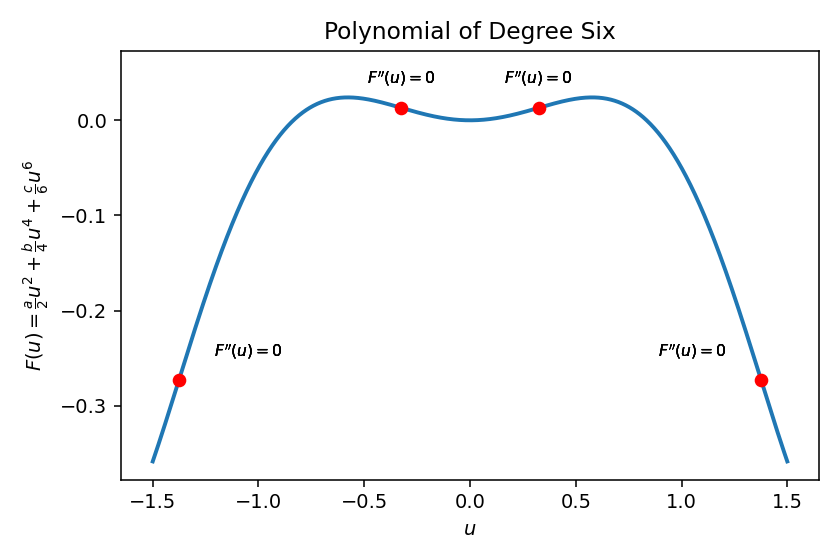
Figure 1: Three commonly used potential functions, the red ⋅ marks the inflection point.
Structure-Preserving Numerical Discretization
The paper systematically applies the QCE method to both isotropic and anisotropic CH equations. The implicit midpoint discretization in time and Fourier pseudo-spectral discretization in space yield fully discrete schemes. For the isotropic case, auxiliary variables are used to quadraticize the double-well type potential. The discrete scheme is rigorously proven to inherit the energy dissipation law such that the discrete energy monotonically decreases, exactly mirroring the continuous system’s dissipative property.
For anisotropic CH models, the spatially varying anisotropy factor requires a nontrivial quadraticization. The paper provides a detailed construction of auxiliary variables for typical twofold and fourfold anisotropic energies. Discrete schemes are meticulously designed to preserve both mass conservation and energy dissipation—the latter is established analytically for the discrete system, including the complicated orientation dependence.
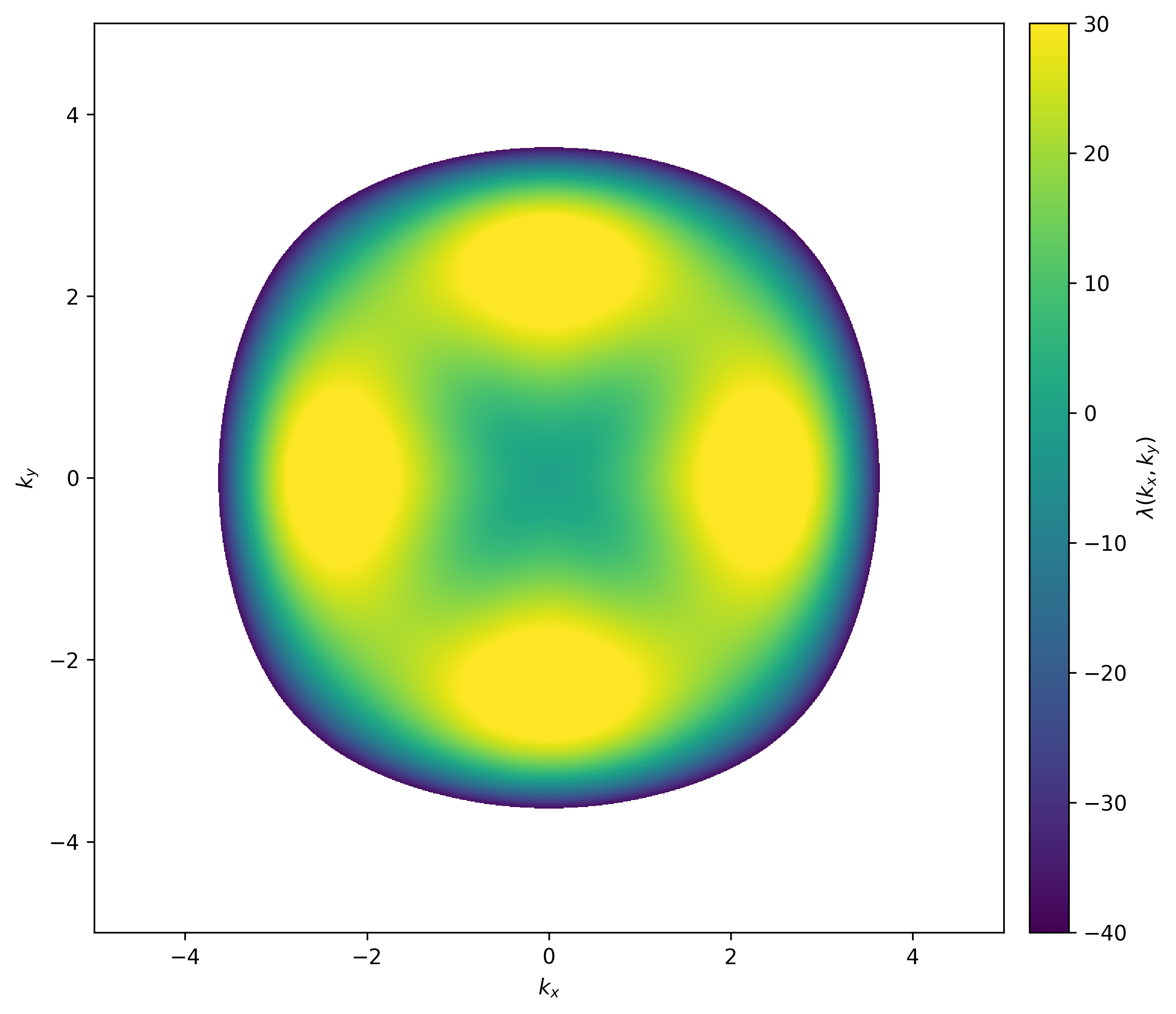
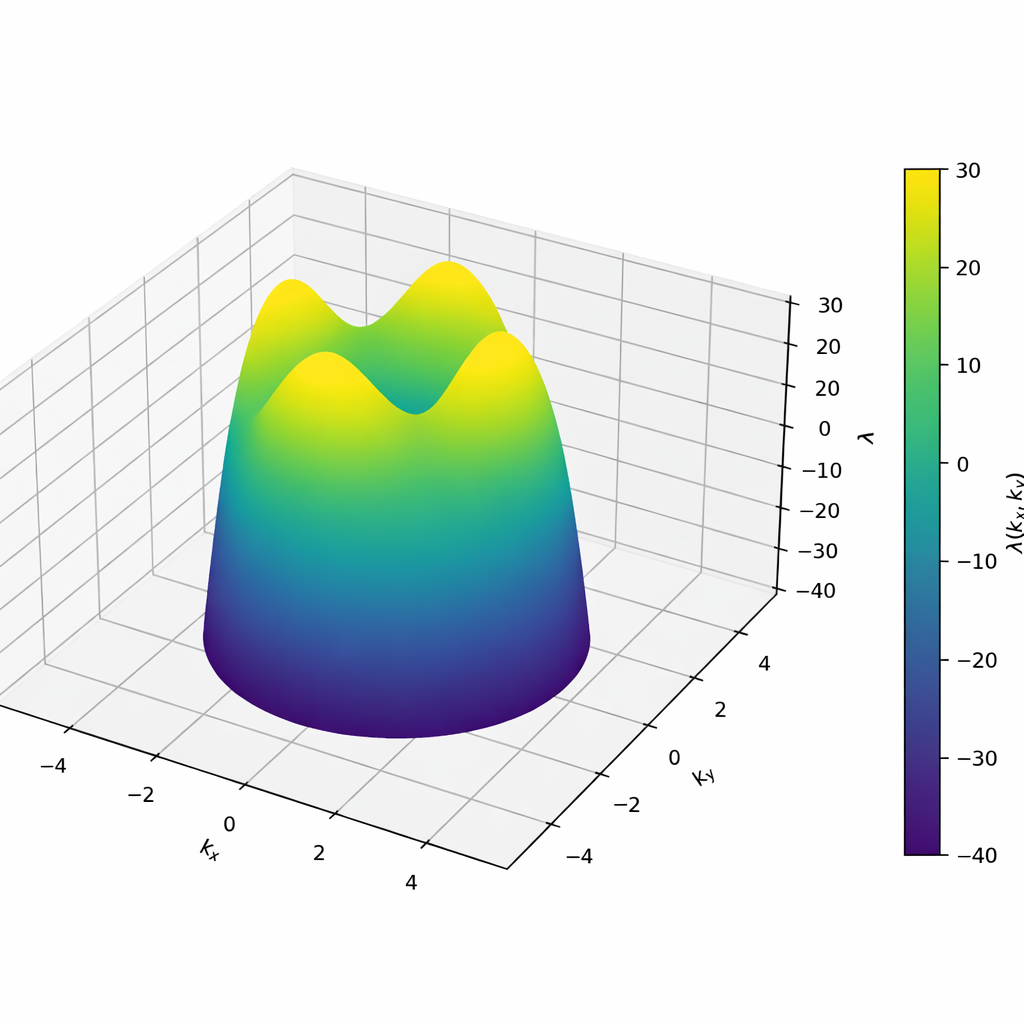
Figure 2: Contour of λ(k) for the isotropic CH equation, visualizing the linear growth rate of Fourier modes.
Dispersion Relation, Coarsening Dynamics, and Physical Phenomena
The QCE-based schemes match the continuous CH dynamics at the level of discrete dispersion relation, phase separation, and coarsening behavior. Linear stability analysis reveals that the discrete growth rates (λ(k)) align closely with analytical predictions. The implicit midpoint scheme achieves A-stability and second-order temporal accuracy, showing nearly optimal preservation of the amplification factors and contour shapes over the (kx,ky) plane, as compared to explicit and implicit Euler methods which exhibit excess damping or instability at large wavenumbers.
The paper demonstrates that its schemes accurately reproduce spinodal instability criteria, phase separation, and t{-1/3} coarsening law in late-stage dynamics, consistent with theoretical scaling arguments for CH-type evolution.
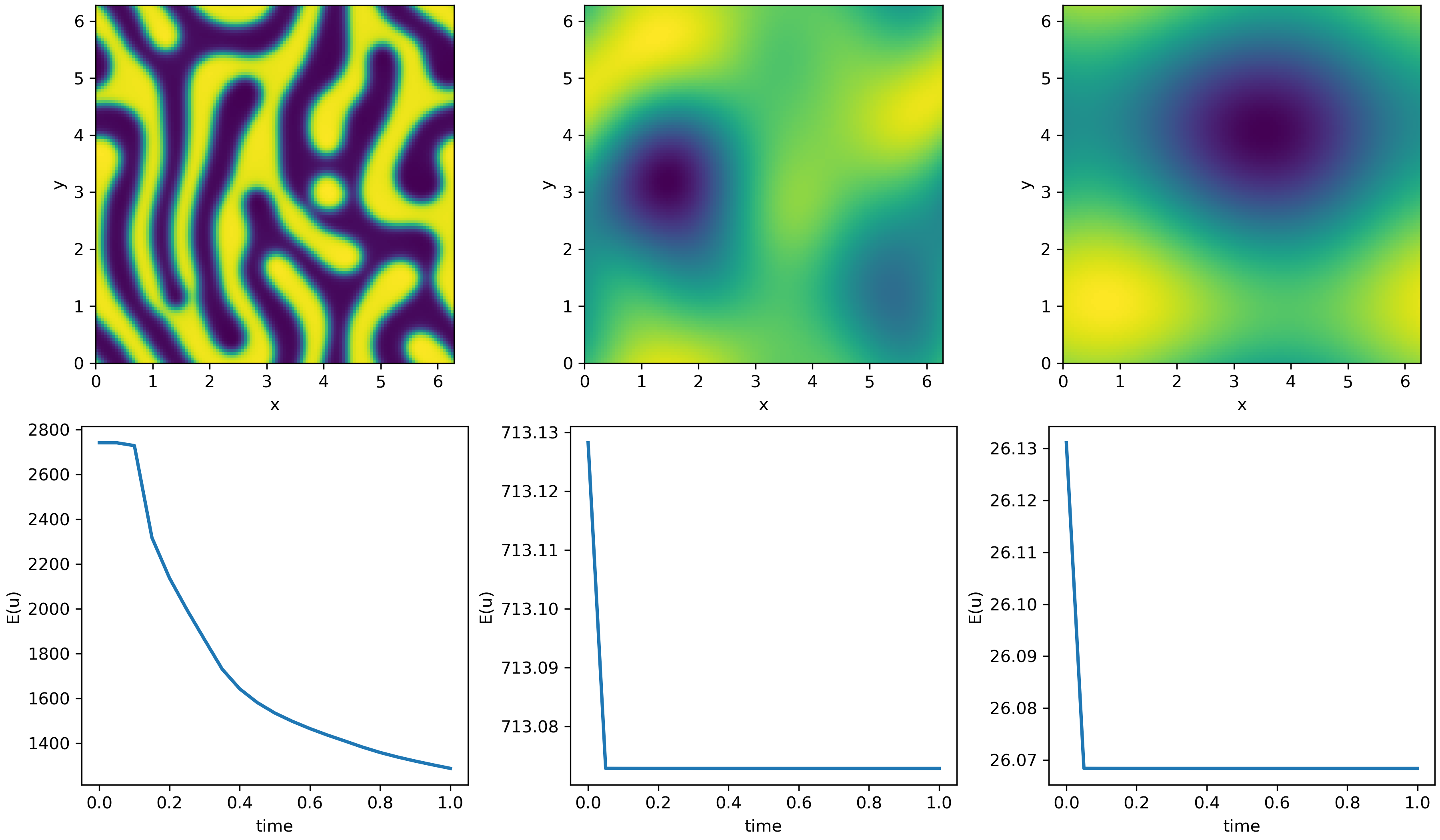
Figure 3: Phase separation and energy decay with different initial conditions, illustrating the spinodal instability and dissipative behavior.
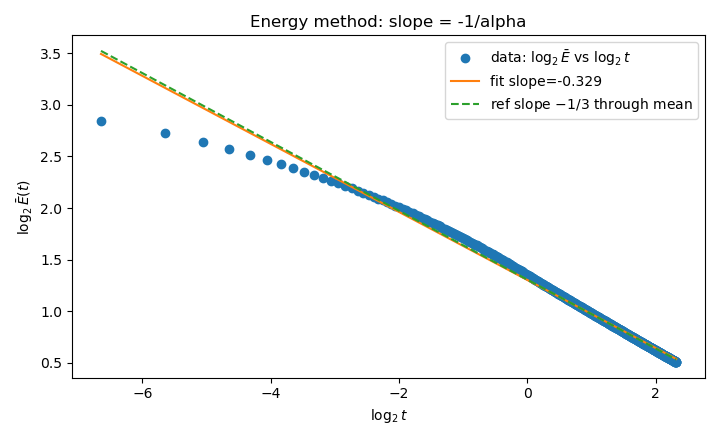
Figure 4: Coarsening rate of the isotropic CH equation with M=1, confirming the predicted energy decay scaling.
Anisotropy, Missing Orientations, and Wulff Shapes
For anisotropic CH equations, the QCE scheme captures subtle phenomena like equilibrium crystal morphologies, missing orientations, and facet formation due to direction-dependent surface energy. The method correctly enforces the surface stiffness condition and distinguishes regimes with smooth interfaces from those with missing directions and convexified Wulff shapes. The paper systematically varies the anisotropy strength and visualizes both interface morphologies and normal-angle polar plots.
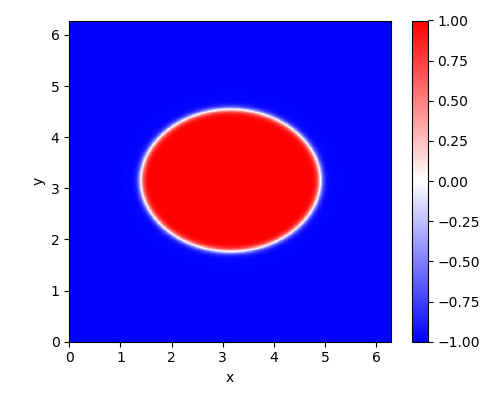
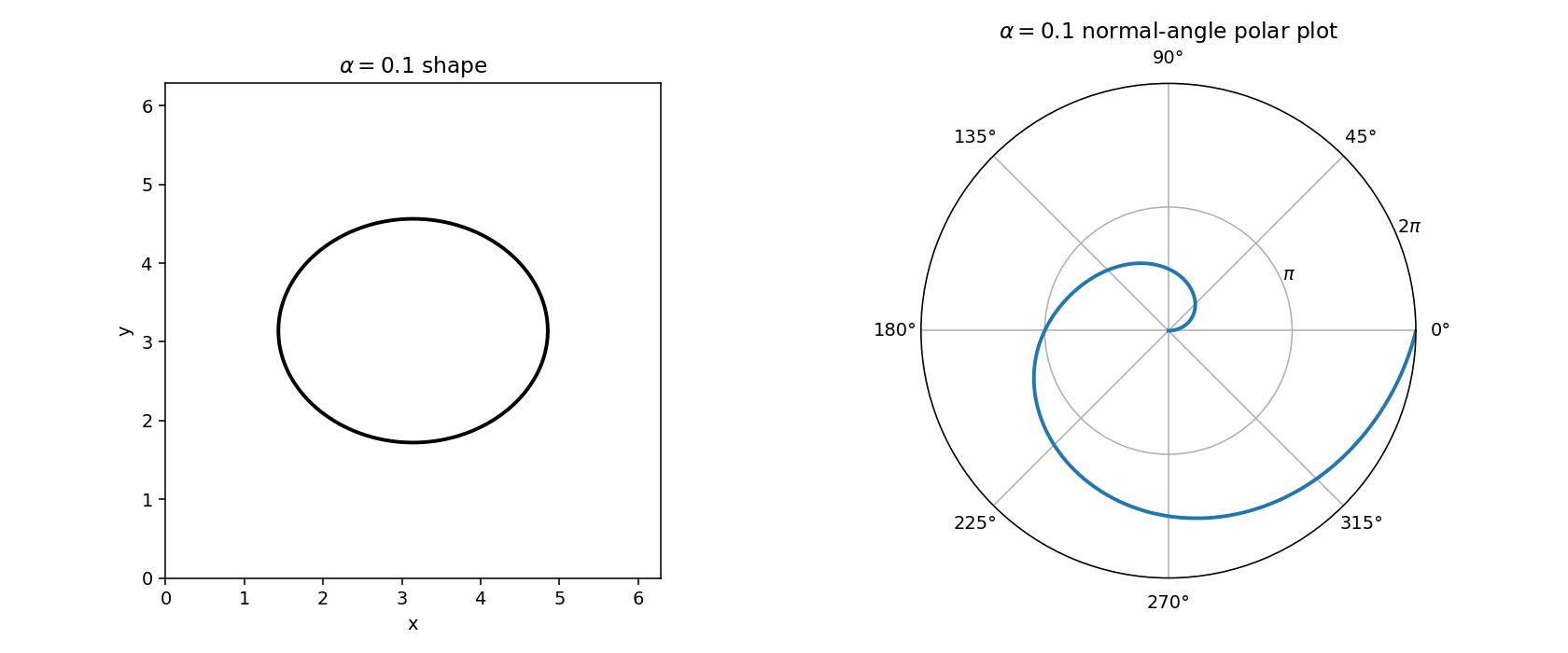
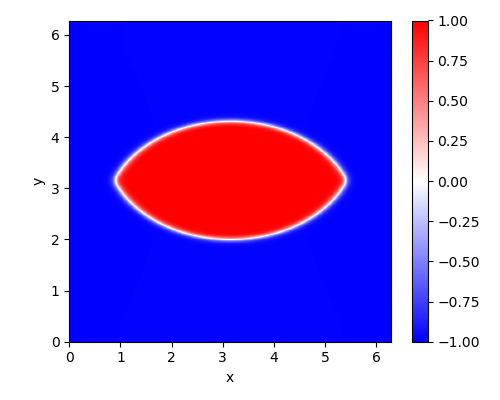
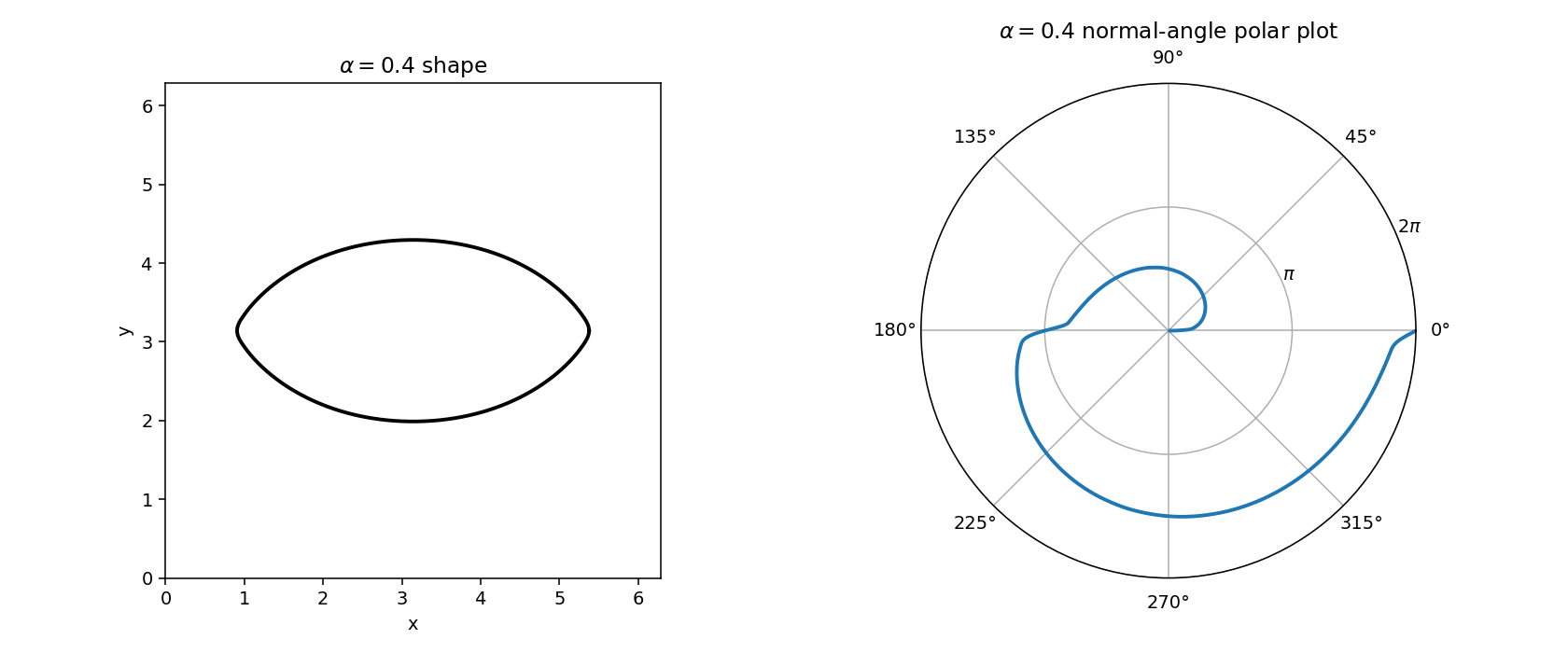
Figure 5: Morphologies and normal-angle polar plots for the twofold anisotropic CH model, showing effect of anisotropy strength on shape.
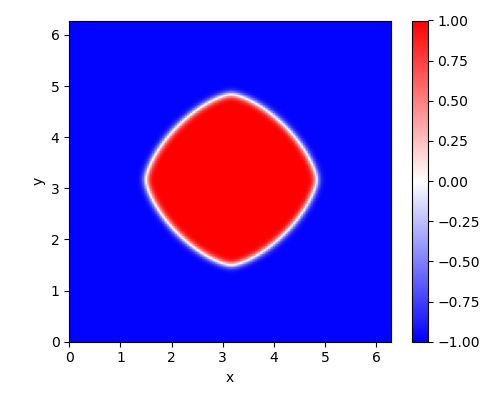
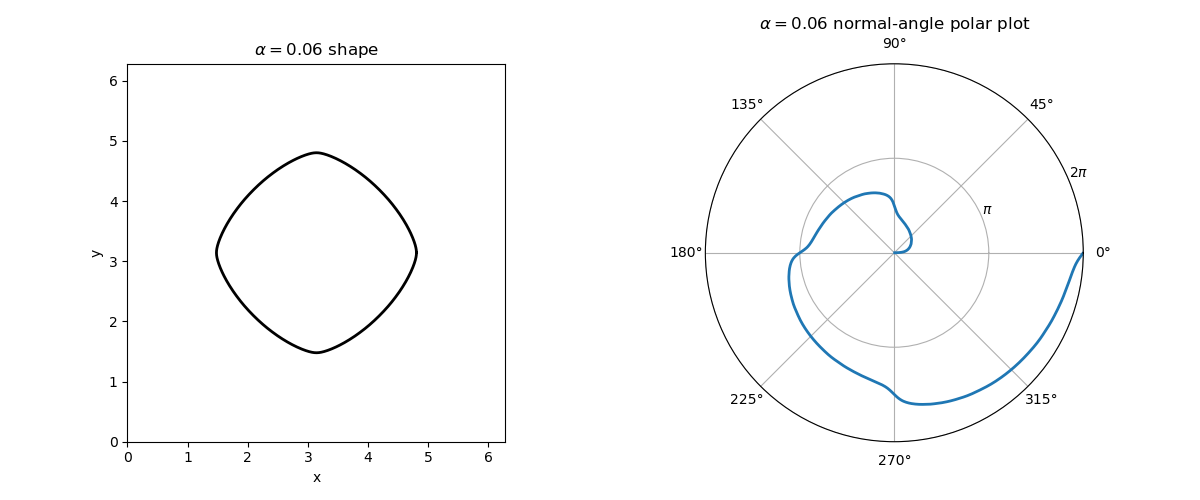
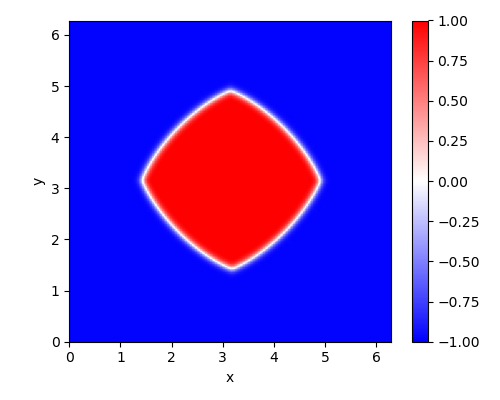
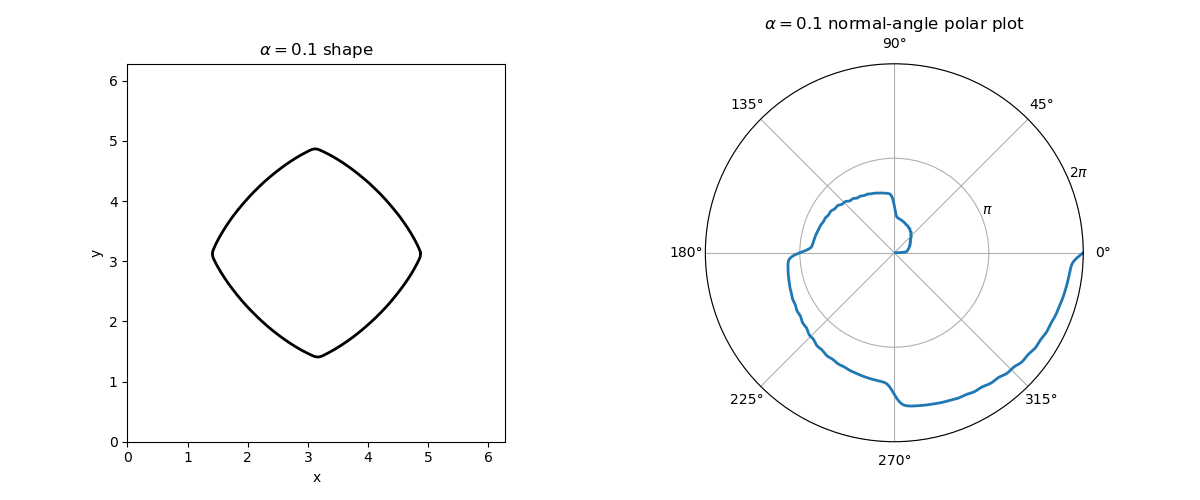
Figure 6: Morphologies and normal-angle polar plots for the fourfold anisotropic CH model, illustrating emergence of facets and missing orientations.
Numerical Accuracy, Temporal Convergence, and Robustness
Rigorous numerical experiments validate the energy-dissipative property and second-order time accuracy of the QCE scheme for both isotropic and anisotropic cases. Tests with various initial conditions—single and double droplets, random fields—demonstrate robustness and fidelity to theoretical expectations. The Mann relaxation iteration used for implicit updates is proven to converge under mild conditions, supporting practical implementation.
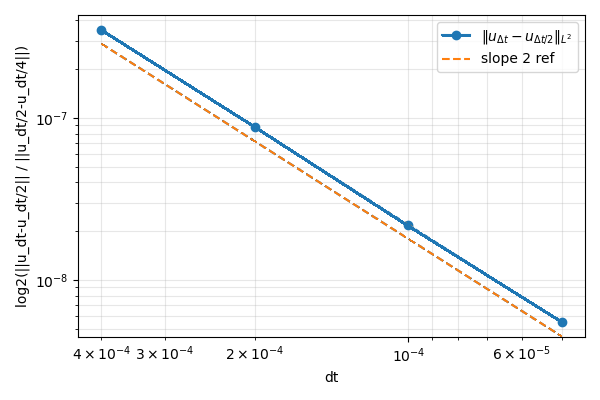
Figure 7: Temporal convergence order of the proposed scheme, demonstrating second-order accuracy.
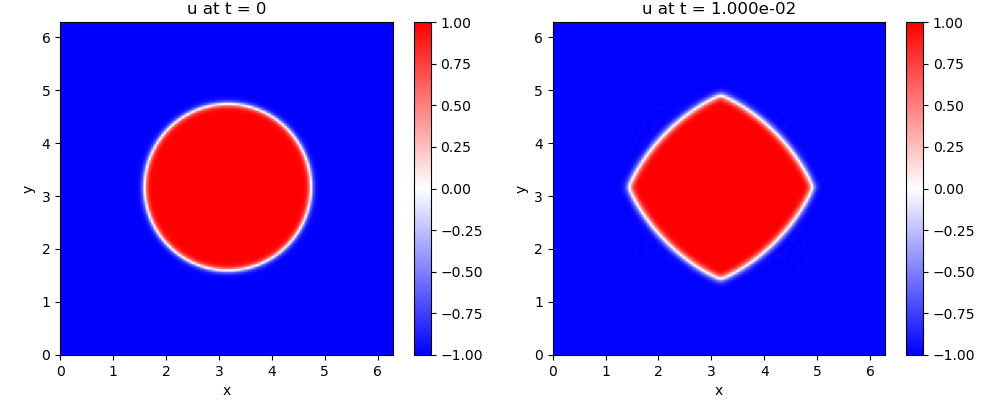
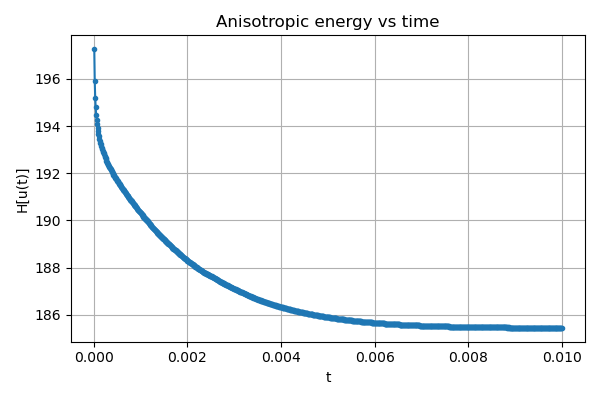
Figure 8: Phase-field evolution for the single-droplet test, confirming anisotropic interface dynamics.
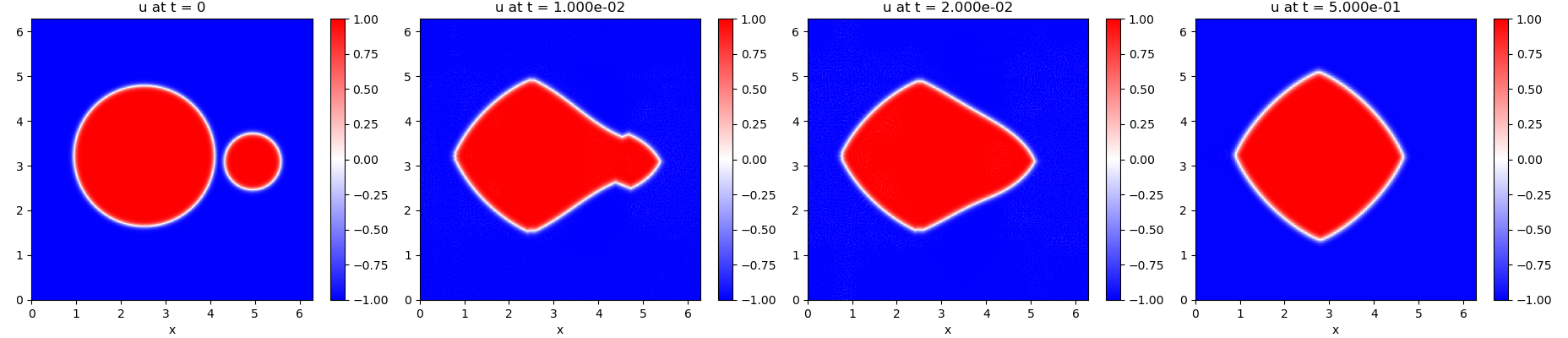
Figure 9: Phase-field evolution for the double-droplet test, showing dynamic coalescence and shape evolution.
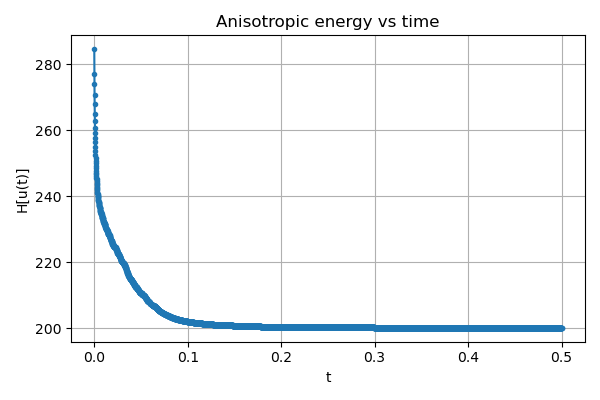
Figure 10: Evolution of discrete energy for the double-droplet test, verifying monotonic decay and equilibrium convergence.
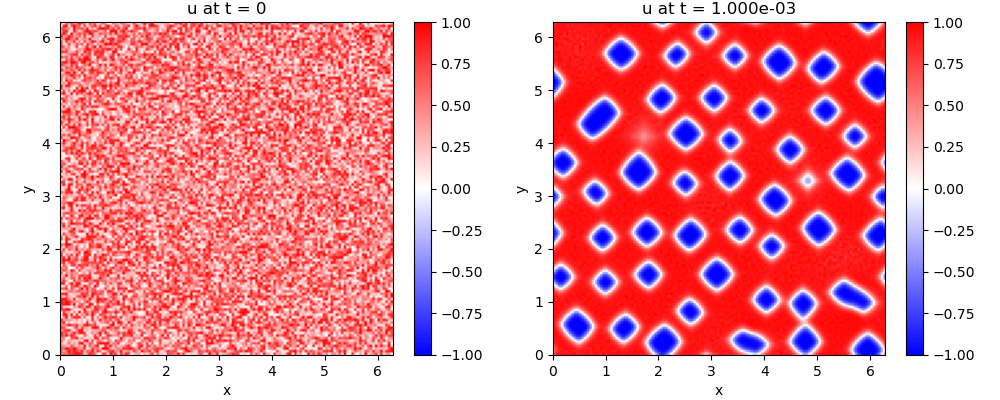
Figure 11: Phase-field evolution for the random test, illustrating emergence of symmetric patterns from random initial conditions.
Implications and Prospects
This work provides a rigorous foundation for quadratic reformulation in structure-preserving numerical methods for CH-type gradient flows. The QCE approach generalizes previous auxiliary variable techniques, enabling exact energy dissipation for rational-like nonlinearities and anisotropic phase-field models. Practically, this framework enhances long-time simulations of material microstructure, capturing nuanced interface dynamics and equilibrium shapes with fidelity.
Theoretically, the explicit connection to Casimir invariants and geometric integration suggests further extensions to Hamiltonian PDEs, more complex anisotropies, and potentially adaptive schemes. The precise characterization of convergence and energy dynamics opens avenues for integration with multiscale modeling and machine learning assisted simulations.
Conclusion
The paper establishes a quadratic reformulation theory for rational-like functions and demonstrates its utility in constructing energy-stable auxiliary variable methods for Cahn–Hilliard equations. The QCE scheme preserves the discrete energy dissipation law for both isotropic and anisotropic cases, matches continuous dispersion relations and coarsening dynamics, and accurately captures equilibrium morphologies and missing orientations. Numerical tests confirm robustness, second-order accuracy, and practical applicability to diverse initial conditions. This work solidifies the foundations for structure-preserving geometric numerical integration in phase-field modeling and offers a scalable framework for future advances in computational materials science (2604.26402).