- The paper presents a benchmark and multi-agent LLM framework for automated chart-centric video storytelling.
- It details a four-stage data curation pipeline and a modular multi-agent process that produces coherent D3.js-based HTML with synchronized animation and narration.
- Empirical evaluations show that agentic multi-stage approaches outperform single-model techniques in narrative coherence, visual style, and timeline synchronization.
DATAREEL: Automated Data-Driven Video Story Generation with Animations
Introduction
DATAREEL introduces a formal benchmark and multi-agent LLM-based framework for the automated generation of chart-centric, data-driven video stories with synchronized animation and narrative subtitles (2604.25220). The system addresses the lack of standardized, rigorous evaluation paradigms for visual and story-based data video generation—a critical gap in assessing LLM capacity for more than static chart summarization or captioning. The benchmark comprises 328 real-world annotated data reels, paired with structured data, chart visualizations, and full narration transcripts, enabling systematic study of this multimodal generation task.
A representative data reel extracted from the Wall Street Journal illustrates the genre: animated sequential charts (arrow, bar, pie) synchronized with narrative, highlighting trends in China’s global arms trade over time.
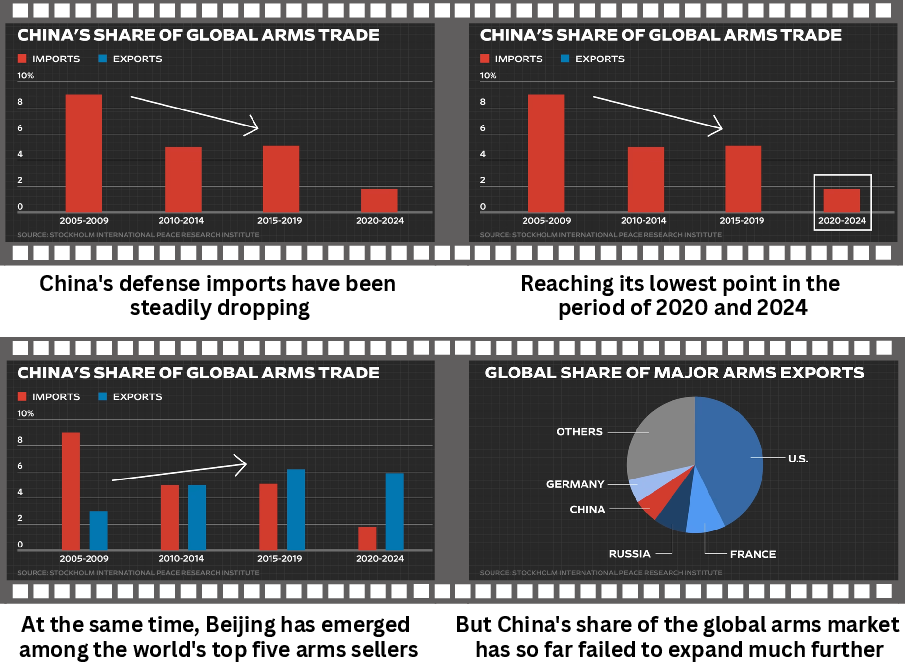
Figure 1: A data reel extracted from the YouTube channel Wall Street Journal, exemplifying chart-centric animated storytelling with synchronized narration.
Benchmark Construction and Dataset Properties
DATAREEL’s benchmark curation follows a four-stage pipeline: video sourcing from journalism-centric YouTube channels, manual identification of data reels, systematic annotation of animation types and user intent, and automated chart data extraction with Gemini-2.5-flash MLLM. Only reels where the core narrative is delivered through animated visualizations are selected, distinguishing this dataset from generic news or explainer video collections.
The overall process establishes a pipeline for generating a rendered video from data and user intent:

Figure 2: Benchmark workflow showing collection, annotation, code generation by VLMs, rendering, and evaluation of data reel videos.
The dataset exhibits broad topical coverage—politics, finance, social issues, environment—and significant diversity in chart type and animation form.
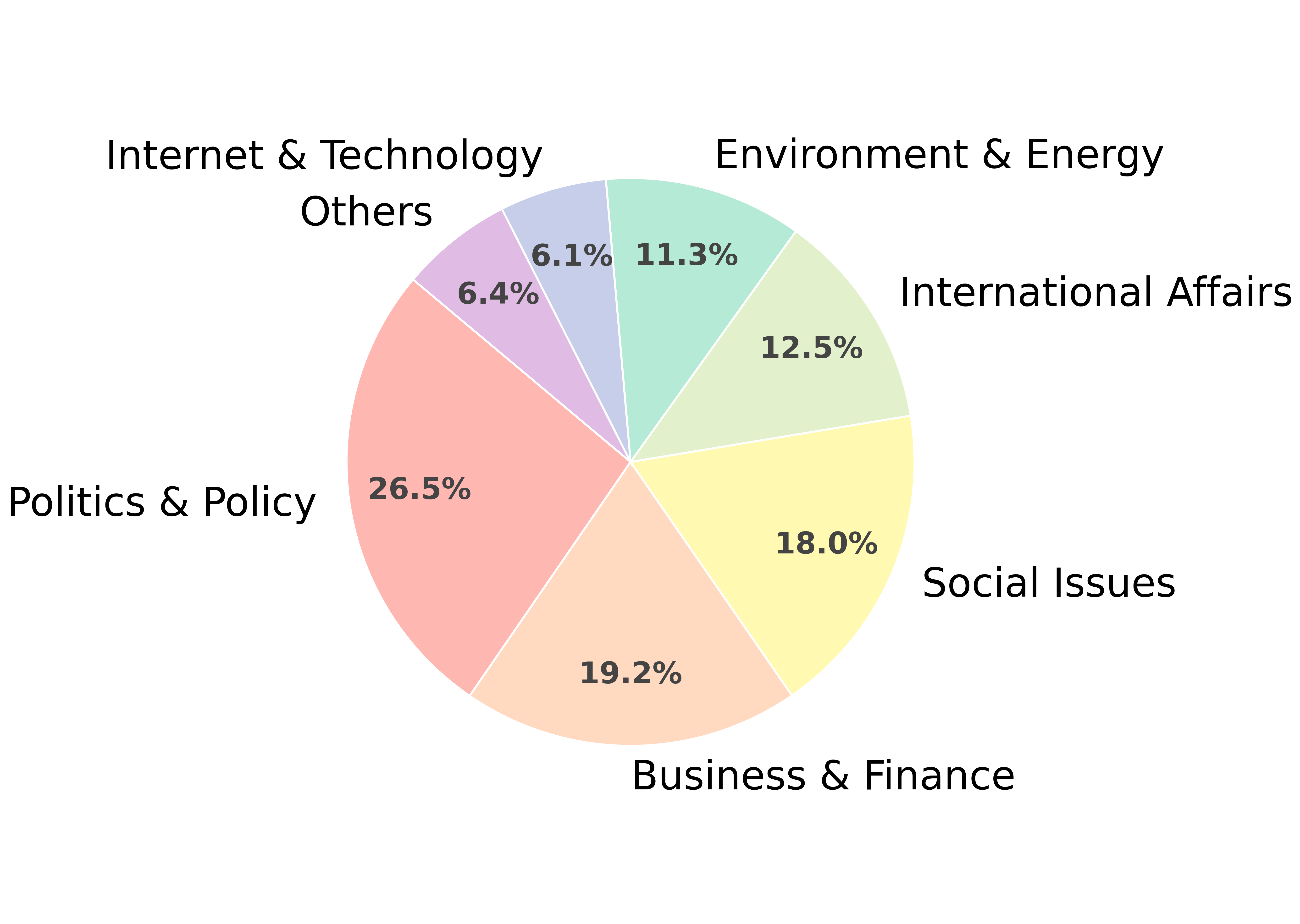
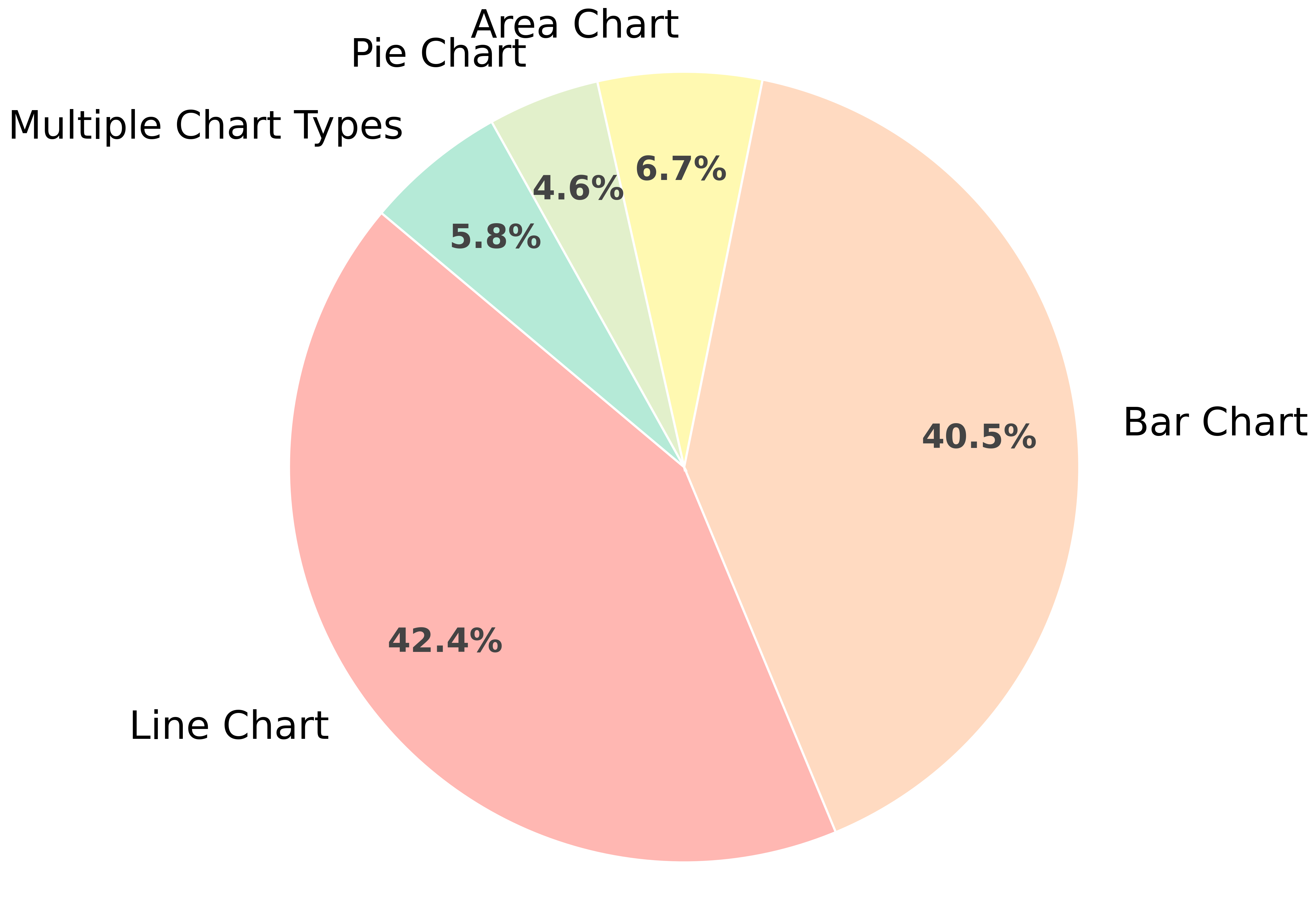
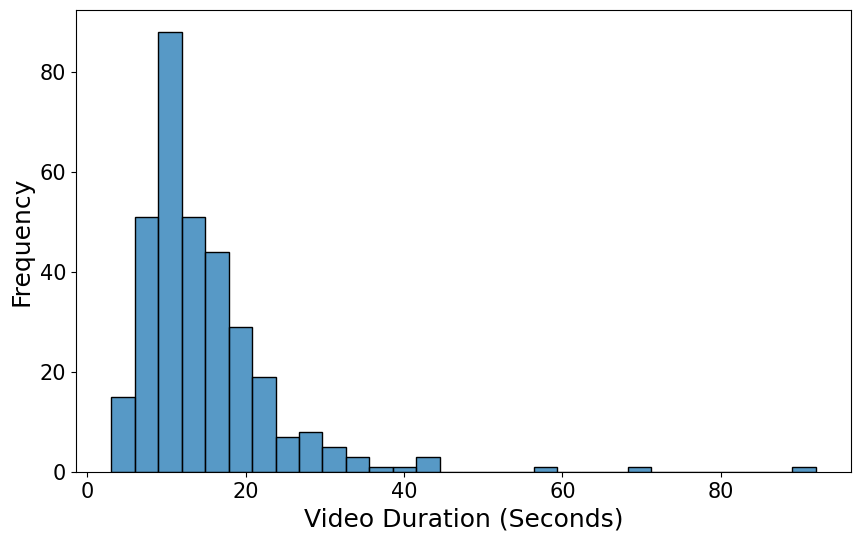
Figure 3: Distribution of topics demonstrating the breadth of real-world domains covered by the data reels.
Bar and line charts dominate, but area, pie, and multi-type reels are present, reflecting real-world practices where animation is leveraged for both emphasis and suspense. Narratives are long-form and tightly coupled with the visual storytelling; clips are typically under 20 seconds but with a heavy-tailed duration distribution. Annotation inherits a rich taxonomy of animation strategies (emphasis, suspense, comparison), enabling future work on narrative design spaces.
The generation task is formally defined: from a data table, narrative intent, and animation duration, generate a self-contained renderable HTML (D3.js-based), where synchronized animation and narrative subtitles yield a coherent data story consistent with the provided intent.
DATAREEL evaluates both direct, single-model prompting (using a prompt-refinement regime for high-fidelity HTML and narrative) and a structured, multi-agent framework. The latter decomposes the workflow into four LLM roles: Director Agent (narrative/animation planning), Plan Critic Agent (plan verification for narrative/intent fidelity), Coder Agent (HTML/D3.js generation), and Video Critic Agent (visual/temporal evaluation with iterative correction).
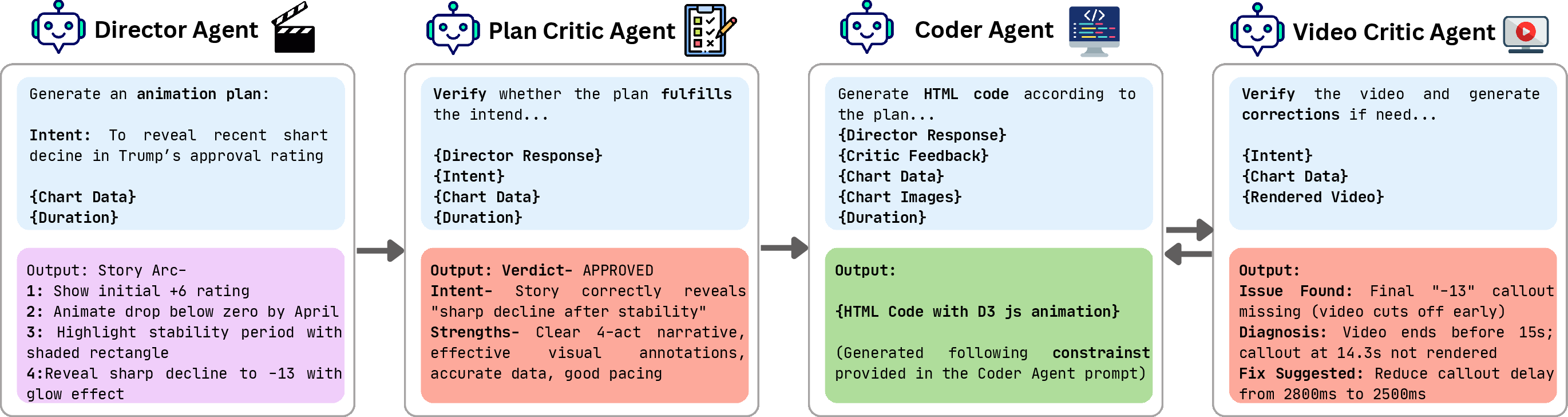
Figure 4: Schematic of the multi-agent framework with director, critic, coder, and video evaluation agents, closely mirroring the human authoring process.
The multi-agent system embodies human-inspired iterative refinement, interactive alignment, and robust code/narrative validation, overcoming limitations inherent in static, one-shot prompting.
Empirical Evaluation
Six VLMs—Gemini 2.5 Pro, GPT-4.1 Mini, GPT-5.4 Mini, Claude Opus 4.5, InternVL 3.5-8B, and Qwen 2.5 VL-7B—are evaluated on DATAREEL. Closed-source models significantly outperform open-source ones on composite metrics (narrative quality, informativeness, subtitle-transcript similarity, code correctness). Notably, Gemini 2.5 Pro achieves the highest overall score. The main factor undermining open-source model performance is sequence length (HTML often approaches context window limits), as well as poor code synthesis for multi-stage animation.
Video-centric evaluation utilizes a VLM-as-a-judge protocol and human annotator comparison, employing pairwise, blind evaluation on three axes: visualization quality, subtitle-animation coherence, and style consistency. The multi-agent approach is strongly preferred: in VLM-based evaluations, it is selected over the direct baseline in 138 out of 150 cases, and in human judgments, 101 of 150. Style consistency is a dominant factor—multi-agent outputs much more closely adhere to reference design, palette, and layout. Annotator agreement is moderate; filtering for consensus increases alignment with VLM-based judgments to ~80%.
Example agentic generations are provided with alignment of charts, story, and visual style:
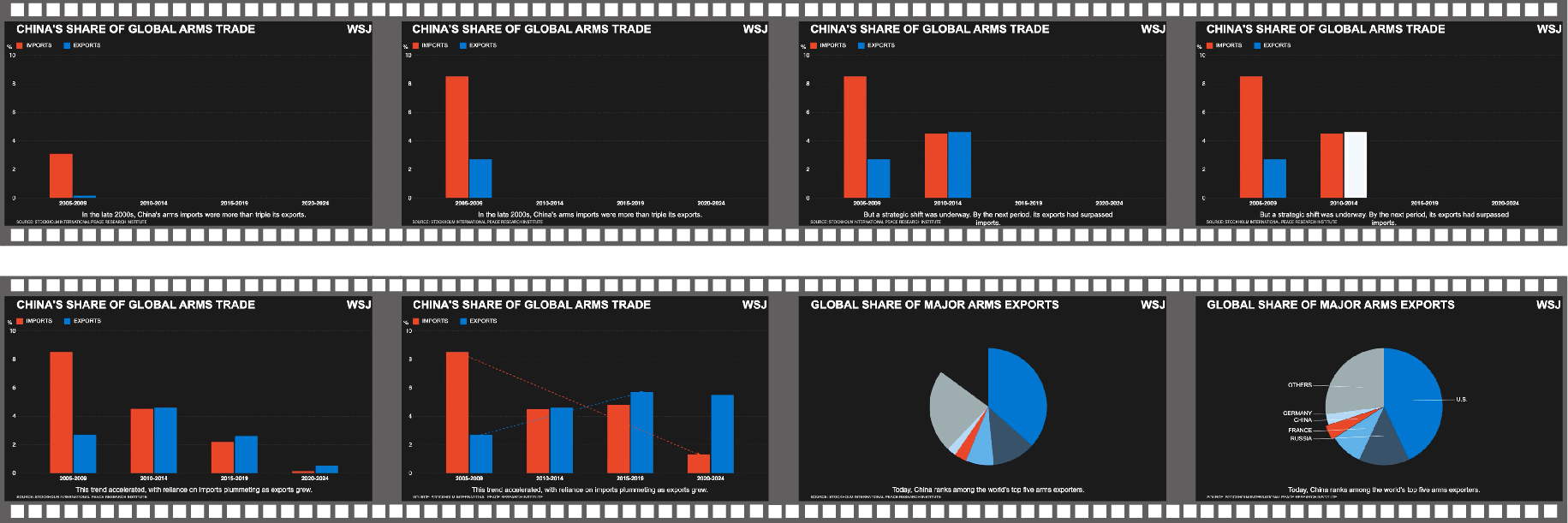
Figure 5: A datareel generated by the Multi Agentic Approach utilizing Gemini 2.5 Pro, demonstrating structurally synchronized and stylized visual-narrative output.
Qualitative Error Analysis and Challenges
Systematic annotation of common errors reveals persistent issues across all VLMs:
- No Animation: Many outputs are static, lacking described narrative motion.
- Narrative Synchronization Failures: Subtitles and animation are frequently desynchronized, impairing overall story coherence.
- Visual Overlap and Clipping: Chart objects and subtitles overlap or are clipped, degrading legibility.
- External Resource Errors: In attempts to visually match references, models often hallucinate invalid asset URLs leading to render failures.
- Instability and Jitter: Animations are sometimes non-deterministic or exhibit discontinuities.
- Poor Adherence to Reference Styles: Single-model outputs rarely match provided exemplars; multi-agent refinement closes this gap.
Illustrative examples of failure cases are provided for each model class:
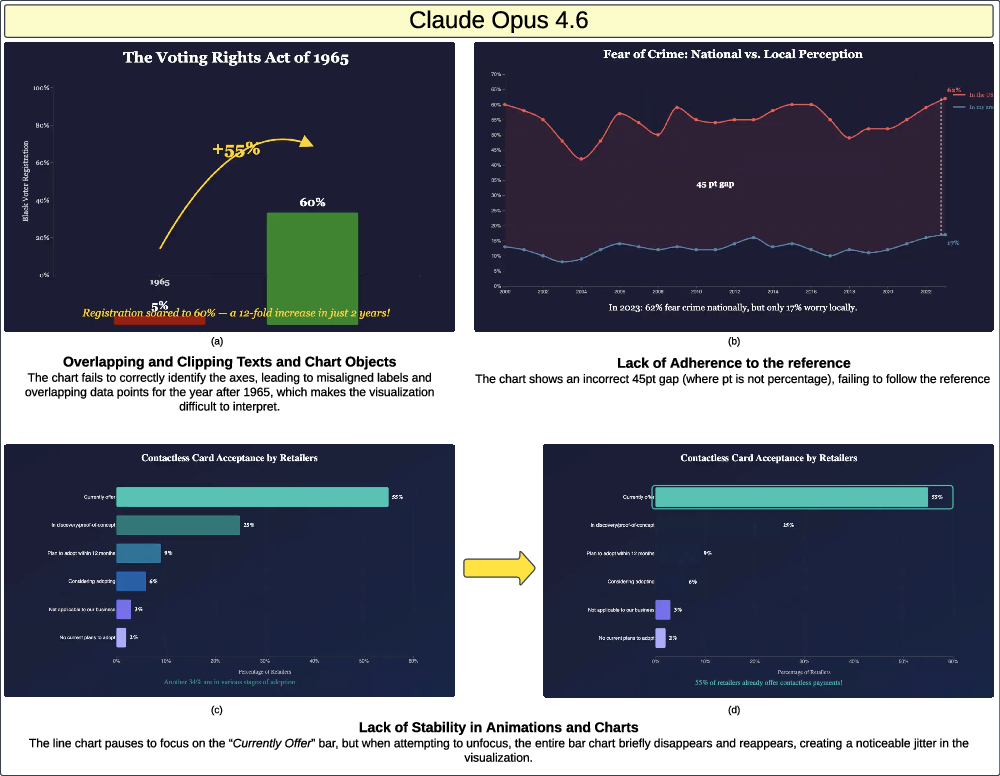
Figure 6: Claude Opus 4.6—instabilities, axis misassignment, overlapping elements, non-coherent chart transitions.
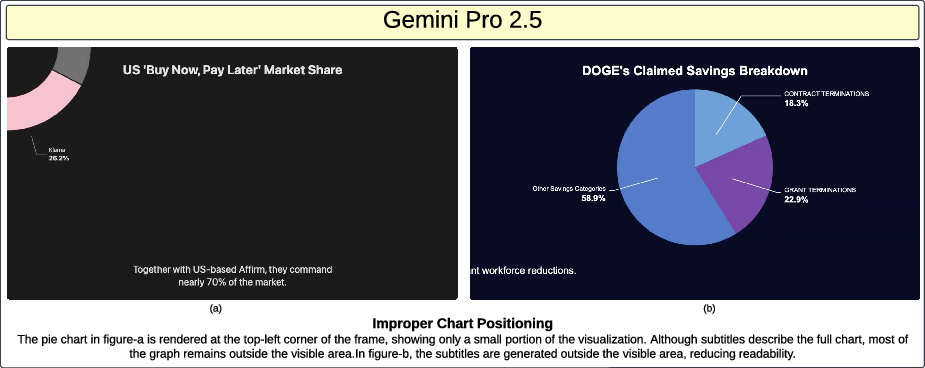
Figure 7: Gemini Pro 2.5—misaligned chart positioning and subtitles rendered outside the frame.
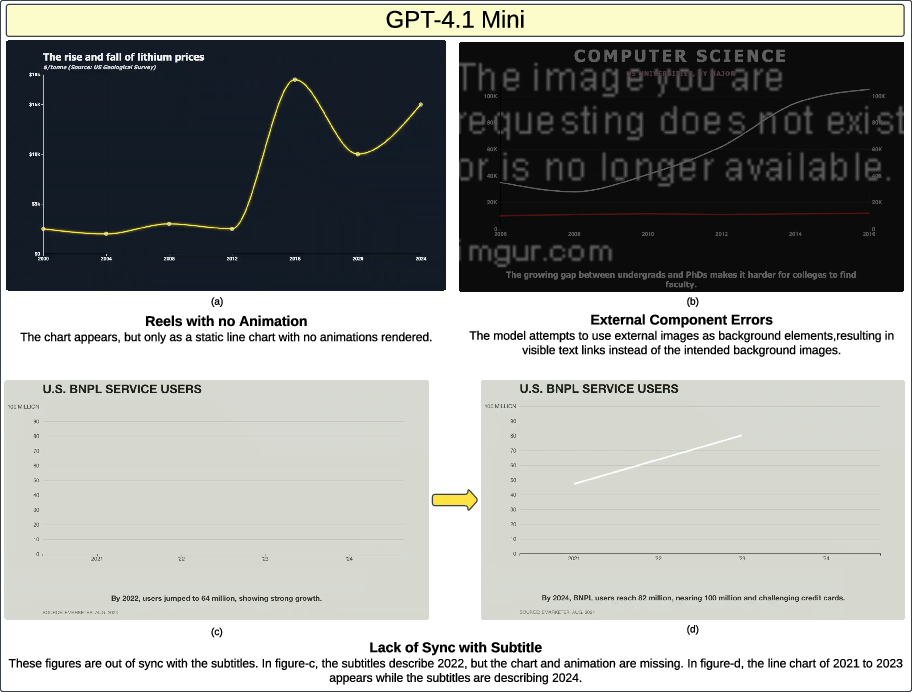
Figure 8: GPT-4.1 Mini—missing animations, asynchronous updates, hallucinated backgrounds.
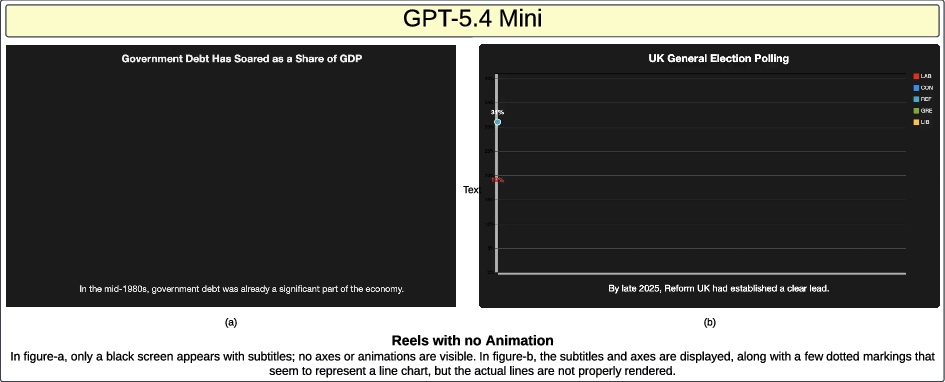
Figure 9: ChatGPT 5.4 Mini—absent graphical elements, scatter artifacts, incomplete line chart rendering.
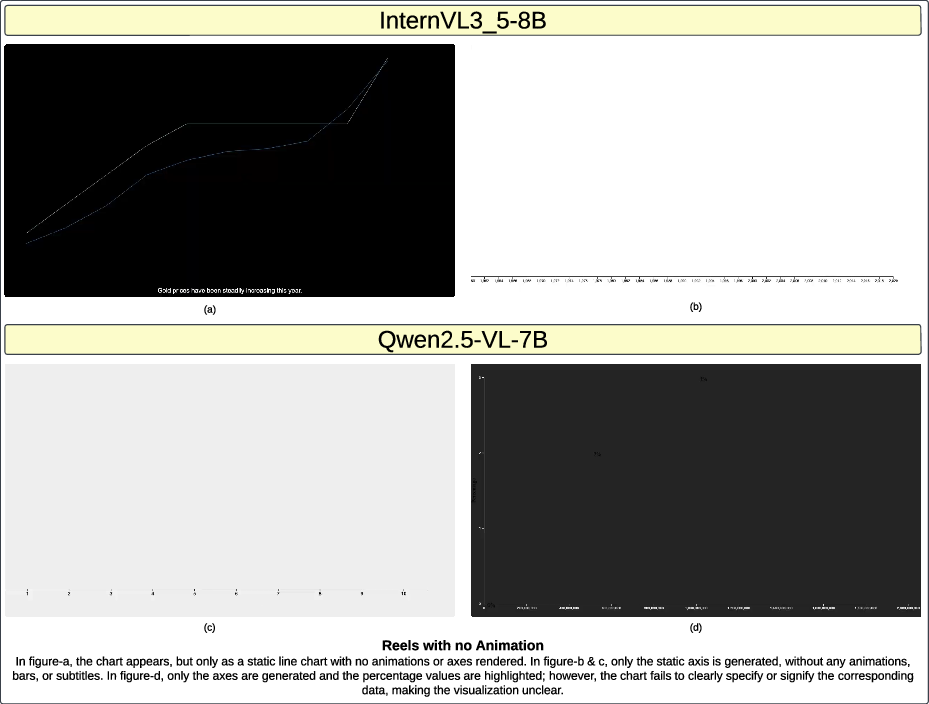
Figure 10: InternVL3.5-8B and Qwen2.5-VL-7B—incomplete axes, partial lines, or blank outputs, typical of smaller open-source VLMs.
Agentic multi-stage setups offer significant improvements, particularly in correcting visual, temporal, and narrative coherence issues.
Practical and Theoretical Implications
DATAREEL enables, for the first time, standardized measurement of LLM/VLM progress in automated multimodal data video synthesis—a pedagogically and socially important genre for information dissemination. The strong performance of agentic, multi-stage architectures relative to direct LLM prompting suggests chain-of-verification and interactive refinement are essential for complex multimodal artifact creation. Further, such systems approach (but do not yet match) the narrative, temporal, and stylistic subtlety of human-authored data storytelling.
Practically, this positions agentic VLM systems as a foundation for scalable, accessible video data communication in education, journalism, and public information. However, limitations in hallucination control, context window constraints, and style transfer fidelity remain.
Future Directions
The paper motivates several open problems:
- Extending context length and reasoning capacity for complex, longer-form data videos.
- Robust integration of visual reference style transfer.
- Direct end-to-end multimodal synthesis combining animation, synchronized audio, and video rendering.
- Systematic study of the interaction between human and agent-driven video authoring.
- Further benchmarking with human-authored data reels and generalization across domains.
Conclusion
DATAREEL establishes a rigorous benchmark and comprehensive agentic framework for automated data-driven video storytelling. Empirical results show that multi-agent architectures outperform single-prompt models, especially in stylistic fidelity and narrative synchronization. However, agentic VLMs still face significant limitations in animation logic, code execution fidelity, and visual design adherence. The research provides a strong foundation for future advances in agent-oriented, multimodal generative systems and highlights pathways for the practical deployment of LLM-enabled narrative visualization tools.

