- The paper introduces a friction-aware RL approach that closes the Sim2Real gap for underactuated spherical robots.
- It employs high-fidelity MuJoCo simulation with detailed friction modeling and consumer-based VIO for robust, real-time state estimation.
- Ablation studies and benchmarks reveal that the RL policy outperforms classical LQR in velocity tracking and station-keeping across varied environments.
Friction-Aware Reinforcement Learning for Humanoid Ballbots: The asRoBallet Approach
System Architecture and Reconfigurable Design
The asRoBallet system represents a reconfiguration of an overconstrained quadruped platform (asOverDog) into a robust, cost-efficient humanoid ballbot architecture, leveraging subtractive design strategies. Key actuator, computational, and sensor modules were transplanted from asOverDog, retaining high-torque, proprioceptive actuators and a high-bandwidth computation stack built atop off-the-shelf hardware. The transformation enables impact resilience without sacrificing dynamic capability or bandwidth. The spherical base utilizes three ETH-style omni-wheels, each with 12 rollers, coupled with a 220 mm SBR-coated steel sphere, yielding substantial underactuation. The upper body includes a 2-DoF head and two 4-DoF arms with tactile spheres, designed for minimal inertia and high COM stability.
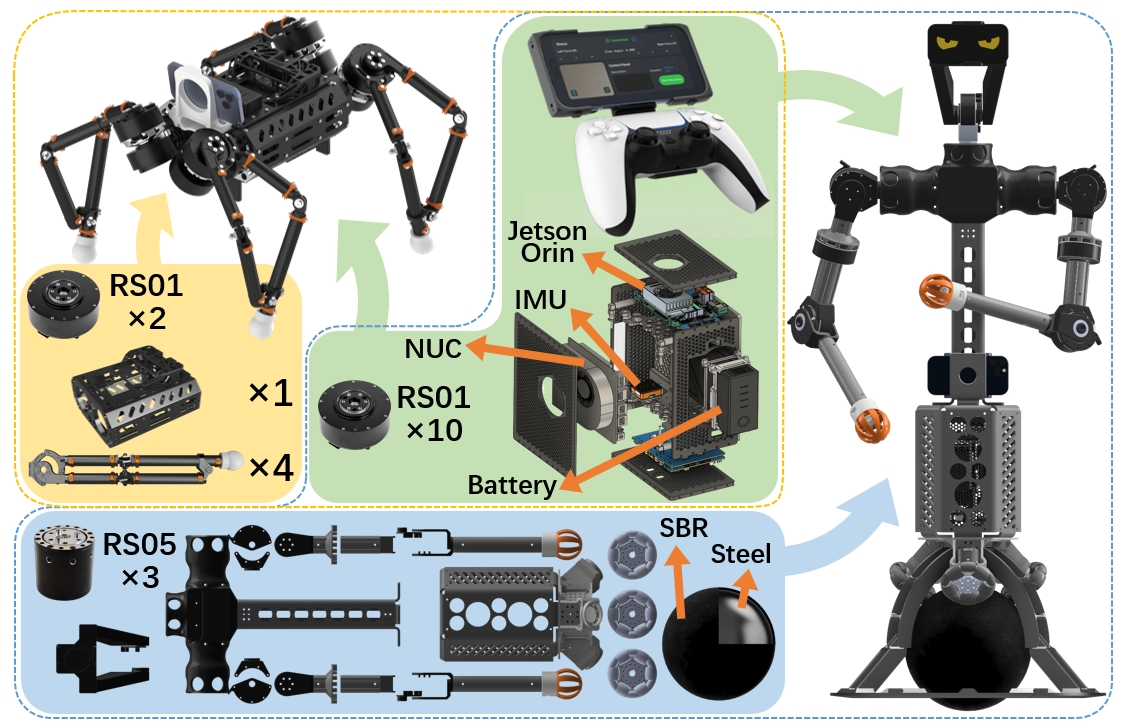
Figure 1: Structural transformation from asOverDog quadruped (top left) to the asRoBallet humanoid (right).
The perception stack is built around consumer electronics, notably the iPhone 12 Pro, utilized for VIO-based state estimation and teleoperation, eliminating the need for expensive industrial sensors. A unified iOS ecosystem enables single-operator orchestration of expressive gestures and body maneuvering, with integration of Apple devices for markerless human motion capture, facilitating scalable human-robot interaction.
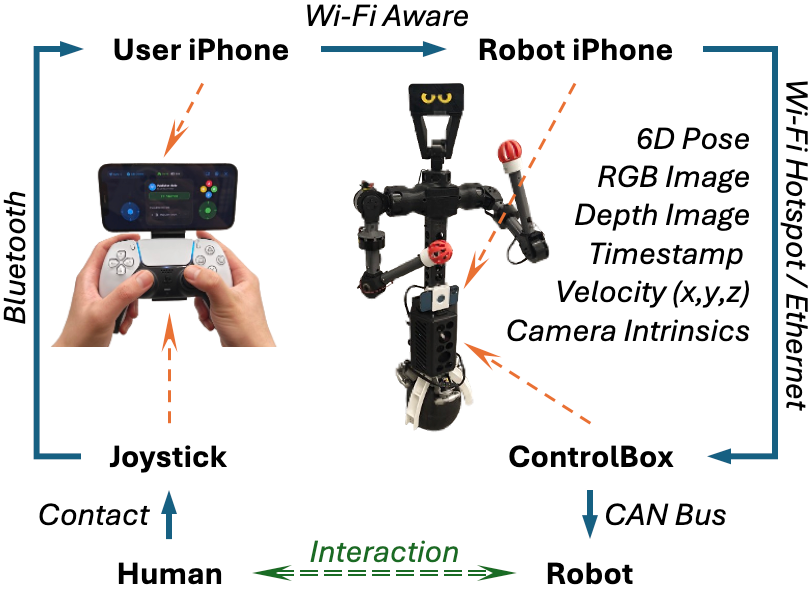
Figure 2: Repurposing mobile perception and computation from consumer devices enables affordable robotic platforms.
High-Fidelity Simulation of Spherical Dynamics
The core methodological innovation lies in the friction-aware modeling of underactuated dynamics within a MuJoCo simulation environment. The discrete mechanics of ETH-type omni-wheels, including roller handovers and parasitic vibrations, are explicitly modeled, capturing multi-dimensional friction channels at wheel-sphere and sphere-ground interfaces. The inclusion of a virtual ball joint between torso and sphere during training stabilizes early learning, while friction cone parameterization and contact impedance gradients ensure physically plausible stick-slip and rolling onset behaviors. Actuator friction is characterized experimentally, yielding a dead zone (Coulomb friction Dc) markedly larger than prior ballbots, influencing station-keeping jitter observed during real-world deployment.
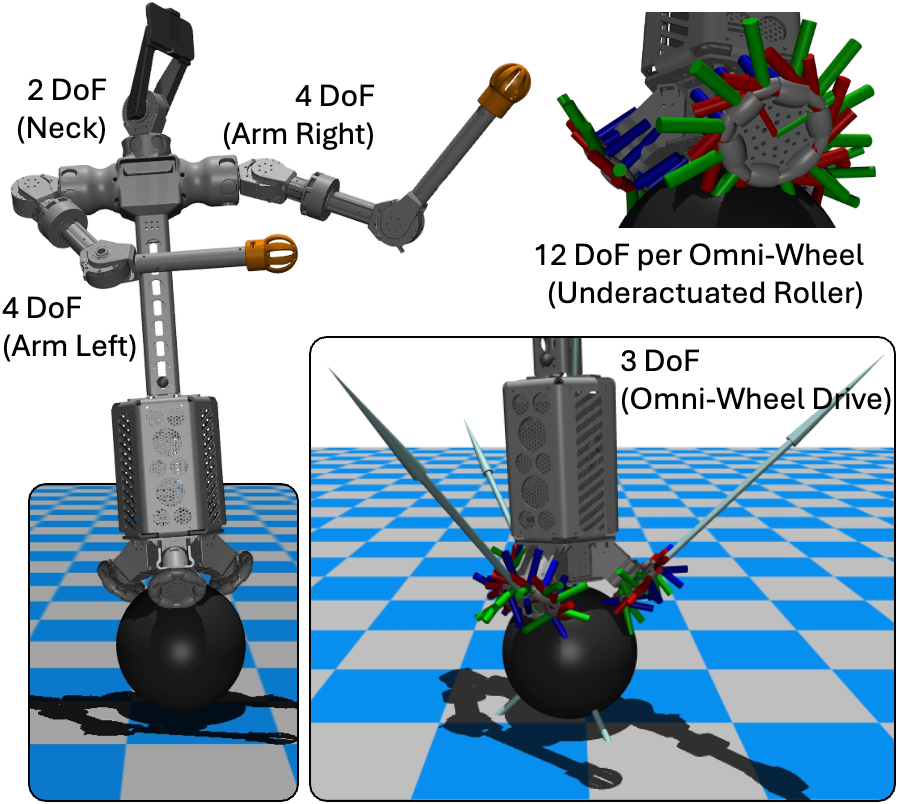
Figure 3: High-fidelity MuJoCo simulation of asRoBallet's underactuated spherical dynamics.
Friction-Aware Reinforcement Learning and Policy Shaping
The RL policy employs continuous torque control for the three omni-wheels, trained for both velocity tracking and station-keeping, with careful state and action space definition. The observation vector reflects task-dependence, with station-keeping augmented by VIO exteroception from the iPhone. Reward shaping combines velocity and heading tracking, uprightness preservation, and smoothness penalties, with episode resets driven by randomized orientation, velocity, and inertial payload configurations.
Domain randomization is critical―friction coefficients, actuator dead zones, and IMU sensor noise are sampled to ensure policy robustness. Ablation studies confirm that omission of realistic noise or friction perturbations significantly degrades Sim2Real transfer, and excessively sharp reward shaping (σ=0.1) penalizes deviations too aggressively, hampering convergence. Removal of the virtual ball joint yields unlearnable, sparse reward landscapes, highlighting its importance as a scaffold during policy training.
iOS Ecosystem for Real-Time Sensing and Interaction
The iOS application suite provides direct access to embedded sensors of Apple devices, covering ARKit-based pose estimation, IMU suit mapping, and peer-to-peer control. Evaluation of pose tracking demonstrated sub-5% error on position and sub-1.5% error on orientation versus ground truth from a UR7e arm, and network latency below 1.2 ms at 100 Hz. The app ecosystem enables not only intuitive human-robot interaction—including markerless whole-body retargeting—but also real-time data streaming and simulation visualization, with support for OpenUSD environmental models for broader research applicability.
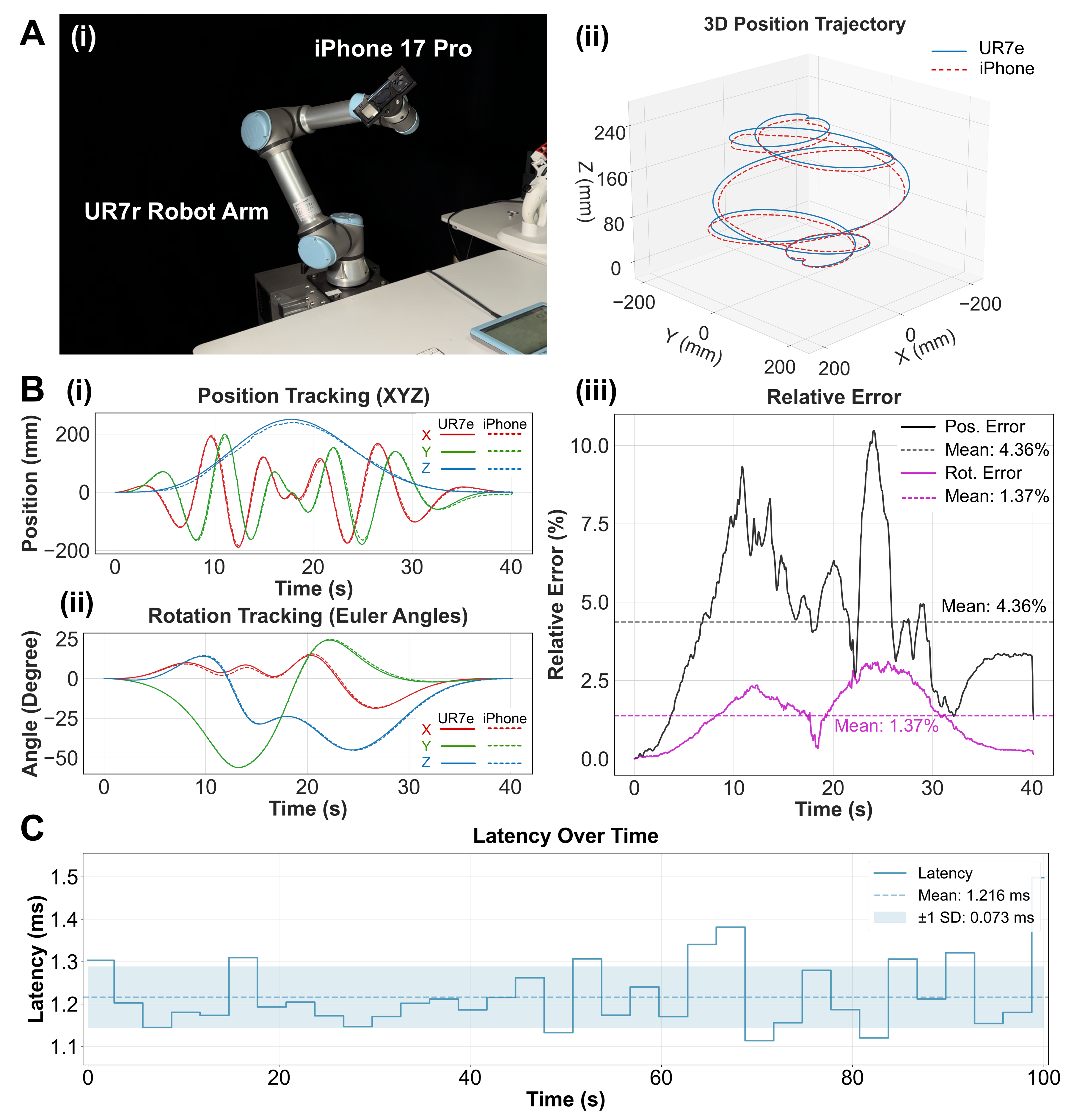
Figure 4: ARKit pose estimation accuracy and peer-to-peer latency confirmation for iPhone Pro.
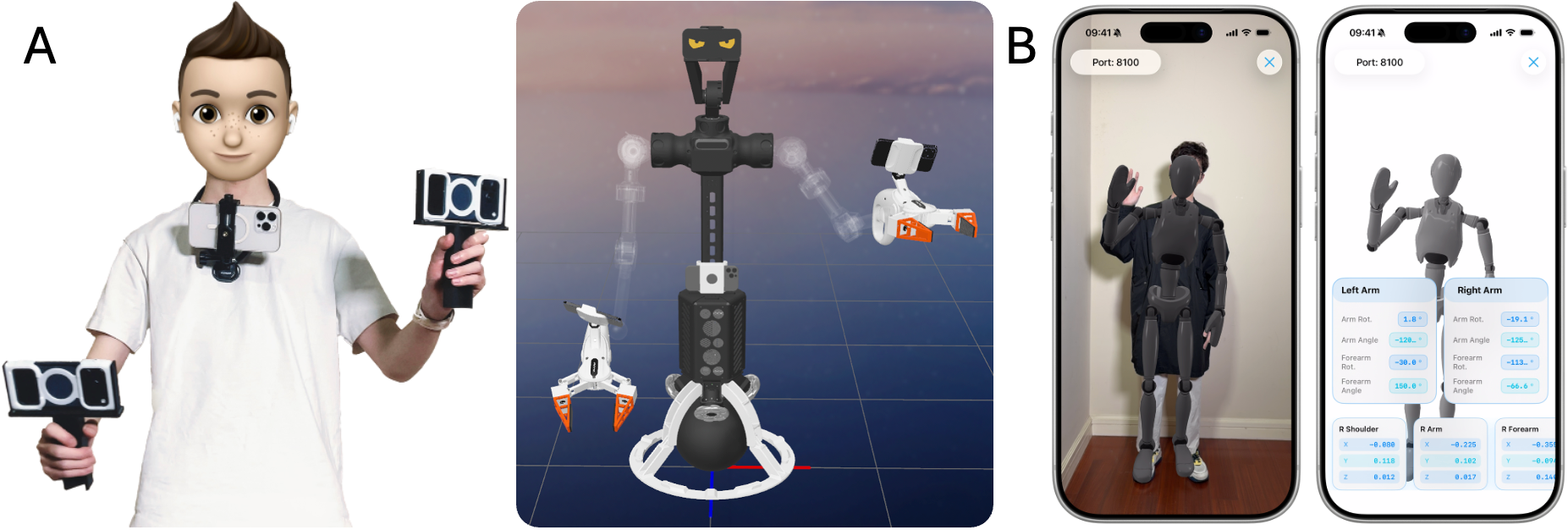
Figure 5: Scalable human-robot interaction via iOS ecosystem—joystick, IMU suit, and markerless motion capture.
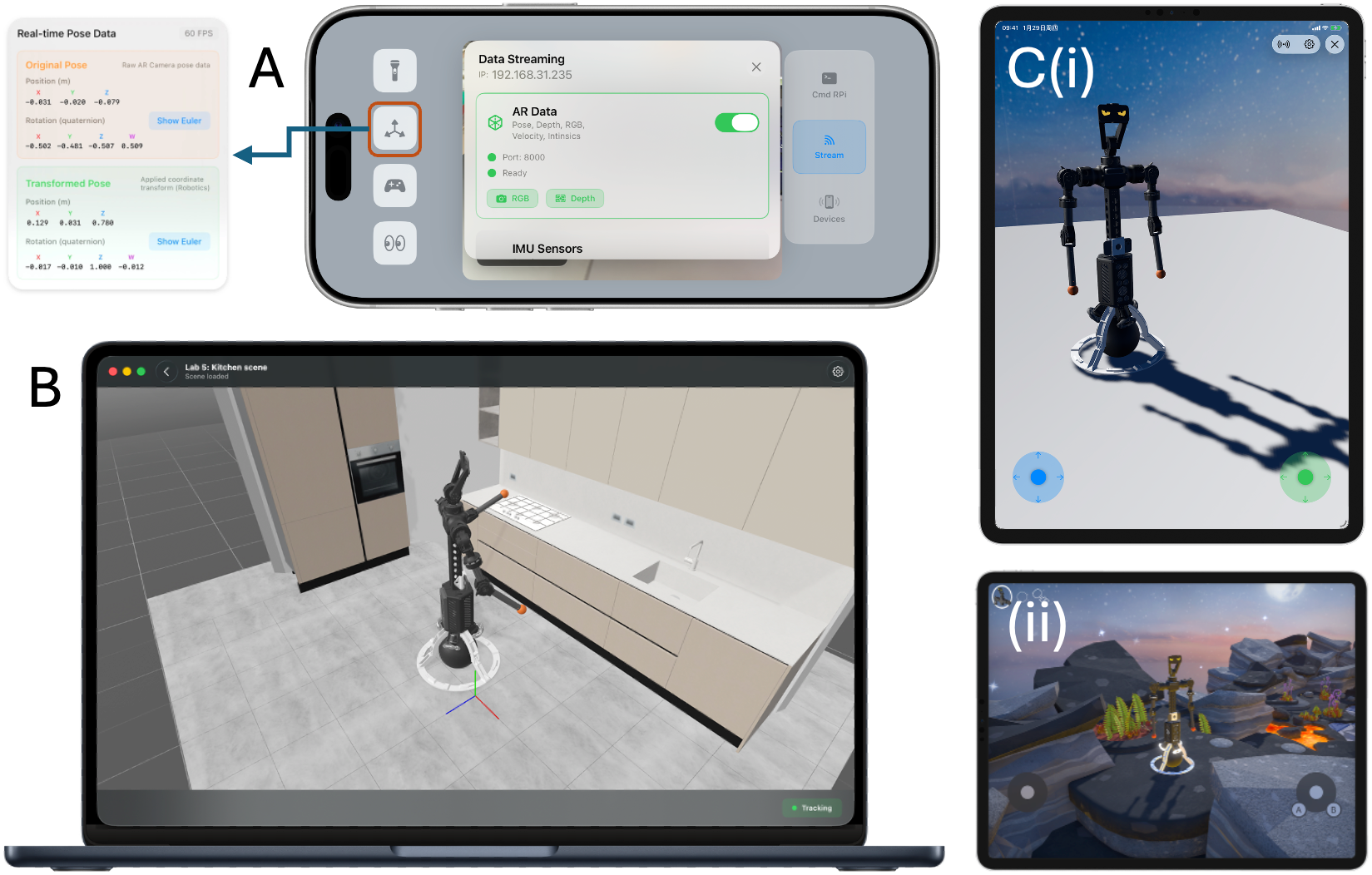
Figure 6: Multi-modal data streaming and interactive sim-like control in the asMagic iOS ecosystem.
Benchmarking, Ablation, and Numerical Results
Simulation experiments benchmark asRoBallet’s RL controller against LQR across escalating complexity: fixed arms, randomized friction, tilt, and arm pose. Numerical analysis reveals:
- Velocity tracking MAE (RL vs LQR): RL ≤ 4.0 cm/s (fixed), ≤ 6.6 cm/s (random pose); LQR ≥ 7.7 cm/s (fixed), ≥ 23.1 cm/s (random pose).
- Station-keeping success rates: RL maintains 100% across all scenarios; LQR success falls to 0% at random orientation and 6% with random pose.
- RL demonstrates greater robustness to violations of classical assumptions (friction, inertia, sensor noise).
Ablation confirms the importance of domain randomization, reward shaping, and task-relevant state encoding (CoM vs joint positions) for Sim2Real reliability.
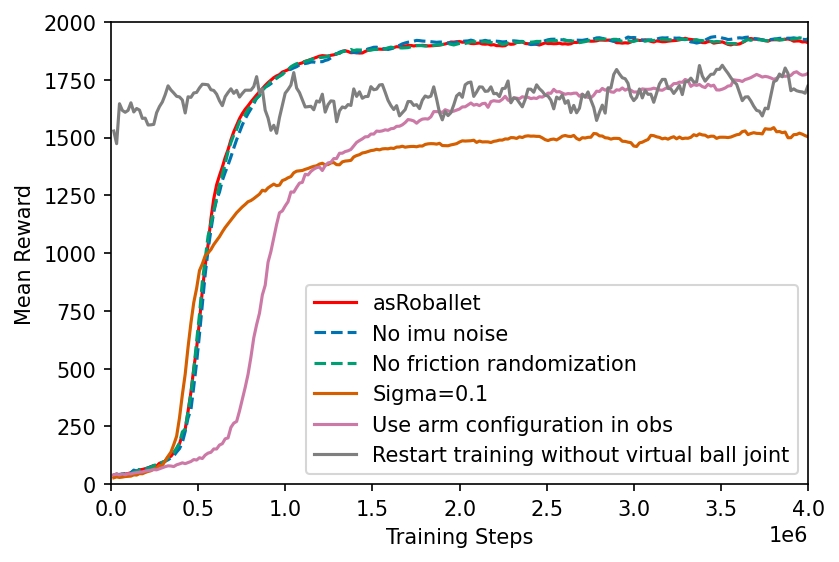
Figure 7: Velocity-tracking learning curves for RL policy and ablations, demonstrating convergence and stability.
Sim2Real Deployment
Zero-shot deployment of RL policies on real hardware was achieved, with asRoBallet operating robustly indoors and outdoors across heterogeneous floor textures and lighting, with documented transitions over obstacles and slopes. Station-keeping error remains under 5 cm on tiles and under 3 cm on a yoga mat; push recovery is demonstrated over displacements of 0.3 meters. Velocity tracking on office carpet yields a mean absolute error of 0.05 m/s, confirming strong alignment between simulation and hardware performance.
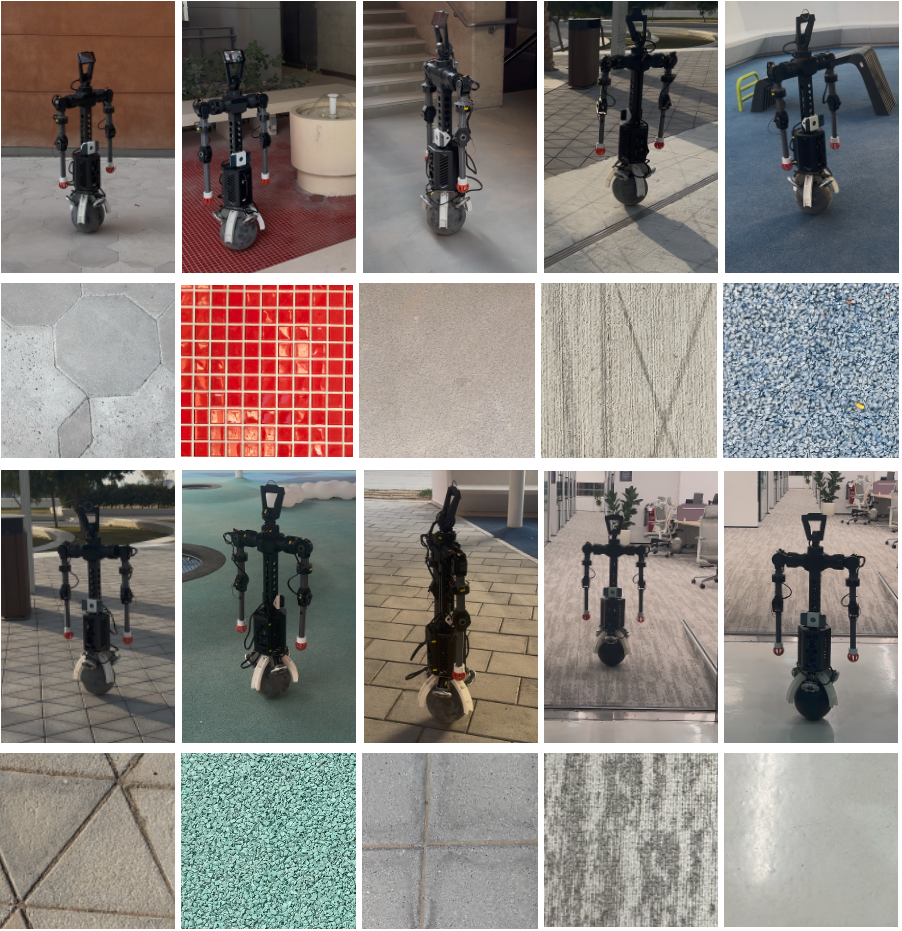
Figure 8: Successful Sim2Real deployment of asRoBallet across varied environments and obstacles.
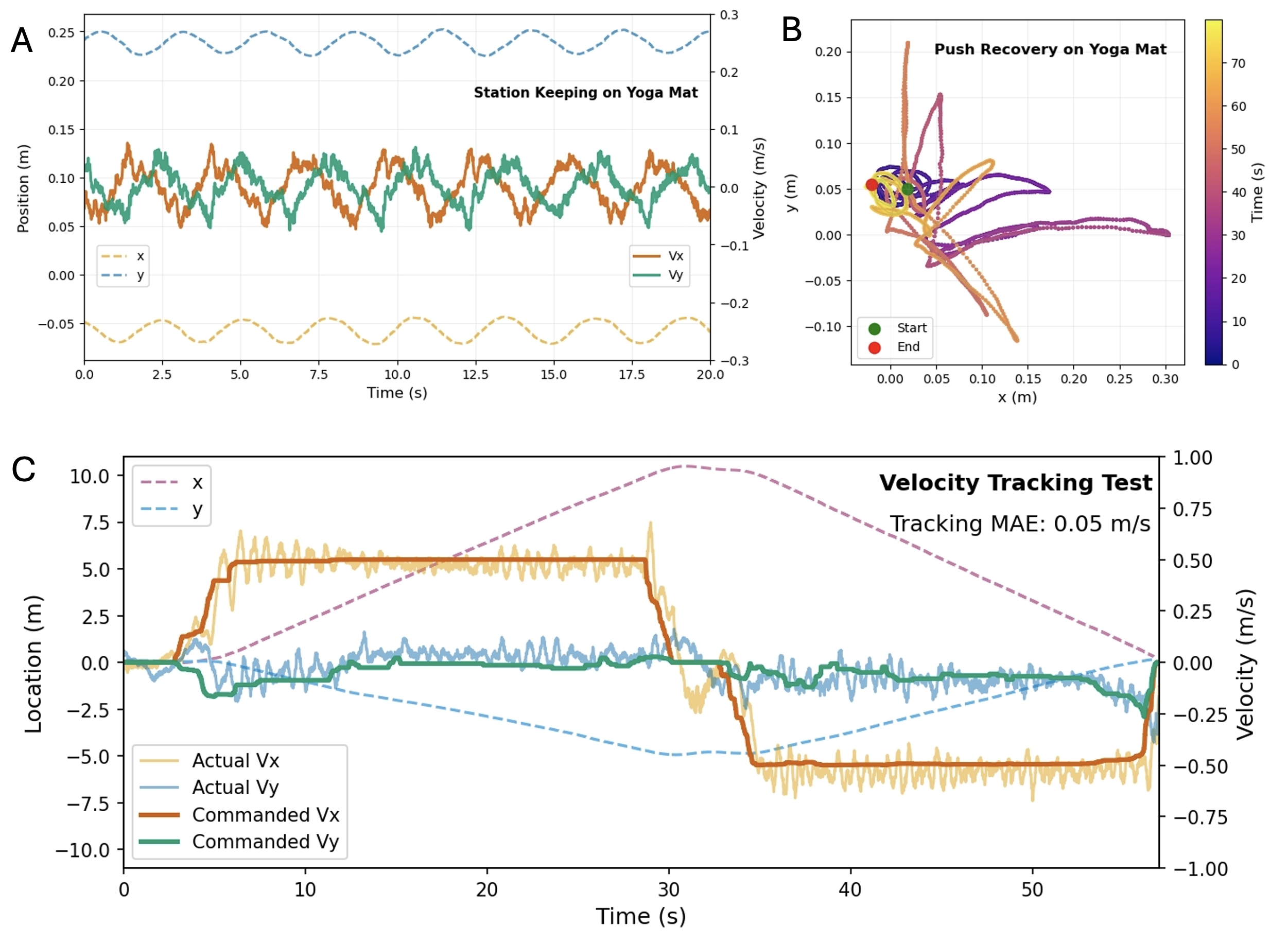
Figure 9: Real robot performance: station-keeping, push recovery, and velocity tracking accuracy.
Implications, Theoretical and Practical Considerations, and Future Directions
The asRoBallet platform establishes that high-fidelity tribological modeling is paramount for bridging the Sim2Real gap in underactuated spherical robots—a claim substantiated by numerical superiority over LQR baselines in disturbed settings. The system validates subtractive reconfiguration for cost-effective humanoid research platforms and demonstrates that consumer-grade devices are viable for high-bandwidth, low-latency control, democratizing access to advanced robotics.
The reliance on a virtual training constraint (ball joint) signals that reward landscape engineering and exploration scaffolding remain essential for learning in sparse environments. The actuator friction dead zone constraints introduce residual jitter, presenting design trade-offs for future hardware iterations. Proprietary VIO stacks present opaque pipelines in state estimation, which may complicate rigorous safety certification.
Going forward, exploration of active whole-body manipulation, direct visual-to-torque policy mapping, and multi-agent peer-to-peer coordination are expected. Vision-driven friction estimation learned from raw inputs would further close the Reality Gap. AsRoBallet's modular interface and app ecosystem are poised to support distributed collaborative tasks, advancing the scalability and versatility of humanoid ballbots for social and manipulation contexts.
Conclusion
This work demonstrates the feasibility of deploying friction-aware RL to humanoid ballbots, closing the historical Sim2Real gap by combining high-fidelity tribology modeling with domain-randomized learning and consumer-grade perception. The system outperforms classical control methods in robustness and accuracy across challenged operational envelopes, and achieves intuitive whole-body interaction via scalable mobile interfaces. Future extensions will address residual hardware and policy limitations, aiming toward dynamic, vision-driven manipulation and collaborative robotic behaviors.