- The paper’s main contribution is the rigorous definition and analysis of CaTherine wheels as surjective maps from S¹ to S², establishing universal correspondences among topological, combinatorial, and group-theoretic structures.
- Its methodology employs canonical decompositions, laminar relations, and zipper structures to connect low-dimensional topology with complex dynamics and hyperbolic geometry.
- The results offer practical implications for classifying pseudo-Anosov flows, advancing hyperbolic 3-manifold theory, and informing probabilistic models such as SLE and LQG.
CaTherine Wheels: A Synthesis of Topology, Dynamics, and Group Theory
Introduction and Motivation
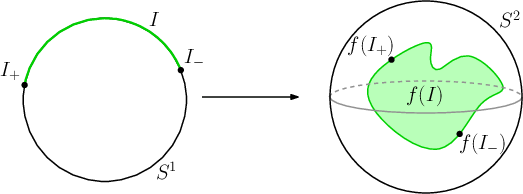
The concept of a CaTherine wheel—a surjective continuous map f:S1→S2 with the property that for every closed interval I⊂S1, the image f(I) is homeomorphic to a closed disk and f(∂I) is contained in its boundary—serves as the central object in this paper. The authors develop the theory of CaTherine wheels in broad generality, unifying diverse perspectives in low-dimensional topology, geometric group theory, and dynamics. Their framework creates a rigorous correspondence between combinatorial, geometric, and group-theoretic structures.
The definition is simple but powerful: each closed arc of S1 maps to a topological disk in S2 with boundary compatibility. This condition yields a rich structural theory, connecting to Cannon–Thurston maps, group actions, pseudo-Anosov flows, and modern probability (e.g., SLE and LQG decorated random surfaces). The paper's dual focus is (a) developing the intrinsic topology and combinatorics of these maps, and (b) establishing their universality as a 'dictionary' between quasi-isometric group invariants and classical geometric/topological features.
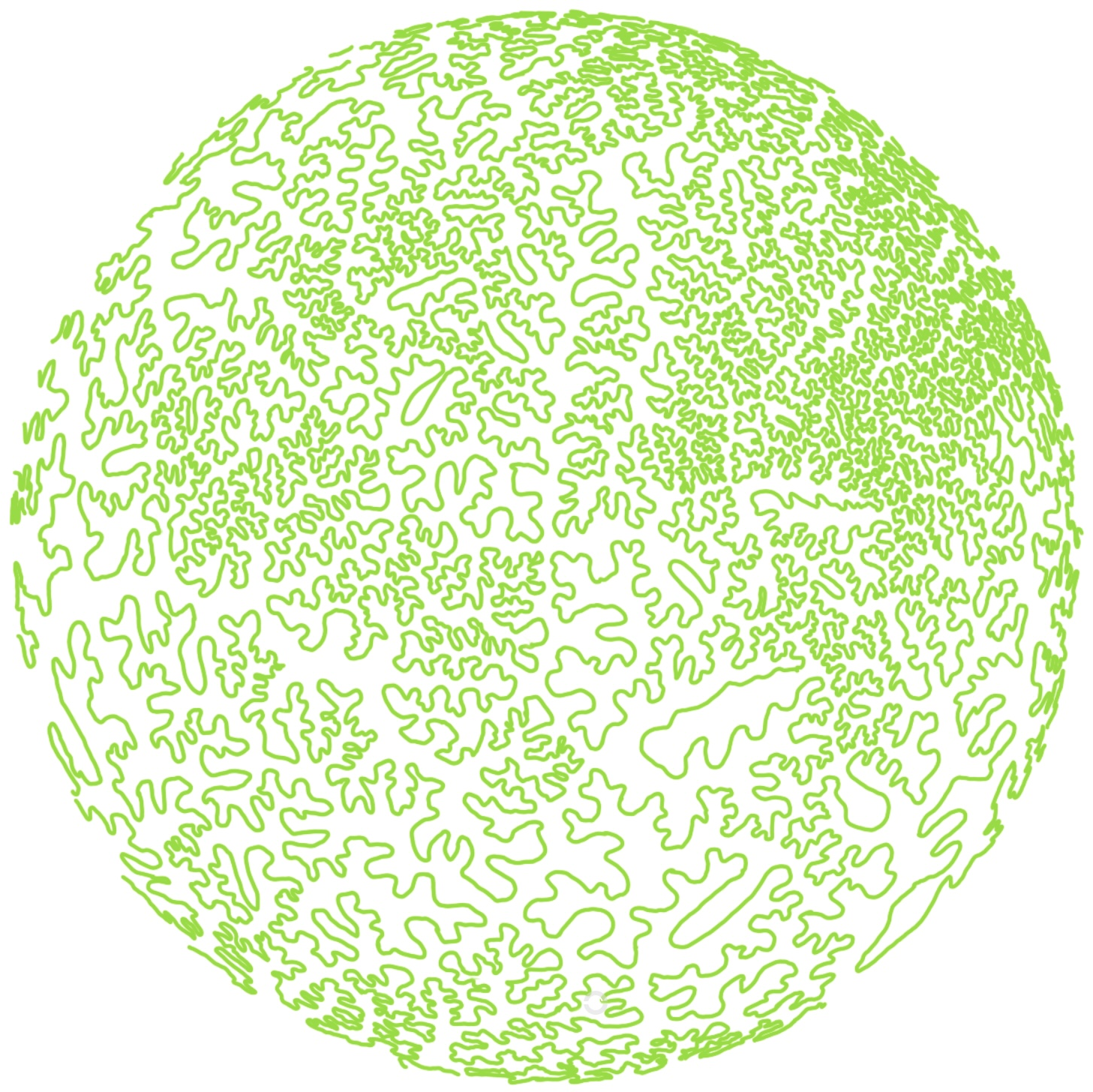
Figure 1: A CaTherine wheel; not to be confused with Figure~\ref{Saint_Catherine}.
Structural Theory and Canonical Decompositions
The main technical content is the characterization of CaTherine wheels in terms of canonical decompositions and associated equivalence relations on S1 (laminar relations) and path-connected dense trees ("zippers") in S2.
Fundamental Definition
A map f:S1→S2 is a CaTherine wheel if:
Basic lemmas show that I⊂S12 is nowhere locally constant and that images of disjoint intervals in I⊂S13 have disjoint interiors in I⊂S14.
Laminar Relations
The non-injectivity of I⊂S15 naturally endows I⊂S16 with an equivalence relation: two points are equivalent if they have the same image. Crucially, this splits canonically into two closed, unlinked equivalence relations (I⊂S17). Each gives rise to a lamination: a closed collection of pairwise unlinked unordered pairs (leaves) of I⊂S18.
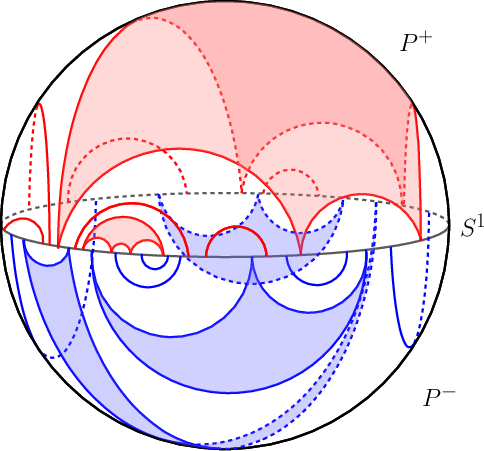
Figure 3: Nontrivial subsets I⊂S19 in f(I)0.
Each laminar relation partitions f(I)1 into (possibly Cantor) sets, governed by dynamical behavior, and constructs a laminar equivalence on the circle. The induced laminations have salient dynamics: so-called "rainbows" (nested sequences of leaves accumulating at points), and the absence of "perfect fits" (no two equivalence classes share a point).
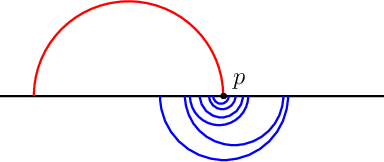
Figure 4: A negative rainbow at f(I)2.
Zippers
The images of the open hemispheres in an auxiliary sphere f(I)3 under the induced map f(I)4 yield two disjoint, dense, path-connected, tree-like subsets f(I)5 in f(I)6 called zippers. These are defined as increasing unions of finite trees, each point a cut point. Canonically associated with f(I)7, the structure of zippers captures the tree-like (fractal) branching behavior observed in many geometric and probabilistic constructions.
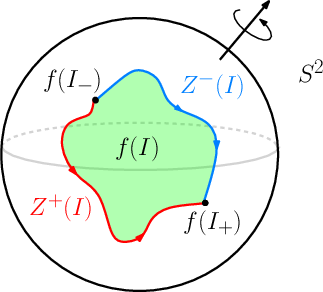
Figure 5: The oriented intervals f(I)8 in f(I)9.
Equivalence Theorem
A core result is the following canonical bijection:
- CaTherine wheels f(∂I)0;
- Pairs of laminar relations f(∂I)1 on f(∂I)2 with no perfect fits and no isolated sides;
- Hairy zippers f(∂I)3 with the strong landing property.
Group Actions, Dynamics, and Hyperbolic 3-Manifolds
A central tour de force is the identification of CaTherine wheels with structures in geometric group theory and 3-manifold topology—specifically, with f(∂I)4-actions for f(∂I)5 where f(∂I)6 is a closed hyperbolic 3-manifold.
Key Equivalence (The f(∂I)7-equivalence theorem):
- Orbit-equivalence classes of pseudo-Anosov flows (without perfect fits) on f(∂I)8;
- f(∂I)9-equivariant CaTherine wheels up to conjugacy;
- Minimal S10-zippers;
- Connected components in the space of uniform quasimorphisms on S11.
Practically, this amplifies the theory of fibrations of hyperbolic 3-manifolds, Thurston norm faces, and coarse geometry invariants. Orbit-equivalence classes of (non-suspension) pseudo-Anosov flows correspond to (non-fibering) uniform quasimorphisms, translating Gromov’s coarse geometric data into laminar/lamination and topological disk structures.
Point Set Topology and Decomposition Theory
A technical novelty is the use of canonical decomposition theory to analyze and classify these objects:
- Upper semi-continuous decompositions of the sphere and disk;
- Moore’s and Bing’s shrinkability theorems to parametrize when such quotient maps yield S12 again;
- The property of "hairiness" (every arc in the zipper has side-branches);
- The "strong landing property" for rays in zippers.
These tools ensure that the quotient spaces and parameterizations constructed from laminar data or zippers are topological 2-spheres and that CaTherine wheels are uniquely characterized by their decomposition data.
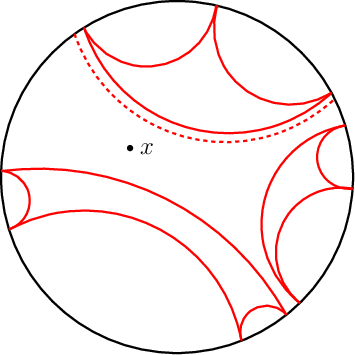
Figure 6: The union of all decomposition elements yields all of S13.
Pseudo-Isotopy, Embeddings, and Uniqueness
Every CaTherine wheel admits a unique (up to homotopy) pseudo-isotopy to an embedding—these are not self-bumping points at the boundary of the space of smooth embeddings. The uniqueness comes from a refined analysis using Kerbs’ invariants (metrics measuring how intervals shrink or get pinched under pseudo-isotopies), indicating robust topological stability. In contrast, most singular maps at the frontier correspond to pathological, "self-bumping" points, a phenomenon proven by explicit zigzag constructions.
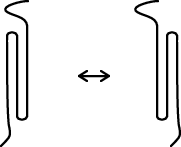
Figure 7: Two embedded intervals that are close as maps but not close through embedded maps.
Dynamics: Endomorphisms, Expanding Maps, and Thurston Theory
The theory extends to encompass cases where the map S14 admits dynamical symmetries—endomorphisms S15 such that S16—as in rational or postcritically finite branched covers, matings of Julia sets, and expanding Thurston maps. For example, canonical "mating" procedures in complex dynamics yield CaTherine wheels with dense fractal zippers, reflecting polynomial dynamics on Julia sets.
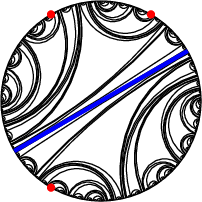
Figure 8: The Julia set for S17 is the quotient of S18 by the laminar relation for the degree 2 major S19.
The paper quantifies when these yield honest CaTherine wheels, when only generalized (P-CaTherine) wheels, and connects the critical combinatorics of laminar relations (e.g., absence of perfect fits) to the existence of conformal models.
Applications: Probability, SLE, and LQG
Remarkably, the unifying theory accommodates probabilistic objects:
- Whole-plane S20 (S21) random curves almost surely yield CaTherine wheels; their zippers correspond to the geodesic trees of LQG metrics.
- For LQG random surfaces, metric trees associated to geodesics produce (with high probability) the half-zippers corresponding to suitable laminar equivalence relations.
These connections align discrete geometric structures in probability with the canonical topological dictionary developed in the paper.

Figure 9: Arcs in S22 for S23-CaTherine wheels for S24, visualizing the evolution of zipper structure as group parameters vary.
Numerical and Boundedness Results
The authors provide explicit numerical estimates for the Hausdorff dimension of zippers in families of CaTherine wheels associated to S25-manifold groups under Dehn surgeries, showing strictly sub-2 dimension, and bounded preimage cardinality for S26-quasicircle CaTherine wheels. They further state and prove compactness/finiteness theorems for S27-CaTherine wheels under group-theoretic and geometric constraints (injectivity radius, absence of parabolics).

Figure 10: A sequence of approximations to S28 for complex multiplication examples, showing geometric refinement of the disk image.
Implications and Outlook
Practical Implications: The theory provides essential tools for translating between geometric, dynamical, and group-theoretic data under broad circumstances. The canonical correspondences enable the classification of flows, quasimorphisms, and laminar data in hyperbolic group boundaries. In dynamics, the parameterization of Julia sets and the comprehension of polynomial mating phenomena benefit from these constructs. Probabilists may use these tools to encode properties of random planar maps or quantum gravity surfaces in topological or combinatorial invariants.
Conclusion
The authors present a comprehensive and foundational theory of CaTherine wheels, establishing a universal correspondence between combinatorial (laminar), topological (pseudo-isotopy class), group-theoretic (uniform quasimorphism), and geometric (zipper) avatars of the same abstract object. The framework is robust to generalizations and applications, connecting deep areas such as S29-manifold topology, geometric group theory, complex dynamics, and modern probability. The structural theorems, as well as the detailed analysis of equivalence, stability, and dynamical properties, position CaTherine wheels as central constructs in the landscape of low-dimensional geometry and dynamics.