- The paper demonstrates that integrating AI-generated personas into OSS workflows enhances empathy by providing actionable user impact insights.
- The paper employs a React-Django architecture with LLM-based persona synthesis, enabling low-barrier generation and transparent issue mapping.
- The paper’s user study reveals improved issue responses, highlighting both empathy-driven and utility-driven engagement among developers.
Fostering User Empathy in OSS Development with PersonaFlow
Background and Motivation
Open-source software (OSS) projects exhibit a persistent challenge in bridging the gap between developers and users. Issue trackers and discussion forums primarily capture technical dialogue, often sidelining user goals, frustrations, and contextual information. Conventional persona approaches, known to facilitate empathy and user-centered design, are rarely applied in OSS due to resource and expertise limitations. Emerging generative AI technologies enable automated persona creation, but solutions must address adoption barriers and mitigate the risk of misrepresentation and bias. "Putting a Face to the Issue: Fostering User Empathy of Open Source Software Developers With PersonaFlow" (2604.24478) introduces PersonaFlow, an integrated tool leveraging LLMs to generate and embed personas seamlessly within the OSS issue management workflow.
System Design and User Interaction
PersonaFlow adheres to four core design goals: providing actionable user impact insights (DG1), enabling low-barrier persona generation (DG2), integrating flexibly with OSS workflows (DG3), and maximizing transparency and user control (DG4). The system is architected with a React frontend and Django backend, interfacing with LLMs (GPT-4o, Gemini 1.5-Flash) for persona generation, merging, and issue-to-persona mapping. Celery-powered asynchronous processing ensures responsive user interactions during computationally expensive workflows.
The tool is structured into three interactive workflows:
Repository Analysis and Persona Generation: Users input repository URLs, configure generation parameters (number of personas, external documentation), and initiate persona synthesis. The tool visually tracks generation stages and presents results for review, edit, merge, or regeneration.
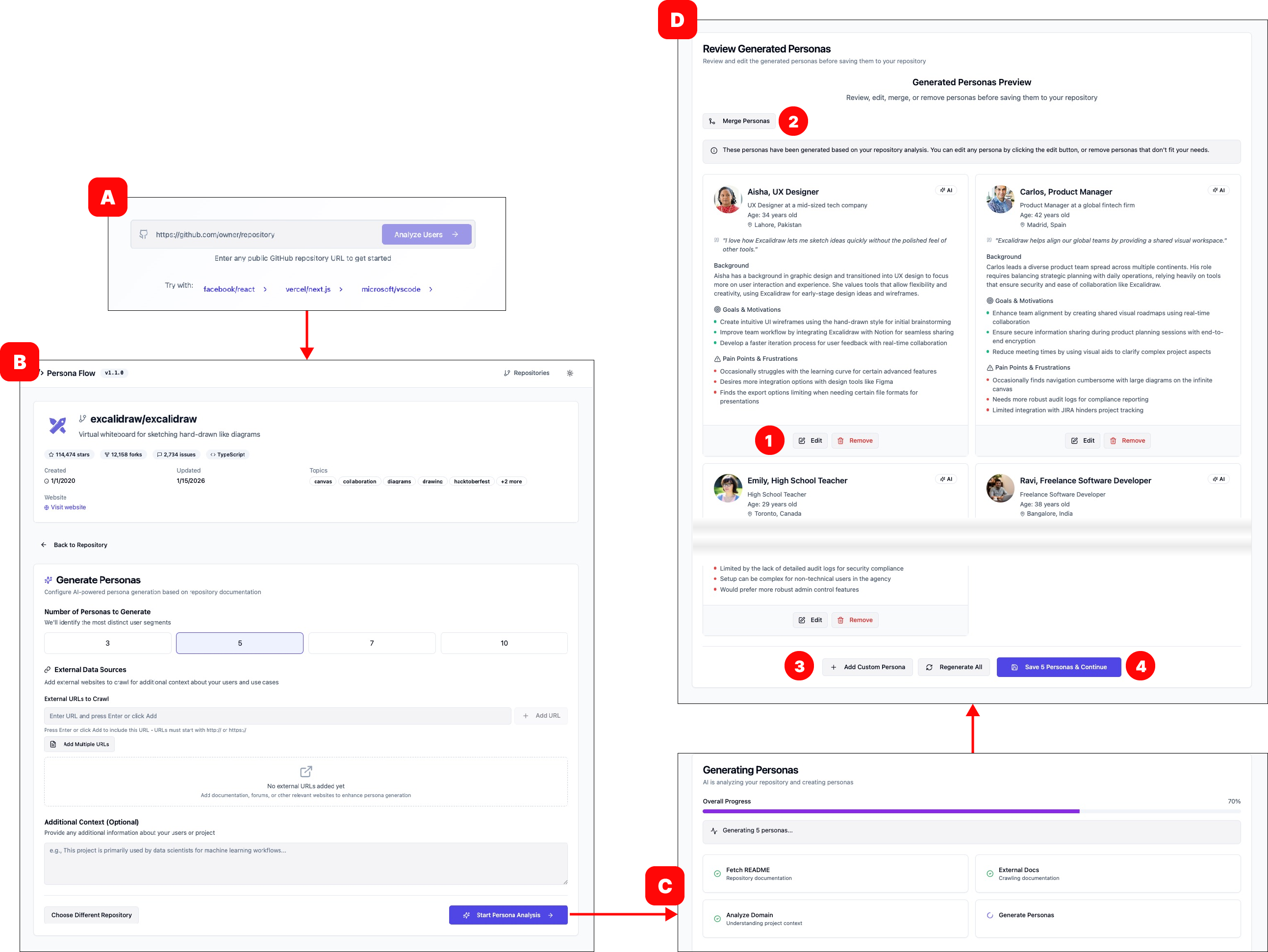
Figure 1: PersonaFlow's repository-driven persona generation integrates minimal user input with transparent, editable synthesis and review.
Persona Management and Analytics: Developers inspect, curate, and extend personas, perform manual edits and merges, and analyze coverage and issue mapping statistics. The analytics dashboard exposes gaps and distribution patterns in user representation.
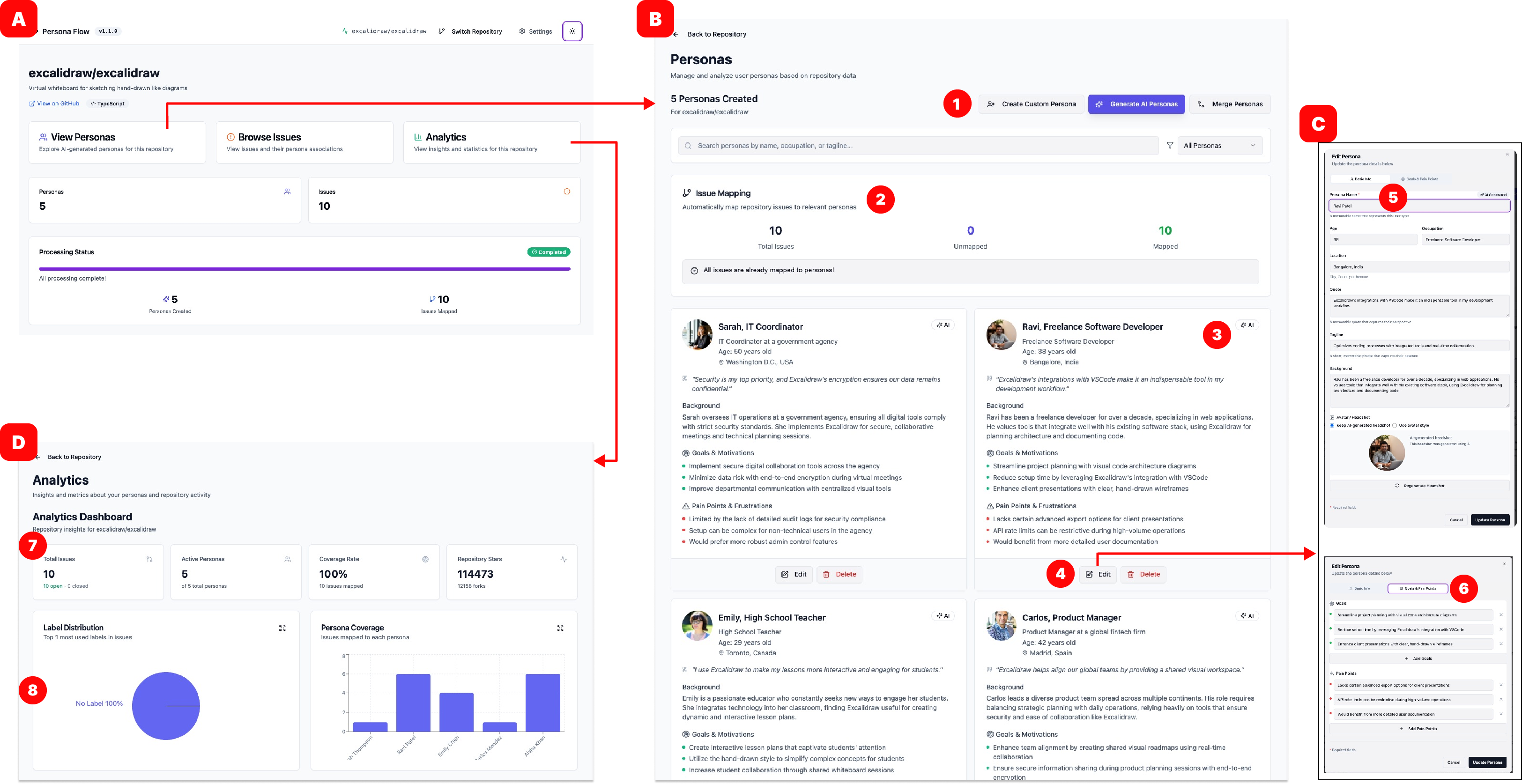
Figure 2: Dashboard-centric persona management and analytics visualize persona coverage and facilitate granular refinement.
Issue Browsing and Management: Issues imported from GitHub are mapped to relevant personas, annotated with confidence scores and reasoning, supporting both GitHub-style and persona-grouped views. Developers can filter, override, and adjust associations, streamlining triage and prioritization with explicit user impact signals.
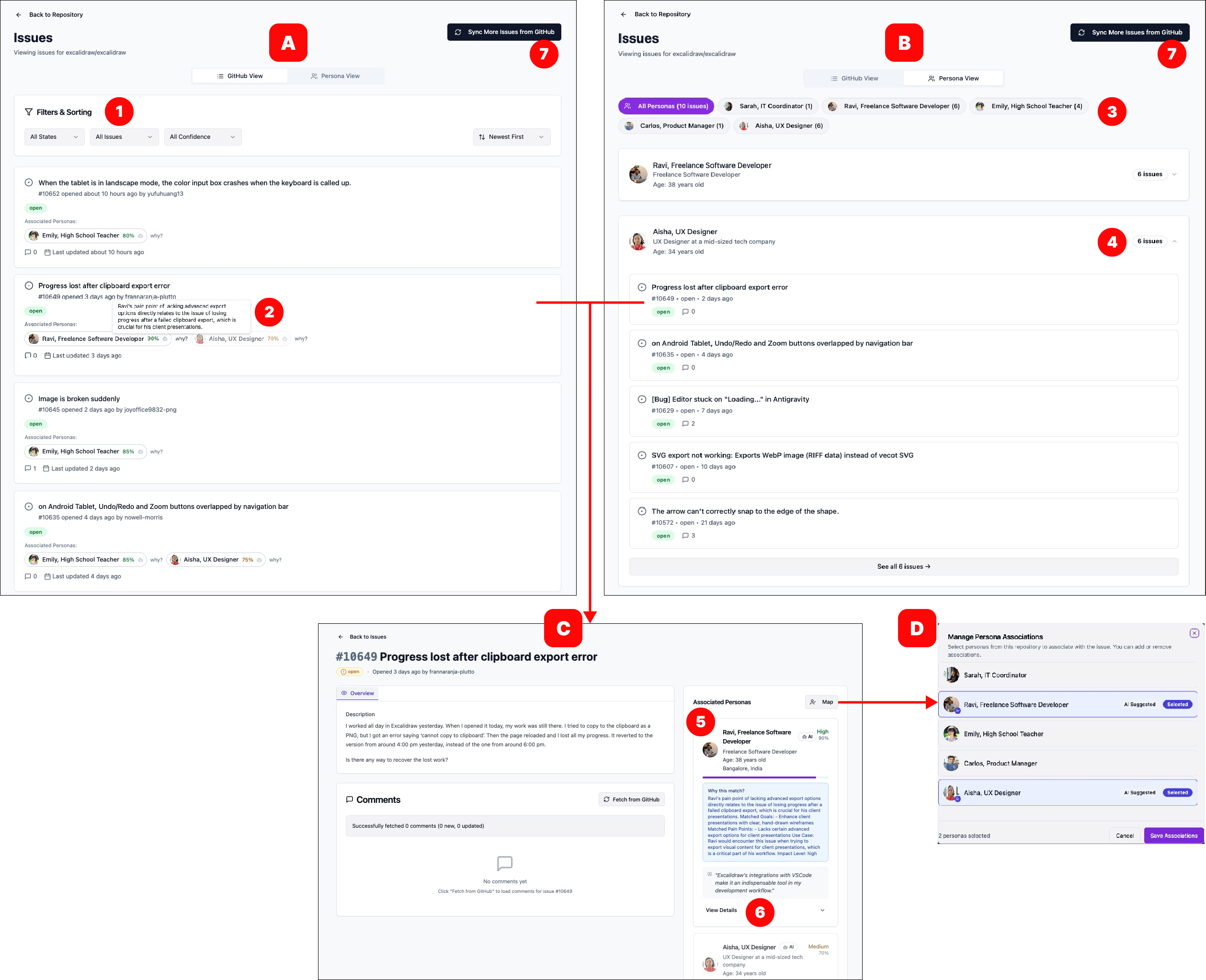
Figure 3: PersonaFlow overlays issue lists with mapped persona cards, confidence scores, and actionable rationale, enabling perspective-shifting triage.
This architectural flow is unified across UI and backend, with explicit prompt chaining for link discovery, user insights extraction, domain analysis, persona synthesis, and issue-persona matching.
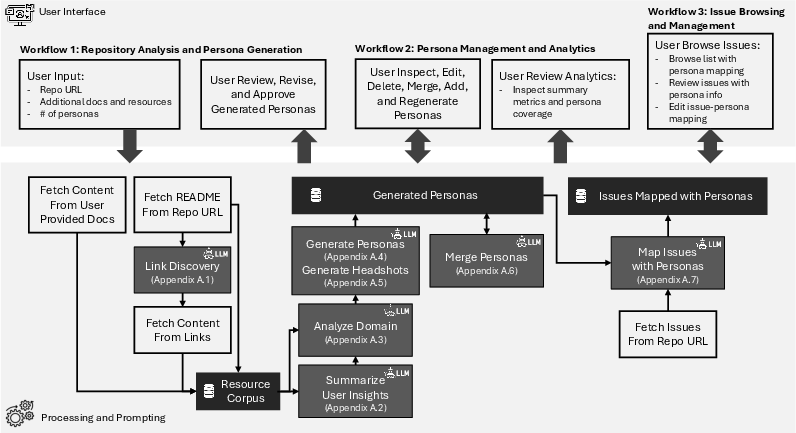
Figure 4: PersonaFlow connects user workflows to backend prompt pipelines; each stage is isolated for transparency and auditability.
Persona Generation and Issue Mapping: Quality Assessment
Empirical examples (Table 1 in the paper) demonstrate that PersonaFlow produces personas (characterized by roles, goals, and pain points) grounded in repository artifacts and mapped to issues via evidence-based scoring and rationale. The system avoids keyword-based fallacies and superficial matches by enforcing anti-pattern checks and requiring explicit feature-pain point alignment. Generated personas collectively span technical, business, customer-facing, and external roles, and cover diverse product features and usage contexts. Mapping reasoning illustrates impact pathways for each persona; for example, associating a UI bug with a freelance composer’s goal of efficient score management or a marketing manager’s need for rapid annotation workflows.
User Study Results
A qualitative user study with 13 OSS contributors examined PersonaFlow's influence on issue triage, user empathy, and adoption attitudes. Key findings include:
- Empathy Activation: 61.5% revised their issue responses after persona exposure, with modifications including empathetic language, tailored technical explanations, and increased priority ratings. Shifts manifested both in explicit communication and internal attitude calibration.
- Dual Pathways: Developers engaged with personas via two mechanisms—empathy-driven (emotional connection to personas as people) and utility-driven (practical use for issue prioritization). Both led to more user-centered behavior.
- Critical Validation: Participants actively validated and curated AI-generated personas against their domain knowledge, employing editing and merging features to enhance representation accuracy. Confidence scores and mapping rationales improved trust calibration.
- Workflow Integration: Deep GitHub integration and analytics dashboards were strongly valued, enabling rapid triage and identification of underserved user segments.
- Adoption Factors: Prior persona exposure, project scale, developer role, and organizational distance influenced tool uptake. Resistance stemmed primarily from perceived irrelevance in backend or highly technical contexts, bias concerns, and preference for real user interaction.
- Systemic Empathy Gap: The study reframes OSS developers' lack of user empathy as a consequence of information environments—structural, not individual. Tools like PersonaFlow function as infrastructure to supply awareness triggers and enable perspective-taking.
Implications and Critique
PersonaFlow delivers actionable implications:
- Emphasize behavioral goals and pain points in persona profiles for maximal empathy support.
- Maintain transparency and human oversight as AI-generated personas may reinforce visibility gaps; silent or marginalized user populations remain underrepresented unless input artifacts are expanded.
- Integrate persona-based analytics for systemic prioritization, highlighting inequities in issue impact across user segments.
- Extend persona evolution and update mechanisms to reflect dynamic OSS community changes.
- Promote explicit workflow integration, including IDE and platform extensions, to minimize friction.
- Adopt stronger transparency features and validation requirements to mitigate over-reliance and reinforce critical engagement.
However, persona-based approaches are most impactful for usability and UX-relevant issues. For technical or code-centric issues, personas may be less effective in driving prioritization or empathy. Scalability challenges remain for large issue backlogs; future work could leverage automated synthesis and summarization methods for high-volume environments.
Theoretical and Practical Impact, Future Directions
The PersonaFlow framework generalizes to other distributed, efficiency-driven domains where human context is obscured—remote work, gig platforms, healthcare, and algorithmic management systems. By surfacing user context and embedding perspective-shifting triggers at key workflow junctures, tools can systemically address empathy gaps. AI-assisted persona synthesis combined with rigorous human validation offers a scalable avenue toward user-centeredness, supporting both emotional and transactional engagement by practitioners.
Longitudinal studies and larger-scale deployments will clarify persistence, real-world effect, and optimal integration strategies. Expansion to richer artifact ingestion, multi-modal persona synthesis, and automated bias detection should be prioritized in future research.
Conclusion
PersonaFlow demonstrates that AI-generated, contextually mapped personas can reorient OSS developers toward user-centered communication and triage. The tool activates empathy or utility-driven pathways across diverse developer orientations, directly addressing systemic empathy barriers rooted in information environments. Design implications extend both within and beyond OSS, encouraging a broader redesign of socio-technical information architectures to foreground human context and stimulate perspective-shifting during distributed collaboration.