- The paper presents the KAConvLayer, which integrates the Kolmogorov-Arnold theorem into convolutional architectures using learnable piecewise linear activations to boost efficiency and interpretability.
- It demonstrates that KAConvNet-L achieves 80.1% Top-1 accuracy on ImageNet-1K with 17.5M parameters and 2.9G FLOPs, outperforming comparable models in object detection and semantic segmentation.
- The paper shows that replacing B-spline activations with GLinear functions mitigates overfitting and maintains performance, particularly in shallow network stages through effective channel-wise mappings.
Kolmogorov-Arnold Convolutional Networks for Vision Recognition: An Expert Analysis
Theoretical Foundation and Network Innovations
The paper "KAConvNet: Kolmogorov-Arnold Convolutional Networks for Vision Recognition" (2604.23320) addresses the integration of Kolmogorov-Arnold Networks (KANs) into convolutional architectures for computer vision tasks. KANs, inspired by the Kolmogorov-Arnold representation theorem, possess learnable nonlinear edge activations and summation nodes, improving parameter efficiency and interpretability over traditional MLPs. Existing methods like CKAN and KACN violate the theorem's foundational structure, resulting in limited empirical gains and excessive parameter count.
The authors introduce the KAConvLayer, a mathematically rigorous convolutional layer that applies the Kolmogorov-Arnold theorem to convolution kernels. Internally, learnable piecewise linear (GLinear) activation functions replace B-spline-based activations, mitigating overfitting and reducing computational complexity. Each channel utilizes distinct functional mappings, and channel mixing is achieved via fully connected layers, preserving theoretical alignment while enhancing representational flexibility.
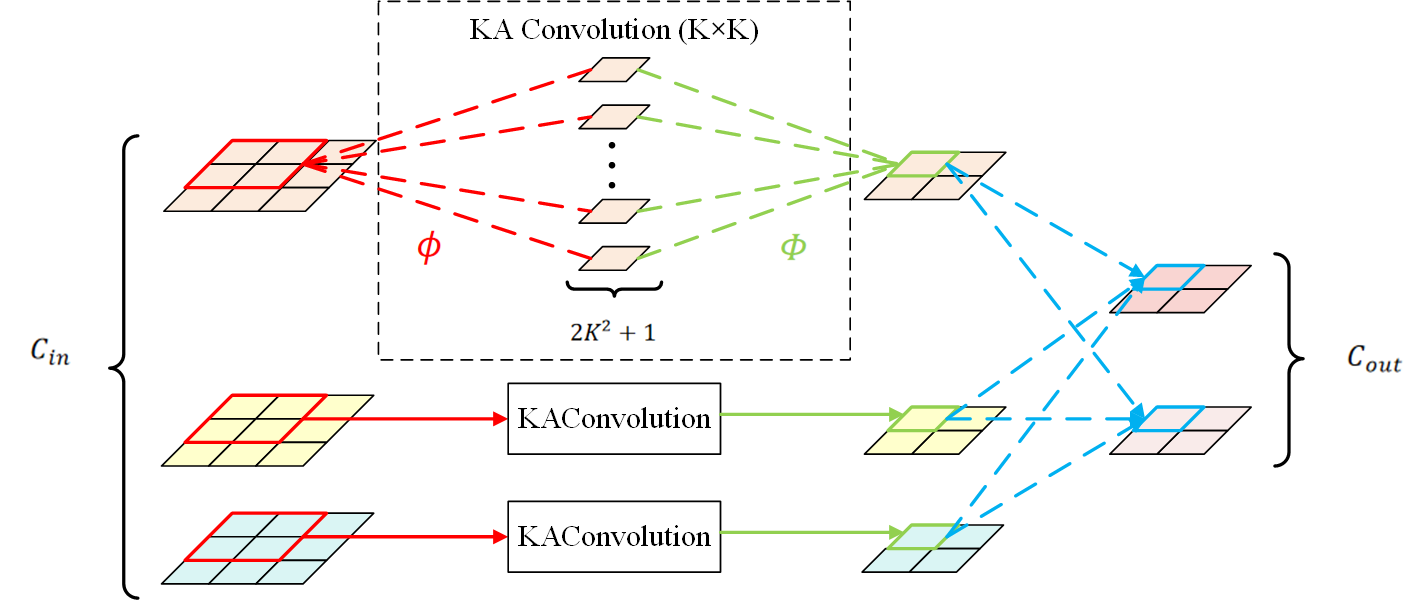
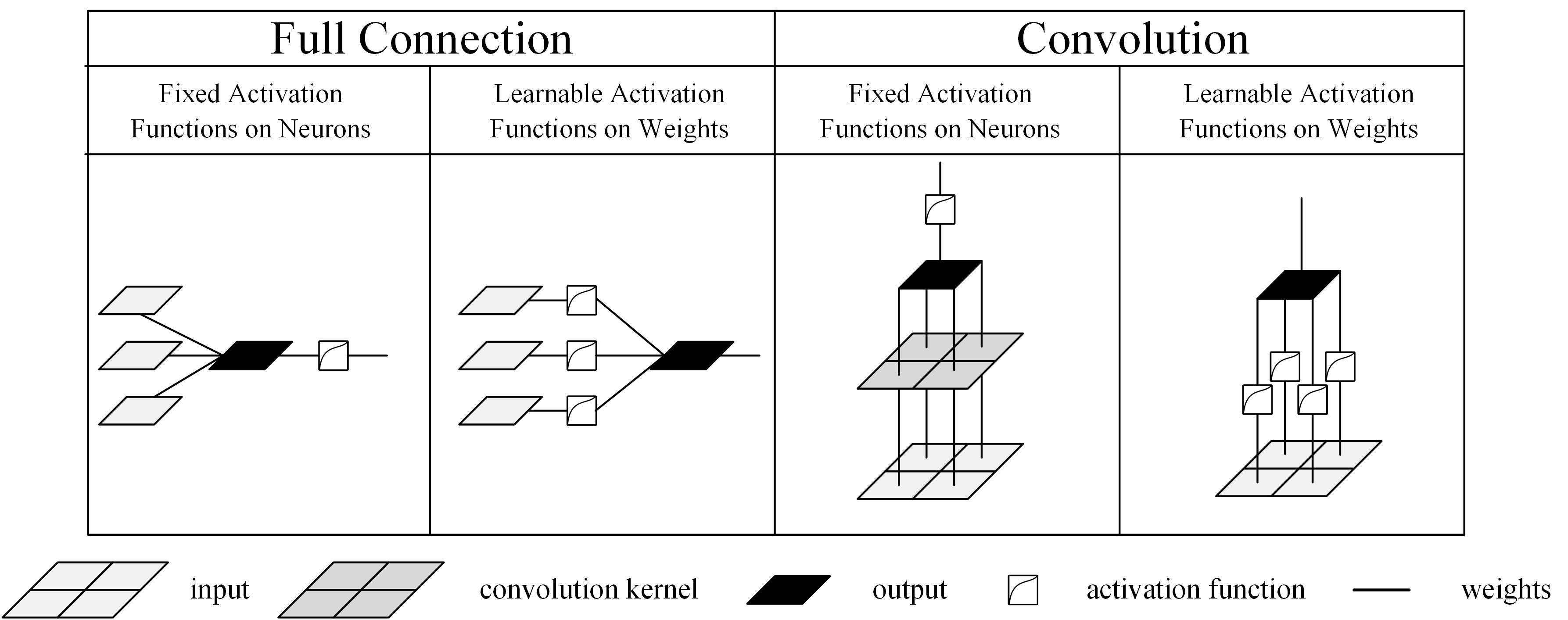
Figure 1: Structural illustration of KAConvLayer and differential activation placements within the layer.
The design culminates in the KAConvNet, a pure CNN stringently composed of KAConvLayers, standard convolutions, and channel attention (SE Block). The network follows a four-stage hierarchical structure with stems, KAConvBlocks (residual units), and transition modules. KAConvNet variants ("S", "B", "L") scale parameterization and channel dimensions to benchmark across computational budgets.
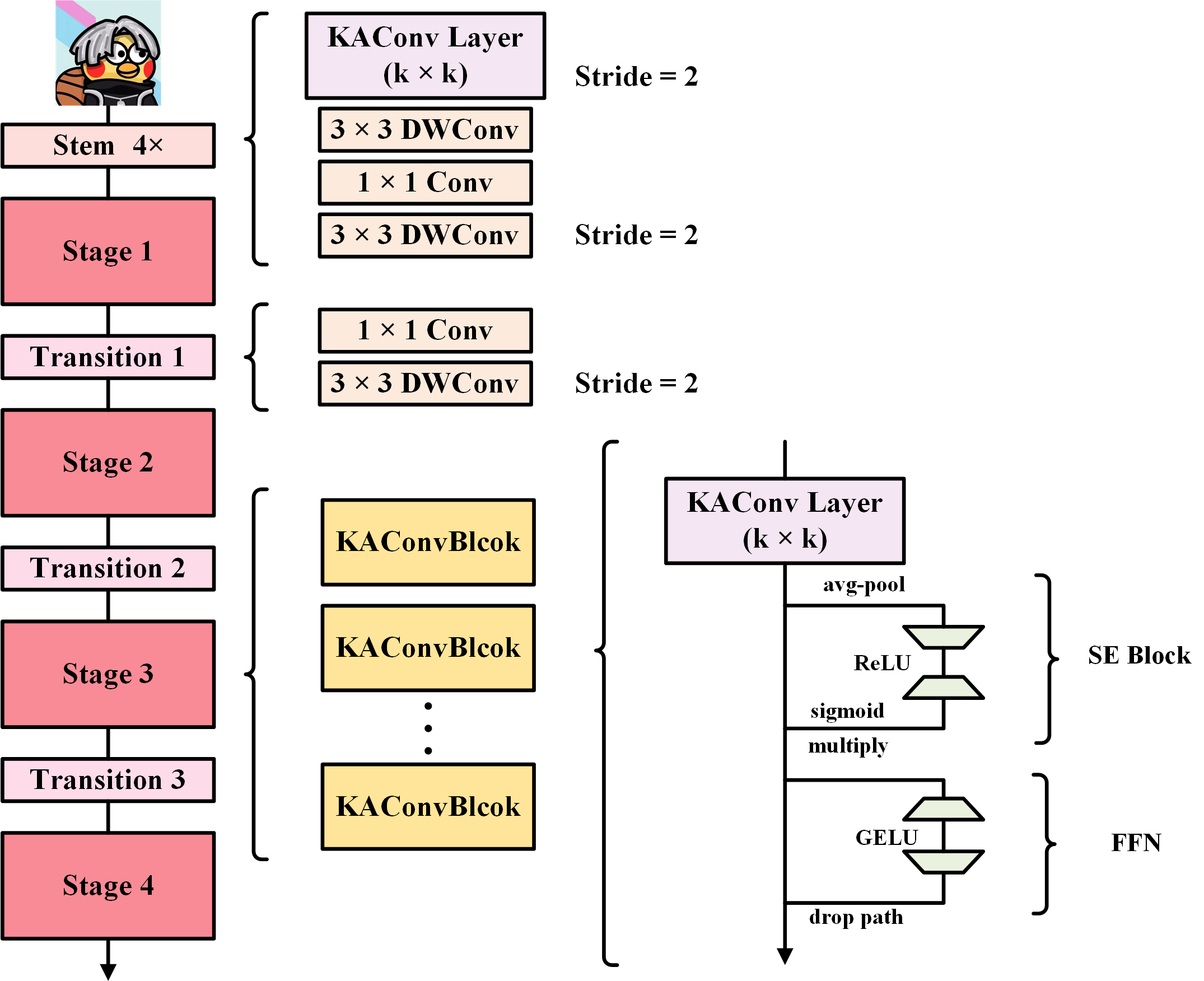
Figure 2: Architectural scheme of KAConvNet, featuring conventional CNN modularity with KAConvLayer infusion.
Extensive experiments on ImageNet-1K, COCO, and Cityscapes demonstrate competitive accuracy and efficiency. KAConvNet-L achieves 80.1% Top-1 accuracy with 17.5M parameters and 2.9G FLOPs, outperforming existing KAN-based models and matching leading Mamba-based, CNN, and ViT architectures at comparable scales.
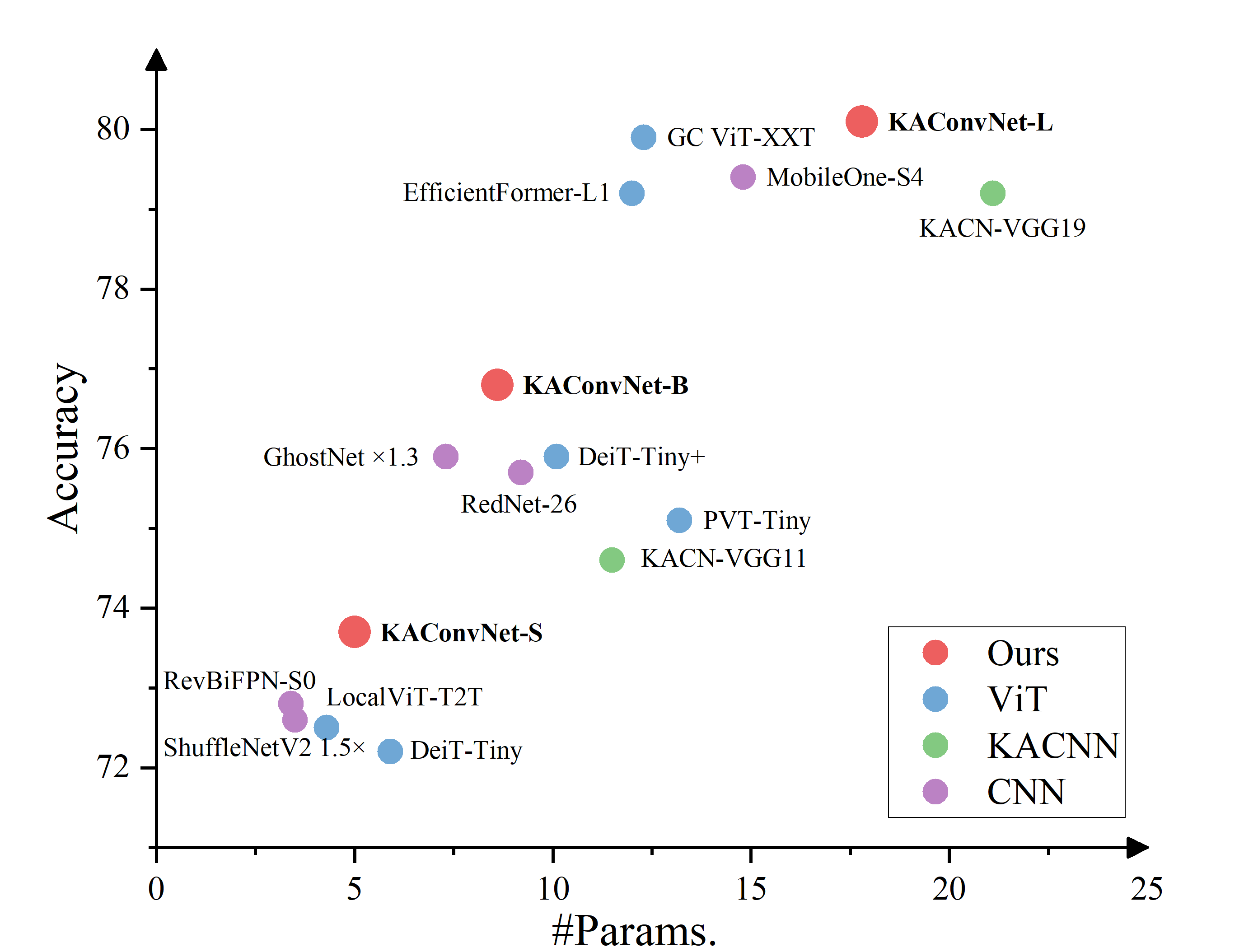
Figure 3: KAConvNets attain superior ImageNet-1K accuracy with reduced parameter count versus prominent contemporaries.
On object detection (COCO) and semantic segmentation (Cityscapes), KAConvNet consistently surpasses lightweight and mainstream backbones. KAConvNet-L achieves mAP of 48.0 and Mean IoU of 70.58, indicating robustness across recognition and dense prediction tasks.
Ablation studies reveal several key findings: B-spline activations induce severe overfitting, while GLinear functions achieve optimal generalization with modest interval partitions (n=4). KAConvLayers are most effective when deployed in shallow network stages, and performance degradation in deeper layers is abated by residual structures.
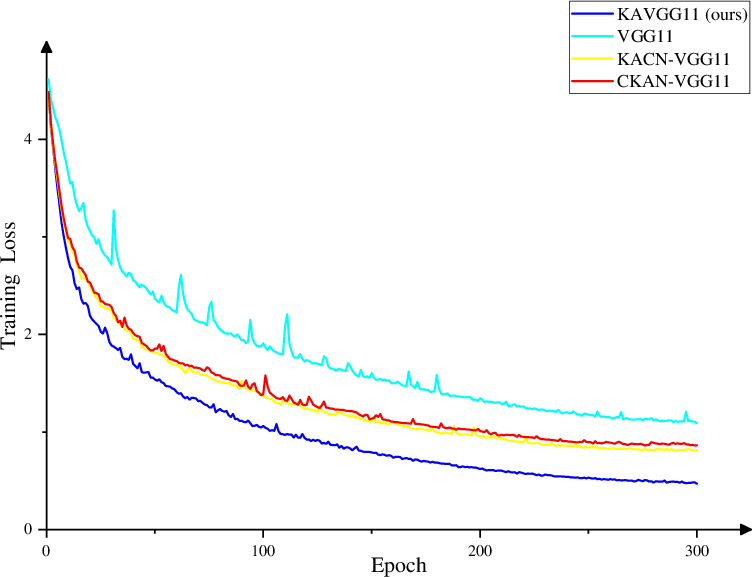
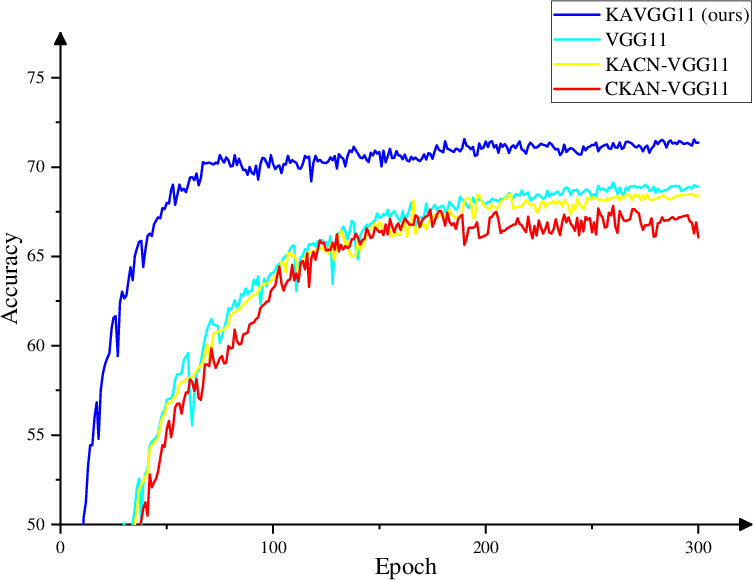
Figure 4: B-spline-based KAConvLayer variants significantly overfit on CIFAR-100 compared to convolution and GLinear counterparts.
Computational complexity analysis notes that KAConvLayer cost becomes advantageous as channel dimensionality increases, though the runtime remains higher than standard convolution due to segmented activations and channel-wise aggregation.
Explainability, Visual Comparisons, and Latency
Grad-CAM visualizations confirm that KAConvNet-L attains finer-grained object localization, attributing activations more broadly and precisely than ConvNeXt-T and an equivalent architecture with standard convolutions. This underscores the interpretability benefits of Kolmogorov-Arnold-based aggregation.

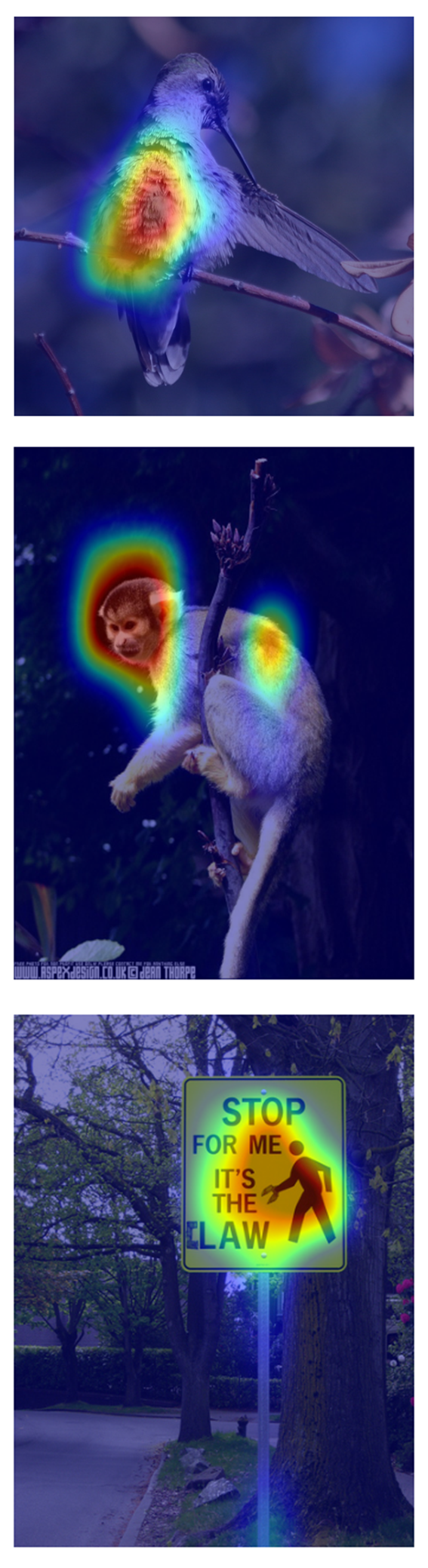
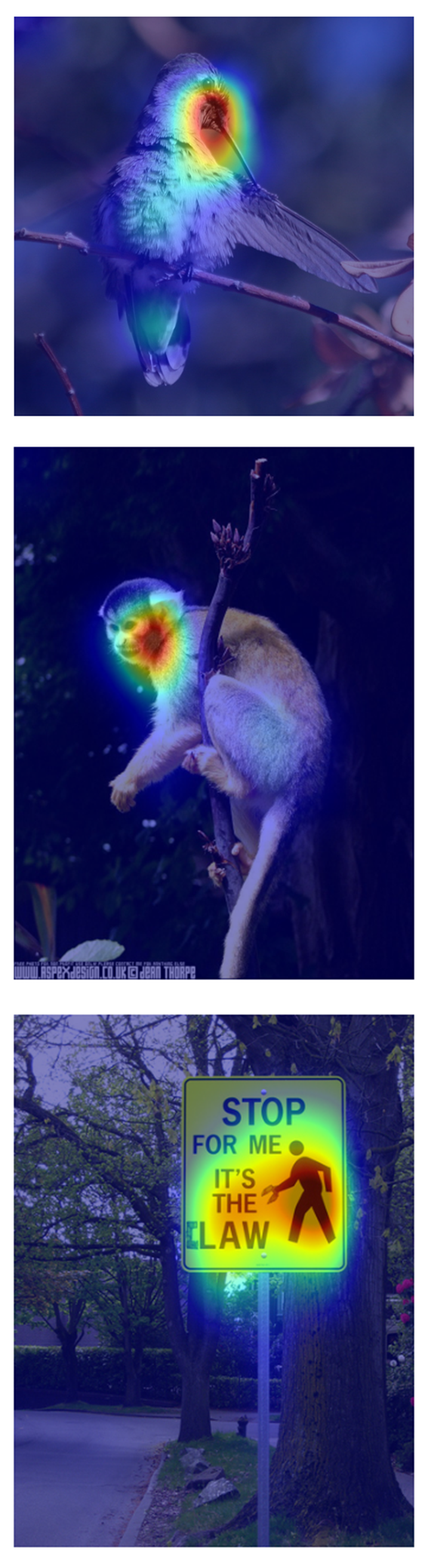
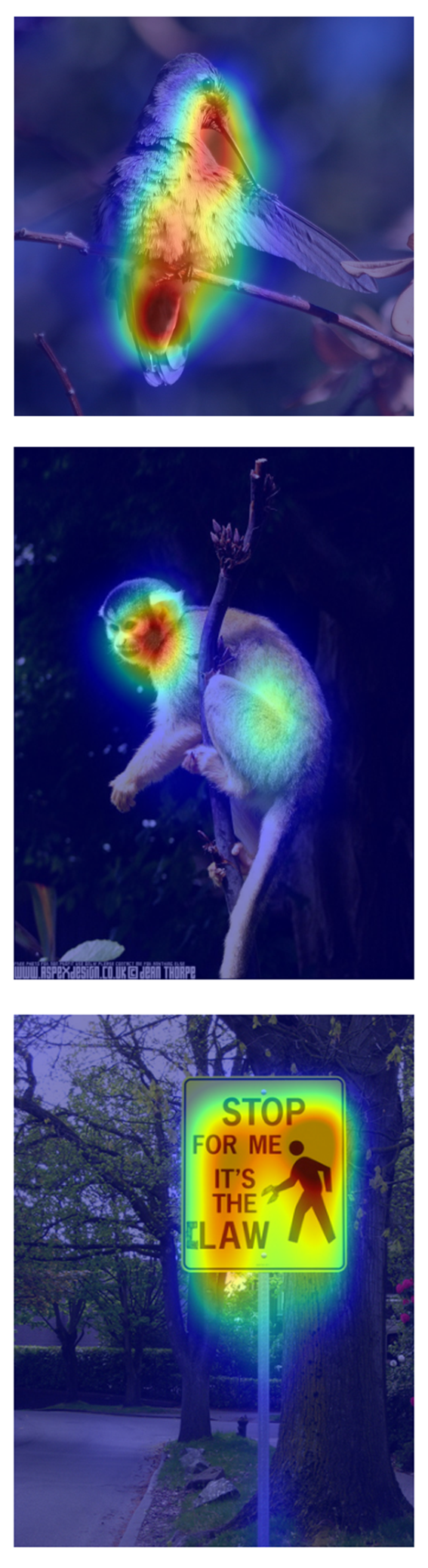
Figure 5: Grad-CAM reveals superior attention localization for KAConvNet-L versus ConvNeXt-T and ConvNet-L.
Further, semantic segmentation visualizations validate boundary accuracy improvements for KAConvNet on Cityscapes. Inference latency measurements show KAConvLayer is distinctly faster than other KA-based convolutional methods (e.g., CKAN, KACN, JacobiKAN), with observed latency (86.4 ms) nearly threefold lower than CKAN, confirming the practical gains from piecewise linear activations and channel-wise design.
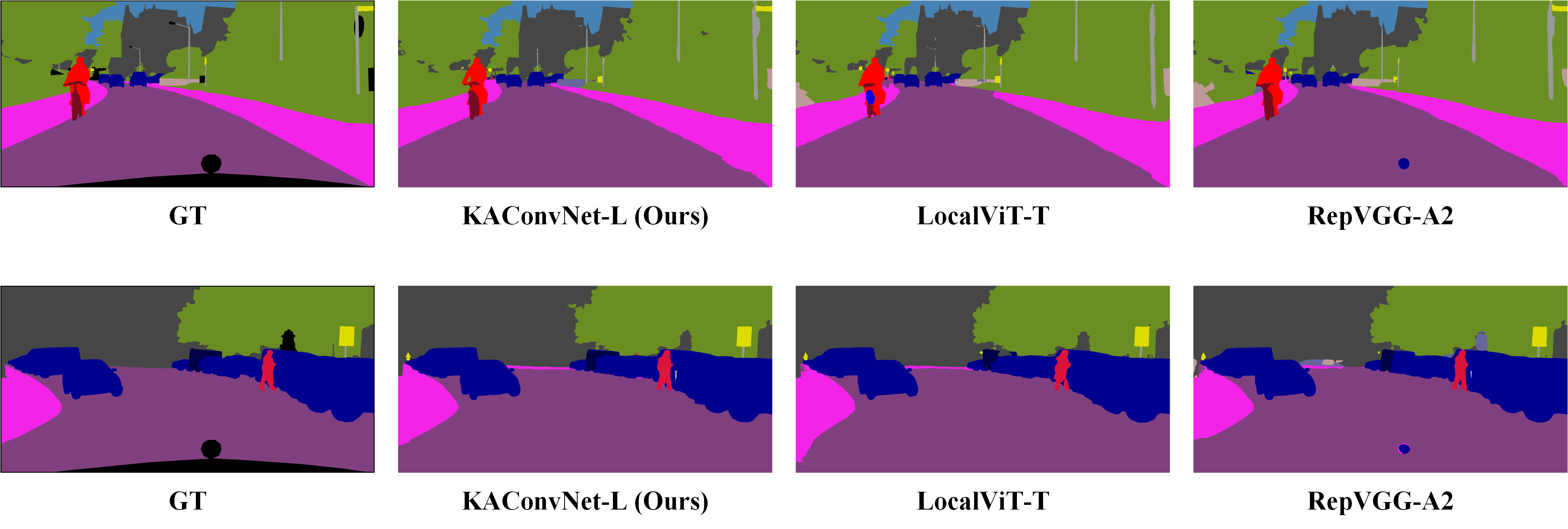
Figure 6: KAConvNet achieves more accurate segmentation boundaries on Cityscapes compared to competitive backbones.
Practical Implications, Theoretical Impact, and Future Directions
KAConvNet's approach demonstrates a viable pathway for the principled integration of mathematical representation theorems into deep vision backbones, fusing interpretability and parameter efficiency with competitive performance. Empirically, KAConvLayer design yields robust accuracy boosts, particularly when integrated with residual structures and, prospectively, larger convolutional kernels.
The findings challenge the prevailing methodology of simply substituting weights with learnable activations in KAN-augmented convolutional layers, emphasizing the necessity of channel-wise functional diversity and mathematically informed aggregation. The parameterization with GLinear functions presents an effective remedy to classic overfitting pitfalls of B-spline activations.
Looking forward, scaling KAConvNet architectures via larger kernel sizes (as evinced by minor gains with 5×5 kernels) and optimizing activation runtime overhead represent promising research axes. Furthermore, the interplay between architectural depth, KAConvLayer coverage, and residual topology merits deeper analysis to refine vision backbone design in line with Kolmogorov-Arnold principles.
Conclusion
KAConvNet introduces a theoretically coherent and empirically validated convolutional architecture that leverages the Kolmogorov-Arnold representation theorem for vision tasks. The KAConvLayer’s channel-wise activations and efficient GLinear functions circumvent prior limitations, delivering superior accuracy and inference efficiency across classification, detection, and segmentation benchmarks. The research showcases the potential for mathematically inspired convolutional methods to advance both the interpretability and performance frontier in deep vision modeling, setting the stage for future exploration of large kernel KAConvNets and runtime optimization strategies.

