- The paper introduces a multi-frequency cooling strategy that doubles steady-state atom numbers and triples loading rates compared to single-frequency MOTs.
- It details the use of optimized spectral shaping and spatial light profiles to mitigate collisional losses and force reversals, enabling enhanced atom capture.
- The study projects that scalability to larger trap volumes could yield order-of-magnitude improvements, significantly impacting quantum sensors and precision metrology.
Enhanced Atom Capture via Multi-Frequency Magneto-Optical Trapping
Introduction
The paper "Enhanced Atom Capture via Multi-Frequency Magneto-Optical Trapping" (2604.23221) addresses substantial improvements to the performance of the magneto-optical trap (MOT)—a foundational tool for cold atom physics, quantum technology, and precision metrology. MOT-based platforms underpin a broad spectrum of quantum applications, including sensors (gravimeters, accelerometers, magnetometers), optical clocks, and neutral-atom quantum processors. Enhancing atom capture efficiency and loading rates in MOTs directly impacts experimental sensitivity, bandwidth, and throughput, and is crucial for modern efforts in quantum sensing and tests of fundamental physics.
Previous efforts to boost MOT atom capture with multi-frequency cooling have encountered performance bottlenecks due to limitations such as collisional loss channels and deleterious spectral force reversals at low velocity, restricting improvements to less than a factor of two. This work overcomes those barriers by optimizing spectral shaping and spatial light profiles, demonstrating sustained and scalable increases in both atom number and loading rate using multi-frequency cooling light.
Multi-Frequency Cooling: Principles and Implementation
MOT capture efficiency is fundamentally limited by the mismatch between the Doppler-broadened atomic velocity distribution and the narrow frequency response of standard laser cooling transitions, resulting in the capture of less than 10−5 of background atoms in typical settings. The central innovation here is the use of laser beams with multiple frequency components—each detuned by a few to several natural linewidths from resonance—thereby enlarging the velocity class of atoms decelerated and trapped.

Figure 1: Schematic and spectra for the six-beam multi-frequency MOT, illustrating expanded velocity class addressed by additional cooling frequencies.
The top of Figure 1 shows the spectral content used, clearly separating the conventional trapping frequency (red) from the extra multi-frequency cooling components (amber). The lower panel demonstrates how, by broadening the range of resonances, the MOT can address an increased fraction of the atomic velocity distribution, raising the effective capture velocity substantially.
The theoretical upper bound for loading rate improvement is given by the maximum radiative force available across the MOT diameter, but practical considerations such as power broadening, spatial mode overlap, and coherent/incoherent effects bring this closer to the observed modest enhancements for current laboratory trap sizes. Nevertheless, simulations described in the paper predict scaling up to order-of-magnitude gains for much larger beams and trap volumes.
Experimental Optimization and Observed Gains
A key technical advance enabling the gains reported is the mitigation of two previously limiting effects: (i) enhanced collisional loss due to highly detuned light, and (ii) velocity-force reversals due to blue-side components in phase-modulated spectra. These are countered by:
- Using an axicon-generated ring beam to spatially segregate multi-frequency cooling light, minimizing its intensity at the trap center and reducing density-dependent collisional losses.
- Employing acousto-optic modulation to generate single-sided frequency comb spectra with a sharp blue-edge cutoff, thoroughly suppressing heating effects.
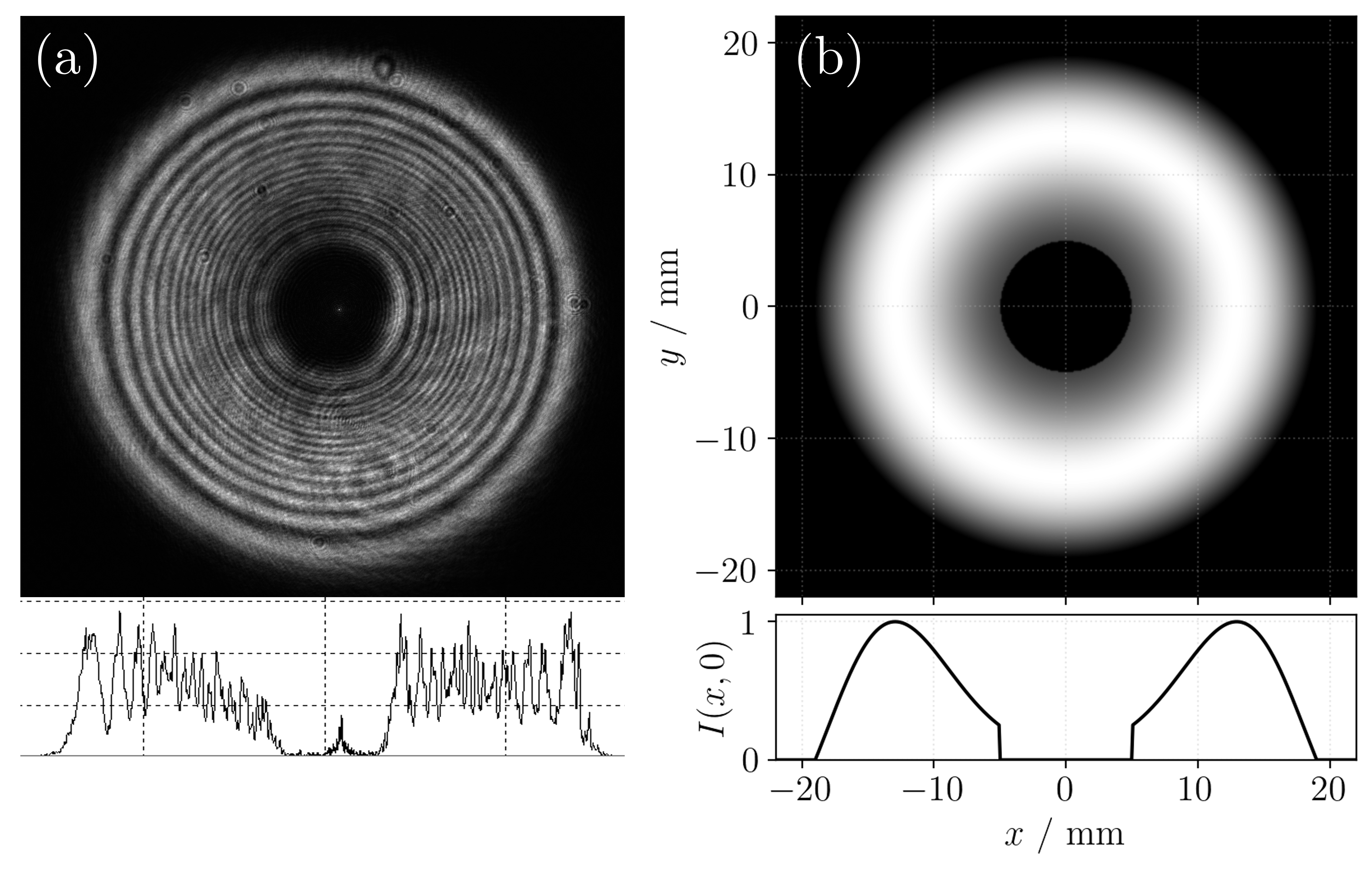
Figure 2: Spatial beam profiles for the ring-shaped cooling beam used to minimize core MOT density overlap.
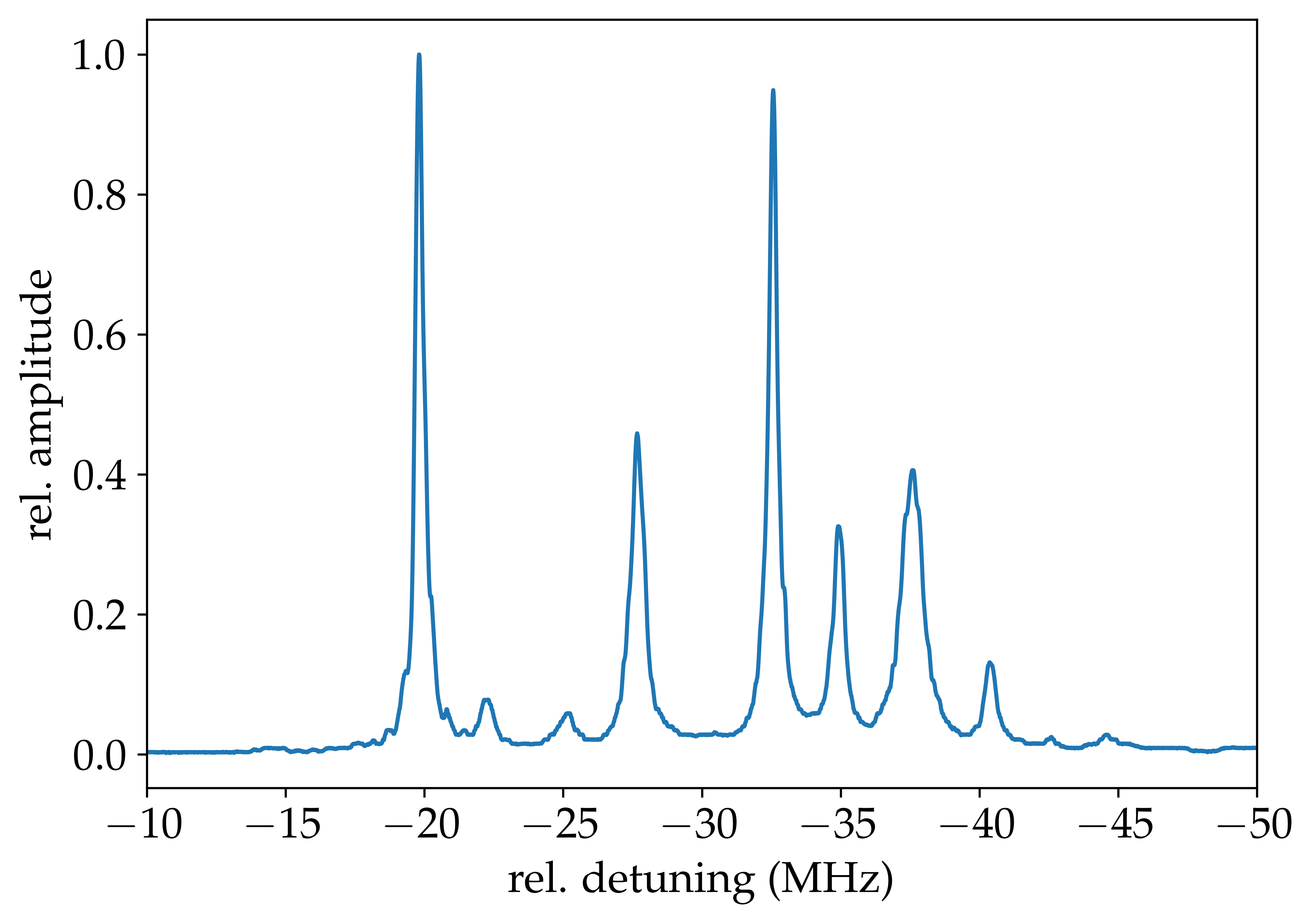
Figure 3: Frequency content of the MOT beams, showing single-sided multi-frequency spectrum for optimal force profile.
The multi-frequency configuration achieves a steady state atom number of 1.0(1)×1010 and a loading rate of 1.3(2)×1011 atoms/s, representing approximately a doubling of the atom number and above a factor of three improvement in loading rate relative to single-frequency MOTs under equivalent conditions.
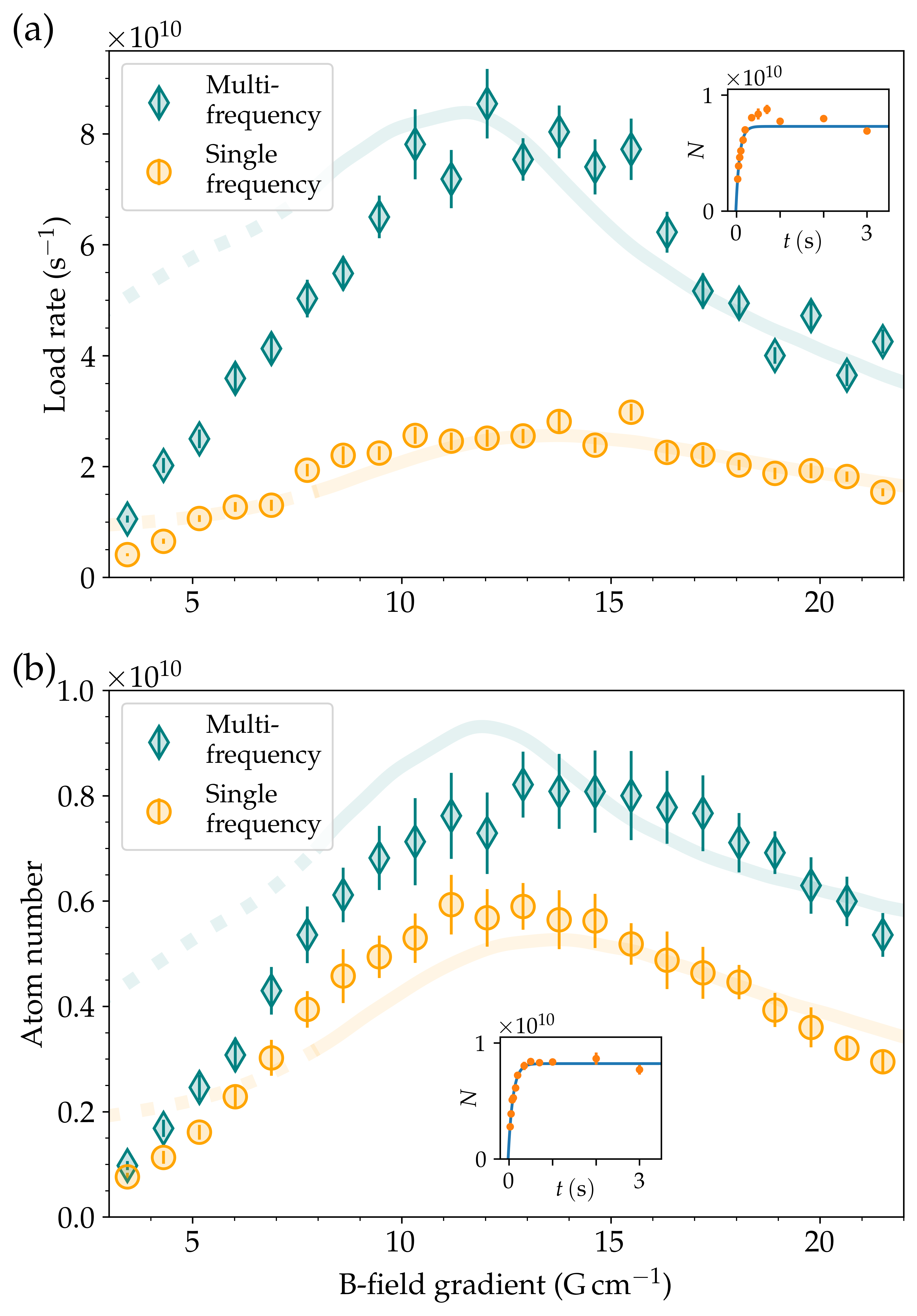
Figure 4: Loading rate and atom number as a function of axial field gradient for single and multi-frequency MOTs, with experimental data and supporting simulations.
The loading curve fits show the pronounced difference, especially in the high-gradient regime most relevant for compact, high-throughput sensors.
Scaling with Trap Size and Frequency Spacing
A parametric surface plot (Figure 5) of atom number versus the dual-frequency detuning and spacing reveals two performance optima—a global maximum relevant to Doppler-broadened, multi-velocity class cooling, and a local maximum at small frequency separations, likely linked to coherent bichromatic force effects.
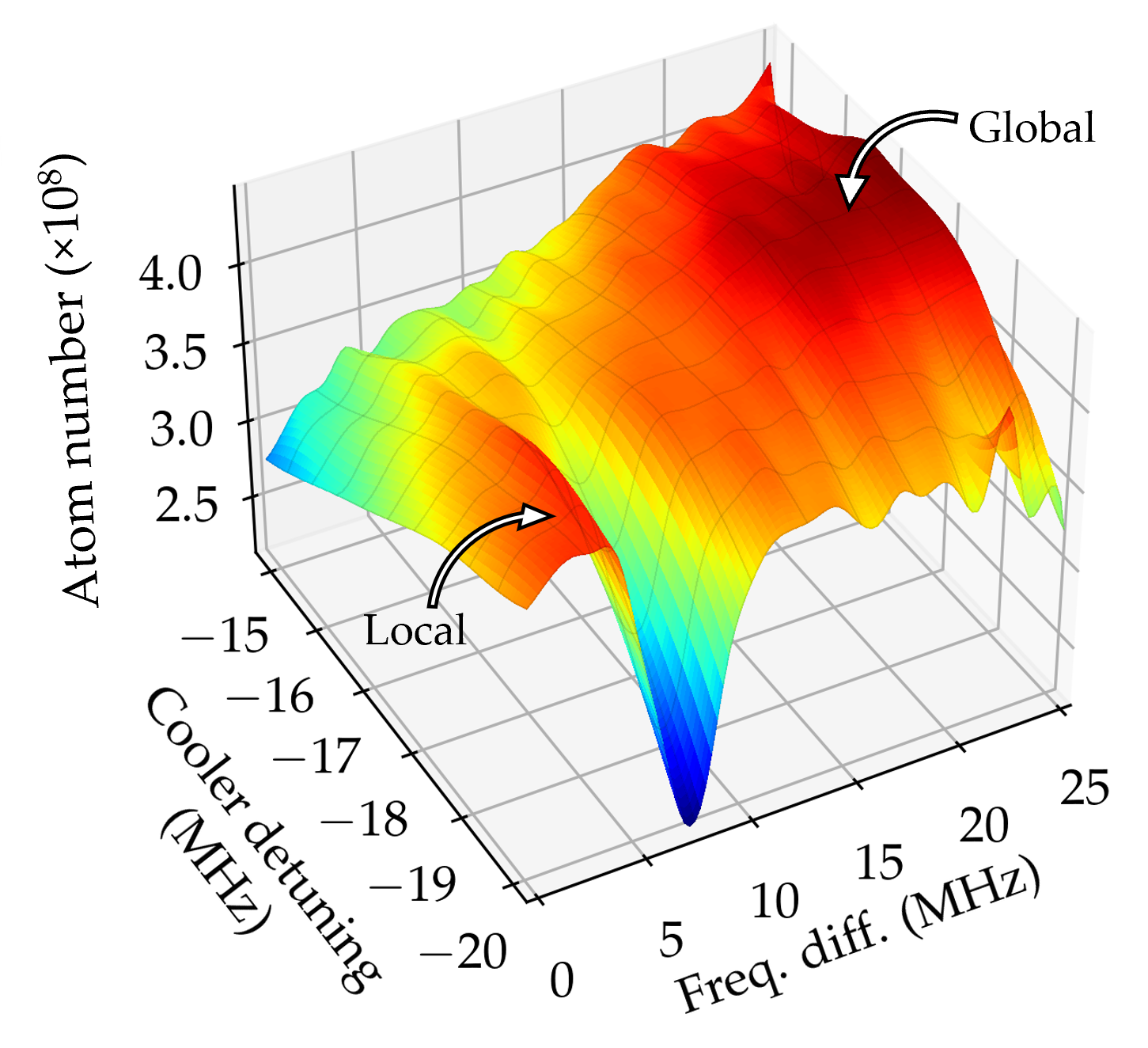
Figure 5: Surface plot of dual-frequency MOT atom number, showing troughs and maxima as a function of detuning and frequency spacing.
The benefit of multi-frequency cooling grows dramatically with the beam diameter and overall trap size, as detailed in simulations and experimental data (Figure 6). Theoretical modeling predicts order-of-magnitude enhancements for realistic next-generation MOT geometries with meter-scale beams.
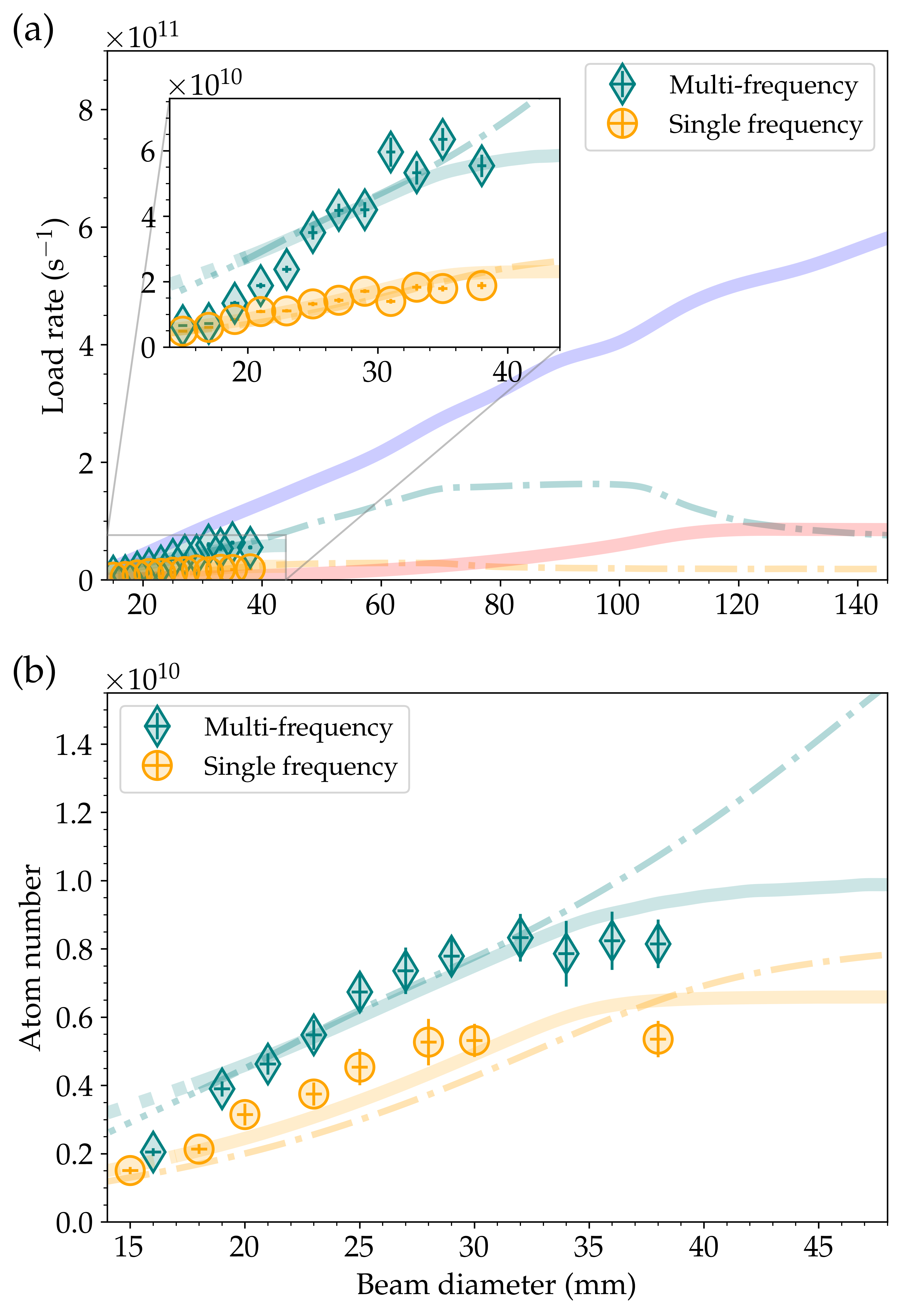
Figure 6: Loading rate and atom number for single and multi-frequency MOTs as a function of beam diameter, with annotated simulation regimes for extrapolated trap sizes.
Implications for Quantum Sensing and Fundamental Physics
High-bandwidth quantum sensors, particularly portable atom interferometers for gravimetry, accelerometry, and magnetometry, are directly limited by MOT loading rates. Enhanced capture via multi-frequency MOTs reduces experiment dead time and enables greater sensor bandwidth and sensitivity, with direct practical implications for moveable QTs and space-based metrological platforms.
Furthermore, increased atom numbers improve protocols that exploit quantum correlations—such as spin-squeezed clocks, magnetometers, and interferometers—offering scaling advantages beyond the standard quantum limit. The paper specifically highlights the impact of enhanced atom counts on experimental tests of quantum foundational models, including collapse theories (CSL), where cubic scaling of sensitivity with atom number is attainable.
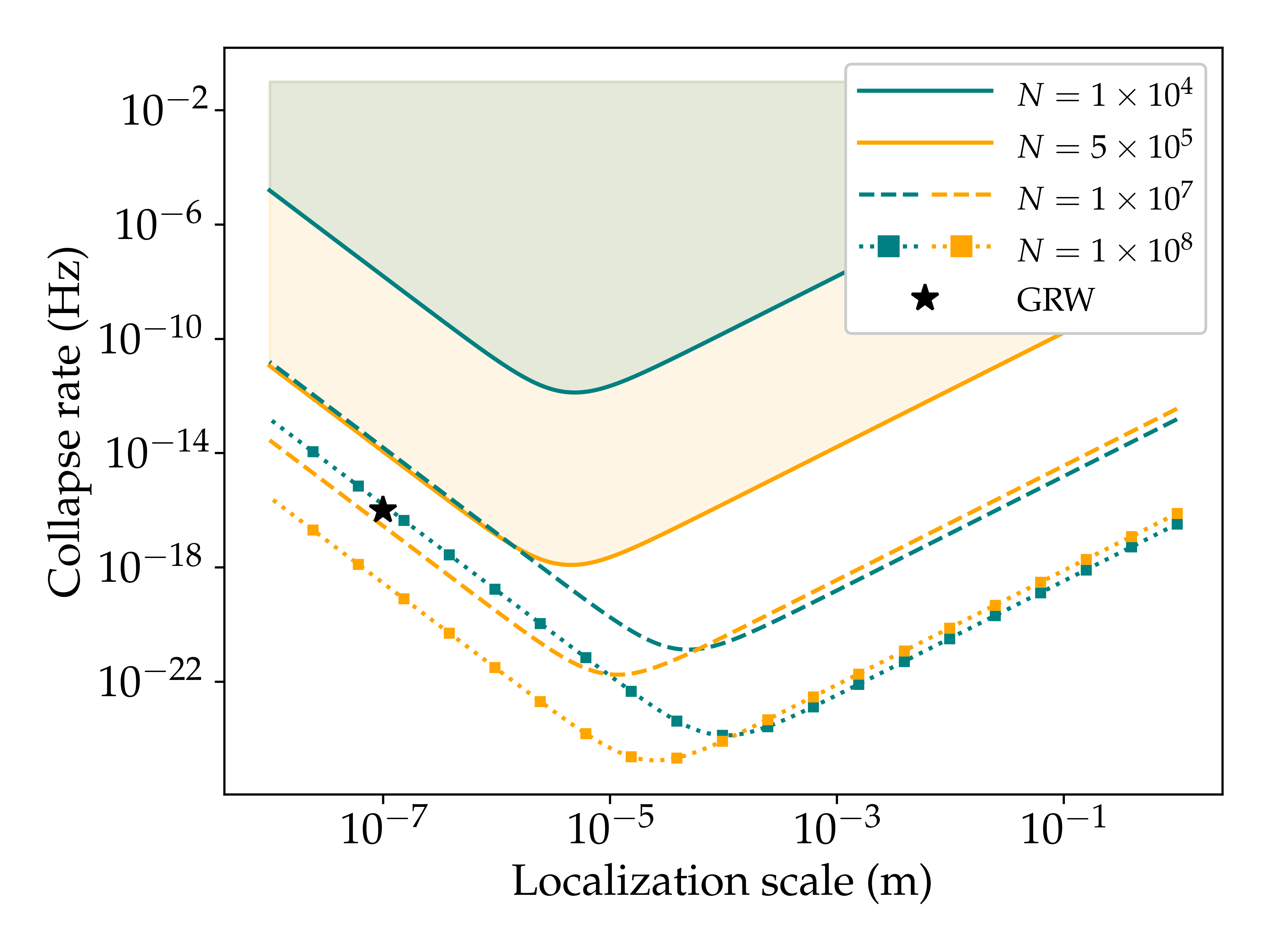
Figure 7: Projected experimental bounds on CSL parameter space with increased atom numbers accessible via multi-frequency MOT loading and transfer to BEC.
The anticipated improvement translates into significantly expanded experimental reach for testing collapse models and fundamental limits in quantum mechanics using cold atom platforms.
Future Directions and Prospects
The demonstrated scalability of multi-frequency MOT atom capture suggests compatibility with both 2D MOT and Zeeman slower architectures, creating opportunities for further improvement in high-flux cold atom sources. The technique is also especially promising for species with unfavorable Doppler widths or exhibiting strong collisional loss, including lithium, hydrogen, antihydrogen, or positronium—critical for antimatter precision experiments.
In the context of quantum technology miniaturization, the compatibility of this approach with advanced, additively manufactured atom traps and photonic-integrated architectures offers a viable route toward compact, high-performance quantum sensors and quantum networks.
Conclusion
This work establishes multi-frequency MOT operation as an effective and scalable method for substantially increasing both the atom number and loading rate, overcoming the major technical bottlenecks of previously attempted implementations. The authors demonstrate more than a tripling of loading rate and a doubling of steady-state atom number in a compact 87Rb MOT, with simulations projecting order-of-magnitude improvements for larger traps. These results have immediate and broad-ranging consequences for quantum sensing, atomic clock development, and experimental tests of fundamental physics. Multi-frequency cooling in MOTs thus provides a foundational advance toward next-generation quantum technology platforms and ultra-sensitive metrological devices (2604.23221).

