- The paper introduces an extended Monte Carlo framework that incorporates nonvanishing cyclic sum constraints to drive active six-state Potts models out-of-equilibrium.
- It quantitatively distinguishes dynamic modes such as spiral, stripe, target, and disordered waves by analyzing order parameters, correlation functions, and phase diagrams.
- The study demonstrates first-order symmetry breaking and robust pattern selection across lattice geometries, offering insights for designing controllable non-equilibrium systems.
Spiral, Target, Stripe, and Disordered Waves in Active Six-State Potts Models
Introduction and Model Innovation
This study develops a detailed characterization of wave dynamics in active six-state Potts models on two-dimensional lattices, leveraging an extended Monte Carlo framework that incorporates non-equilibrium cycles via nonvanishing cyclic sum constraints on flip energies. The extension of the Potts model used here embeds local detailed-balance respecting transitions between states, while violating global detailed balance, thereby enabling controlled non-equilibrium driving analogous to, for example, driven chemical or biological pattern forming systems.
Within this formalism, the authors systematically vary intra-state and inter-state contact energies—particularly focusing on repulsive or attractive interactions at nonflip contacts—alongside the cyclic flip energy h. This parameterization enables not only the recovery of familiar equilibrium and near-equilibrium phases but also the robust emergence of multiple, highly distinct non-equilibrium spatiotemporal wave patterns.
Phase Structure and Dynamic Modes
The most prominent result is the richly structured dynamic phase diagram delineating the dependence of spatiotemporal patterns on h and contact energy differences (specifically Jnf for nonflip contacts and Jk,k for same-state contacts).

Figure 1: Dynamic phase diagram for L=128, mapping h versus Jnf with clear identification of homogeneous cycling (HC), wave (W3b/W3f/W6), mixing (M6), stripe (ST), and target (TG) modes.
The principal dynamic states include:
- Homogeneous cycling (HC): Macroscopically uniform phases cycle through the six states via nucleation and growth, with near-equilibrium behavior at low h.
- Disordered six-state (DS) and spiral (SP) waves (W6): For moderate and strong nonflip repulsion, large domains cycle in space and time, with SP waves emerging as nonflip interfacial energies become dominant.
- Stripe (ST) and target (TG) waves: Emergent under strong nonflip contact repulsion, with the formation of globally ordered stripe or concentric domain structures. These represent nonequilibrium analogues of excitable media target and spiral patterns.
- Mixing modes (M6): Loss of macroscopic order, with multi-state coexistence and unstructured domain arrangements at low attraction.
Transition thresholds between these states are established quantitatively using order parameters, cluster-size measures, autocorrelation functions, and transition rate metrics, enabling high fidelity discrimination between subtle structural regimes.
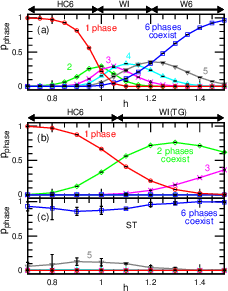
Figure 2: Probabilities for single- and multi-phase coexistence states provide statistical delineation of coexistence and hysteresis near phase boundaries.
Characterization of Wave Phenomena
Six-State Disordered and Spiral Waves
Two distinct classes of six-state wave structures are quantitatively distinguished: disordered (DS) and spiral (SP) waves. DS waves display diffuse domain walls and irregular boundaries, prevalent when nonflip contacts are energetically neutral. SP waves, dominant for large negative Jnf, minimize nonflip contacts—domains are regular with ballistic domain-wall propagation and highly reduced interfacial disorder.
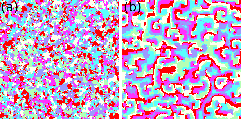
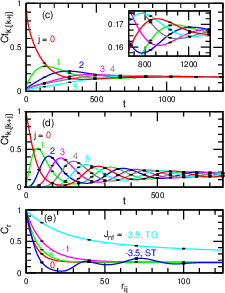
Figure 3: Snapshots and correlation functions for DS and SP waves, elucidating contrasting domain morphologies and temporal/spatial organization.
Key statistical measures, including spatial autocorrelation length (rcr), oscillation amplitude and period of local-state autocorrelations (h0, h1), and interfacial contact probabilities (h2), show nontrivial extremal behavior near transitions, providing clear, robust markers for regime delineation.
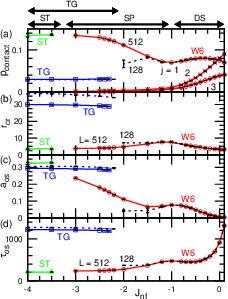
Figure 4: Non-monotonic dependence of correlation and contact properties on nonflip contact energy, marking precise phase boundaries between DS and SP regimes.
At even stronger nonflip repulsion, the system supports two distinct, highly ordered waveforms: ST (stripe) and TG (target/concentric) waves. TG patterns nucleate from nearly uniform initial conditions, reflecting global symmetry breaking and a preference for nested domains, while ST waves are the result of coarsening or nonequilibrium transients, forming parallel domain sheets.
Near the transition thresholds, finite-size simulations demonstrate temporal coexistence and switching between SP, ST, and TG modes, with switching becoming exponentially rare in larger systems, indicative of first-order, hysteretic transitions.
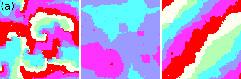
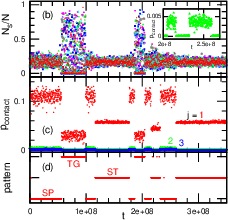
Figure 5: Temporal coexistence of SP, ST, and TG waves in small systems, with time-resolved state density and contact metrics tracking pattern switching.
Coarsening and Nonequilibrium Kinetics
Wave pattern selection is closely tied to coarsening dynamics from randomly mixed initial states. Coarsening follows the Allen–Cahn/Lifshitz–Slyozov exponents (h3), but strong non-equilibrium drive can induce transient accelerations and the formation of metastable intermediate patterns, notably the spontaneous appearance of SP waves en route to the formation of the final ST stripes.
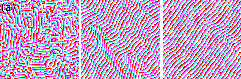
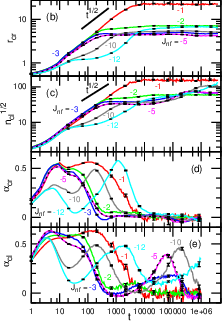
Figure 6: Spatiotemporal evolution during coarsening highlights formation and transformation of domain morphologies, and demonstrates anomalous growth kinetics tied to pattern selection.
Three-State Spiral Waves and First-Order Symmetry Breaking
An intriguing and novel aspect of the six-state model is the spontaneous selection of three-state spiral (SP) waves, subdivided into forward (W3f) and backward (W3b) propagation types, depending on the signature of diagonal and nonflip contact energies. Whether even- or odd-numbered states form the dominant set can be controlled by breaking symmetry between contact energies for these groups. The transition between even and odd wave-dominated regimes is shown to be first-order, as evidenced by the discontinuous tuning of an order parameter h4 and size-scaling of its susceptibility.

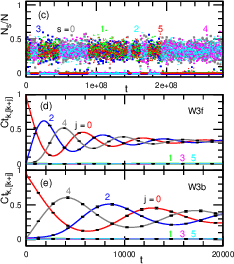
Figure 7: Structurally distinct three-state forward and backward spiral waves are visualized and quantitatively separated by local correlation sequencing and flow analysis.

Figure 8: Order parameter and susceptibility scaling confirm first-order transition between even- and odd-state selected three-state spiral waves as a function of interaction asymmetry.
This substructure demonstrates that nonreciprocal, driven multi-state systems can support a zoo of symmetry-broken wave regimes with discontinuous transitions, in analogy to field-tuned phase selection in Ising-type systems.
Lattice Dependence and Robustness
The study also rigorously examines the dependence of dynamic wave modes on lattice geometry by performing simulations on both square and hexagonal lattices. While the coarse morphology and certain transient traps in coarsening differ by lattice connectivity, the overall sequence of dynamic modes, thresholds, and selection mechanisms are robust, testifying to the fundamental relevance and universality of the reported patterns.


Figure 9: Late-stage coarsening and final wave patterns in hexagonal lattices reveal more isotropic spiral domains and robust formation of stripe waves, confirming the generality of the observed phenomena.
Discussion and Implications
The systematic exploration of nonequilibrium wave selection and pattern transitions in active six-state Potts models illustrates the diverse organizational possibilities generated even in simple, locally coupled driven lattice systems. The ability to stably and reproducibly generate stripe, spiral, and target domains—each with distinct coarsening kinetics, phase coexistence, and dynamic phase boundaries—highlights the model's capacity for encoding complex spatiotemporal information.
The first-order character of pattern selection under symmetry breaking further provides a paradigmatic case for understanding bistability and abrupt pattern switching in nonreciprocal or actively driven statistical systems, with potential analogues in biological signaling and synthetic active media.
The approach used has practical implications for the design and control of out-of-equilibrium pattern-forming materials, and for interpreting pattern transitions in active biological membranes, predator-prey ecological lattices, and reaction-diffusion systems with cyclically dominating species. The framework, with its flexibility concerning state number and interaction topology, establishes a rigorous foundation for extending such studies to higher h5-state systems and to settings with frustrated or competing cyclic drives.
Future developments will likely focus on exploration of the active antiferromagnetic regime (h6), inclusion of quenched disorder, and application to experimentally realistic, spatially inhomogeneous drive protocols or boundary conditions.
Conclusion
Through meticulous parameter mapping and analysis, this work clarifies the taxonomy of wave modes, their transitions, and underlying kinetic mechanisms in active six-state Potts models, providing a blueprint for the exploration of generic non-equilibrium pattern formation across diverse physical and biological contexts. The articulation of first-order symmetry breaking in wave domain selection and demonstration of robust pattern architectures under both square and hexagonal lattice geometries present strong evidence for the universality of active Potts model dynamics (2604.22353).

