FingerEye: Continuous and Unified Vision-Tactile Sensing for Dexterous Manipulation
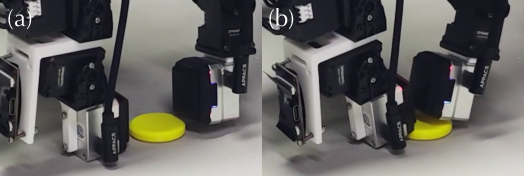
Abstract: Dexterous robotic manipulation requires comprehensive perception across all phases of interaction: pre-contact, contact initiation, and post-contact. Such continuous feedback allows a robot to adapt its actions throughout interaction. However, many existing tactile sensors, such as GelSight and its variants, only provide feedback after contact is established, limiting a robot's ability to precisely initiate contact. We introduce FingerEye, a compact and cost-effective sensor that provides continuous vision-tactile feedback throughout the interaction process. FingerEye integrates binocular RGB cameras to provide close-range visual perception with implicit stereo depth. Upon contact, external forces and torques deform a compliant ring structure; these deformations are captured via marker-based pose estimation and serve as a proxy for contact wrench sensing. This design enables a perception stream that smoothly transitions from pre-contact visual cues to post-contact tactile feedback. Building on this sensing capability, we develop a vision-tactile imitation learning policy that fuses signals from multiple FingerEye sensors to learn dexterous manipulation behaviors from limited real-world data. We further develop a digital twin of our sensor and robot platform to improve policy generalization. By combining real demonstrations with visually augmented simulated observations for representation learning, the learned policies become more robust to object appearance variations. Together, these design aspects enable dexterous manipulation across diverse object properties and interaction regimes, including coin standing, chip picking, letter retrieving, and syringe manipulation. The hardware design, code, appendix, and videos are available on our project website: https://nus-lins-lab.github.io/FingerEyeWeb/
Paper Prompts
Sign up for free to create and run prompts on this paper using GPT-5.
Top Community Prompts
Explain it Like I'm 14
What is this paper about?
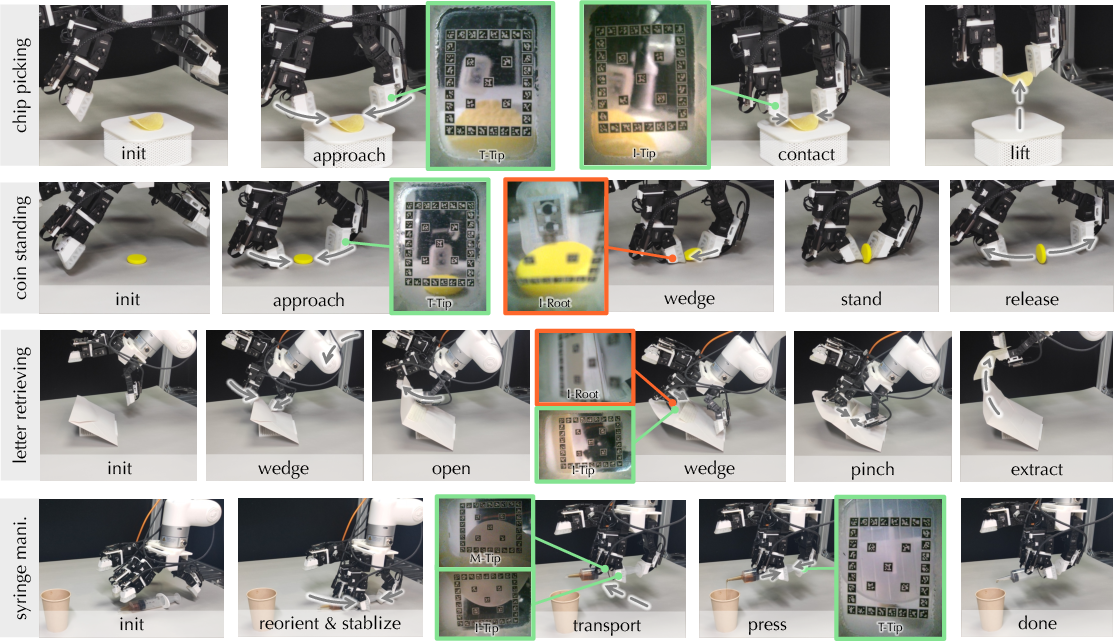
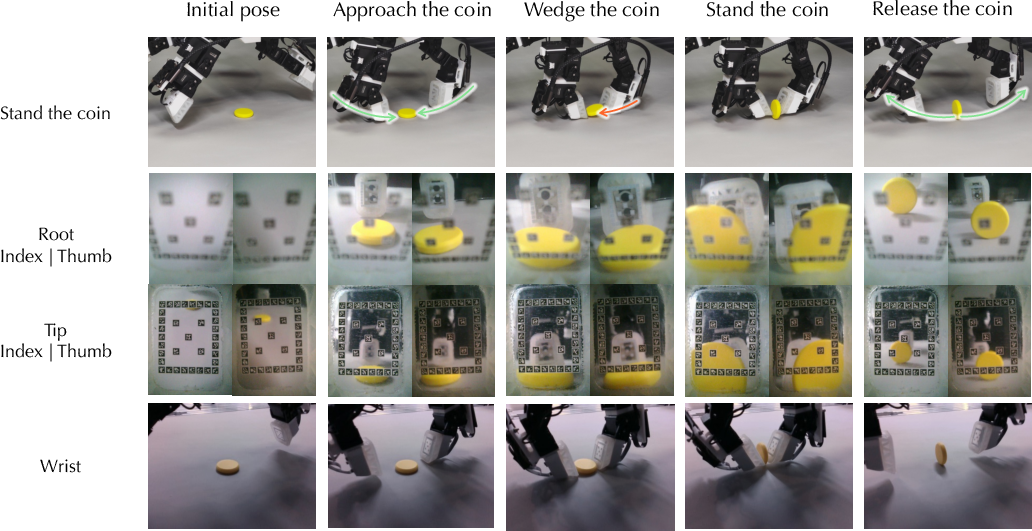
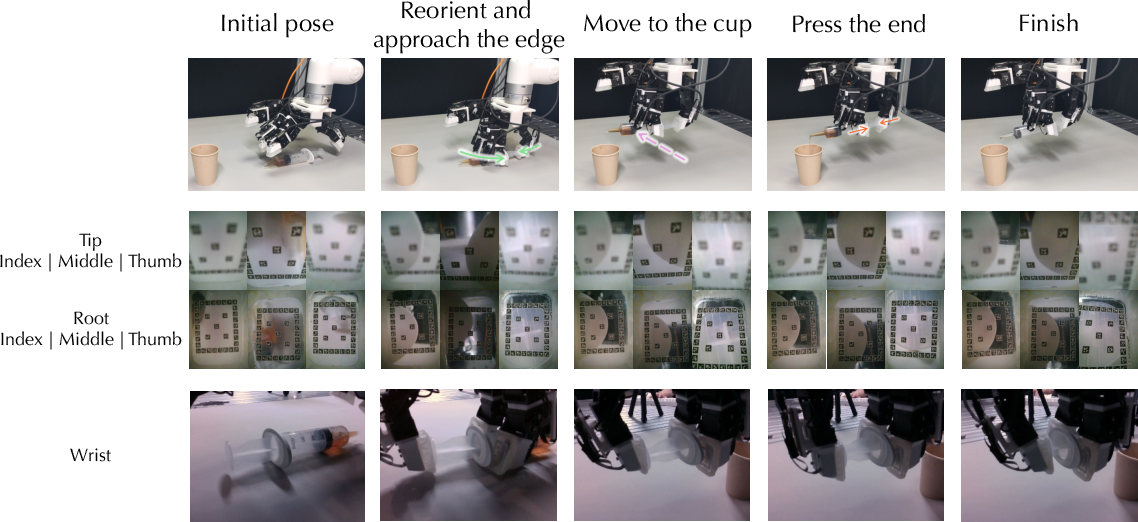
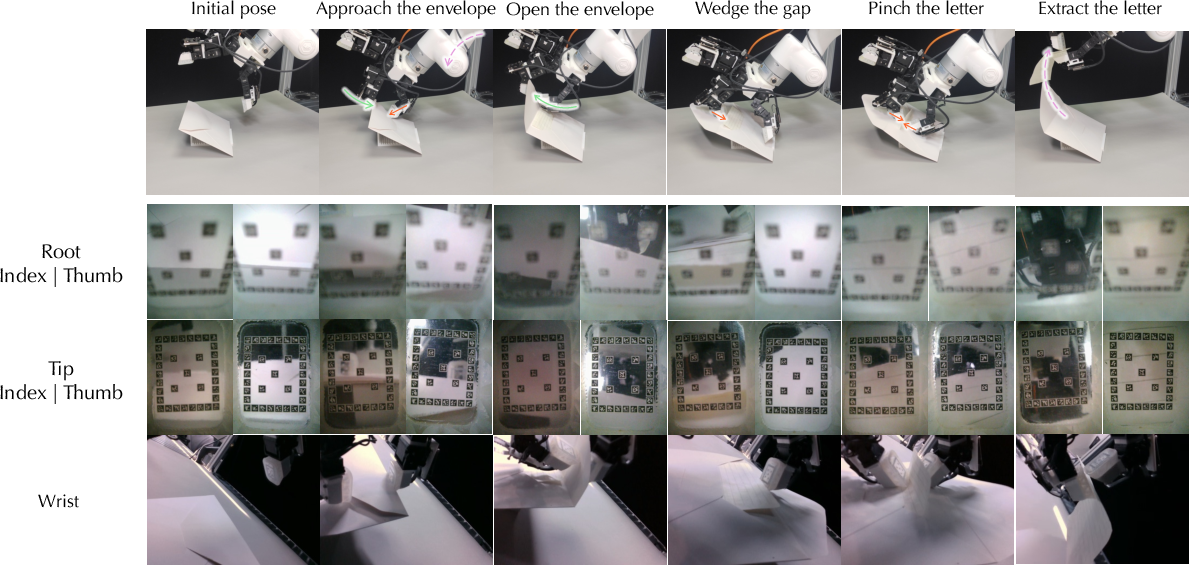
This paper introduces FingerEye, a small sensor that attaches to a robot’s fingertips. It lets the robot “see” and “feel” continuously as it interacts with objects—from before touching them, to the moment of first touch, and while holding or moving them. The goal is to help robots do delicate, precise tasks, like standing a coin on its edge, picking up a potato chip without breaking it, pulling a letter out of an envelope, and operating a syringe.
What questions were the researchers trying to answer?
They asked simple but important questions:
- How can a robot smoothly switch from looking at an object to feeling it when contact starts, without losing track of what’s happening?
- Can a fingertip sensor that uses two tiny cameras (like having two eyes) and a soft, squishy ring give better feedback during contact?
- Can robots learn careful manipulation from limited examples if they combine fingertip vision and touch?
- Can a virtual version of the sensor help the robot learn to handle objects that look different (like coins of different colors) without needing tons of real-world practice?
How did they do it?
A new fingertip sensor called FingerEye
Think of FingerEye as a robot’s smart fingertip:
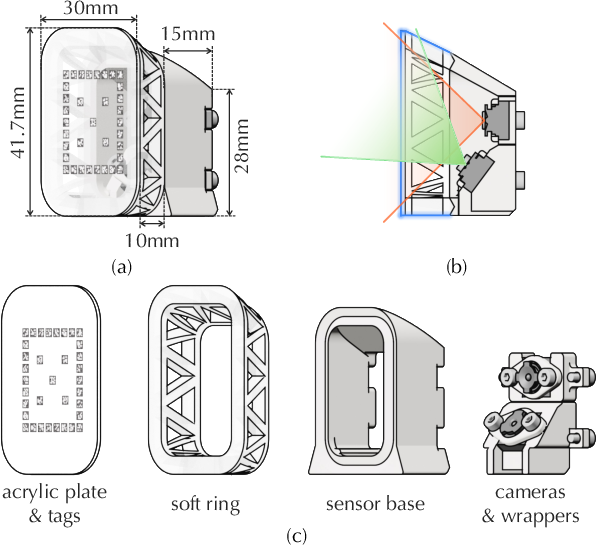
- Two tiny cameras act like binocular eyes: one close-up “tip” camera for fine detail and one “root” camera for a wider view. This helps the robot judge distance and shape up close, the way our two eyes help with depth.
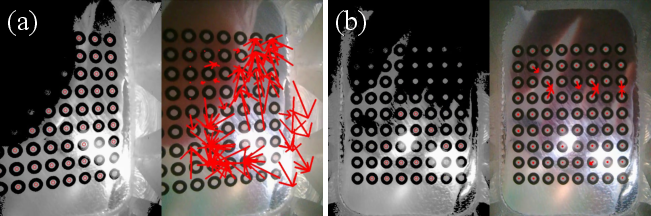
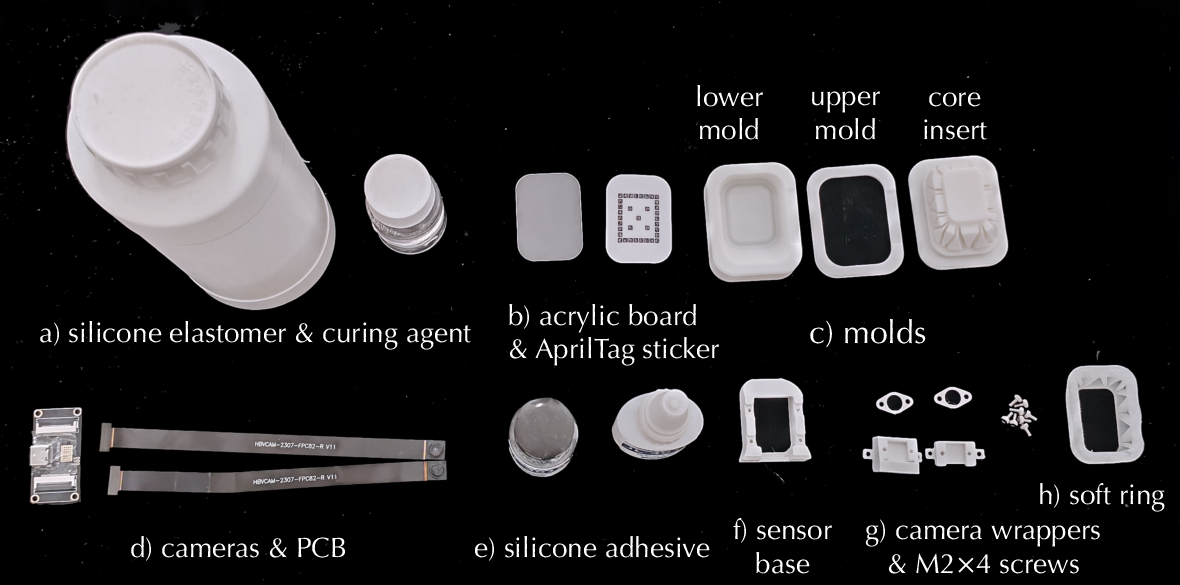
- A soft silicone ring around a clear plastic cover squishes when the robot touches things. The clear cover has special printed markers (AprilTags, which are like advanced QR codes) that the cameras can track. When the ring squishes, these markers move slightly, and the cameras measure that motion.
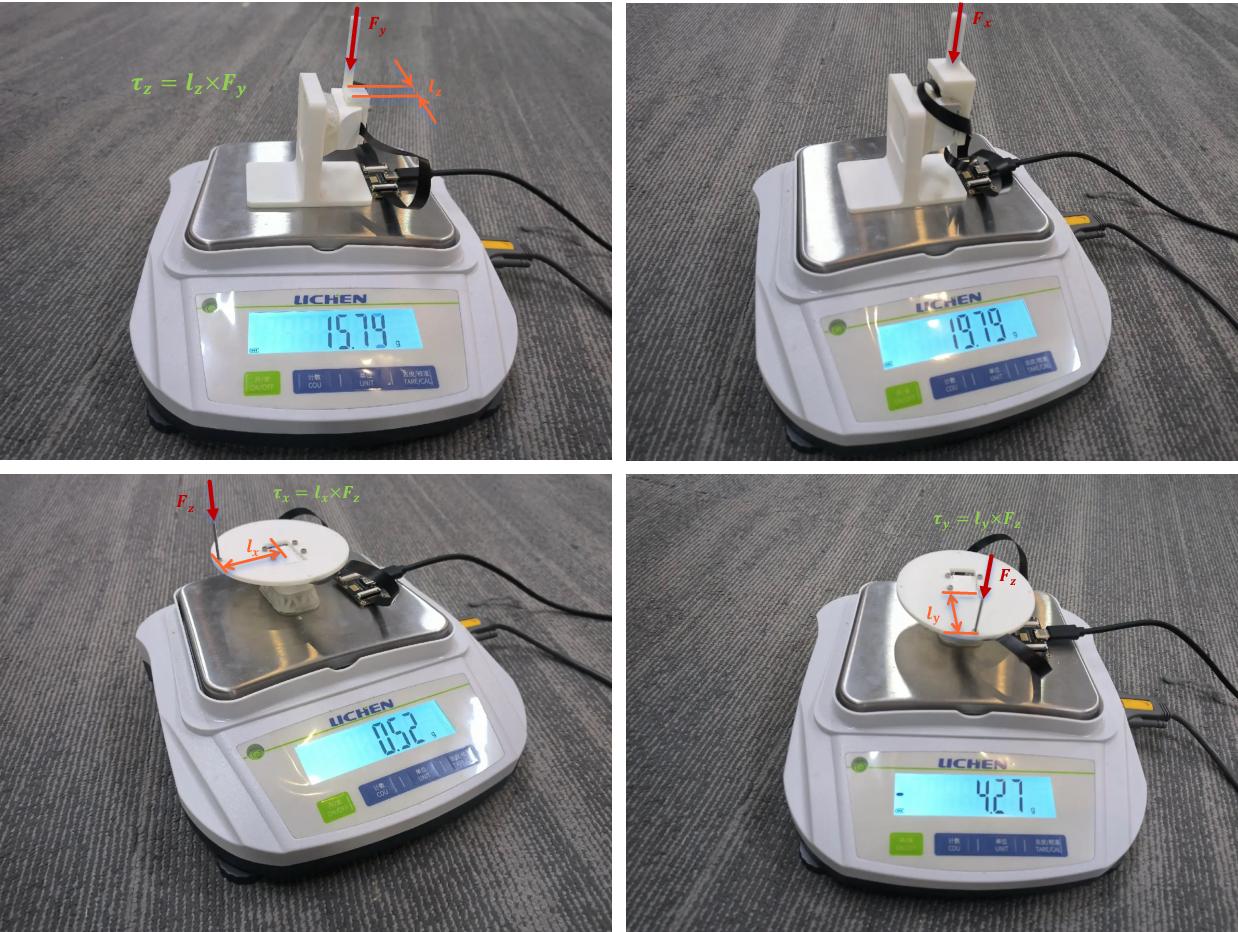
- By tracking how the markers move, the system estimates how hard and in what direction the robot is pushing or twisting. Engineers call that a “wrench,” which just means the combination of forces and torques.
- The parts are low-cost and mostly 3D-printed, making the sensor easier to build.
Teaching the robot: watch-and-copy
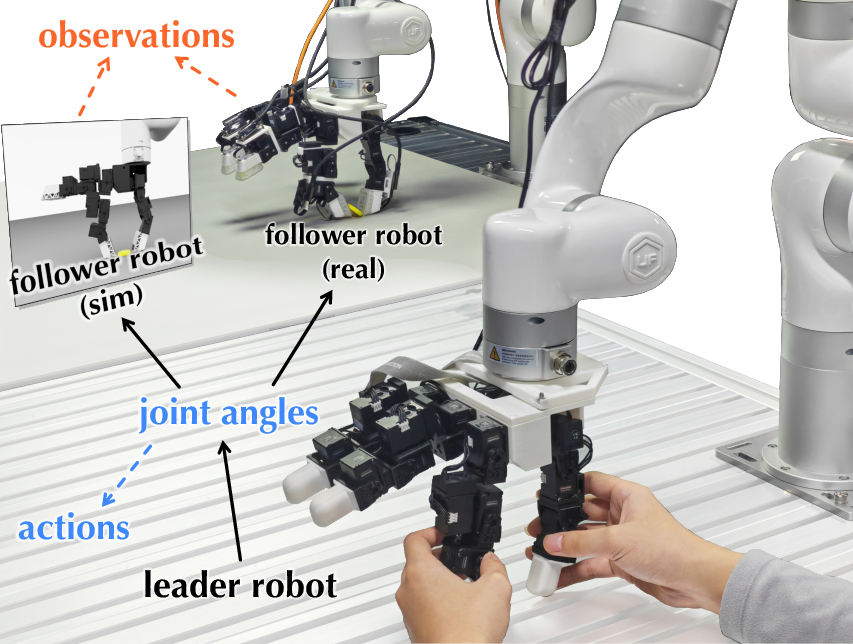
They used imitation learning, which is like “watch-and-copy.” A person teleoperates the robot to do tasks, and the robot records:
- Images from the fingertip sensors and a wrist camera.
- The robot’s joint positions.
- The marker positions from the FingerEye tips (to sense contact).
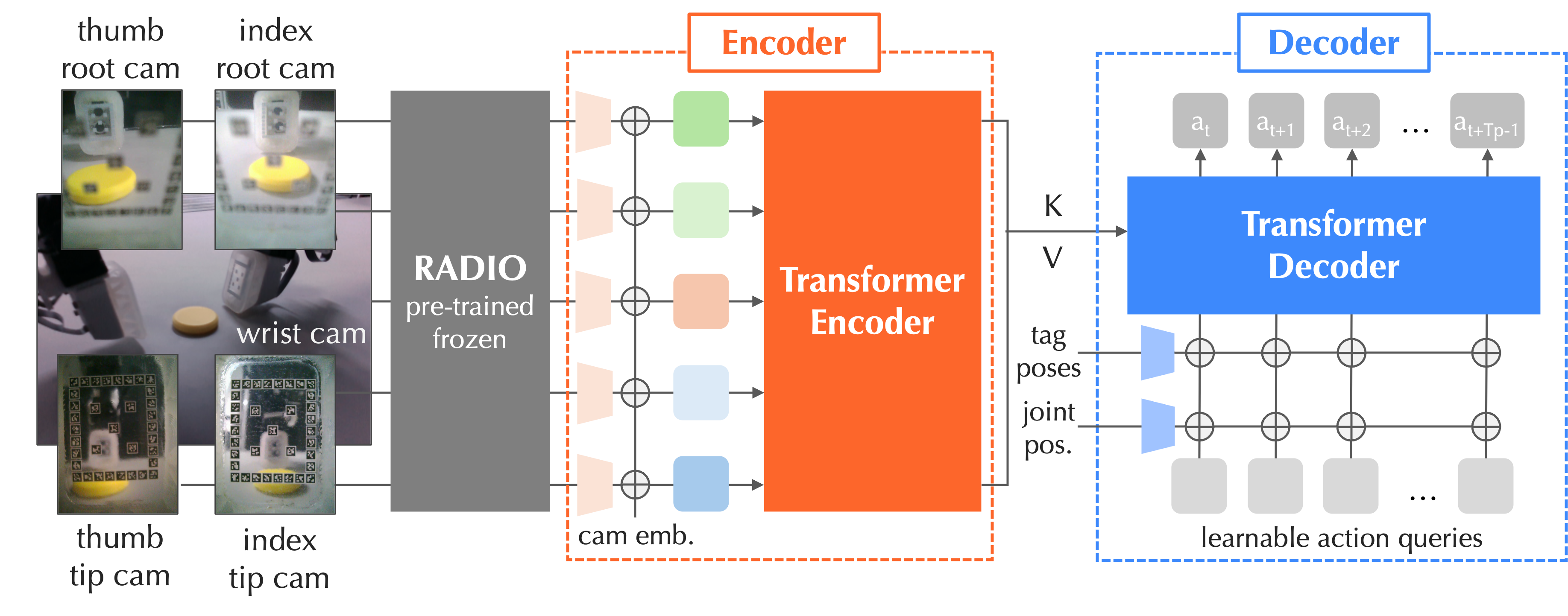
A transformer-based policy (a kind of AI model good at combining many signals) learns to predict sequences of future movements based on what it sees and feels. This helps the robot act smoothly during contact-rich tasks.
A virtual “digital twin” to practice
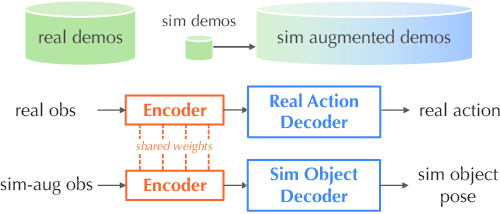
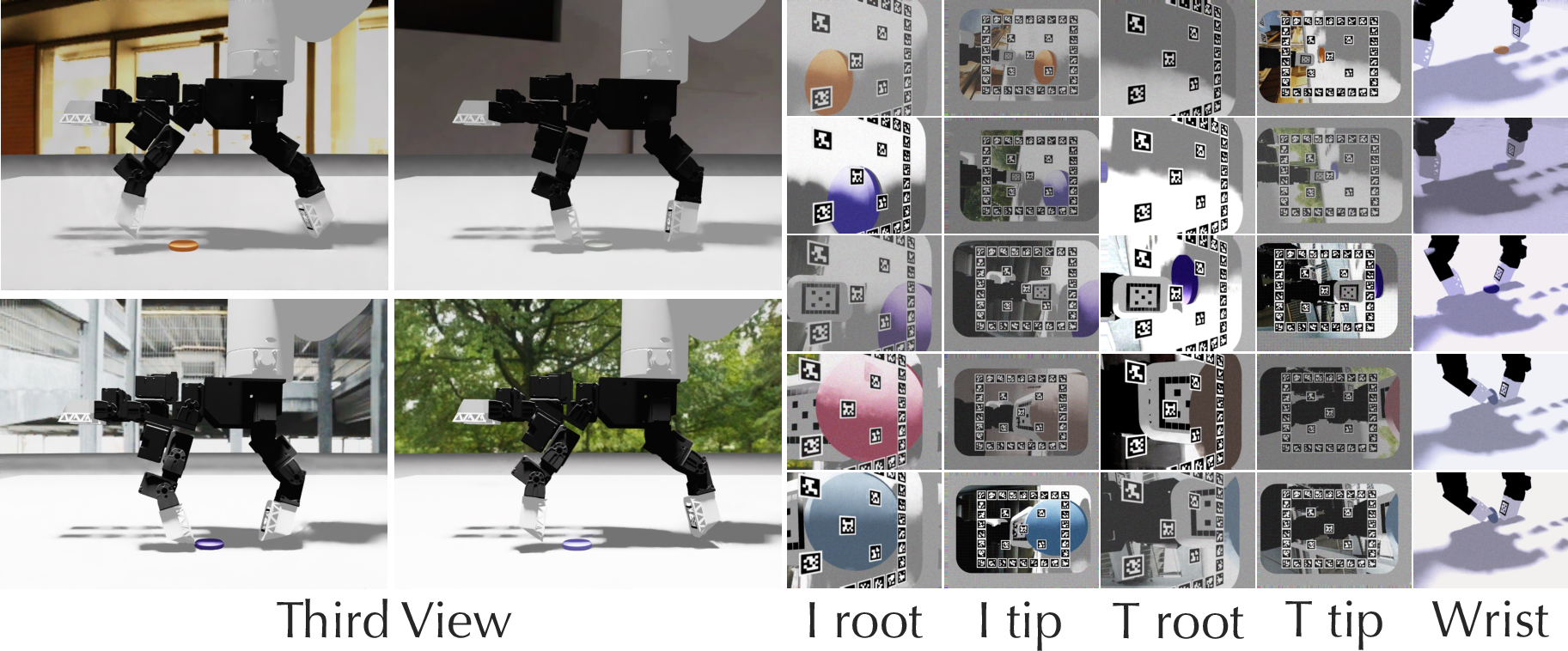
They built a digital twin (a realistic simulation) of the robot and FingerEye. In simulation, they can change lighting and object appearance easily (like changing coin colors). They trained the visual part of the model using both real and simulated images, but they only learned actions from real data. This reduces problems caused by differences between simulation and the real world.
What tests did they run?
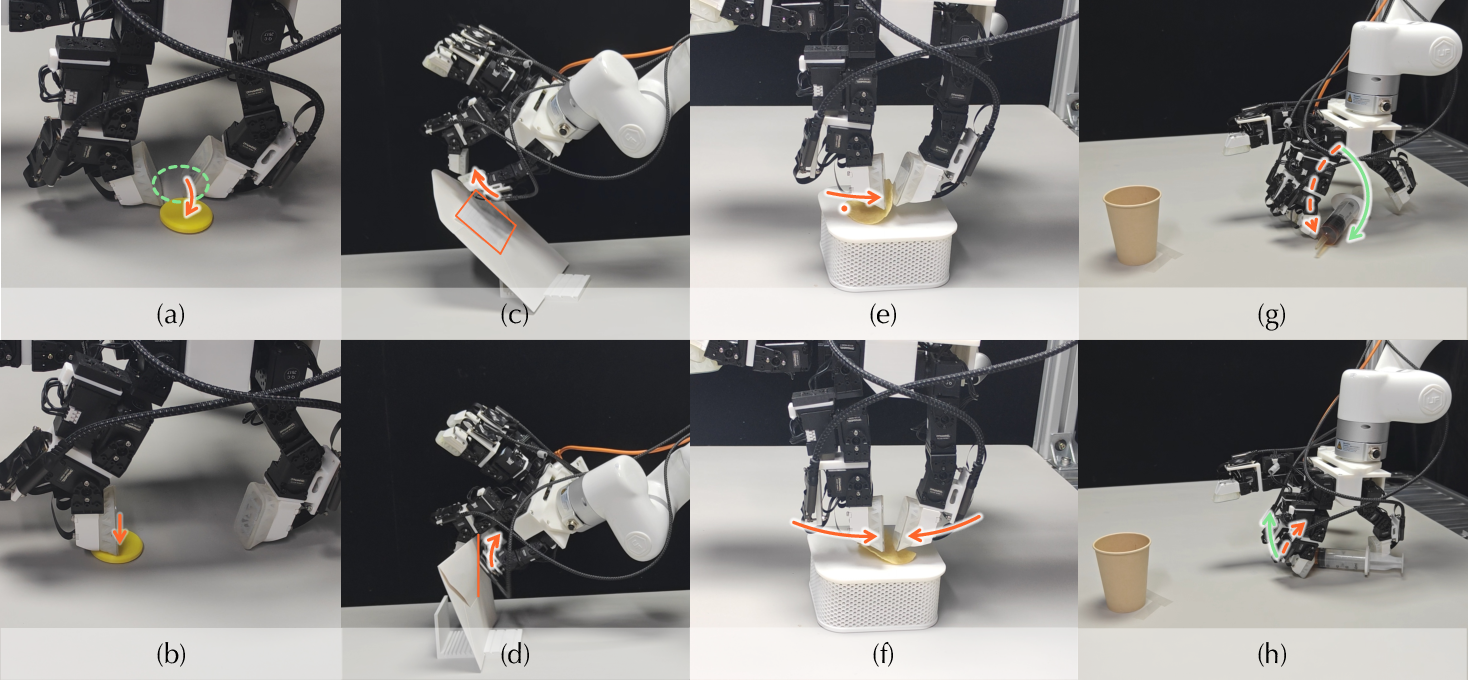
They tried four real-world tasks that need careful touch:
- Coin Standing: stand a flat coin upright without knocking it over.
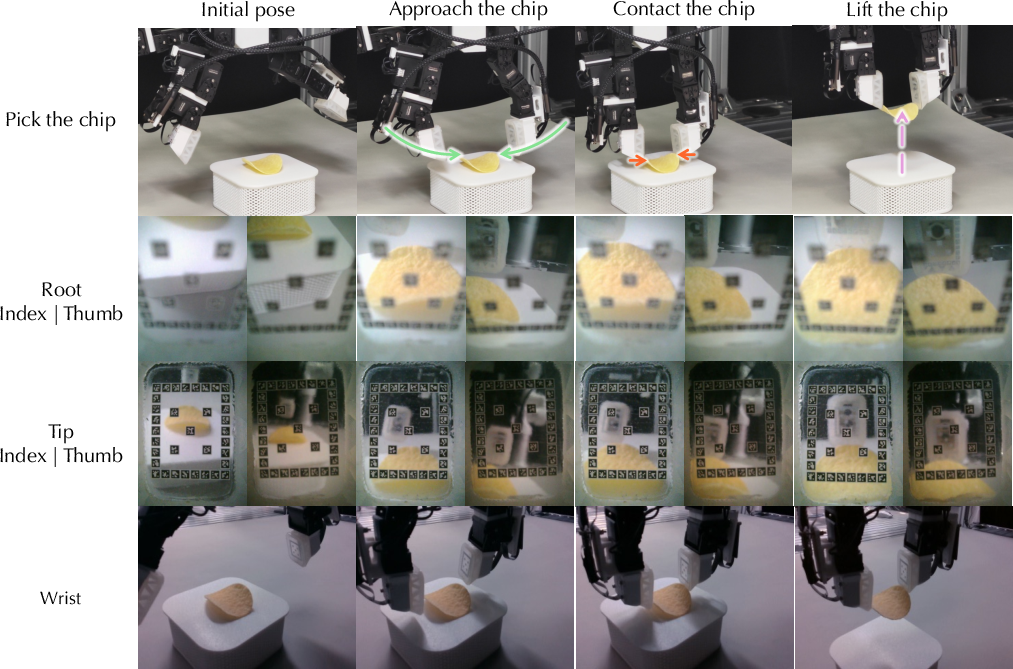
- Chip Picking: lift a thin potato chip without snapping it.
- Letter Retrieving: open an envelope flap and pull out the letter cleanly.
- Syringe Manipulation: grasp and operate a syringe to squirt liquid into a container.
They also measured how sensitive FingerEye is to small forces, how robust it is under different lighting, and how well marker motion maps to actual forces and torques.
What did they find, and why is it important?
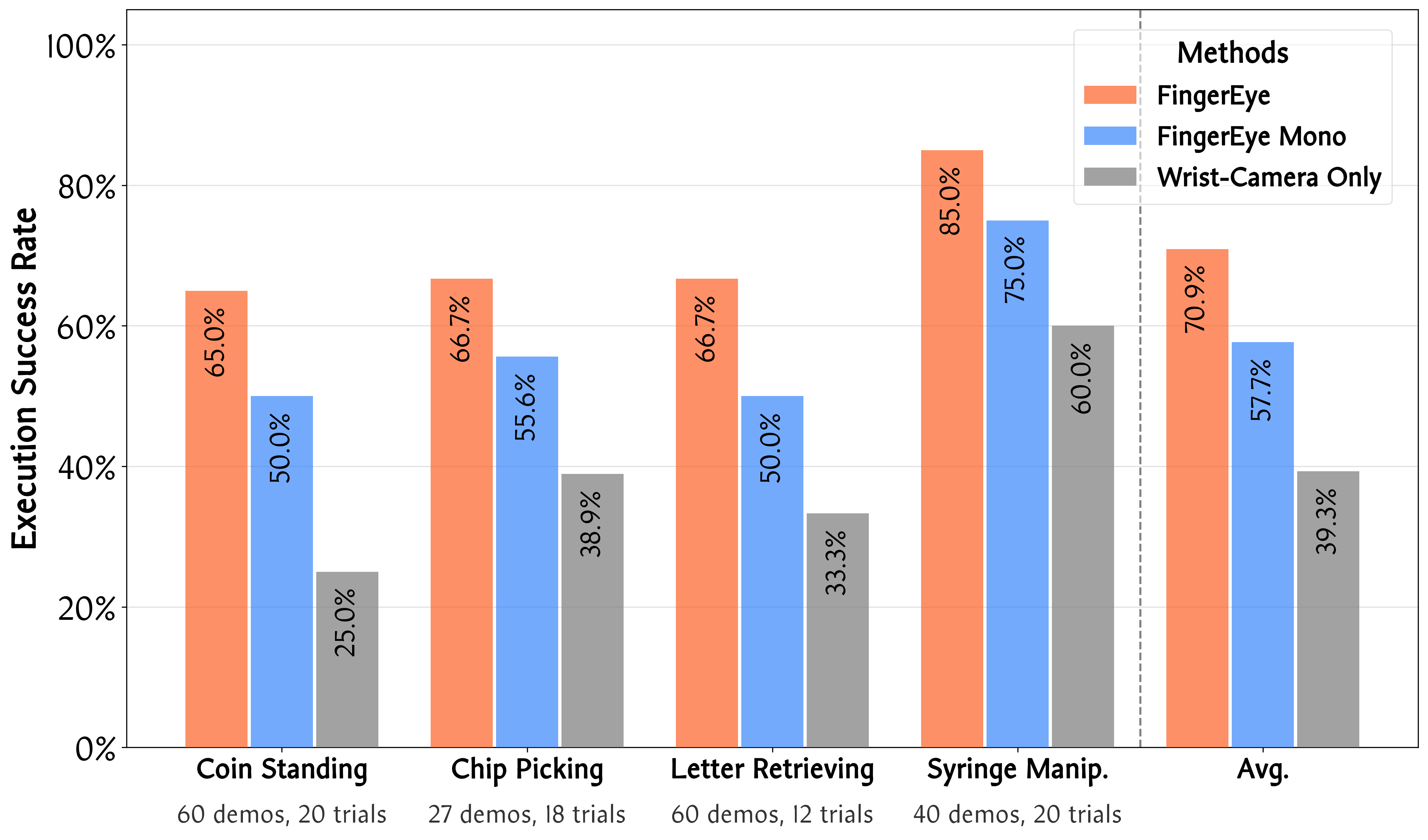
- Continuous “see-and-feel” helps a lot: Policies using FingerEye beat vision-only (wrist camera) policies by over 30% on average across tasks. Seeing only from the wrist often misses tiny edge alignment or the first touch moment, causing the robot to slip, push items away, or fail to grasp.
- Two cameras at the fingertip are better than one: Binocular fingertip sensing gives more reliable depth and distance at close range. This reduces missed contacts and improves precision during delicate maneuvers.
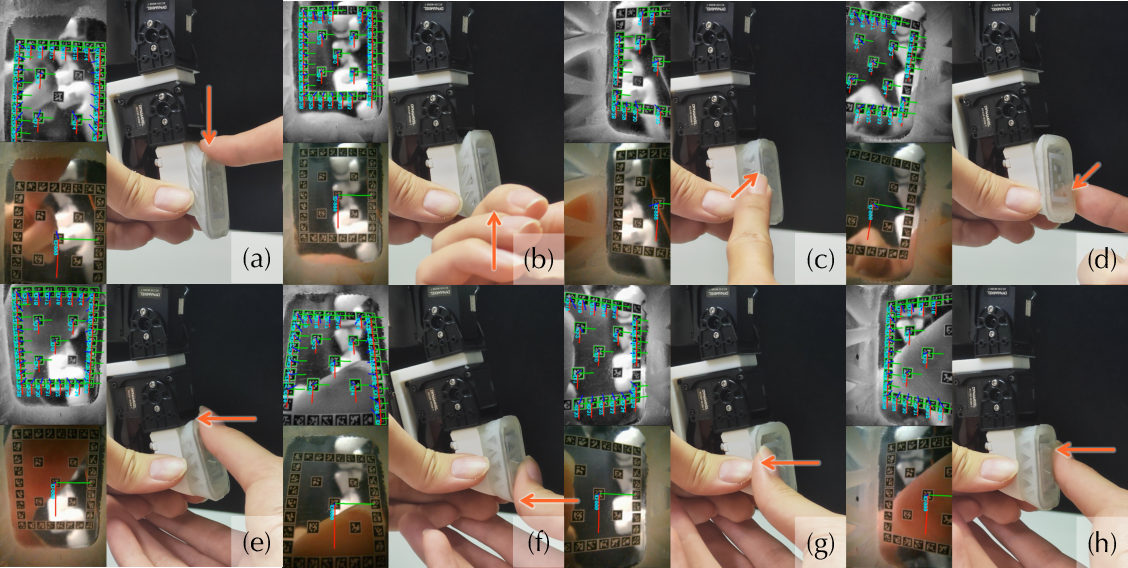
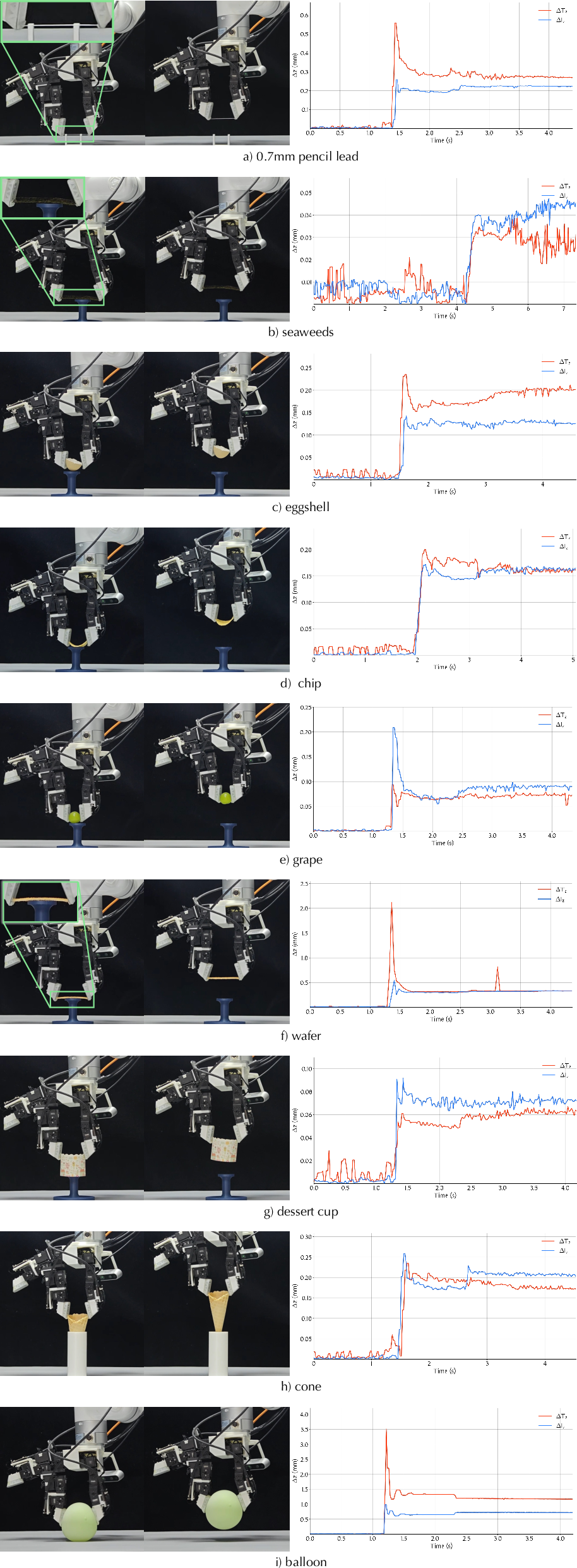
- The sensor detects small forces: FingerEye can sense very small pushes and twists. That’s crucial for fragile items.
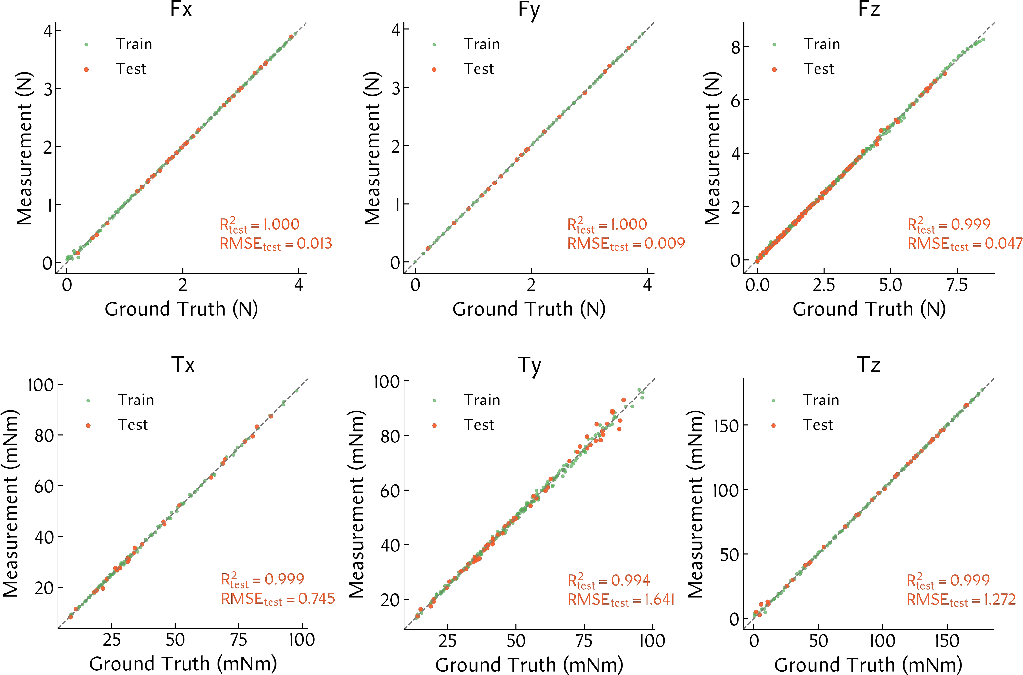
- Marker motion reflects true contact forces: Changes in the AprilTag poses closely match the actual forces and torques applied. This confirms the sensor’s readings are trustworthy.
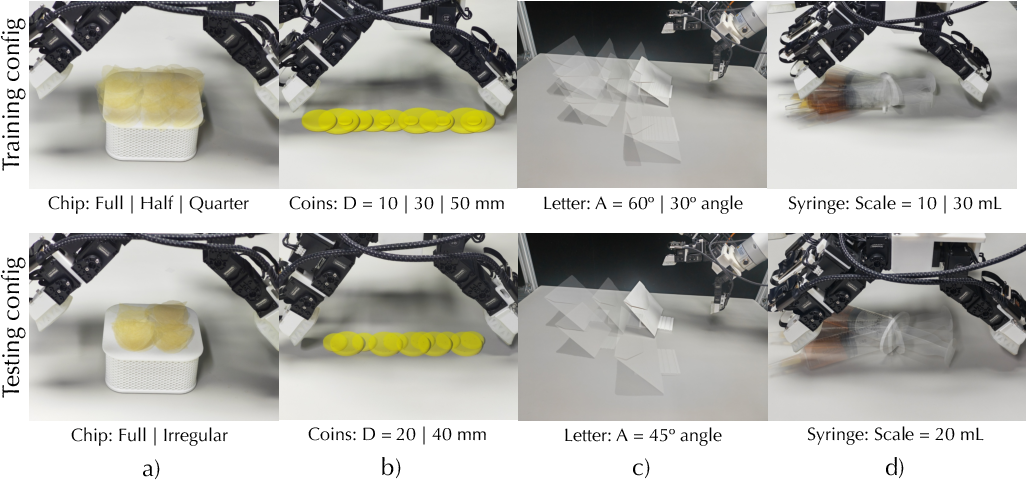
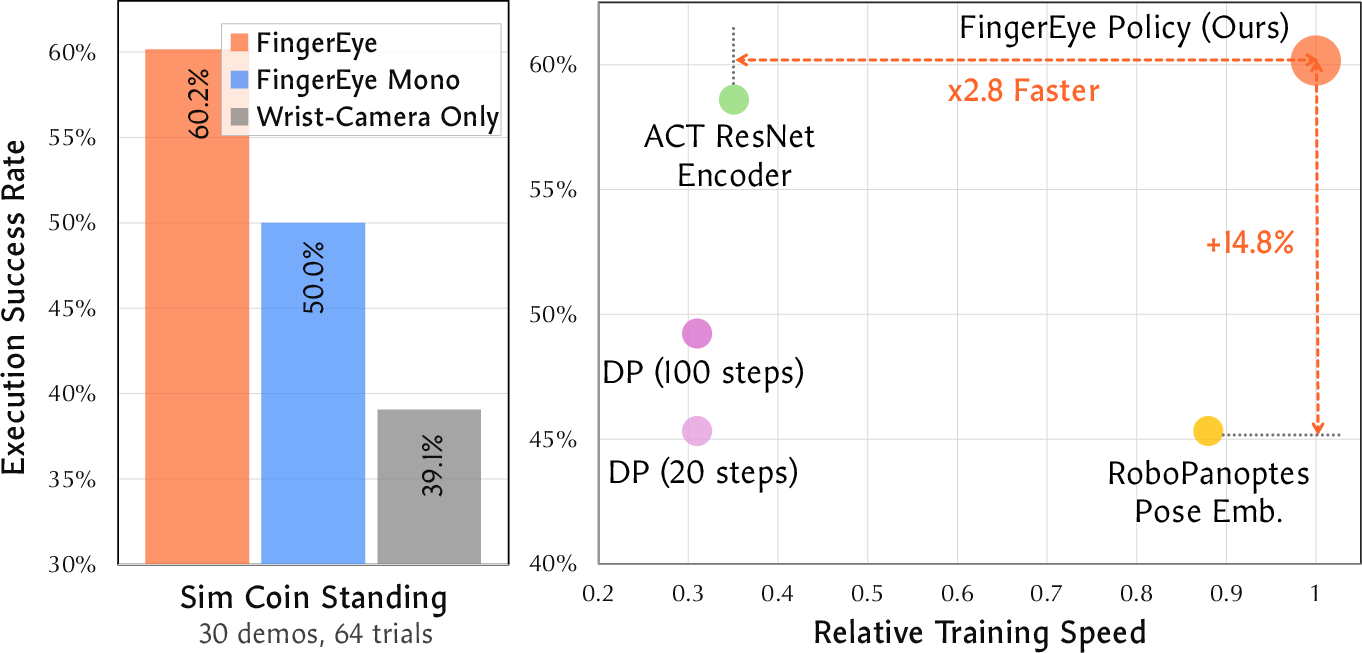
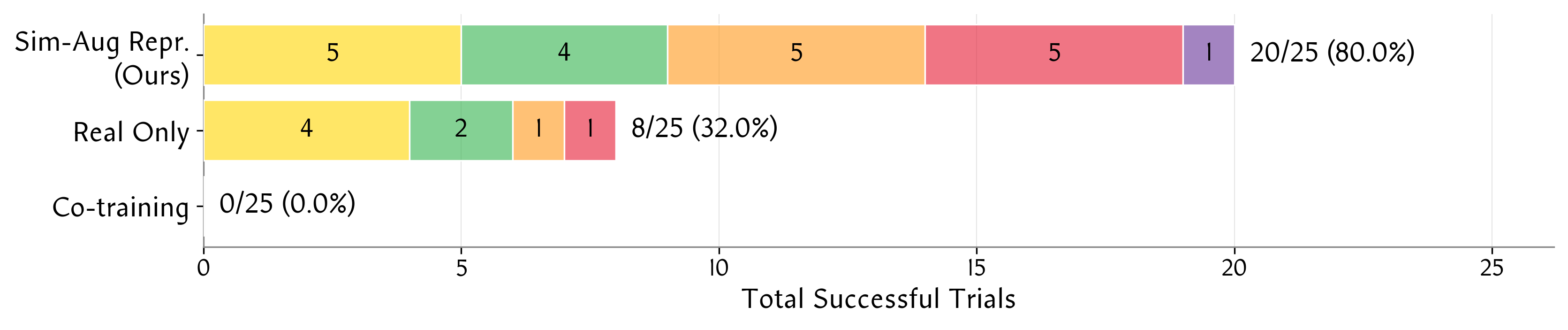
- Learning with a simulation boost improves generalization: When trained with simulated, visually varied images, the robot handled coins of different colors much better—even though it learned actions only from real data. This suggests the biggest gap between simulation and reality is physical interaction, not appearance. Using simulation to teach the model “what to look for,” rather than “how to act,” worked well.
- Efficient and effective model design: Their transformer policy trained faster and achieved higher success rates than several strong baselines, while handling multi-camera inputs smoothly.
Why does this matter?
Robots struggle with the exact moment of touch—getting that right can make the difference between success and failure in delicate tasks. FingerEye gives robots fingertip-level awareness before, during, and after contact, helping them:
- Align precisely with thin edges or small objects.
- Detect the instant of touch and adjust force to avoid damage.
- Maintain stable contact over time without slipping.
This capability could improve robot skills in manufacturing, packaging, medical handling, and home assistance—anywhere careful touch matters.
Limitations and future directions
- The sensor layout and camera positions were chosen by hand; optimizing them automatically could make sensing even better.
- The system currently uses a fixed-base, single-arm robot. Extending to mobile robots or two-handed manipulation could unlock richer tasks.
- FingerEye doesn’t reconstruct the exact contact shape; it focuses on continuous, useful signals for control. Combining it with detailed contact maps in the future might enhance precision further.
- Simulation helped visuals, but action learning still relies on real data. Better sim-to-real physics could reduce the need for costly demonstrations.
Overall, FingerEye shows that simple, low-cost hardware plus smart learning can make robots much more capable at touch-sensitive, dexterous manipulation. Videos, code, and designs are available at the project site: https://nus-lins-lab.github.io/FingerEyeWeb/
Knowledge Gaps
Knowledge gaps, limitations, and open questions
Below is a single, consolidated list of concrete gaps that remain unresolved and can guide future research:
- Lack of explicit contact localization: the sensor reports global acrylic-plate pose changes but does not reconstruct contact patch shape, contact location, or multi-contact distributions across the fingertip.
- Unmodeled coupling in wrench estimation: the pose-to-wrench mapping is validated with per-axis fits; full 6D coupled calibration, cross-axis interference, and invertibility (especially under multi-axis loads) are not characterized.
- Spatial nonuniformity: how pose–wrench sensitivity varies with contact location (central vs. peripheral, frontal vs. lateral) is not quantified or compensated in the mapping.
- Dynamic performance unknowns: bandwidth, latency (camera exposure + detection + estimation + control), and frequency response for fast transients (e.g., slip onset) are not measured.
- Hysteresis and drift: effects of viscoelasticity, temperature, and long-term material aging of the silicone ring on calibration drift and repeatability are unreported.
- Force/torque operating envelope: saturation limits, linearity ranges, overload behavior, and safety margins of the compliant ring are not specified.
- Noise characteristics: sensor noise spectra (pose jitter, force-equivalent noise), dependence on illumination and motion blur, and stability over time are not quantified.
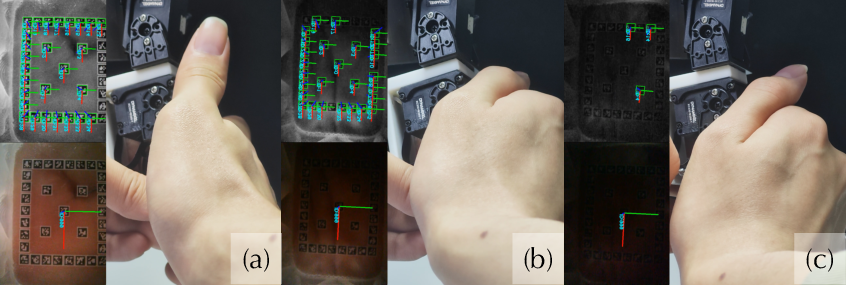
- Robustness to severe lighting: while CLAHE helps under low light, performance in extreme brightness, specular glare on acrylic, direct sunlight, and complete darkness (no active illumination) is not evaluated.
- Contamination and wear: impact of dust, fingerprints, scratches, moisture, and marker degradation on tag detection and calibration fidelity is not assessed; cleaning and maintenance protocols are unspecified.
- Manufacturing variability: cross-unit variability from 3D printing, silicone molding, and assembly tolerances and the need for per-sensor calibration procedures are not studied.
- Camera extrinsic calibration and synchronization: procedures for calibrating and time-synchronizing the two fingertip cameras (and across multiple fingers) are not detailed; robustness to desynchronization/clock drift is unknown.
- Binocular depth quantification: “implicit depth” benefits are shown via task success, but no quantitative depth accuracy/precision benchmarks (e.g., stereo triangulation or depth-from-motion) are provided.
- Explicit depth reconstruction: no attempt to recover metric depth maps or contact distances from binocular observations; potential benefits and costs are unexplored.
- Tag detection limits: AprilTag detection accuracy at high speed, under large viewpoint changes, near-grazing angles, and with small tag size (2 mm) is not systematically benchmarked.
- Marker layout optimization: camera placements and tag layouts are empirically chosen; systematic or learned optimization for coverage, sensitivity, and robustness remains open.
- Peripheral contact ambiguity: the same global plate pose change could arise from different peripheral contact configurations; disambiguation strategies (e.g., additional markers/sensors) are not investigated.
- Slip detection: explicit slip onset detection and friction estimation from temporal pose changes are not developed or benchmarked.
- Friction trade-offs: the acrylic cover reduces friction; added friction material in non-visible regions is a qualitative fix without quantitative analysis of grasp stability vs. visual tracking trade-offs.
- Failure recovery: behavior under temporary tag-loss (occlusion, glare) and strategies for graceful degradation or fallback sensing are not addressed.
- Comparison to STS baselines: no head-to-head comparisons (same tasks/metrics) versus recent see-through-skin or vision-based tactile sensors on force accuracy, spatial resolution, bandwidth, and durability.
- Generalization across embodiments: performance on other hands/finger geometries, sensor placements, and grippers is not evaluated; transferability assumptions are unclear.
- Real-time deployment constraints: inference rates, compute/energy footprint, and performance on embedded platforms are not reported; scalability with more cameras/fingers is unknown.
- Policy control rate vs. sensor rate: demonstrations are logged at 10 Hz; it is unclear whether the sensing/control loop operates faster during deployment and what minimal control rate is required for success.
- End-to-end visual learning: the policy freezes the vision backbone and caches features; benefits/trade-offs of joint fine-tuning or adapter-based updates for contact-rich scenes are not analyzed.
- Action chunking limits: the effect of chunk length on reactivity during rapid contact events and safety under unexpected disturbances is not studied.
- Multi-sensor fusion robustness: sensitivity to camera failures, desynchronization, or dropped frames, and methods for robust fusion across multiple FingerEye units are not explored.
- Digital twin fidelity: the simulation primarily augments appearance; fidelity of contact dynamics, friction, compliance, and deformation-to-pose signals is neither calibrated nor validated against real measurements.
- Dynamics gap mitigation: sim-aug focuses on visual features; strategies to reduce dynamics mismatch (e.g., randomizing compliance, friction, damping; learning dynamics priors) are untested.
- Sim-aug breadth: appearance generalization is tested only on coin color; robustness to geometry, texture, transparency, and clutter changes remains open.
- Data scaling laws: the relationship between number/diversity of demonstrations, sensing modalities, and downstream performance/generalization is not quantified.
- Force-aware control: integration with model-based impedance/force control or wrist F/T sensors for safety and precision is not investigated.
- Long-horizon and bimanual tasks: extension to mobile, bimanual, or humanoid manipulation and tightly coordinated multi-contact sequences is untested.
- Environmental edge cases: performance with transparent/reflective objects, liquids on the acrylic surface, high humidity/temperature, or outdoor conditions is unknown.
- Safety and durability: behavior under sharp-edge contact, large impacts, or ring puncture, and the resulting failure modes and protective design choices are not reported.
Practical Applications
Below is an overview of practical, real-world applications enabled by the paper’s findings, methods, and hardware innovations (continuous vision–tactile sensing, a compact binocular fingertip sensor, AprilTag-based deformation-to-wrench proxy, transformer-based multi-view learning, and a simulation digital twin). Each application notes relevant sectors, what tools/products/workflows could emerge, and key assumptions/dependencies that impact feasibility.
Immediate Applications
- Drop-in fingertip sensing upgrade for cobots and industrial hands
- Sectors: manufacturing, logistics/warehousing, robotics integrators, education
- What: Replace/augment existing fingertips with the ~$60 FingerEye module to add pre-contact alignment and at-contact wrench cues without switching sensors or illumination modes.
- Tools/workflows: 3D-printed housings, off-the-shelf mini cameras, AprilTag tracking, ROS/Isaac Lab integration; optional use of the paper’s transformer “FingerEye Policy” for multi-view fusion.
- Dependencies/assumptions: Mechanical mounting for different grippers (e.g., Robotiq, Leap/Shadow); calibration of cameras and tag layout; adequate ambient lighting (or carefully tuned passive lighting + CLAHE); protective, cleanable acrylic cover; maintaining tag visibility under wear/contamination.
- Delicate pick-and-place of fragile consumer goods
- Sectors: food processing/packaging (chips, confectionery), cosmetics, small goods e-commerce
- What: Reliably lift and move fragile/thin objects (e.g., chips, thin plastic shells) using contact onset detection and gentle force regulation from the deformation-to-wrench signal.
- Tools/workflows: Rule-based “stop on Δz” contact triggers or imitation-learning policies; friction patches on non-imaged areas as suggested in the paper; multi-finger coordination.
- Dependencies/assumptions: Food-grade, cleanable materials when applicable; line-cycle-time validation; consistent illumination; surface-dependent friction tuning due to rigid acrylic.
- Precision assembly and insertion (press-fit, wedging thin edges, coin-cell/connector work)
- Sectors: electronics assembly, small-device manufacturing, medical-device assembly
- What: Use fingertip-centric stereo cues for pre-contact alignment and post-contact wrench cues to control insertion forces/torques, reducing misalignment and scrap.
- Tools/workflows: Multi-view transformer policies; per-task calibration mapping g(ΔL)→wrench; QA thresholds on contact signals.
- Dependencies/assumptions: Tag visibility in tight spaces; repeatable calibration for force thresholds; cycle-time constraints; ESD and cleanliness requirements for electronics lines.
- Packaging and mailroom automation (envelope opening and thin-sheet handling)
- Sectors: logistics, office automation, service robots
- What: Open flaps, wedge gaps, pinch thin sheets/letters with continuous sensing during approach and contact.
- Tools/workflows: Task-specific imitation learning; small sets of demonstrations; binocularity for millimeter-level alignment.
- Dependencies/assumptions: Variation in envelope materials/geometries; moderate lighting consistency; policy re-training for new SKUs.
- Lab automation: syringe manipulation and gentle actuation
- Sectors: healthcare, biotech/pharma, laboratory automation
- What: Grasp, orient, and press syringe plungers with stable multi-contact control and small torque detection.
- Tools/workflows: Integration with arm+hand controllers; imitation learning with few demos; plunger force thresholds from ΔL→wrench mapping.
- Dependencies/assumptions: Cleanable/sterilizable sensor cover; liquid handling safety and regulatory compliance; repeatable calibration; chemical compatibility of materials.
- Safer human–robot interaction via gentle contact detection
- Sectors: collaborative robotics (HRI), factory automation
- What: Use sensitive contact onset detection to reduce contact forces with people/objects; stop or modulate motion at first touch.
- Tools/workflows: Low-latency Δz/pose-based reflexes; hybrid impedance control informed by fingertip deformation.
- Dependencies/assumptions: Certified safety workflows and emergency stops still required; robustness to clothing/skin textures; validation against standards.
- Teleoperation with contact-aware assistance
- Sectors: field robotics, nuclear/defense maintenance, remote handling
- What: Leader–follower teleop augmented with automatic halting at contact onset and fingertip stereo alignment cues to reduce operator workload and errors.
- Tools/workflows: The paper’s leader–follower interface; joint-space PD tracking; on-the-fly Δz thresholds; lightweight haptic cues (audio/visual).
- Dependencies/assumptions: Network latency/jitter; training operators on contact-aware behavior; robust lighting or local passive illumination.
- Research and education platform for continuous vision–tactile sensing
- Sectors: academia, R&D labs, robotics courses
- What: Low-cost, reproducible sensor for teaching and benchmarking continuous sensing across pre-, at-, and post-contact phases.
- Tools/workflows: Open-source designs, AprilTag pose tracking, Isaac Lab digital twin, feature-caching training recipe.
- Dependencies/assumptions: Access to small cameras and 3D printing; maintenance of tag patterns; reproducible silicone molding.
- Quick, in-line quality checks using deformation-to-wrench proxies
- Sectors: manufacturing QA, assembly validation
- What: Threshold small force/torque signatures to confirm a component is seated or an insertion is complete; detect subtle misfits.
- Tools/workflows: Axis-wise 1D regressors (as in the paper’s g(ΔL)); per-fixture calibration.
- Dependencies/assumptions: Stability of calibration over time and temperature; controlled contact geometry; routine recalibration schedules.
- Dataset generation and sim-augmented policy training
- Sectors: robotics/AI tooling
- What: Combine small real datasets with visually diversified simulated observations (digital twin) to improve appearance robustness.
- Tools/workflows: Isaac Lab twin, domain randomization, shared-encoder/multi-decoder setup, visual feature caching for faster training.
- Dependencies/assumptions: Sim–real dynamics gap remains; visuals augment representations but actions are learned from real data; GPU availability.
Long-Term Applications
- General-purpose household assistants handling diverse, contact-rich tasks
- Sectors: consumer/home robotics, eldercare/assistive tech
- What: Picking thin objects (cards, pages), opening packages, manipulating zippers/buttons, handling delicate foods.
- Tools/workflows: Multi-finger policy learning across varied objects; large-scale sim-to-real with the digital twin; onboard multi-camera sensing.
- Dependencies/assumptions: Robustness to clutter, dirt, and large appearance shifts; long-horizon task decomposition; durable, washable materials; embedded compute.
- Surgical and micro-manipulation robotics with fine force-awareness
- Sectors: medical robotics, microsurgery, micro-assembly
- What: Miniaturized continuous vision–tactile fingertips for gentle tissue handling or sub-millimeter part placement.
- Tools/workflows: Sterilizable, downscaled sensors; higher-resolution force mapping; regulatory-grade validation.
- Dependencies/assumptions: Biocompatibility, sterilization cycles, strict regulatory approval; custom optics under body fluids; significant miniaturization R&D.
- Electronics micro-assembly and repair at scale
- Sectors: semiconductor back-end, consumer electronics, repair automation
- What: High-precision edge finding and low-force contact for connectors, flex cables, tiny fasteners.
- Tools/workflows: Tighter ΔL→wrench calibration; ESD-safe materials; closed-loop dexterous policies; high-throughput fixturing.
- Dependencies/assumptions: Cleanroom compatibility; dust/oil resilience; more robust markers for long-term visibility.
- Bimanual/humanoid dexterous manipulation with unified fingertip sensing
- Sectors: advanced robotics, logistics, manufacturing, service robots
- What: Coordinated multi-finger and multi-hand tasks (regrasping, threading, knot-tying, tool use) with continuous sensing on every fingertip.
- Tools/workflows: Scalable multi-sensor fusion (synchronization, time stamping), decentralized policies, learned contact sequencing.
- Dependencies/assumptions: Cable routing and power constraints; synchronization across dozens of cameras; compute budgets; rigorous calibration.
- Closed-loop lab workflows (pipetting, microfluidics, sample prep)
- Sectors: biotech, pharma R&D
- What: Continuous sensing for handling delicate labware (PCR tubes, slides) and actuating plungers/valves precisely.
- Tools/workflows: Specialized gripper attachments, sterile covers, learned routines with sim-augmented representations.
- Dependencies/assumptions: Sterility and contamination control; compatibility with solvents; long-term material stability.
- Telerobotics with haptic feedback from vision–tactile fusion
- Sectors: telemedicine, disaster response, offshore/space robotics
- What: Stream continuous contact cues back to operators via haptic devices or multimodal feedback; improved dexterity under limited visibility.
- Tools/workflows: Low-latency encoding of ΔL/wrench proxies; haptic mapping interfaces; predictive displays.
- Dependencies/assumptions: Bandwidth and latency constraints; robust encoding of contact signals; standardized haptic interfaces.
- High-mix/low-volume manufacturing via fast imitation learning
- Sectors: contract manufacturing, SMEs
- What: Rapidly teach new contact-rich tasks with few real demos plus sim-augmented visuals to generalize across product variants.
- Tools/workflows: Turnkey “teach-and-deploy” kits combining FingerEye, policy training, and domain randomization presets.
- Dependencies/assumptions: Workforce skills for quick demo capture; product-specific calibration; managing dynamics gaps for new materials.
- Standardization and policy for vision–tactile end-effectors
- Sectors: standards bodies, regulators, industry consortia
- What: Define test methods for continuous sensing (pre-/at-/post-contact), safety thresholds for contact forces, and interoperability (interfaces, calibration).
- Tools/workflows: Reference fixtures for calibration; open datasets and benchmarks; certification protocols.
- Dependencies/assumptions: Cross-vendor collaboration; consensus on metrics (e.g., minimum detectable wrench, latency, durability).
- Commercial productization: ruggedized, plug-and-play FingerEye kits
- Sectors: robotics OEMs, integrators, component suppliers
- What: Sealed, dust/oil-resistant, food-safe variants with swappable covers; software SDKs for AprilTag pose, ΔL→wrench APIs, and policy templates.
- Tools/workflows: Mass manufacturing of silicone rings and acrylic covers; service kits for replacement; cloud or edge training pipelines.
- Dependencies/assumptions: IP landscape; supply chain for miniature cameras; long-term reliability under industrial contaminants and impacts.
- Outdoor and harsh-environment manipulation (agriculture, energy, construction)
- Sectors: agriculture (delicate fruit handling), energy maintenance (valves, gauges), construction (thin materials)
- What: Pre-contact alignment and gentle contact detection in unstructured settings and confined spaces.
- Tools/workflows: Ruggedized enclosures, weather sealing, adaptive exposure/CLAHE tuning; domain-randomized training for lighting/weather.
- Dependencies/assumptions: Extreme lighting variability; water/dust ingress protection; tag detectability under soiling; optional active illumination research.
Notes on cross-cutting dependencies and assumptions:
- Sensing and calibration: Stable AprilTag detection (clean optics, consistent lighting), multi-camera calibration, and periodic ΔL→wrench recalibration are required for reliable force inference.
- Friction and materials: Rigid acrylic improves imaging but may need added high-friction patches (outside the camera’s view) and food-/bio-safe variants; long-term wear and scratch resistance matter.
- Compute and latency: Multi-camera streams and transformer policies require edge compute; feature caching helps training but real-time inference still needs optimization.
- Data and generalization: Real demonstrations remain key for dynamics; simulated images help appearance robustness but cannot substitute real action labels in contact-rich tasks.
- Integration: ROS/Isaac Lab support accelerates adoption; mechanical adapters and cable routing are non-trivial for multi-finger hands.
Glossary
- Action chunking: A control strategy that predicts and executes short sequences of future actions to improve temporal consistency. "We employ a transformer-based imitation learning policy with action chunking"
- Action queries: Learnable query vectors used by a transformer decoder to generate action sequences conditioned on observations. "The transformer decoder predicts an action chunk using a set of learnable action queries."
- AprilTag: A square, robust fiducial marker system used for camera-based pose estimation. "A custom AprilTag layout that provides robust and reliable detection under diverse visual conditions, enabling accurate pose estimation and sensitivity to subtle 6D contact wrench cues."
- Binocular camera system: A two-camera setup providing stereo cues for depth and close-range perception. "A binocular camera system with complementary placements and focal configurations provides implicit depth perception across interaction phases."
- Blob-based tracking: A vision technique that tracks image regions (blobs) based on intensity or shape, often used for simple markers. "keyline-style circular markers with blob-based tracking"
- CLAHE (Contrast Limited Adaptive Histogram Equalization): A local contrast enhancement method that improves visibility under poor lighting. "stable detection under lighting variation with CLAHE."
- Compliant soft ring: A deformable structural element that yields under contact forces, enabling tactile sensing from deformation. "The compliant soft ring is fabricated via silicone molding and serves both as a mechanical buffer and as a deformation-based sensing medium."
- Contact wrench: The combined vector of forces and torques at a contact, typically in six dimensions. "serve as a proxy for contact wrench sensing."
- Cross-attention: A transformer operation that aligns and fuses information between queries (e.g., actions) and encoded observations. "Cross-attention~\cite{vaswani2017attention} between the action queries and encoded observation tokens then produces temporally coherent action sequences."
- Digital twin: A high-fidelity simulation replica of a physical system used for data generation and transfer learning. "We further develop a digital twin of our sensor and robot platform to improve policy generalization."
- Diffusion policy: A control policy that generates actions by denoising from noise using a diffusion model. "Diffusion Policies, using a UNet-based diffusion policy with short (20-step) and long (100-step) denoising schedules~\cite{chi2023diffusion}."
- Elastomer: A rubber-like polymer with high elasticity, used in tactile skins or transparent interfaces. "using a transparent elastomer and persistent illumination"
- EPnP (Efficient Perspective-n-Point): An algorithm to estimate a camera’s pose from 3D–2D point correspondences efficiently. "using EPnP followed by Levenberg--Marquardt refinement."
- Euler angles: A three-parameter representation of 3D rotations using sequential rotations about coordinate axes. "with rotations represented as Euler angles."
- Fiducial: A known reference marker used in vision systems for reliable detection and pose estimation. "we perform a fiducial-based analysis to estimate the minimum detectable forces and torques of FingerEye."
- GelSight: A vision-based tactile sensor that measures surface deformation of a soft gel to infer contact geometry and forces. "many existing tactile sensors, such as GelSight and its variants, only provide feedback after contact is established"
- Gravity compensation: A teleoperation mode that offsets gravity to make the leader robot feel weightless for easier guidance. "The leader operates in passive mode with gravity compensation,"
- Imitation learning: A learning paradigm where policies are trained to mimic expert demonstrations. "we develop a vision-tactile imitation learning policy that fuses signals from multiple FingerEye sensors to learn dexterous manipulation behaviors"
- Isaac Lab: An NVIDIA robotics simulation framework for large-scale, high-fidelity embodied learning. "we develop a simulation digital twin of FingerEye\ in Isaac Lab~\cite{mittal2025isaaclab}"
- Levenberg–Marquardt: A nonlinear least-squares optimization method for refining parameter estimates. "using EPnP followed by Levenberg--Marquardt refinement."
- Minimum detectable wrench: The smallest force/torque vector magnitude that a sensing system can reliably detect. "The resulting minimum detectable wrench is"
- PD control (Proportional–Derivative control): A feedback control law using proportional and derivative terms to track targets. "the follower tracks the streamed joint positions via PD control."
- PnP (Perspective-n-Point): The problem of estimating camera pose from known 3D points and their 2D projections. "can be aggregated into one multi-tag PnP estimate under partial occlusion and non-uniform deformation."
- RADIO (vision backbone): A pretrained visual feature extractor used to encode images before fusion in the policy. "a frozen pretrained vision backbone (RADIO~\cite{ranzinger2024radio})."
- SE(3): The Special Euclidean group in 3D, representing all 3D rigid-body poses (rotations and translations). "\arg\min_{\mathbf{T}\in SE(3)}"
- See-Through-Skin (STS) sensor: A class of sensors that integrate visual and tactile perception through semi-transparent skins. "See-Through-Skin sensors address this limitation by combining visual and tactile perception within a single sensing surface."
- Silicone molding: A fabrication process using silicone to cast compliant components for sensors or grippers. "The compliant soft ring is fabricated via silicone molding"
- Sim-to-real learning: Techniques that leverage simulation to improve real-world performance despite dynamics and appearance gaps. "enable scalable data generation and sim-to-real learning."
- TacTip: A vision-based tactile sensor using internal pins under a soft skin to infer contact from deformation patterns. "Compared to vision-based tactile sensors such as GelSight~\cite{yuan2017gelsight} and TacTip~\cite{ward2018tactip}, which primarily sense deformation after contact"
- Teleoperation: Human control of a robot, often via a master–slave setup for demonstration collection. "Demonstrations are collected using a leaderâfollower teleoperation setup"
- UNet: A convolutional encoder–decoder architecture commonly used in diffusion models and dense prediction. "using a UNet-based diffusion policy"
- Visual domain gap: Differences in visual appearance between training and deployment that can degrade model performance. "reducing visual domain gaps and enabling stable perception and control in contact-rich dexterous manipulation tasks."
Collections
Sign up for free to add this paper to one or more collections.

