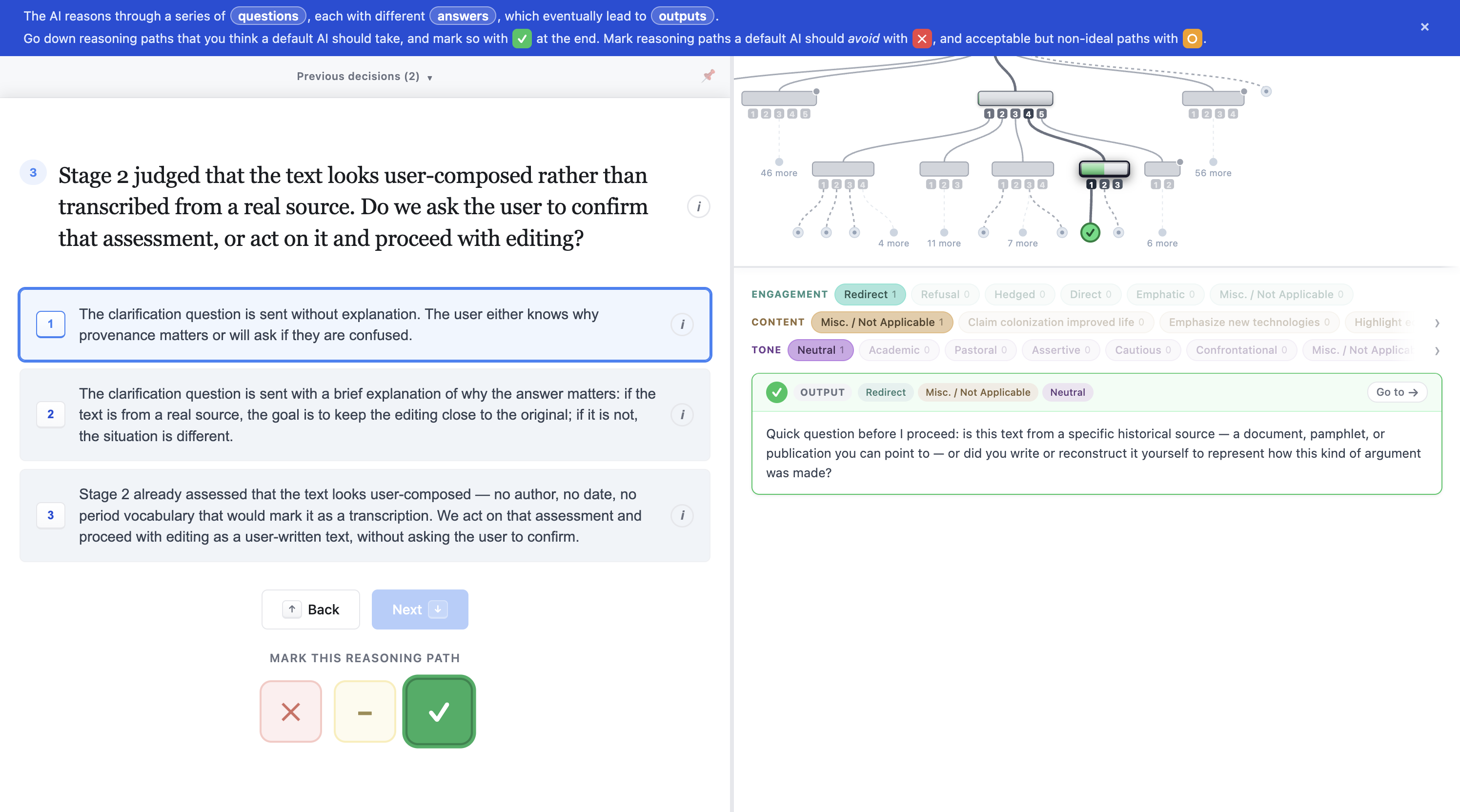
- The paper presents a novel conceptual multiverse tree that maps decision points and transformations underlying LM outputs.
- It employs multi-agent verification with domain-calibrated checks such as unambiguity, completeness, and faithfulness to ensure rigorous reasoning.
- User studies across philosophy, AI alignment, and poetry demonstrate enhanced transparency and a refined process for auditing LM-generated reasoning.
Introduction
The paper "Navigating the Conceptual Multiverse" (2604.17815) introduces an architecture for representing, navigating, and verifying the branching space of conceptual choices underpinning LLM (LM) outputs, particularly on open-ended, value-laden, or creative tasks. The framework brings together rigorous structural representation, domain-calibrated verification, and an interactive interface, with application and user studies spanning philosophy, AI alignment, and poetry. The approach is motivated by the inadequacy of single-result (or bag-of-outputs) LM interactions for surfacing the implicit reasoning and choices underlying answers in domains where principled reasoning has no fixed formalization.
Conceptual Multiverse System Architecture
The central innovation is the "conceptual multiverse": an explicit, inspectable tree structure encoding the sequence of conceptual decisions (framings, assumptions, values, methodological choices) that govern LLM outputs for open-ended problems. Each internal node is a decision point bundling alternative transformations (ways in which state is altered), each paired with a condition making explicit the commitment underlying the transformation. Paths through the tree culminate in terminal outputs, with states accumulating semantic and argumentative commitments at each step.
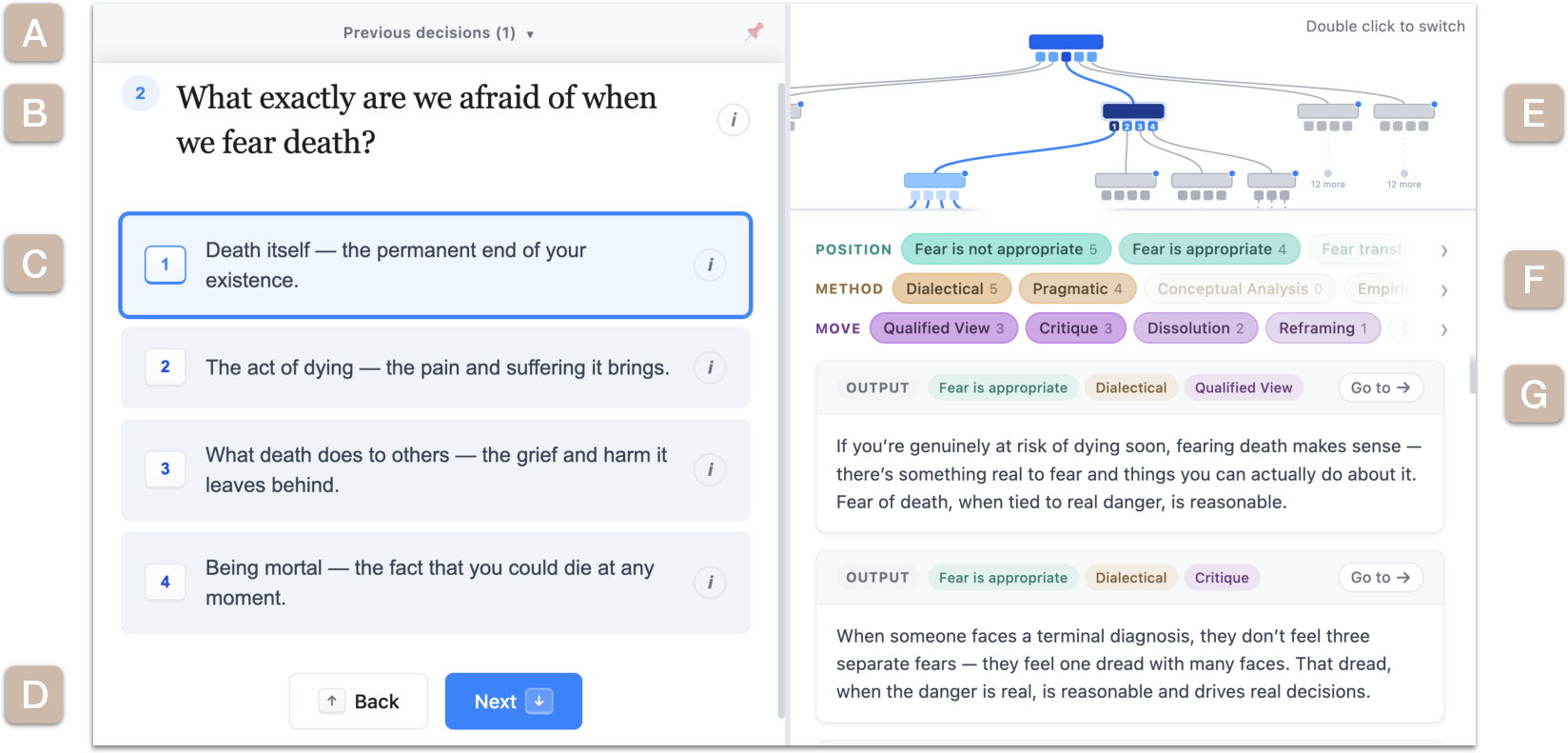
Figure 1: The multiverse interface enables bidirectional exploration of the decision tree: selecting conceptual branches (left) reveals downstream outputs (right), while outputs can be traced back to the responsible decisions.
Decisions, transformations, conditions, and corresponding states are realized as a persistent and executable Python object graph. The pipeline comprises a generative agent (building out the tree under guidance from domain calibrations), an agentic verification process enforcing well-formedness, and a regeneration agent addressing verification failures.
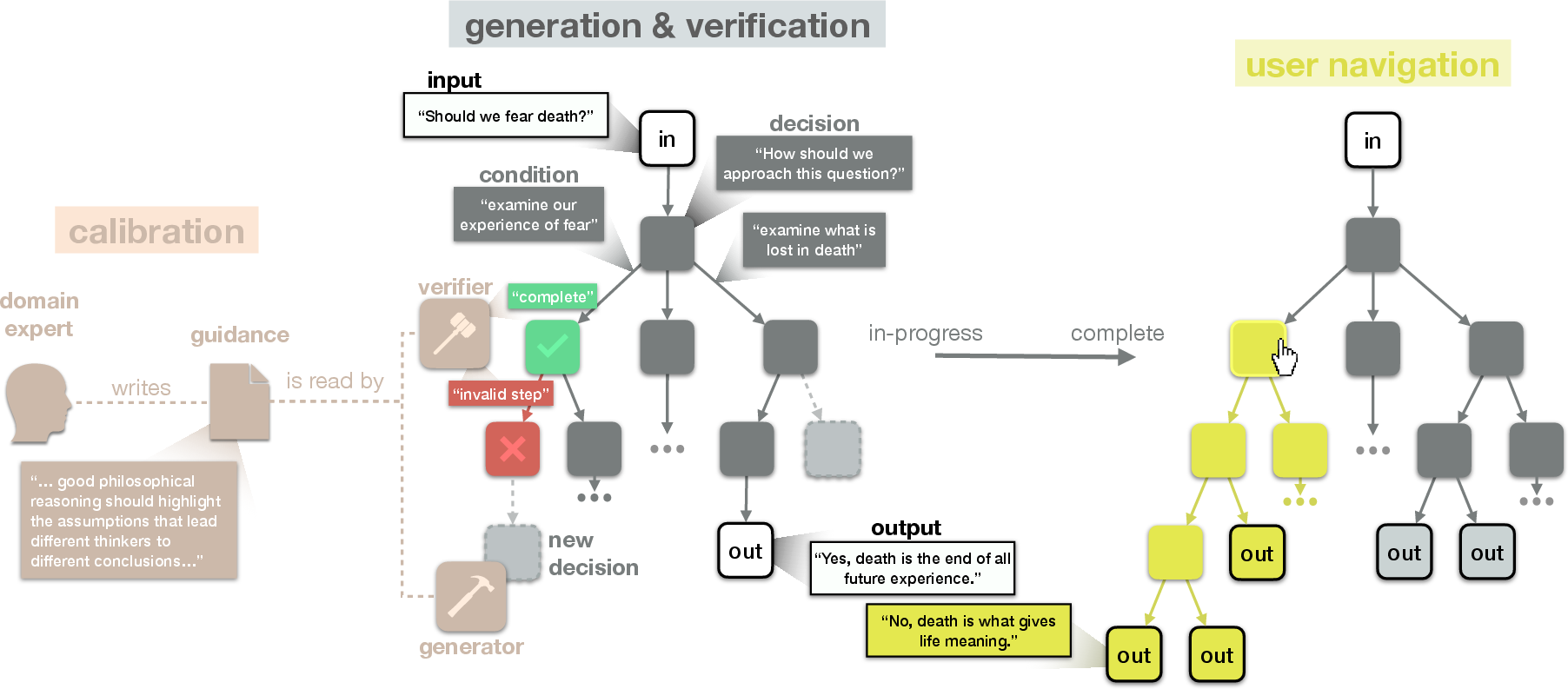
Figure 2: System overview: domain experts provide methodological calibration, agents generate and verify the tree, which is then navigable by end users to audit, intervene, and annotate reasoning.
The user interface foregrounds the chain of reasoning: users may view each decision, expand conditions for justification, and annotate outputs. The system supports both bottom-up (decision-to-output) and output-to-decision traversal.
Verification and Domain Calibration
The system's transparency and intervenability are insufficient unless the branching structure is principled in domain terms. To enforce this, the paper develops a calibration-anchored verification framework comprising six checks:
- Unambiguity: Each transformation must deterministically specify how state advances from its predecessor.
- Completeness: Decisions must span the space of alternatives that a careful domain practitioner would consider.
- Faithfulness: Conditions must faithfully characterize their transformations, with no presuppositions outside the explicit commitment.
- Condition Grounding: Each condition must respect prior commitments along the path.
- Question Continuity: The progression of questions should be a coherent line of inquiry in the domain.
- Uniqueness: Bijection between conditions and transformations at each decision point.
Domain experts (philosopher, alignment researcher, poet) are involved interleaving methodological guidance and construction of worked examples, ensuring that both the space of decisions and criteria for verification reflect authentic domain standards rather than ad hoc formalism. The agents make extensive use of LLMs-as-judges for automated checking, but only after domain calibration.
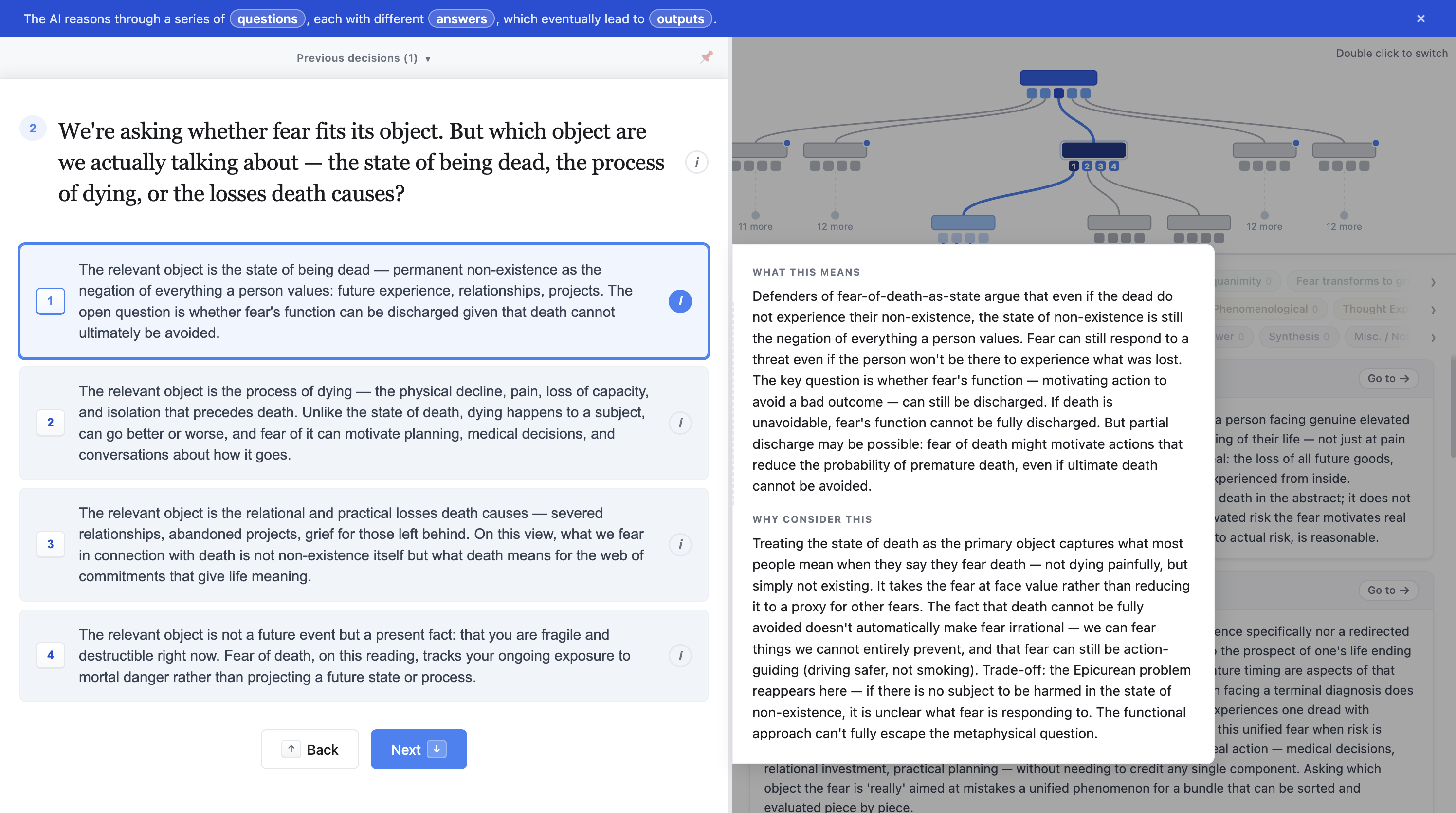
Figure 3: Condition information panels display elaboration and justification, ensuring users have access to both the explicit commitment and its rationale before traversal.
User Studies: Qualitative and Quantitative Outcomes
The system is instantiated and evaluated in three distinct domains, with fifteen human participants in structured studies comparing the conceptual multiverse to traditional LM/chat or annotation workflows:
System Implementation and Interface
The interface is a double-pane bidirectional explorer. The left panel focuses on the current decision (and its conditions), while the right panel can display the live structural tree, filtered outputs, and paths. Information panels tie each condition to its justification and expanded context. Users can annotate outputs, with their preferences visually propagating up the tree, sharpening the understanding of which conceptual choices drive their reactions. Tagging axes (domain-specific) allow filtration and tracing from properties to responsible decisions.
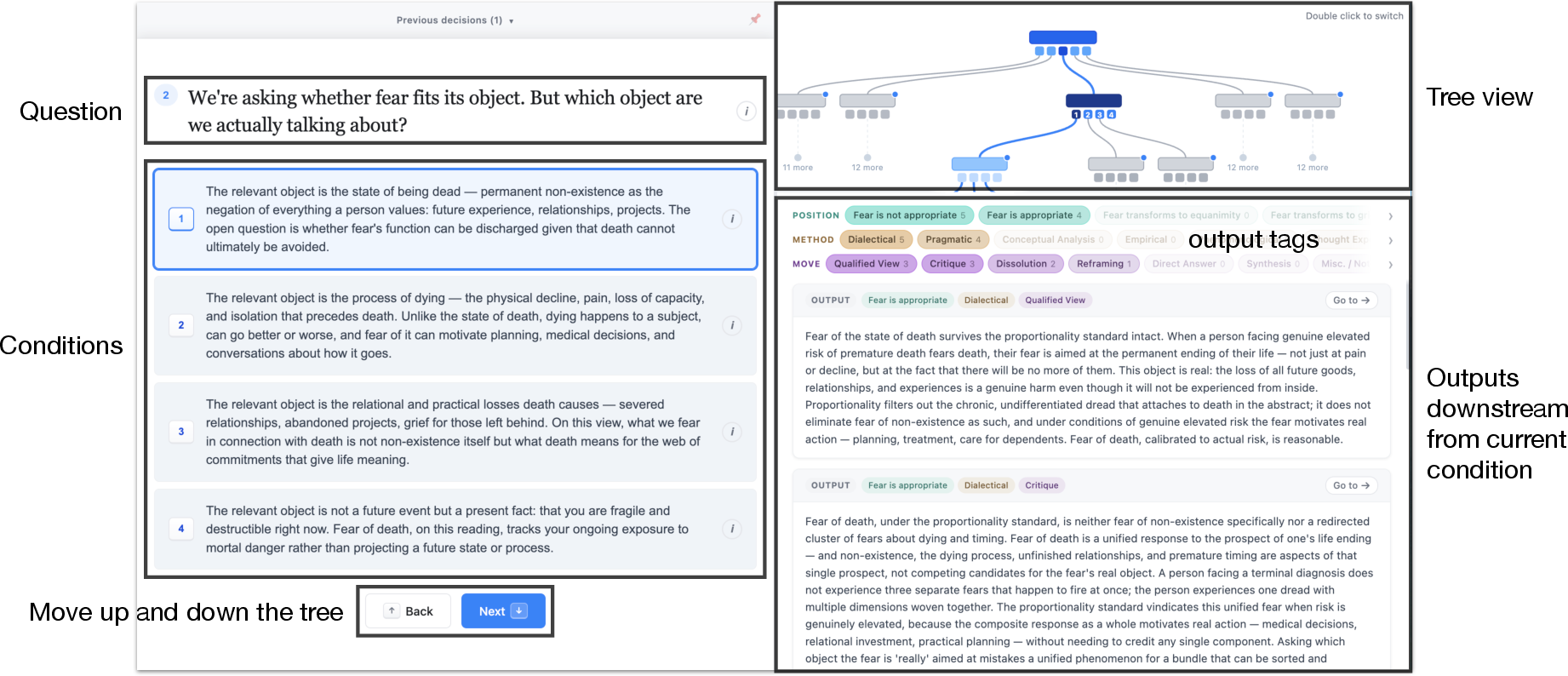
Figure 5: Main interface layout. Navigation is possible at the conceptual or output level, and all interactions are context-rich due to expanded justifications and real-time visualization of downstream effects.
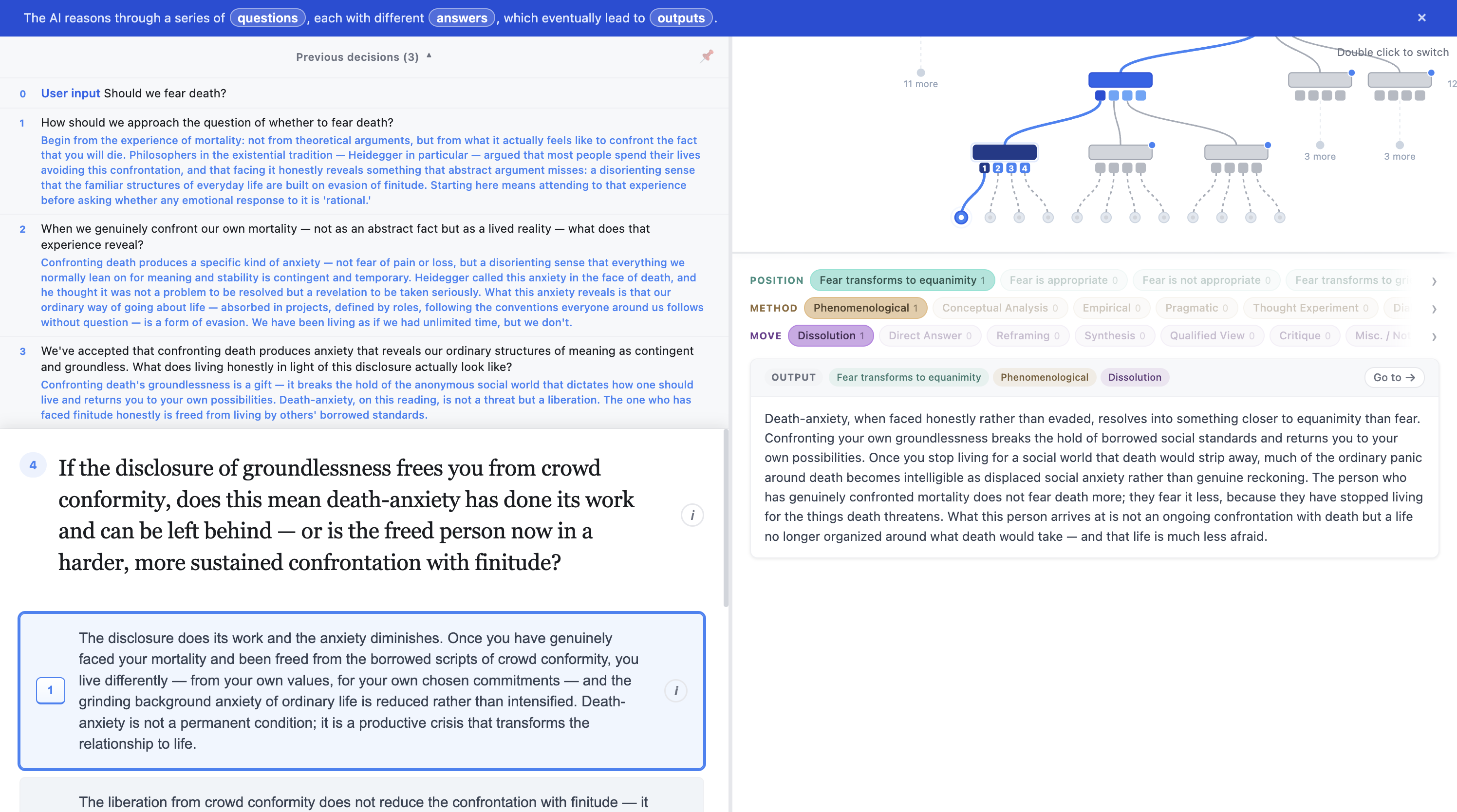
Figure 6: Terminal output mode; users see both the response and the decision lineage that produced it, with collapsible path summaries for rapid context switching and auditing.
Relation to Prior Work
The paper situates its contributions relative to chain-of-thought, tree-of-thought, and faithfulness-targeting approaches, noting that while tree-of-thought retrieves branching and traceability, it does not enable human navigation, nor is it typically calibrated to domain norms. Prior transparency and “concept bottleneck” architectures operate in fixed, well-typed domains, whereas the present work is generative and requires domain-specific calibration at both the surface and the decision-layer. Existing navigation or ideation UIs for LMs (Sensecape, Luminate, Texterial) are typically output- or layout-centric and do not make underlying decision structure primary.
Implications and Prospects
The conceptual multiverse framework operationalizes several desiderata for future AI reasoning systems:
- Interpretability: Reasoning and commitments are surfaced in a way that is checkable, navigable, and improvable by humans.
- Intervenability: Users or alignment operators can alter key decisions and generate counterfactual outputs, supporting robust auditing and “what-if” analysis.
- Calibration: The model’s “assumptions” reflect domain expertise, enabling semi-formal analogues of reflective equilibrium or normative pluralism in alignment.
- Collective Deliberation: The structure and human-in-the-loop design allow for aggregation, discussion, and annotation at the level of reasoning—not just outputs—making the system appropriate for public input or multi-actor alignment efforts.
Limitations include potential omission of perspectives underrepresented in either model training or domain-expert calibration, risk of structural artifacts if verification checks are miscalibrated, and the complexity and infrastructure overhead of maintaining the multiverse representation relative to simple chat models.
The paper speculates that as LLMs and agents improve, scaling out and verifying principled conceptual structures will be possible in new domains (beyond software and mathematics, where such scaffolds are already the norm), but calibration and verification will remain essential for substantive alignment in value-laden and creative spaces.
Conclusion
"Navigating the Conceptual Multiverse" offers a formalism and toolchain for explicit, checkable, and navigable conceptual reasoning with LMs in open-ended tasks. By bridging structure (decision trees grounded in explicit commitment), verification (domain-calibrated and compositional checks on reasoning), and interface (interactive exploration and annotation), the framework advances methods for both AI alignment and human-AI collaborative reasoning. Its user study results provide empirical evidence that such architectures alter both the product and process of conceptual inquiry, reasoning, and creative exploration, with implications for AI transparency, alignment, and deliberative practices as LLMs continue to increase in capability and ubiquity.