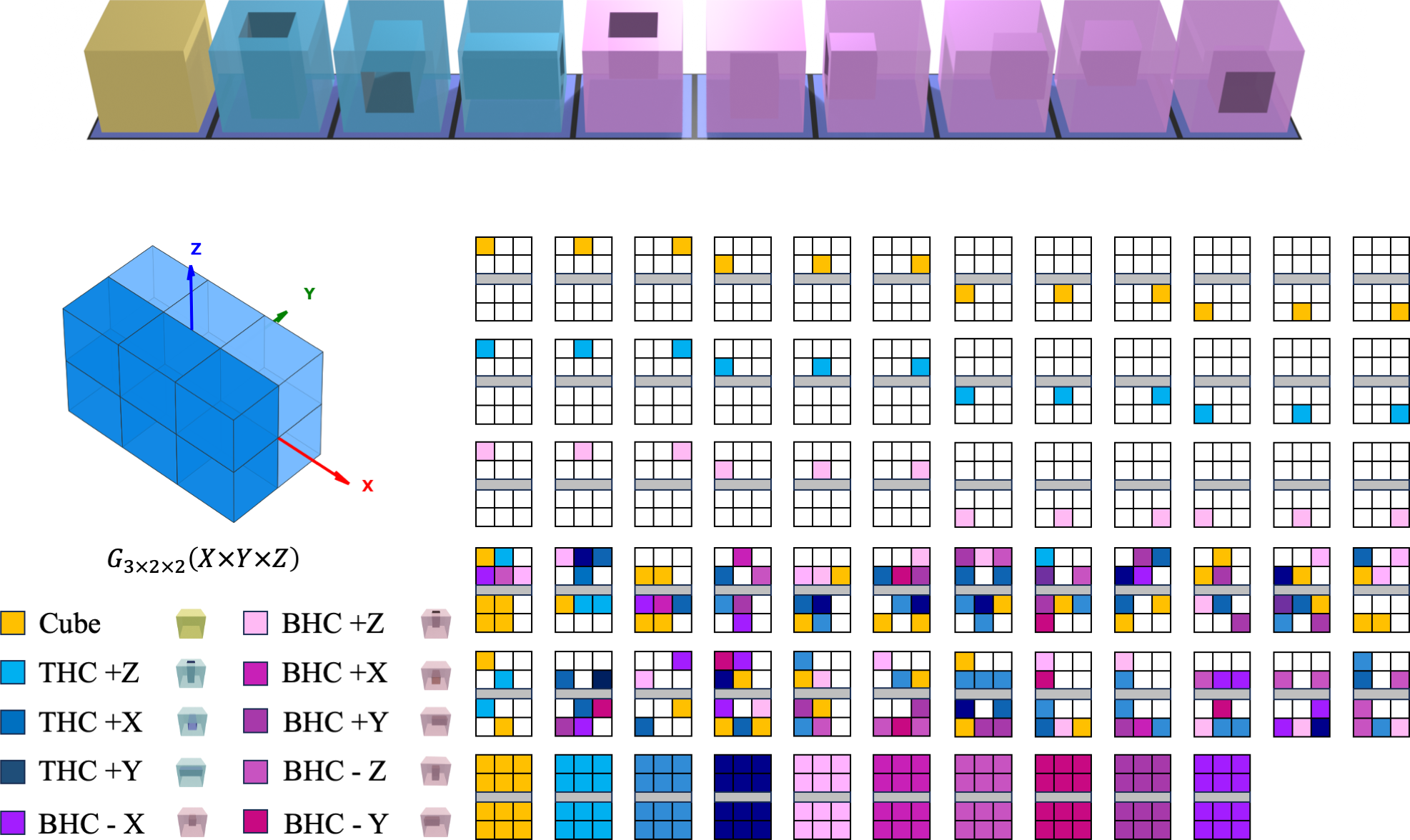
- The paper presents a novel diffusion-based pipeline for automated polycube synthesis, enabling high-quality all-hexahedral mesh generation and spline construction.
- The method integrates PCA normalization, context encoding, and hierarchical verification to efficiently handle complex CAD features and diverse grid configurations.
- Empirical results demonstrate stable convergence, significant reduction in geometric discrepancies with BHC primitives, and robust performance in both user-guided and automated modes.
Scalable DDPM-Polycube: Diffusion-Based Automation for Polycube Mesh and Volumetric Spline Generation
Introduction and Motivation
Polycube-based meshing is crucial for constructing all-hexahedral (all-hex) meshes and volumetric splines, which are central to isogeometric analysis (IGA) pipelines. Traditional CVT-based and template-mapping polycube approaches face significant challenges when accommodating complex feature-rich CAD models, particularly with respect to grid flexibility, primitive diversity, and scalable automated inference. The presented work, "Scalable DDPM-Polycube: An Extended Diffusion-Based Method for Hexahedral Mesh and Volumetric Spline Construction" (2604.17266), systematically addresses these limitations by reformulating the polycube inference pipeline using scalable denoising diffusion probabilistic models (DDPM) and introducing methodological advances at multiple levels.
Pipeline Architecture
The SDDPM pipeline processes an input triangular mesh through explicit PCA-based normalization, followed by either user-guided or automated context generation. In user-guided mode, partial or full context vectors are encoded to guide the reverse diffusion process. In automated mode, the mesh is temporarily tetrahedralized and spatially segmented; the genus is computed for individual subregions to condition the context. Both modes produce a cell-wise one-hot context vector, paired with a structured 64×96×3 tensor representation of the geometry for DDPM-based denoising.
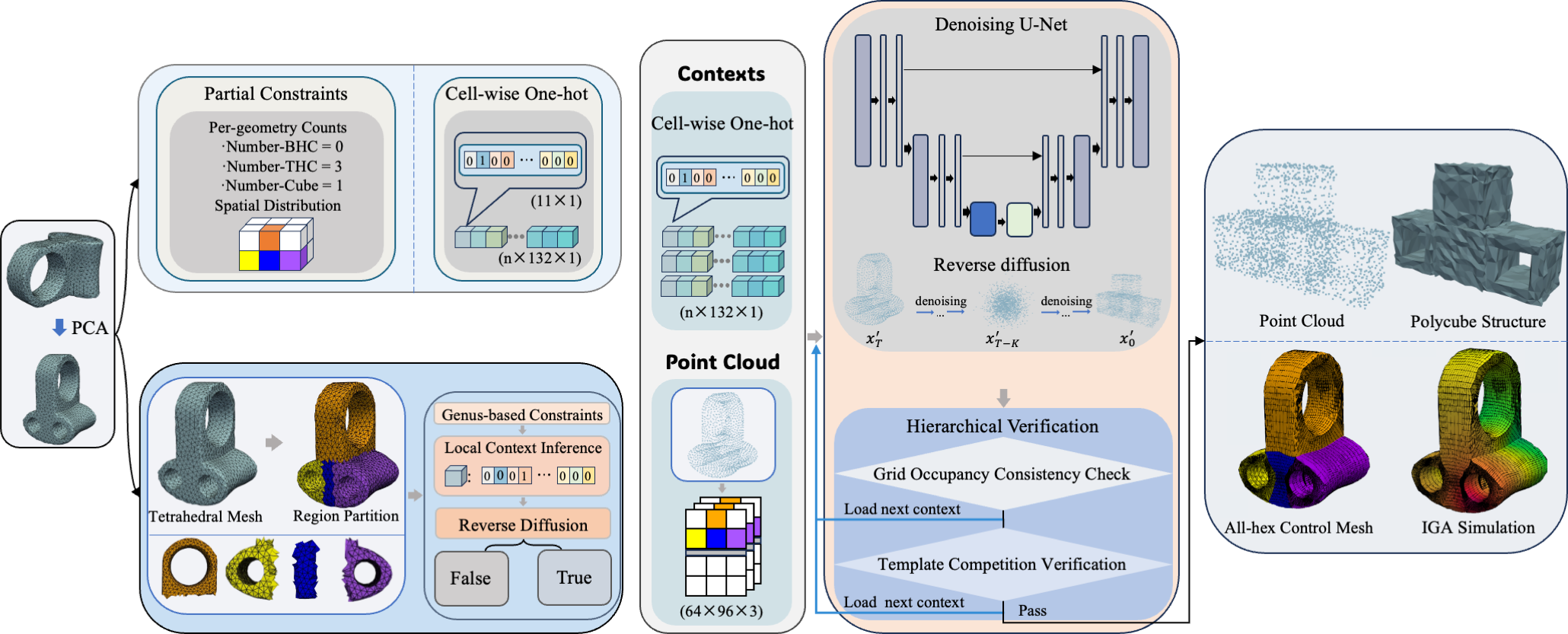
Figure 1: SDDPM pipeline overview, depicting preprocessing, user/automated context generation, context-conditioned reverse diffusion, hierarchical verification, and downstream mesh/spline generation.
The reverse diffusion is performed by a denoising U-Net operating on the geometry tensor, conditioned on the context. The generated polycube is validated through a hierarchical process: a grid occupancy consistency check (GOCC) and template competition verification (TCV). Only polycubes passing both stages are utilized for parametric mapping, all-hex mesh generation, and 3D spline fitting.
Expanded Primitive and Grid Set
SDDPM addresses representational limitations by:
The dataset covers all single-cell placements, fully occupied grids, and balanced random multi-cell assemblies, promoting structural diversity without combinatorial explosion.
Context Encoding and Diffusion Model
Each grid cell in G3×2×2 is represented as an 11-category one-hot encoding (10 primitives plus null). Training enforces strict spatial ordering, ensuring that point tensors and contexts are aligned throughout the pipeline. The diffusion model uses a nonzero-mean Gaussian forward process, ensuring geometry-like endpoint distributions and improving generation stability.
Reverse diffusion applies context-conditioned denoising updates, using a high-resolution U-Net. This architecture supports both high spatial detail and effective modality fusion between geometric and contextual signals.
Automated Context Generation and Hierarchical Verification
Direct global context traversal becomes prohibitive as grid and primitive diversity increase. SDDPM introduces an automated, hierarchical context generation and validation procedure:
- Input geometry is temporarily volumetrized and partitioned; subregion genus computation constrains possible primitives locally.
- For each subregion, local reverse diffusion inference is performed, and candidates are validated via GOCC (minimum occupancy/count/extent criteria).
- Successful assignments are aggregated into the global context vector.
- The final polycube candidate is further validated via grid-level GOCC and TCV, leveraging Chamfer-like metrics penalized for large deviations and orientation mismatches.
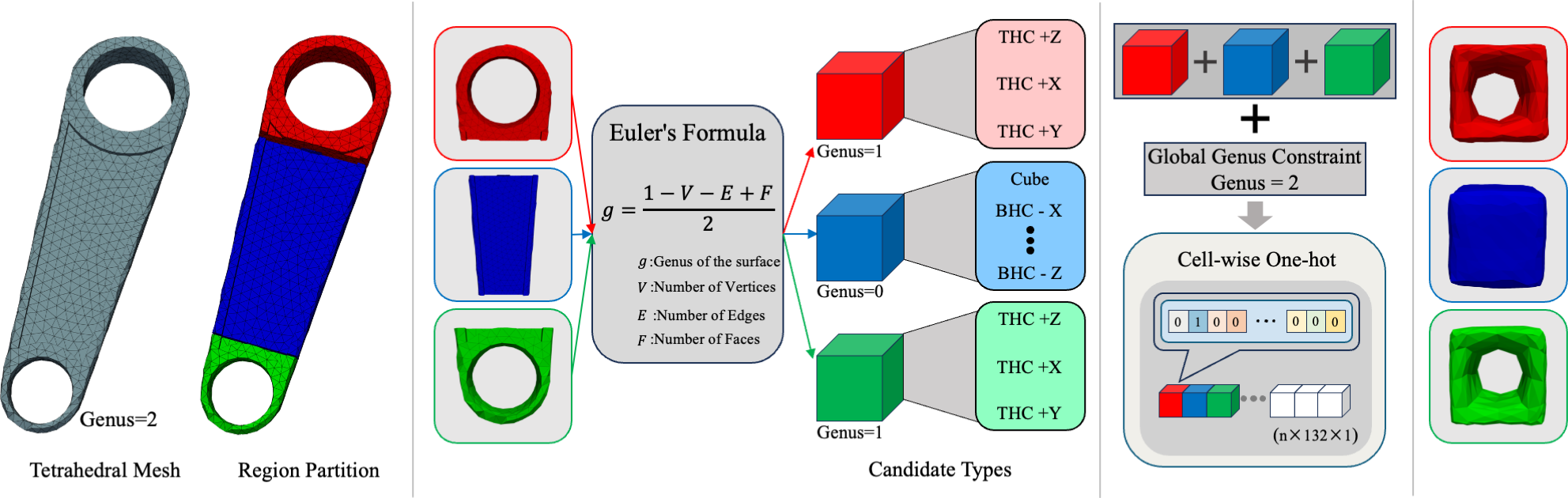
Figure 3: Automated context generation: volumetric partitioning, subregion genus estimation, local context inference, assembly into global vector, and final polycube synthesis.
This hierarchical approach dramatically reduces inference trials while maintaining strict compliance with both global and local topology and geometry.
Empirical Validation and Results
Training Convergence
SDDPM demonstrates stable convergence with the expanded primitive and grid configuration, achieving robust MSE minimization across 500 epochs, as evidenced by smooth descending loss and gradients.
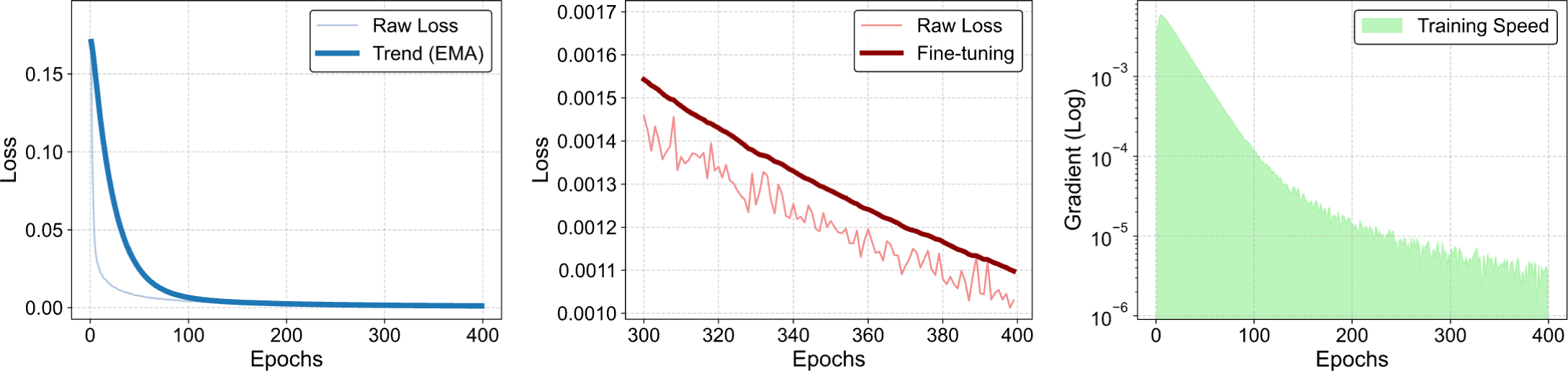
Figure 4: Training loss and gradient trajectories demonstrate efficient optimization for the G3×2×2 grid and 10-class primitive set.
User-Guided and Automated Inference
SDDPM supports both user-guided and fully automated modes. User-guided contexts (either complete or partial) result in efficient and accurate polycube generation when constraints are genus-consistent. The genus check prevents infeasible specifications upfront.
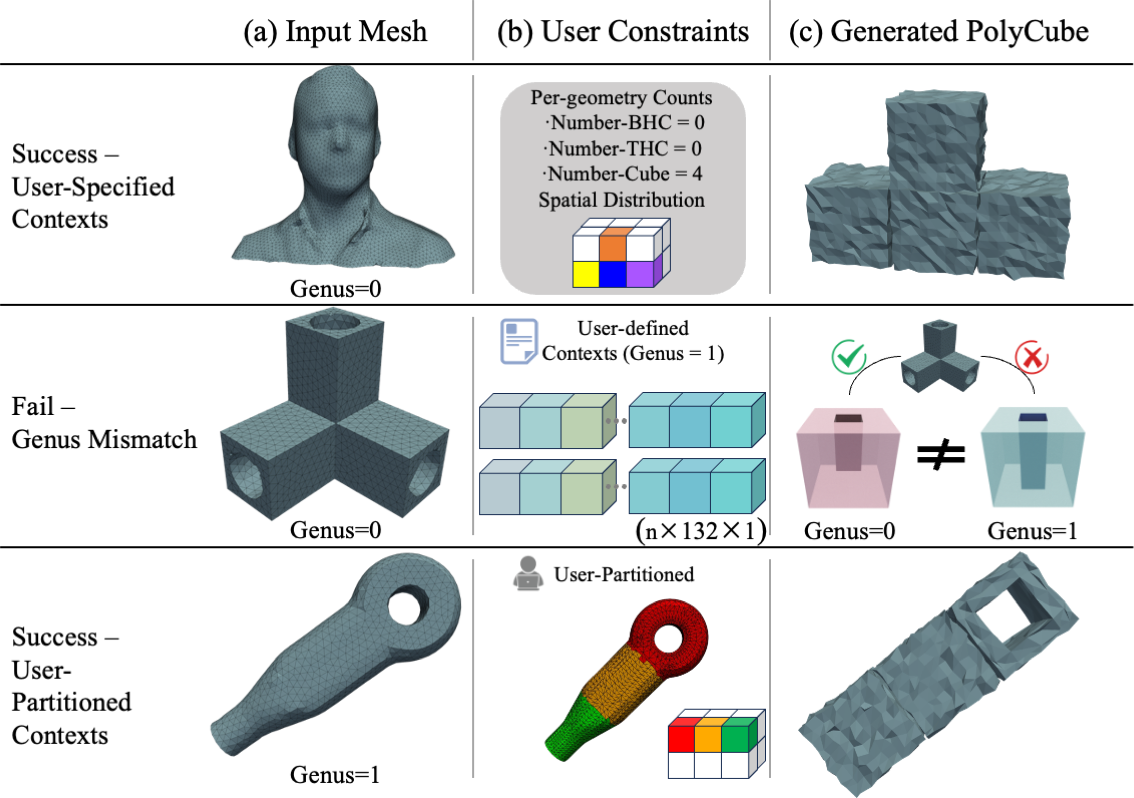
Figure 5: User-guided inference with context constraints, genus-mismatched context rejection, and user-directed partition guidance.
In fully automated mode, volumetric partitioning and local context inference, validated by GOCC and TCV, yield valid global contexts and robust polycube assemblies across genus-0, 1, and higher test cases.
Hierarchical Verification Efficacy
GOCC reliably discards occupancy-inconsistent candidates with negligible cost, while TCV ensures primitive category and orientation fidelity via penalized Chamfer metrics against template libraries.
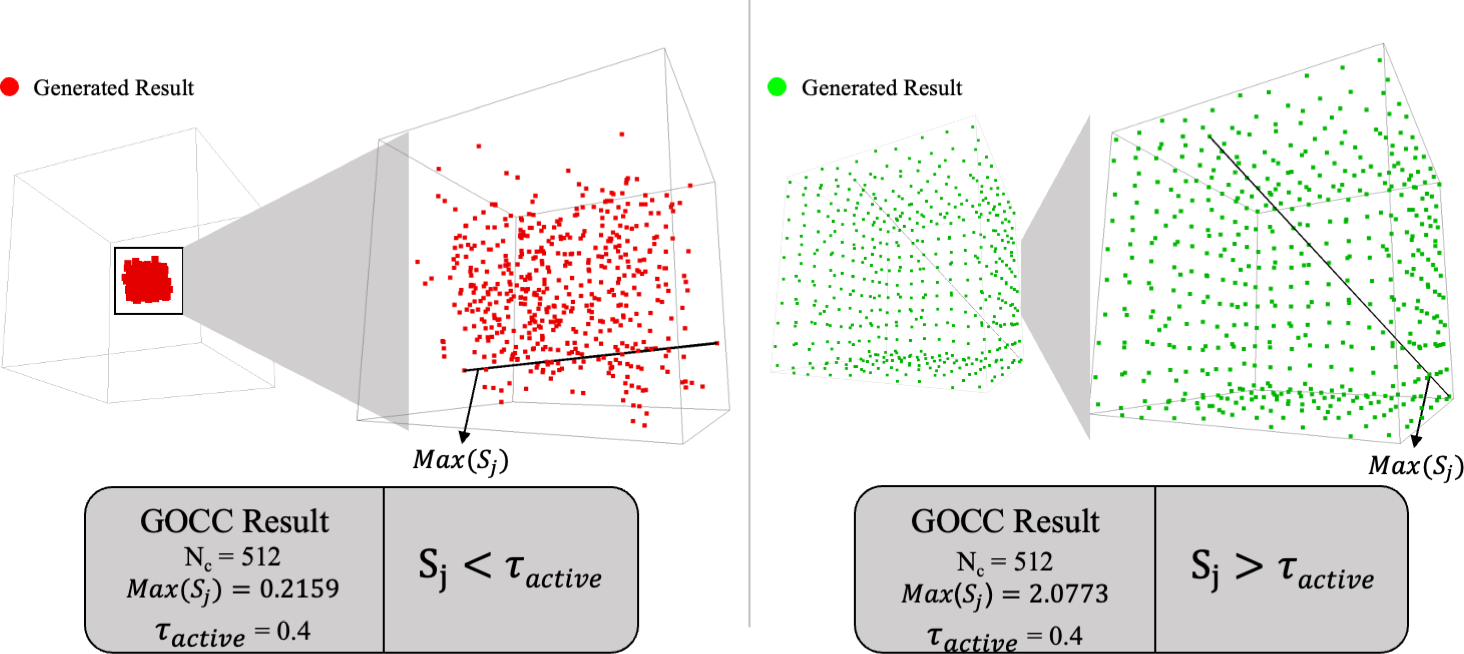
Figure 6: GOCC: distinguishing between occupancy-deficient and occupancy-adequate local predictions.
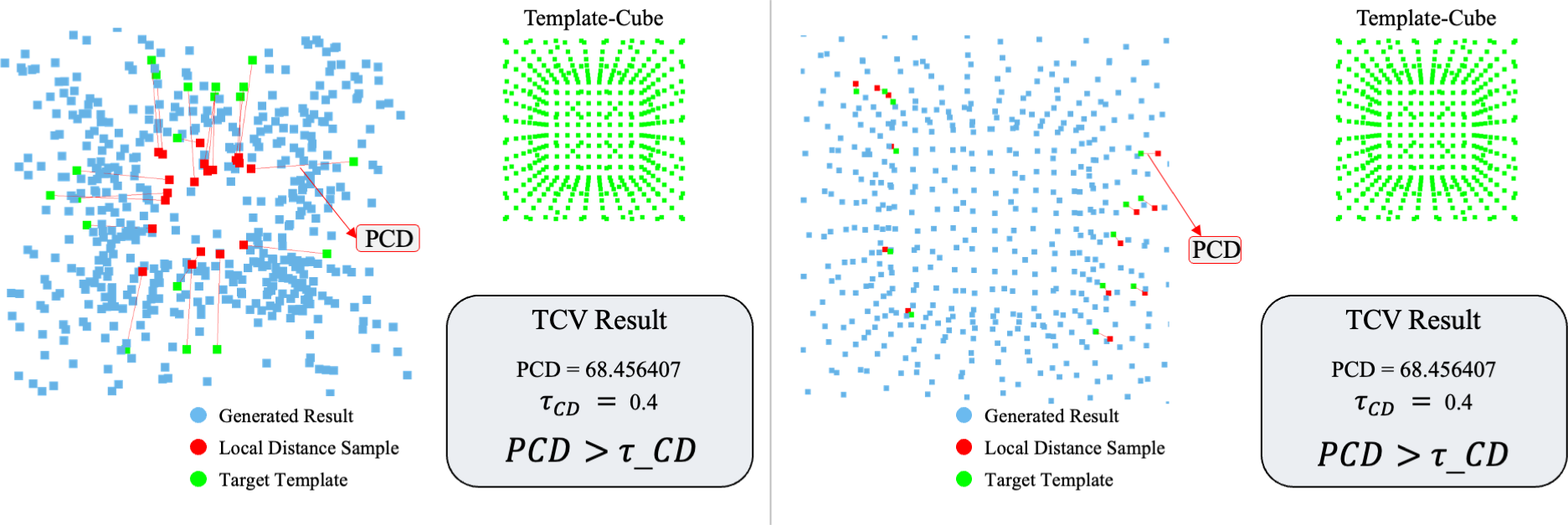
Figure 7: TCV: detecting semantic mismatches between local geometry and intended primitive.
A quantitative breakdown for complex models shows that the combined local and global filtering reduces the effective candidate space by orders of magnitude compared to brute-force enumeration.
Polycube Synthesis and Generalization
The pipeline synthesizes topology-consistent polycube assemblies for previously unseen mesh configurations, with generative capacity beyond explicit training set enumeration. Reverse diffusion recoveries reflect faithful geometric and topological denoising.
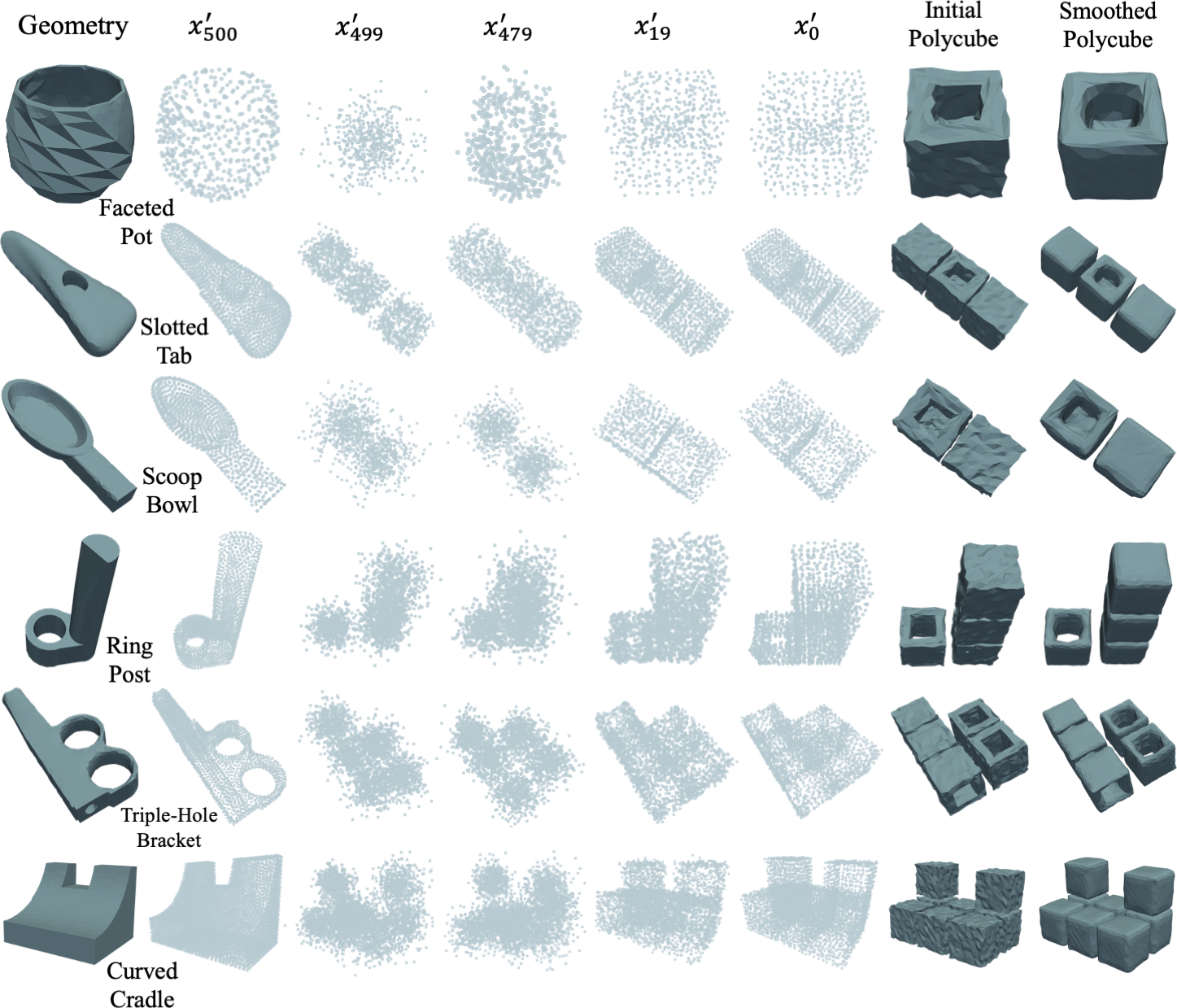
Figure 8: Visualization of geometry denoising through reverse diffusion, showing deformation removal and polycube structure recovery.
(Figures 9, 10)
Figure 9/10: Representative generation results across genus-0/1 and genus-2+ assemblies, illustrating the flexibility of the SDDPM grid and primitive set.
Ablation and Scalability
The inclusion of BHC primitives significantly reduces local geometric discrepancies (average Chamfer from 0.28 to 0.03, max deviation from 0.91 to 0.08). Automated context generation scales sublinearly with structural complexity—candidate pool and runtime rise, but are controlled due to hierarchical reduction strategies.
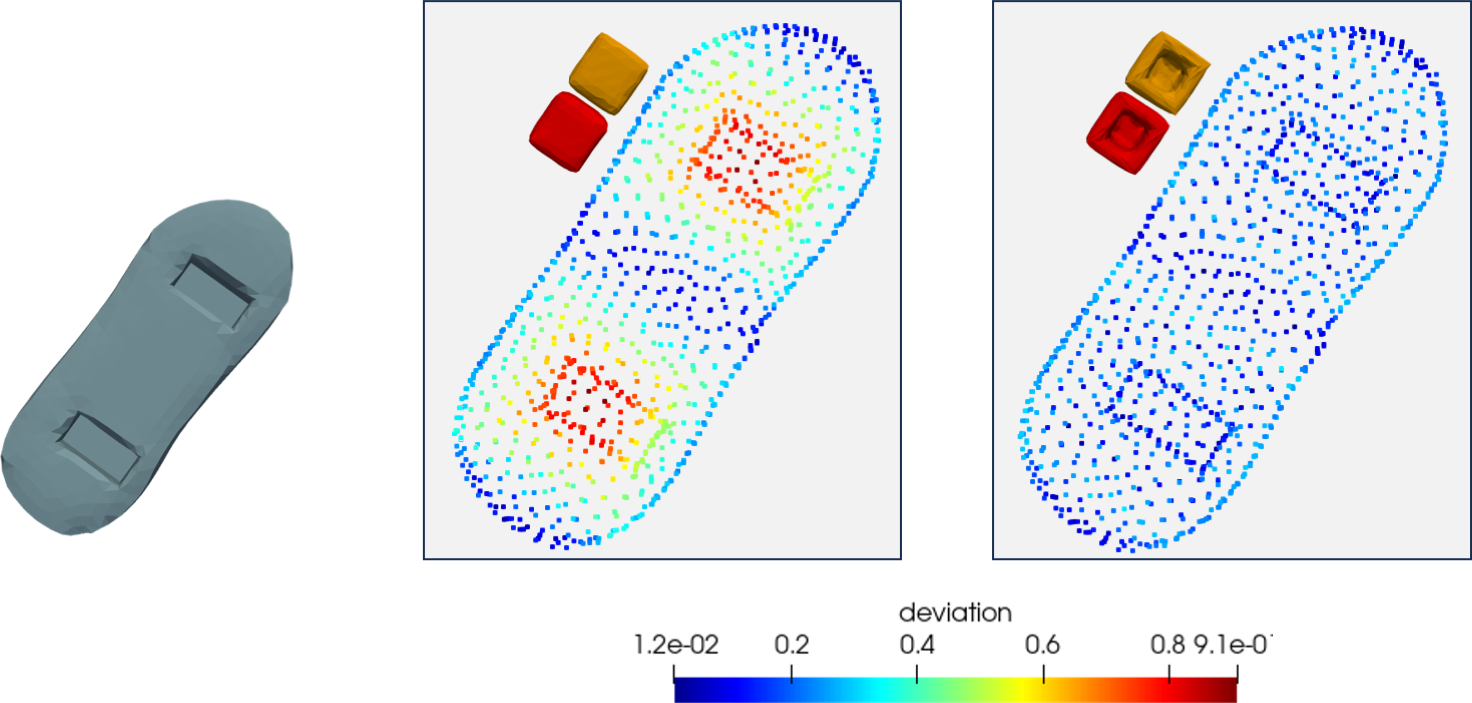
Figure 10: Ablation on BHC primitive—blind-hole features are only maintained with appropriate primitivization.
Mesh Quality and Volumetric Spline Construction
SDDPM-generated polycubes lead to all-hex control meshes via mapping and octree subdivision, which, after pillowing, smoothing, and Jacobian-based optimization, achieve high scaled Jacobian quality metrics. These meshes are seamlessly converted to TH-spline3D volumetric splines suitable for direct IGA application.
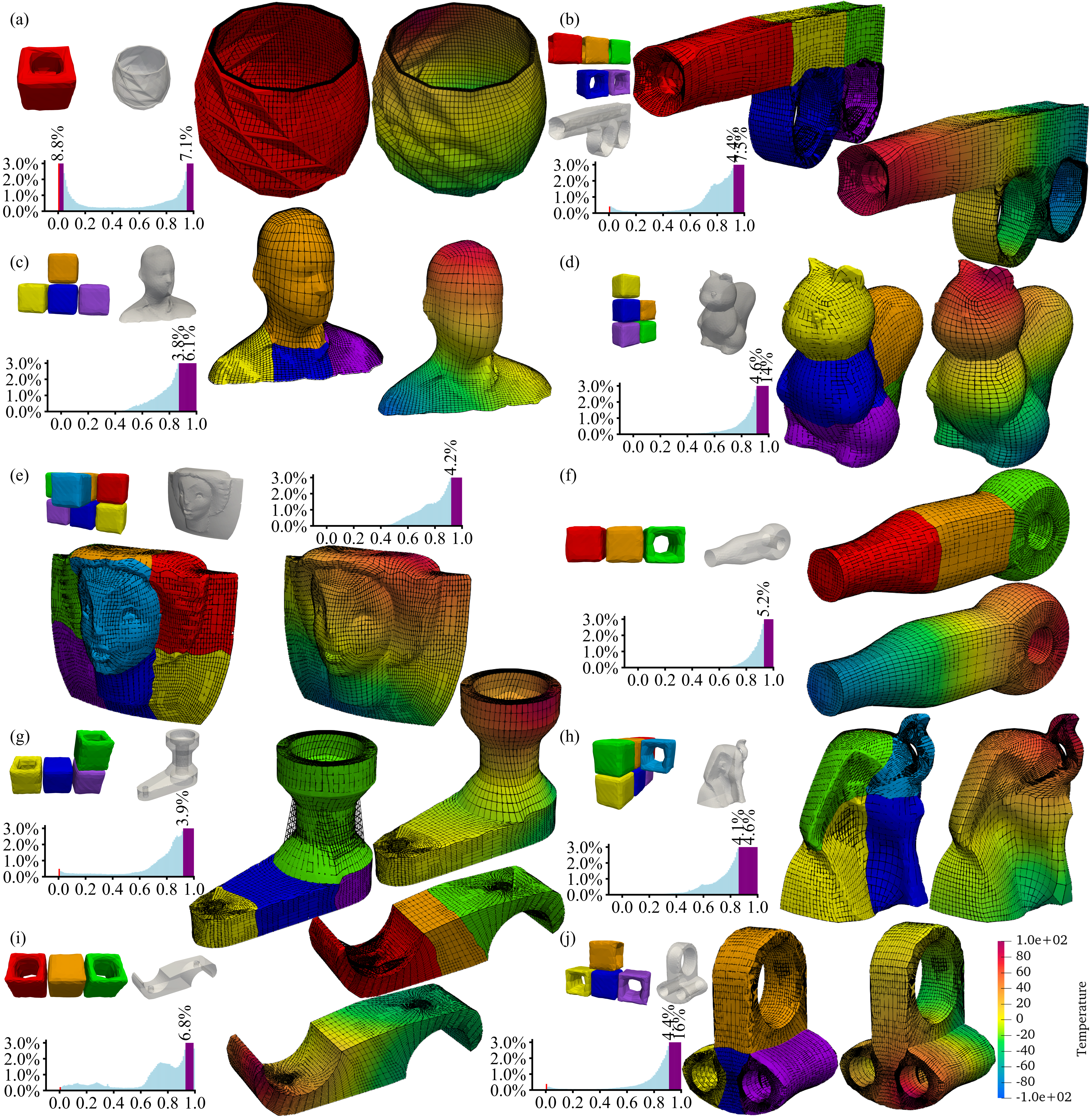
Figure 11: Outputs include polycube domains, optimized all-hex control meshes, reliable scaled Jacobian distributions, and corresponding TH-spline based IGA solutions.
Limitations
Current restrictions include reliance on a fixed grid and a delineated primitive set. Extreme industrial complexity or elaborate local detail may still exceed SDDPM's expressiveness. The volumetric partitioning step for automated context inference is sensitive to initial tetrahedralization, and hierarchical verification operates as a post-hoc filter rather than a learned, differentiable constraint within diffusion. Finally, inference efficiency remains bounded by the cost of iterative denoising and is not yet adapted for hybrid or hex-dominant meshing.
Conclusion and Outlook
SDDPM presents a principled, extensible approach for automated polycube structure synthesis, all-hex mesh generation, and volumetric spline construction in the context of IGA. Methodological advances—expanded primitive libraries, scalable grid representation, genus-guided automated context generation with hierarchical verification—enable robust, label-consistent performance across diverse mesh classes. Theoretical implications suggest improved automation and coverage in CAD-to-IGA front-ends, especially when compared to template-based methods. Practically, SDDPM paves the way toward further integration of generative diffusion models with classical mesh generation, and toward on-the-fly adaptability for industrial design and analysis. Future research should target differentiable verification, adaptive/hierarchical grid architectures, fusion with additional primitive types, and fully integrated hybrid mesh modes.