- The paper presents a three-perspective methodology integrating memory simulator, CPU–memory interface, and application views to identify simulation inaccuracies.
- It diagnoses errors like clock synchronization mismatches and integer truncation that misalign simulated performance with measured hardware.
- The study underscores that detailed modeling of NoC, address mapping, and prefetcher behavior is critical for reliable DRAM-based system simulation.
Analysis of Divergent Memory System Simulation Perspectives
Introduction and Problem Statement
"Different Perspectives of Memory System Simulation" (2604.16965) systematically investigates the fidelity of memory system simulators used to estimate application performance on advanced DRAM-based platforms. The study is motivated by empirical evidence demonstrating that simulators adhering to DRAM Verilog models can still exhibit substantial discrepancies relative to measured hardware performance. Two core questions underpin the work: 1) What are the root causes of these simulation inaccuracies? 2) How can simulator validation methodologies be augmented to ensure reliable performance predictions?
The authors propose and empirically evaluate a methodology based on three distinct but complementary perspectives: the memory simulator view, the CPU–memory interface view, and the application view. This framework enables granular analysis of the interactions and mismatches between simulation layers, exposing how inaccurate integration or abstraction breaks temporal and functional consistency. The study is conducted using ZSim, Ramulator, Ramulator 2, and DRAMsim3, with all modifications released as open source.
Dissection of the Three-View Methodology
The central observation is that memory system performance can be—and is—measured at multiple loci in a full-system simulation pipeline:
- Memory Simulator View: Statistics internal to the DRAM simulator (e.g., Ramulator), reflecting DRAM-level event timings and bandwidths.
- CPU–Memory Interface View: Observations from the CPU simulator's interfacing boundary, reflecting its effective perception of memory system performance.
- Application View: End-to-end, application-visible load-to-use memory latency, determining actual simulated workload performance.
The methods reveal that these three perspectives often diverge substantially. For instance, the application-level view can be functionally decoupled from both the memory interface and simulator views due to integration and temporal mismatches. The utility of this approach is exemplified in the replicated traffic generator workloads and pointer-chasing microbenchmarks.
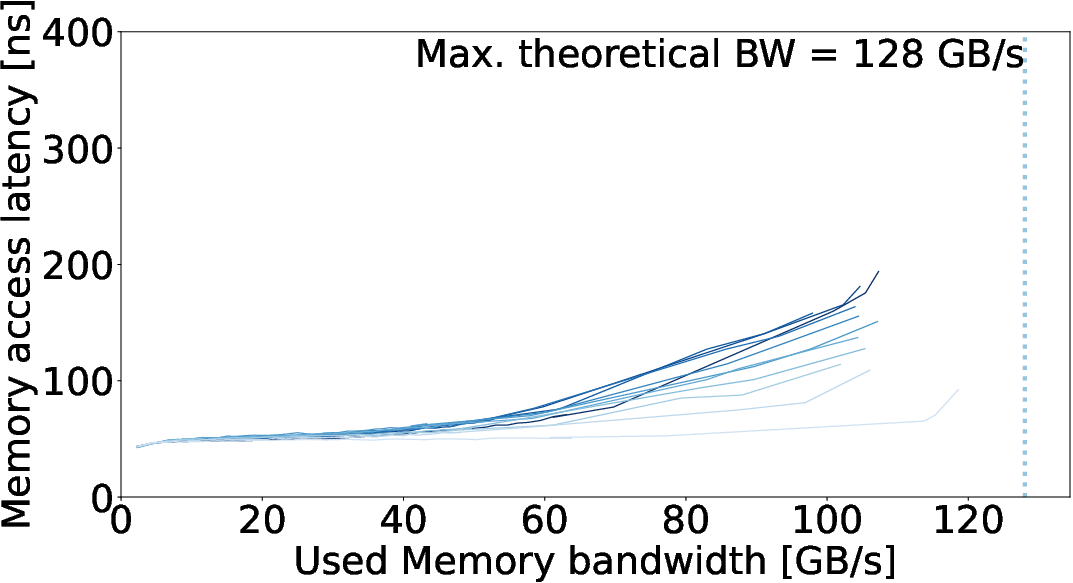
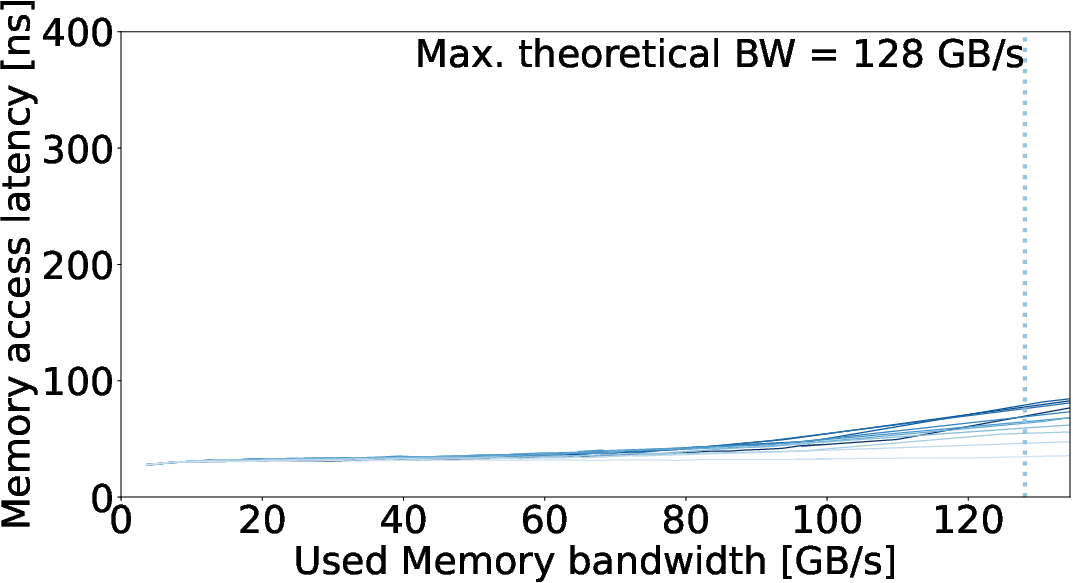
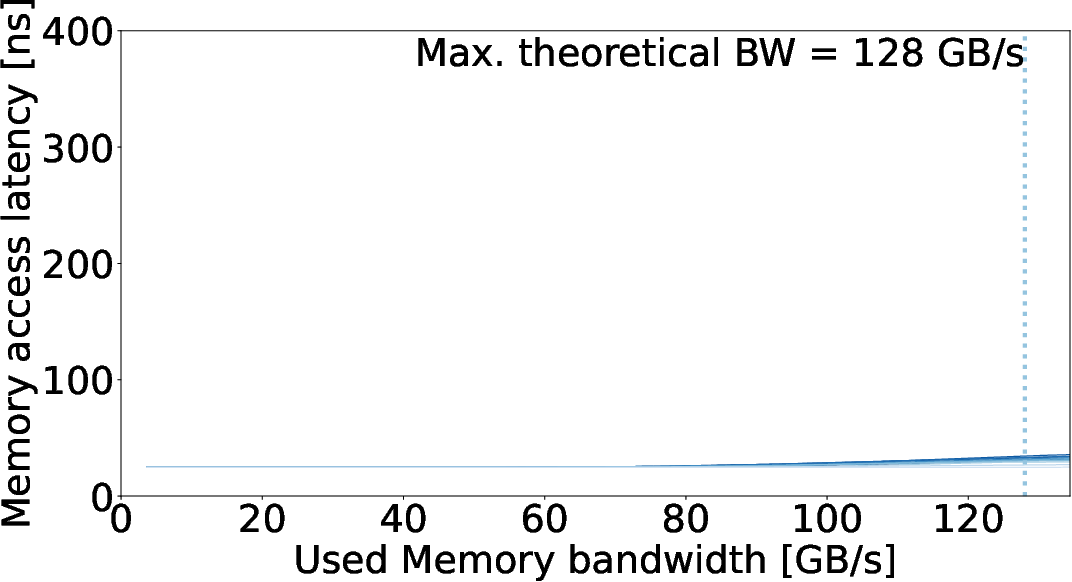
Figure 1: The application view (bottom right) indicates a constant 24 ns load-to-use latency across the bandwidth range—completely mismatched from hardware (top left) and the internal simulator views.
As shown above, before correction, the application view can report unrealistically low and invariant latencies—even when the underlying simulator and hardware exhibit expected, bandwidth-dependent degradations—pinpointing deep integration faults.
Sources and Corrections of Simulation Inaccuracies
The authors show that simulation error often originates not in the individual simulators, but in their interfaces and integration:
Clock Domain Synchronization
A predominant error is the mishandling of clock or tick synchronization between event-driven CPU simulators (e.g., ZSim) and cycle-accurate memory simulators (e.g., Ramulator). The DAMOV interface failed to synchronize the DRAM frequency accurately, leading to the CPU perceiving the DRAM as running 1.575× faster than reality, which produced spurious bandwidth gains and misaligned latencies at the interface and application levels.
Rectification involves implementing proportional clock advancement in both domains, properly tying the simulated passage of time with physical frequency ratios.
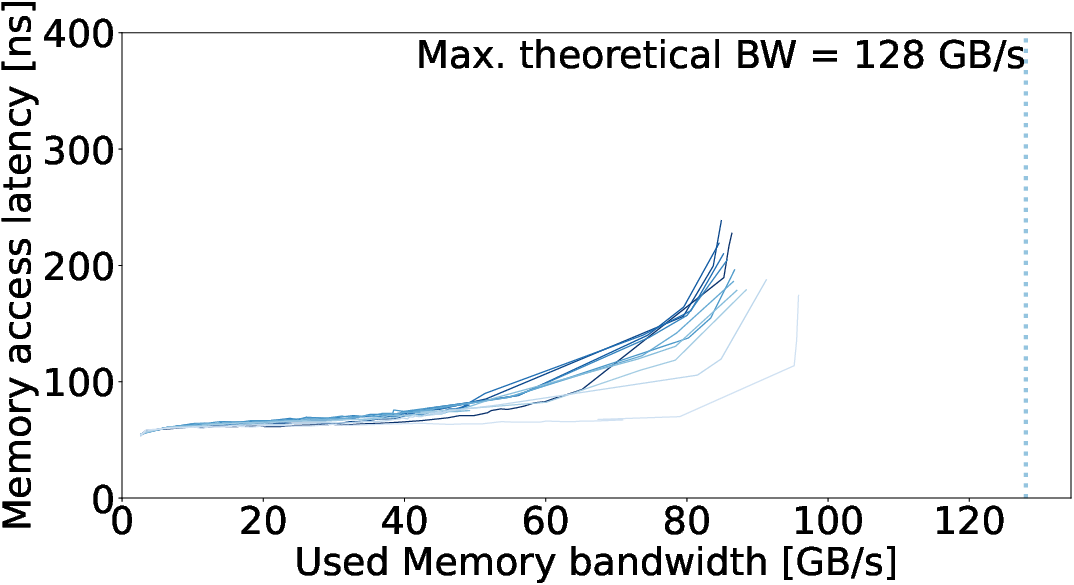
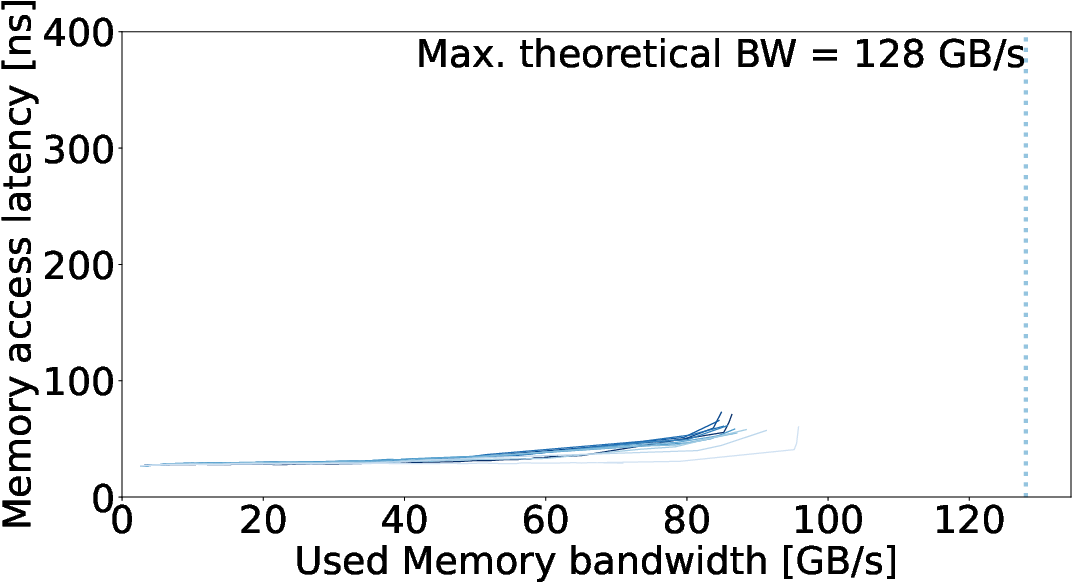
Figure 2: Correction of clock-scaling in the interface normalizes memory bandwidths and narrows—but does not fully close—the application/hardware gap.
A more subtle error relates to integer truncation (rounding up the freqRatio parameter), which shifts simulated ratios and induces systematic under- or over-estimation of memory access costs. This is resolved by precise, floating-point timekeeping and proportional tick generation in the interface.
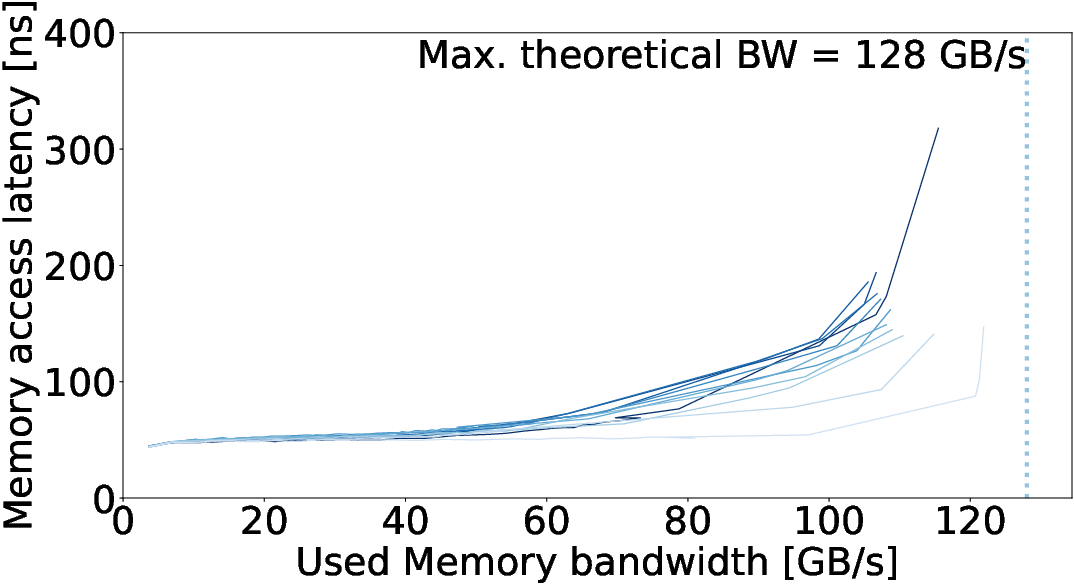
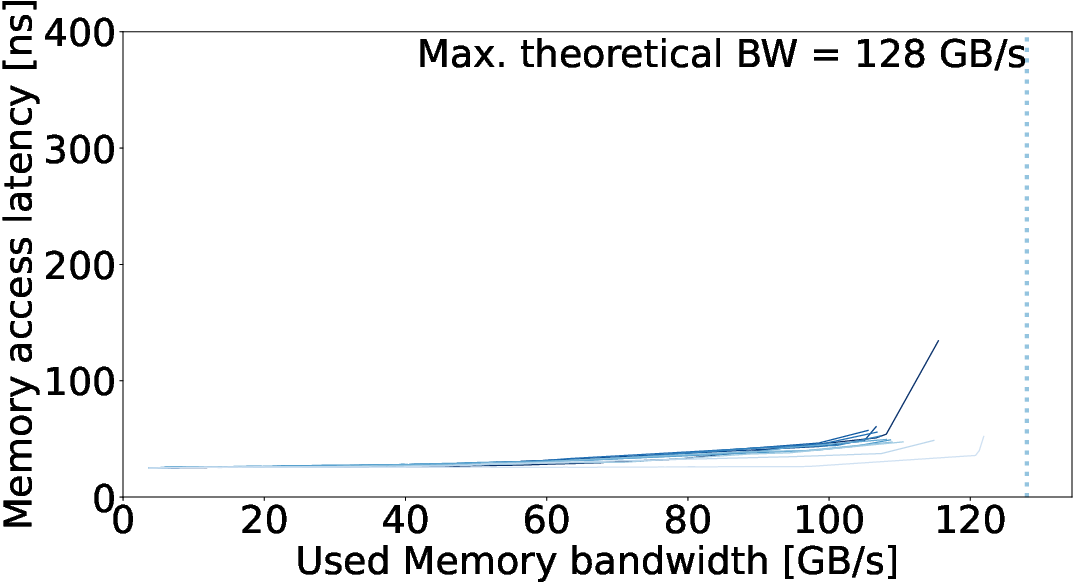
Figure 3: The updated interface corrects DAMOV freqRatio rounding, aligning maximum simulated bandwidth with the hardware envelope.
Another fundamental discrepancy is between ZSim’s two-phase simulation (immediate-response/fixed-latency for initial passes, with later correction by DRAM simulator feedback) and fully cycle-accurate timing. When the fixed-latency model in the early phase is set too optimistically, dependent memory instructions are not delayed as they would be in real hardware, and this error cannot be corrected post-facto when detailed timing is applied.
The solution is dynamic adaptation of the immediate-response latency via a proportional–integral control algorithm, ensuring that the early-phase latency remains in sync with measured DRAM access times, thus minimizing the gap between simulation phases.
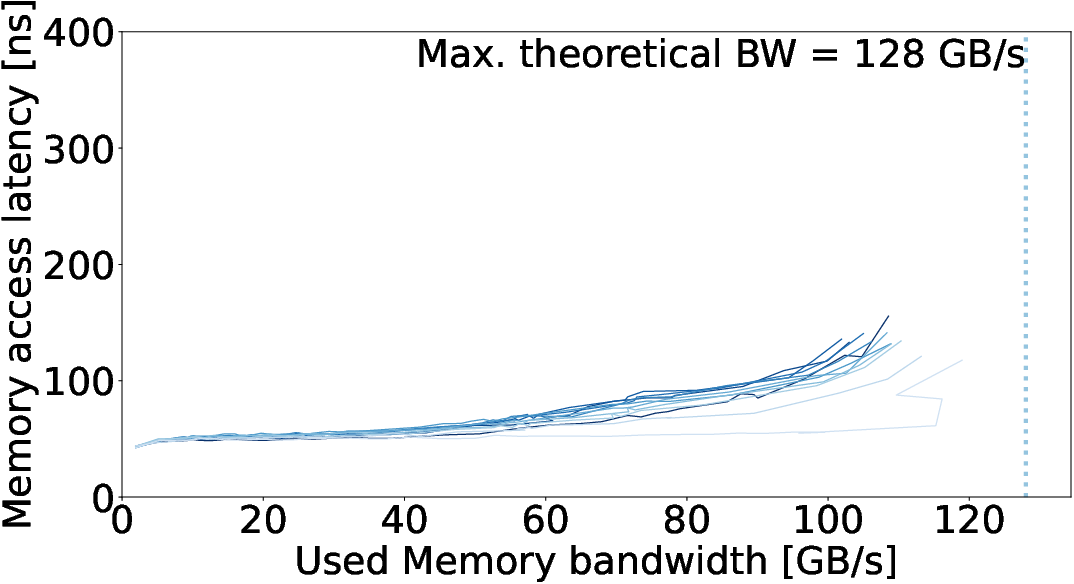
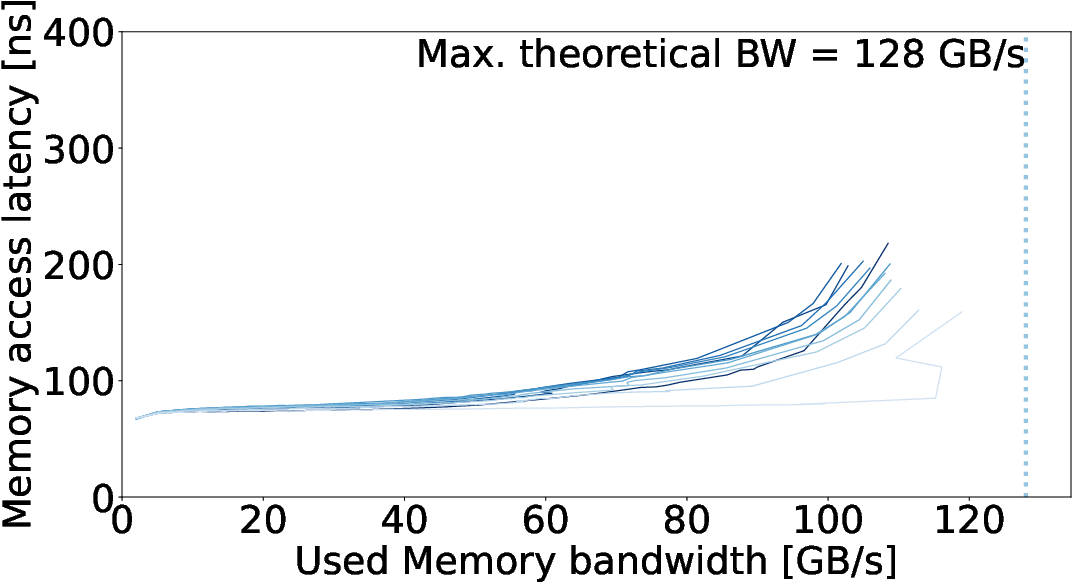
Figure 4: After interface and model corrections, the application-level simulation view converges towards the outcome of the cycle-accurate memory simulator.
Additional Fidelity Enhancements
Beyond CPU–memory interface faults, several secondary simulation details are shown to critically impact accuracy:
- Physical Address Mapping: Correct reverse-engineered mappings from CPU physical addresses to DRAM channels, ranks, and banks are required to capture contention and interference effects correlated with read/write mix. Simplistic mappings fail to reproduce characteristic skew and bandwidth collapse visible in hardware.
- Network-on-Chip (NoC) Modeling: The network topologies, core-to-tile mappings, and real NoC latencies must be encoded; simplistic fixed-delay models systematically understate latency as core counts rise or core placement is non-uniform.
- Prefetcher Realism: Omitting prefetchers underestimates bandwidth and overestimates the benefits of certain microarchitectural optimizations. Realistic prefetch emulation causes simulated saturated latencies to increase by up to 37 ns in high-intensity scenarios.
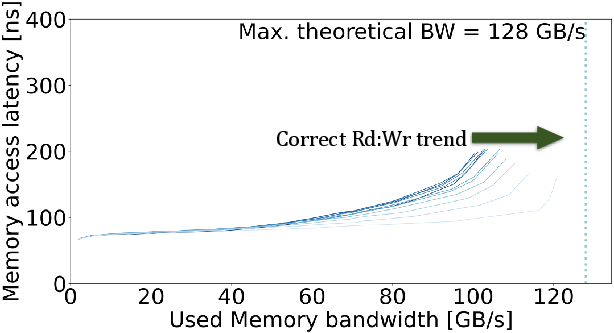
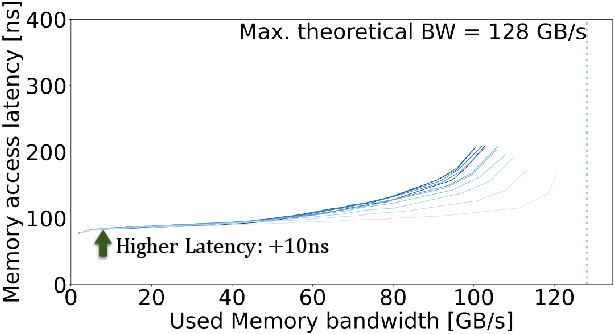
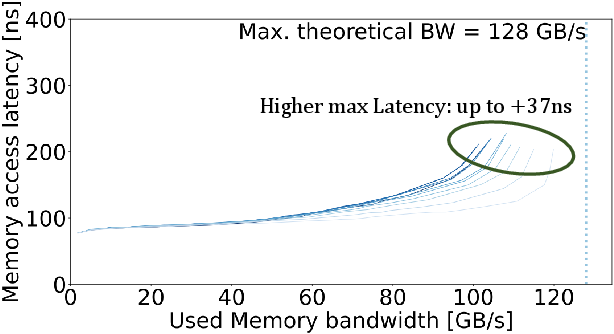
Figure 5: High-fidelity simulation models achieve hardware-consistent bandwidth/latency curves only when integrating accurate address mapping, NoC, and prefetcher detail.
Simulator Portability and Remaining Gaps
All identified corrections are validated across multiple DRAM simulation backends (Ramulator 2, DRAMsim3), demonstrating wide applicability of integration fixes.
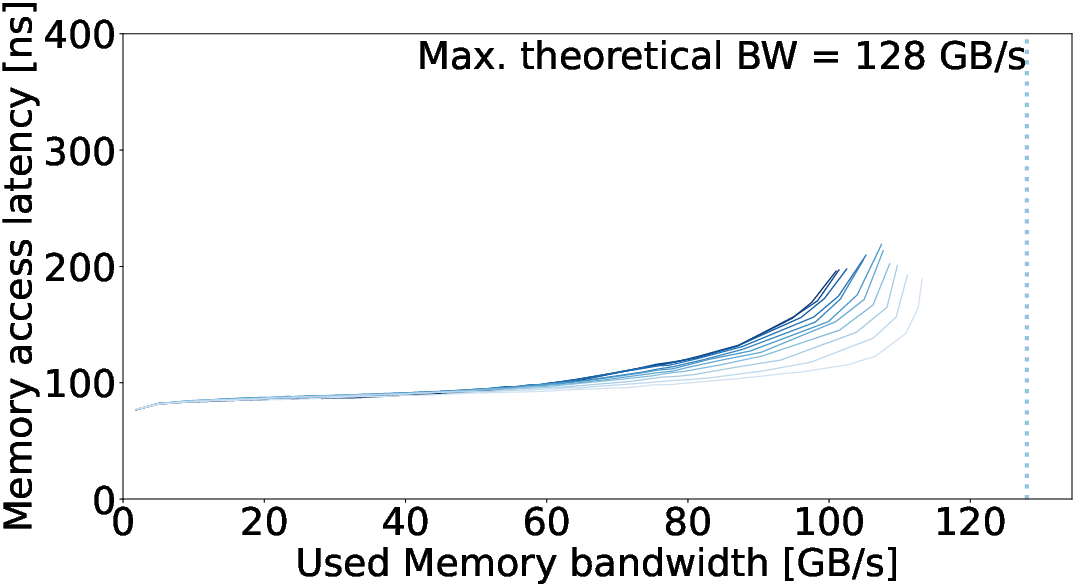
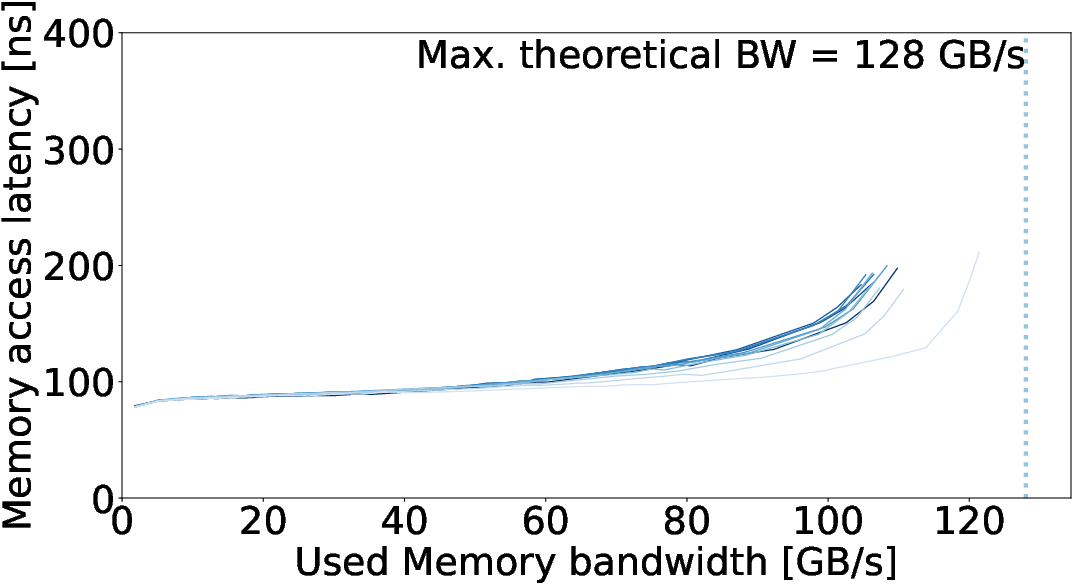
Figure 6: Enhanced interfaces successfully harmonize application latency/bandwidth response across different DRAM simulators, promoting reproducibility.
Despite these improvements, the authors observe that even close-to-hardware simulation platforms still fail to fully capture maximum measured hardware latencies in saturation (residual gaps up to 214 ns). Likely explanations include the lack of fine-grained modeling of memory controller pipelines, PHY, and I/O delays not exposed in DRAM simulators. Remedies could include calibrated delay elements (“delay buffers”) or full pipeline models.
Theoretical and Practical Implications
This work systematically demonstrates that fidelity in performance modeling is non-monotonic in simulator detail—internal correctness in DRAM timing does not guarantee aggregate accuracy unless interface, clock, behavioral, and traffic subtleties are co-modeled. This carries implications for architectural evaluation, co-design of memory and processing, and for the trustworthiness of conclusions drawn from simulation-based studies.
For the AI systems community, which is increasingly bottlenecked by bandwidth and large-scale heterogeneity, the ability to reliably simulate the end-to-end latency/bandwidth curves of full memory hierarchies is critical. The lessons from this work should inform both the configuration and validation of simulators used for architecture search, scheduling, and system software co-design.
Conclusion
This analysis highlights that achieving high-fidelity memory system simulation requires coherent integration and validation across multiple abstraction layers. The three-perspective methodology reveals that internal simulator statistics are necessary but not sufficient; the only statistically valid reference point is the application-experienced latency/bandwidth profile. Rigorous interface synchronization, phase model harmonization, address mapping accuracy, NoC topologies, and prefetcher behavior must all be validated and, where necessary, corrected. The corrections and validation approach described in this work constitute a robust procedure for future studies. The residual latency gaps point towards needed research in modeling controller pipeline and I/O delays. This framework will help ensure simulators remain reliable proxies for advanced memory systems as they become increasingly critical in data-intensive and AI workloads.

