- The paper presents TICoE, a framework that combines a continuous convex concept manifold with hierarchical visual encoding to achieve precise concept erasure in diffusion models.
- It demonstrates superior performance over state-of-the-art methods by ensuring complete suppression of targeted content while preserving related benign details.
- Experimental results validate TICoE’s robustness with improved erasure precision, generative fidelity, and resistance to adversarial prompts.
Precise Concept Erasure in Diffusion Models through Text-Image Collaboration
Motivation and Limitations of Existing Approaches
Diffusion-based text-to-image models have enabled scalable, high-fidelity image synthesis but are susceptible to replicating unsafe, undesirable, or copyrighted content due to data biases present in their large-scale training corpora. Existing concept erasure methodologies predominantly focus on prompt-conditioned suppression or attention manipulation but are fundamentally constrained by incomplete semantic coverage and vulnerability to adversarial or paraphrased prompts. Conversely, naively incorporating image-based guidance can entangle the erasure process with unrelated content, leading to excessive semantic suppression and collapse of generation diversity. The critical challenge, therefore, is achieving precise, faithful concept removal while maximally preserving the fidelity and utility of unrelated, benign content.
TICoE: Collaborative Text-Image Erasure Framework
The paper introduces TICoE, a text-image Collaborative Erasing framework that addresses the aforementioned limitations by jointly optimizing a continuous convex concept manifold for robust prompt coverage and a hierarchical visual representation for precise disambiguation. TICoE's design targets two orthogonal objectives:
- Erasing Precision: Complete, consistent suppression of the specified target concept across prompt variations and adversarial attacks.
- Contextual Fidelity: Preservation of semantically or morphologically related but distinct content to avoid over-erasure and maintain generative usability.
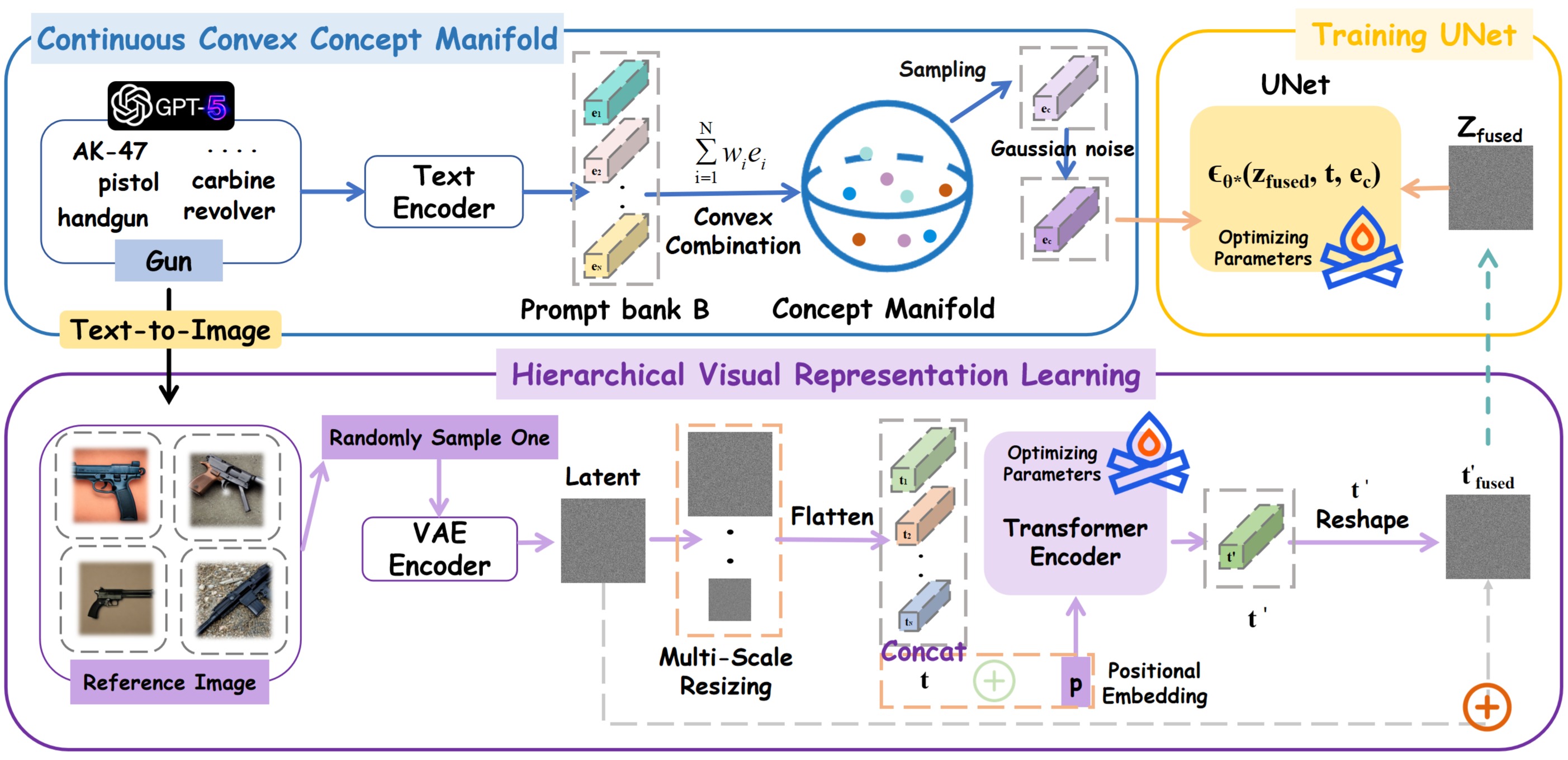
Figure 1: Overview of TICoE’s architecture, illustrating the combination of a continuous convex concept manifold and hierarchical visual encoding for precise, robust concept erasure.
Continuous Convex Concept Manifold
TICoE generates a semantically rich prompt bank for each target concept by expanding user-provided prompts with GPT-5.0, capturing a diverse set of paraphrases and linguistic variants. These embeddings are combined through a Dirichlet-weighted convex combination, ensuring that every interpolated concept embedding remains within the semantic hull of the targeted concept. This manifold construction—unlike simple prompt sets or extrapolated linear combinations—guarantees robust coverage and mitigates prompt-based reactivation attacks. The impact of manifold size and temperature (τ) on semantic stability is empirically quantified, demonstrating that 20–30 well-diversified prompts suffice for manifold completeness and stability.
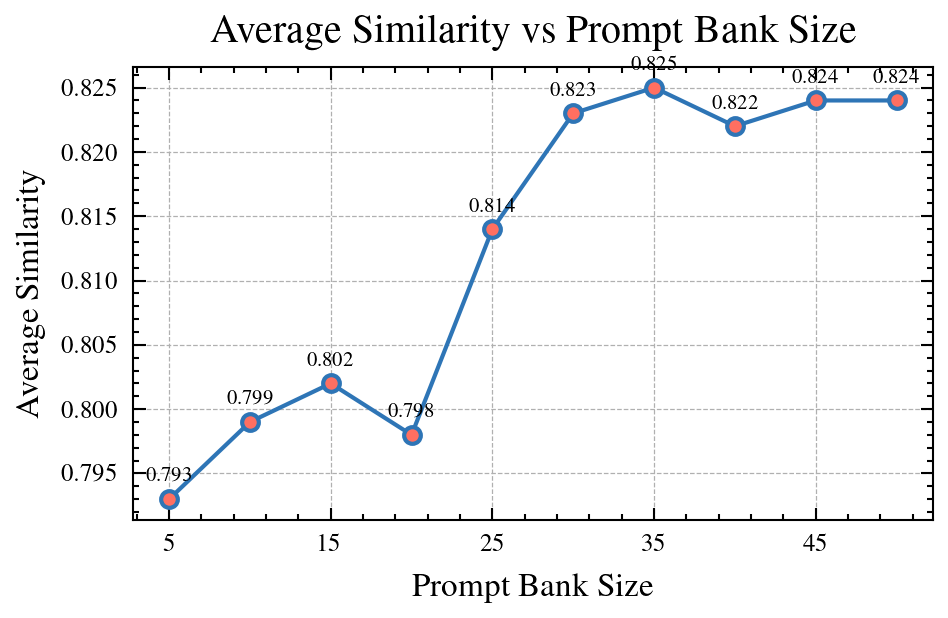
Figure 2: Average embedding similarity as a function of Prompt Bank size, supporting the manifold’s semantic coverage claims.
Hierarchical Visual Representation Learning
Reference images for the target concept are synthesized with a "clean" diffusion model to capture unbiased visual priors. Latents from these images are decomposed into multi-scale tokens and passed through a transformer encoder, capturing both global and local contextual features. This hierarchical fusion enables TICoE to disambiguate the target concept from visually or morphologically similar, but semantically unrelated, entities—thus reducing over-suppression (collateral damage) typical in naive image guidance approaches.
TICoE adapts conditional denoising diffusion training with negative classifier-free guidance (CFG). The edited model is jointly trained to align conditional predictions to guided targets that enforce selective suppression of the target concept, while matching unconditioned outputs to the original model for benign prompts. This maintains the model’s conditional structure outside the erased region and promotes robust fidelity post-erasure.
Experimental Evaluation
Quantitative Results
TICoE establishes strong numerical dominance over state-of-the-art baselines (ESD, UCE, FMN, SPM, Co-Erasing) on erasure precision (ASR, UDA, P4D), fidelity (FID, CLIP), and, notably, on the newly introduced Morpho-Contextual Concept Preservation (MCP) metric. The MCP directly reflects the model’s ability to preserve content related in structure or visual context but semantically distinct—a regime where existing image-assisted methods degrade severely.
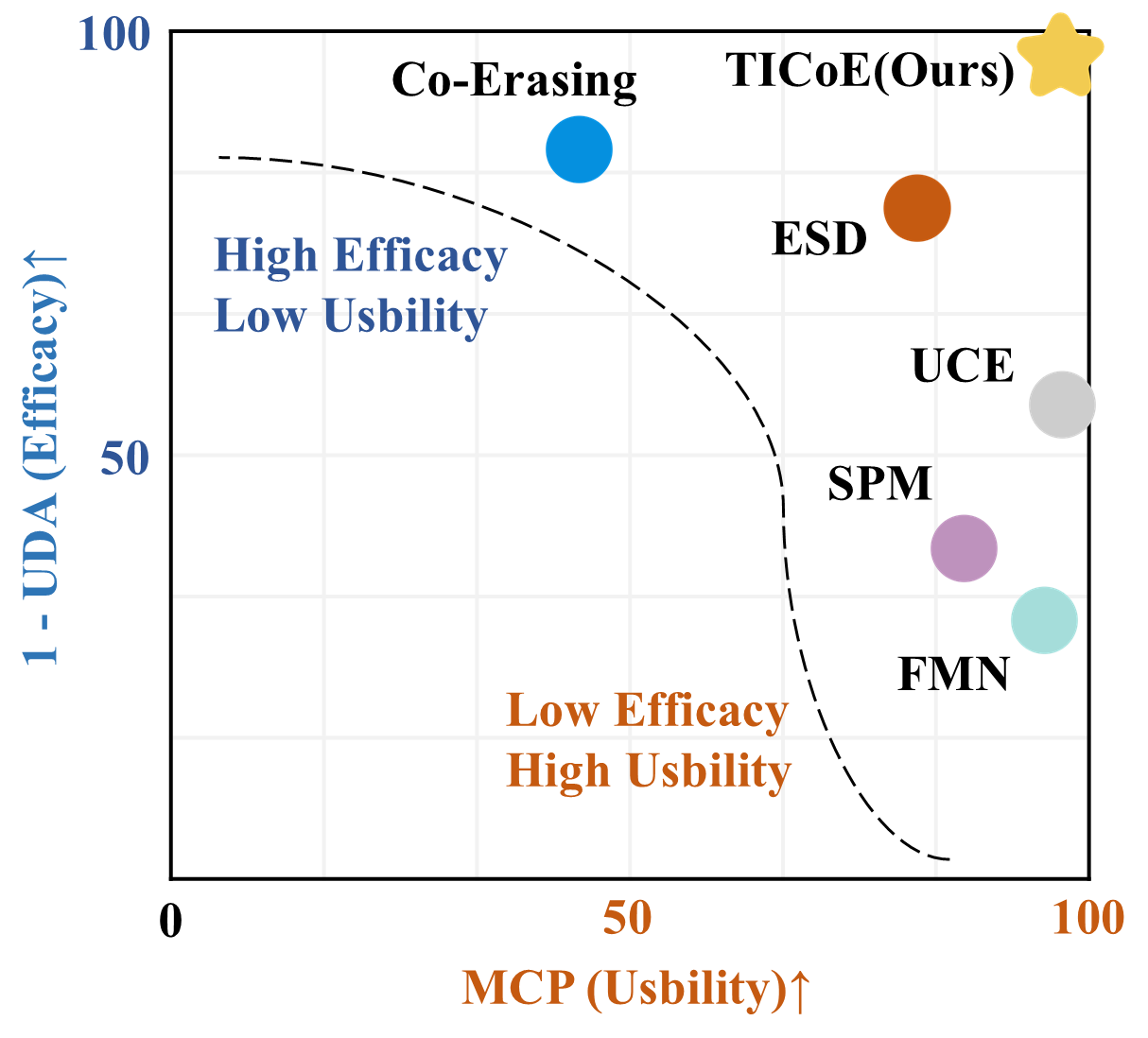
Figure 3: TICoE outperforms prior methods on concept removal precision and usability metrics when erasing “gun,” resolving prior trade-offs between suppression and generative usability.
Further, the framework shows consistent improvements across a spectrum of tasks (nudity, object, style, and identity erasure), demonstrating that TICoE's advantages are not confined to isolated benchmarks but generalize across application domains.
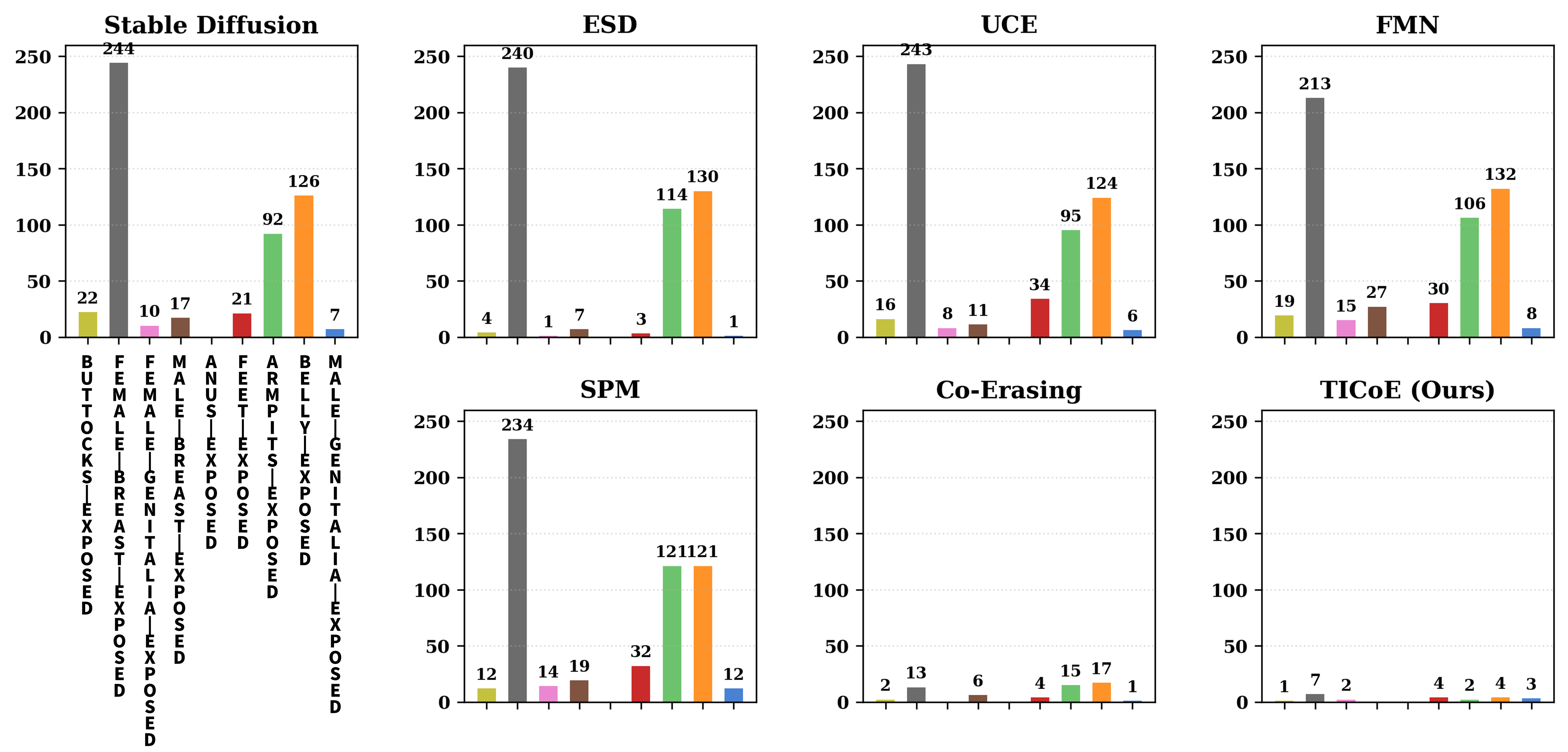
Figure 4: Fine-grained erasure results for nudity, showing minimal failure cases for TICoE compared to baselines.
Qualitative Results and Ablation
Visualizations evidence comprehensive suppression of target content (e.g., “futuristic plasma rifle”) without unintended removal of structurally similar concepts (e.g., “camera,” “phone”). Fine-grained ablation studies confirm the critical roles of both the convex manifold (semantic coverage) and multi-scale transformers (contextual disambiguation). The joint modeling approach produces clean, high-fidelity generations in even challenging contexts, such as adversarial prompts or partial occlusion.
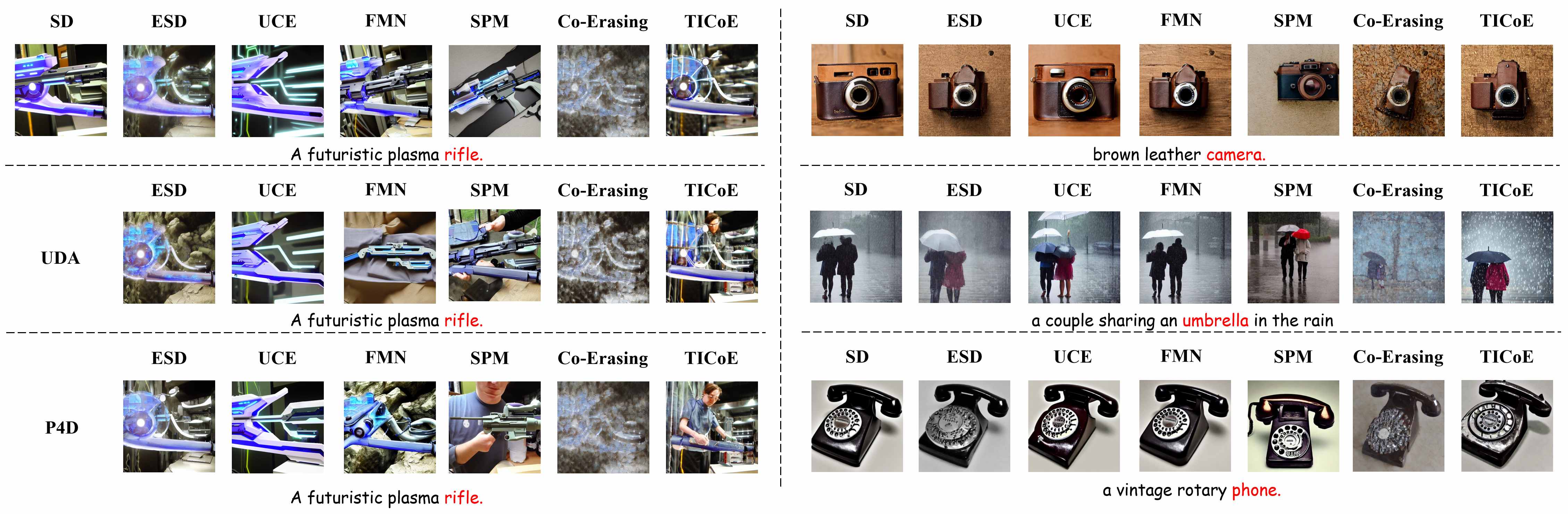
Figure 5: Comprehensive visual comparison, demonstrating TICoE’s effectiveness against prompt attacks and over-erasure.
Ablations on prompt bank size, temperature, and multi-scale fusion show diminishing returns and redundancy effects beyond 30 prompts and excessive scales, highlighting the significance of careful manifold construction. The robustness of TICoE is further corroborated by strong performance across different Stable Diffusion backbones.
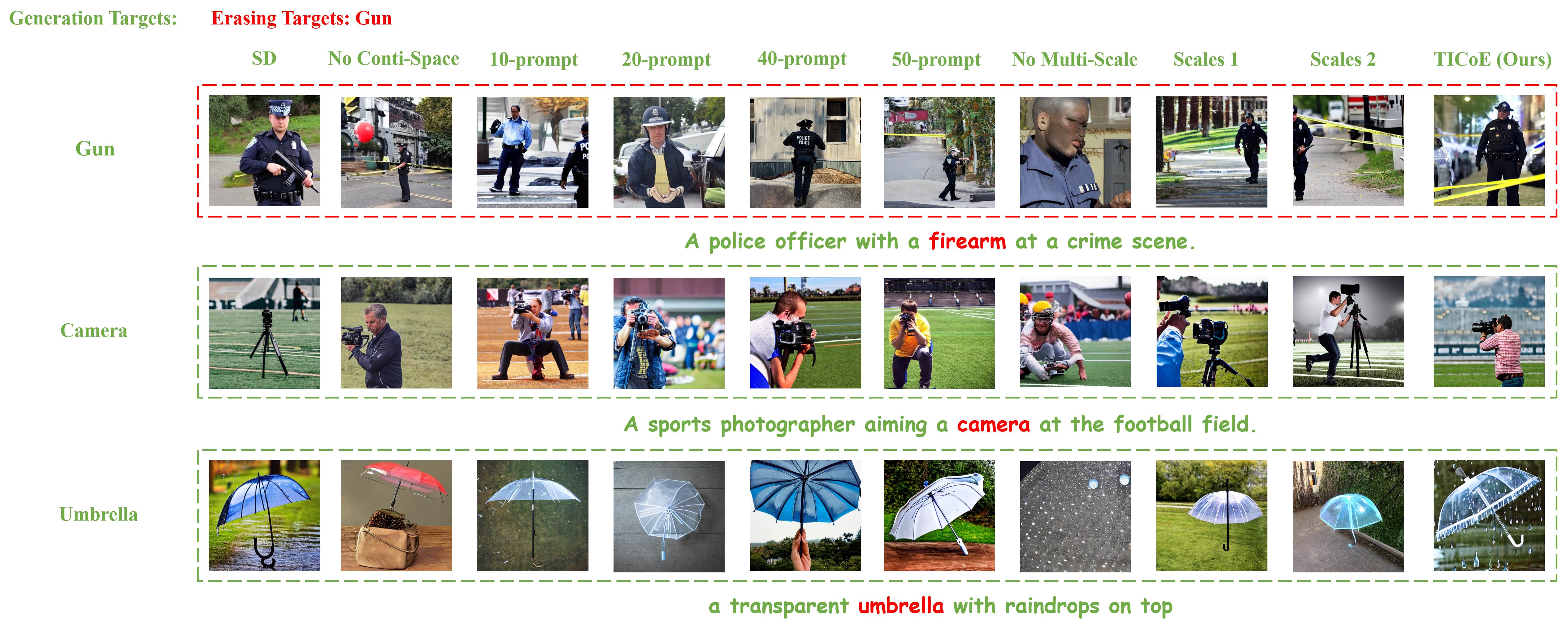
Figure 6: Visualization of key ablations, showing qualitative degradation when omitting manifold or hierarchical visual guidance.
Theoretical and Practical Implications
The continuous convex concept manifold represents a substantial advance over prompt-only and naive image-guided erasure: it encapsulates the entire semantic span of a concept, covering adversarial prompt spaces and hidden trigger phrases. The hierarchical multi-scale visual fusion brings in a new degree of granularity for disambiguating semantically similar but non-target content—a critical factor in safety-aligned generative modeling. The combination provides a rigorous pathway for both research and deployment of responsible, controllable generative models, particularly as regulatory and ethical demands on AI safety intensify.
From a systems perspective, TICoE operationalizes a modular framework applicable to any diffusion-based generative pipeline. Fine-grained and multi-concept erasure are demonstrated empirically, indicating scalability to more complex, layered erasure policies (e.g., simultaneous object, style, or identity suppression).
Future Directions in AI Unlearning
The integration of convex semantics and visual grounding in erasure frameworks opens several new research avenues:
- Automated manifold construction via LLMs for zero-shot or dynamic concept definition.
- Extending collaborative erasure beyond images—e.g., for language-only or multimodal diffusion, enabling safer large-scale generative AI.
- Algorithmic efficiency improvements, especially in runtime prompt synthesis and transformer-based latent fusion, for large-scale deployment scenarios.
- Adversarial robustness under realistic red teaming, supporting proactive safety and trustworthiness.
Conclusion
TICoE presents a rigorous, collaborative approach for concept erasure in diffusion models, bridging the coverage gaps of text-based methods with the precision of visual guidance. By leveraging both a continuous convex textual manifold and hierarchical visual encoding, TICoE achieves precise suppression of undesired concepts without compromising generative quality, as demonstrated through both quantitative benchmarks and qualitative analyses. This framework will serve as a foundation for future research into scalable, controllable, and trustworthy text-to-image generative modeling.
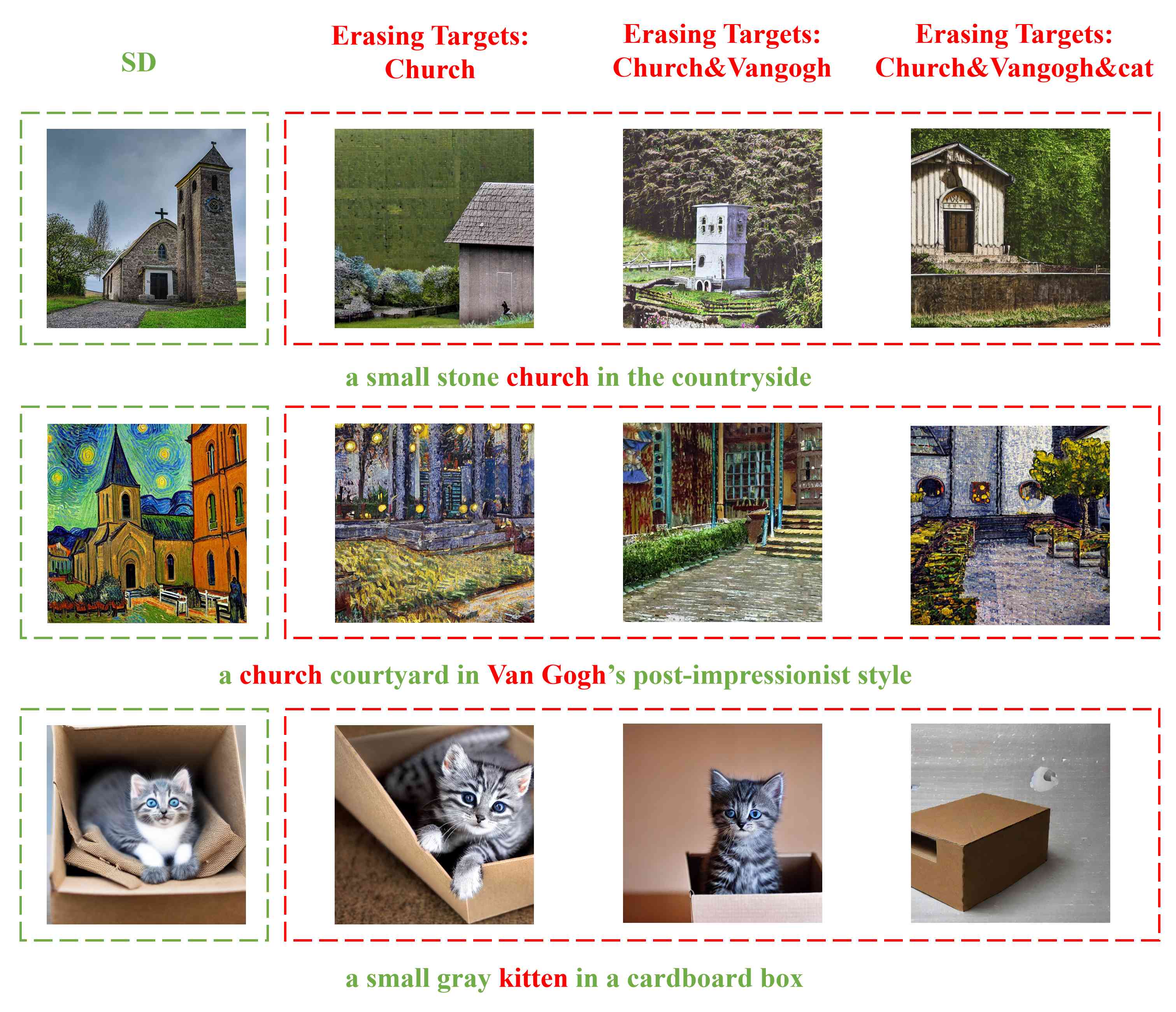
Figure 7: Multi-object erasure visualizations, demonstrating TICoE’s scalability to simultaneous, disentangled suppression of several concepts.