- The paper demonstrates a contact-aware planning and control method that discriminates between benign and hazardous contacts to ensure safe navigation in constrained anatomical environments.
- It employs a search-based algorithm with task-space partitioning and contact quality evaluation, achieving low tracking errors (e.g., 1.2±0.1 mm) in aortic arch models.
- The results highlight the critical role of hybrid feedback control in preserving manipulability and preventing unsafe tip contacts during autonomous surgical procedures.
Introduction
This paper addresses the dual challenge of motion planning and control for continuum robots tasked with navigation in highly constrained and fragile anatomical environments, such as the aortic arch during neurovascular procedures. The proposed framework centers on contact-aware planning that discriminates between benign and hazardous robot-environment interactions, ensuring kinematic feasibility and preserving manipulability while minimizing safety risks. Rigorous hardware validation is conducted across multiple patient-derived anatomical environments, demonstrating robust autonomous navigation with minimal tracking error and strict avoidance of unfavorable tip contact.
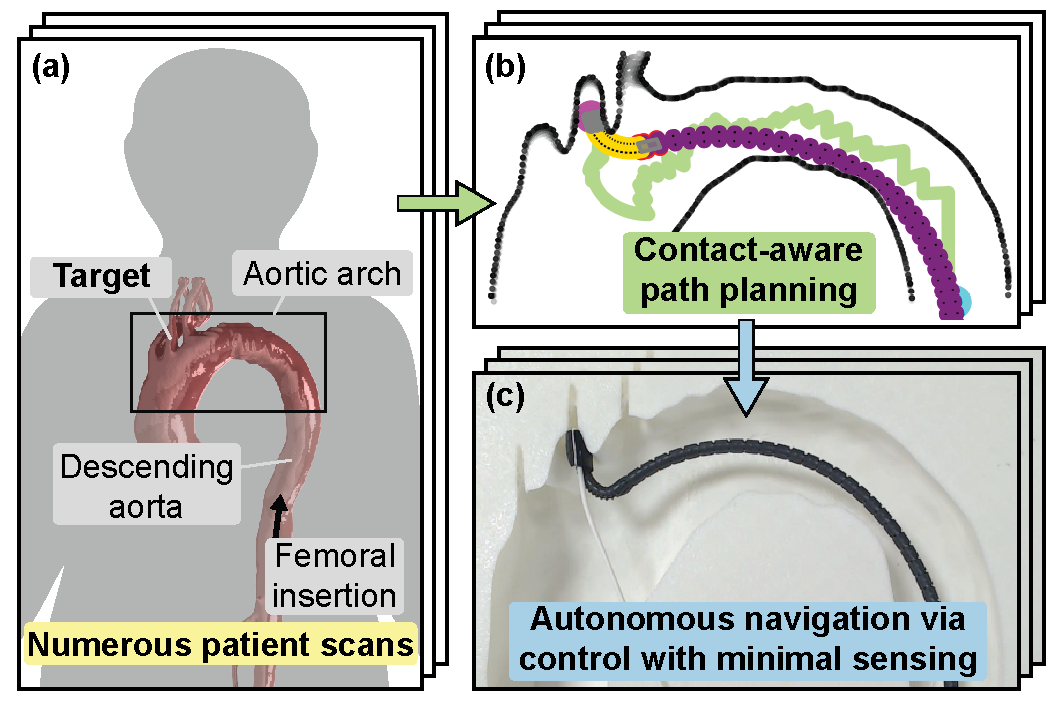
Figure 1: Overview of the proposed contact-aware planning and control system, integrating anatomical imaging inputs, contact-aware motion planning, and feedback-based execution.
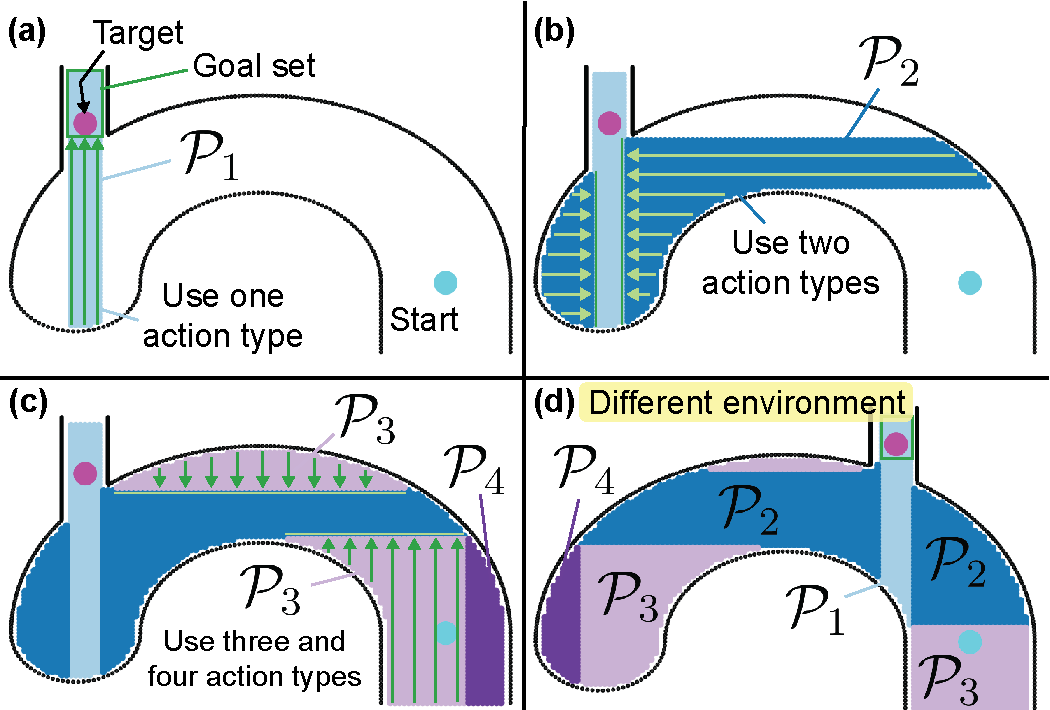
The planning framework employs a search-based algorithm operating over a discretized configuration space, leveraging a contact-aware motion model that enforces actuation consistency and environmental constraints. Key elements include:
The cost function combines joint motion penalties proportional to expected tip displacement and contact penalties weighted by anatomical risk. Favorable robot-environment interaction permits compliant movement, but unfavorable contact—particularly distal tip contact—is strictly prohibited at all stages except controlled entry into the target vessel.
The planner utilizes analytic derivatives to accelerate optimization in the high-dimensional curvature space and caches function evaluations. Planning times are consistently achievable within anatomically relevant time windows.
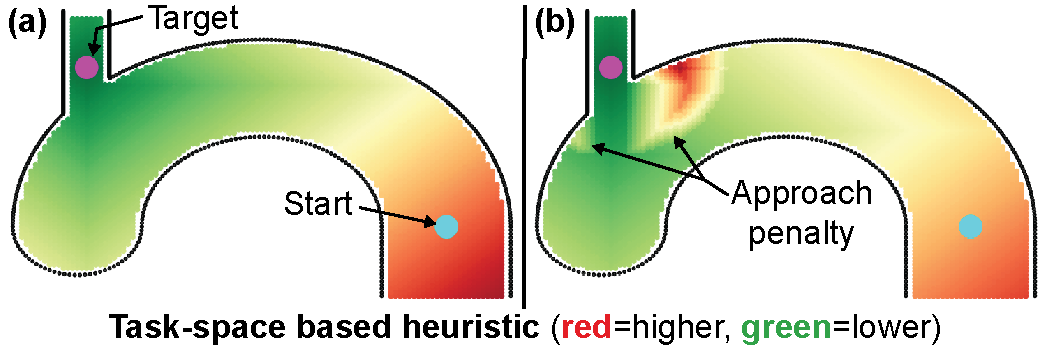
Figure 3: Heuristic fields generated via backward Dijkstra search efficiently prioritize feasible paths and penalize lateral approaches at vascular bifurcations.
The robot architecture features antagonistically-actuated proximal and distal continuum segments. Shape modeling leverages a piecewise constant curvature kinematic parameterization, with constraints enforced for tendon length consistency and minimum clearance from anatomical boundaries. Transformation chains propagate gradients, enabling efficient analytical differentiation in optimization.
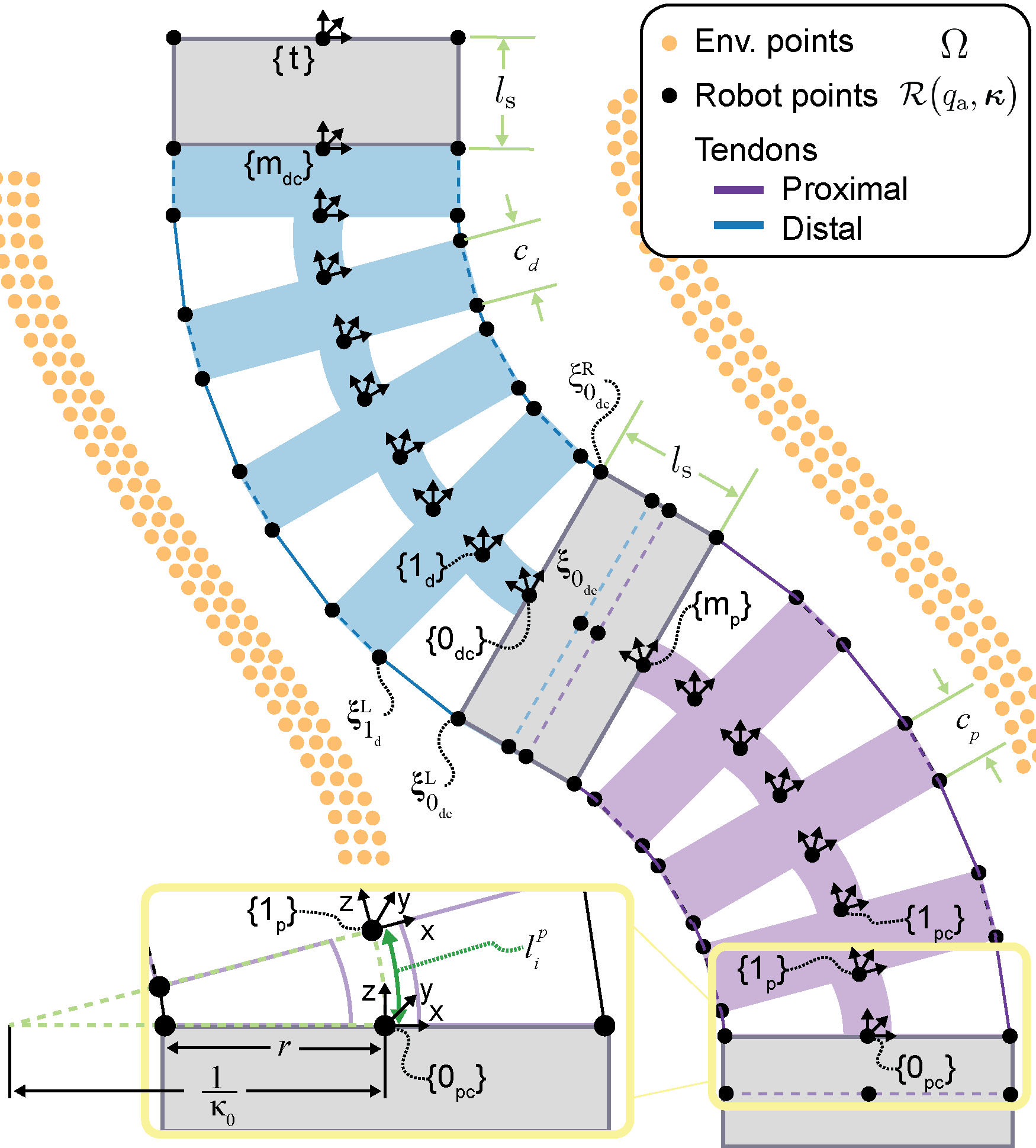
Figure 4: Piecewise constant curvature robot model with environmental contact points and segment transformations.
Control Framework
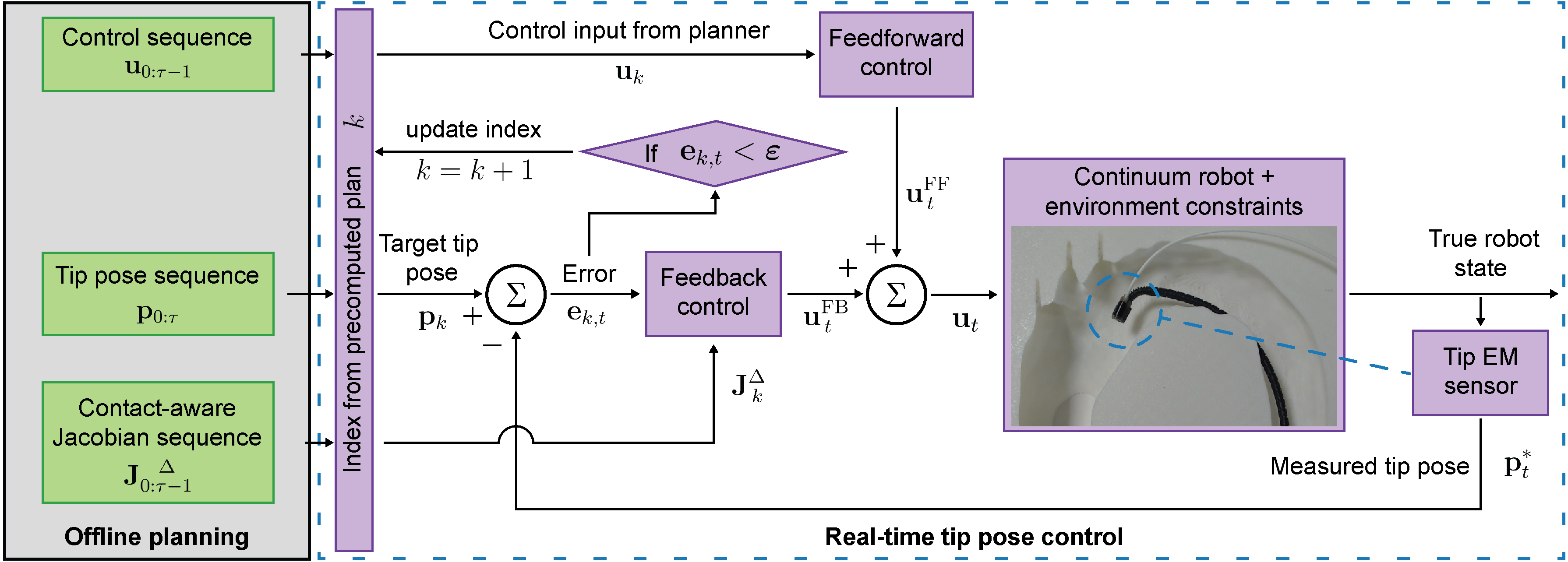
Execution employs a hybrid trajectory tracking controller combining feedforward inputs derived from the planner and feedback correction via a contact-aware Jacobian estimated offline for each plan step. The Jacobian is computed numerically by perturbing joint parameters and measuring local tip pose variations under contact constraints.
Experimental Evaluation
Hardware experiments employ a custom-fabricated continuum robot and a set of 3D printed anatomical models reconstructed from patient CTA data. The framework was tested across three aortic arch types (I, II, III), reflecting increasing navigation difficulty observed in clinical practice.
- Numerical results: Across all trials (three per environment), the robot reached the target vessel with 100% success while avoiding distal tip contact.
- Mean tracking errors: 1.9±0.5 mm (type I), 1.2±0.1 mm (type II), 1.7±0.2 mm (type III).
- Planning times: All plans converge within clinically relevant durations (type III: 21.1 min total, including 839 s planning).
- Ablation studies: Penalizing ECS contact substantially improves manipulability (reduced Jacobian condition number) and prevents hardware failures; introducing body contact penalties reduces completion time and enhances agreement between planned and actual kinematics.
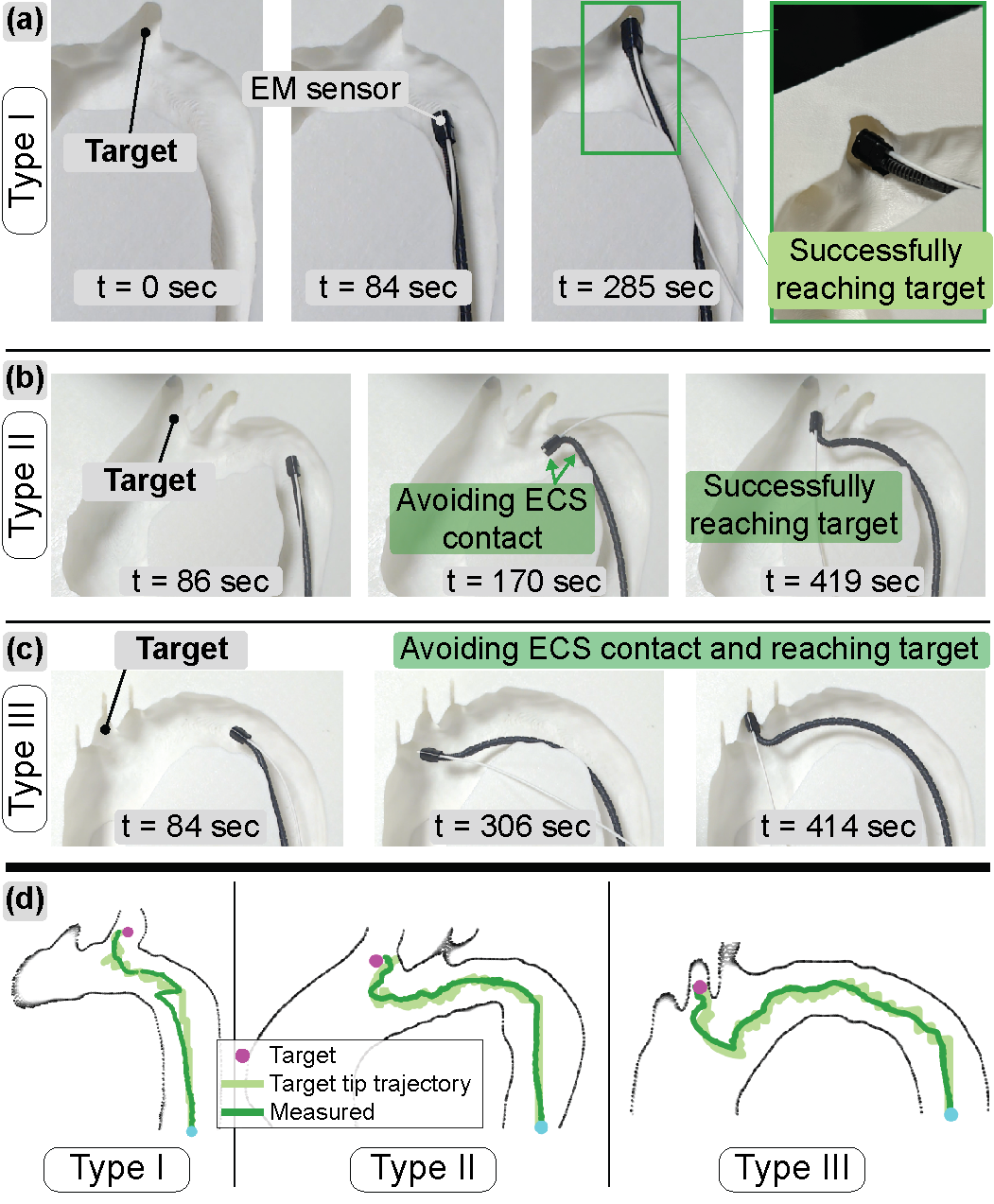
Figure 6: Hardware trials in three anatomical environments; robot successfully reaches targets, avoiding critical contacts.
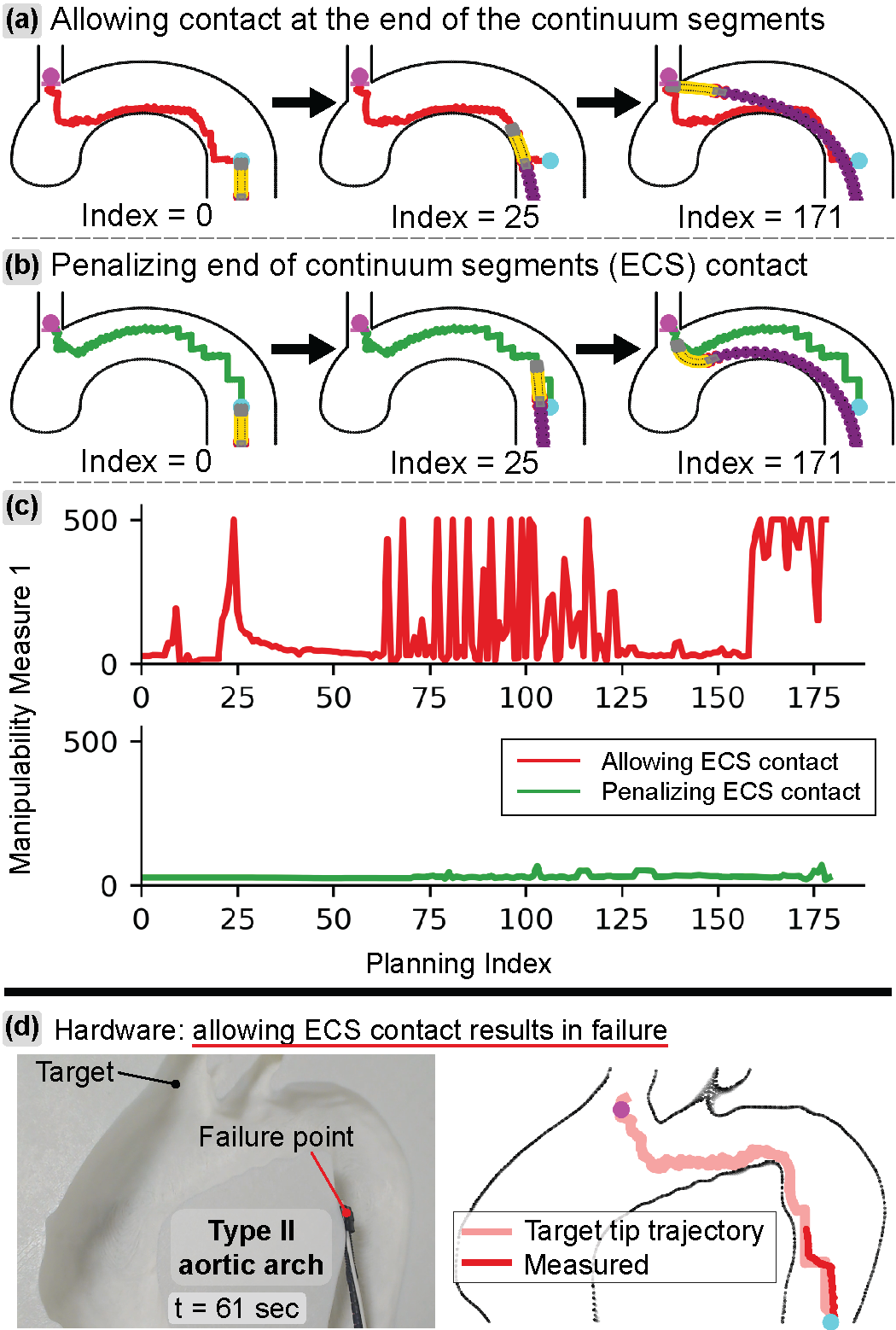
Figure 7: Comparative analysis—plans allowing ECS contact (red) induce loss of manipulability and result in robotic failures; penalty (green) preserves control.
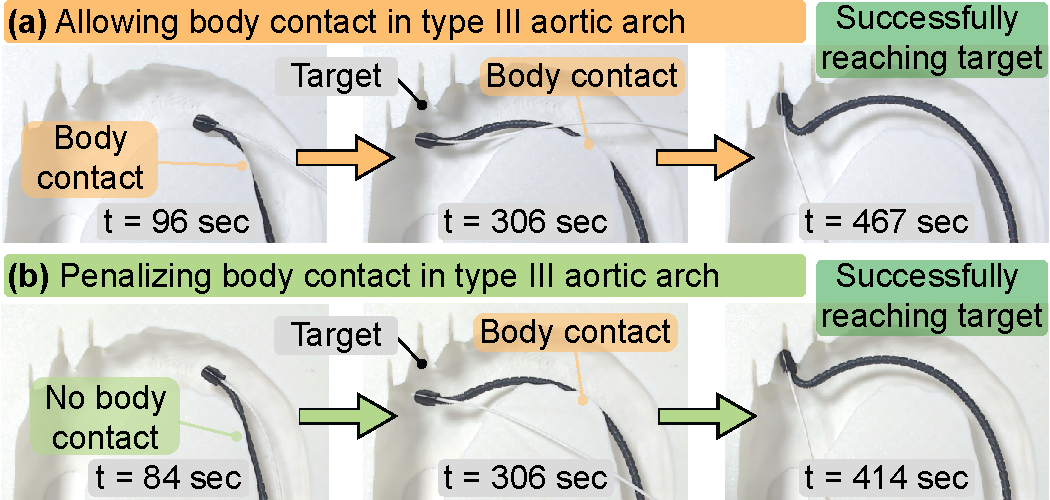
Figure 8: Robust navigation in type III arch with reduced body contact, validating planner's impact on contact minimization.
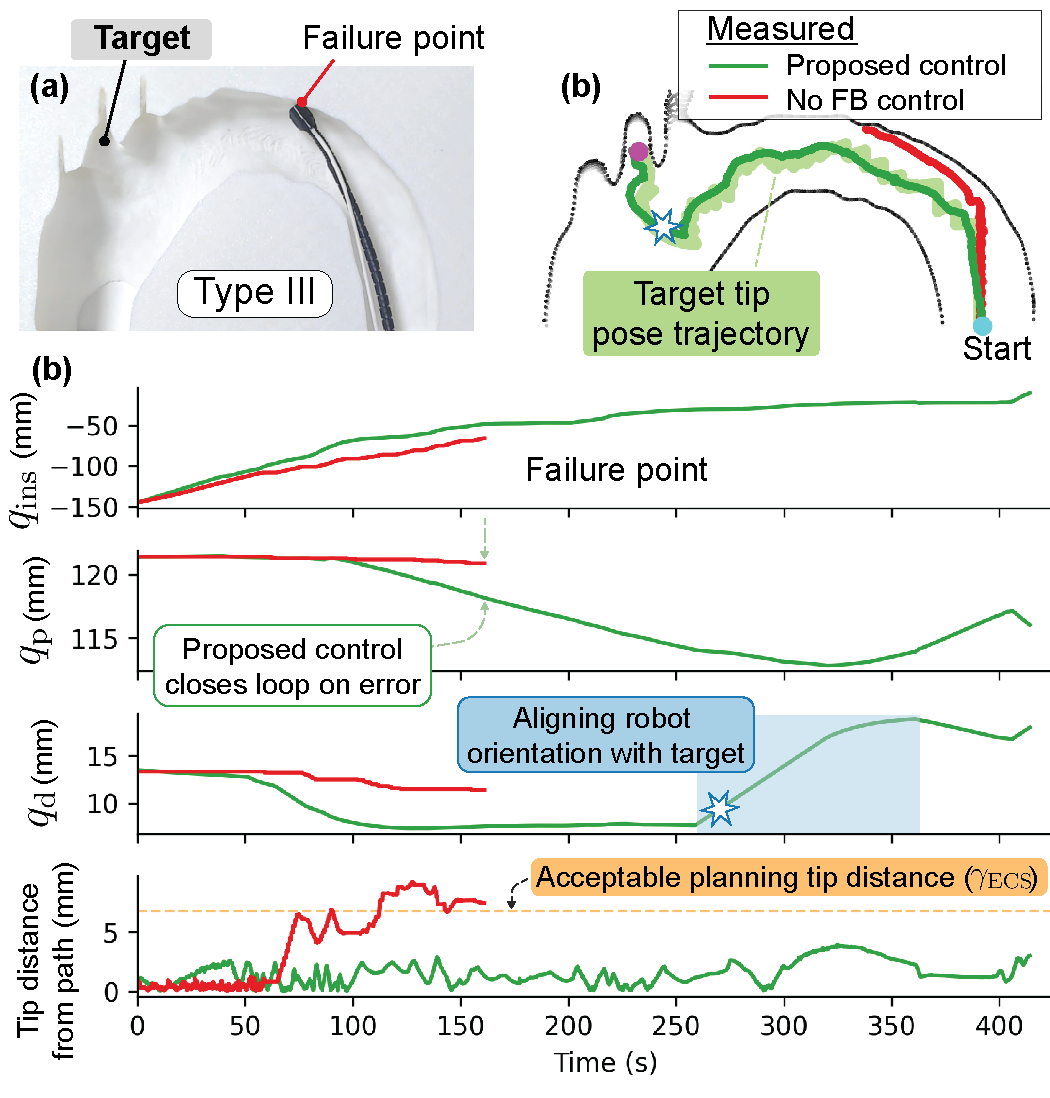
Figure 9: Closed-loop feedback demonstrates superior tracking; open-loop execution yields large errors and unsafe tip contact.
Implications and Future Directions
Practically, the framework enables reliable and safe autonomous continuum robot navigation through highly complex anatomical environments, minimizing procedural risk and potentially shortening intervention times—critical for neurovascular emergencies. The approach generalizes to other constrained domains demanding compliant, contact-aware navigation.
Theoretically, this methodology advances motion planning for soft robots by integrating task-space complexity partitioning, anatomy-specific contact assessment, and analytic motion modeling within a unified framework. The results highlight the necessity of both favorable trajectory generation and robust feedback control for successful hardware deployment.
Future work includes transitioning from 2D to full 3D anatomical planning, further accelerating computation, enhancing execution speed, and incorporating advanced state estimation to infer interaction forces or tissue properties. Integration with learning-based approaches and adaptive controllers could further extend performance in real-world surgical scenarios.
Conclusion
This paper presents a unified, contact-aware planning and control framework for continuum robotic navigation in anatomically constrained environments. Experimental results validate consistent target reaching, low tracking error, and safety preservation in patient-derived aortic arch models. Avoiding ECS contact and minimizing body contact are essential for maintaining manipulability and hardware reliability. The framework represents a technically rigorous advance in continuum robot autonomy, with significant clinical and theoretical implications for future intelligent robotic systems.