- The paper introduces finite-step probabilistic bounds for contraction ratios in iterated Pearson correlation dynamics using state-dependent empirical quantile methods.
- It employs logarithmic binning and deterministic enlargement techniques to precisely control transient behavior across varying matrix sizes.
- Empirical validations demonstrate near-uniform thresholds and robust coverage, offering practical stopping criteria and insights for normalization algorithms.
Finite-Step Probabilistic Bounds for Iterated Pearson Correlation Dynamics
Problem Setting and Motivation
The paper "Finite-Step Bounds for Iterated Correlation Matrices" (2604.14071) addresses the finite-step contraction behavior of the iterated Pearson row–row correlation operator applied to matrices with random initialization. The dynamic sequence (Pk) evolves via Pk+1(i,j)=corr(Pk(i,:),Pk(j,:)), defining a nonlinear map on the set of correlation matrices. This iterative dynamic is central in relational clustering (CONCOR), association visualization (GAP), and iterative normalization in machine learning. While global convergence (i.e., Δk→0) is known, practitioners lack explicit probabilistic bounds for the ratio ρk=Δk+1/Δk at finite steps.
Traditional local analyses, such as Kruskal's spectral radius criterion, guarantee geometric convergence near certain block-{±1} fixed points, but do not control transient finite-step dynamics, nor do they address probabilistic behavior induced by random initialization. Large-scale empirical studies (Hassan, 17 Dec 2025) established dimension-uniform, state-dependent contraction behavior, but did not operationalize explicit bounds for stepwise updates. The present work systematically addresses this gap, formulating and empirically constructing state-dependent probabilistic bounds for ρk conditioned on the normalized step size δk=Δk/n.
Empirical Conditional Structure and Quantile-Based Construction
A principal empirical finding leveraged here is the conditional regularity of ρk given δk, documented by Law III in (Hassan, 17 Dec 2025): large δk leads to strong contraction (Pk+1(i,j)=corr(Pk(i,:),Pk(j,:))0), while small Pk+1(i,j)=corr(Pk(i,:),Pk(j,:))1 concentrates Pk+1(i,j)=corr(Pk(i,:),Pk(j,:))2 near unity with non-negligible probability of expansion (Pk+1(i,j)=corr(Pk(i,:),Pk(j,:))3). This conditional structure is dimension-uniform across Pk+1(i,j)=corr(Pk(i,:),Pk(j,:))4.
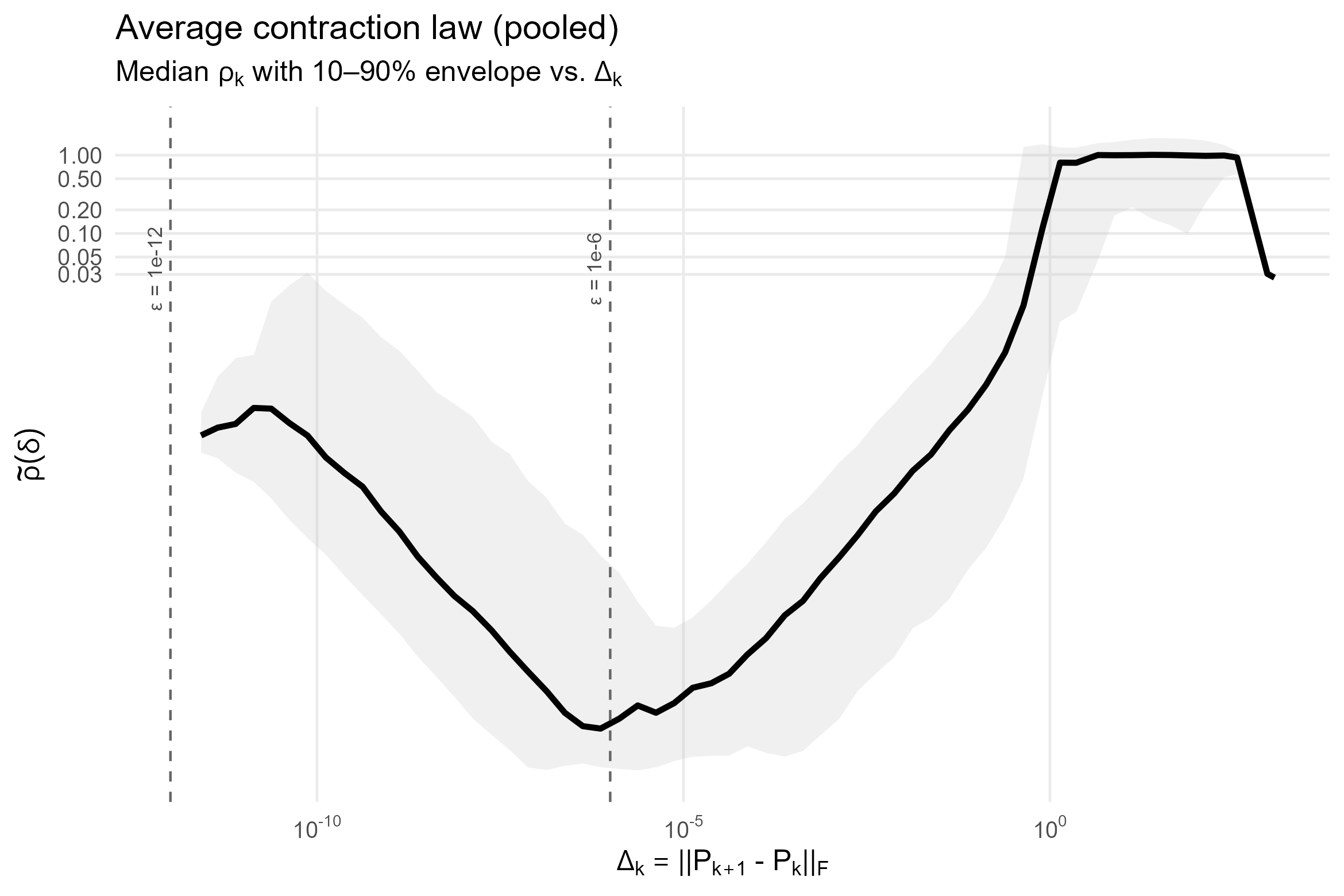
Figure 1: Empirical conditional structure of iterated Pearson correlation dynamics, showing pooled post-transient pairs Pk+1(i,j)=corr(Pk(i,:),Pk(j,:))5 across matrix sizes; the V-shaped geometry supports the conditional quantile approach.
The construction proceeds via logarithmic binning of Pk+1(i,j)=corr(Pk(i,:),Pk(j,:))6, ensuring stable estimation across several orders of magnitude. Within each bin, the empirical conditional Pk+1(i,j)=corr(Pk(i,:),Pk(j,:))7-quantile of Pk+1(i,j)=corr(Pk(i,:),Pk(j,:))8 defines the baseline bound Pk+1(i,j)=corr(Pk(i,:),Pk(j,:))9, yielding a piecewise-constant state-dependent function. Adjacent bins are merged to guarantee minimum sample size, stabilizing tail quantile estimates. Deterministic enlargement mechanisms—log-scale inflation and linear dilation—yield pointwise larger families (Δk→00), facilitating explicit safety margins and systematic control for epistemic uncertainty.
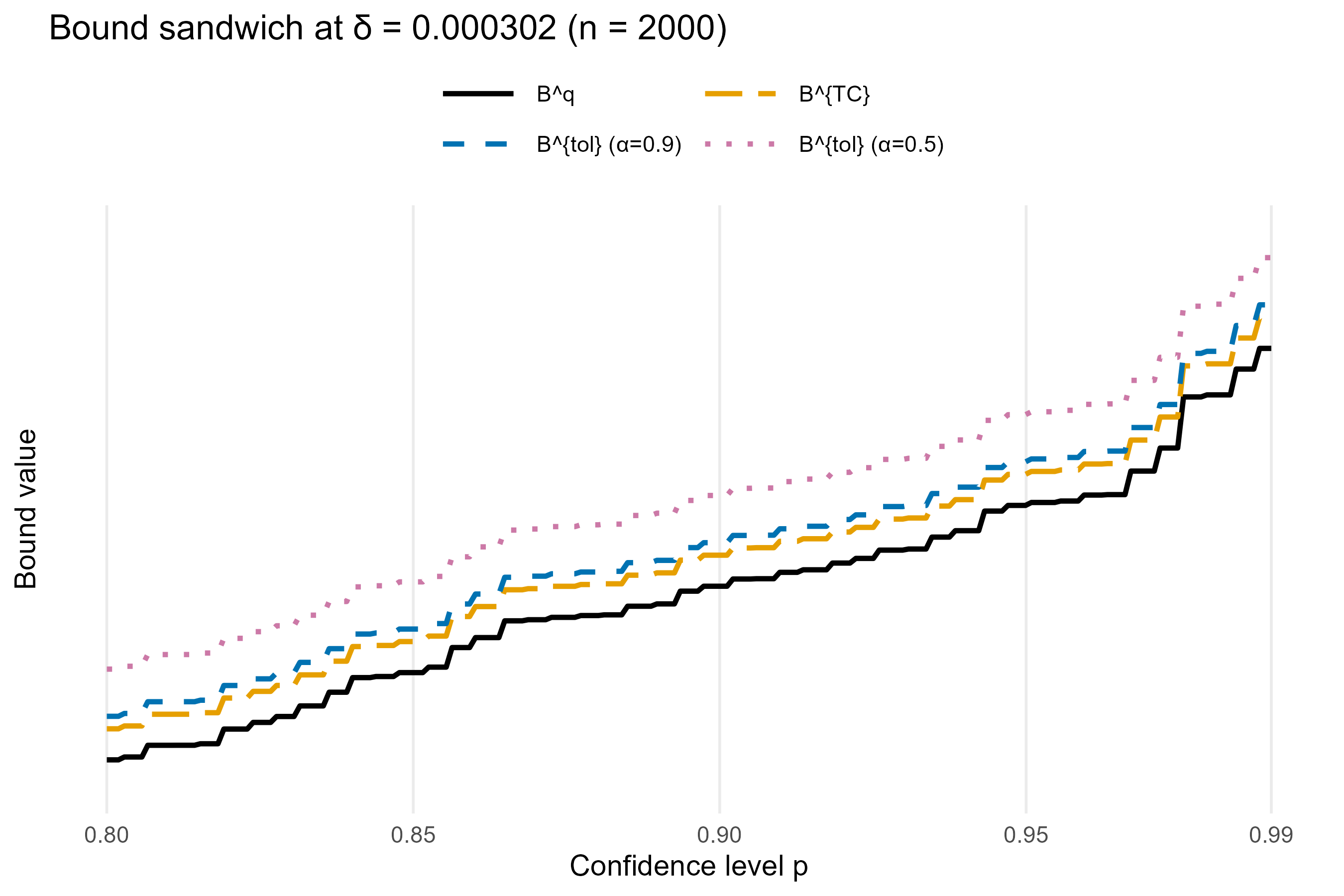
Figure 2: Quantile bound and deterministic enlargements for Δk→01, illustrating how inflation and dilation construct conservative bounds from the empirical quantile baseline.
Validation and Numerical Coverage
Independent validation on held-out trajectories demonstrates that the bounds achieve empirical coverage closely matching the intended nominal levels across all tested dimensions, both globally and stratified by matrix size. The empirical quantile bound Δk→02 attains Δk→03 for Δk→04.
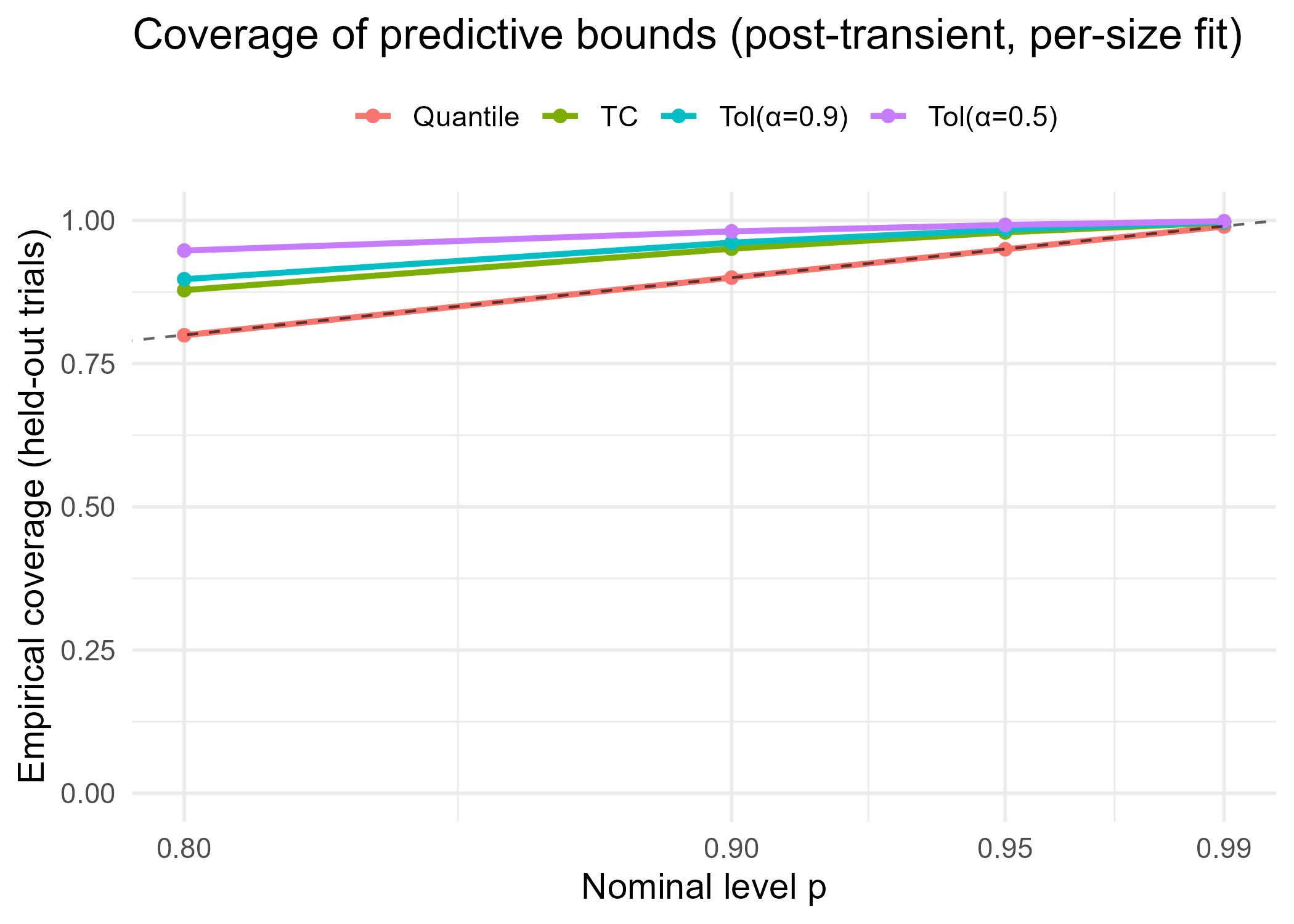
Figure 3: Global out-of-sample coverage of the finite-step bounds, confirming that quantile-based and enlarged bounds achieve or exceed their target probabilities.
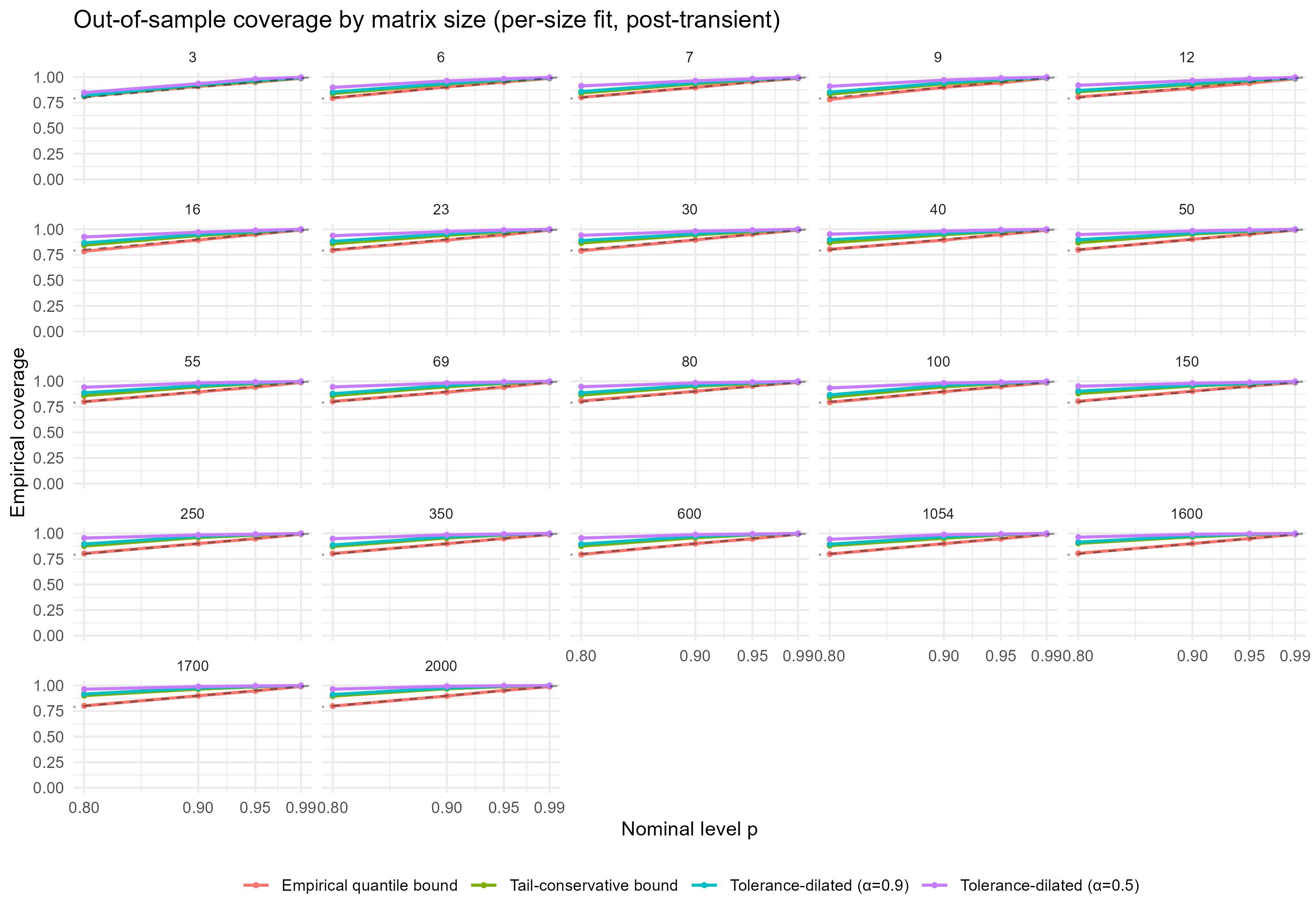
Figure 4: Out-of-sample coverage stratified by matrix size, showing empirical quantile bounds and deterministic enlargements remain calibrated across Δk→05.
The deterministic enlargements uniformly increase coverage, with the inflated bounds regularly achieving conservative margins above nominal values. Bootstrap analysis quantifies parameter uncertainty and confirms robustness of the threshold estimates under bin merging and splitting protocol.
Practical Thresholds and Structural Summaries
Two robust practical guidelines emerge from the expansion threshold analysis:
- Contraction threshold: For Δk→06, Δk→07 across all tested matrix sizes. This empirical threshold offers a usable rule for stopping criteria in iterative algorithms.
- Worst-case envelope: For Δk→08 of Δk→09 tested dimensions, ρk=Δk+1/Δk0; the exception (ρk=Δk+1/Δk1) is attributed to a distributed upper-tail feature in the conditional quantile function, not local to any particular trajectory.
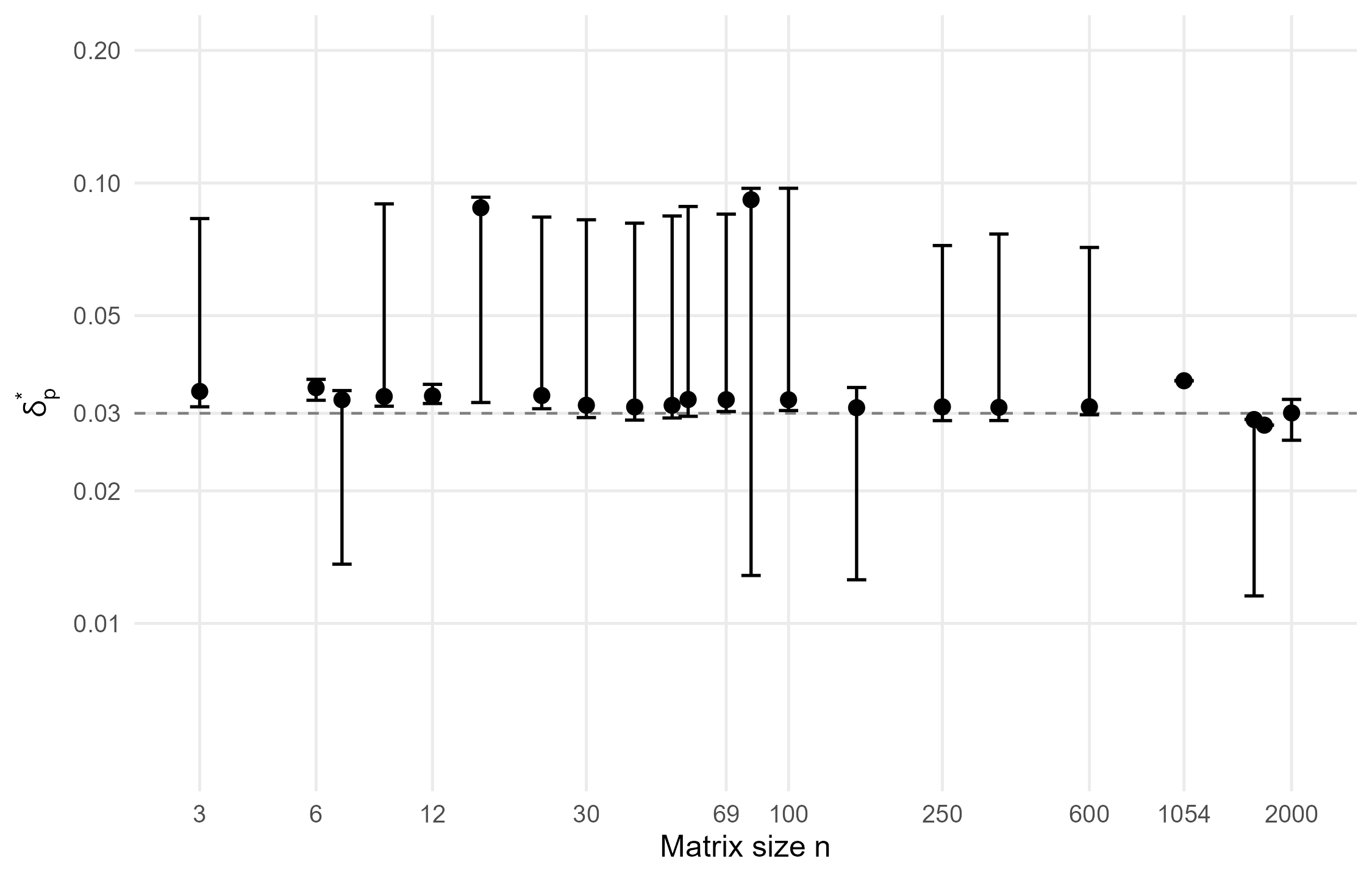
Figure 5: Bootstrap estimates of the expansion threshold ρk=Δk+1/Δk2, illustrating near-uniform thresholds around ρk=Δk+1/Δk3 across matrix sizes.
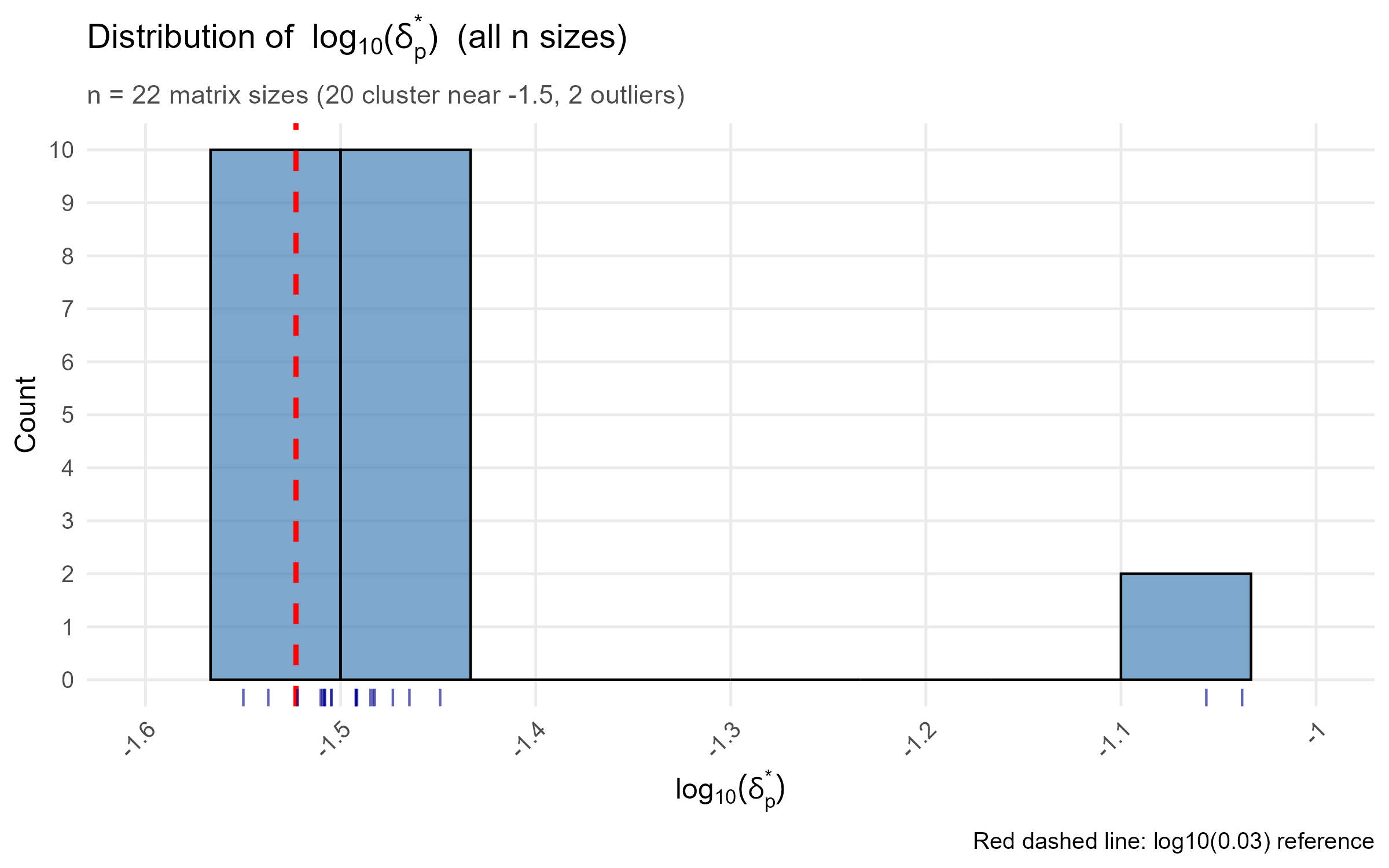
Figure 6: Distribution of ρk=Δk+1/Δk4, confirming empirical stability and practical dimension-independence.
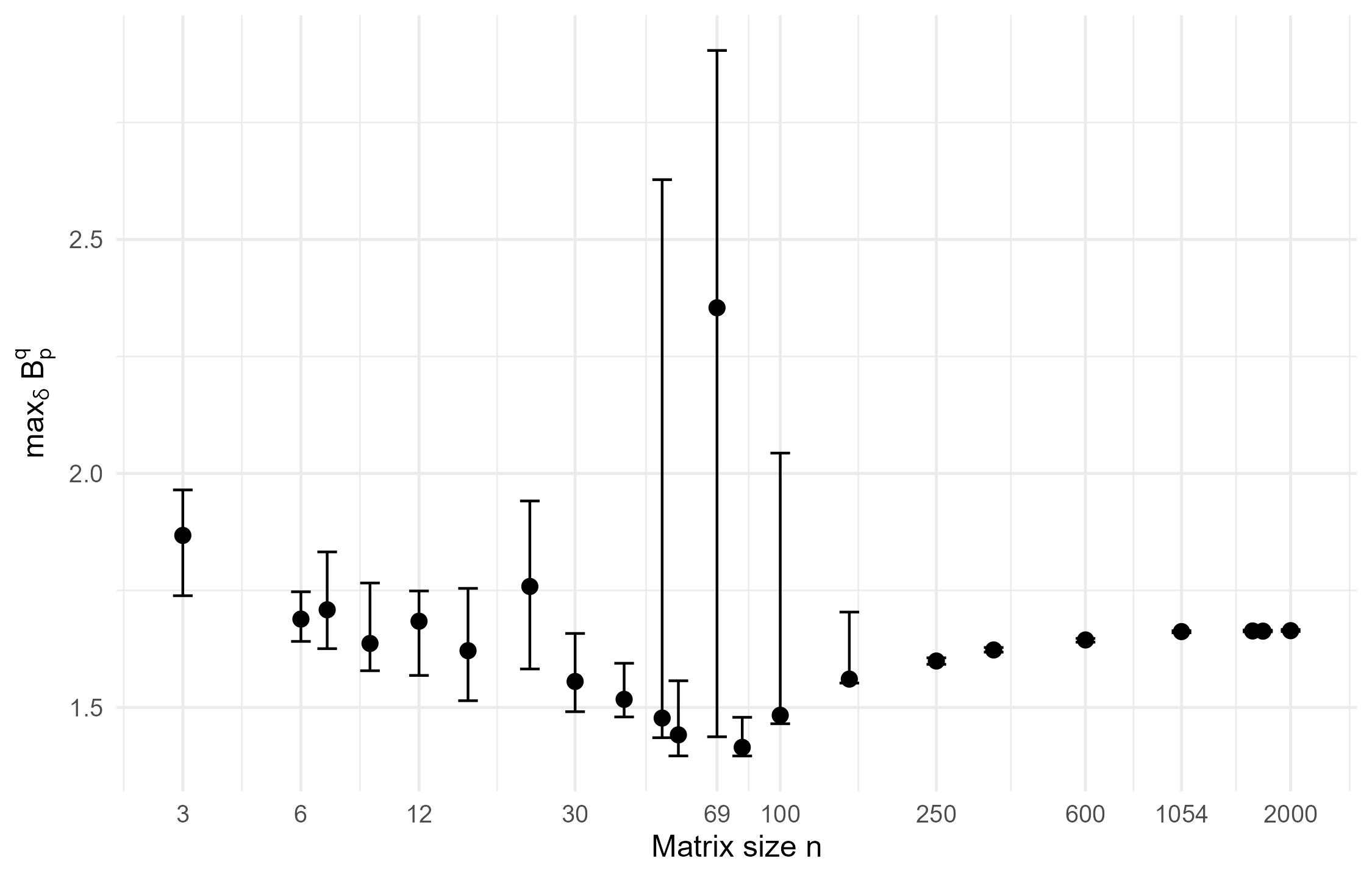
Figure 7: Bootstrap estimates of the worst-case envelope ρk=Δk+1/Δk5, showing envelope values cluster between ρk=Δk+1/Δk6 and ρk=Δk+1/Δk7 except for the isolated anomaly.
Theoretical Implications and Extensions
The explicit finite-step bounds operationalize empirical structural laws into practical, verifiable control statements for nonlinear normalization dynamics. The findings clarify that contraction is not uniformly geometric, but state-dependent—large steps exhibit strong contraction, while small steps are nearly isometric. The empirical dimension-uniform conditional structure challenges existing theoretical frameworks, motivating future development of analytical description for finite-step dynamics.
The deterministic enlargements (ρk=Δk+1/Δk8, ρk=Δk+1/Δk9) address epistemic uncertainty, providing conservative calibration of tail risk. The framework is extensible to other nonlinear normalization maps, subject to validation of conditional structural regularity, and is amenable to cross-validation and calibration for practitioner-specific application requirements.
Limitations and Open Problems
All bounds are model-dependent, relying on random initialization of {±1}0. Distribution-free guarantees for arbitrary {±1}1 remain open, and the framework's applicability to other iterative normalizations requires further empirical and analytical scrutiny. No analytical proof currently exists for the dimension-uniform conditional contraction structure, and rigorous Lyapunov-type analysis or operator-level concentration results would extend the theoretical foundation.
The anomaly observed for {±1}2 reveals the presence of distributed upper-tail effects, highlighting the importance of robust tail quantile estimation and bin merging sensitivity analysis.
Conclusion
The paper provides a comprehensive empirical framework for constructing, validating, and operationalizing finite-step probabilistic bounds for contraction ratios in iterated Pearson correlation dynamics. Explicit state-dependent bounds, with empirically validated coverage, enable practical control and diagnosis in clustering and normalization algorithms, and offer structural insight for theoretical analysis of nonlinear matrix iterations. Future developments may generalize this framework to broader classes of normalization maps and pursue analytical underpinnings for the observed empirical laws.
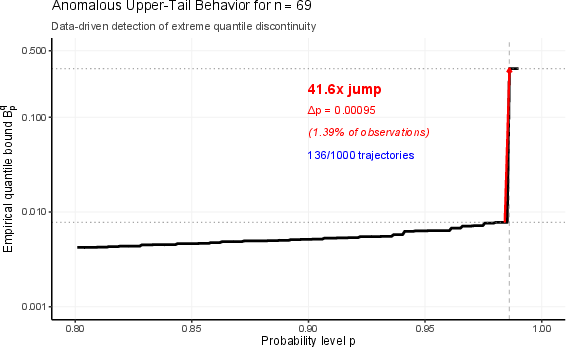
Figure 8: Empirical conditional quantile function {±1}3 for the anomalous {±1}4 case, illustrating discontinuity and distributed upper-tail effects in the ratio distribution.