- The paper introduces a novel radar bundle adjustment framework that employs differentiable Gaussian Splatting to jointly optimize sensor poses and dense scene geometry.
- It integrates a radar-inertial odometry frontend with a RadarSplat++ backend, achieving over 90% reduction in translational error and 80% in rotational error.
- Experimental results on a custom indoor dataset reveal dense, consistent scene reconstructions without relying on explicit loop closures.
RadarSplat-RIO: Indoor Radar-Inertial Odometry with Gaussian Splatting-Based Radar Bundle Adjustment
Motivation and Problem Statement
Radar is increasingly sought after for SLAM in adverse environments due to its resilience to illumination changes, weather effects, and occlusions. However, the prevailing paradigm for radar odometry in such conditions remains per-frame estimation—either velocity or geometry-based—which leads to substantial cumulative drift. Loop closure can mitigate long-term error but depends on place revisitation and robust recognition, creating constraints for online or exploratory applications. While bundle adjustment (BA) is standard for visual and LiDAR SLAM, adapting BA to radar poses significant challenges: the lack of a dense, differentiable scene representation and the inherent complexity of radar data (range, azimuth, Doppler).
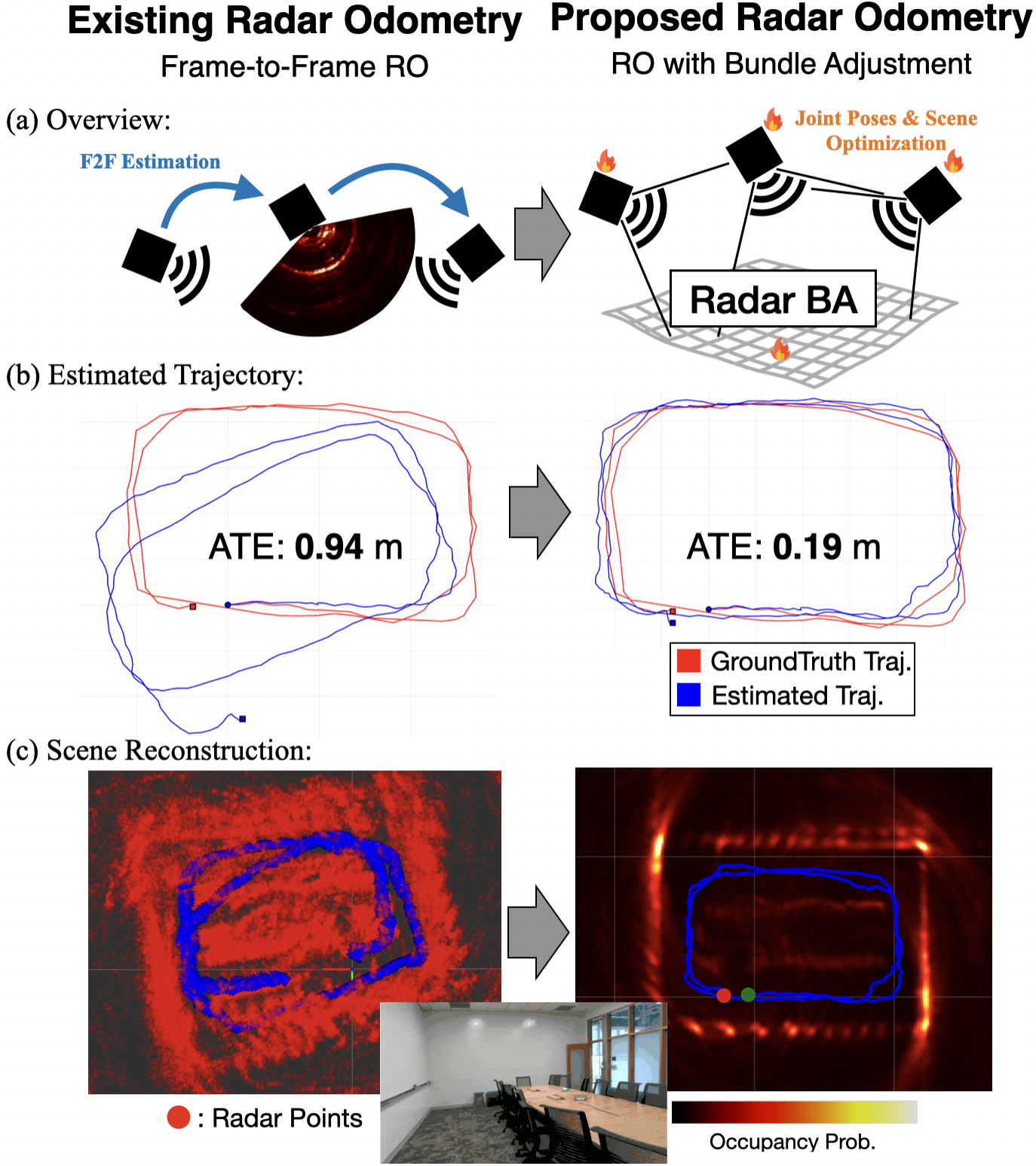
Figure 1: Existing radar SLAM methods accumulate drift with frame-to-frame estimation; RadarSplat-RIO addresses this via joint BA of poses and scene, reducing trajectory drift and improving consistency.
RadarSplat-RIO Framework
RadarSplat-RIO introduces the first radar bundle adjustment framework enabled by a differentiable Gaussian Splatting (GS) representation. This system jointly optimizes radar sensor poses and dense scene geometry using full range–azimuth–Doppler (RAD) data. The method consists of two principal components:
- Radar-Inertial Odometry (RIO) Frontend: Adapts MRIO for initial pose estimation, leveraging ego-velocity from Doppler measurements and IMU fusion.
- RadarSplat++ Backend: Incorporates GS-based multi-frame optimization, with differentiable rendering for both RA and RD images, and a novel Doppler-aware rendering pipeline inspired by DART.
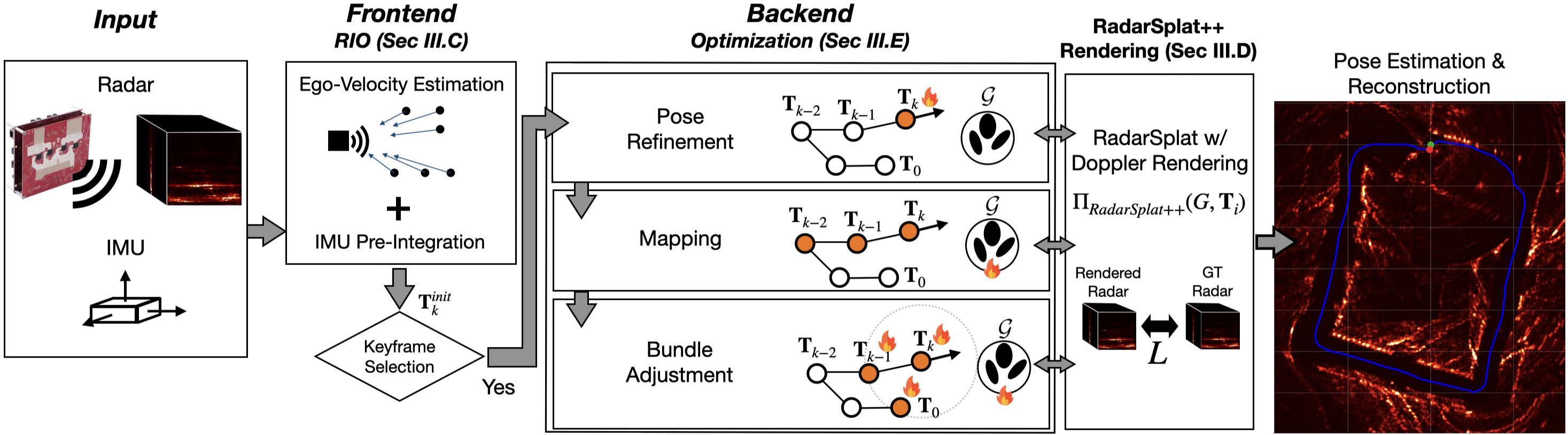
Figure 2: Pipeline overview: the RIO frontend estimates initial poses; the RadarSplat++ backend refines poses and scene via GS-based BA in a local window.
Radar Data Representation and Rendering
RadarSplat++ extends the RadarSplat paradigm by introducing full RAD rendering, crucial for robust scene and pose estimation. The radar data cube after MIMO FFT processing enables simultaneous access to range, azimuth, and Doppler measurements.
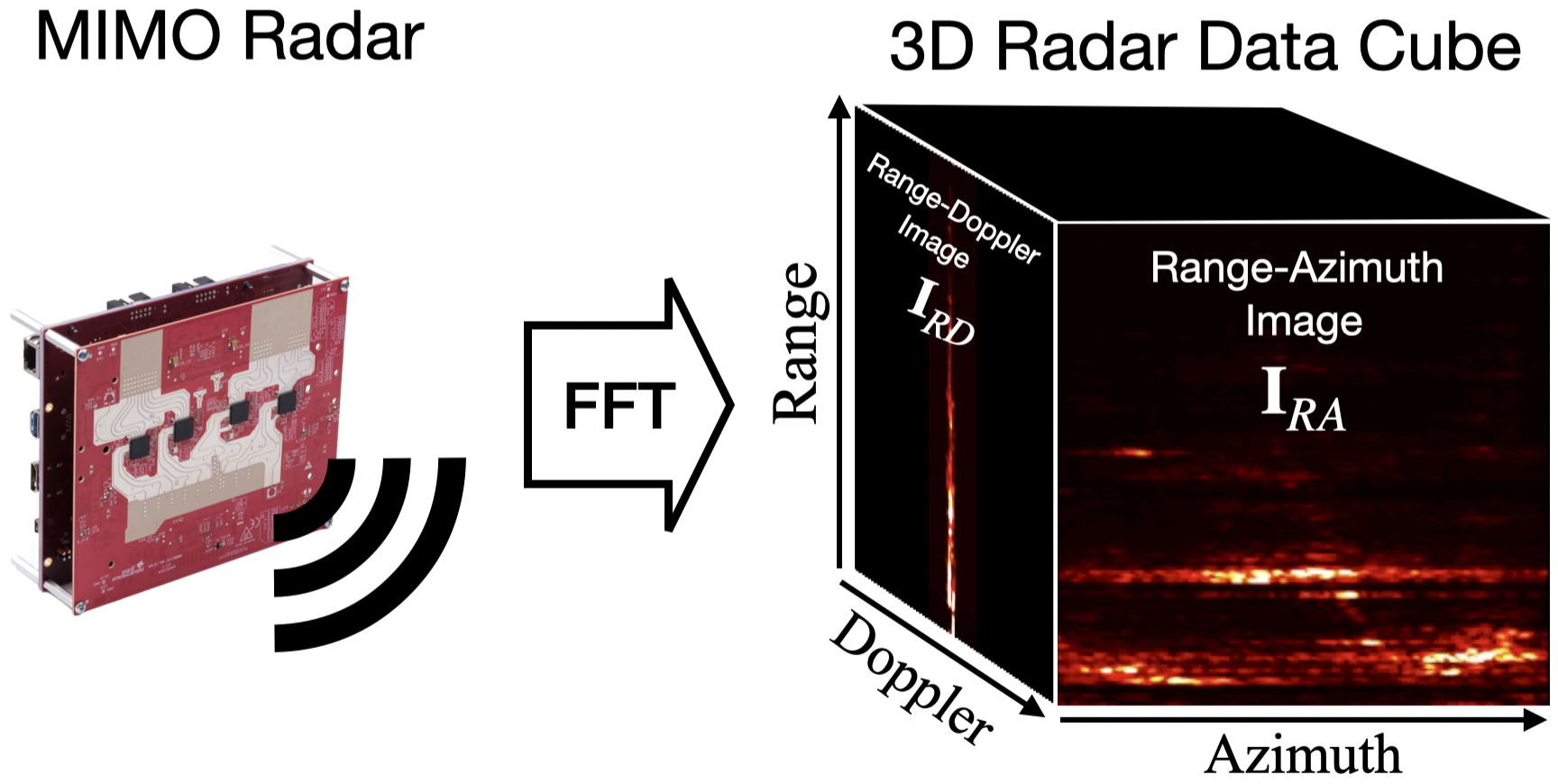
Figure 3: 3D MIMO radar data cube, providing range, azimuth, and Doppler velocity measurements.
RadarSplat++ computes Doppler velocity for each Gaussian using ego-motion and synthesizes RD images as differentiable functions of pose and velocity, enabling backpropagation through BA. The conversion from RA to RD is performed using antenna profiles and soft binning over the Doppler domain, thereby maximizing the utilization of radar sensing modalities for both linear motion and geometric reconstruction.
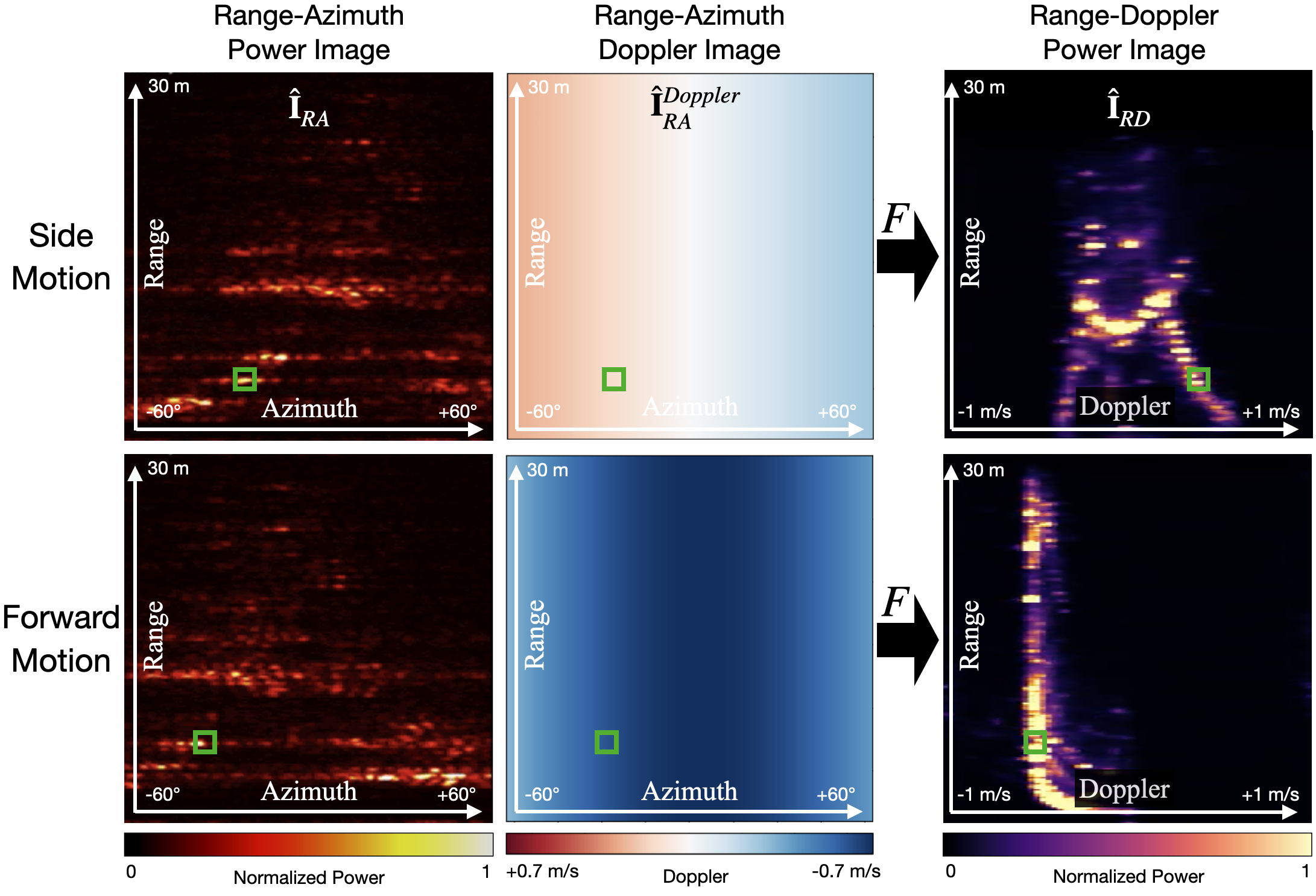
Figure 4: Examples of rendered range–Doppler images for varying motion patterns, revealing distinct Doppler signatures.
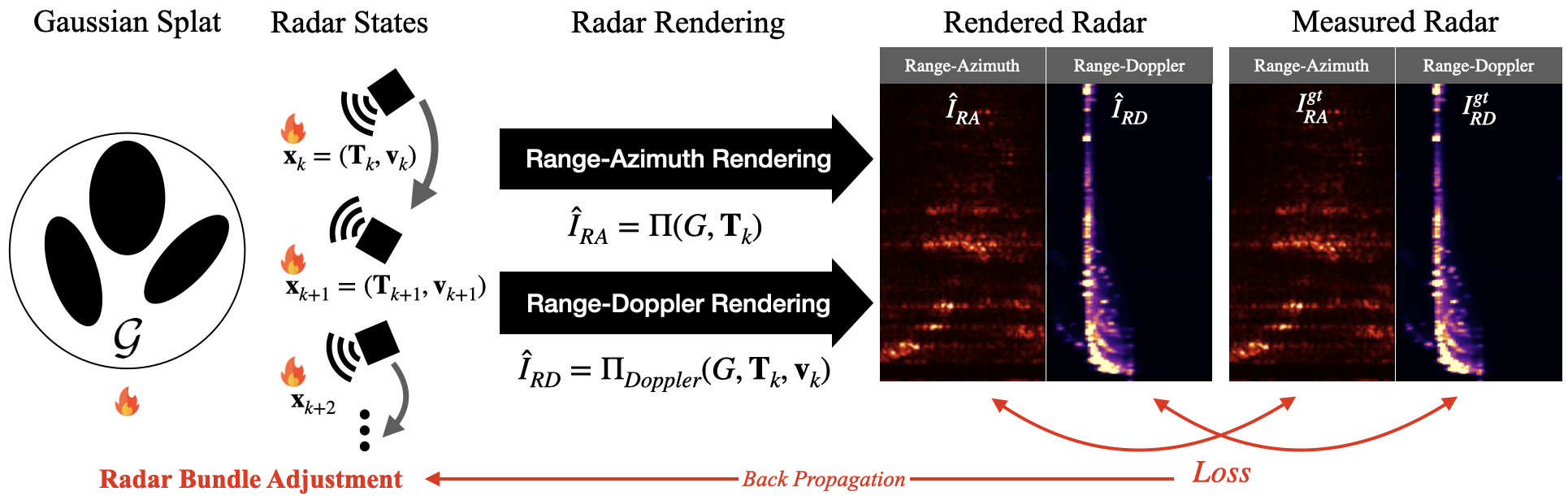
Figure 5: RadarSplat++ rendering and training pipeline: given poses and ego-velocity, both RA and RD images are rendered and compared to measurements for pose and mapping loss.
Bundle Adjustment Mechanism
The BA backend operates by minimizing rendering errors from both RA and RD images in a spatial window around the current pose (radius-based keyframe selection). Joint optimization is applied to both radar sensor poses and the GS parameters (means, quaternions, scaling, RCS). Pose refinement, mapping (with Gaussian regularization), and BA are executed in sequence, using differentiable radar rendering as the loss function. The approach enables spatial revisit keyframes to be leveraged for geometric consistency, eliminating reliance on explicit loop closure.
Experimental Methodology and Results
A custom indoor dataset was collected using TI MMWCAS-RF-EVM millimeter-wave radar and Intel RealSense D435i RGB-D camera (with synchronized IMU), providing challenging conditions for SLAM evaluation. Reference trajectories were generated using RTAB-Map stereo VIO as pseudo-ground truth. The proposed RadarSplat-RIO was evaluated against MRIO (RIO-only) as the baseline, as other open-source radar SLAM methods did not generalize to multi-chip radar.
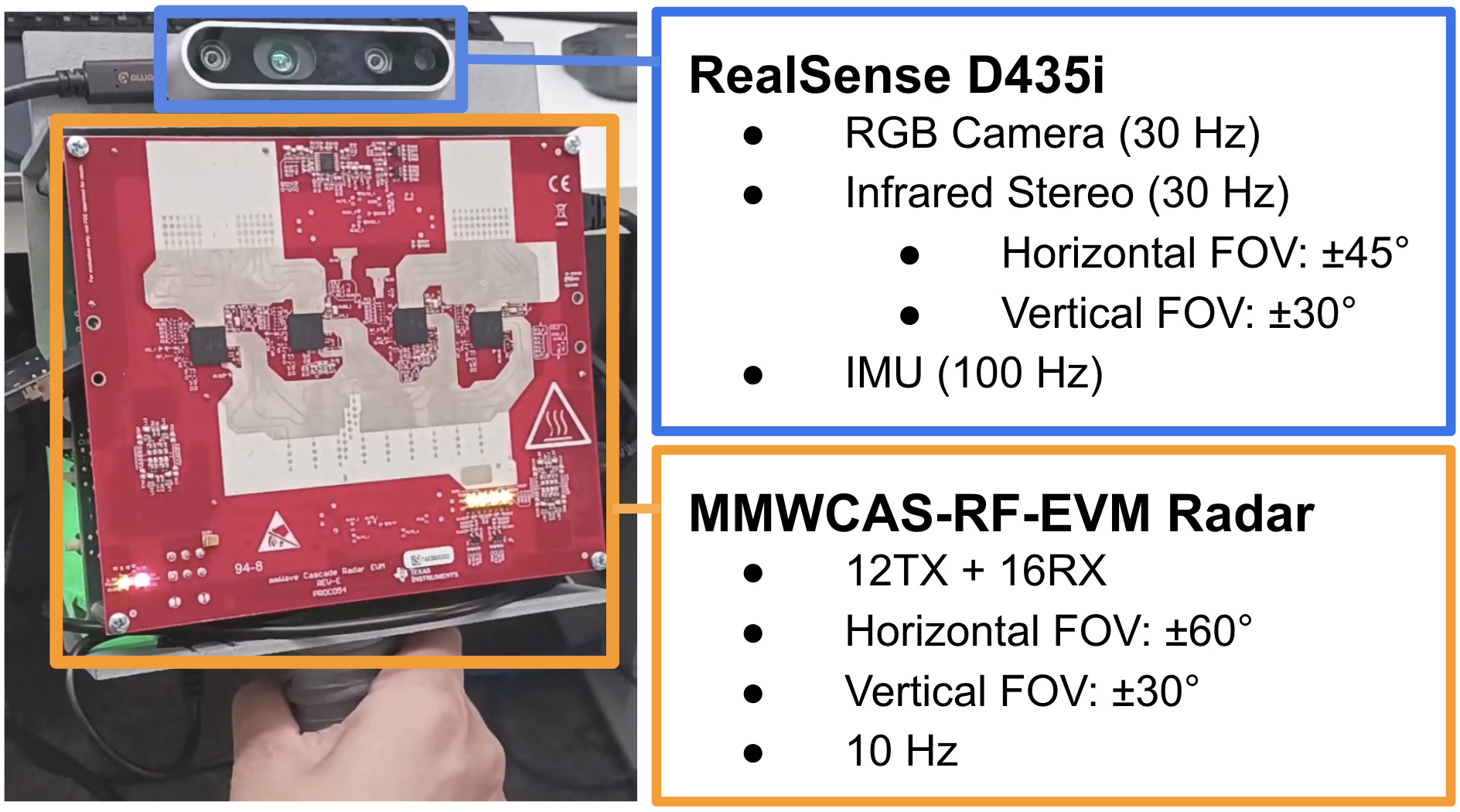
Figure 6: Sensor rig utilized for dataset acquisition.
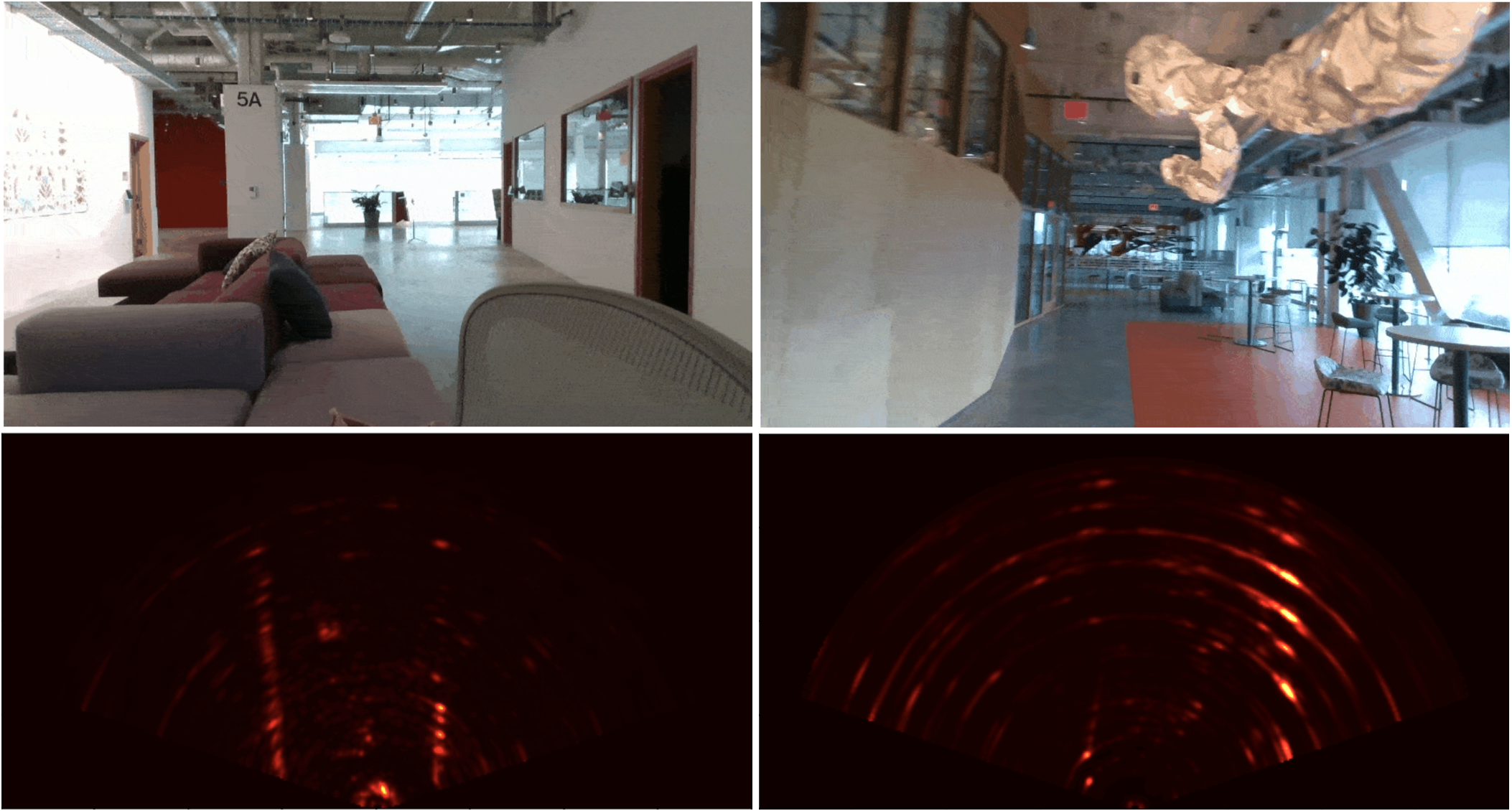
Figure 7: Visualization of synchronized camera and radar observations in indoor scene.
Trajectory estimation, scene reconstruction, and ablation studies were performed across multiple sequences with loop closures. The method achieved over 90% reduction in translational error and 80% reduction in rotational error compared to MRIO—robustly mitigating drift in extended trajectories. Notably, scene reconstruction was substantially denser and more consistent.
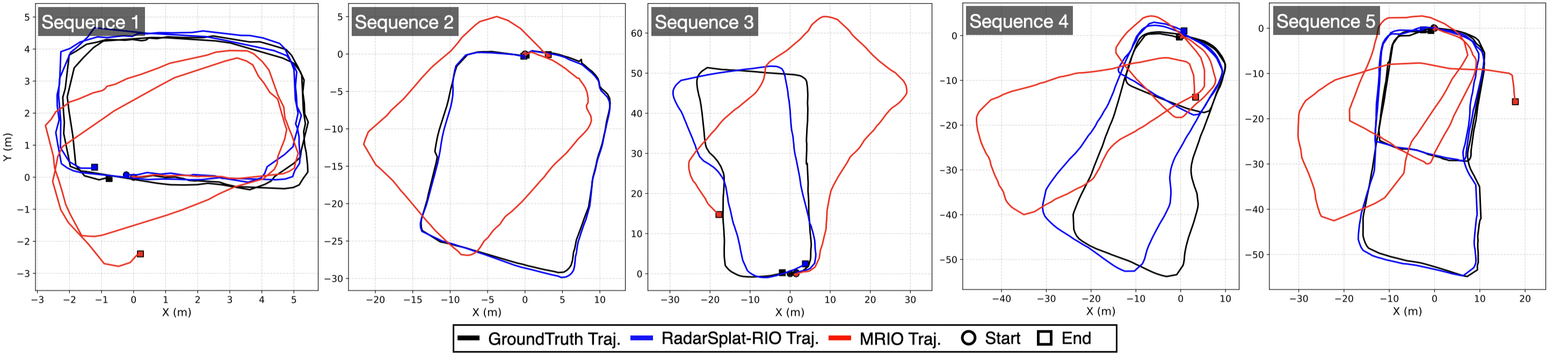
Figure 8: Trajectory comparison—RadarSplat-RIO maintains geometric consistency and minimizes drift compared to MRIO.
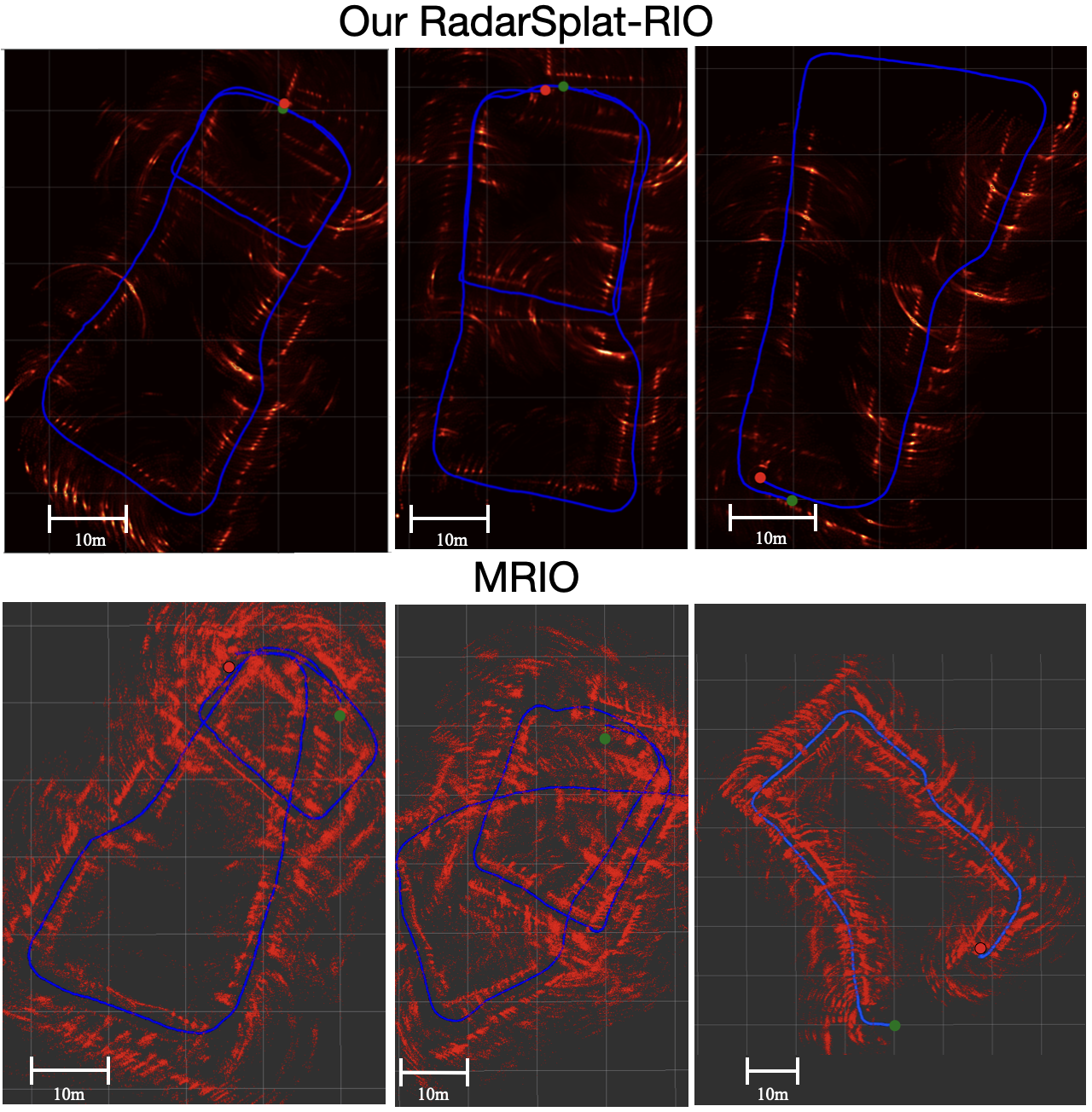
Figure 9: Scene reconstruction comparison—RadarSplat-RIO yields dense, accurate mapping; MRIO shows sparse, drift-affected results.
Ablation studies confirmed the necessity of the BA backend, the benefit of spatial (radius-based) keyframe selection, and the critical contribution of RD rendering loss to translation accuracy, especially in feature-sparse corridors. Omitting any component led to substantial degradation in performance.
Implications and Future Directions
RadarSplat-RIO narrows the gap between radar and visual/LiDAR SLAM via dense, differentiable scene modeling and BA-enabled joint optimization. Practical implication: real-time, drift-resilient indoor navigation in environments where optical sensors fail. Theoretical implication: validates the efficacy of GS-based representations for radar and demonstrates adaptability of NeRF/GS paradigms beyond vision and LiDAR. Future extensions include generalization to multi-radar setups with 6-DoF pose estimation, integration with various RIO frontends, and expansion to large-scale and outdoor environments.
Conclusion
RadarSplat-RIO establishes a new approach for indoor radar SLAM via GS-based bundle adjustment, achieving robust odometry and dense reconstruction without explicit loop closure. By exploiting the full RAD measurement space and differentiable rendering, this framework offers substantial gains in accuracy and reliability, marking a pivotal step toward practical deployment of radar-driven localization and mapping in autonomous robotics.