- The paper establishes the existence of the exotic π₁(1600) state with a significance exceeding 21σ via robust amplitude analysis.
- It employs a comprehensive partial-wave analysis using covariant tensor formalism to fully reconstruct over 37,000 events from two η′ decay modes.
- The study precisely measures the π₁(1600) mass at 1828 MeV/c² and width at 638 MeV, supporting its interpretation as the lightest hybrid meson.
Observation of the Exotic State π1(1600) in ψ(2S)→γχc1,χc1→π+π−η′
Introduction and Background
The identification and characterization of hadrons with exotic quantum numbers, which cannot be accommodated in the conventional constituent quark model, provide critical constraints on non-perturbative QCD. States with JPC=1−+ are especially notable, since such quantum numbers are unattainable by ordinary quark-antiquark mesons and are widely interpreted as strong candidates for hybrid mesons with an excited gluonic component. Although multiple candidates for 1−+ isovector states, e.g., π1(1400), π1(1600), and π1(2015), have been reported in hadronic reactions, their properties and even their existence have remained subject to debate due to possible analysis artifacts and production uncertainties in diffractive processes.
Prior amplitude analyses in charmonium decays, which offer clean experimental environments and minimal background, have lacked the statistical precision to robustly establish the π1(1600) resonance. This paper addresses this gap by performing a high-statistics amplitude analysis of ψ(2S)→γχc1, χc1→π+π−η′, using the world's largest ψ(2S)→γχc1,χc1→π+π−η′0 sample collected by the BESIII detector. The analysis targets the ψ(2S)→γχc1,χc1→π+π−η′1 system, where evidence for a resonant ψ(2S)→γχc1,χc1→π+π−η′2 signal can be unambiguously attributed to an exotic state, strongly constraining hybrid interpretations.
Experimental Analysis
The analysis uses ψ(2S)→γχc1,χc1→π+π−η′3 ψ(2S)→γχc1,χc1→π+π−η′4 events to reconstruct ψ(2S)→γχc1,χc1→π+π−η′5 with ψ(2S)→γχc1,χc1→π+π−η′6 detected in both ψ(2S)→γχc1,χc1→π+π−η′7 and ψ(2S)→γχc1,χc1→π+π−η′8 (ψ(2S)→γχc1,χc1→π+π−η′9) final states. Both decay modes are fully reconstructed with kinematic and topological constraints to maximize purity. Control of backgrounds is achieved using tight invariant-mass selections and explicit vetoes on known contaminant channels. Residual backgrounds, including non-JPC=1−+0 and JPC=1−+1, are estimated and subtracted using sideband techniques and MC-driven methods.
The selected datasets comprise 24,577 (for JPC=1−+2) and 12,952 (for JPC=1−+3) events. The Dalitz plots and JPC=1−+4 invariant mass distributions for both final states show clear enhancements around JPC=1−+5, motivating a full partial-wave analysis.
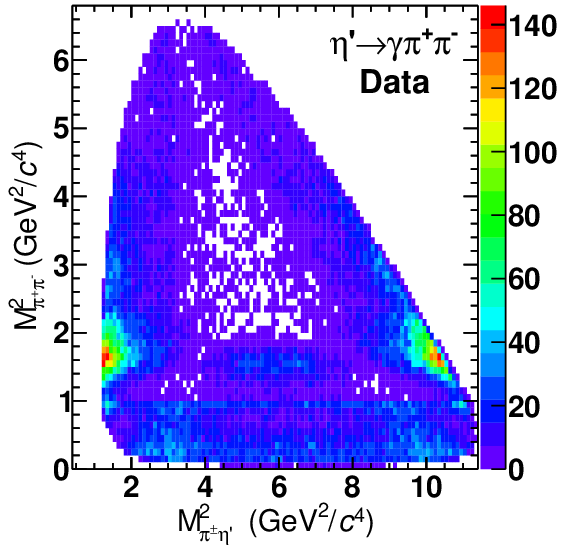
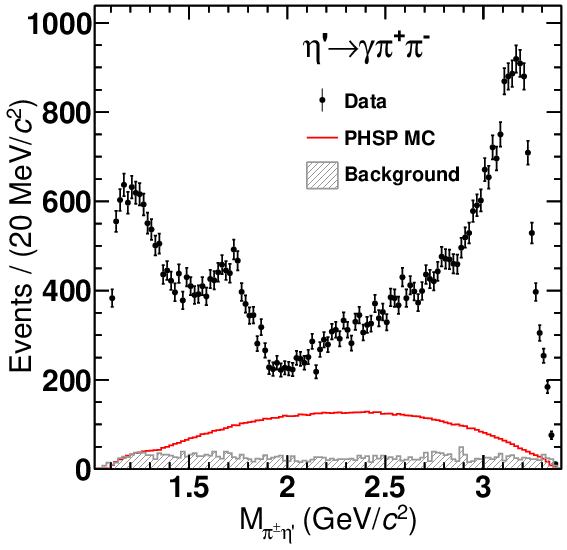
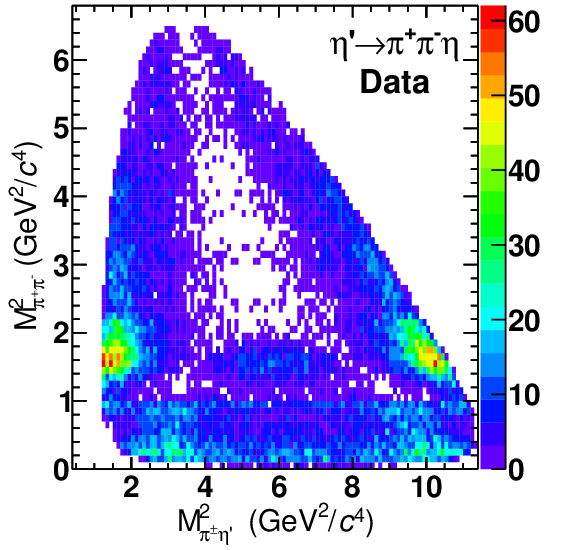
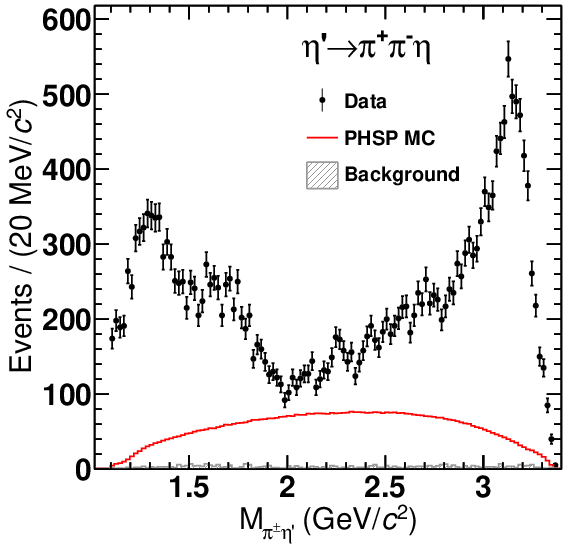
Figure 1: (a, c) Dalitz plots; (b, d) JPC=1−+6 distributions for JPC=1−+7 decays, revealing structures around JPC=1−+8.
Partial Wave Analysis and Extraction of JPC=1−+9
A multi-component model, implemented in the GPUPWA framework, is fit to the combined data using covariant tensor formalism. The signal is modeled as a coherent sum of sequential quasi-two-body decay amplitudes, including 1−+0, 1−+1, 1−+2, various tensor and scalar resonances, and nonresonant S-wave contributions.
A statistically significant 1−+3 1−+4 component is required by the fit, exceeding 1−+5 significance. Parameterizing the exotic amplitude as a relativistic Breit-Wigner (BW) with mass-dependent width, the resonance parameters are extracted:
- Mass: 1−+6
- Width: 1−+7
The product branching fraction for 1−+8 followed by 1−+9 is determined to be
π1(1400)0
Quantitative agreement between fit and data is evident in the projections for π1(1400)1, π1(1400)2, and helicity angle distributions.
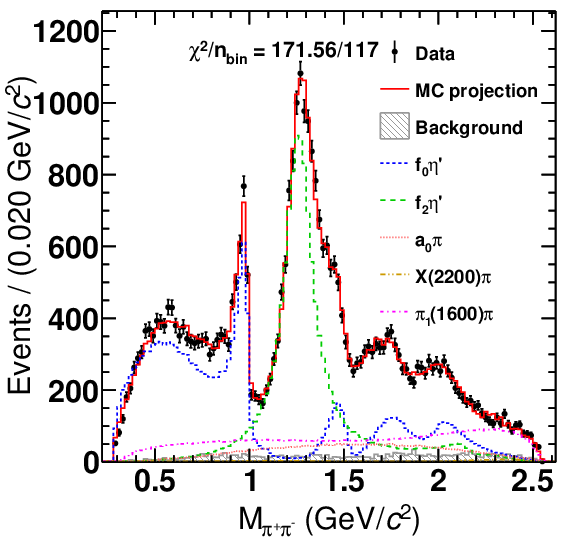
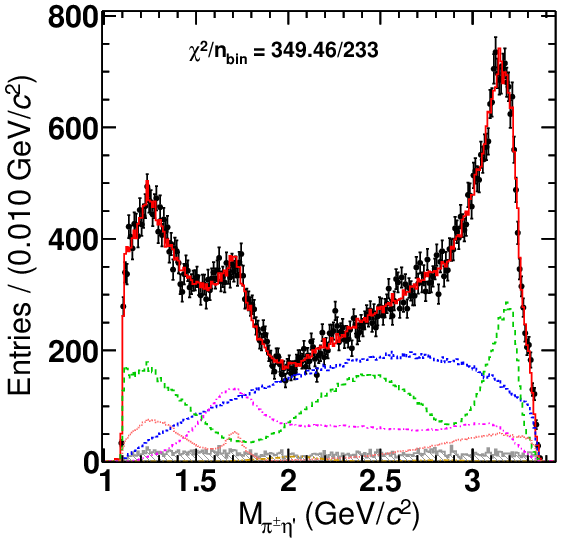
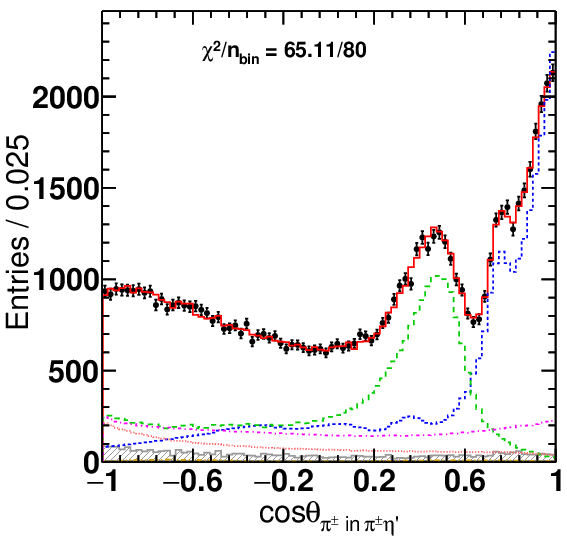
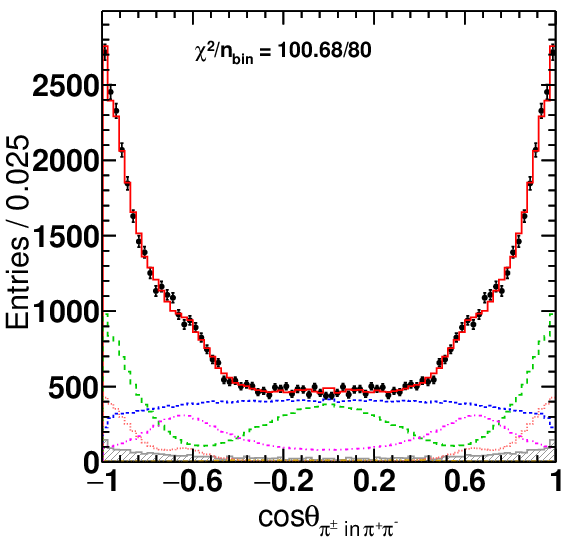
Figure 2: Model projections and data for π1(1400)3, π1(1400)4, and relevant angular distributions, confirming the quality of the PWA description.
Robustness of the resonance assignment is established via likelihood-ratio tests (phase motion and alternative spin-parity hypotheses), systematic scans over additional possible amplitudes, and fits with both mass-dependent and constant-width BW forms. The extracted pole positions are stable under these modeling choices, underscoring the resonance's physical reality.
Systematic Uncertainties
Comprehensive systematic studies include variations in tracking, photon ID, kinematic fits, and mass window requirements (affecting branching ratio at the π1(1400)5 level), as well as model uncertainties from background handling, resonance parametrization, and alternative amplitude combinations. The largest contributions to mass and width uncertainties arise from resonance description and combination, reflecting the complex, overlapping spectrum of nearby states.
Numerical Summary and Amplitude Content
The partial-wave fit reveals that, after interference, the π1(1400)6 contributes a fit-fraction of π1(1400)7 to the π1(1400)8 decay. Incoherent S-wave and π1(1400)9 contributions account for the majority of the remaining intensity, with smaller roles for higher-mass tensor/scalar states and π1(1600)0.
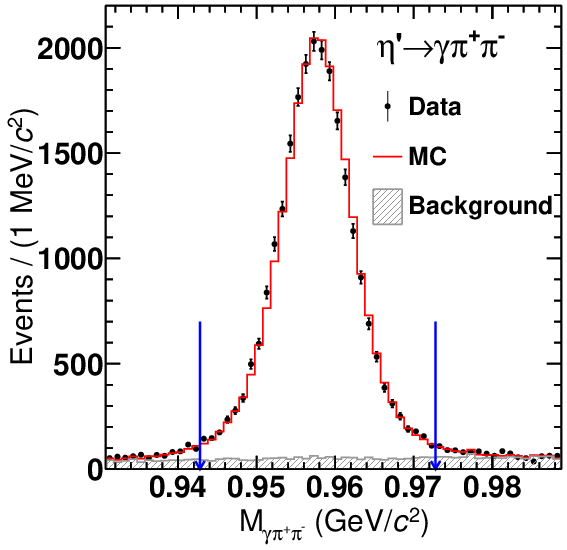
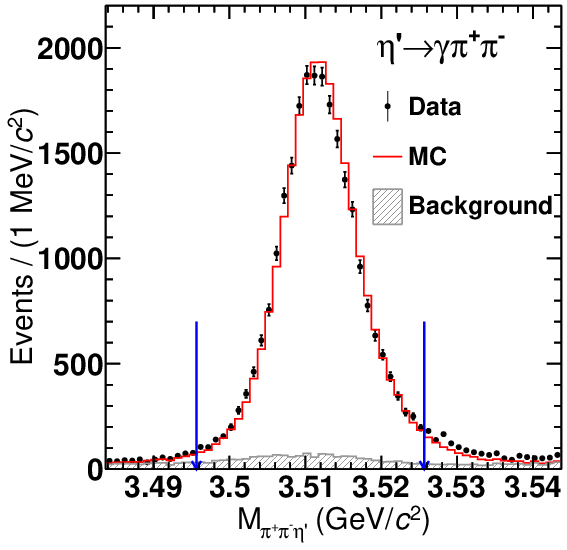
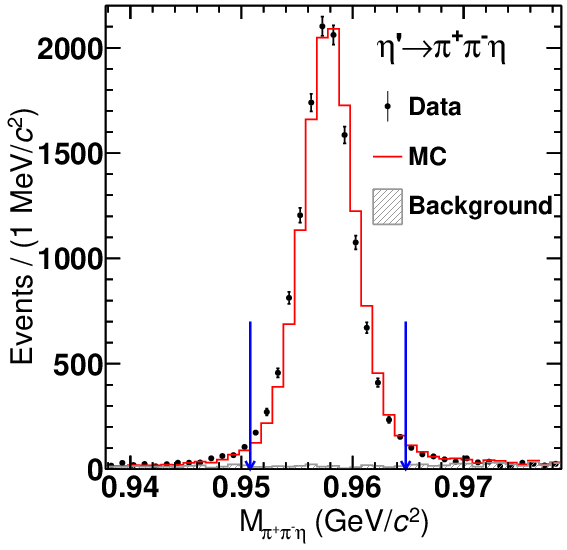
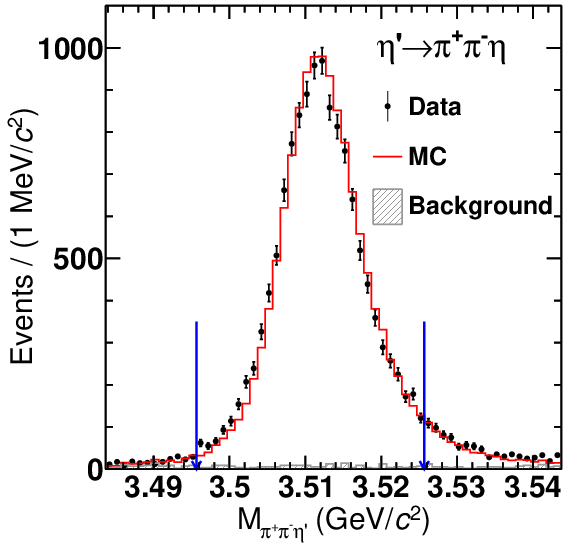
Figure 3: Invariant mass spectra for the selected π1(1600)1 and π1(1600)2 candidates for both π1(1600)3 decay channels, demonstrating purity of event selection.
Theoretical and Phenomenological Implications
This observation constitutes the first unambiguous, high-significance evidence for the isovector π1(1600)4 state in charmonium (π1(1600)5) decays. The mass and width are compatible with previous reports in diffractive processes, but with greatly reduced systematic ambiguity, confirming previous coupled-channel interpretations involving strong π1(1600)6 couplings. The measured parameters are consistent with lattice QCD predictions for the lightest π1(1600)7 hybrid meson mass, supporting the hybrid interpretation for π1(1600)8.
Of particular theoretical interest is the relationship to the isoscalar π1(1600)9 state π1(2015)0 recently observed in π1(2015)1 decays. Joint consideration of both results facilitates investigations into the nonet structure of light hybrid mesons and may help distinguish between hybrid and tetraquark scenarios, especially when the production and decay mechanisms can be precisely characterized in multiple channels.
Further, the methodology—robust partial-wave amplitude analysis in charmonium radiative decays, utilizing large datasets—establishes a gold standard for such studies and sets a benchmark for future searches targeting exotic candidates in both isovector and isoscalar systems.
Future Prospects
Future work should extend the amplitude analysis to the neutral mode π1(2015)2 to directly test isospin symmetry and confirm the C-parity assignments in charmonium decays. Precise measurement of additional decay channels, mapping out the full decay pattern, will be decisive for testing hybrid assignments and validating theoretical calculations. The high-statistics BESIII dataset should enable such comprehensive studies, with potential critical input from next-generation π1(2015)3 and hadron facilities.
Conclusion
This study presents the first observation of the π1(2015)4 π1(2015)5 exotic state in charmonium decay, with a significance in excess of π1(2015)6 and well-determined mass, width, and decay branching fractions. Model-independent resonance parameters and spin-parity quantum numbers firmly establish the π1(2015)7 as a leading hybrid meson candidate. The result substantially advances the empirical foundation for hadron spectroscopy beyond the constituent quark model, and the analytical framework lays the groundwork for further comprehensive mapping of the QCD spectrum of exotics.