- The paper introduces a generalized Behler-Parrinello neural architecture adapted for magnetic systems, enabling efficient simulation of LLG dynamics.
- It employs symmetry-adapted descriptors and locality principles to achieve near–quantum accuracy in predicting exchange fields and torque responses.
- Validated on noncollinear orders and voltage-driven dynamics, the ML model reliably reproduces domain evolution and coarsening kinetics in complex spin textures.
Introduction
The paper "Machine-learning modeling of magnetization dynamics in quasi-equilibrium and driven metallic spin systems" (2604.11513) presents an advanced framework for constructing machine-learning (ML) force fields tailored to the simulation of Landau-Lifshitz-Gilbert (LLG) spin dynamics in metallic magnets. By generalizing the Behler-Parrinello (BP) architecture, originally designed for quantum molecular dynamics, the work addresses the challenge of simulating large, strongly correlated itinerant magnetic systems, both in equilibrium and under nonequilibrium conditions imposed by external driving fields.
Conventional LLG simulations of itinerant magnets rely on computationally expensive integration of the electronic degrees of freedom, typically via electronic structure methods or nonequilibrium Green's functions (NEGF). This heavy computational overhead severely restricts both system size and timescales. The ML-based methodology in this work, underpinned by explicit symmetry-adapted magnetic descriptors and locality principles, achieves near–quantum accuracy in predicting exchange fields and torques at a fraction of the computational cost, enabling scalable simulations of complex spin and charge textures.
Behler-Parrinello Architecture for Spin Systems
The authors adapt the BP neural architecture for itinerant magnets by assuming that the electron-mediated exchange field felt by each spin can be accurately determined from its local magnetic environment Figure 1.
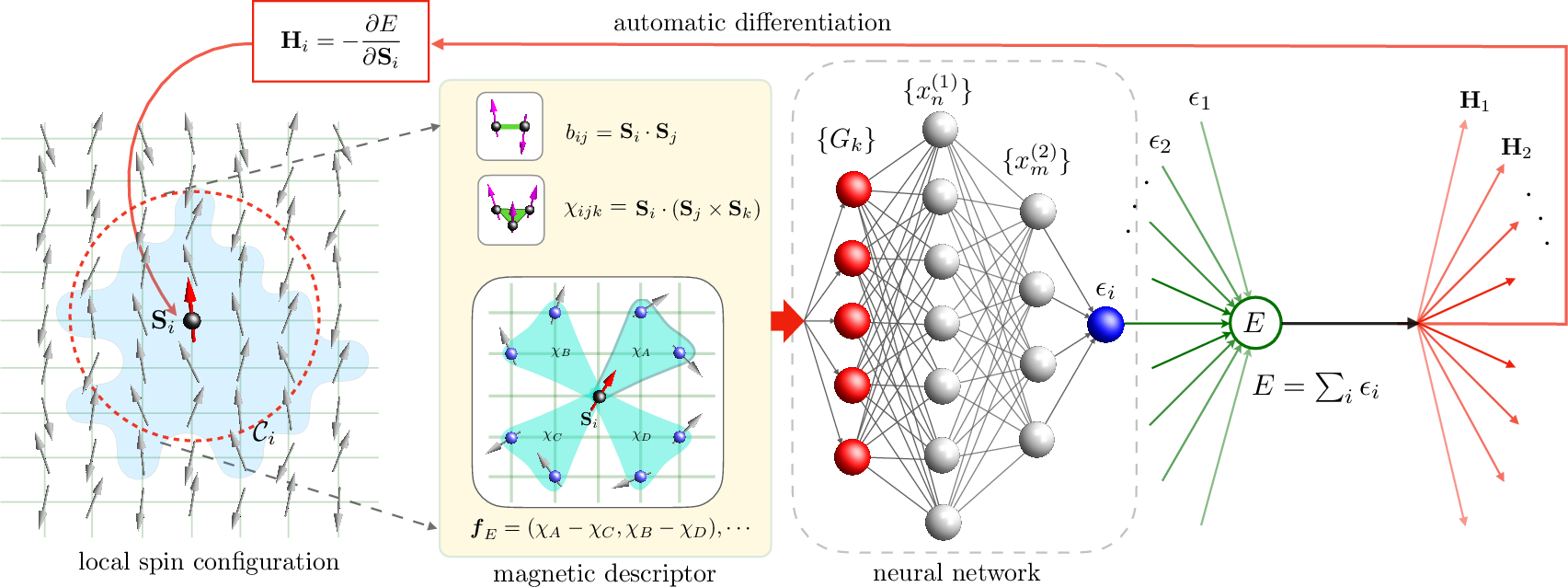
Figure 1: The ML force-field architecture transforms a neighborhood spin configuration into invariant descriptors, feeds them to a neural network, and outputs local energies from which exchange fields are differentiated.
The total energy is decomposed into a sum of local contributions, E=∑iε(Ci), where Ci encodes the spin configuration within a finite cutoff neighborhood of site i. The mapping from Ci to the local energy ε is realized via a deep neural network, exploiting the universal approximation theorem to capture the nontrivial nonlinearities induced by itinerant electron correlations. Automatic differentiation yields the local effective magnetic fields required for LLG evolution. This locality-driven decomposition, justified by the quantum-nearsightedness principle, guarantees scalability while encoding the essential physics inherent to electron-mediated magnetism.
Symmetry-Aware Magnetic Descriptors
A critical technical advance is the development of symmetry-invariant magnetic descriptors that not only preserve SO(3) spin rotation but also the discrete point-group symmetries of the underlying lattice. The descriptors are constructed from two-spin bond variables and three-spin scalar chirality elements (see Figure 2).
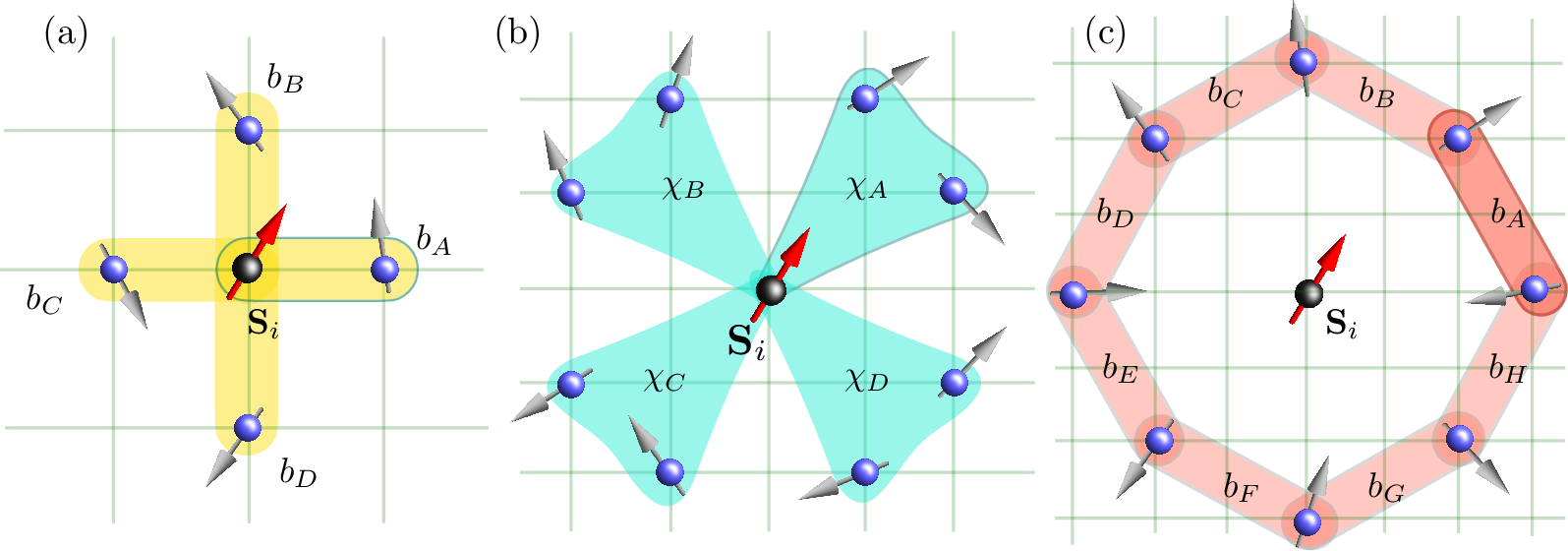
Figure 2: Basis construction for magnetic descriptors: (a) four bond variables, (b) four chiralities, and (c) eight bond variables, each forming reducible representations of the D4 lattice point group.
Through group-theoretical analysis, these variables are decomposed into irreducible representations (IRs) of the point group, and higher-level invariants—such as the power spectrum or bispectrum coefficients—are constructed to fully capture relative phase information among IR channels. The resultant descriptors serve as effective, symmetry-respecting coordinates for the input layer of the neural network, ensuring that all output observables are invariant under both continuous and discrete symmetries.
Validation on Noncollinear and Noncoplanar Orders
The framework is validated on prototypical models with complex magnetic order: the triangular-lattice s–d model at half-filling (exhibiting 120∘ noncollinear order) and near quarter filling (showing noncoplanar tetrahedral order), both regimes where electron-mediated interactions and frustration drive emergent spin textures.
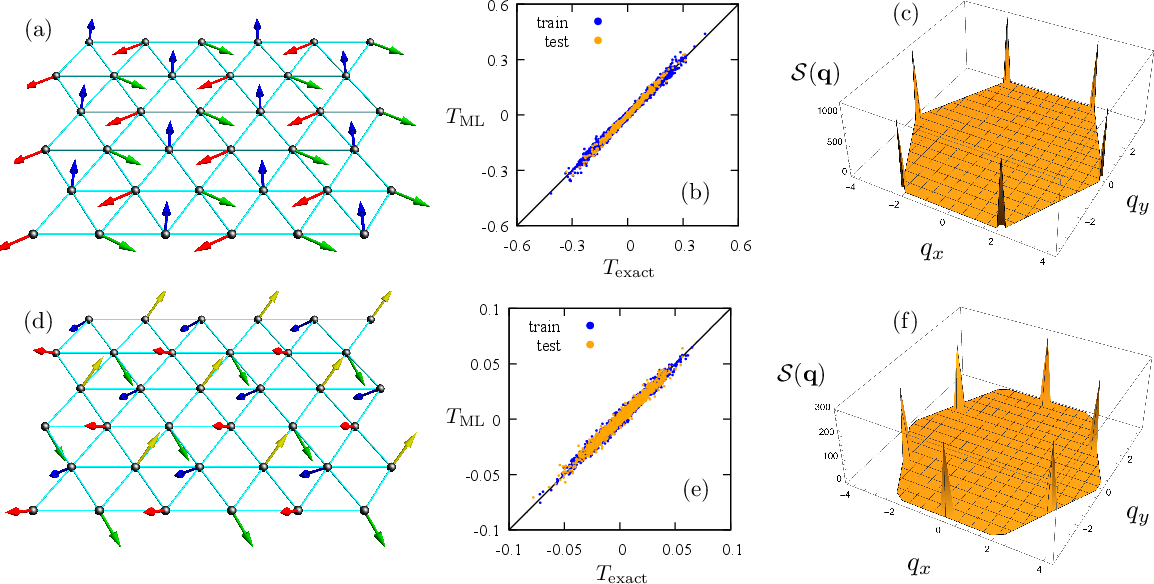
Figure 3: Top: (a) 120∘ magnetic order and (b) ML-predicted torques benchmark. Bottom: (d) tetrahedral order and (e) ML-predicted torques, demonstrating excellent fidelity with ED and KPM solutions.
ML predictions for torques and energies exhibit mean-squared errors on the order of 10−7 relative to exact diagonalization benchmarks, with no overfitting observed. The corresponding ML-driven LLG simulations reproduce correct long-wavelength ordering and Bragg peaks in the spin structure factor, confirming reliability for large-scale dynamical studies.
Mixed-Phase States and Coarsening Kinetics
Extending to the double-exchange regime on the square lattice, the ML model faithfully captures the emergence and kinetics of mixed-phase states, where ferromagnetic (FM) droplets coexist within an antiferromagnetic (AFM) background near half filling Figure 4.
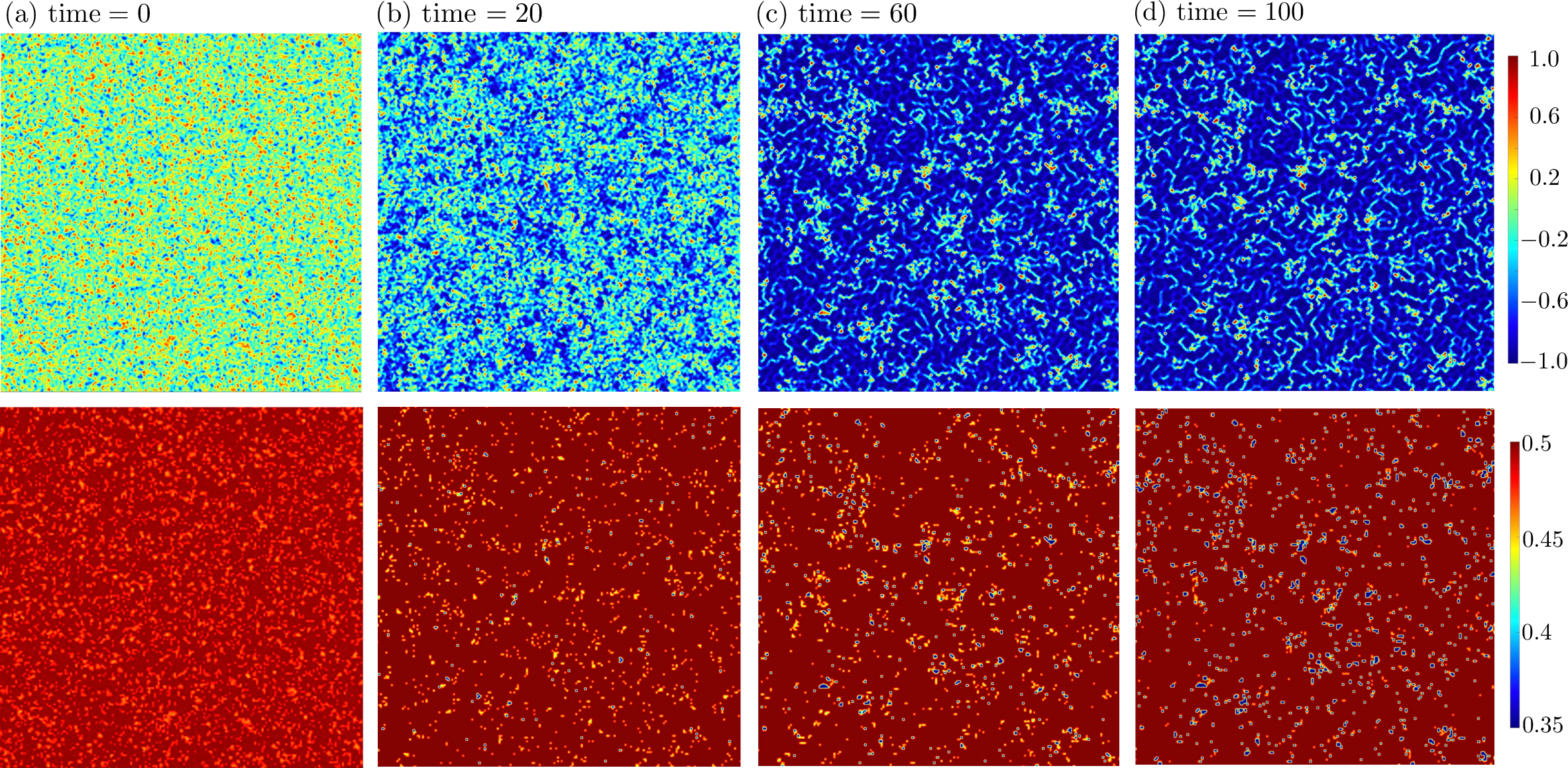
Figure 4: Time evolution of local spin correlation bi (top) and local electron density Ci0 (bottom) during quench-induced domain formation in a Ci1 double-exchange model simulation.
ML simulations of thermal quenches display characteristic scaling: early-time domain growth follows the Lifshitz-Slyozov-Wagner (LSW) Ci2 law, although coarsening slows at late times due to charge localization and FM domain self-trapping Figure 5.
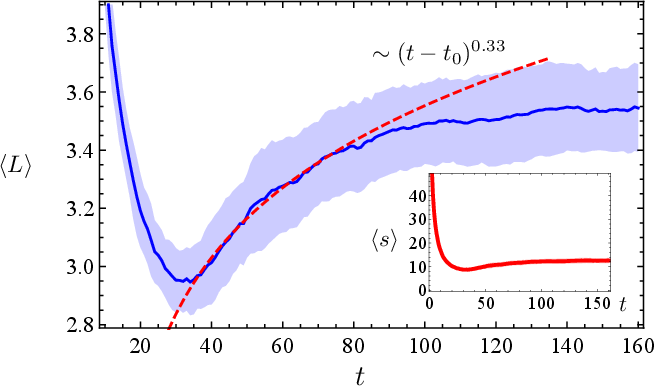
Figure 5: Time evolution of average FM cluster size, showing an initial Ci3 growth consistent with LSW theory, giving way to sublogarithmic scaling at late times.
The ML approach thus enables high-fidelity access to coarsening and pattern formation processes on mesoscopic scales previously inaccessible to direct electronic structure calculations.
Generalization to Nonequilibrium and Nonconservative Fields
A major conceptual and practical advance is the extension of the BP architecture to nonconservative electronic forces, accommodating strongly driven nonequilibrium phenomena such as voltage- or current-induced dynamics. Invoking the Helmholtz-Hodge decomposition on the Ci4 spin manifold, the general exchange field is parameterized by two scalar potentials: an equilibrium component Ci5 and a nonequilibrium "toroidal" potential Ci6 Figure 6.
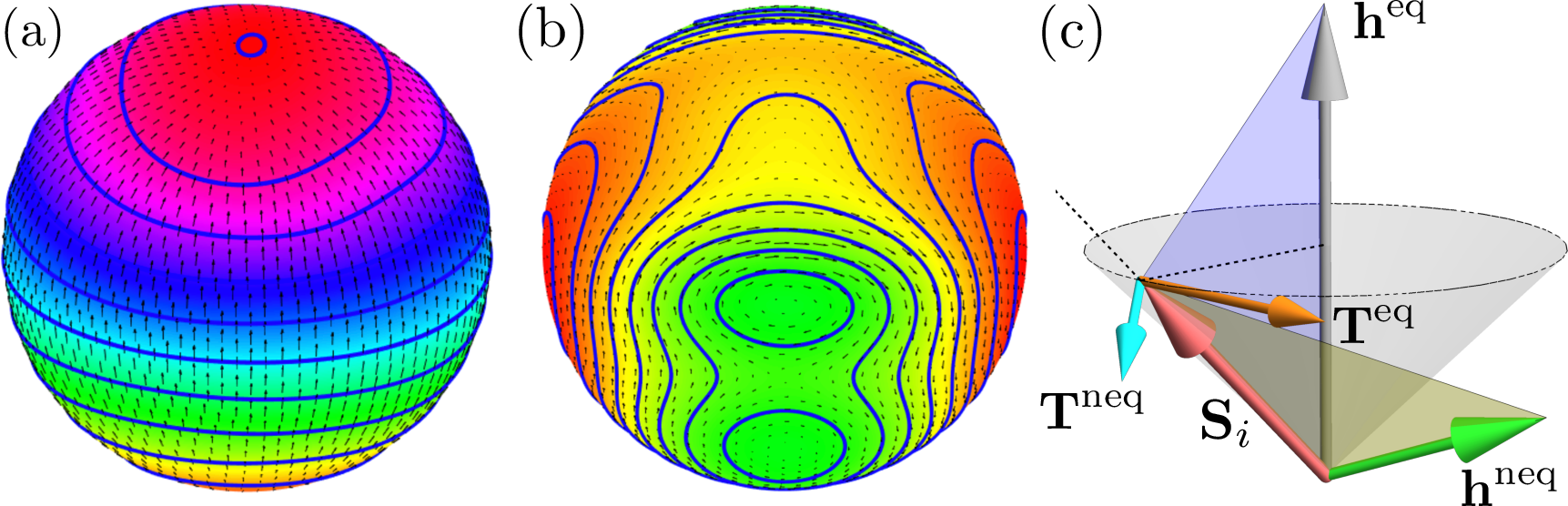
Figure 6: Decomposition of exchange fields into curl-free (gradient) and divergence-free (toroidal) contributions on the spin sphere.
In the generalized BP framework, two neural networks output local contributions to each potential, from which the total force is obtained via automatic differentiation Figure 7.
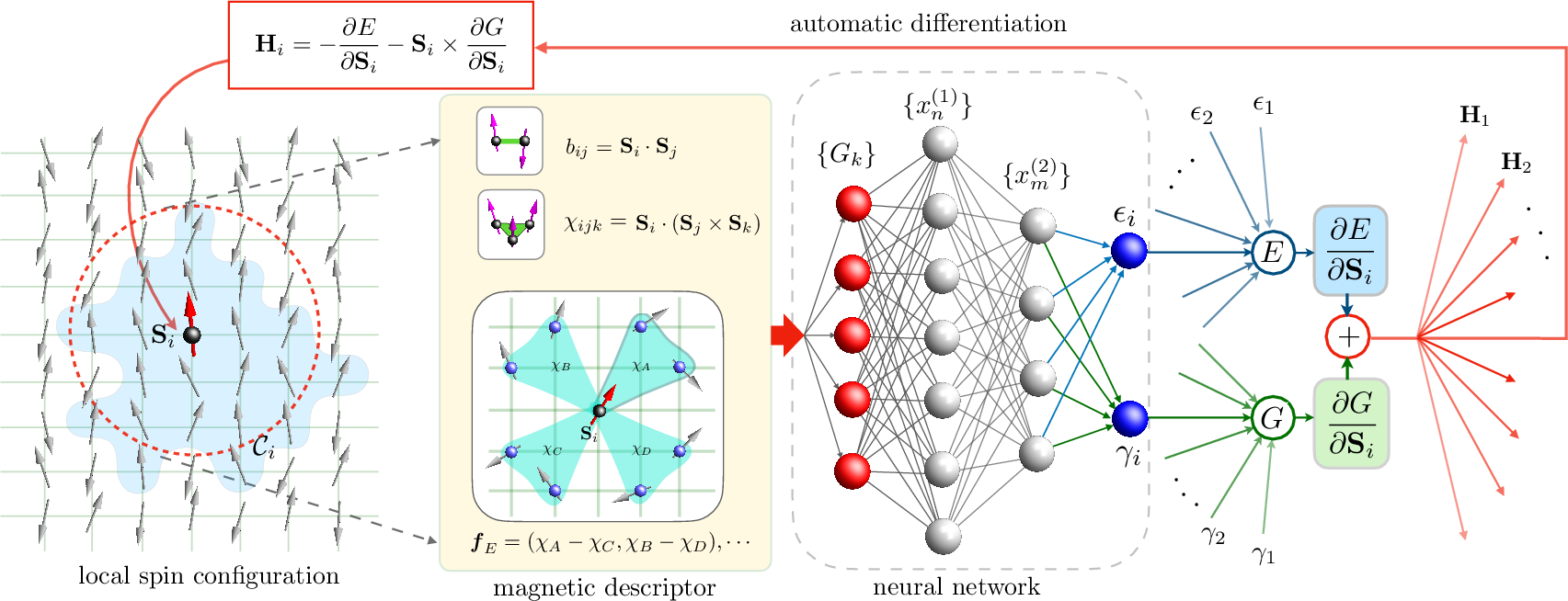
Figure 7: Schematic of generalized BP model: input descriptors yield both Ci7 and Ci8 (for Ci9 and i0), allowing the modeling of both conservative and nonconservative exchange fields.
This construction is fully symmetry-adapted and enables the emulation of expensive NEGF-calculated forces in a computationally efficient manner.
ML Force Fields for Voltage-Driven Magnetization Dynamics
The generalized ML model is concretely tested on a voltage-driven s–d system connected to metallic electrodes, where NEGF calculations are used to generate the force dataset. The ML model achieves a mean-squared error below i1 in predicting exchange-field torques compared to NEGF ground truth Figure 8.
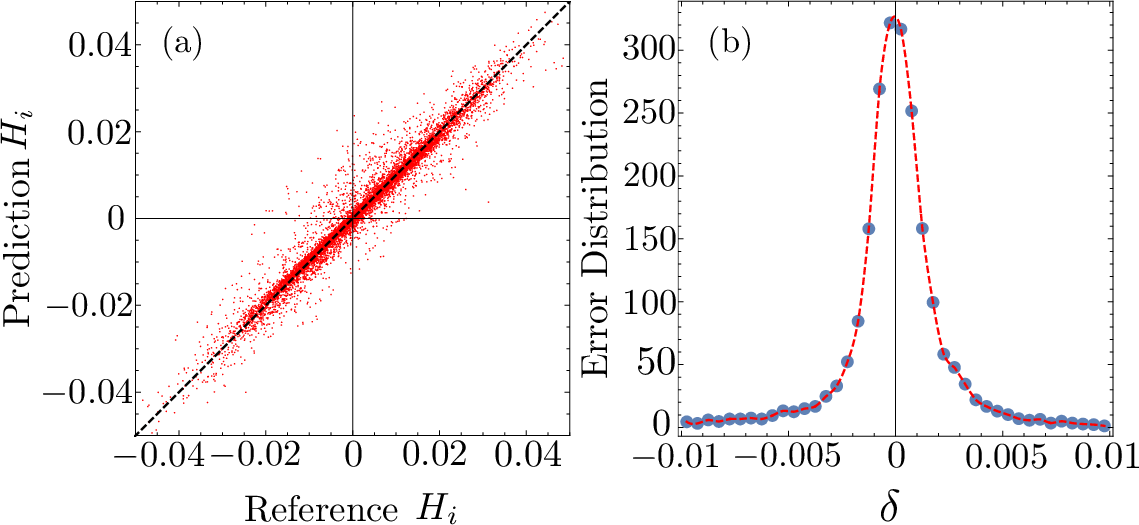
Figure 8: Correlation between ML-predicted and NEGF-computed exchange field components; distribution of prediction errors demonstrates high accuracy.
In dynamic simulations, the ML model accurately captures the voltage-driven propagation of FM-AFM domain walls and the associated insulator-to-metal transition (Figure 9, Figure 10).
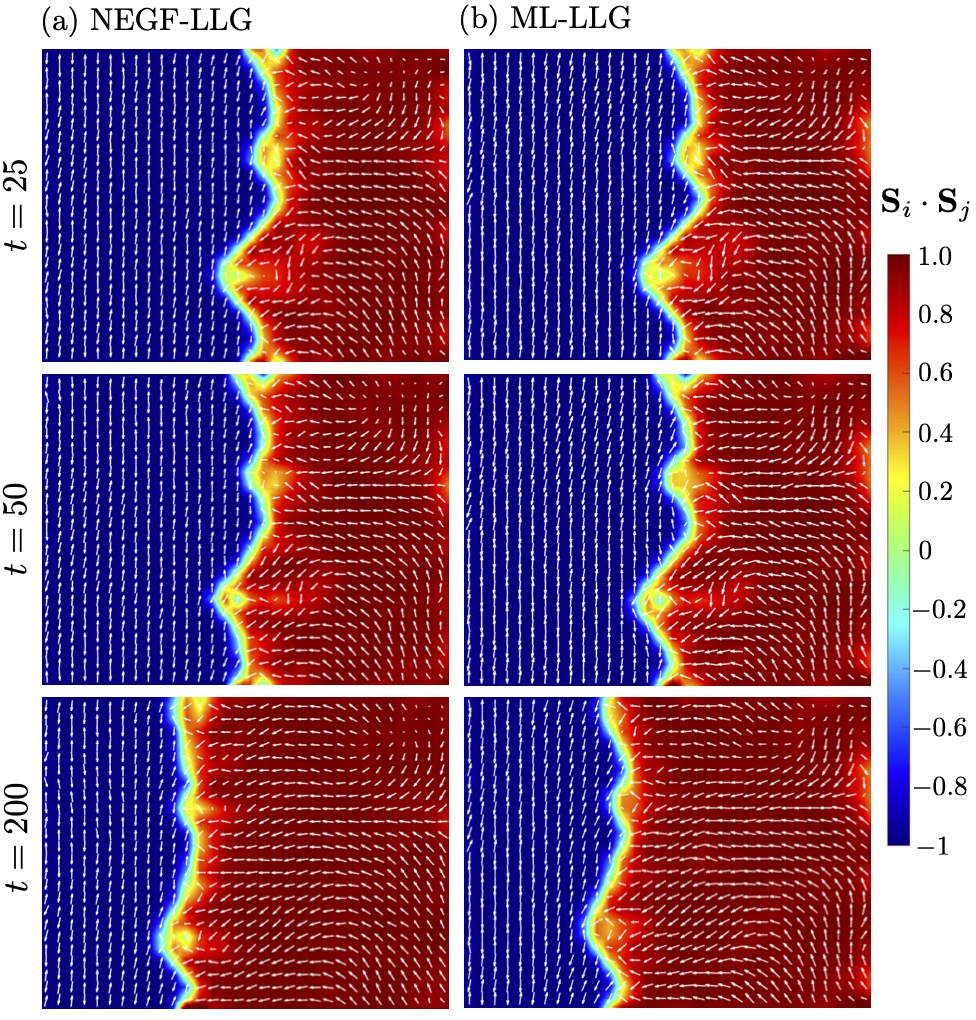
Figure 9: Real-time domain wall propagation under external bias, comparing NEGF-LLG and ML-LLG trajectories; local correlations reveal the growing FM domain.
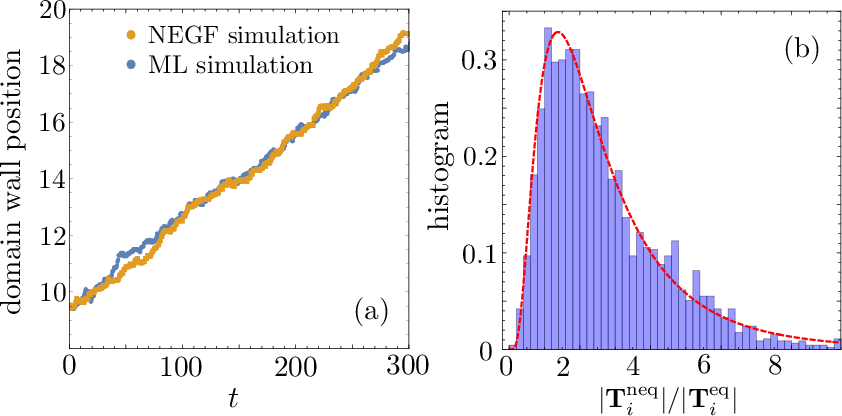
Figure 10: (a) Temporal evolution of domain wall position, in quantitative agreement between NEGF-LLG and ML-LLG; (b) histogram showing dominance of the nonequilibrium torque in the domain wall region, as extracted from NN decomposed potentials.
Notably, the ML model provides access to the decomposition of total torque into equilibrium and nonequilibrium contributions, revealing that nonequilibrium torques drive the domain wall motion and act as nonconservative, anti-damping forces in the interface region.
Implications and Future Directions
The presented ML framework offers a compelling route toward linear-scaling, quantum-accurate modeling of magnetization dynamics in large itinerant systems, including those encountered in correlated oxides, nanostructured spintronic devices, and systems near criticality. The group-theoretical descriptor construction and generalized BP approach establish a rigorous and flexible template, portable to a wide class of symmetry-rich Hamiltonians.
On the practical side, the ability to emulate NEGF-level force calculations with ML surrogates greatly expands the reach of dynamical modeling into device-relevant spatial and temporal regimes. This directly impacts the simulation of real spintronic devices, where quantitatively precise modeling of current- (or voltage-) induced torques is essential.
Looking forward, integration with more expressive ML architectures—such as SO(3)-equivariant neural networks, graph neural networks, or message-passing frameworks—stands as a promising research direction. A key open challenge is the simultaneous incorporation of continuous and discrete symmetries within equivariant architectures. Additional theoretical work may extend the generalized potential formalism to cases with explicit time-dependent, stochastic, or strongly nonadiabatic effects.
Conclusion
This work delivers a unified and extensible ML-based framework for modeling LLG spin dynamics in itinerant electron systems, capable of capturing both conservative and driven nonequilibrium forces with near–quantum accuracy and computational efficiency. The introduction of symmetry-adapted descriptors and the generalized Behler-Parrinello architecture fundamentally advances the state-of-the-art in scalable electronic spin dynamics and provides a foundation for future developments in ML-guided multiscale modeling of complex magnetic and spintronic systems.

