- The paper introduces a bilevel optimization framework that models a large flexible consumer as a Stackelberg leader impacting DC-OPF market outcomes.
- It demonstrates that misalignment occurs at active-set boundaries, where strategic load shifts can reduce consumer costs by up to 13.3% while increasing system costs by 3.4%.
- Computational evaluations on test systems reveal that while decentralized load shifting generally aligns with system cost minimization, higher flexibility levels trigger redistributive inefficiencies.
Strategic Spatial Load Shifting and Market Efficiency: An Expert Synthesis
Introduction and Motivation
The paper "Strategic Spatial Load Shifting and Market Efficiency" (2604.10998) investigates the economic and operational impacts of large, spatially flexible electricity loads—most notably data centers—in wholesale electricity markets. It challenges the prevailing assumption that flexible load invariably improves system efficiency, emphasizing the necessity of considering price-anticipatory behavior. The core analytical framework treats a large flexible consumer as a Stackelberg leader vis-à-vis a DC optimal power flow (DC-OPF) based market operator, endogenizing the interaction between load shifting decisions and market outcomes.
Analytical Framework
The model is formalized as a bilevel optimization: the upper level optimizes the flexible consumer's procurement cost subject to physical and balance constraints on load shifting, while the lower level executes market clearing (DC-OPF) conditional on the realized loads. The load shifting dynamics introduce a polyhedral feasible set parameterized by flexibility level α, enforcing both bus-level and aggregate energy balance.
A pivotal theoretical innovation is the explicit mapping of system states to active-set regions—partitions in the feasible space wherein the set of marginal generators and binding transmission constraints remains invariant. The analysis clarifies that the flexible consumer's objective is piecewise constant and discontinuous, while the system operator's cost function remains convex and piecewise linear.
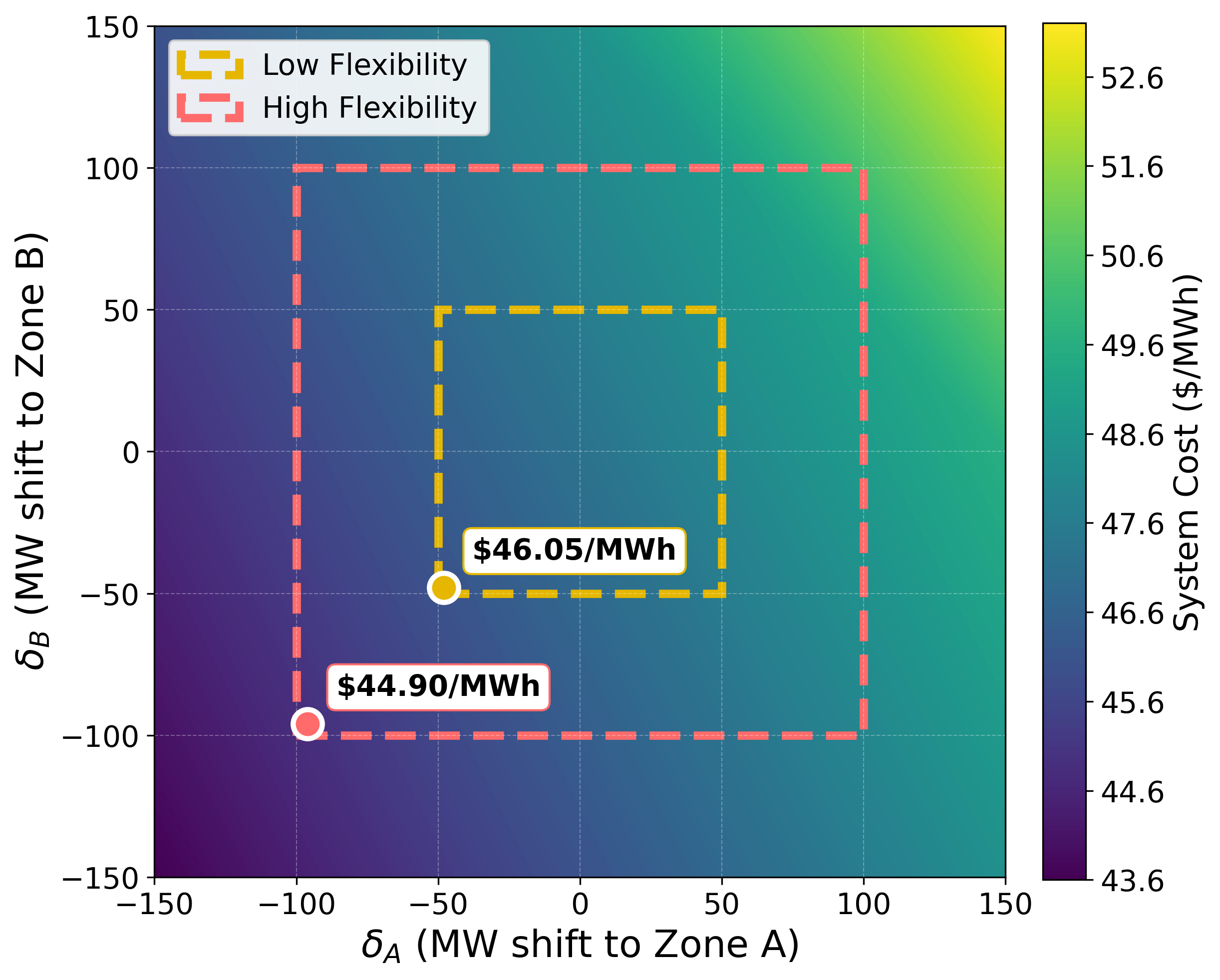
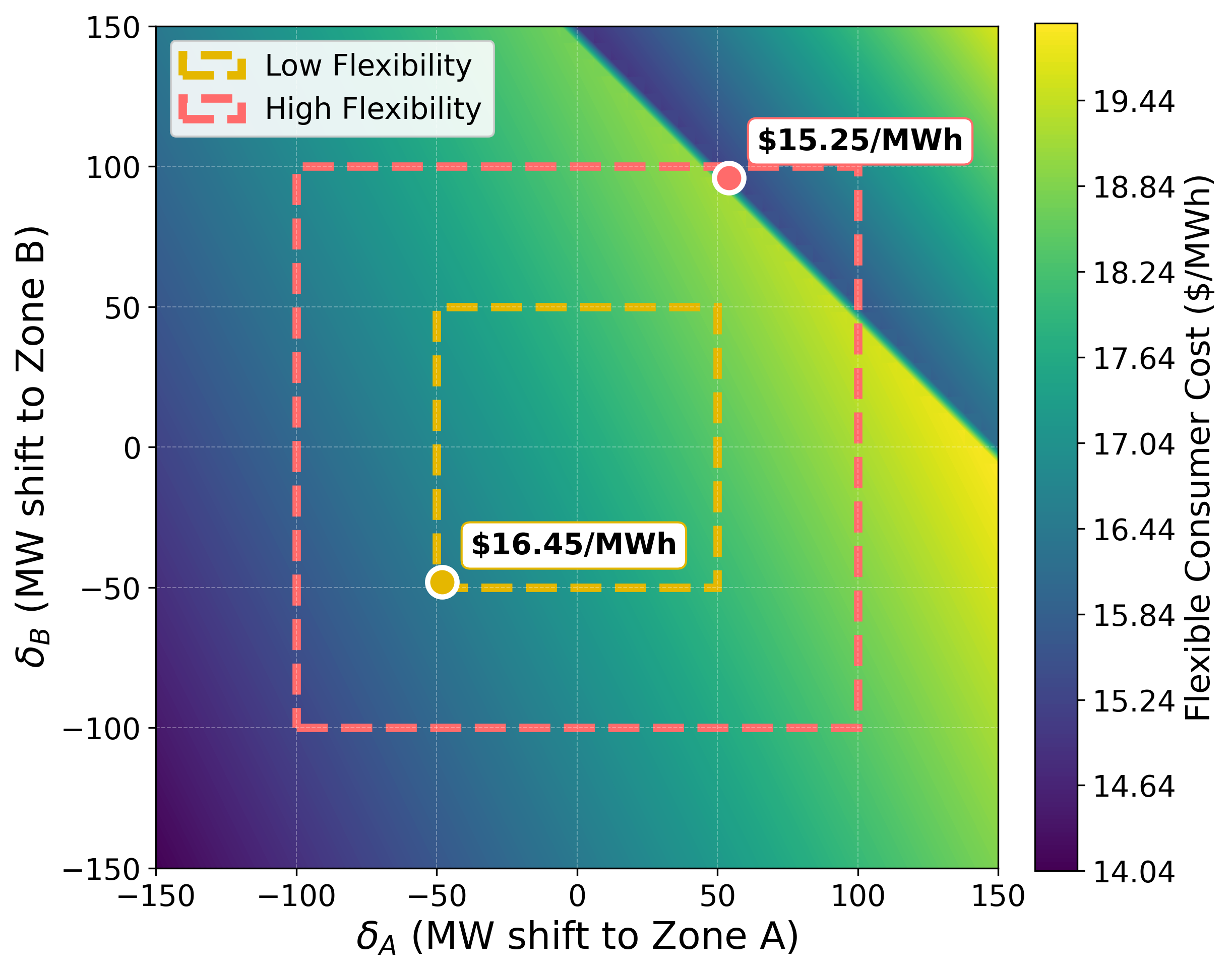
Figure 1: System topology and parameters.
Theoretical Results on Misalignment
Sufficient Condition for Alignment
The first main result is a sufficient condition for the alignment of private and system-level objectives: as long as feasible load shifts remain within a single active-set region, procurement cost minimization by the flexible consumer is system-cost minimizing as well. That is, misalignment cannot arise unless flexibility is sufficient to alter the operating regime—specifically, the set of marginal generators or binding transmission constraints.
Necessary Condition for Misalignment
A complementary, necessary condition is derived: misalignment arises only at the intersection of active-set regions—that is, when the optimal load shift positions the system at a regime boundary where marginal generators or congested interfaces change. At these boundaries, the LMP mapping exhibits discontinuities, decoupling the flexible consumer's procurement incentives from aggregate system cost. The mechanism generates arbitrage opportunities whereby strategic consumers can reduce their private costs while increasing total system operating cost, realized through discrete redispatch events rather than smooth rebalancing.
Illustrative Example: Mechanism of Misalignment
The theoretical mechanism is concretized using a stylized three-zone test system with differentiated generation cost and congestion. At low flexibility levels (α=0.25), decentralized and system-optimal outcomes coincide—both direct load toward low-cost zones and reduce system cost. At elevated flexibility (α=0.5), the consumer optimally induces a regime transition: strategically reallocating toward higher-LMP zones to trigger a change in marginal generators, the consumer reduces its cost by 13.3%, while system operating cost increases by 3.4% relative to baseline.
Computational Evaluation: RTS-GMLC System
A realistic case study on the RTS-GMLC 73-bus system further substantiates the theoretical claims. Multiple large data-center-like loads, each representing up to 20% of annual energy, are modeled under various flexibility levels and incentive structures.
Key findings include:
- Procurement Cost Impacts: Flexible consumers achieve substantial procurement cost savings (up to 12.6% annually for α=0.5), with most savings attributable to strategic, price-anticipatory load shifting.
- System Cost and Misalignment: In most hours, decentralized shifting is aligned with system cost minimization. However, misalignment—where decentralized load shifting increases system operating cost—occurs in 4.6% (α=0.25) to α=0.250 (α=0.251) of all hours. These events are tightly clustered near merit-order discontinuities and congestion boundaries.
- Surplus Redistribution: Strategic load shifting is primarily redistributive—it reduces generator profits and inflexible consumer costs, even when total system cost rises.
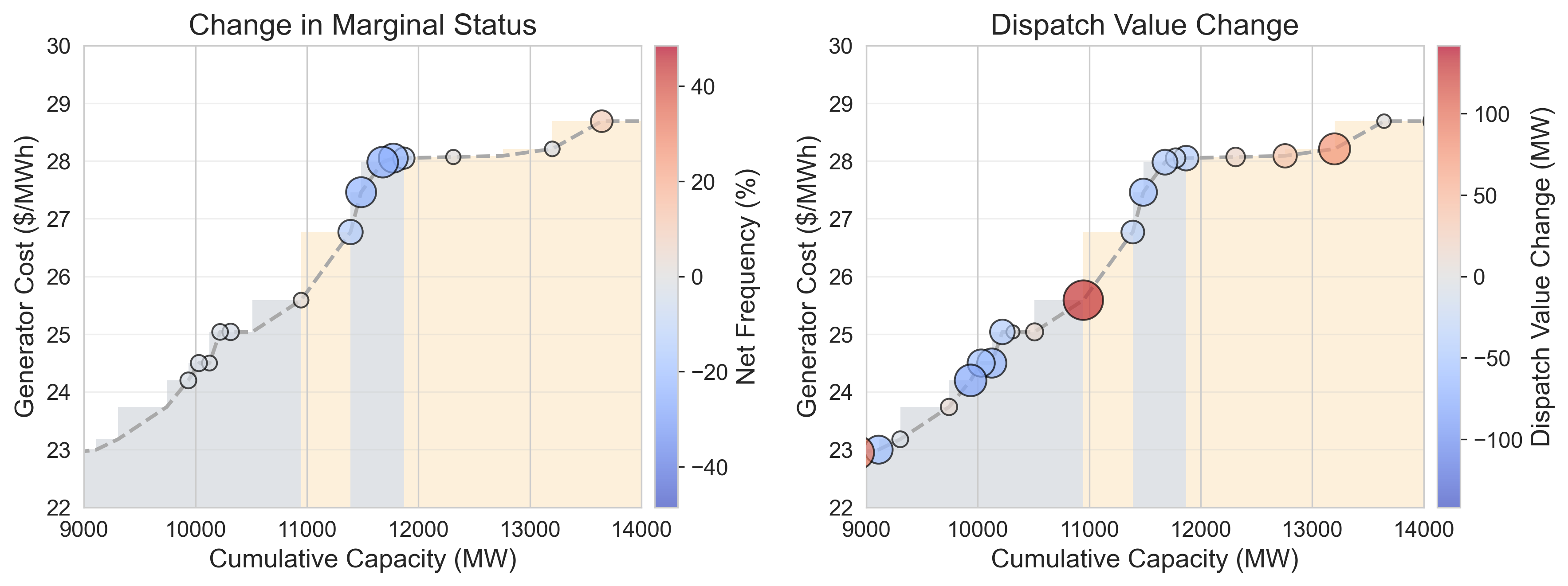
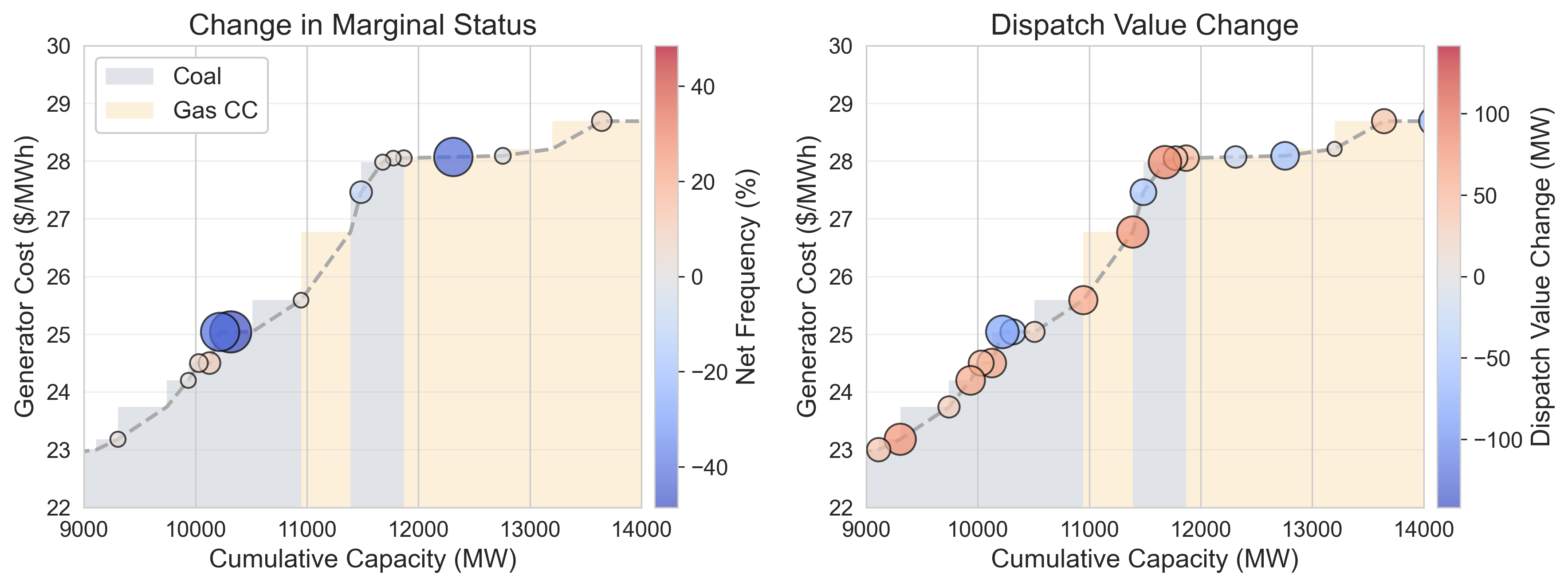
Figure 2: Misaligned instances.
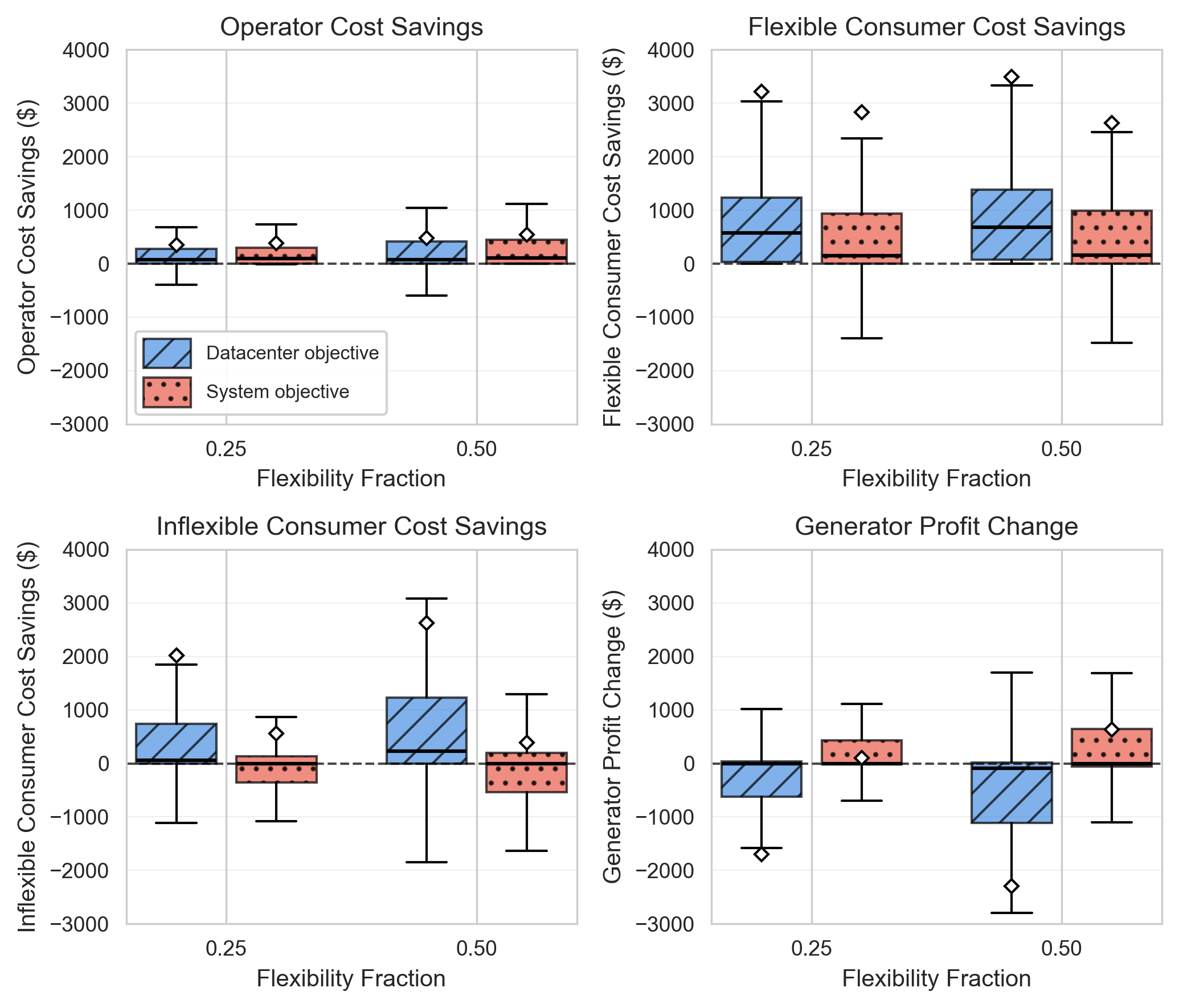
Figure 3: Hourly cost and profit impacts of spatial load shifting under α=0.252 and α=0.253. Boxplots compare decentralized and system-optimal outcomes relative to the no-flexibility baseline.
Mechanistic Insights
Detailed analysis of generator marginal status reveals that misalignment is driven by load shifts that suppress certain generators from the marginal set—those at sharp merit-order cliffs or congestion interfaces—causing the system to rely on higher-cost alternatives elsewhere in the network. Decentralized load shifting, therefore, exploits regime boundaries, with price discontinuities enabling strategic actors to secure private gains at the expense of overall system efficiency.
Practical and Theoretical Implications
Practical Implications:
The results indicate that while strategic spatial load shifting can generally be harnessed to improve system welfare, there is a non-trivial subset of operational scenarios wherein market power can induce inefficiency. Robust market designs should account for the possibility of such regime-induced misalignments, especially as the prevalence and scale of flexible loads increases.
Theoretical Implications:
This work operationalizes the linkage between bilevel structure, DC-OPF regime geometry, and market efficiency. It clarifies that inefficiency arises not from the introduction of decentralized flexibility per se, but from discontinuous price responses at regime transitions, highlighting the utility of active-set region analysis for mechanism design and policy evaluation.
Future Directions:
The paper suggests several avenues for future research—especially extension to non-linear cost structures, multi-period flexibility, and emission-aware load shifting. The computational tractability and empirical relevance of bilevel and multiparametric models will be central to ongoing grid modernization efforts.
Conclusion
This work rigorously delineates the boundaries of alignment between strategic spatial load shifting by large electricity consumers and total system operating efficiency. It provides formal, empirically validated conditions under which decentralized flexibility improves or undermines system cost minimization, exposes the mechanism by which misalignment emerges, and documents the redistributive impacts among market participants. Future market architectures and regulatory approaches must anticipate the behavior of strategic flexible loads to ensure both efficiency and equity as demand-side flexibility becomes a central feature of power systems.