- The paper introduces two novel approximation algorithms, STAR-SC and STAR-ACOV, providing constant-factor guarantees for the sliding-window temporal vertex cover problem on always-star graphs.
- It leverages the star structure of each snapshot to reduce redundant vertex selections, achieving an optimal (Δ–1) approximation ratio for specific window sizes.
- Empirical evaluations on synthetic and real-world networks show that the proposed methods are scalable and substantially outperform prior algorithms in both cover size and runtime.
New Approximations for Temporal Vertex Cover on Always Star Temporal Graphs
Problem Setting and Theoretical Underpinnings
Temporal graphs formalize dynamic systems by equipping a static graph topology with time-indexed edge activity, capturing realistic scenarios such as evolving contact or communication networks. The Temporal Vertex Cover (TVC) and its sliding window adaptation (SW-TVC) extend the classic vertex cover (VC) to cover temporal edges over discrete intervals: TVC seeks a minimal set of vertex appearances covering each edge at least once during the entire lifetime, whereas SW-TVC requires each edge to be covered at least once in every window of Δ consecutive time steps to address applications with periodic monitoring or repeated coverage constraints.
This paper studies the SW-TVC problem parameterized by fixed window size Δ in the significant restricted setting where every snapshot of the temporal graph is a star possibly with a time-varying center ("always star temporal graphs"). These graphs naturally abstract cases such as coordination protocols with dynamic leaders, star-shaped sensor readings, and broadcast processes. Notwithstanding the imposed structure, TVC and SW-TVC remain NP-complete for always star temporal graphs, and even fixed-parameter tractable (FPT) algorithms have prohibitive worst-case complexity for sizable graphs.
Algorithmic Contributions
Two polynomial-time approximation algorithms are developed for SW-TVC on always star temporal graphs:
- STAR-SC: A O(T) algorithm with 2Δ−1 approximation ratio, optimal for Δ=1.
- STAR-ACOV: A O(TmΔ2) algorithm with improved Δ−1 approximation ratio, exact for Δ≤2.
Both algorithms exploit the structural restriction: since every snapshot is itself a star, the minimal covers correspond to the center(s) of the star at each timestep. The algorithms avoid redundant selections by leveraging window overlaps and the presence of unique centers.
The paper also implements and empirically benchmarks the prior state-of-the-art d- and (d−1)-approximation algorithms for always degree at most Δ0 temporal graphs ("D-APPROX" and "D-1-APPROX") in this restricted context (Δ1 being the maximum per-snapshot degree). A key innovation is a data structure for temporal graphs supporting Δ2 access to all edges at a given time and all edges adjacent to a vertex.
Approximation Guarantees
- STAR-SC: For all Δ3, the trivial algorithm covering the center at every active timestep yields a Δ4 approximation; worst case occurs when every edge is present at every timestep.
- STAR-ACOV: Improves the ratio to Δ5 using an exclusion mechanism that only adds the star center at Δ6 if its coverage is indispensable within the sliding window. The algorithm remains exact for Δ7 and achieves tight analysis via worst-case constructions where optimal covers are strictly sparser than those constructed by the algorithm.
Both theoretical analyses are matched by synthetic worst-case instances.
Experimental Results
Extensive experimentation includes both synthetic always-star graphs (including challenging worst-case instances) and large real-world dynamic networks (for D-APPROX/D-1-APPROX). Key findings are as follows:
- Solution Quality (STAR-ACOV vs Baselines):
STAR-ACOV consistently outperforms D-APPROX and D-1-APPROX in solution size on always star temporal graphs, achieving an average 40.46% smaller cover than D-1-APPROX in large-scale settings.
STAR-ACOV is much faster than D-1-APPROX (by over 120% in several configurations); STAR-SC is fastest but less accurate at larger Δ8.
On large graphs (over 10,000 time steps and thousands of nodes), both STAR-based algorithms are computationally practical under moderate hardware.
The superiority of STAR-ACOV is more pronounced as Δ9 increases, except in specifically constructed adversarial cases.
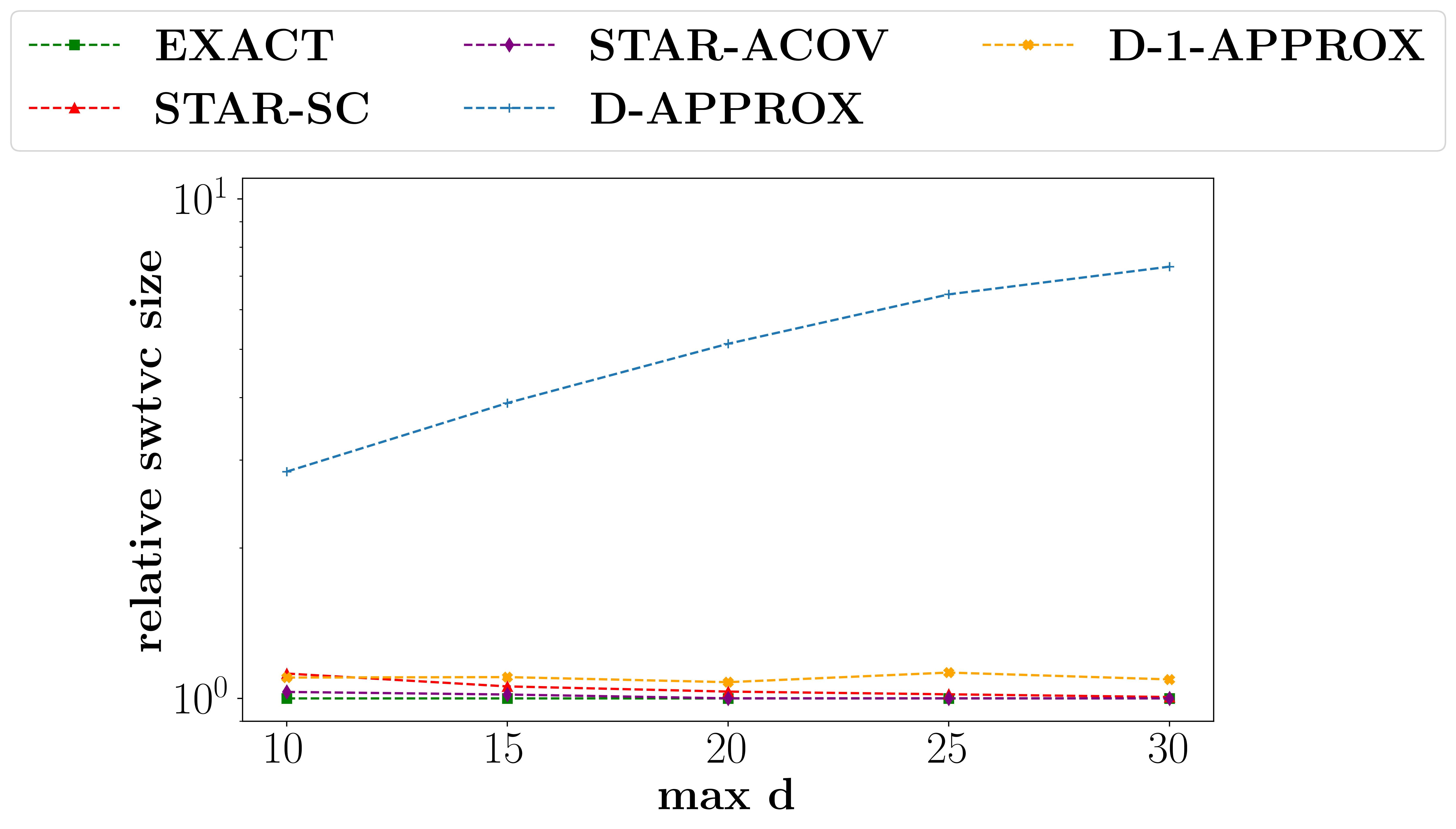
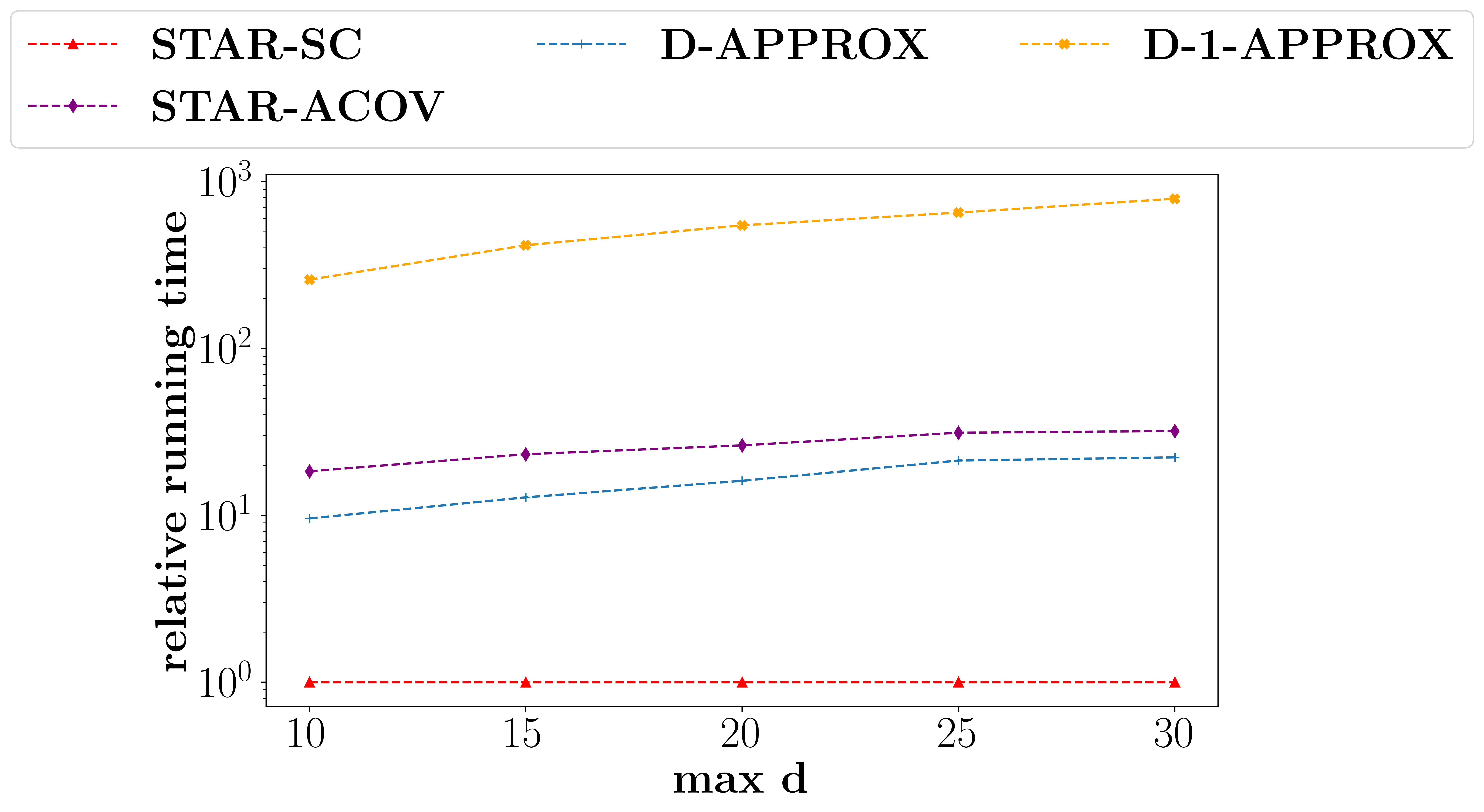
Figure 2: Averaged results of 3- and 4-TVC comparison of always-star algorithms (STAR-SC, STAR-ACOV) against general always-degree-at-most-O(T)0 algorithms.
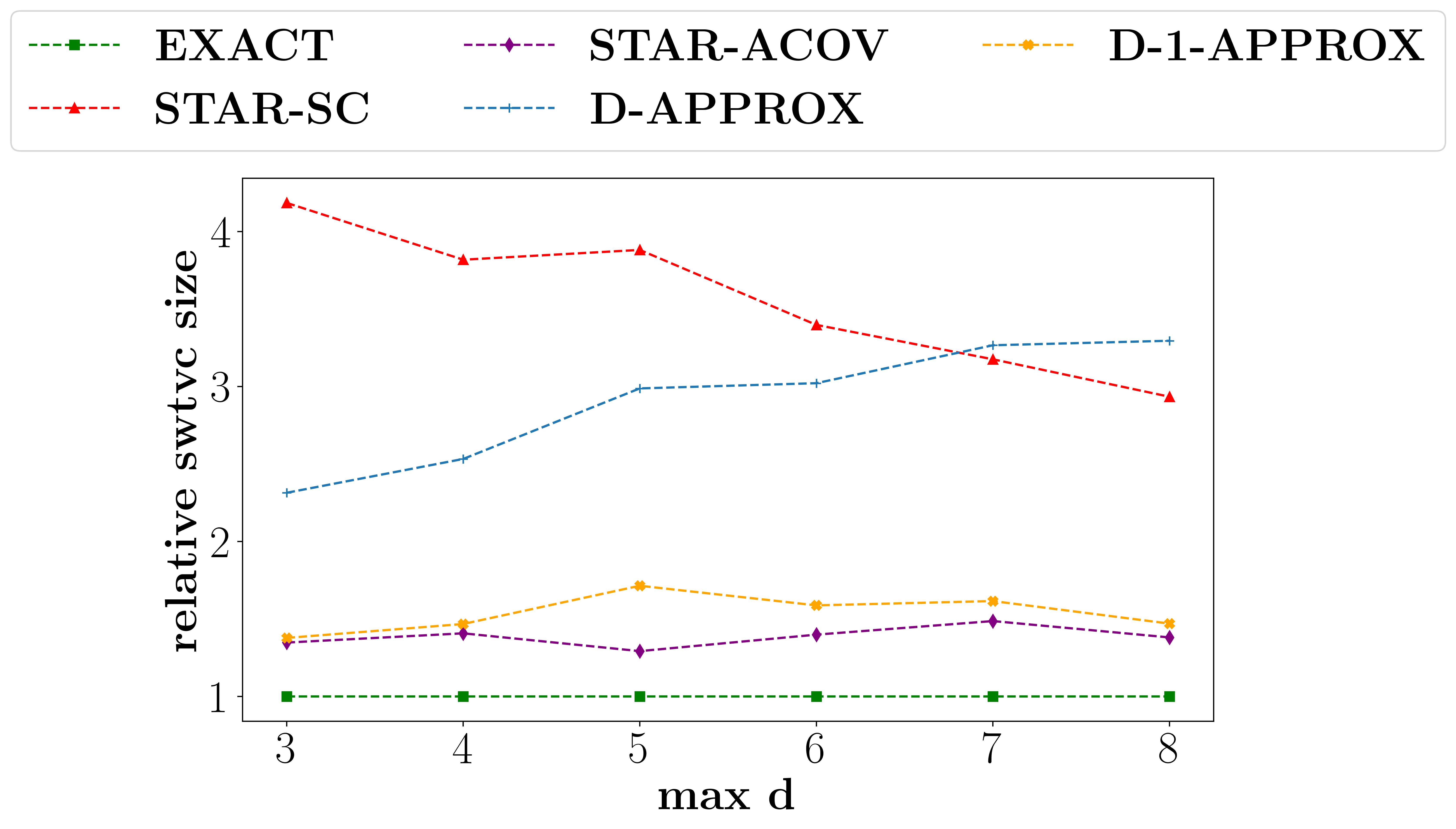
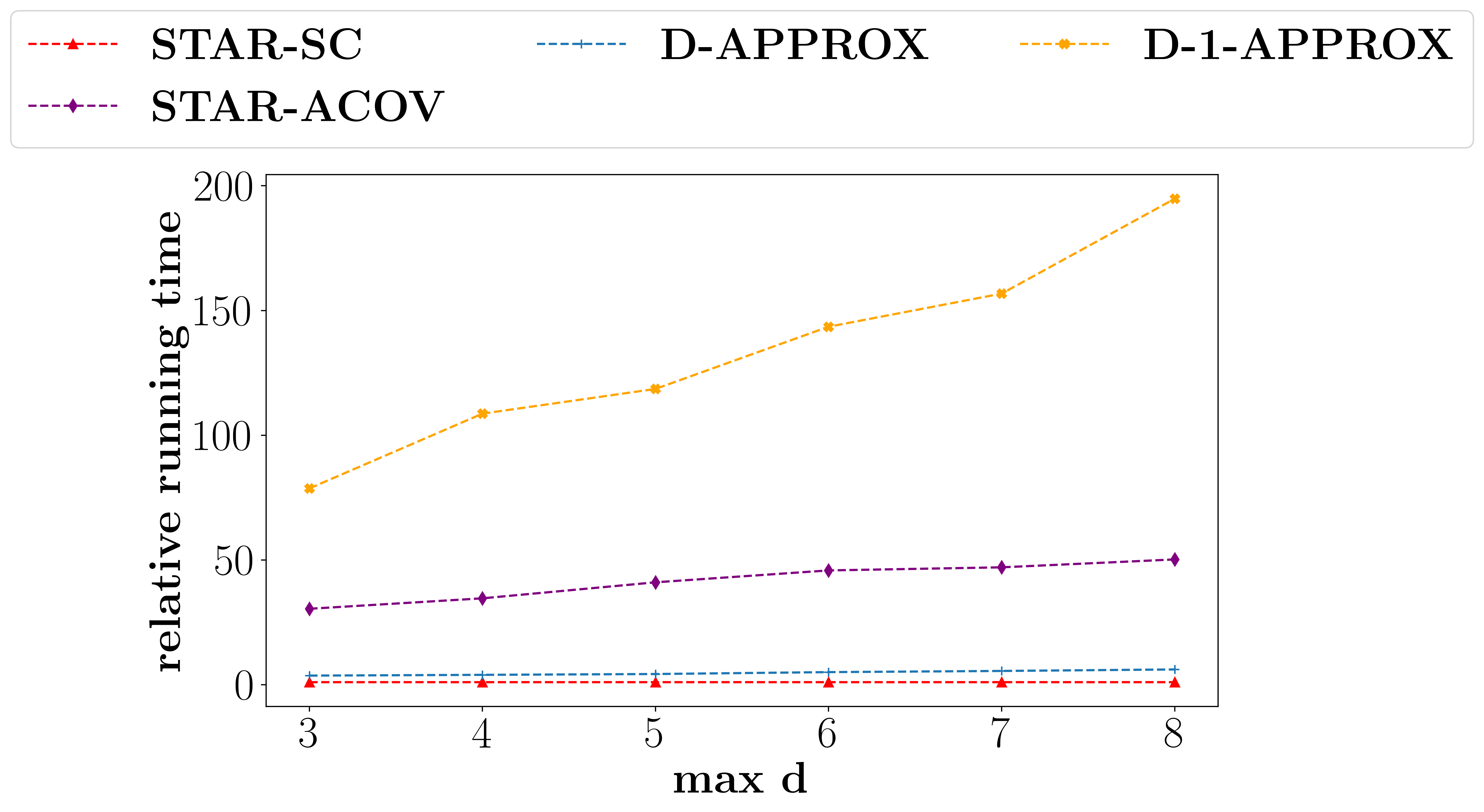
Figure 4: Averaged 20-TVC comparison on always star temporal graphs demonstrates that STAR-ACOV outperforms prior art even when O(T)1.
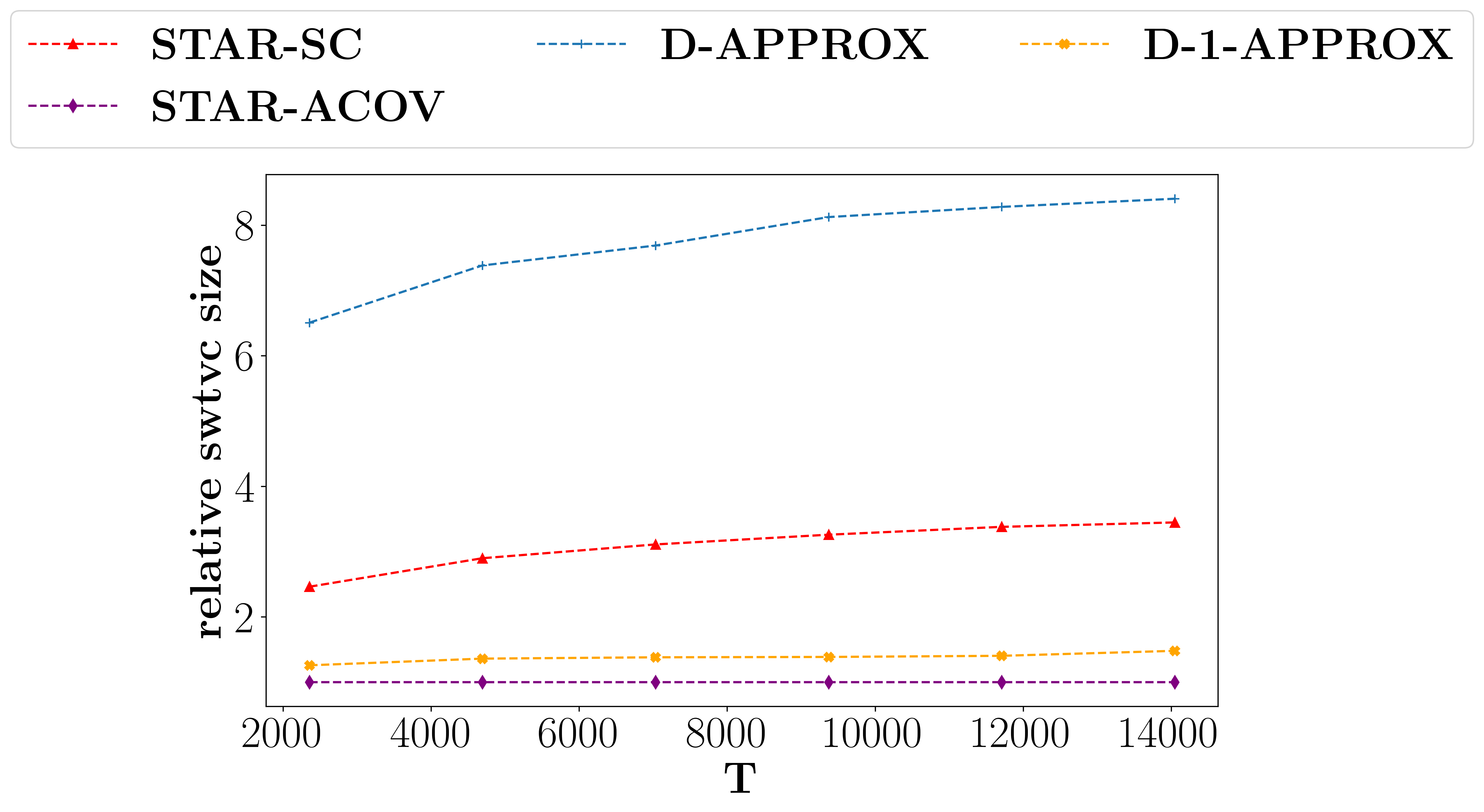
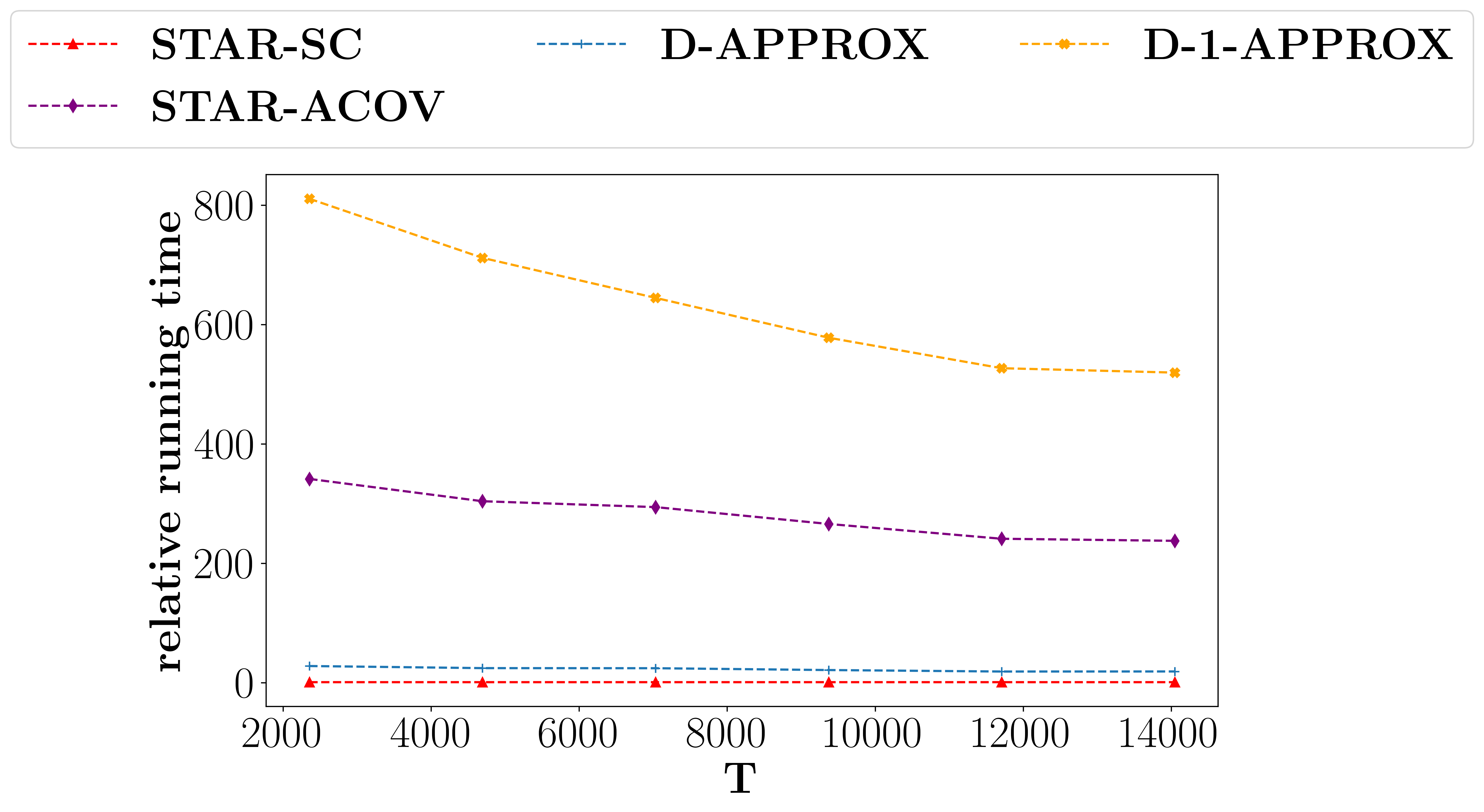
Figure 6: 16-TVC results for larger graphs highlight the strong scalability and solution quality of STAR-ACOV over D-APPROX and D-1-APPROX.
Empirical Analysis on Real-life Instances
The D-1-APPROX and D-APPROX algorithms were assessed on large temporal graphs from the SNAP library (e.g., Wikipedia talk, StackExchange traces). Results reveal a substantial gap between theoretical and practical performance:
- D-1-APPROX outperforms D-APPROX both in cover size and runtime for sparse, real-world networks, despite an analytically worse worst-case approximation factor. This is explained by the O(T)2-frequency set cover structure of real data, which aligns poorly with per-edge greedy approaches.
- Novel Implementation:
An optimized version of D-APPROX ("D-APPROX-S"), exploiting sparse edge schedules and improved data access, achieves more than two orders-of-magnitude acceleration over baseline D-APPROX while maintaining solution quality.
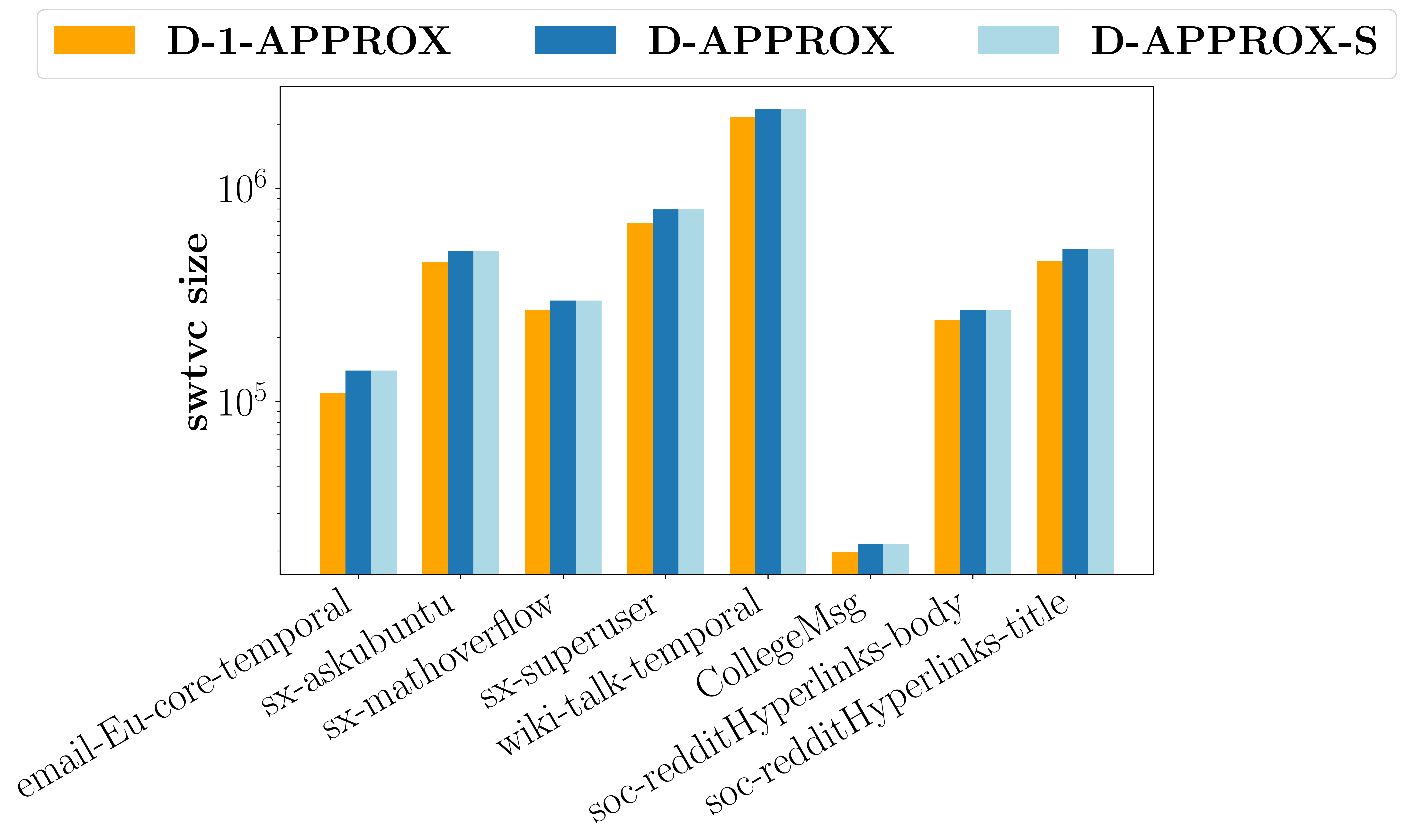
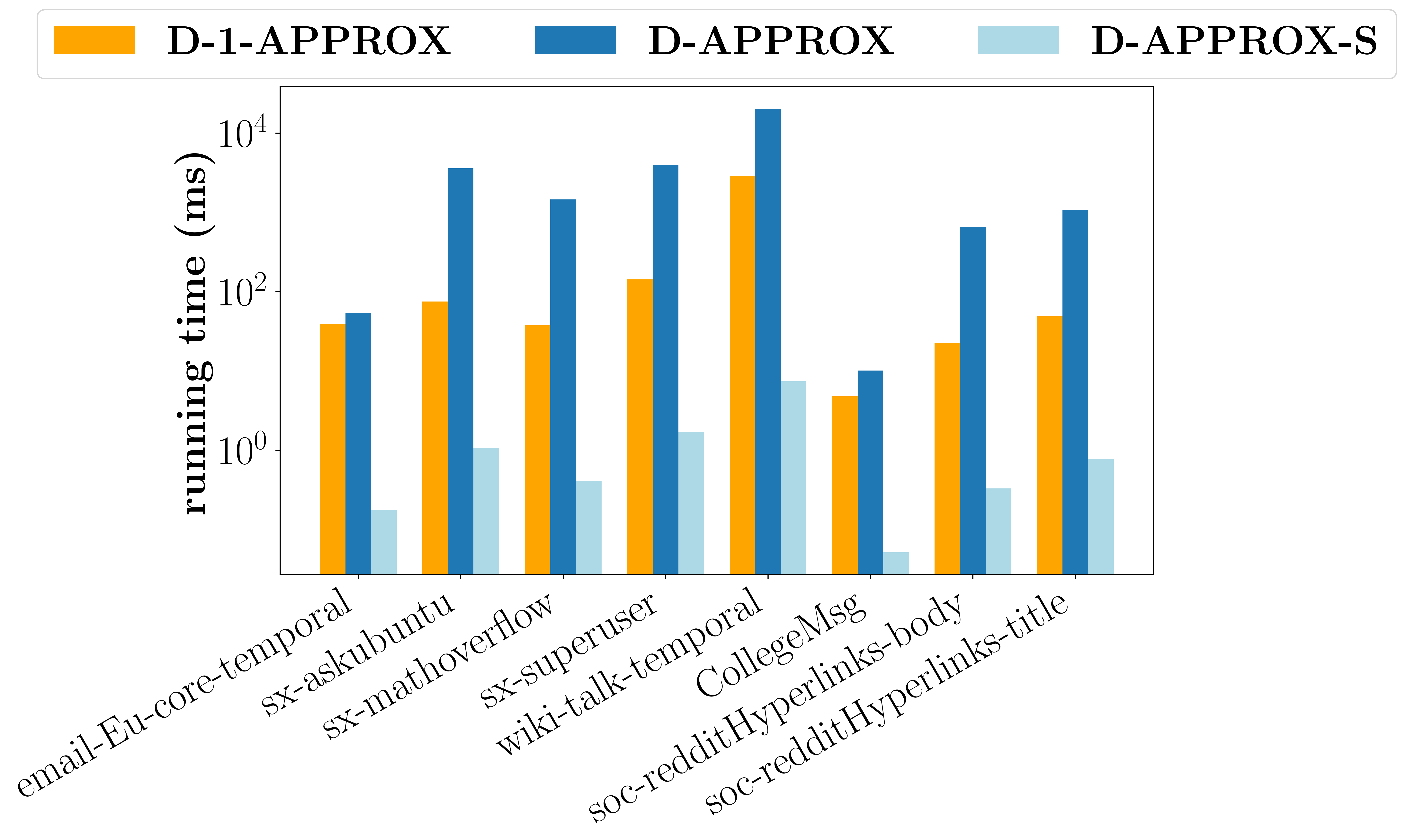
Figure 1: 64-TVC comparison of D-1-APPROX and D-APPROX on real-life temporal graphs shows strong empirical advantage of D-1-APPROX in practice.
Implications and Future Work
The proposed algorithms provide concrete improvements in the SW-TVC covering periodic monitoring requirements on dynamic star-like networks, which are prevalent in sensor, leader-based, and broadcast systems. From a theory standpoint, the results tighten the gap between achievable approximation factors and computational tractability for core temporal covering problems in highly restricted but still NP-hard cases.
Practically, the work demonstrates how analytic worst-case factors may not translate to real performance, motivating both implementation-aware algorithm engineering and a data-driven perspective for dynamic network covering.
Open avenues include:
- Generalization to broader graph classes where centralized (hub-like) structure dominates, or combining star restrictions with path/cycle constraints.
- Parameteric cuts between O(T)3 and O(T)4, as the STAR-ACOV–D-1-APPROX comparison hints at a phase transition in optimal choice.
- Streaming and online variants, for cases where the temporal graph is not known in advance.
Conclusion
This work delivers two dedicated approximation algorithms for SW-TVC on always star temporal graphs, surpasses prior generic methods both theoretically and empirically, and sets new standards for benchmarking and algorithm engineering in temporal covering. The detailed analysis, supporting data structures, and codebase provide a foundation for both theory refinement and application to real large-scale monitoring and dynamic graph analysis.

