- The paper presents SGED-TCD, integrating explicit lag-resolved structural gating and effect-aligned scoring to reveal causal links in high-dimensional climate time series.
- It demonstrates how remote teleconnection drivers, including ENSO, AO, and NAO, modulate heat-pollution extremes in Eastern and Northern China through nonlinear, lagged interactions.
- Results show superior predictive skill over traditional methods, offering actionable early-warning capabilities for compound climate extreme events.
Structural Gating and Effect-aligned Lag-resolved Temporal Causal Discovery for Compound Climate Extremes
Introduction and Motivation
Compound climate extremes—particularly the concurrence of heatwaves and air pollution—have emerged as major risks, with substantial amplification of public health hazards across eastern and northern China. The compounded severity results from nonlinear interactions: elevated temperatures enhance photochemical ozone formation and facilitate PM2.5 accumulation, leading to more acute impacts than isolated heat or pollution events. Mounting evidence attributes such extremes not solely to local meteorological dynamics or emissions but to lagged and nonlinear modulation by remote atmosphere-ocean climate variability, transmitted through complex teleconnection processes. Quantifying these lagged, multivariate causal influences is essential for robust risk attribution and actionable early warning.
Existing frameworks for analyzing causality in time series—often correlation-based or regression-driven, rarely lag-resolved—fail to disentangle direct causality from indirect or confounded pathways, especially amid nonlinearity, strong autocorrelation, and bidirectional coupling present in geophysical systems.
The SGED-TCD Framework
SGED-TCD (Structural Gating and Effect-aligned Discovery for Temporal Causal Discovery) is introduced as a general formalism for lag-resolved causal discovery in high-dimensional time series. The framework is constructed to ensure four key properties:
- Explicit lag-specific structural gating: Structural gates Zi,j,τ are explicitly parameterized over candidate source-target-lag triplets, making the causal graph a direct learnable object.
- Functional alignment: Structural gate importance is calibrated against perturbation-based predictive effects, countering structural overfitting or spurious links.
- Stability-oriented regularization: The causal graph is required to be reproducible under structure-preserving perturbations, suppressing mode collapse or instability induced by sample noise.
- Nonlinear, interaction-sensitive encoding: The variable-level temporal encoder and lag-aware aggregation support discovery of nonlinear, multistep pathways, enabling the framework to resolve genuine causal mediators beyond simple pairwise effects.
The SGED-TCD architecture combines a grouped Temporal Convolutional Network encoder, a parameterized hard-concrete structural gating tensor, lag-resolved aggregation, and a composite loss integrating predictive error, group sparsity, structural stability, and ablation-alignment criteria.
Application to Compound Heat--Pollution Extremes in China
The application targets two regions: Eastern China (EC) in the warm season, dominated by heatwave-ozone co-occurrence, and Northern China (NC) in the cold season, marked by heatwave-stagnation-PM2.5 events. The variable set integrates large-scale climate indices (ENSO, Indian/Western Pacific/North Atlantic SST, AO, NAO), regional circulation and boundary-layer diagnostics (Z500, PBLH, WS10, RH, SW↓), and compound extreme metrics (HW_Int/HW_Dur, O3, PM2.5) on a monthly basis.
Joint exploratory analyses highlight synchrony between heatwave and ozone extremes over EC in the warm season and marked cold-season PM2.5 cycles and heatwave persistence in NC.
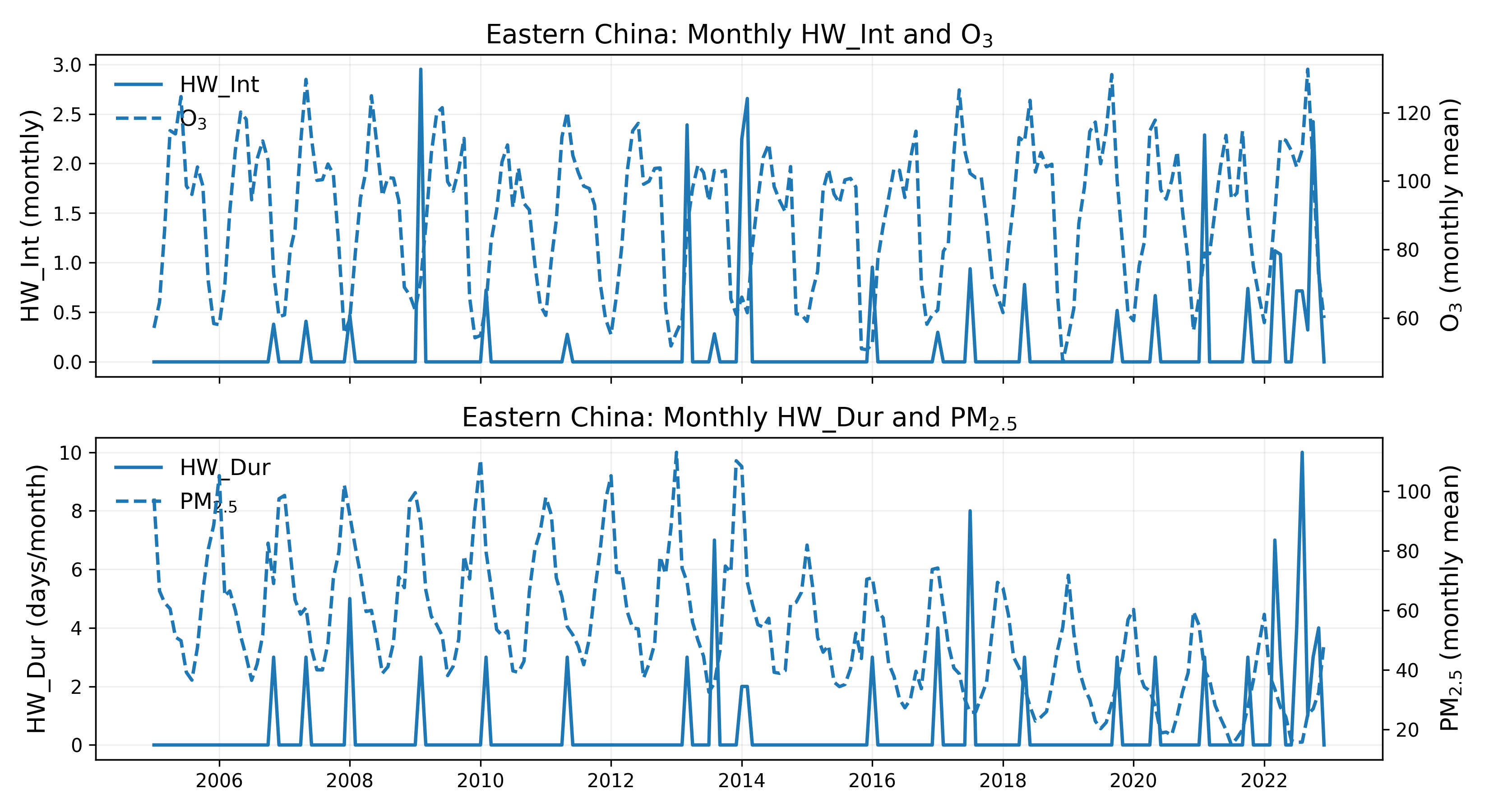
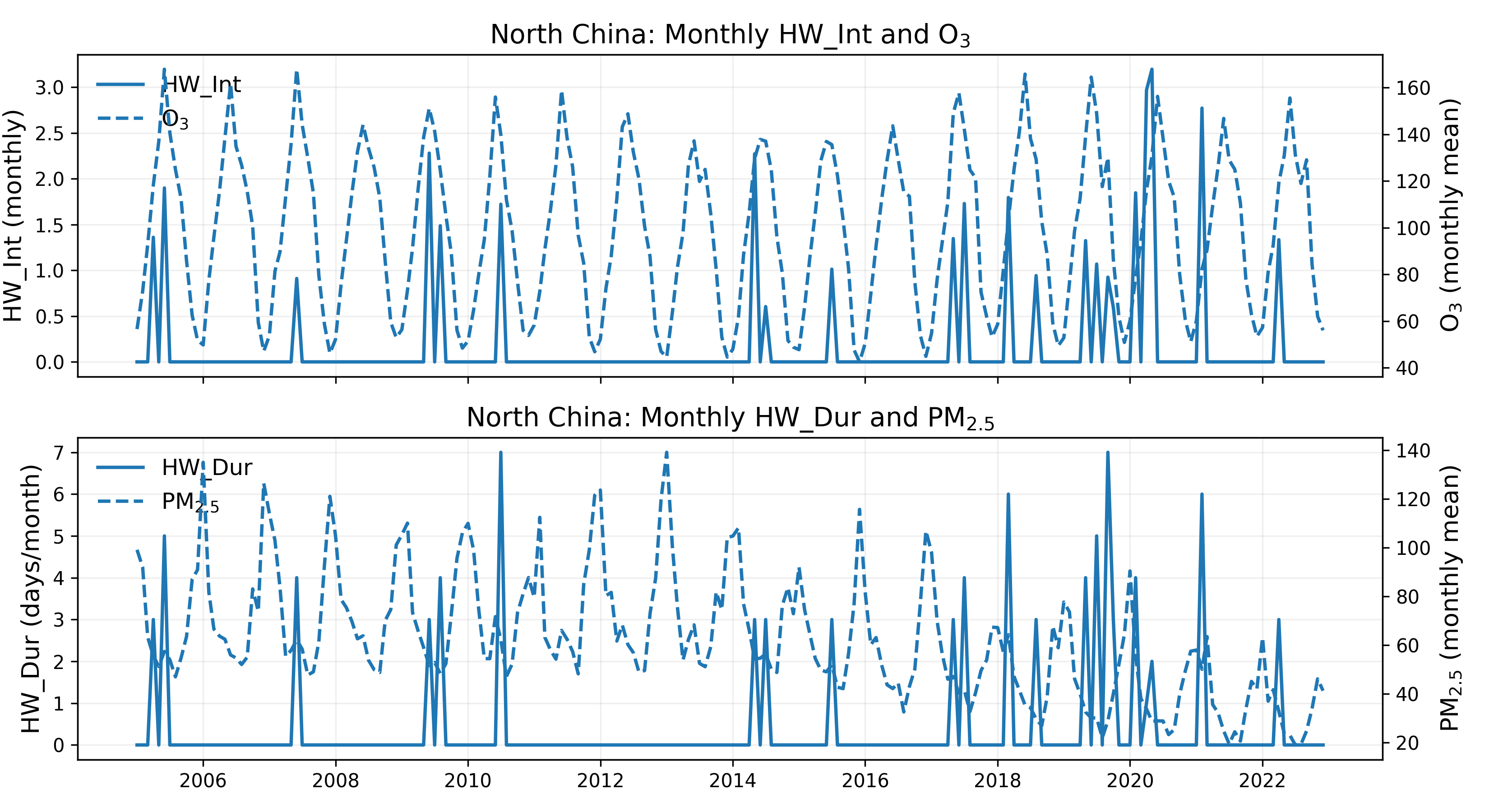
Figure 1: Monthly time series of heatwave indices and air pollution variables over Eastern China (EC) and Northern China (NC).
Major interannual teleconnection variability—especially in Nin~o3.4, AO, and NAO—manifests lagged correlations with thermal indices, substantiating the need for lag-resolved modeling.
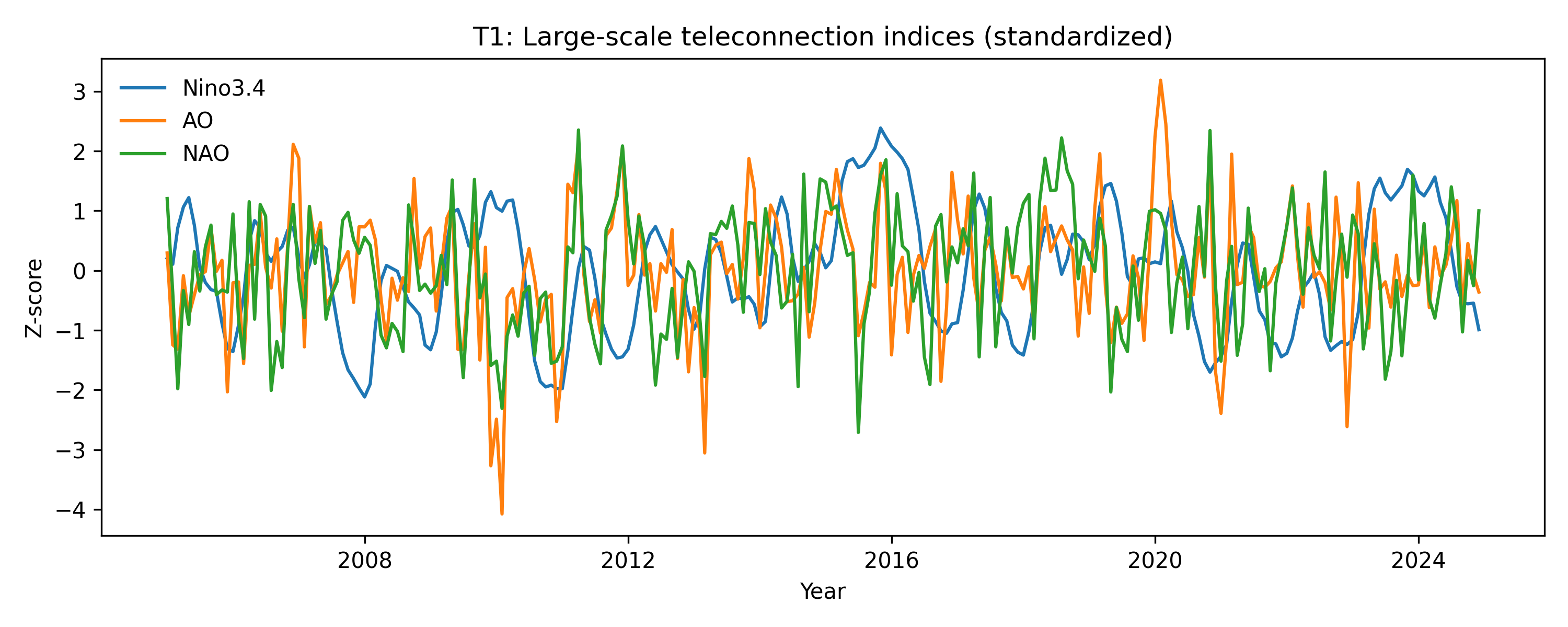
Figure 2: Standardized time series of major large-scale teleconnection indices.
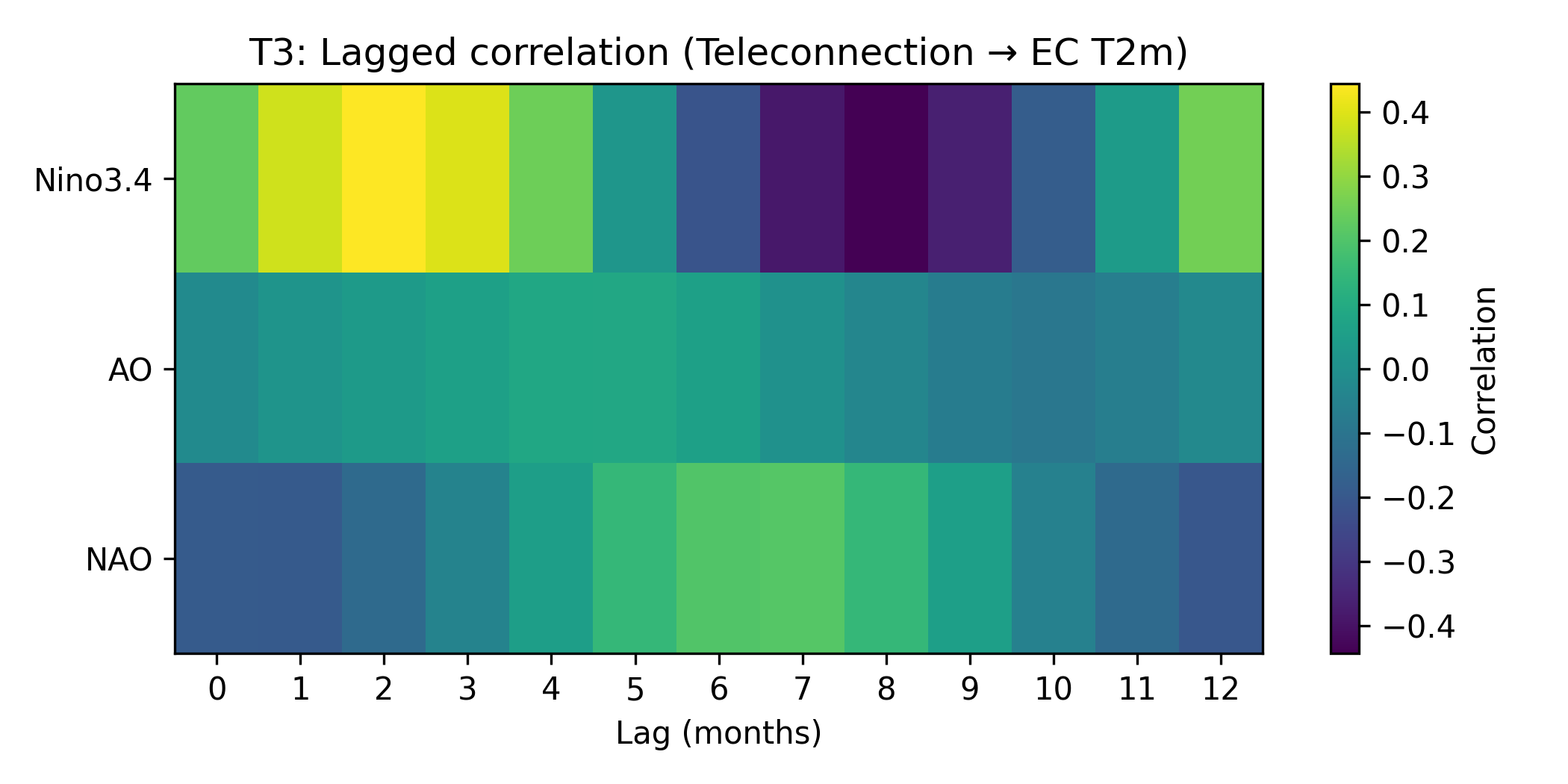
Figure 3: Lagged correlations between teleconnection indices and EC near-surface temperature (T2m).
Distributions of meteorological mediators indicate that compound extremes arise in environments characterized by heightened temperature, radiation, humidity, and subdued wind/ventilation.
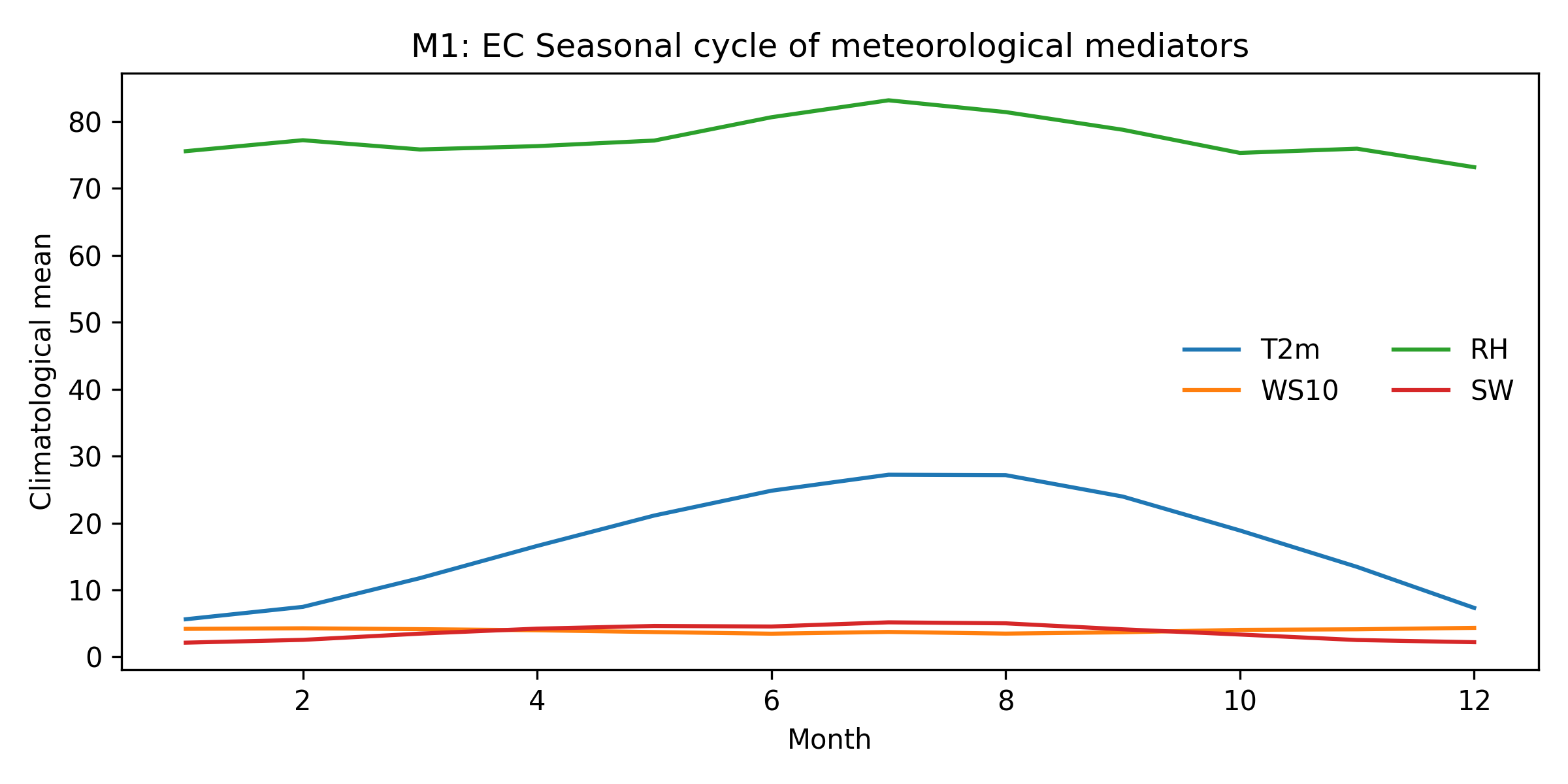
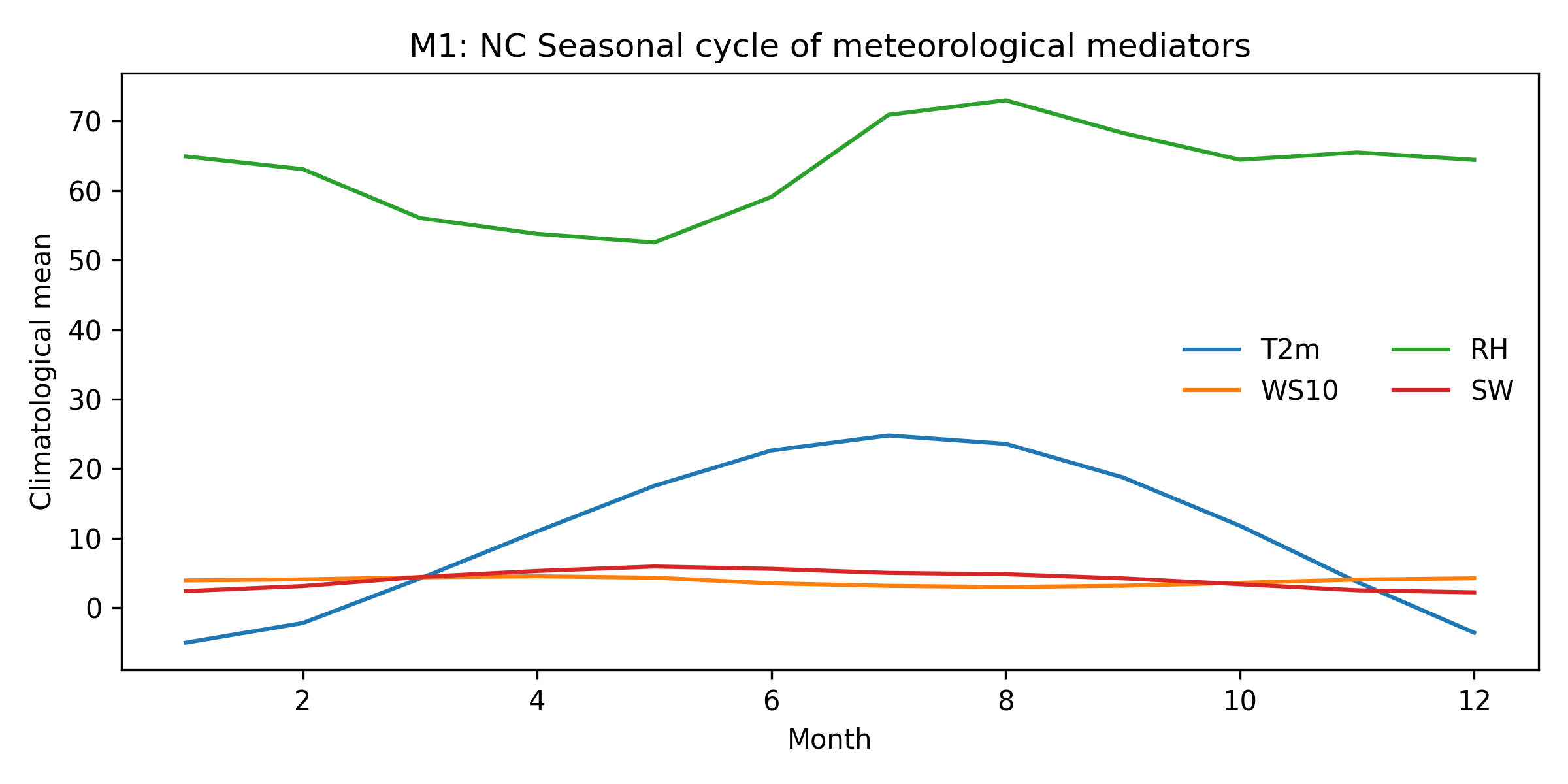
Figure 4: Seasonal cycles of key meteorological mediators over EC and NC.
A clear distinction in meteorological conditions during concurrent versus non-concurrent extremes motivates the causal mediation analysis.
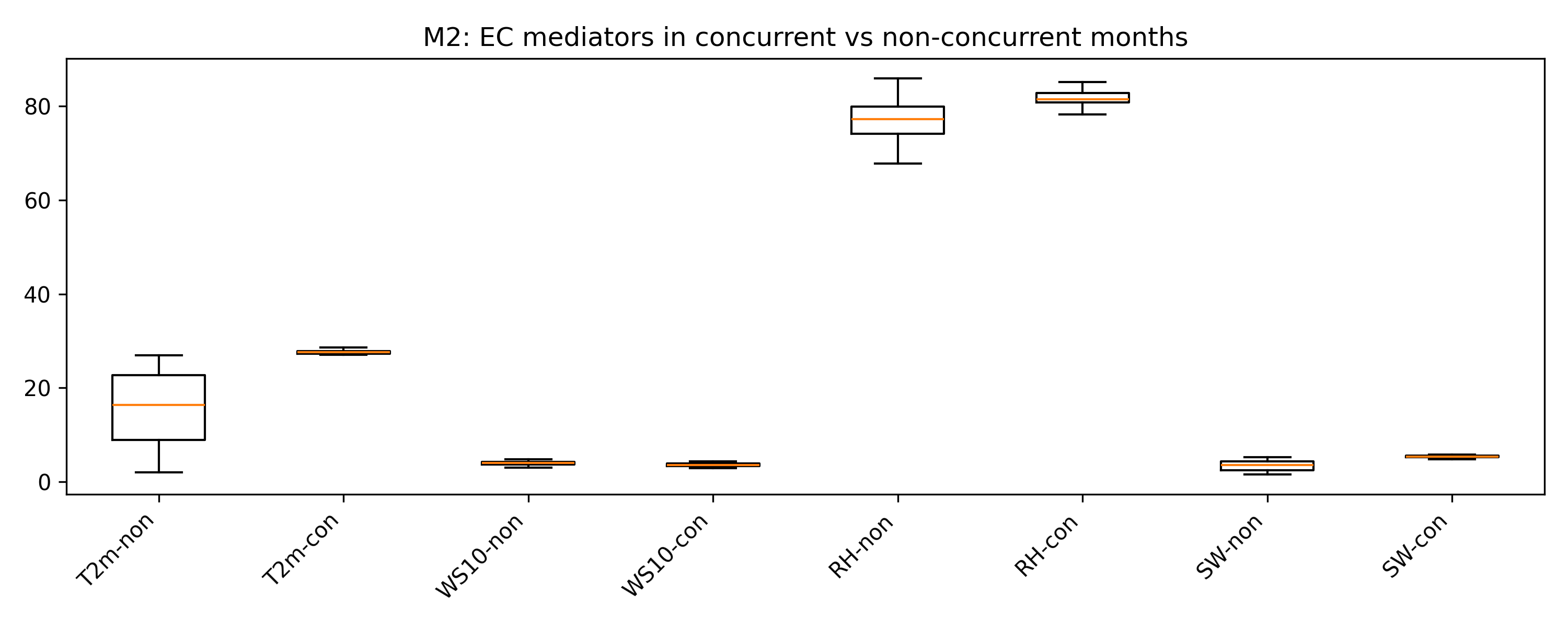
Figure 5: Comparison of meteorological mediators during concurrent and non-concurrent months in EC.
Experimental Design and Causal Network Construction
SGED-TCD is applied separately for the EC-warm and NC-cold regimes, with a physically motivated maximum lag window of 12 months. All variables are standardized, with seasonality removed from key meteorological indices to preserve sensitivity to intermonthly teleconnection-driven variance.
The model explicitly isolates source-target-lag edges via the gating tensor and ablation-aligned composite scoring. Composite scores Si,j,τ integrate normalized gate values and perturbation-induced predictive effects (α=0.8, Zi,j,τ0), with dominant lags extracted per edge. Structural robustness is ensured by:
- Sensitivity analysis across lag window lengths (6, 12, 18 months)
- Block-bootstrap recurrence scoring
- Consistency under structure-preserving neural input perturbations
- Ablation-based validation, quantifying the non-redundant contribution of each candidate driver
The final causal networks are filtered for stability and physical interpretability.
SGED-TCD-Inferred Causal Networks: Results and Interpretation
The SGED-TCD networks reveal a multi-layer, hierarchically organized causal structure in both regions, with lagged remote forcing as the root.
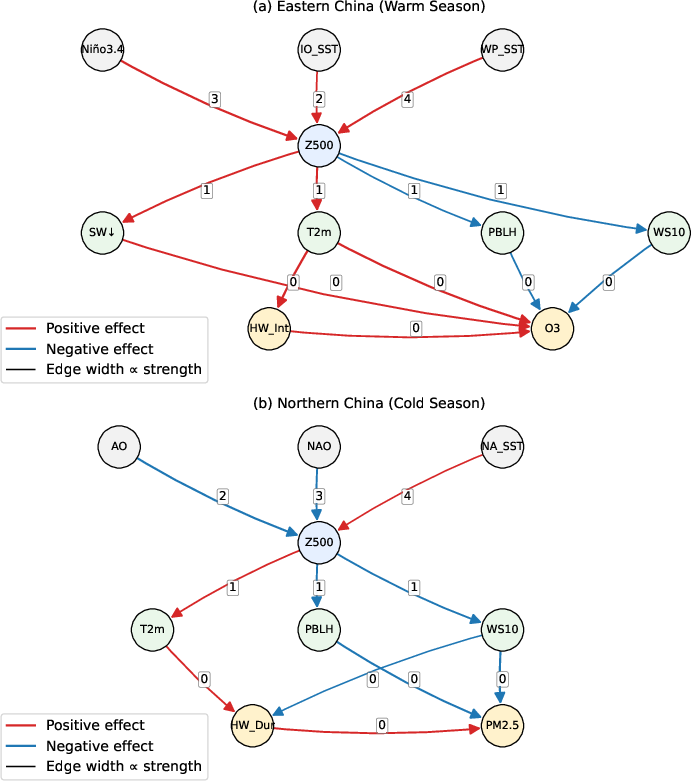
Figure 6: SGED-TCD-inferred weighted causal networks for (a) Eastern China during the warm season and (b) Northern China during the cold season.
Eastern China (Warm Season): Pacific Teleconnection Dominance
- Dominant Remote Forcing: NiZi,j,τ1o3.4 and WP_SST indices exert 3–4 month lagged directed control over mid-tropospheric circulation (Z500), with intermediate contributions from IO_SST.
- Circulation-Meteorology Cascade: Elevated Z500 anomalies drive near-surface temperature surges (T2m), boundary layer suppression (PBLH), and weaken ventilation (WS10), all enhancing both ozone formation and heatwave intensity. Notably, the effect pathways from SST to OZi,j,τ2 are channeled through these meteorological mediators, rather than direct teleconnection.
- Heatwave–Ozone Co-amplification: Structural coupling of HW_Int to both T2m and OZi,j,τ3 underscores that high-ozone extremes are disproportionately frequent during maxima in heat stress, confirming prior empirical findings.
Northern China (Cold Season): High-Latitude Circulation and Stagnation
- Upstream Drivers: AO and NAO anomalies propagate through Z500 (with lags ~2–4 months), modulating regional circulation over northern Eurasia and East Asia.
- Local Meteorological Linkages: These circulation shifts produce shallower PBLH and sustained meteorological stagnation, the latter encoded by causal links to WS10 and PMZi,j,τ4.
- Compound Heat–Stagnation Episodes: Prolonged HW_Dur episodes, driven by reduced dispersion and anomalously warm/stagnant air, dominate the linkage to PMZi,j,τ5. Unlike in EC, heatwave intensity plays a secondary role relative to persistence.
These findings delineate a bold claim: robustly lagged, teleconnection-driven, multi-hop causal chains, rather than short-term or purely local meteorological variability, are responsible for synchronized heatwave-air pollution extremes in both EC and NC, but with regionally and seasonally distinct canonical drivers and mediation structures.
Predictive Implications: Early Warning
SGED-TCD-inferred drivers are evaluated as lead-time predictors for compound extreme occurrence, against persistence, correlation-based, and Granger/VAR-selected baselines.
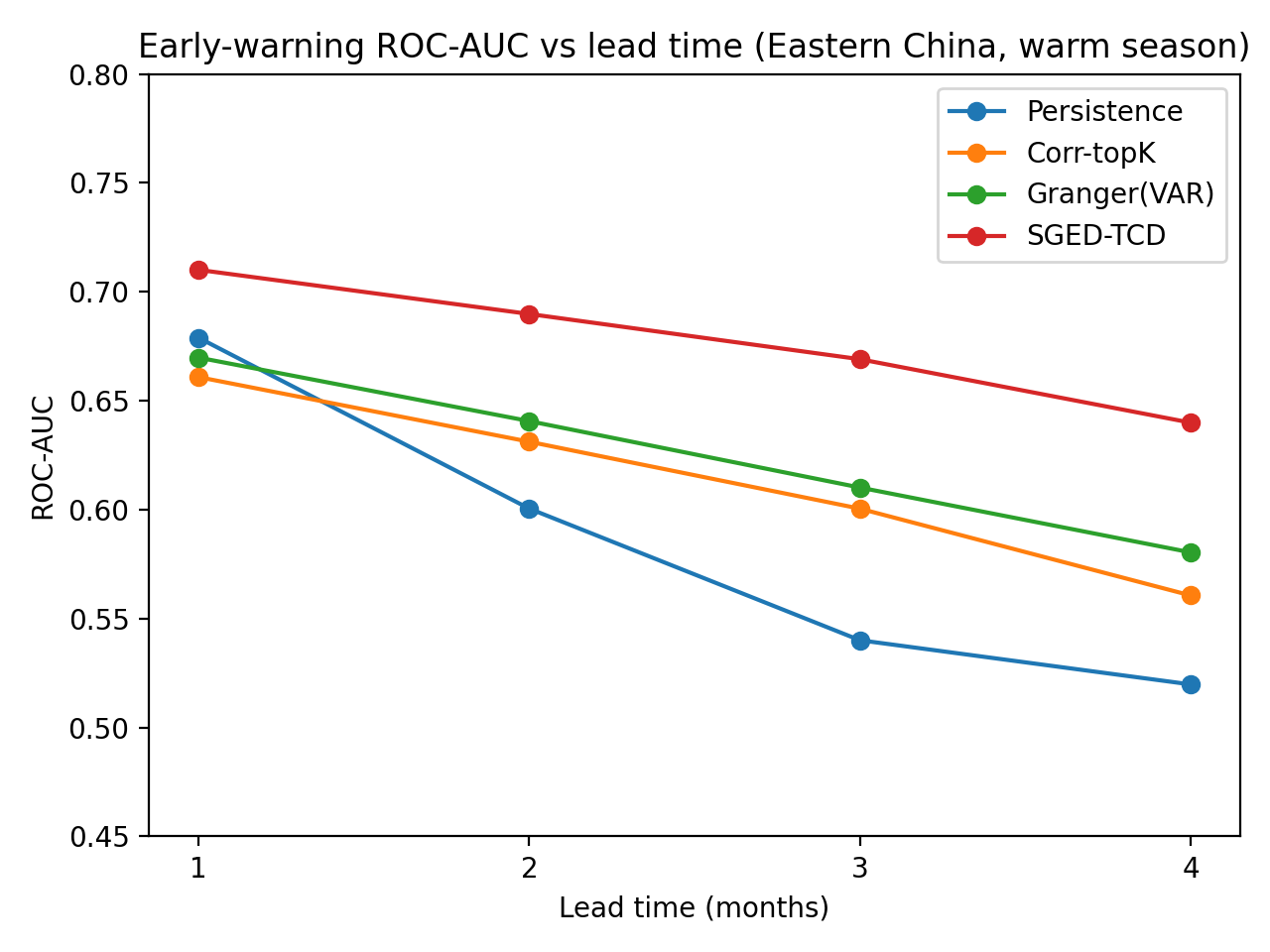
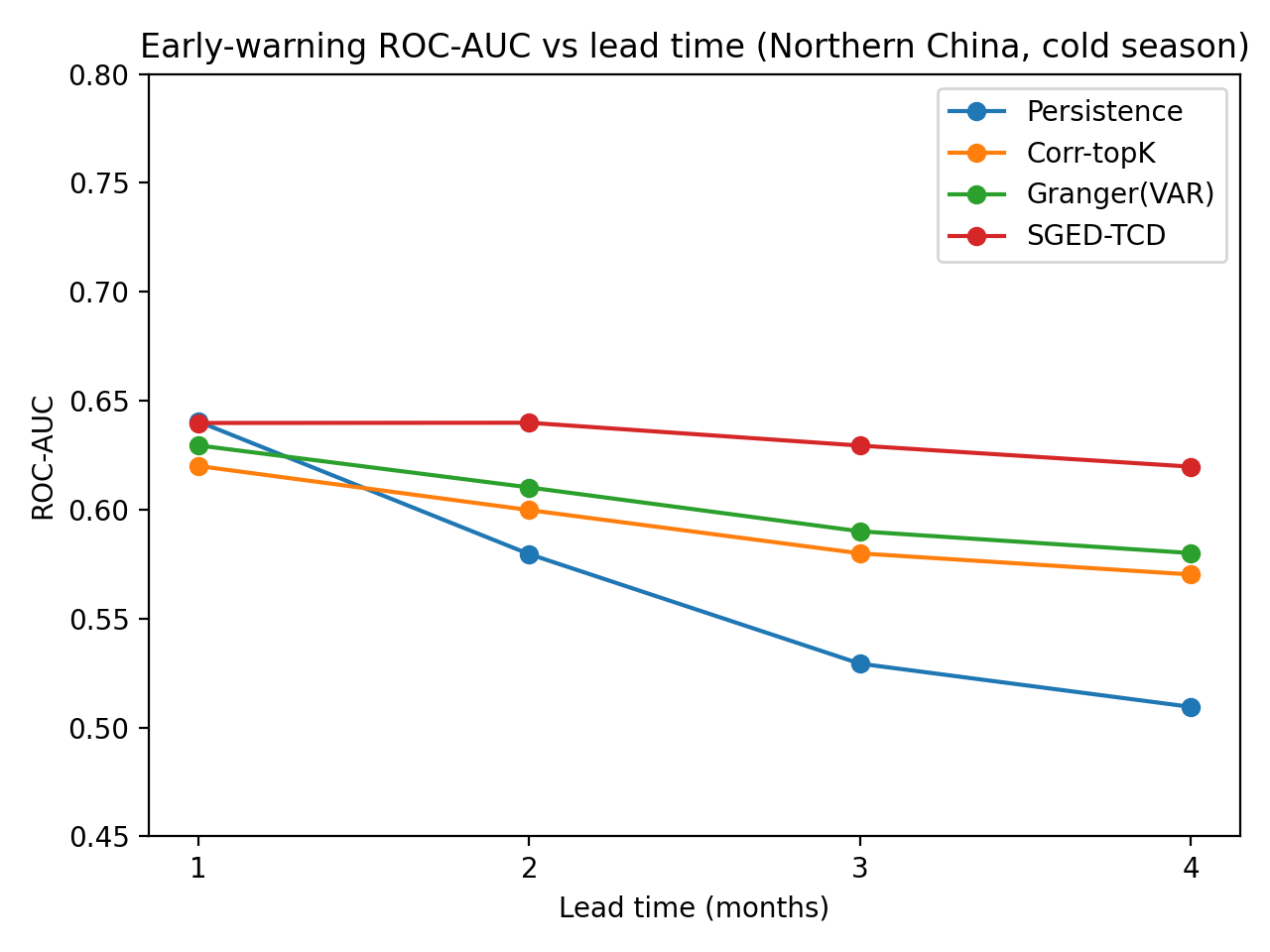
Figure 7: Early-warning ROC-AUC versus lead time (Zi,j,τ6–Zi,j,τ7 months) for compound heat–pollution months. Teleconnection features identified by SGED-TCD provide consistently higher discrimination skill than climatology, persistence, correlation-based selection, and Granger/VAR-selected baselines, with clearer advantages at longer lead times.
For both regions, SGED-TCD-derived features yield superior ROC-AUC, with the gains widening with longer lead times—e.g., an ROC-AUC uplift of 0.05–0.07 at 3–4 months—a demonstration of actionable early-warning skill rooted in dynamically and causally substantiated precursors.
Theoretical and Practical Implications
SGED-TCD is not merely an incremental advance over attention-based temporal discovery. By integrating explicit lag-resolved structural gating, robust functional alignment with ablation-based effect quantification, and rigorous stability/robustness filtering, it delivers causal graphs with enhanced physical interpretability and stability—critical for scientific trustworthiness, reproducibility, and guiding downstream early warning or scenario analysis.
In the climate-extreme setting, SGED-TCD provides a causal diagnostic tool that can attribute observed extremes to physically plausible teleconnections, resolve the lag structure, and inform multiseasonal risk monitoring. More generally, the framework is adaptable to nonstationary, high-dimensional systems in other domains requiring nonlinear, lag-sensitive causal inference—suggesting broad future importance in AI/ML for temporal sciences.
Conclusion
SGED-TCD represents a principled advance in the causal discovery of lagged, multivariate time series, superseding correlation- and attention-based approaches via explicit gating, stability regularization, and effect-aligned graph extraction. Its application to compound heat-pollution extremes in China reveals region-specific, lag-resolved teleconnection pathways, with bold assertions of remote climate drivers’ primacy in extreme event genesis. Additionally, SGED-TCD-derived precursors translate into statistically significant early-warning gains, underlining both explanatory and predictive value. Expected future developments include extension to spatiotemporal graph structures, integration with data assimilation pipelines, and application to other domains—biosciences, finance, engineering—demanding causal inference in complex temporally dependent datasets.

