- The paper introduces a modular deep unrolling framework that unites signal processing and deep learning for adaptable RF sensing.
- It replaces fixed signal processing blocks with differentiable neural operators, achieving improvements like 24–27 dB PSLR and a 68% reduction in mean angular error.
- The framework supports robust performance and edge deployment across modalities such as mmWave, UWB, and Wi-Fi while preserving interpretability.
RF-LEGO: Modular Deep Unrolling for Signal Processing–Deep Learning Co-Design in RF Sensing
Introduction and Motivation
RF-LEGO introduces a modular framework that systematically unrolls classical RF signal processing (SP) algorithms into differentiable, trainable neural network operators. In contrast to opaque end-to-end neural pipelines or manually-tuned, brittle SP algorithms, the RF-LEGO framework preserves mathematical operator structure and explicit physical semantics while exposing compact learnable components for robust data-driven adaptation. The key innovation is deep unrolling at the operator or iteration level, ensuring plug-and-play modularity, cascadability, and structure-aligned interpretability within the RF sensing pipeline.
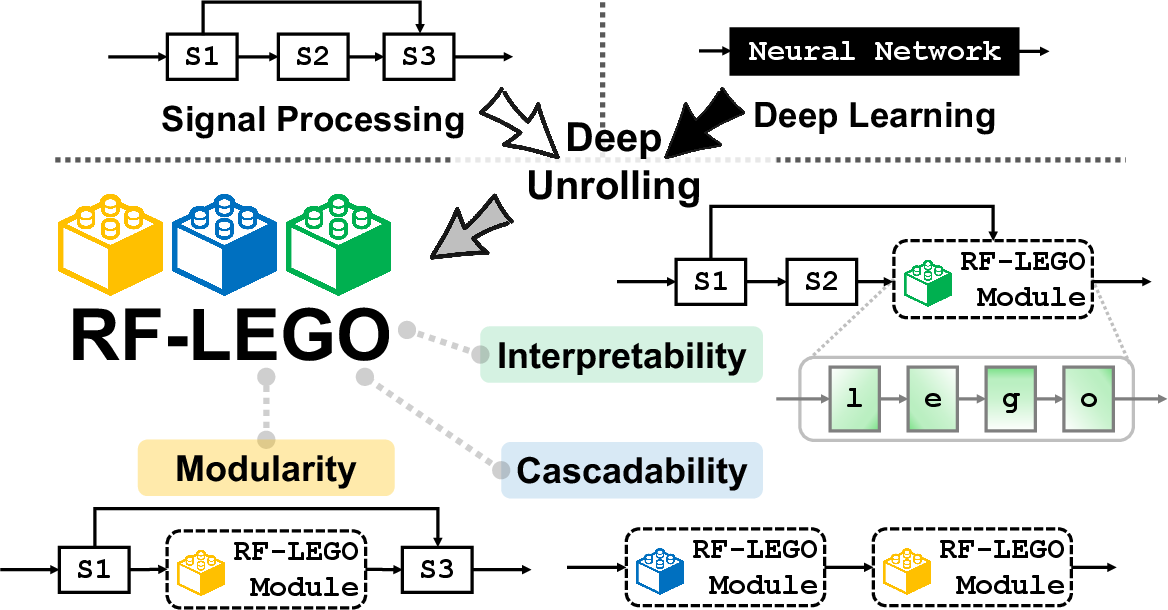
Figure 1: RF-LEGO core principles: modularity, cascadability, and interpretability, bridging SP and DL for RF sensing via deep unrolling.
Deep Unrolling: Framework and Principles
Deep unrolling comprises two principal strategies: operator unrolling, which replaces a classical SP block with a trainable analogue preserving interface and physics, and iterative-optimization unrolling, which exposes algorithmic loop variables as explicit trainable layers. This framework circumvents the rigidity-opaque dichotomy of classical SP versus deep neural networks by learning only the components that benefit most from adaptation.
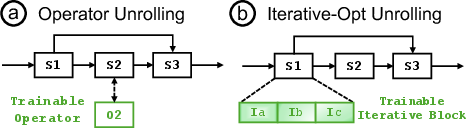
Figure 2: Schematic of deep unrolling: signal processing blocks are unrolled into trainable operators or iterative blocks.
All RF-LEGO modules retain complex-valued semantics, compatible input/output contracts, and task-aligned intermediate representations, ensuring seamless integration into legacy and modern RF pipelines.
RF-LEGO Modules
Classical frequency transforms (FFT), particularly Cooley-Tukey, lack adaptability, resulting in spectral leakage that impairs weak target detection under multipath or wideband noise. RF-LEGO FT unrolls Bluestein's Algorithm: the classical convolution by a chirp kernel is replaced by a shallow, trainable, complex-valued filter. This enables data-driven suppression of non-ideal artifacts while strictly preserving the core mathematical operation.
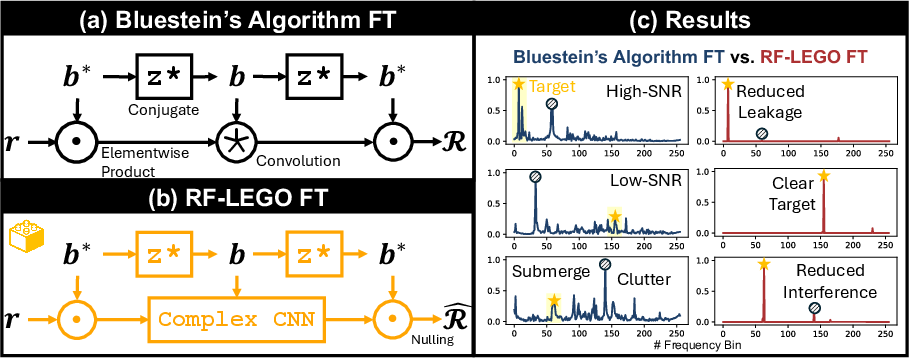
Figure 3: RF-LEGO FT: (a) classical Bluestein's convolution, (b) RF-LEGO FT with a learnable convolutional layer.
Empirically, RF-LEGO FT yields an average PSLR of 24–27 dB and PAPR up to 23 dB, outperforming signal processing (SP) baselines and matching or exceeding black-box DL baselines in range/Doppler estimation tasks, especially under challenging SNR and multipath conditions.
Traditional subspace methods (e.g., MUSIC) are sensitive to SNR and fail under coherent sources. Direct neural substitutes lack explicit angle spectra and are not reusable. RF-LEGO Beamformer recasts angle estimation as LASSO-based sparse recovery and unrolls the ADMM solver into a recurrent, gated network with learnable preconditioners, gates, and shrinkages, while strictly retaining the array manifold and data interface.
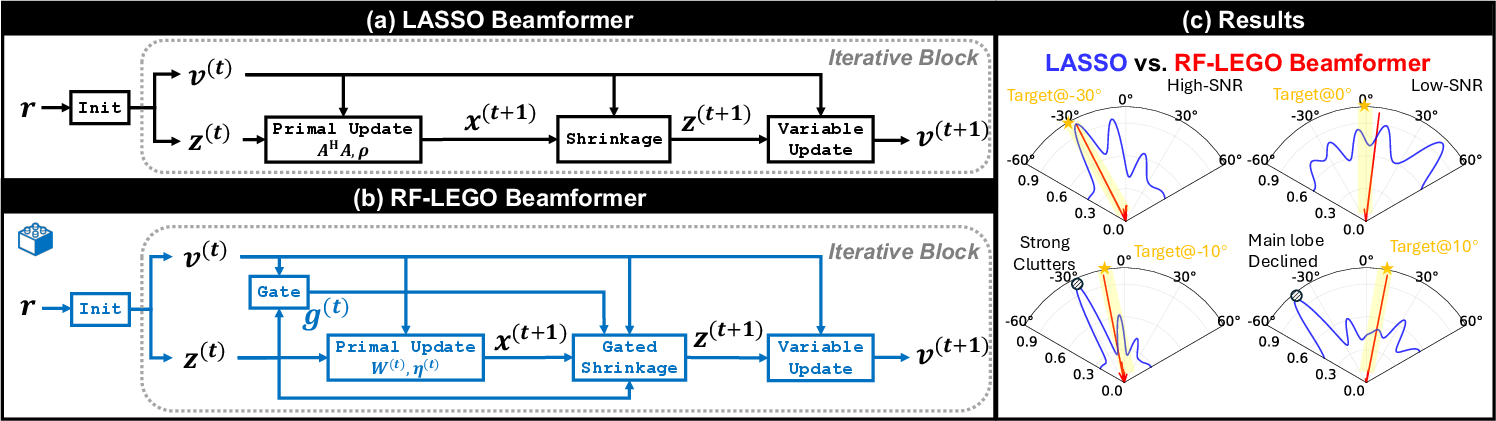
Figure 4: (a) Classical ADMM-based LASSO, (b) RF-LEGO unrolled architecture with learnable parameters and adaptive gate scheduling.
This design achieves robust angle estimation under low SNR, yielding a mean angular error (MAE) reduction from 4.23 to 1.35 degrees (68% improvement) compared to classical LASSO. The flexible, trainable update schedule prevents instability associated with differentiable eigendecompositions and enables stable model training.
RF-LEGO Detector: State Space Model–Based Unrolling of CFAR Detection
CFAR detection relies on manually-tuned sliding windows and selection operators that are non-differentiable and brittle to cluttered or heterogeneous environments. The RF-LEGO Detector unrolls the logic into a trainable state space model (SSM), where adaptive state evolution replaces fixed window statistics.
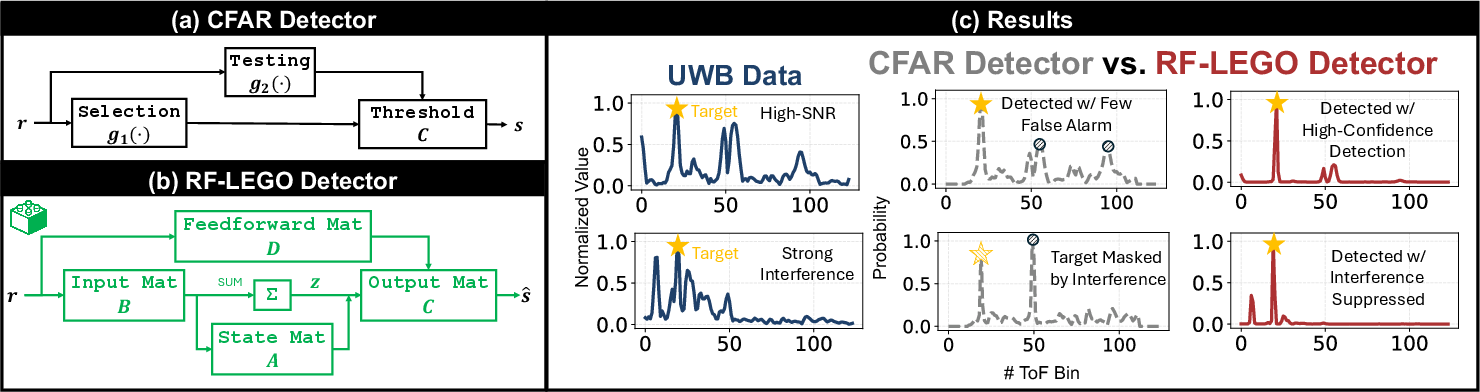
Figure 5: (a) Classical CFAR with fixed windows, (b) RF-LEGO Detector as an unrolled SSM with learned latent states for adaptive thresholding.
Learned dynamics in the SSM encode nonstationary noise and clutter, improving robustness and adaptability across environments. RF-LEGO Detector achieves higher detection rate (DR) at fixed FAR relative to classic CFAR and matches the performance of over-parameterized end-to-end DL models—with the critical benefits of explicit operating point control and structure-aligned interpretability.
Evaluation and Empirical Findings
Modularity, Cascadability, and Benchmarks
Direct module substitution and cascading experiments across mmWave, UWB, and Wi-Fi demonstrate that RF-LEGO modules consistently outperform SP, loose coupling (SP+DL), and DL baselines in all tested modalities and metrics, with significant improvements in PSLR, PAPR, MAE, and DR.

Figure 6: Range FT and Doppler FT results (mmWave, UWB, Wi-Fi): RF-LEGO FT achieves superior leakage suppression and accuracy.
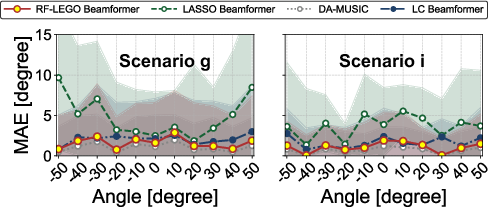
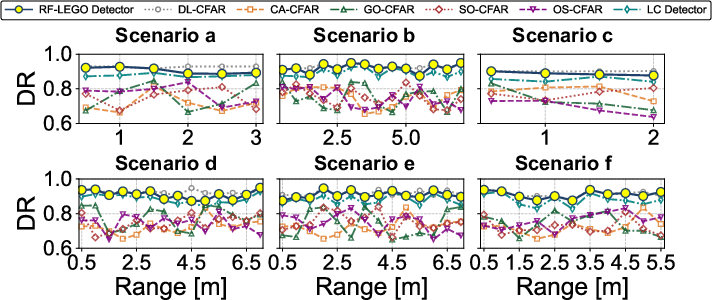
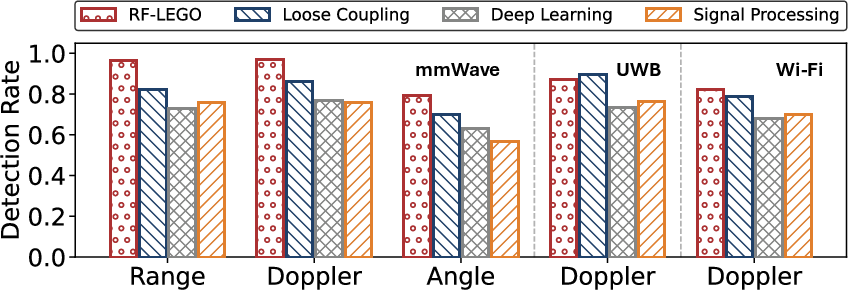
Figure 7: RF-LEGO Beamformer: robust angle estimation with explicit spectrum.
Cascading two or more RF-LEGO modules provides compounding benefits—DR improvements by 27–40% over classical pipelines, and better resilience to error propagation, as measured by normalized DR under varying SNR (see microbenchmark results and cascading analysis).
Generalization, Adaptation, and Edge Deployment
RF-LEGO modules, trained exclusively on synthetic data, generalize robustly to large-scale, real-world public datasets (UWCR, OPERAnet, UWB-Context, DeepSense 6G) without fine-tuning. Light fine-tuning (<20% target domain data) provides diminishing but measurable gains, validating the framework's low-shot adaptability.
Latency benchmarks on Jetson Orin Nano, Raspberry Pi 4, and ESP32-P4 show practical inference times for embedded deployment, especially with further hardware-aligned compression techniques.
Interpretability and Module Analysis
RF-LEGO preserves structure-aligned interpretability—enabling in-depth analysis of learned weights (kernels), gate schedules, and SSM transitions (see module behavior analysis figures). For example, the FT module's non-uniform data-driven kernel directly suppresses leakage artifacts; the Beamformer adapts its iterative memory; the Detector learns structured state transitions, enhancing memory over local statistics.
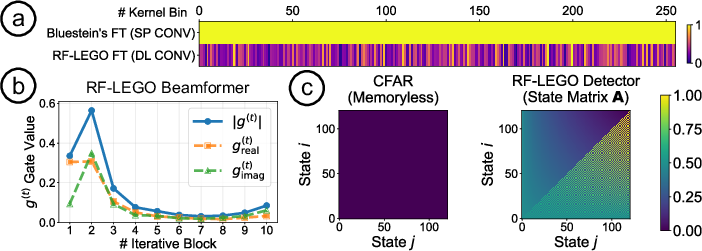
Figure 8: Module analysis—(a) FT kernel adapts beyond fixed chirp, (b) Beamformer learns gate schedule, (c) Detector learns structured state transition.
Case Study: Downstream Applications
RF-LEGO modules were integrated into complete pipelines for trajectory tracking, vital sign monitoring, and human activity recognition:
- Trajectory Tracking: RF-LEGO reduces the median ATE by 40% over SP pipeline, increasing path accuracy and stability.
- Vital Sign Monitoring: The 80th percentile breathing MAE drops below 2 BPM (vs. 10 BPM for SP) in both infant simulators and human adults.
- Human Activity Recognition: RF-LEGO boosts cross-user and cross-environment classification accuracy by up to 5% over traditional front-ends, without any modifications to the neural classifier backbone.
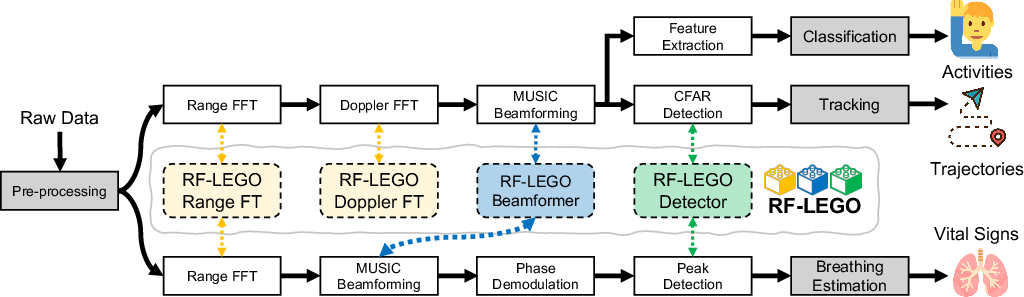

Figure 9: System pipelines for multiple downstream RF sensing applications. RF-LEGO modules enable modular and interpretable plug-and-play.
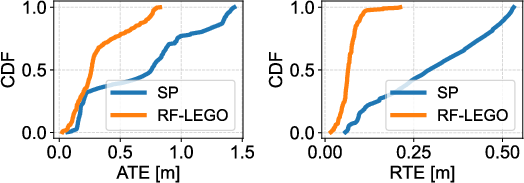
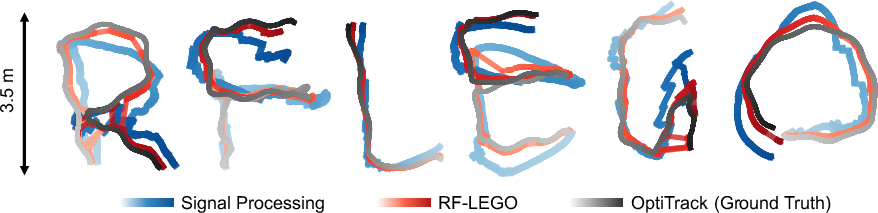
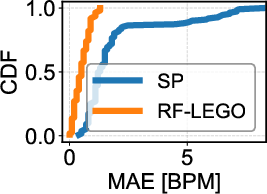
Figure 10: CDF of ATE and RTE in trajectory tracking—RF-LEGO reduces errors for all percentiles.
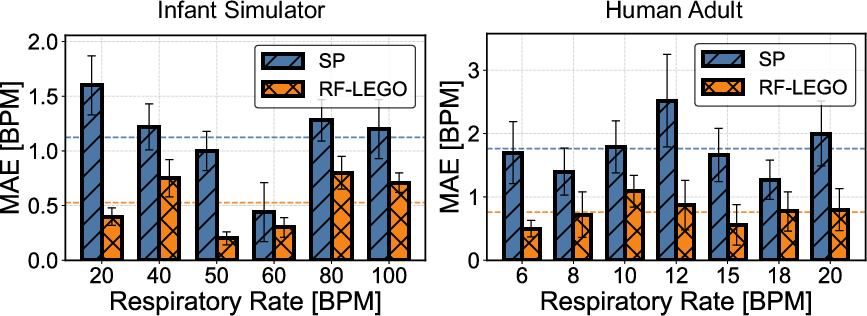
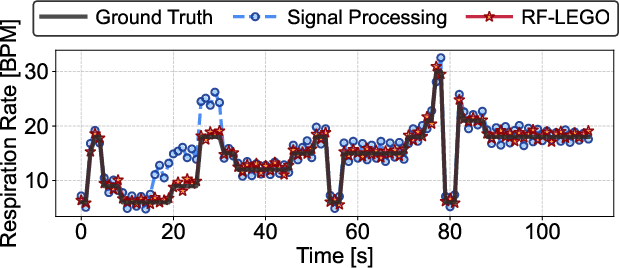
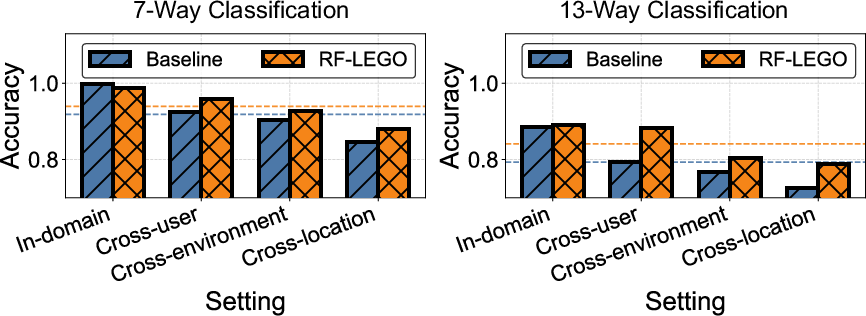
Figure 11: Vital sign monitoring performance—RF-LEGO tracks rates with low error in both controlled simulators and real human subjects.
Practical and Theoretical Implications
RF-LEGO establishes a scalable methodology for modular, interpretable, and reusable RF sensing pipelines, mitigating critical limitations of current end-to-end DWS (lack of reusability, lack of interpretability, sensitivity to data/control drift). The approach ensures plug compatibility with both classical and modern pipelines, enables direct transfer across platforms and applications, and offers a principled path for combining physical domain priors with compact data-driven learnability.
Practically, the framework supports rapid adaptation with minimal in-domain data and robust deployment to resource-constrained edge hardware. Theoretically, it motivates further analysis into the trade-off between structure-aligned interpretability and internal representation alignment, and the systematic development of additional unrolled modules for advanced RF tasks.
Conclusion
RF-LEGO demonstrates that structured, modular deep unrolling of SP algorithms into neural operators yields significant improvements in robustness, accuracy, and practical deployability for RF sensing. By bridging the gap between SP and DL with physics-preserving, trainable "LEGO bricks," this paradigm provides interpretable and reusable components that can empower a new generation of trustworthy and flexible AI-driven RF systems.

