- The paper's main contribution is introducing SINet, a deep learning model that forecasts F10.7 and F30 solar indices, outperforming traditional methods.
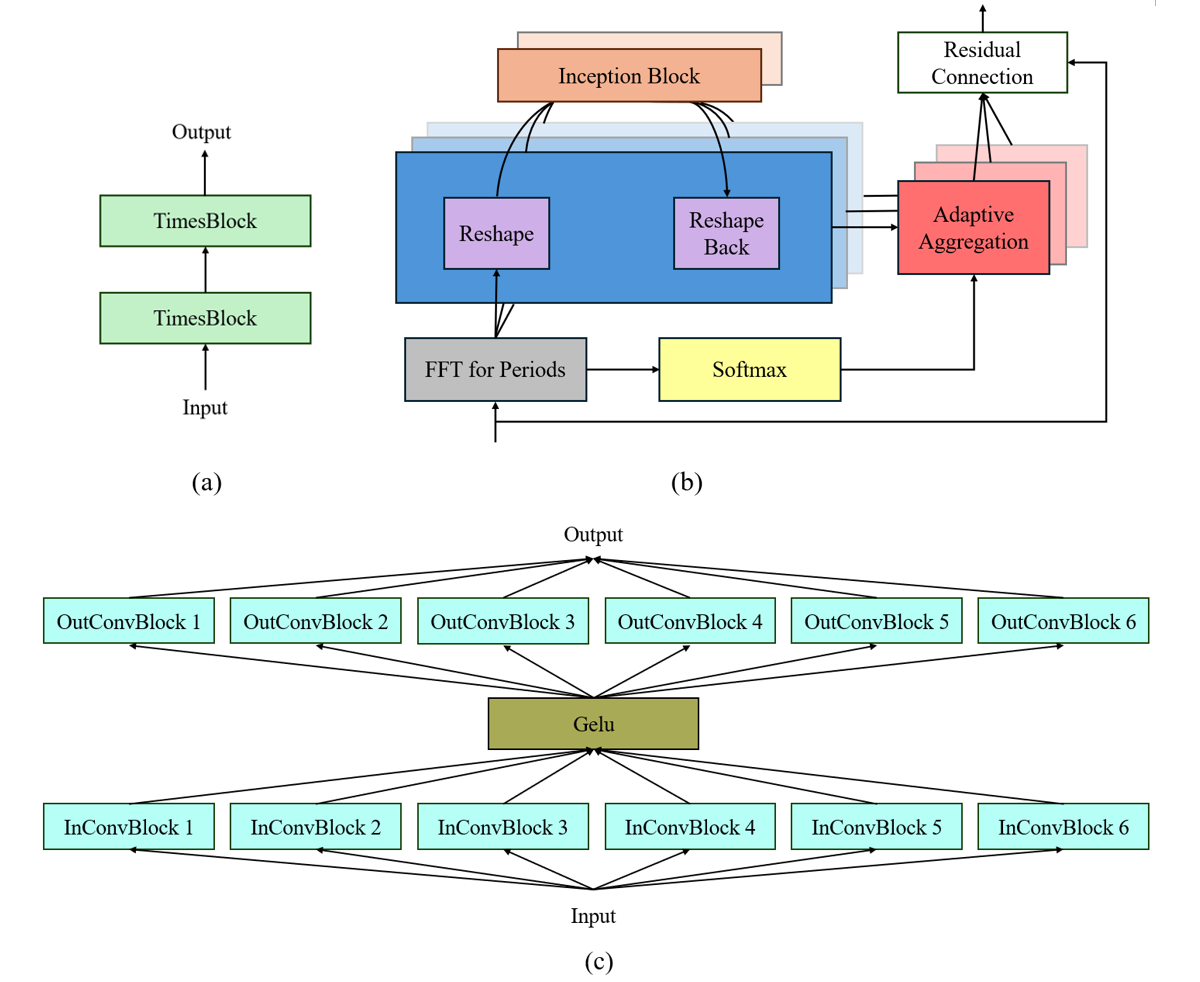
- SINet employs dual TimesBlocks, FFT layers, and a dual-inception structure to capture both short- and long-range dependencies in solar activity.
- Experimental results show SINet reduces error metrics by up to 25% during high solar activity, highlighting its value for operational space weather forecasting.
Deep Learning-Based Medium-Term Forecasting of F10.7 and F30 Solar Indices: The SINet Model
Introduction
The F10.7 and F30 solar indices, representing radio fluxes at 10.7 cm and 30 cm wavelengths, respectively, are pivotal quantitative proxies for tracking solar activity. F10.7 is widely adopted in space weather modeling and UV impact studies on the upper Earth atmosphere, while F30 offers enhanced sensitivity for thermospheric density response analyses. Conventional approaches for forecasting these indices, spanning statistical, empirical, and shallow-learning models, are often constrained in capturing the nonlinear, multiscale variability intrinsic to solar activity. The advent of advanced deep learning (DL) architectures presents new opportunities for medium-range predictive performance. This paper introduces SINet, a deep learning model dedicated to daily prediction of F10.7 and F30 on forecasting horizons up to 60 days. SINet is evaluated rigorously against established methods, demonstrating consistent performance superiority across all metrics and horizons. Moreover, this is the first documented application of deep learning for F30 index prediction.
Data and Prediction Protocols
The dataset comprises daily F10.7 values from NOAA and F30 values from Toyokawa/Nobeyama, spanning 1957–2021, divided into non-overlapping training (1957–2008) and test (2009–2021) sets.
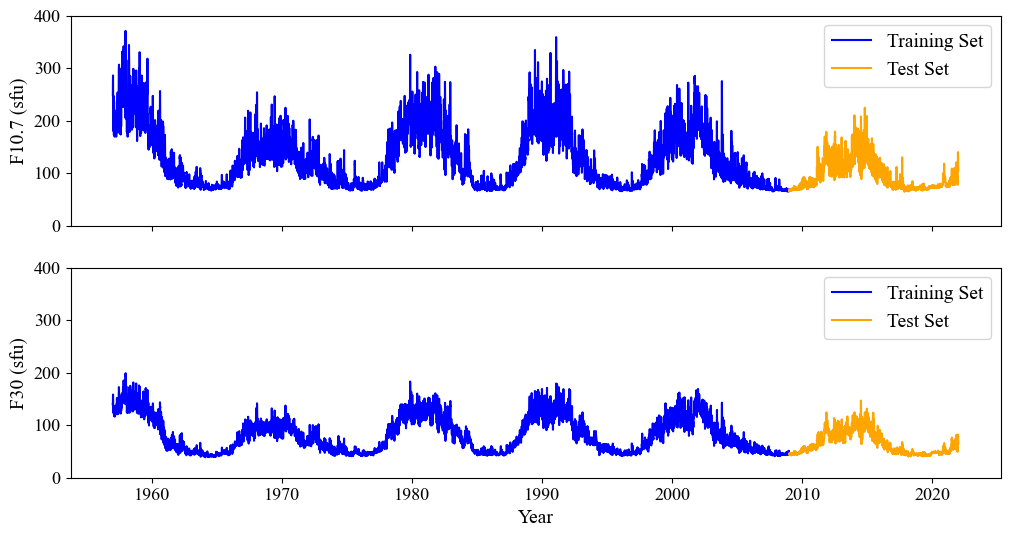
Figure 1: Time series data for F10.7 (top) and F30 (bottom) spanning 1957–2021.
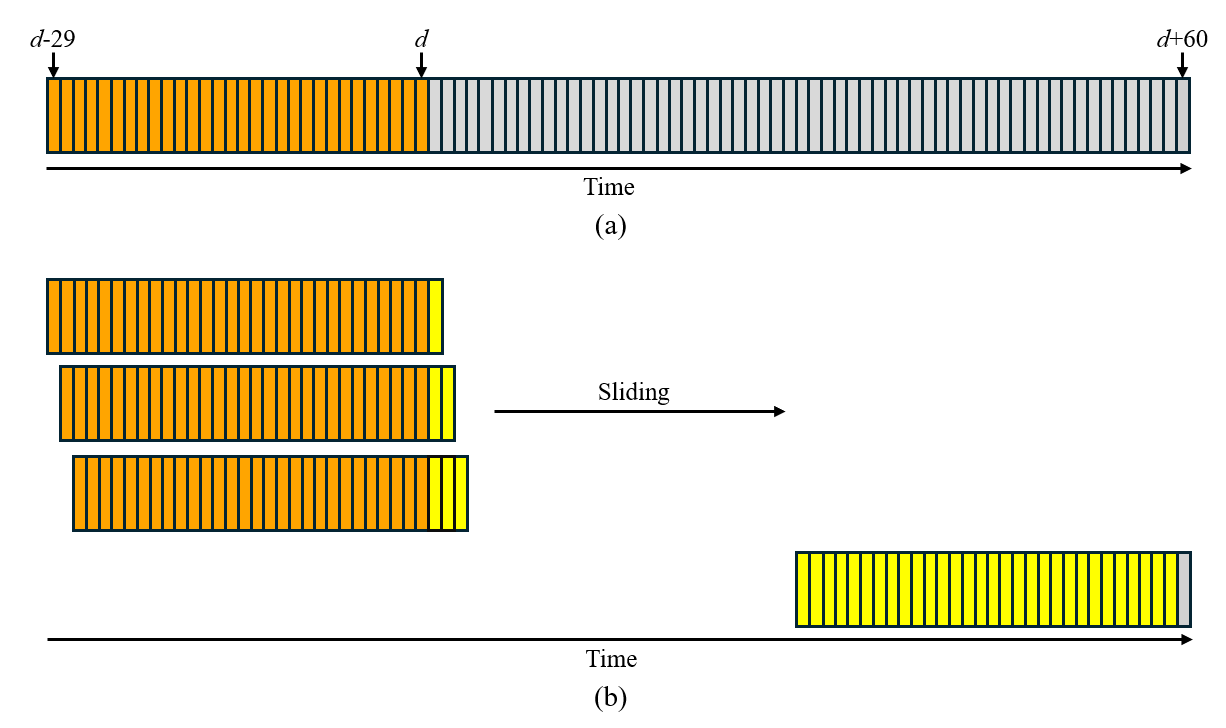
The data is subjected to min-max normalization to mitigate non-stationarity across solar cycles. For supervised learning, two labeling protocols are employed:
SINet Architecture
SINet leverages enhancements of the TimesNet framework but is specifically adapted for the solar index forecasting regime. The primary architectural components include:
Hyperparameters—including epochs, batch size, optimizer, model dimension, and dropout—are optimized using grid search and validated using a held-out 10% subset of the training set. The loss function is MSE, empirically observed to outperform SMAPE in this application.
Experimental Results
Five baseline models are compared: ARIMA, LSTM, CNN, LSTM with Multihead Attention (LSTM+), and TCN. Evaluation spans 1, 27, 45, and 60-day ahead forecasts.
- Mean Absolute Percentage Error (MAPE) on the 60-day horizon: SINetf achieves 10.1%, outperforming TCN (10.4%) and all other models.
- Robustness over solar maximum (2014): SINetf reduces RMSE and MAE by up to 15% compared to TCN, significant during periods of high solar activity when predictive uncertainty peaks.
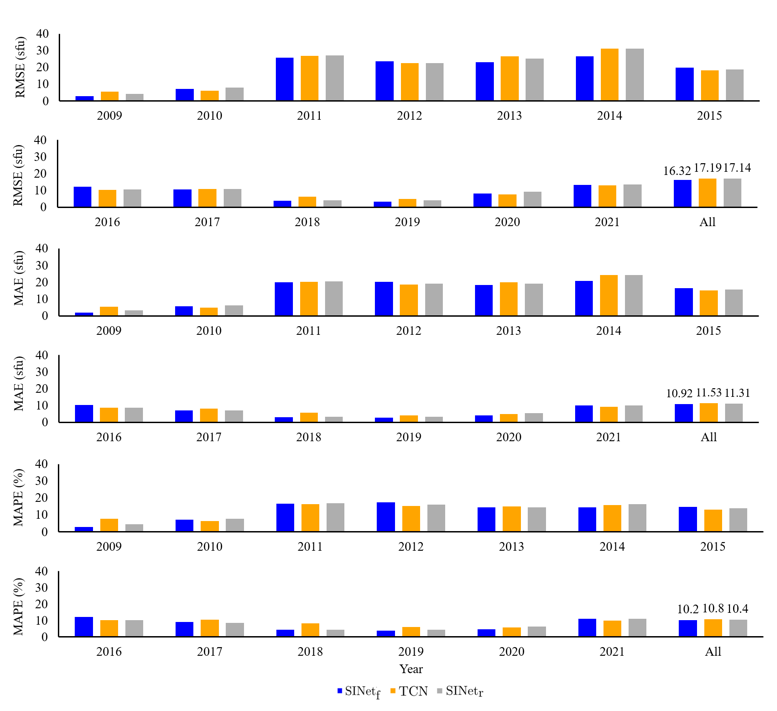
Figure 4: Annual and overall comparison of SINetf, TCN, and SINetr for 60-day F10.7 forecasts (2009–2021).
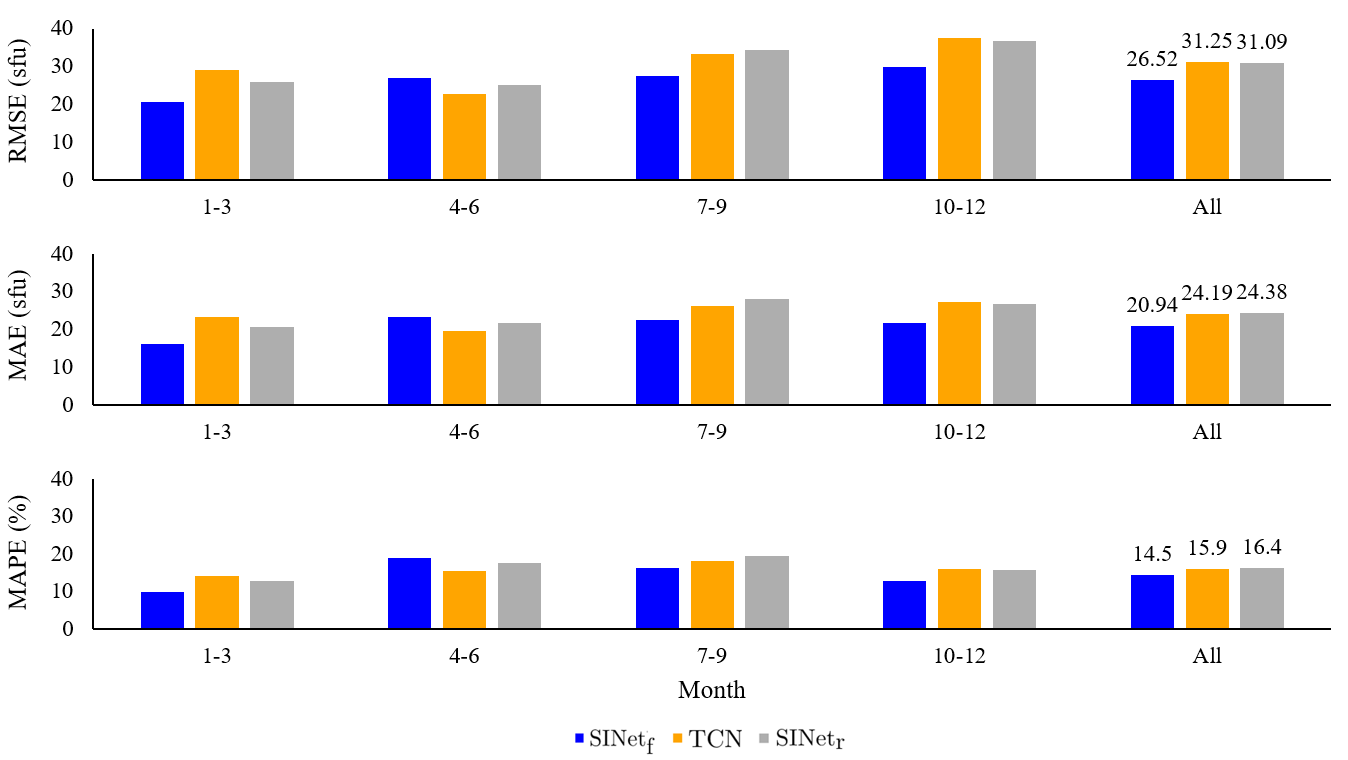
Figure 5: Quarterly and overall errors during solar maximum (2014), highlighting SINetf's gains over TCN.
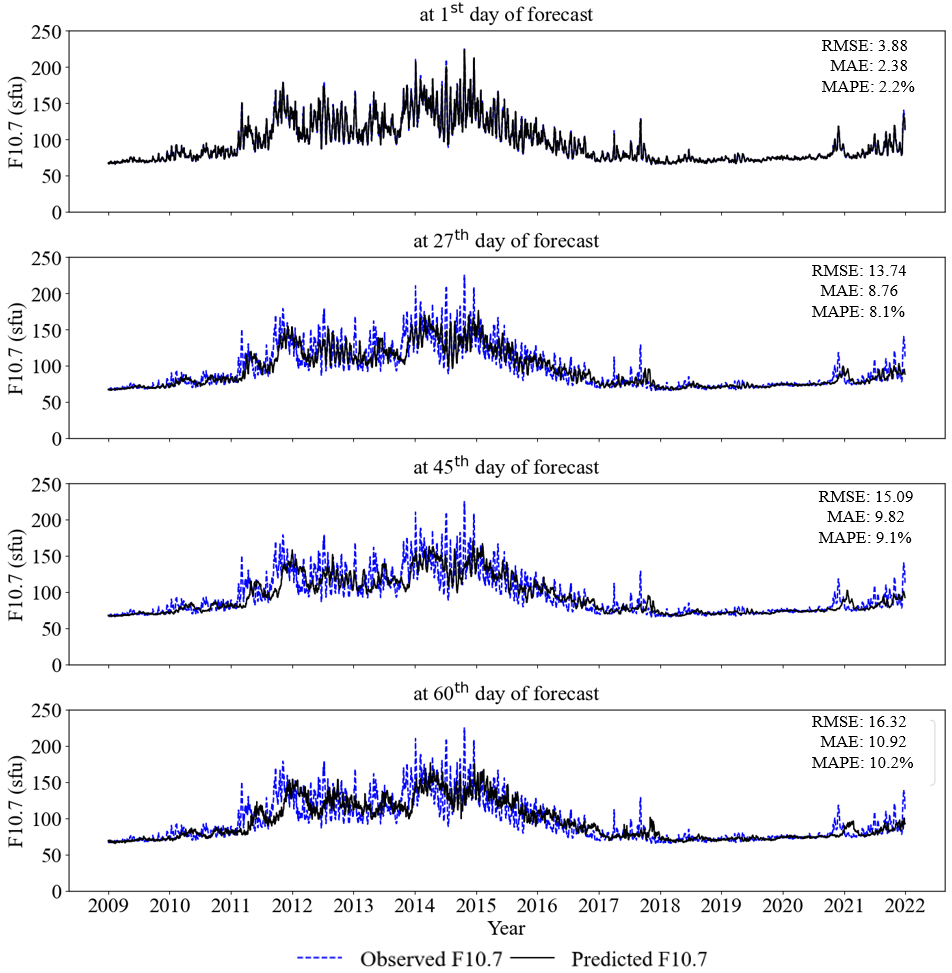
Figure 6: Ground truth vs. SINetf predictions for F10.7 at 1, 27, 45, 60-day horizons (2009–2021). Accuracy degrades smoothly with horizon.
SINetf demonstrates analogous benefits for F30 predictions:
- 60-day MAPE: 9.5% for SINetf, slightly improving TCN's 9.6%.
- Solar maximum phase: Error reduction vs. TCN is even more pronounced (~25% improvement in 2014).
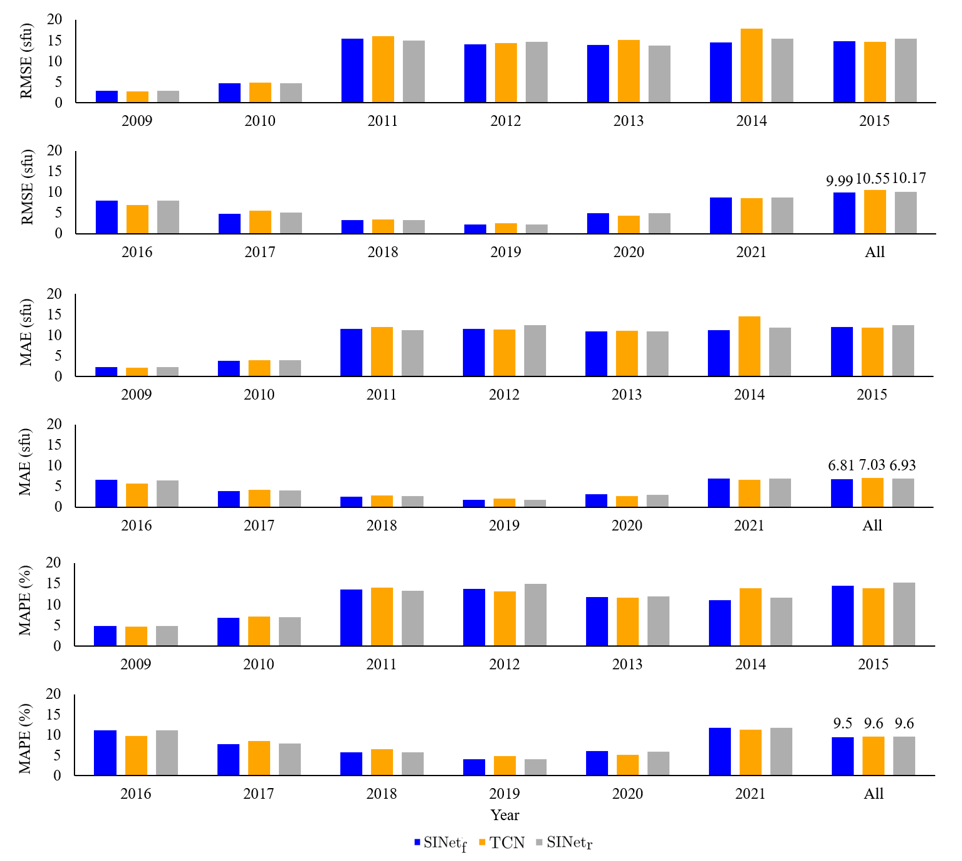
Figure 7: Annual and overall comparison of three methods for F30 60-day forecasts.
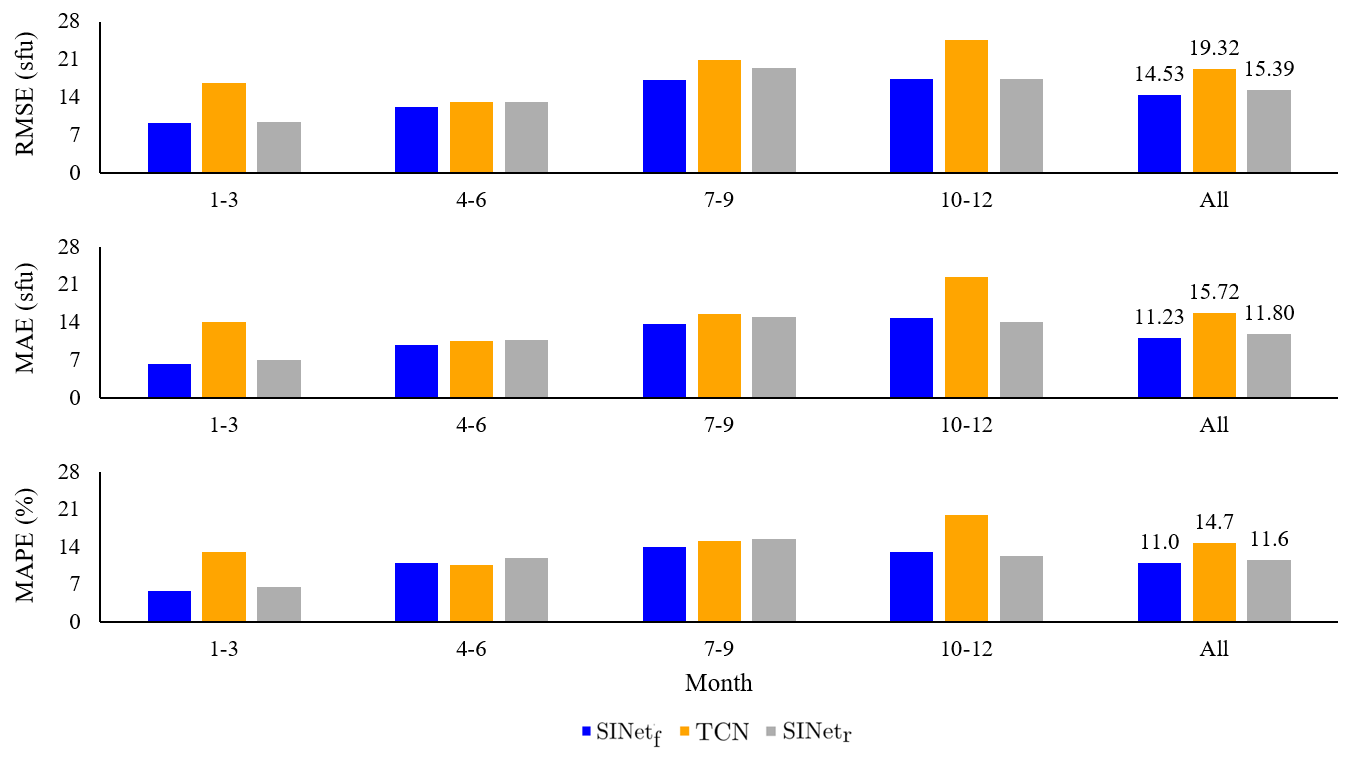
Figure 8: Quarterly and overall error breakdown in 2014 for F30, highlighting major SINetf improvements in challenging phases.
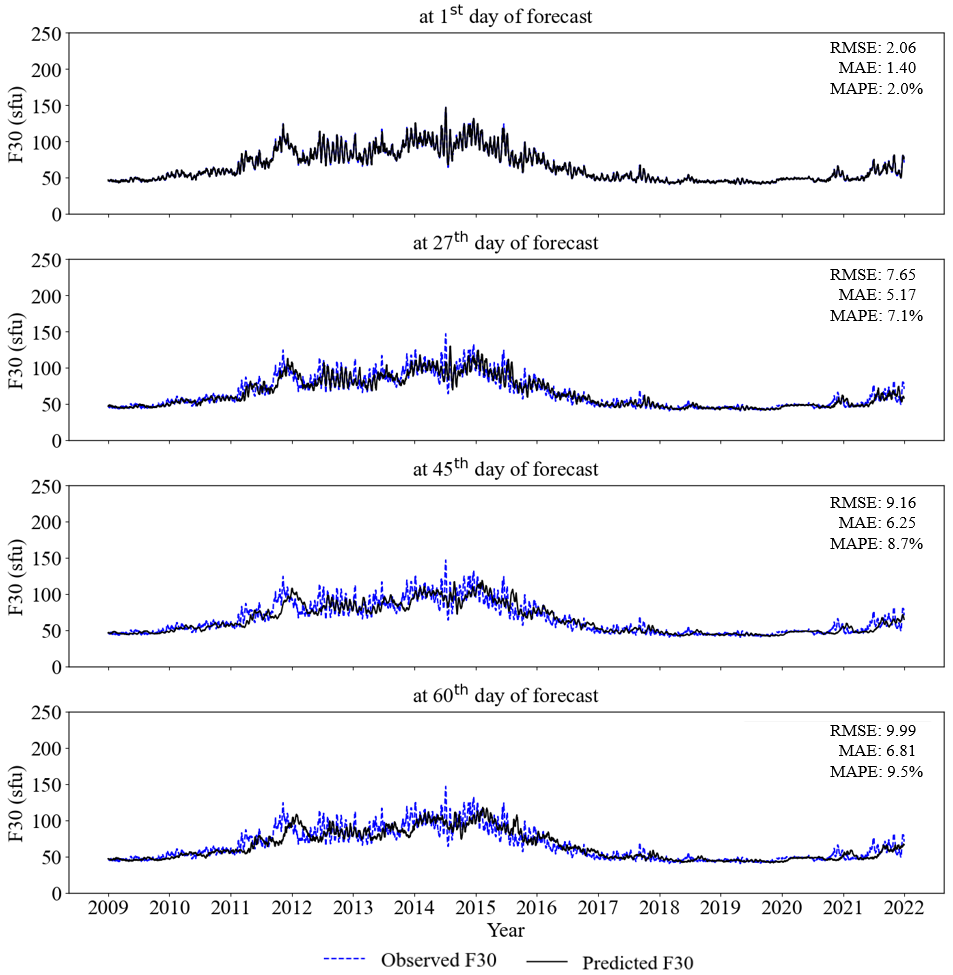
Figure 9: F30 prediction—SINetf is able to accurately track observed values across all tested horizons.
Special Case: Active Region NOAA 12673
During the exceptionally volatile AR 12673 in September 2017, SINetf0 prediction error spikes, revealing a generalization gap for rare, strong-flux emergence events. Insufficient representation of extreme cases in training data is a limitation for all ML-based solar forecasting approaches.
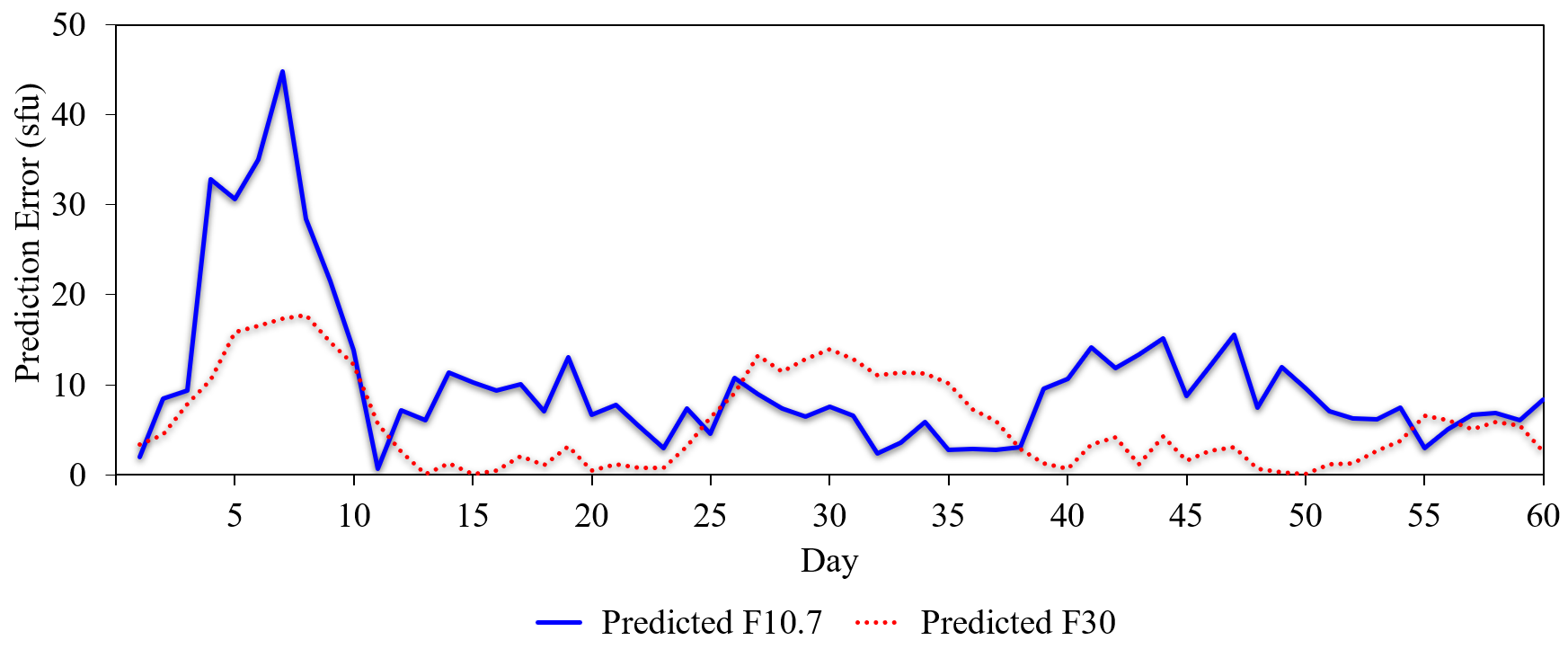
Figure 10: Error profiles for SINetf1 predictions of F10.7 and F30 during the AR 12673 emergence (September–October 2017). Highest errors coincide with intense flux variability.
Autocorrelation Analysis
Autocorrelation analysis of 1-day predictions reveals strong lag-1 dependency, as expected for solar activity time series. Long-lag autocorrelations diminish, consistent with increased predictive uncertainty at extended horizons.
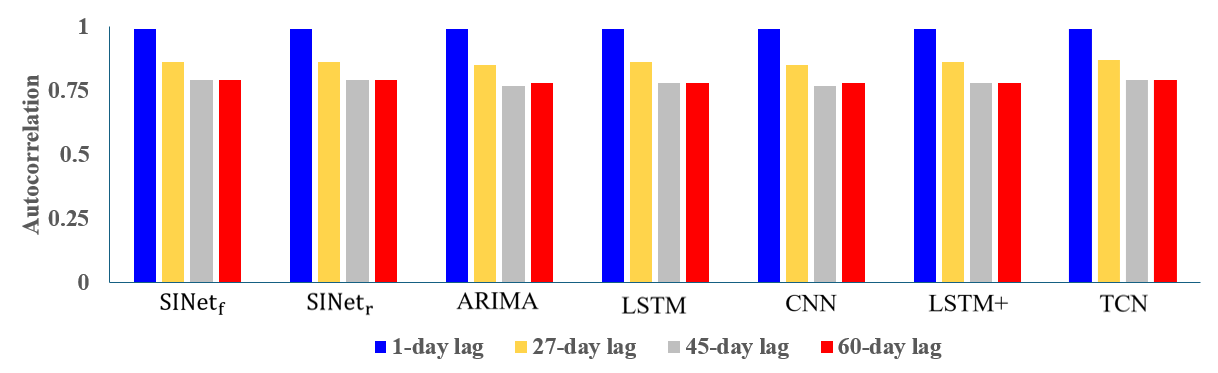
Figure 11: Autocorrelation at lag 1 for F10.7 one-day-ahead predictions; strong effect across all methods.
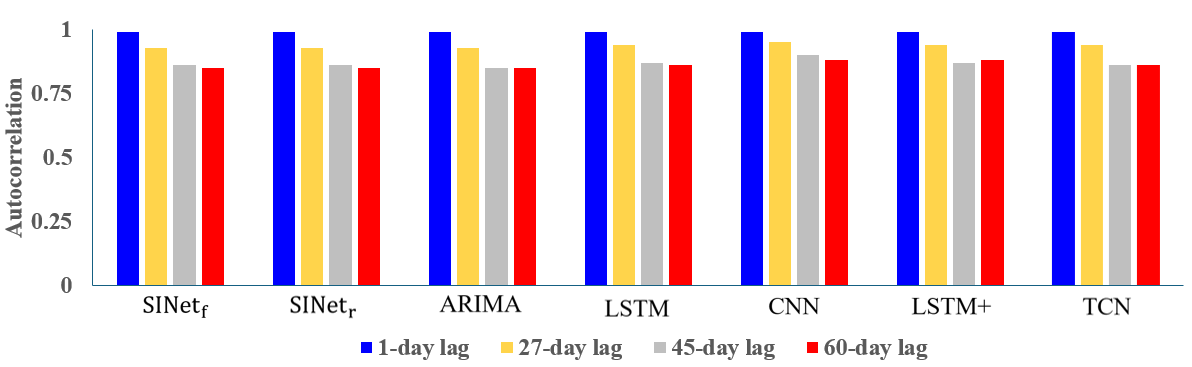
Figure 12: Autocorrelation at lag 1 for F30; similar findings as for F10.7.
Discussion and Implications
SINet's fixed prediction protocol proves superior to recursive rolling, especially for extended horizons, due to error compounding in autoregressive predictions. The dual-inception architecture's capacity for both short- and long-range dependency modeling is validated by significant error reductions—especially during solar maximum, when forecast difficulty peaks due to heightened solar variability.
The analysis of AR 12673 demonstrates the limitations of DL models' generalization under rare, rapid active region emergence. Data augmentation, anomaly-specific subnetworks, or the removal of transient events are plausible future directions to enhance robustness.
Practically, SINetf2 achieves slightly lower operational MAPE than the NOAA/SWPC system over a recent multi-month period, demonstrating tangible value in operational space weather prediction systems.
Theoretically, direct frequency-domain decomposition and selective aggregation in SINet represent a promising methodological advancement for time series dominated by quasi-periodic, bursty phenomena. These techniques may be generalizable to other space weather or geophysical proxy forecasting.
Conclusion
SINet establishes a new standard for medium-term daily forecasting of solar indices, delivering state-of-the-art accuracy across all forecast horizons (1–60 days) for both F10.7 and F30 (2604.10045). The model's design, built around frequency-domain feature abstraction and adaptive sequence aggregation, leads to robust performance, notably suppressing error during periods with extreme solar activity. SINetf3 operates reliably in an operational setting, and its methodological framework holds promise for further advances in solar and geophysical time series forecasting.