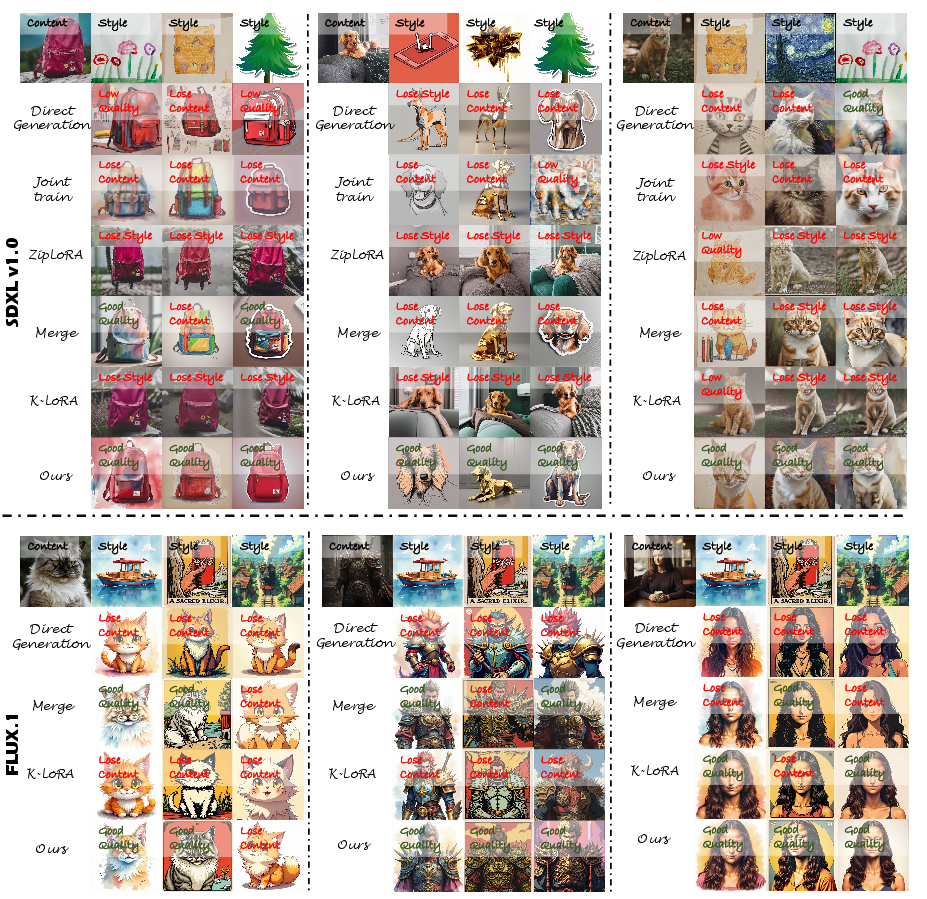
- The paper introduces a frequency-based dynamic switching mechanism that adaptively weights LoRA adapters during each denoising step for improved image generation.
- It integrates vision-language models to automatically align prompts, ensuring semantic consistency and preserving fine-grained details between content and style.
- Experimental results demonstrate enhanced style fidelity, robust content preservation, and competitive generation speed compared to traditional fusion methods.
Frequency-Based Dynamic LoRA Switching for Adaptive Style Transfer: An Expert Analysis of FREE-Switch
Introduction and Context
FREE-Switch ("Frequency-based Dynamic LoRA Switch for Style Transfer") (2604.10023) addresses the challenge of combining multiple open-source LoRA adapters—each trained for specific content or style objectives—on top of diffusion-based image generation backbones. Existing approaches for adapter fusion in vision typically fall into two paradigms: model merging (combining parameters into a single model) or model switching (alternating between adapters through the diffusion process). Merging methods suffer from error accumulation and content drift in iterative and high-dimensional generative tasks, while training-based fusion is computationally prohibitive for edge deployment. Training-free fusion methods, meanwhile, largely ignore inter-adapter differences, leading to suboptimal and detail-poor generation.
FREE-Switch introduces a frequency-domain dynamic adapter switching mechanism, adaptively modulating the contribution of each LoRA per denoising step based on content- and style-specific frequency variation rates. Additionally, the method proposes an output alignment module based on vision-LLMs (VLMs) for semantic consistency, mitigating the loss of fine-grained details common when switching LoRAs conditioned on disparate prompts. The work positions itself as a training-free, efficient, and high-fidelity solution for open-source compositional generation.
Motivation: Dynamic Fusion and the Limitations of Fixed Strategies
The motivation for FREE-Switch arises from the empirical observation that LoRA adapters interact with the diffusion process non-uniformly. Specifically, the significance of each denoising step—and the frequency content it generates—varies across different adapters due to the information they encode (e.g., structural content versus stylistic detail).
Fixed switching heuristics and uniform fusion schemes perform inconsistently across adapter combinations, as illustrated by the performance discrepancies in different content-style pairing scenarios.
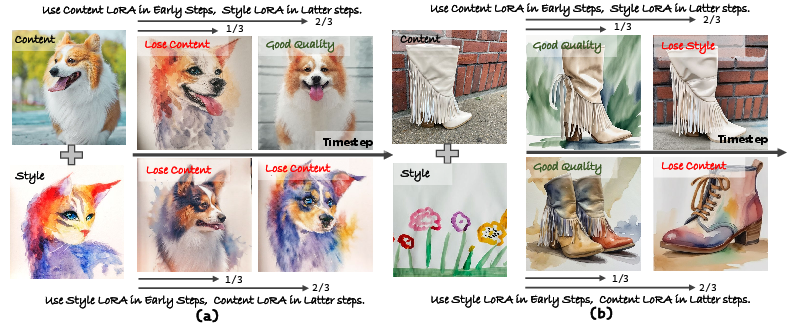
Figure 1: LoRA fusion requires adapter- and situation-specific hyperparameter selection; methods effective on one combination are unreliable on another.
FREE-Switch proposes to analyze the frequency spectra of intermediate generations, quantifying adapter importance dynamically at each step. This granularity unlocks adapter fusion trajectories that closely track the underlying content and style requirements.
Methodology
Frequency-Domain Dynamic LoRA Switch
At the heart of FREE-Switch is a dynamic switching strategy informed by frequency-domain variation. During diffusion, the model computes, at each denoising step, the L2-norm of the second-order difference in frequency spectrum between the LoRA-augmented and base model outputs. Steps with greater frequency changes are deemed more important for the corresponding adapter.
The switch coefficient ηt transitions from prioritizing content LoRA in early steps (structural/low-frequency) to favoring style LoRA in later steps (high-frequency details), governed by the adapter- and timestep-specific frequency variation rates. Stochasticity is introduced to prevent rigid boundaries that may degrade sample diversity.
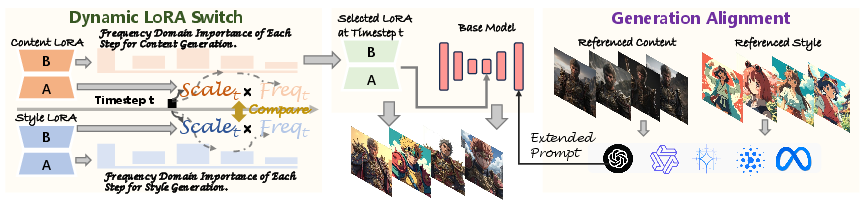
Figure 2: FREE-Switch overview—dynamic LoRA switching based on timestep-variant frequency analysis guided by Generation Alignment for prompt augmentation.
Empirical evidence demonstrates that omitting highly variant frequency steps (where frequency components change rapidly) degrades output fidelity substantially, confirming the importance of adaptive switching.
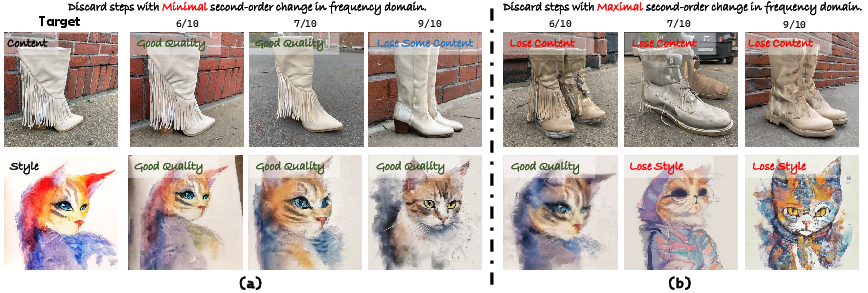
Figure 3: Analysis of the effect of removing high-frequency-variation steps on content and style fidelity shows rapid degradation, underscoring their importance.
Generation Alignment with Vision-LLMs
When switching between LoRAs trained on differing prompts, semantic drift can cause denoising to deviate from intended content/style. FREE-Switch addresses this by leveraging a VLM (such as Qwen3-VL-Plus) to automatically expand the prompt, extracting salient content and style descriptions from reference images. This refined conditioning ensures each LoRA receives input aligned with the joint content-style specification, minimizing off-manifold transitions in the latent space.
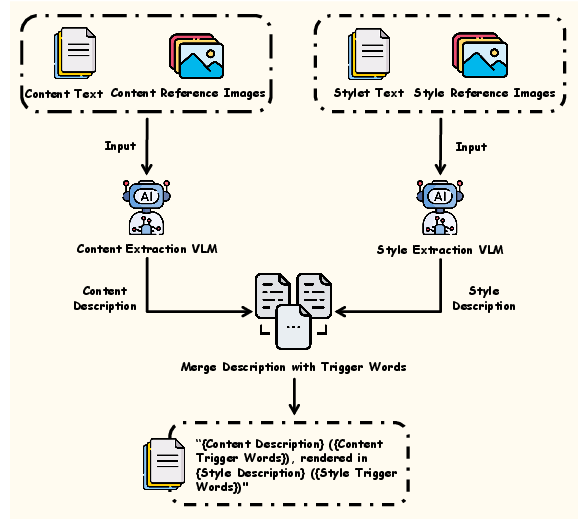
Figure 4: The Generation Alignment pipeline extracts and augments prompts using VLMs for semantic consistency during adapter switching.
Experimental Results
Comparative Evaluation and Ablation
FREE-Switch is evaluated on SDXL v1.0 and FLUX 1, with open-source and custom-trained LoRAs encompassing content and style objectives. The method is compared to model merging, K-LoRA [ouyang2025k], and ZipLoRA [shah2024ziplora] in both qualitative and quantitative terms (CLIP for style, DINO for content, Gemini Feedback for multimodal fidelity, and generation speed).
Key findings:
Ablation reveals that both dynamic switching and prompt alignment are critical for optimal performance. Fixed switching or random LoRA selection markedly degrade content and style preservation. Output alignment specifically addresses semantic drift, especially in challenging combinations.
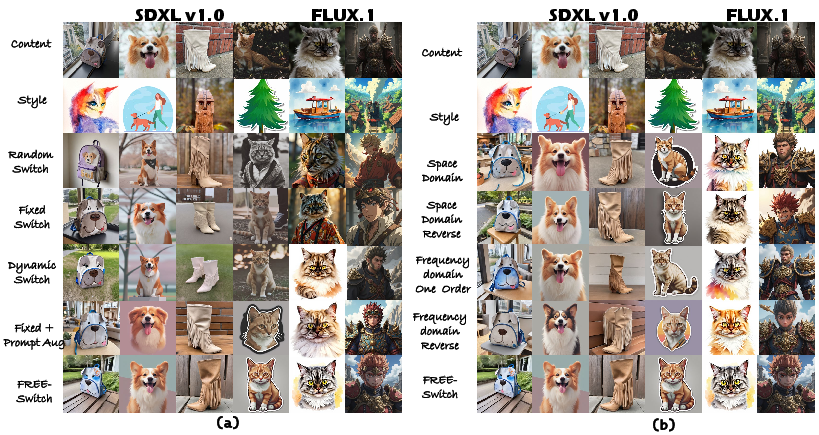
Figure 6: Ablation of FREE-Switch modules—dynamic switching and alignment mechanisms each contribute to content and style preservation.
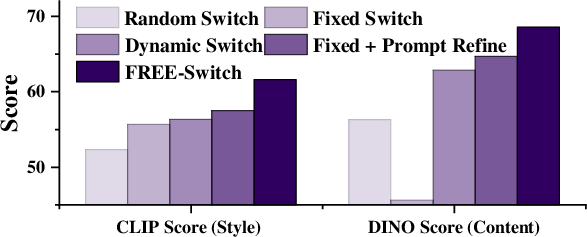
Figure 7: Quantitative ablation confirms that each major component boosts both content and style metrics.
Analysis and Theoretical Implications
Model Merging Versus Switching
FREE-Switch establishes via trajectory analysis that model merging strategies—well-regarded in text classification—are ill-suited for diffusion image generation. Parameter incompatibility across LoRAs (arising from diverging sources or training regimens) causes aggregated small errors to amplify as iterations proceed, ultimately manifesting as visible artifacts and diminished detail.
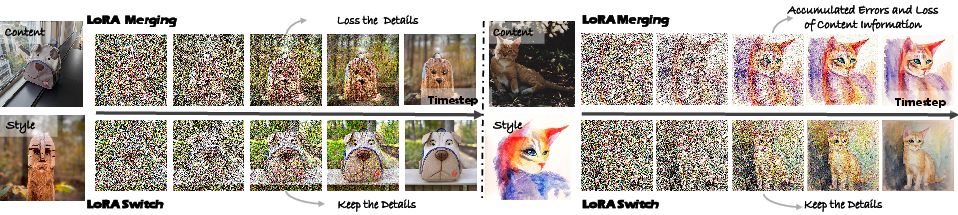
Figure 8: Model merging accumulates errors in diffusion, degrading output; dynamic LoRA switching maintains fidelity by preserving separate optimization trajectories.
Further, parameter distributions of LoRAs trained under different regimes are shown to be highly mismatched, explaining the fragility of naive merge operations.
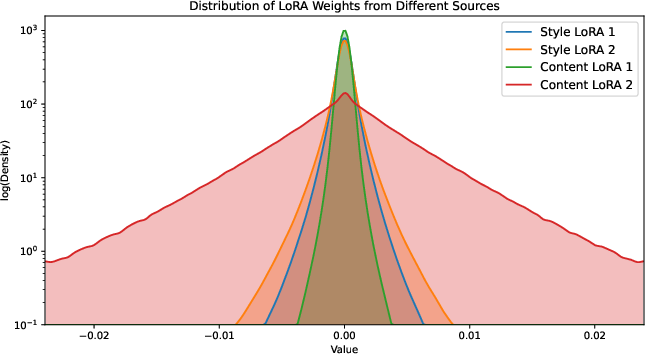
Figure 9: Visualizing parameter value distributions across LoRAs illustrates the heterogeneity problematic for merging.
Generation Alignment in Practice
Incorporating prompt alignment systematically improves fidelity and intent matching. Without it, LoRAs misinterpret contextual cues or fail to robustly transfer fine details, particularly under fixed or abrupt switching schedules.
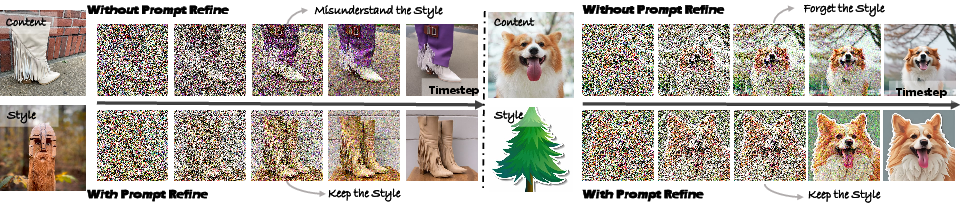
Figure 10: Output alignment allows interpretable, requirement-faithful output when switching LoRAs, directly reflecting user intent.
Failure Modes and Limitations
FREE-Switch, as an entirely training-free method, struggles with highly abstract or unconventional styles where open-source LoRAs exhibit weak generalization or semantic grounding. In such scenarios, compounded prompt ambiguity and non-overlapping feature subspaces result in degraded or inconsistent generations, indicating the potential need for some degree of lightweight post-fusion adaptation or future integration of more capable semantic models.
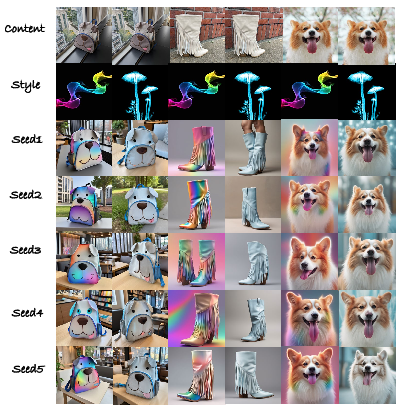
Figure 11: Representative failure cases—abstract or concept-heavy styles remain challenging for strict training-free composition.
Future Directions
The FREE-Switch results open several avenues for future research:
- Incorporating minimal-cost online adaptation for extreme or abstract style/content domains.
- Developing inference-time fusion modules to learn style-content interactions on-the-fly.
- Strengthening VLM priors for even more robust alignment across LoRAs with orthogonal specialties.
- Generalizing the approach to more than two adapters or more complex attribute spaces, where ordering and conditional dependencies become further entangled.
Conclusion
FREE-Switch (2604.10023) advances the field of style-content compositional image generation by introducing a fully training-free, frequency-domain-informed dynamic LoRA switching strategy augmented with semantic output alignment. The method efficiently fuses heterogeneous LoRA adapters, achieving superior quantitative and qualitative results over both training-based and training-free baselines. By exploiting the frequency variation patterns uniquely contributed by each adapter throughout the diffusion process, and by leveraging prompt refinement for semantic coherence, FREE-Switch demonstrates the feasibility and efficacy of robust, data-efficient, high-fidelity compositional generation on open diffusion backbones. The approach sets a new benchmark for adapter fusion in practical generative workflows and highlights the importance of frequency and semantic cues in training-free customization regimes.