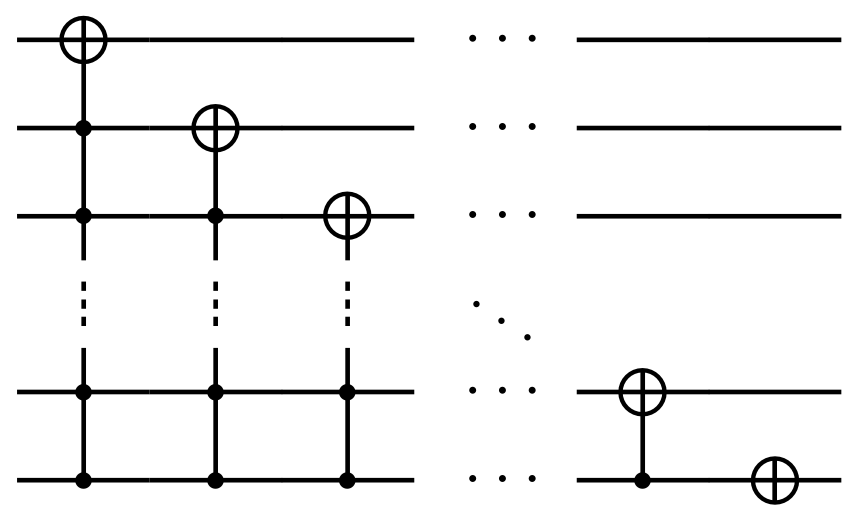
- The paper introduces a framework that enables fractionalization of dyadic-order unitary operators by coherently superposing their integer powers.
- The methodology employs ancilla-based Fourier transforms and controlled multiplexed gate operations to achieve efficient quantum circuit synthesis.
- Applications include practical implementations of quantum Hartley and cosine transforms, paving the way for scalable quantum signal processing.
Introduction
The paper introduces a unifying framework for the circuit-level realization of Shih-type quantum fractional transforms associated with unitary operators of dyadic order, i.e., operators U with U2n=I. This dyadic structure enables realizing fractional powers of U via coherent superpositions of integer powers, weighted by coefficients derived from ancilla-domain quantum Fourier transforms and diagonal phase gates. The framework integrates and generalizes previous approaches, specifically the quantum fractional Fourier transform (QFrFT), and extends coherent fractionalization to other structured operators relevant in quantum signal processing, including the Hartley and cosine transform families.
Dyadic-Order Fractionalization Framework
The central idea underpinning the construction is that dyadic-order unitaries have spectra composed of binary-phase roots of unity, allowing phase information to be encoded exactly using ancillary qubits. Fractionalization is thus realized as
∑k=02n−1ck(α)Uk
with coefficients ck(α) implemented through Fourier-processing blocks on the ancilla. The parameter α gives a continuous interpolation between powers of U, and the additivity property
UαUβ=Uα+β
is preserved.
When controlled powers of U are available, the entire circuit can be modularized using a sequence of Hadamard (or general QFT) operations, block-diagonal (multiplexed) gate applications, and diagonal phase gates. This is visually exemplified in the generalized circuit model.
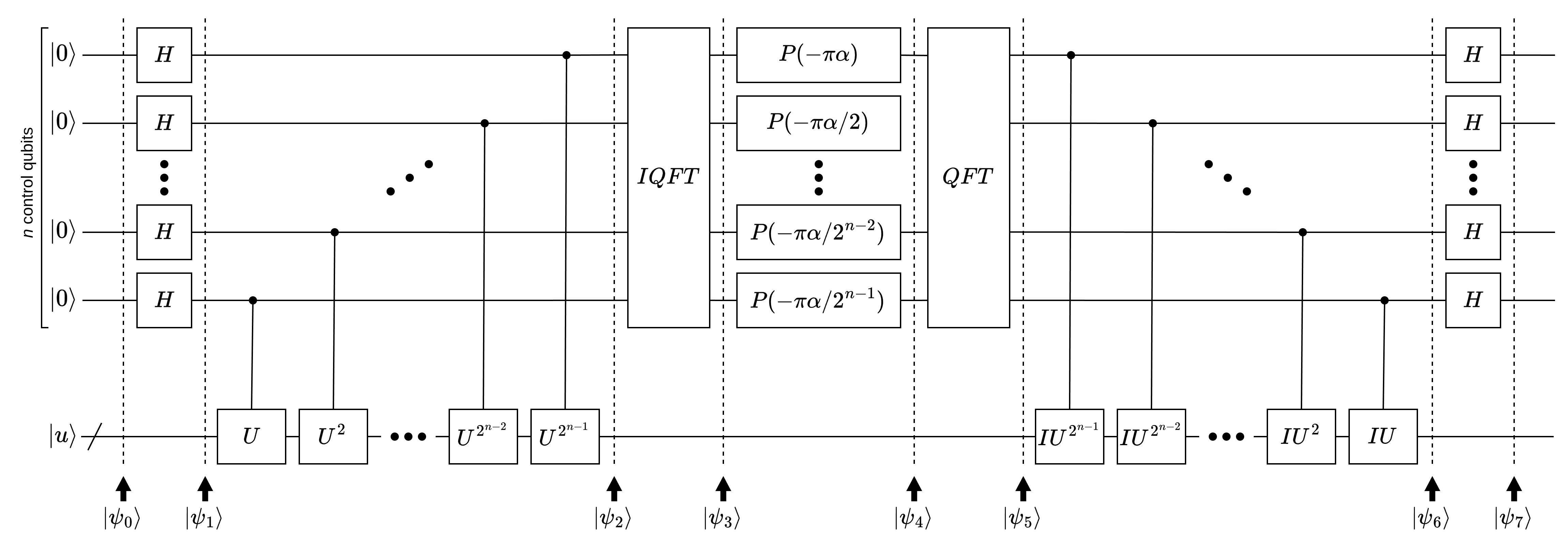
Figure 1: Quantum circuit architecture for fractionalization of a generic dyadic-order unitary operator via phase interpolation and multiplexed power blocks.
The circuit construction mirrors the QFrFT—where the QFT is replaced by a general U—and consists of:
- Ancilla initialization and superposition (Hadamard/QFT)
- Controlled multiplexed powers of U2n=I0
- Ancilla-domain Fourier transformations and phase modulation
- Uncomputation and projection to retrieve the fractionalized data register output.
The framework draws heavily from a structural analysis of the QFrFT. In the QFrFT, an ancilla register is initialized, followed by controlled powers of the Fourier operator applied to the data register. Ancilla-phase modulation and further quantum Fourier processing generate the weighting coefficients.
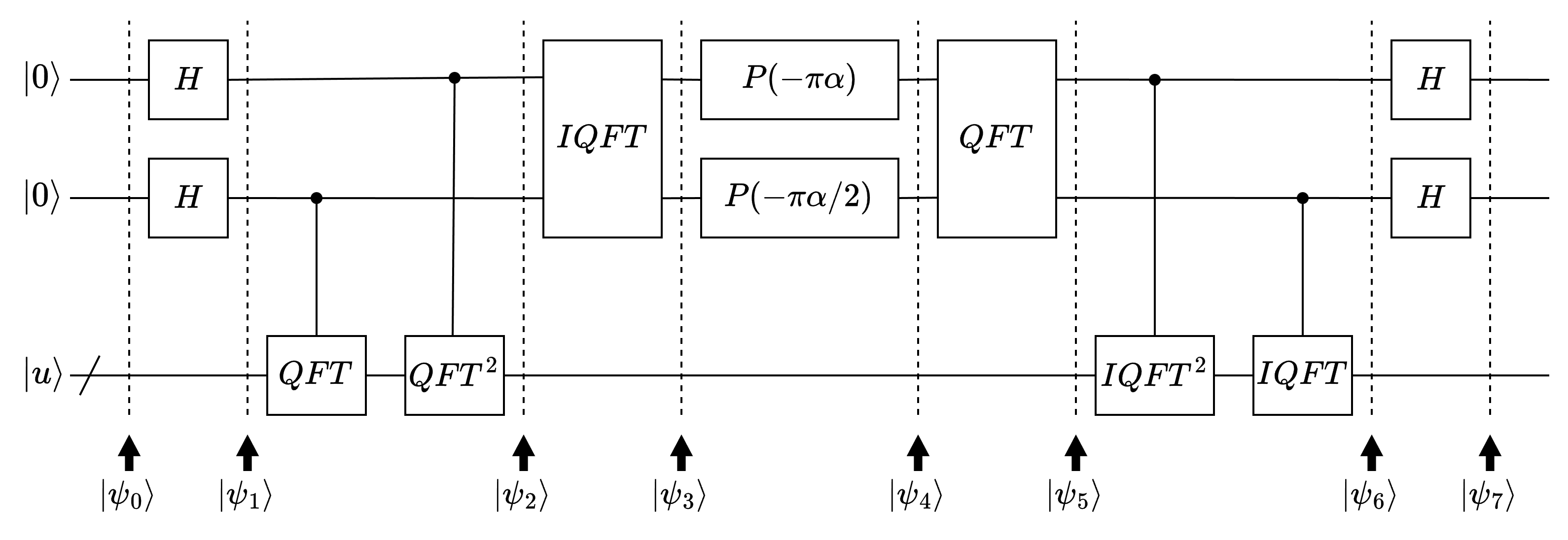
Figure 2: Quantum circuit implementation of the QFrFT, demonstrating the use of ancilla for superposition and coherent interpolation of FT powers.
At output, the data register is deterministically transformed by a weighted sum of FT powers. This methodology directly inspires and validates the approach generalized to arbitrary dyadic-order transformations.
Quantum Fractionalization of Involutive Operators
Operators such as the Hartley transform and types I/IV cosine transforms are involutions (U2n=I1). The dyadic-order framework elegantly accommodates these via single-qubit ancillary processing, making the circuit highly efficient. The fractional operator in this involutive setting is realized as:
U2n=I2
which matches Shih-type fractionalization and is natively unitarily implemented.
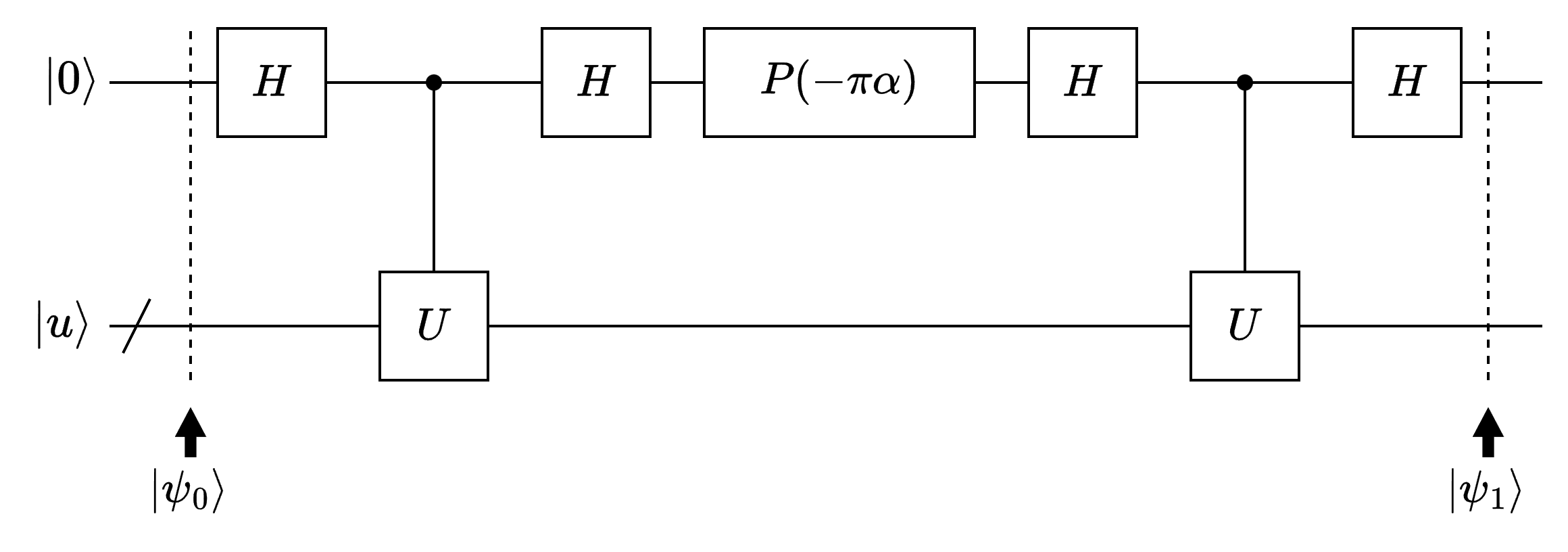
Figure 3: Circuit for the fractional transform of an involution, exploiting the equivalence of the QFT and Hadamard for U2n=I3.
The approach is instantiated via concrete circuits for the QHT and quantum cosine transforms:
The Hartley transform circuit leverages a combination of Hadamard and phase gates, with controlled application of the Hartley core (implemented via an U2n=I4 gate equivalent to U2n=I5). The final output is a coherent superposition of the identity and Hartley transform, with appropriate phase weighting.
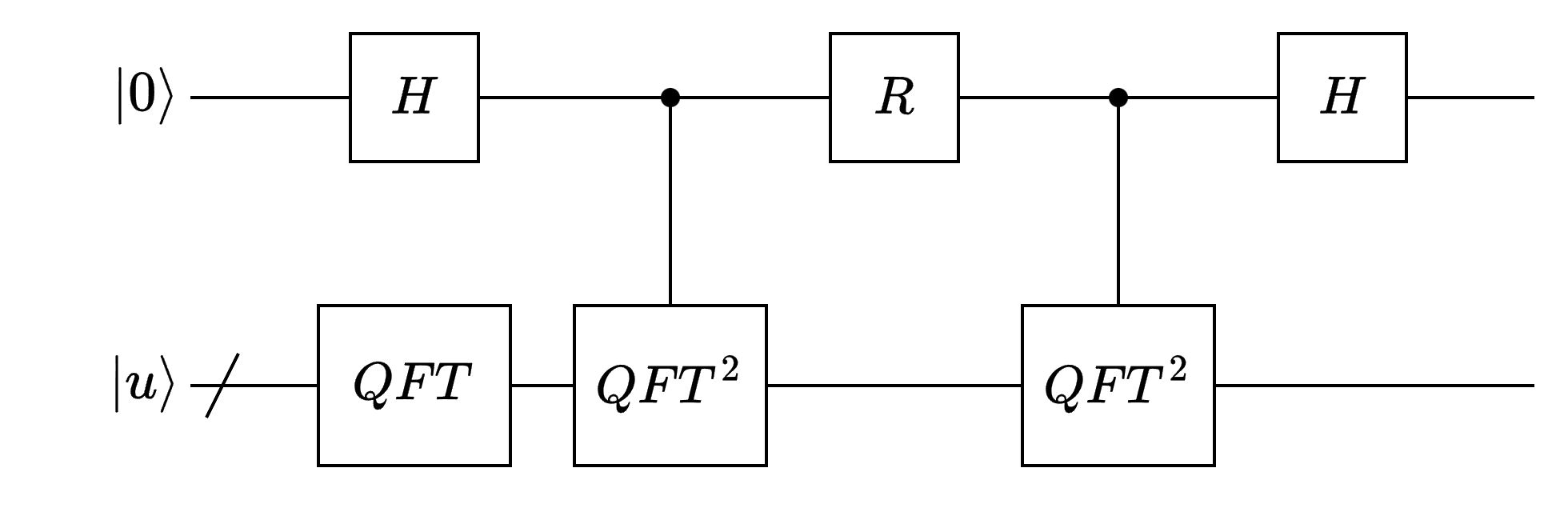
Figure 4: Circuit diagram for the quantum Hartley transform, embedded in the dyadic fractionalization structure.
For cosine/sine transforms, the underlying operator matrices are constructed as direct sums of U2n=I6 and U2n=I7 blocks, with efficient quantum circuits using established basis changes, shift operators, and phase gates. The fractionalization applies directly, with the order-2 structure guaranteeing simplicity and circuit compactness.
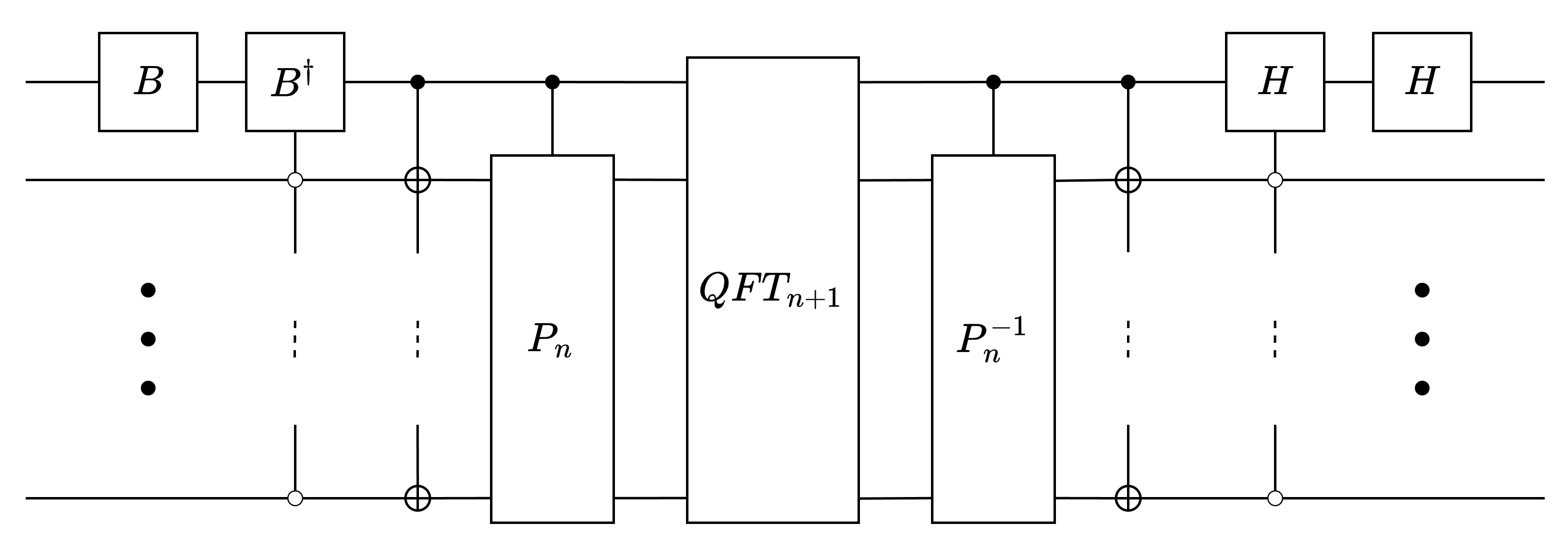
Figure 5: Quantum circuit for the QCT-I, including direct sum structure and shift gates for mode re-labeling.
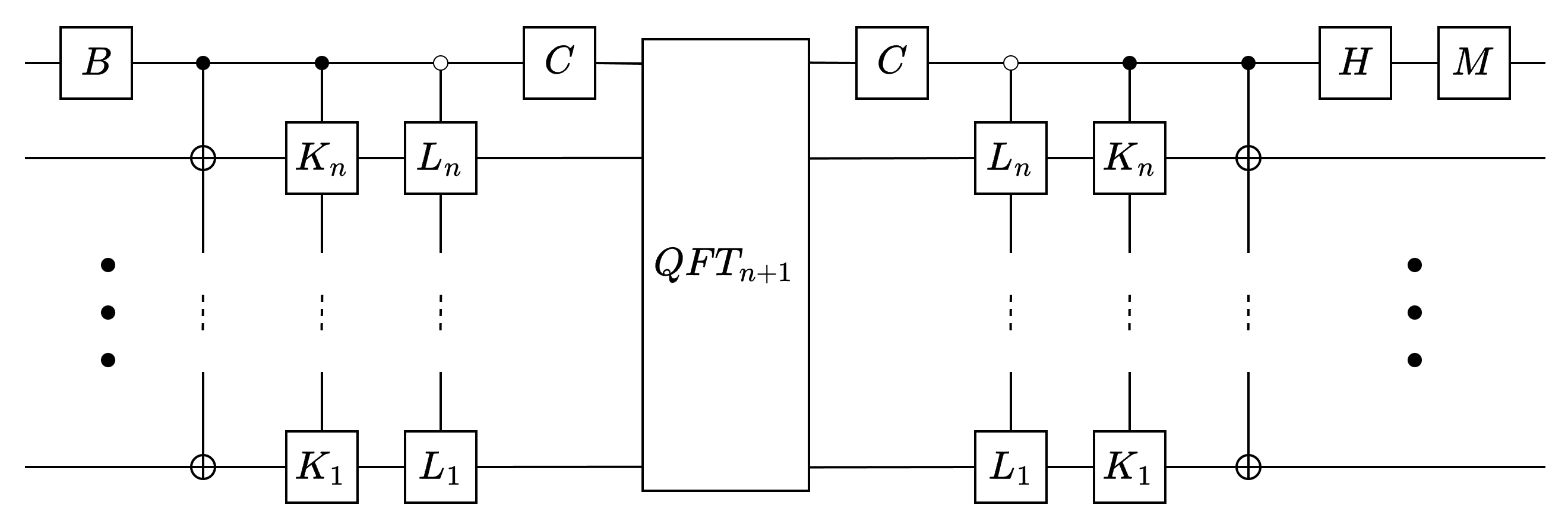
Figure 6: QCT-IV circuit for the IV-type cosine/sine pair, with additional phase and selector logic to separate cosine and sine outputs.
Ancillary Quantum Gates and Circuit Primitives
The construction utilizes several circuit primitives:
The block-diagonal structure of quantum circuits with controlled powers ensures extensibility; fractionalization is compatible with the efficient implementation of operators in quantum signal processing.
Implications and Future Directions
The dyadic-order fractionalization framework formalizes a general method for interpolating between powers of structured quantum operators within a coherent quantum circuit model. Theoretical implications include:
- Preservation of additivity and unitarity in quantum fractional transformations.
- Compatibility with efficient (logarithmic-depth) quantum implementations, contingent on the efficient realizability of U3 and its powers.
- Direct generalization to structured transform families important in signal processing, including those arising in quantum image processing, quantum watermarking, and neural network circuits.
Practically, the results facilitate the embedding of parametric quantum transforms into broader algorithms for signal analysis, quantum machine learning, and quantum information scrambling. The circuits are resource-efficient (ancilla overhead is logarithmic in operator order), and all control is modular, enhancing scalability.
Potential future developments include:
- Applications to encryption protocols, watermarking, or spectral analysis leveraging the flexibility of quantum fractional transforms.
- Exploration of circuit optimization for NISQ architectures.
- Extension to higher-order (non-dyadic) operators, possibly via approximate or hybrid quantum-classical schemes.
Conclusion
The work synthesizes a generalized, circuit-level realization of quantum fractional transforms for all dyadic-order unitary operators. The ancilla-based Fourier-processing strategy efficiently interpolates between powers of U4, realizing the full Shih-type fractionalization in a coherent quantum framework. Demonstrated via explicit construction for Hartley and cosine/sine families, these circuits provide foundational primitives for advanced quantum signal processing and open the door to new algorithmic paradigms in quantum information processing.