- The paper demonstrates that GKSL and dressed-picture master equations yield quantitatively different predictions for coherence and entanglement in the ultrastrong coupling regime.
- It employs scalable numerical simulations with Hilbert space truncation and vectorized ODE integration to compare observable dynamics across various initial quantum states.
- The findings underscore the critical need to choose the appropriate master equation based on the physical regime and observable of interest in cavity/circuit QED systems.
Comparative Analysis of Standard and Dressed-Picture Master Equations in the Quantum Rabi Model: Ultrastrong Coupling Regime
Introduction
The quantum Rabi model provides the minimal, non-perturbative description of light–matter interaction, encapsulating a single two-level system (qubit) coupled to a quantized cavity mode. In the ultrastrong coupling (USC) regime, where the coupling constant g approaches or exceeds $0.1$ times the field mode frequency, the hybridization between matter and field yields nontrivial and nonperturbative physics that cannot be addressed by standard quantum-optical methods such as the rotating wave approximation (RWA). This paper systematically compares two primary frameworks for open quantum dissipative dynamics in the USC regime: the standard Gorini–Kossakowski–Sudarshan–Lindblad (GKSL) master equation and the dressed-picture master equation (DME), focusing particularly on their phenomenological and numerical predictions for a broad set of observables under various initial states and parameter regimes (2604.08852).
In the weak-coupling and near-resonance regime, the GKSL master equation provides a consistent, Markovian description of dissipation using system operators defined in the uncoupled (bare) basis. However, in the USC regime (g/ω>0.1), dissipation cannot be correctly modeled as coupling to environment operators acting locally on the bare atom or field; the eigenstates are strongly hybridized, and the environment probes transitions between the dressed eigenstates of the full Rabi Hamiltonian. The DME is constructed by formulating dissipative terms explicitly in the dressed-state basis, where system–bath couplings are re-expressed in terms of matrix elements between energy eigenstates.
The DME thus incorporates strong-coupling effects into Lindblad dissipators, requiring diagonalization of the system Hamiltonian and computation of dressed matrix elements for each operator. Two functional forms for bath spectral densities are explicitly compared: white noise and Ohmic noise. The resulting equations have substantially increased computational complexity but are necessary for capturing the correct physical dissipation when atom–cavity hybridization becomes significant.
Numerical Methods and Observables
The authors develop scalable numerical routines for both master equations, with Hilbert space truncation and vectorized integration of coupled ODEs. They consider multiple initial cavity states—coherent, odd Schrödinger cat, squeezed coherent, squeezed vacuum, and thermal states—spanning both pure and mixed initial conditions.
Key observables computed include:
- Qubit excited-state population Pe
- Mean photon number ⟨n⟩
- Mandel Q-factor
- Negativity (as an entanglement witness)
- Subsystem purities for qubit and field
- Photon number probability distributions
Dissipative Dynamics for Paradigmatic States
Coherent State Evolution
The authors highlight substantial qualitative deviations between the GKSL and DME descriptions under strong coupling for coherent initial states. Most notably, the standard GKSL prediction for the damping of oscillations is much faster than the dressed-picture approach for certain observables, such as the field and qubit purity or negativity. This overestimation is parameter- and observable-dependent.
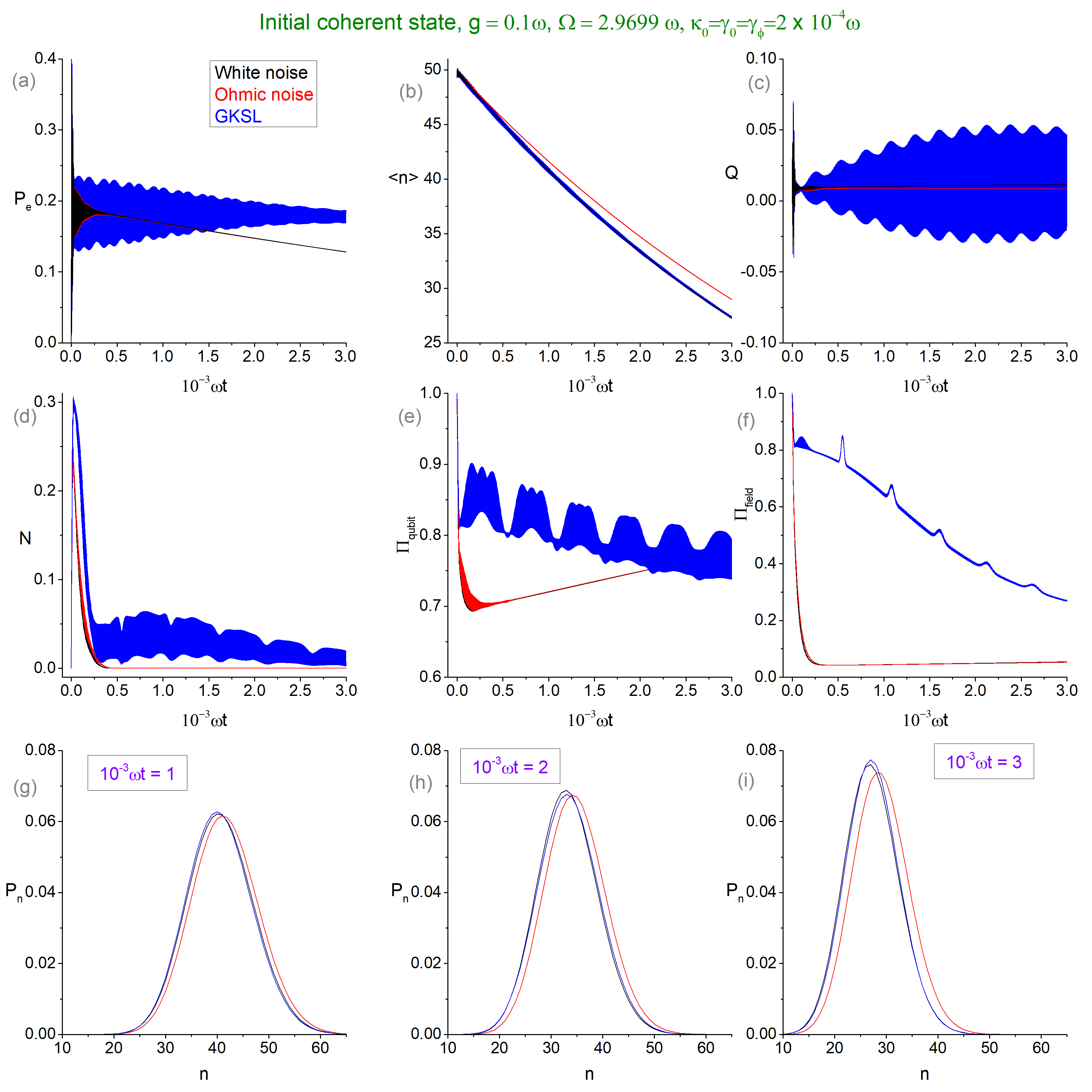
Figure 1: Behavior of the quantum Rabi model under dissipation for the initial coherent state in the USC regime.
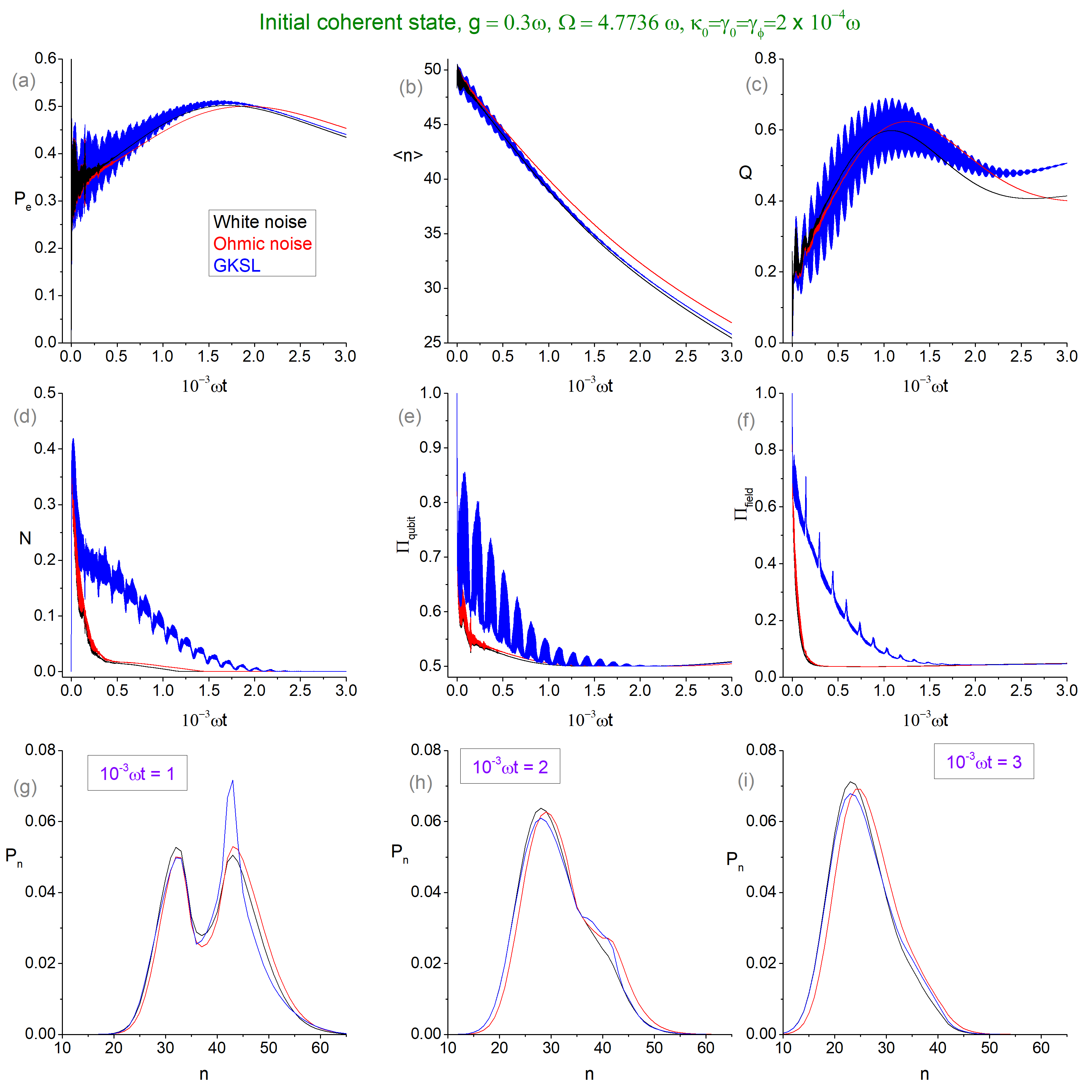
Figure 2: Dissipative dynamics for the coherent state at higher g, highlighting deviations in observable predictions.
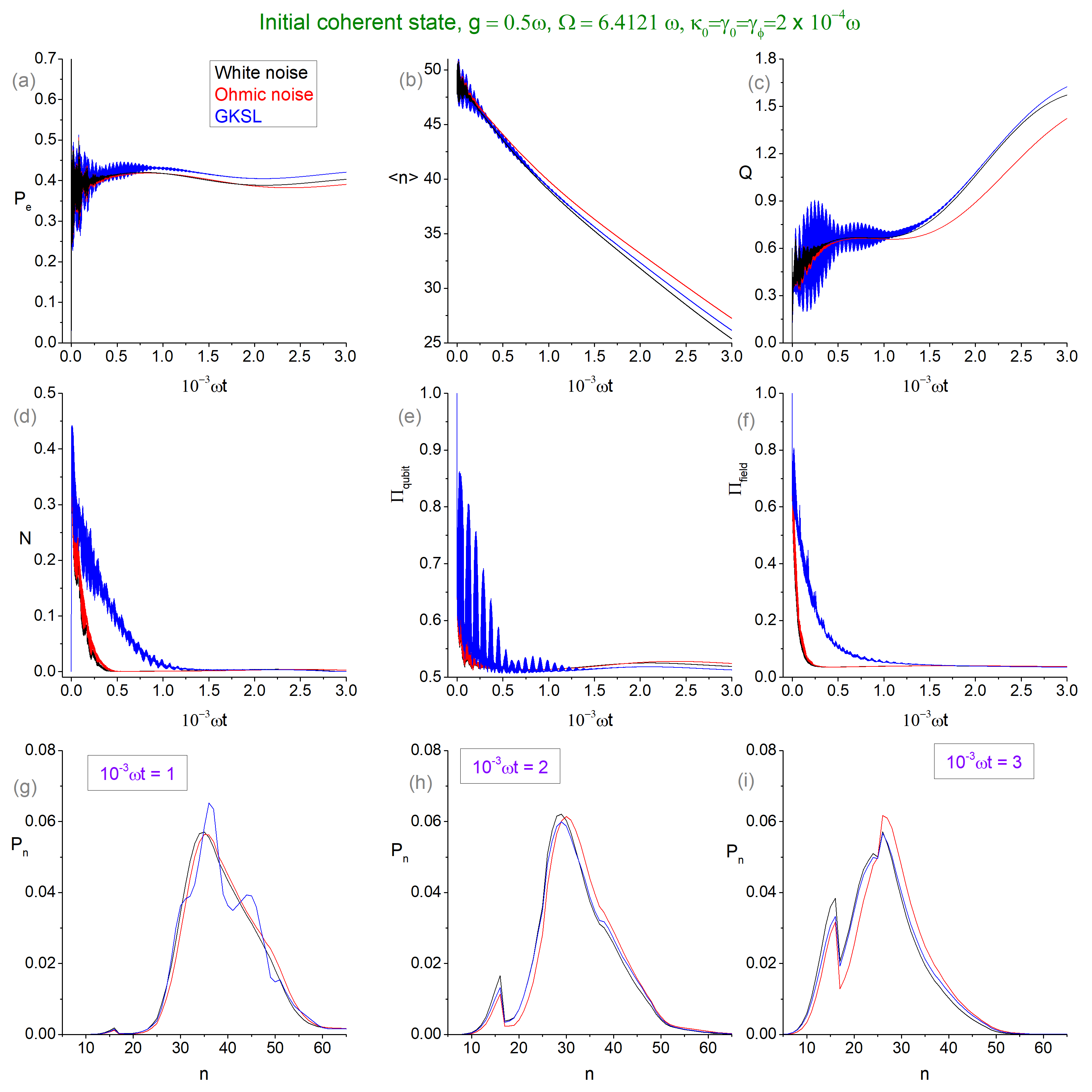
Figure 3: Dissipative evolution for the coherent state at even stronger coupling, emphasizing further divergence between models.
In these cases, the DME predicts longer persistence of coherence and entanglement than the standard GKSL model, in certain spectral density regimes. This behavior is consistent for higher-order photon resonances as g is increased.
Odd Schrödinger Cat and Squeezed States
The analysis extends to nonclassical initial states, such as odd Schrödinger cat states. The GKSL and DME give qualitatively similar predictions for energy-related observables, but diverge for quantifiers of coherence such as negativity and purity. DME-induced decoherence is more rapid for high-order nonclassical features.
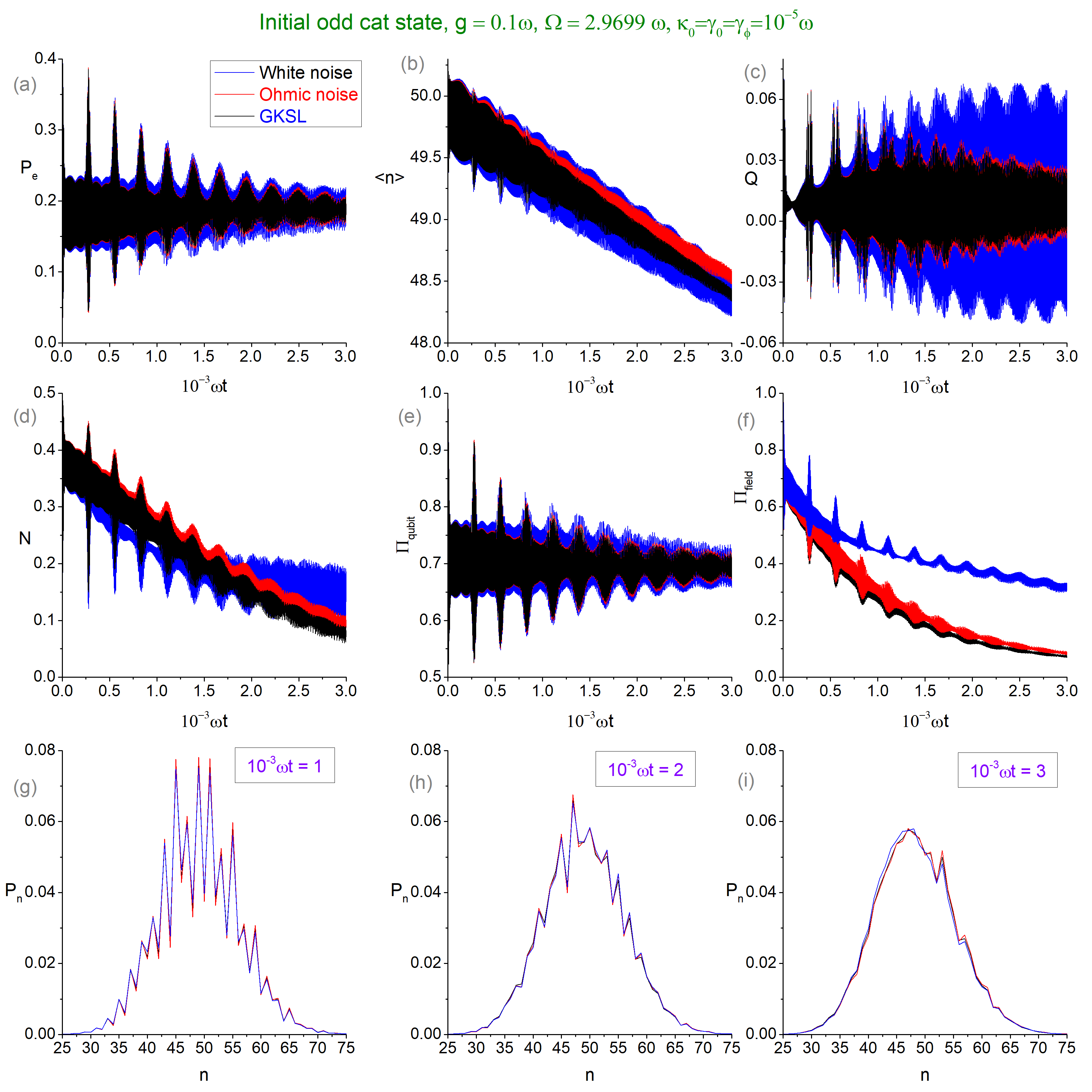
Figure 4: USC dissipative dynamics for an initial odd Schrödinger cat state, demonstrating model-dependent entanglement decay.
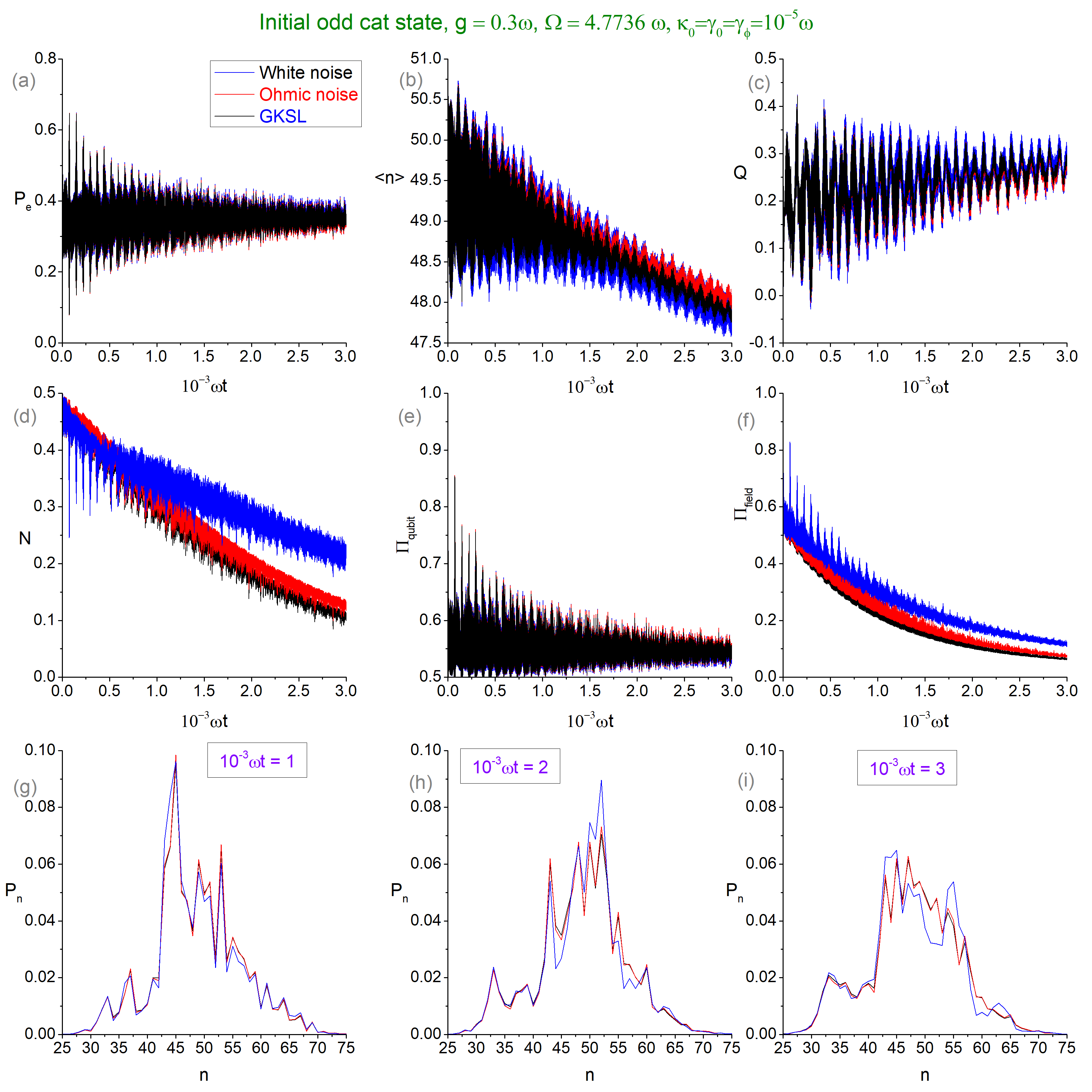
Figure 5: Influence of coupling strength on relaxation in cat states.
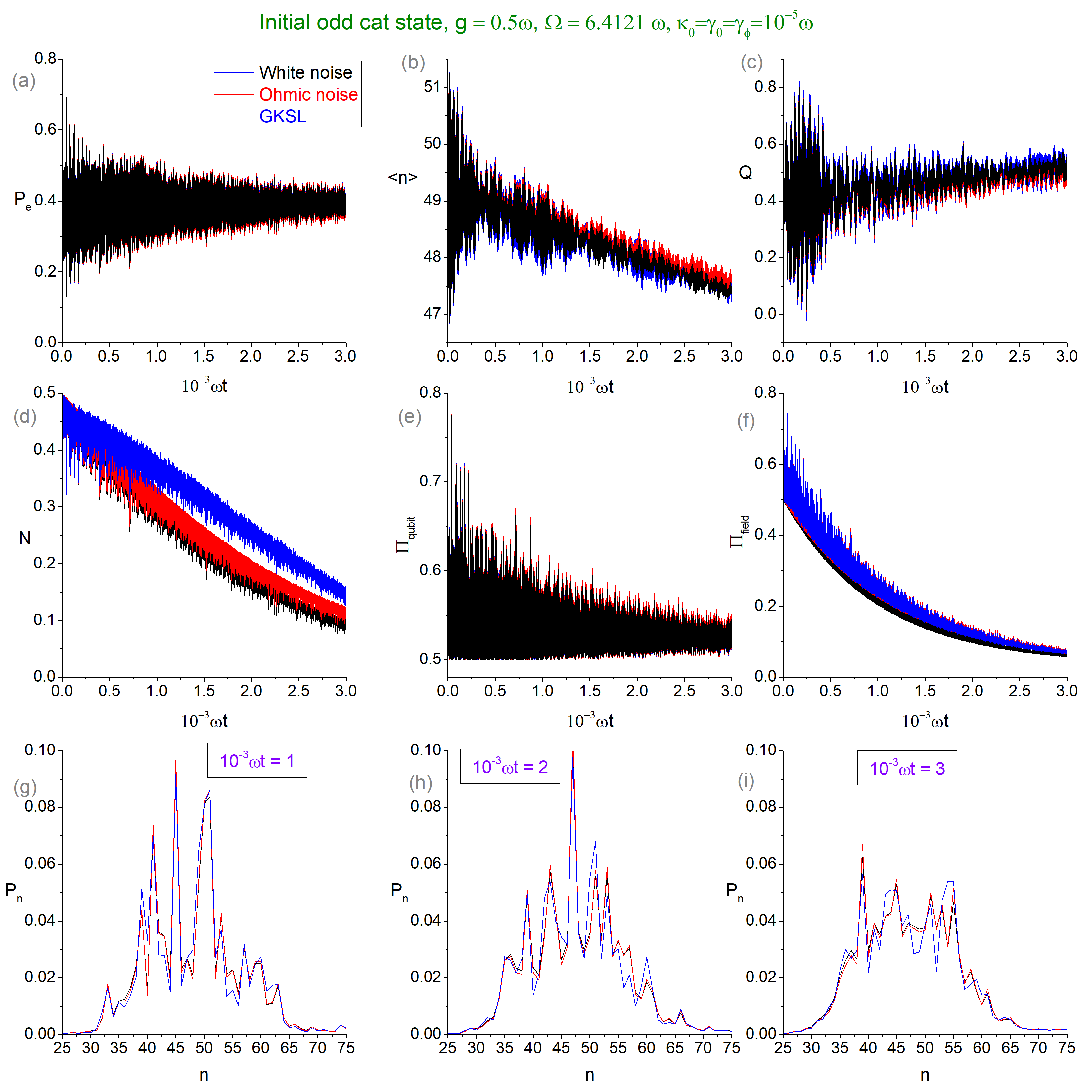
Figure 6: Strong-coupling regime for cat states, highlighting differences in photon number statistics and purity decay.
Squeezed coherent and squeezed vacuum states are also considered; similar patterns emerge where the DME predicts faster loss of coherence, especially with Ohmic spectral densities.
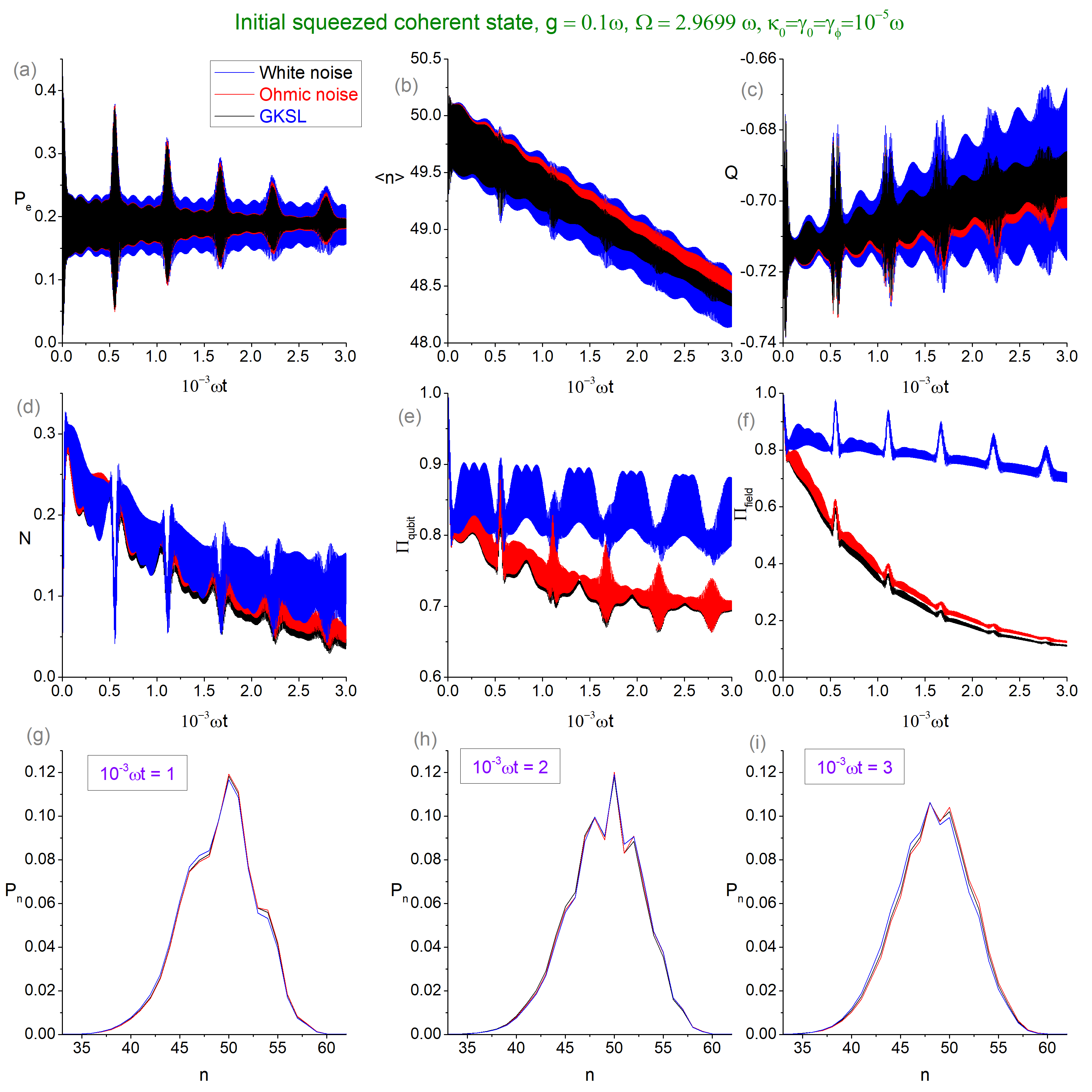
Figure 7: Behavior for the initial squeezed coherent state in the DME and GKSL descriptions.
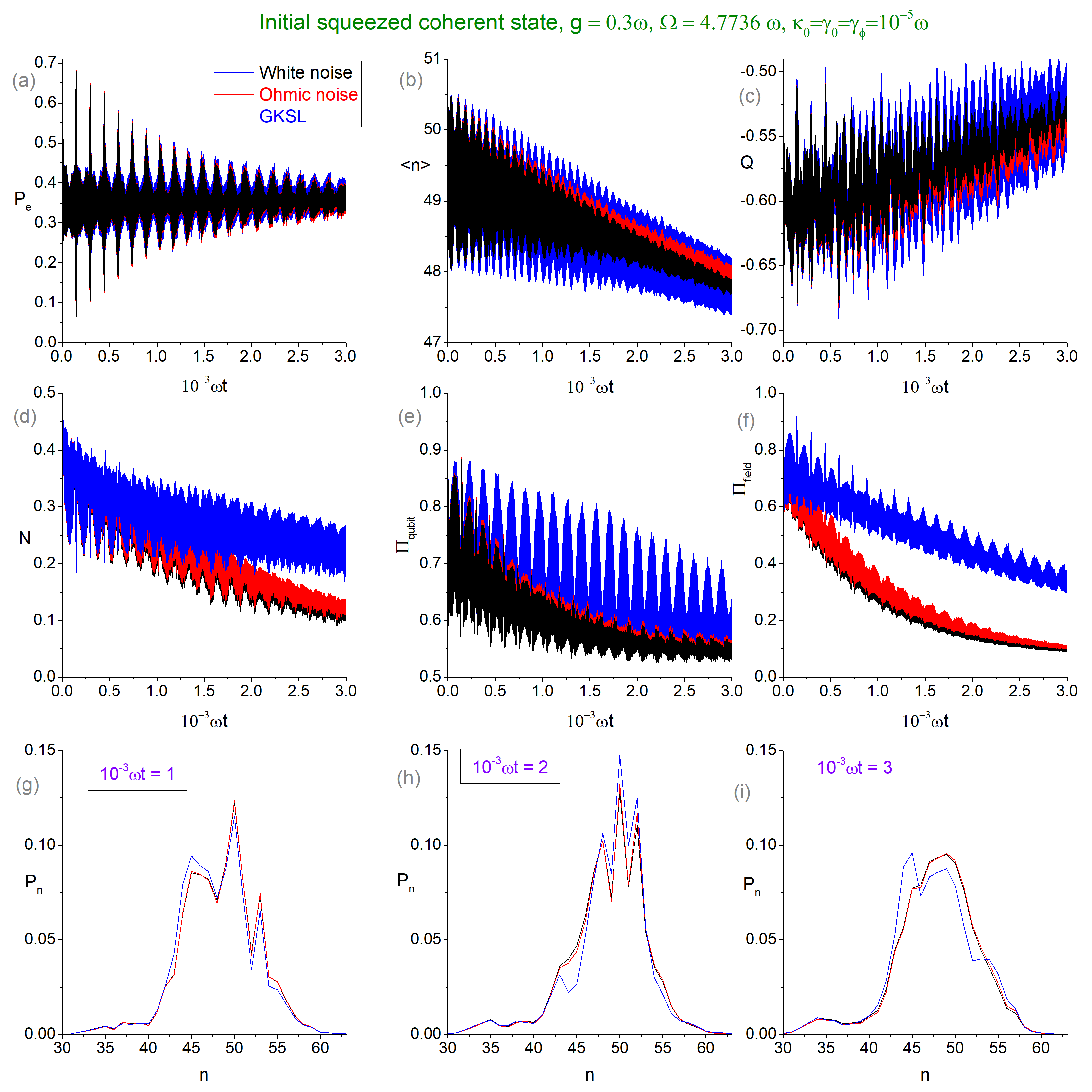
Figure 8: Quantitative contrasts at elevated coupling strengths for squeezed states.
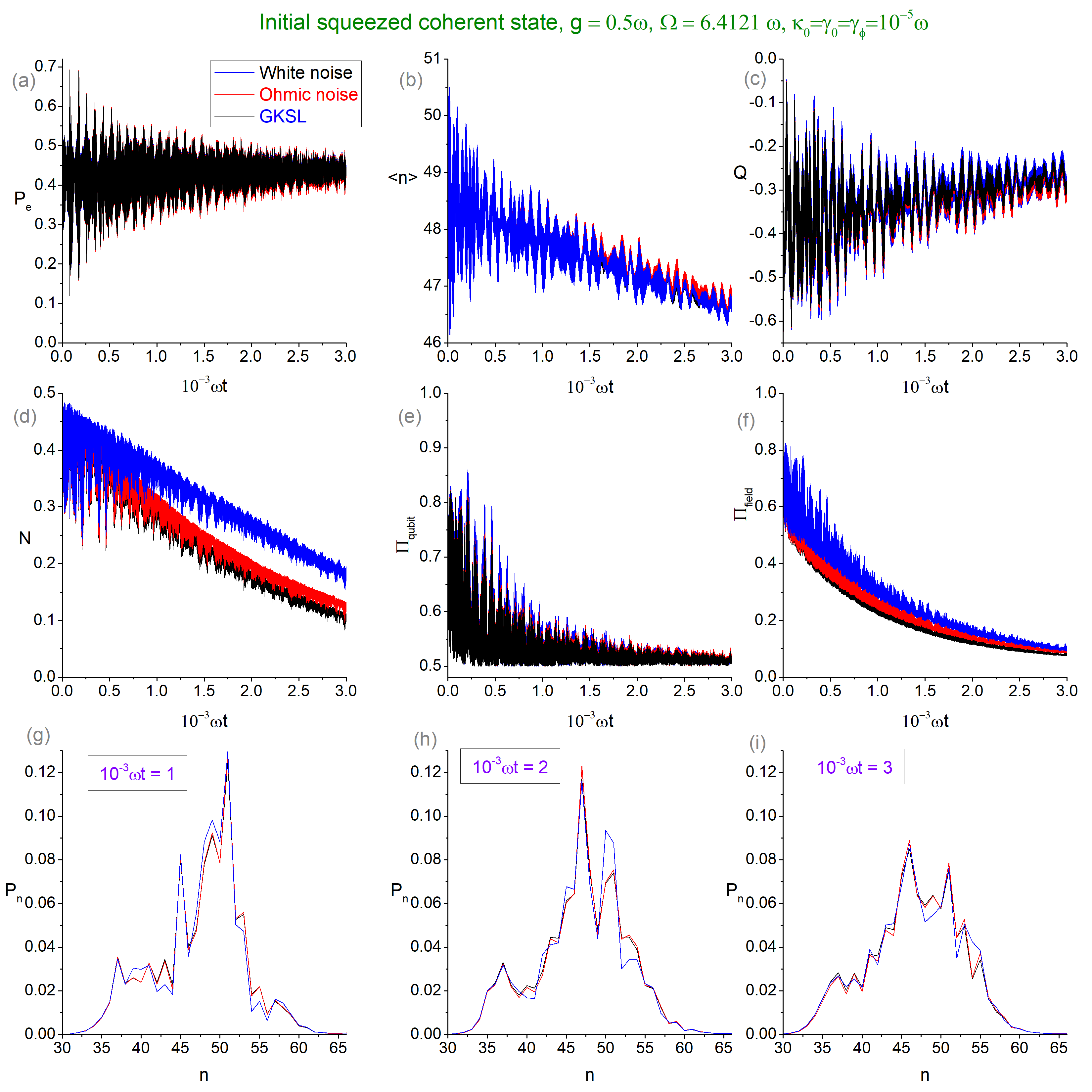
Figure 9: Squeezed vacuum state survival and decoherence rates in the USC regime.
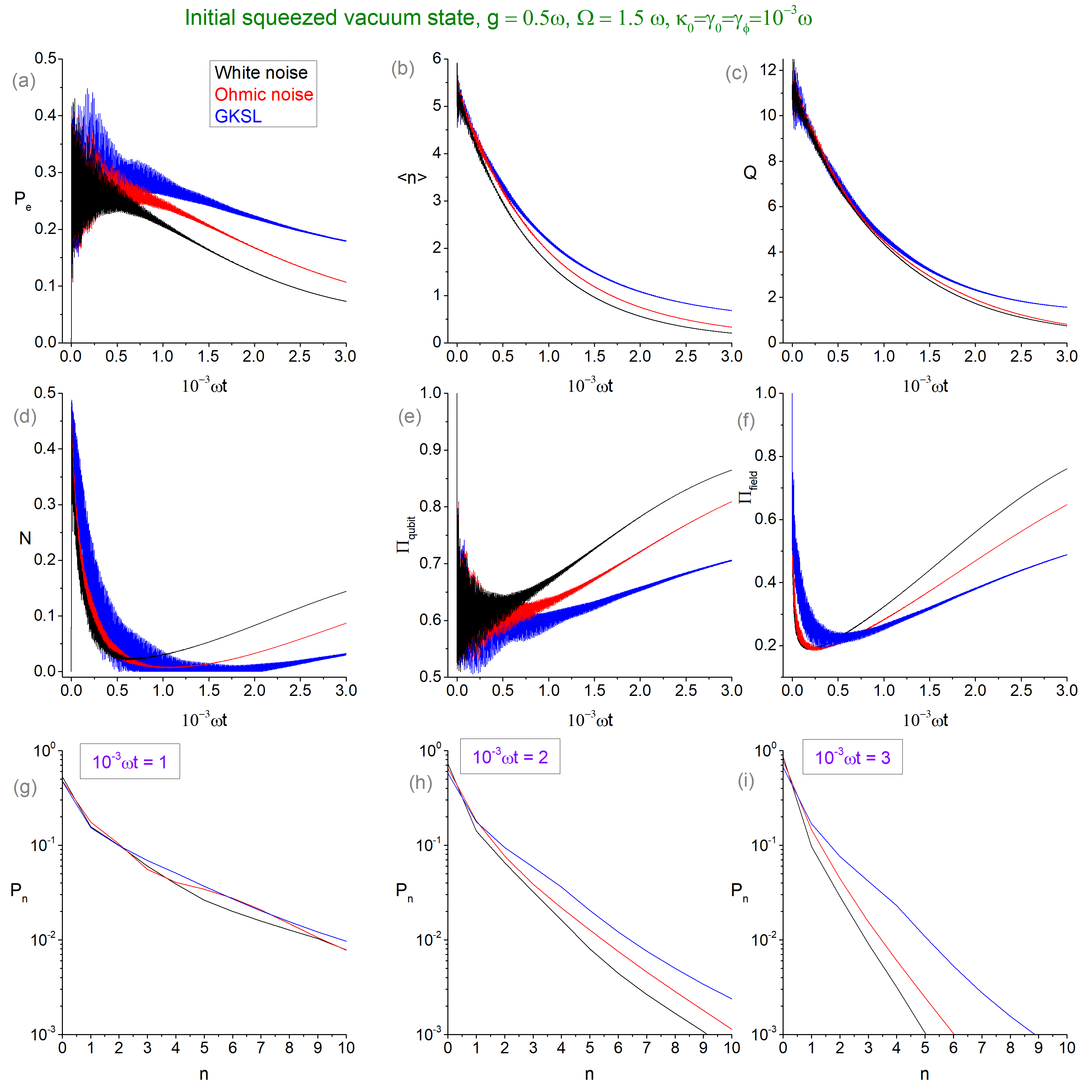
Figure 10: Squeezed vacuum, higher g; GKSL and DME show large discrepancies in coherence benchmarks.
Thermal State Dynamics
For initial thermal states, both master equation approaches tend to disagree strongly for all observables, especially as the average photon number, coupling strength, and dissipation increase.
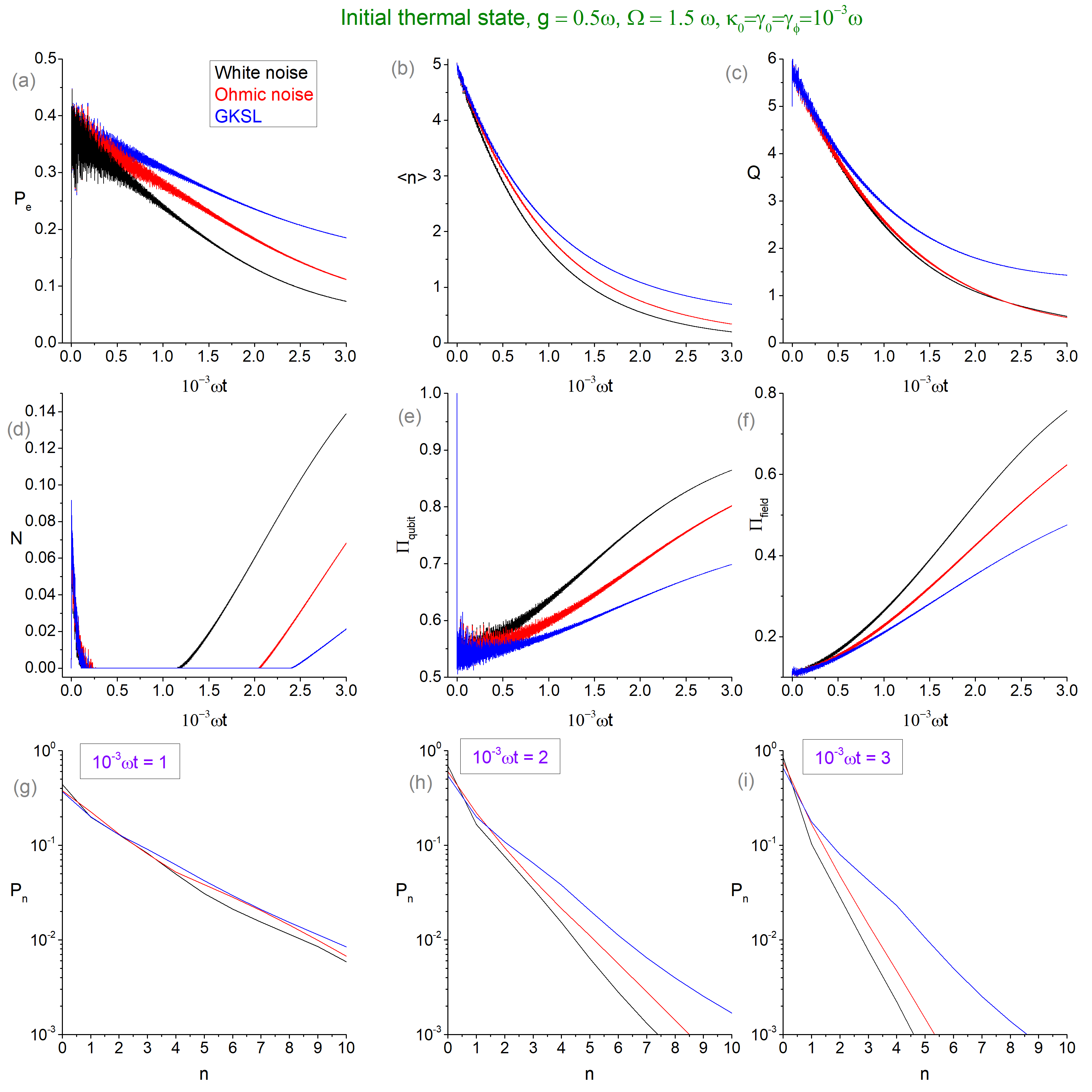
Figure 11: Dissipative dynamics for a thermal state, illustrating the dependence of observable trajectories on master equation type.
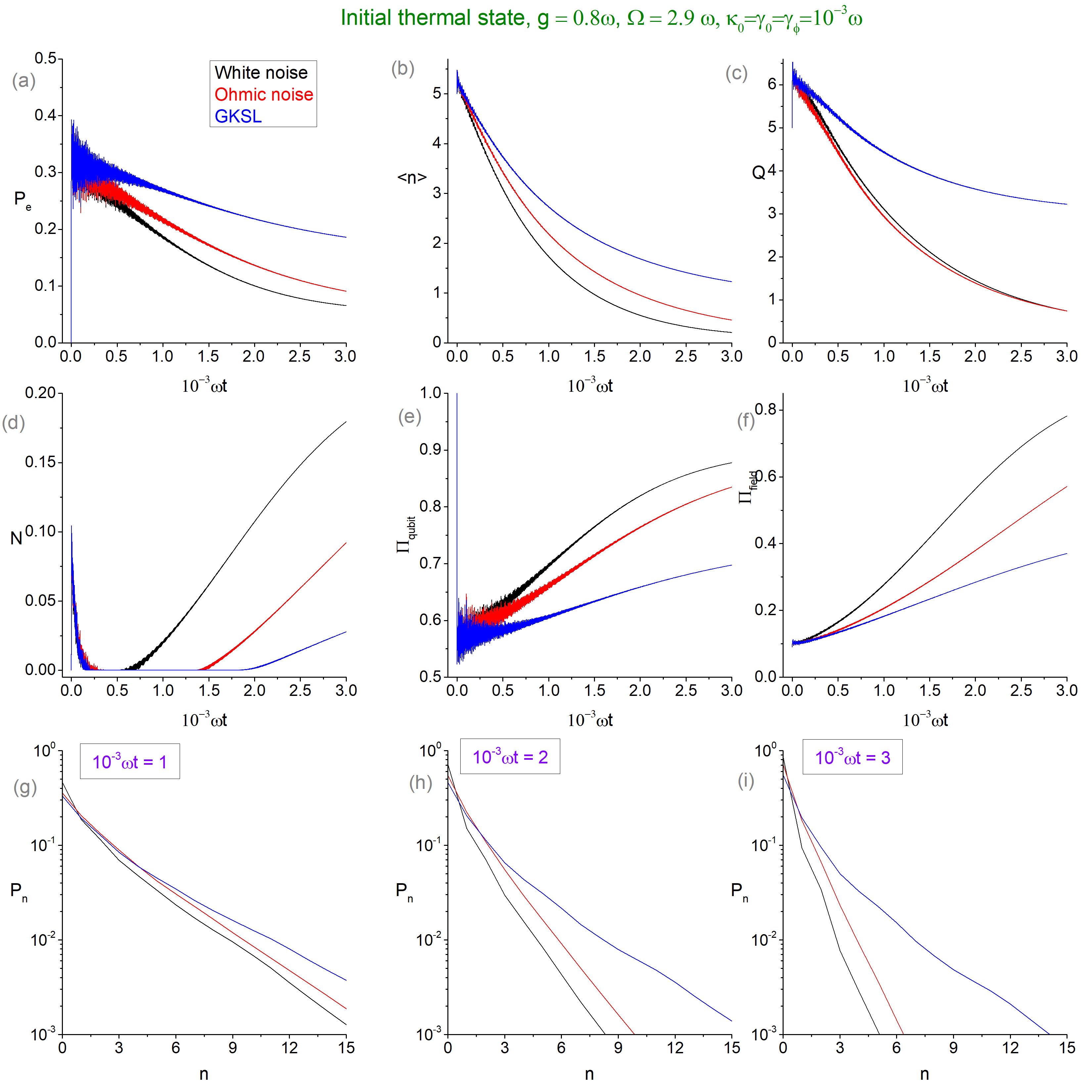
Figure 12: Stronger coupling regime for thermal initial conditions.
Multiphoton Rabi Oscillation Regimes
The paper provides a comprehensive study of multiphoton resonance processes (three-, five-, seven-photon) in the USC regime. For moderate g, the GKSL and DME predictions are close for population relaxation and photon statistics; however, as $0.1$0 increases, deviations in coherence observables are amplified, and DME yields faster decay.
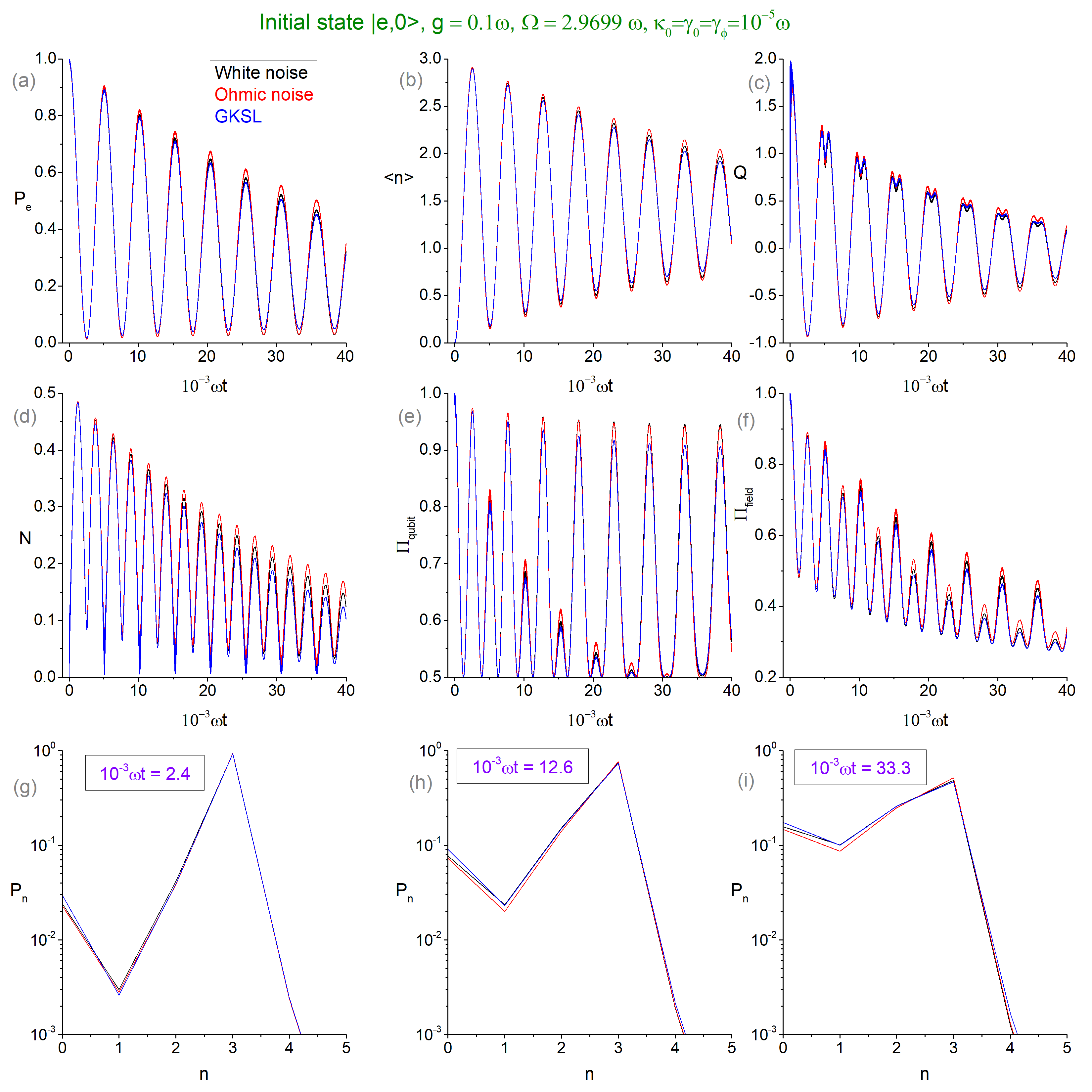
Figure 13: Five-photon resonance. Population transfer, photon generation, and coherence decay compared across dissipation models.
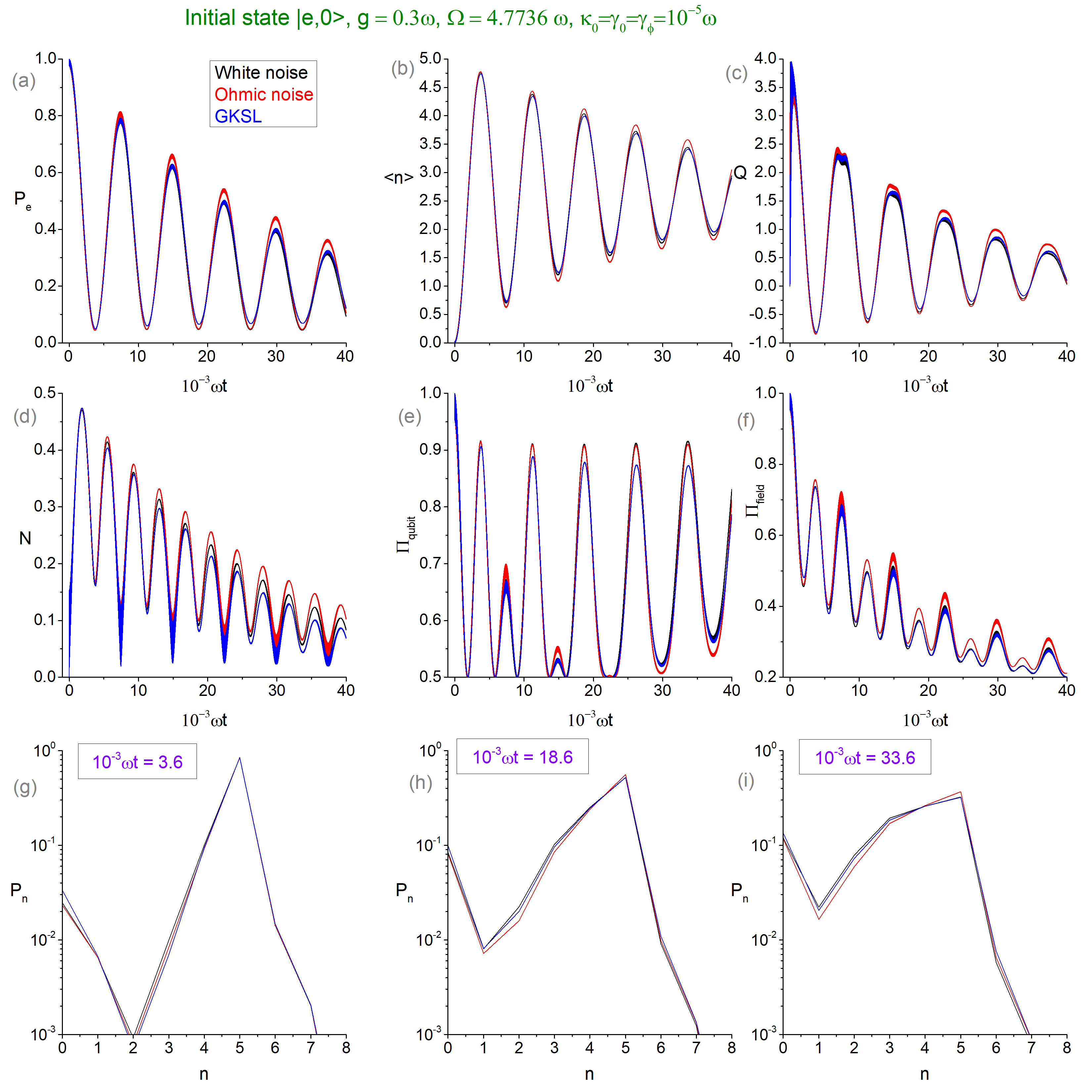
Figure 14: Seven-photon resonance; the DME more strongly damps high-frequency oscillations in purity and entanglement.
Nonstationary Rabi Hamiltonian and Postselection
The nonstationary case, with time-dependent qubit frequency simulating a dynamical Casimir protocol, is used to explore photon generation from vacuum and the metrological properties of the post-selected field. Here, both GKSL and DME agree very closely at early times. At later times in long simulations, the DME predicts quantitatively distinct behavior for photon generation, nonclassicality, and quantum Fisher information comparisons.
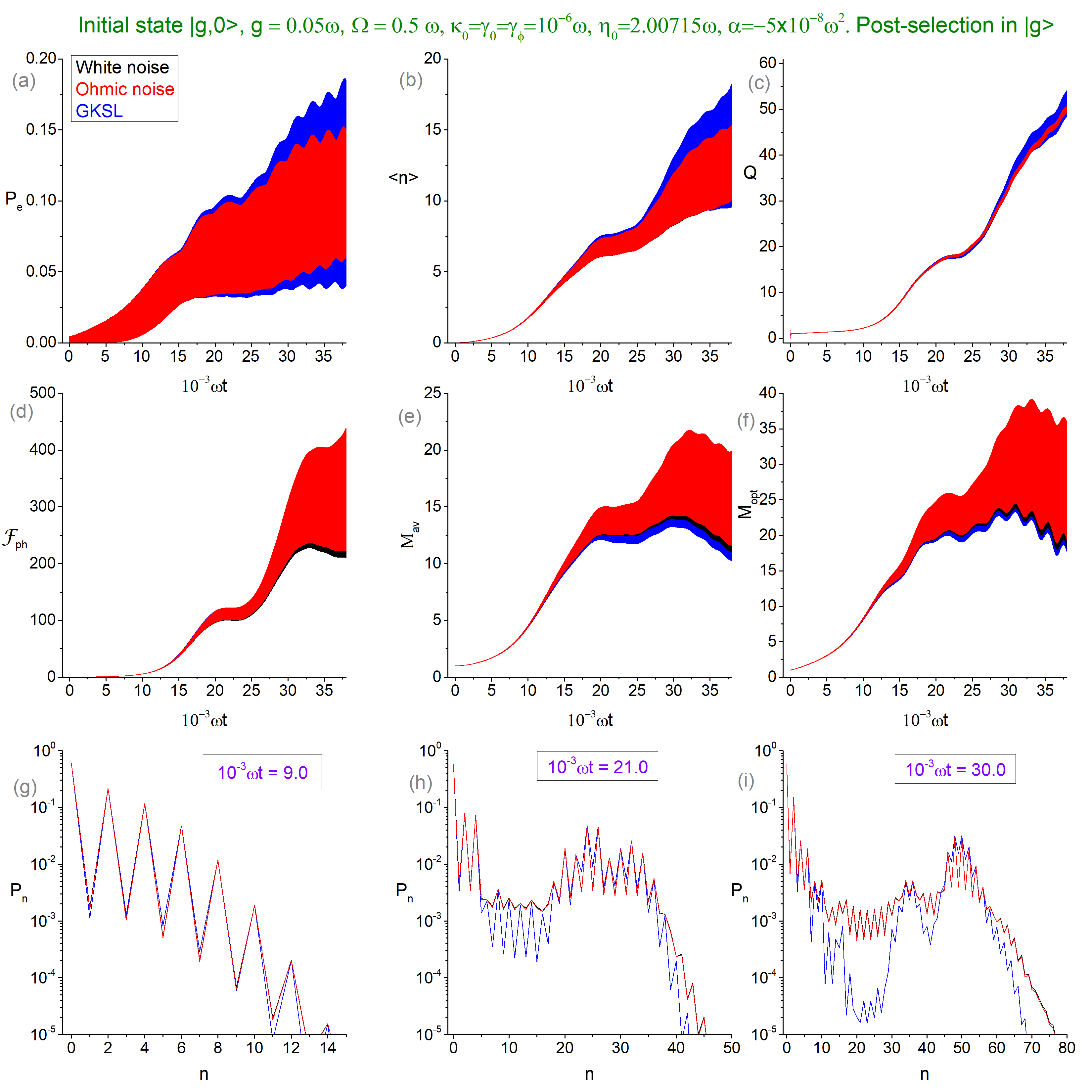
Figure 15: Nonstationary Rabi Hamiltonian under frequency modulation. Predicted metrological power and photon-number statistics for the GKSL ME and DME.
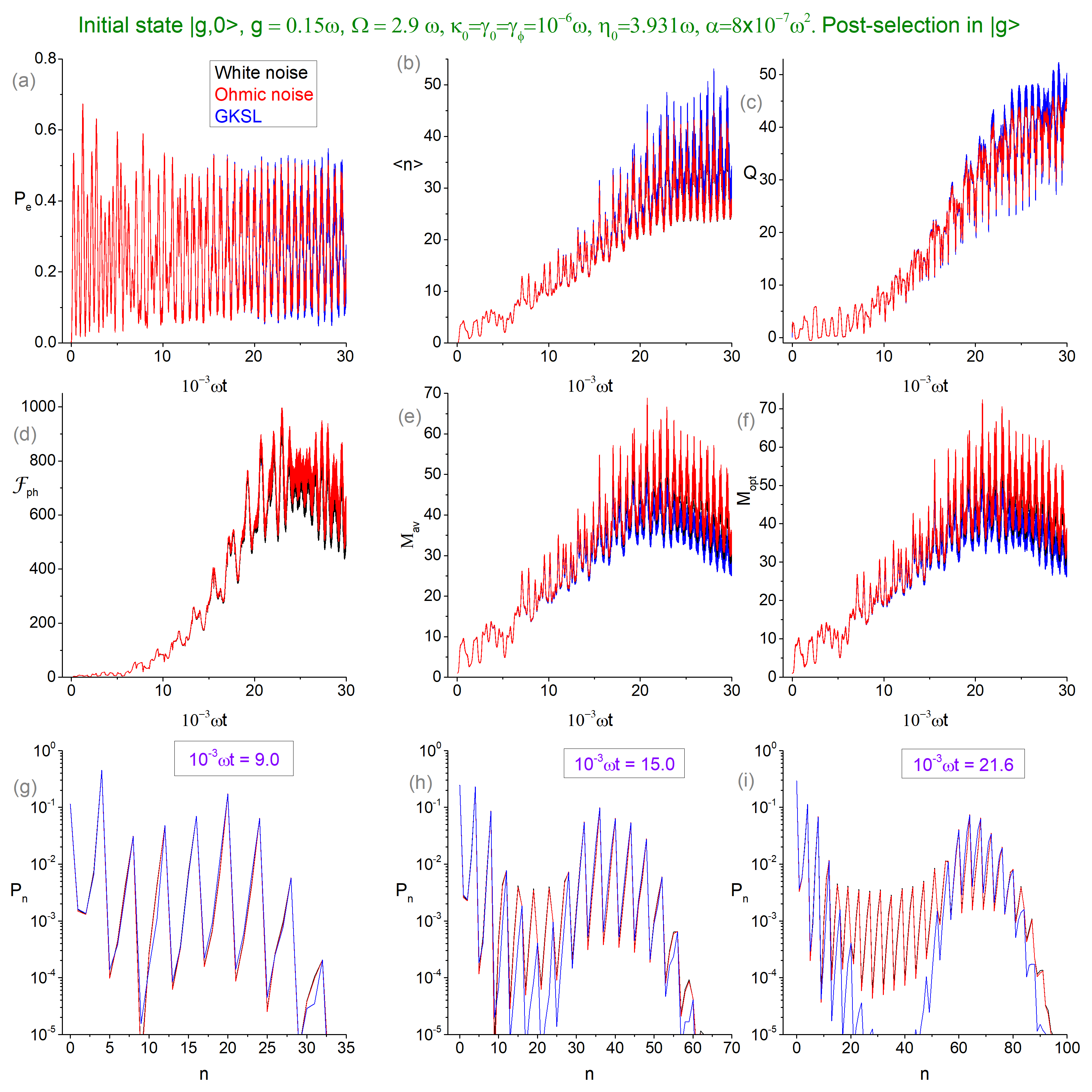
Figure 16: Stronger modulation and coupling, with multiphoton transitions; statistical signatures diverge for the master equation choices.
Strong Numerical and Conceptual Conclusions
The explicit numerical analysis reveals that the detailed choice of dissipative model—GKSL ME or DME—matters substantially for coherence-sensitive observables, especially at high coupling $0.1$1 and for nonclassical initial states. Clear evidence is shown that
- DME can significantly overestimate decoherence relative to GKSL for purity and negativity under some conditions, but not universally.
- Energy-resolved observables (qubit population, mean photon number) are less sensitive to the choice of dissipator, unless $0.1$2 is large or the system is prepared in highly nonclassical states.
- The dependence on the spectral density (white vs. Ohmic) within the DME is itself nontrivial and must be explicitly checked in simulations.
- For quantum protocols relying on long-lived entanglement or nonclassicality, using the GKSL ME can yield erroneously optimistic predictions outside its regime of validity.
Implications and Outlook
This work provides a critical practical reference for numerical implementation and regime analysis of dissipative open quantum dynamics in ultrastrong coupling cavity QED and circuit QED settings. The main implication is that, absent knowledge of the precise system–bath interaction, both the DME and GKSL should be benchmarked in any new parameter regime prior to drawing physical or technological conclusions for quantum information protocols or quantum simulation experiments. Future work should extend this comparative approach to generalized DMEs not relying on the secular approximation, and to models with explicit non-Markovianity.
From a theoretical standpoint, the paper's methodology highlights that no single master equation provides universally accurate dissipation modeling in the USC regime; careful selection and direct simulation are required. On the practical side, the direct link between dissipative model validity and the behavior of measurable quantum resources (negativity, Fisher information, nonclassical photon statistics) provides concrete guidance for experimentalists engineering quantum devices in the strong and ultrastrong coupling regime.
Conclusion
The comparative study evidences that the GKSL and dressed-picture master equations yield quantitatively and sometimes qualitatively distinct predictions for a range of observables in the quantum Rabi model under ultrastrong coupling. The choice of equation must be dictated by the physical regime, initial state, and observable of interest, with particular care taken for nonclassical resource estimation. The toolkit, algorithms, and benchmarks established here will facilitate robust theoretical and experimental investigations of open quantum systems as the field of ultrastrong coupling cavity/circuit QED advances.