- The paper establishes a disclosure framework that leverages symbol-enabled adaptive design through speculative co-creation with users.
- It systematically critiques legacy accessibility icons and promotes community-driven co-design to enhance contextual interpretability.
- It integrates Peircean semiotics with dynamic, multi-layered disclosure systems to mitigate risks of misinterpretation and forced labeling.
Reimagining Disability Disclosure: Symbol-Enabled Systems and Socio-Technical Agency
Introduction
"Because we are no longer ashamed of our disabilities, we are proud" (2604.08514) presents a rigorous empirical and conceptual investigation into the design, interpretation, and socio-technical translation of next-generation accessibility symbols for individuals with invisible and visible disabilities. Leveraging speculative co-creation with a diverse population of informants (n=23, all with invisible disabilities), the work interrogates both the representational limits of legacy disability signage and the future integration of symbol-based disclosure in the context of pervasive interactive modalities (wearables, mobile UIs, AR/XR, and portable tools).
Through semiotic grounding (Peirce’s triad) and situated user artifact analysis, the authors articulate a disclosure systems framework in which the meaning and utility of accessibility symbols are fundamentally shaped by their carrier, contextual deployment, and dynamic audience interpretants. This enables a shift from examining symbols in isolation towards understanding symbol-mediated disclosure as a complex, customizable, risk-managed and community-driven process.
Critique of Legacy Symbols and the Case for Adaptive Representation
The dominant International Symbol of Access (ISA) and similar infrastructure-focused iconography are systematically problematized for their functional and semiotic exclusion of non-mobility impairments. Quantitative and qualitative evidence demonstrates that individuals with non-mobility (especially invisible) disabilities rate the ISA as misaligned with their identity and needs. While historically the ISA offered infrastructural legibility, its standardization produces interpretant drift, reinforcing medicalized and deficit-based readings of disability [guffey2] [31barstow2019examining] [vice2020effectiveness] [6Hofmann].

Figure 1: Contemporary disability symbols developed to represent a range of visible and invisible conditions; many are community-originated and adopted through online networks.
Participants in this study articulate the demand for multi-layered, customizable, and context-aware symbols that can be paired with emerging digital and physical carriers. Such adaptation is required for legitimate, empowering, and legible disclosure across shifting audiences, geographies, and platforms. The research demonstrates that symbols gain meaning as part of sociotechnical assemblages, not as isolated icons.
Symbol-Carrier-Context Coupling: Empirical Findings
The paper's methodology—speculative co-creation sessions with reflexive artifact production and scenario-based critique—yields high-resolution accounts of how symbol-enabled disclosure practices can be embedded in future sociotechnical milieus. Analysis surfaces the following recurring technical themes:
- Visibility as Agency: Selective, user-controllable symbol visibility is critical to minimize interpretant drift and mitigate the risks of “automatic labeling,” misrecognition, and othering inherent in exposure-centric technologies (e.g., AR overlays).
- Device-Enabled Layered Disclosure: Participants envision wearables with configurable displays or components, portable devices with QR codes or dynamic outputs, and digital UIs supporting toggled or audience-filtered symbolization. These function as both initial glanceable signals and gateways to granular, contextualizable communication or accommodation metadata.
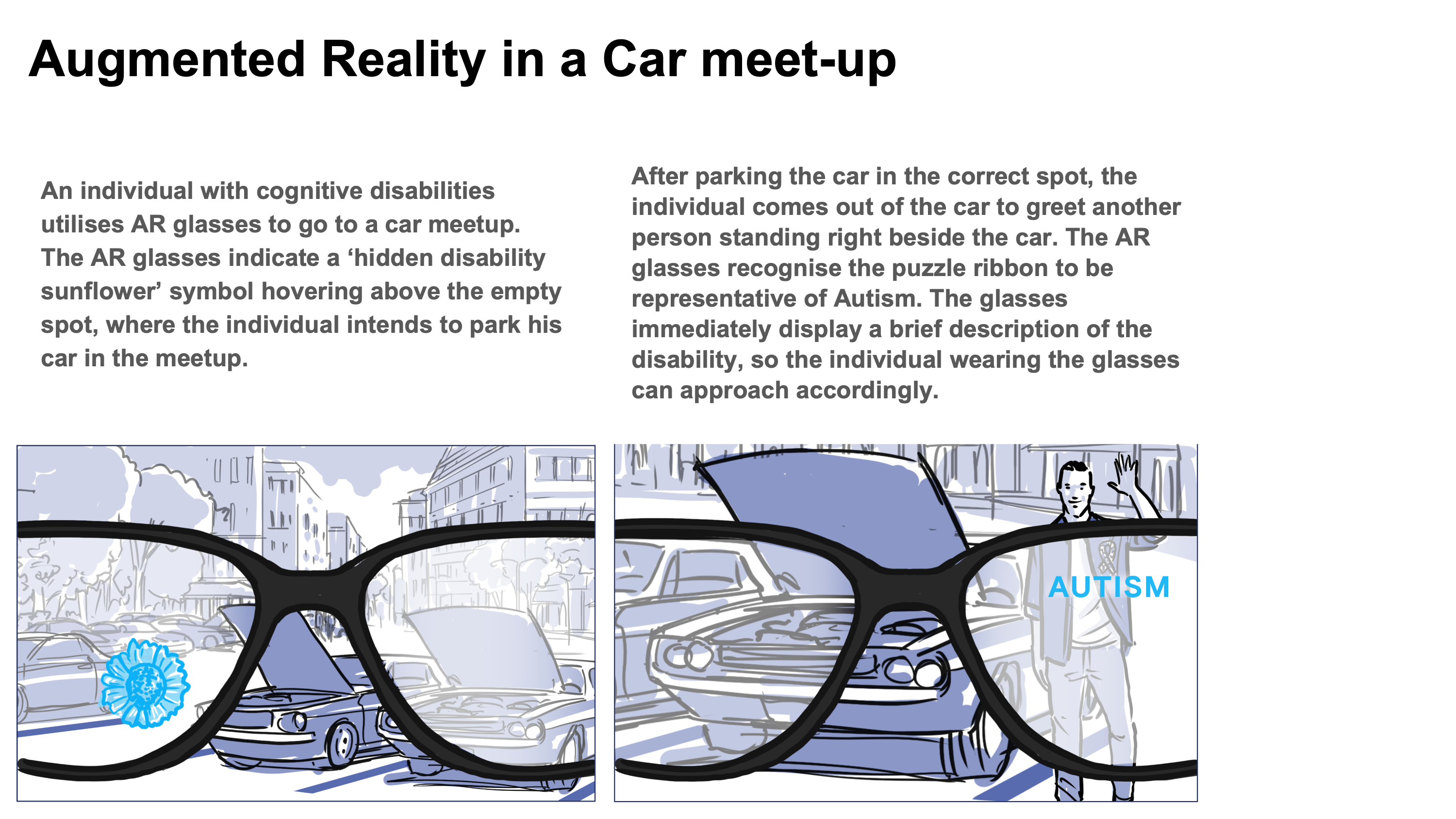
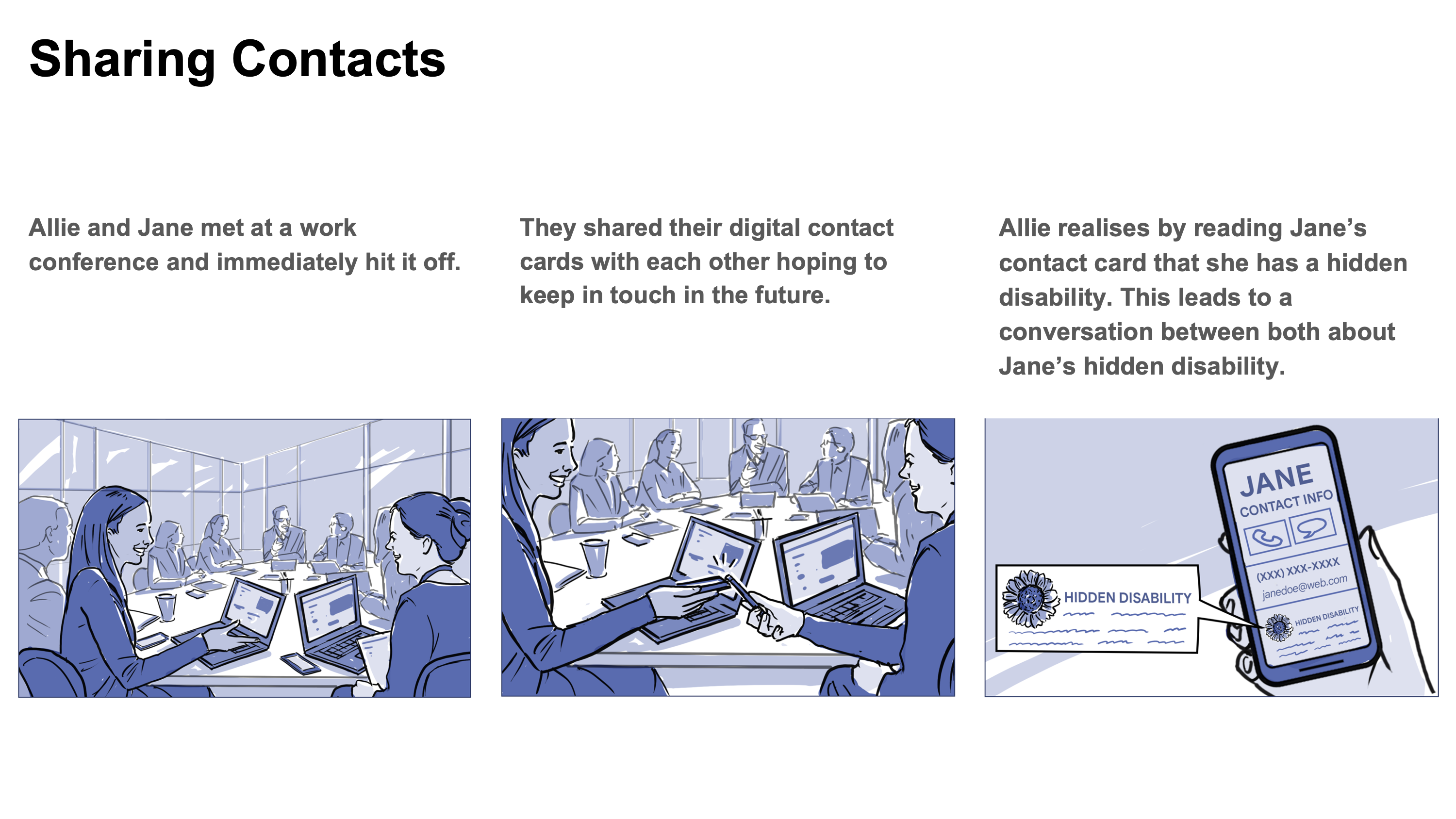
Figure 2: Storyboard 5—futuristic scenario where wearable devices serve as both signifiers and context-gated communication conduits for access needs.
- Transition from Static to Generative Signs: Symbols plus digital carriers enable transitions from static signification (e.g., badges, lanyards) to generative, situation-dependent behavioral cues—e.g., a smartwatch projecting communication tips based on current context, or portable devices outputting context-tailored information for gatekeepers or bystanders.
- Community Legitimacy and Interpretability: Interpretive success depends on community co-design; symbols are both identity artifacts and external signals whose perceived legitimacy (and thus interpretive bandwidth) depend on participatory provenance and ongoing stewardship [6Hofmann].
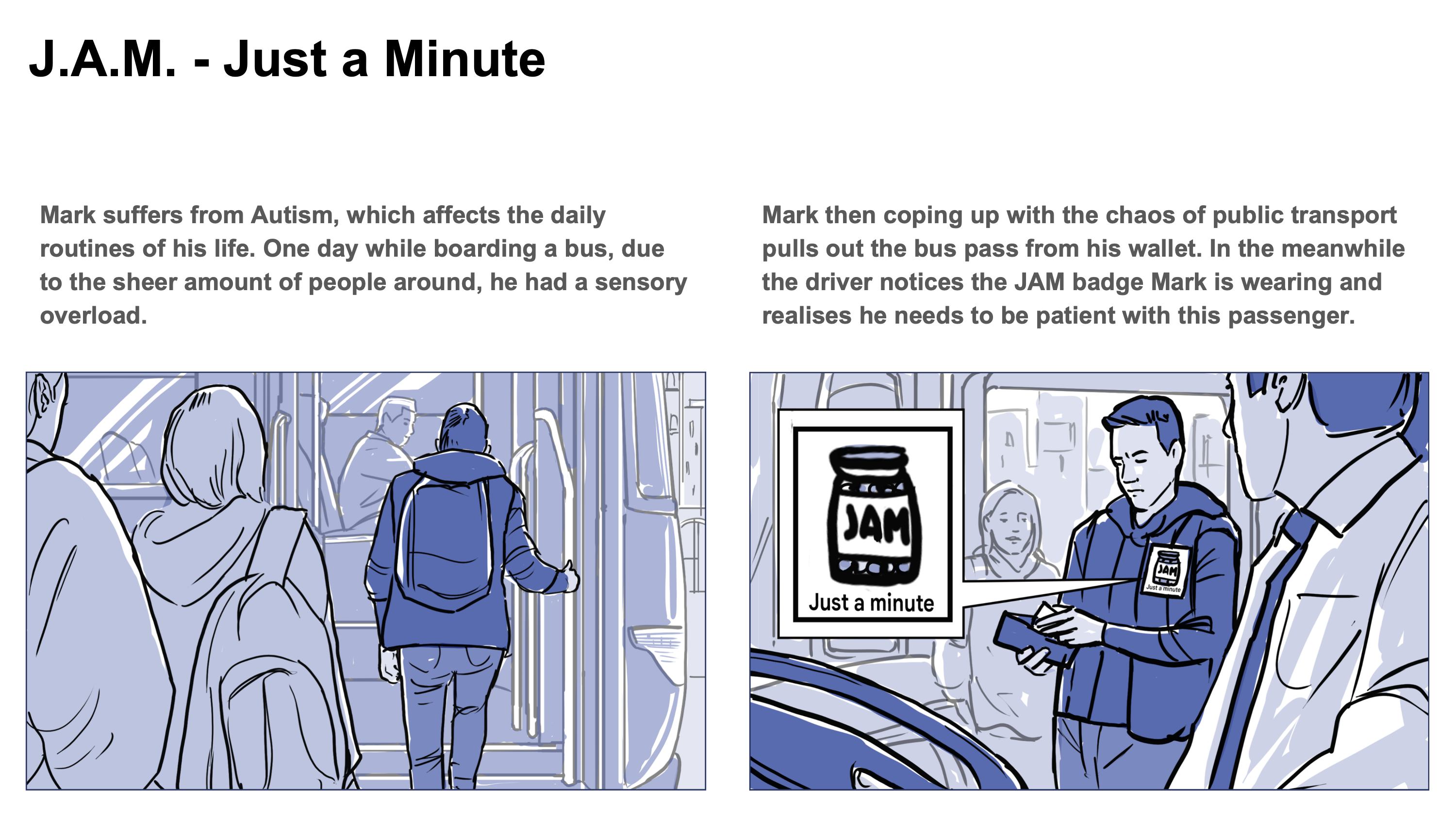
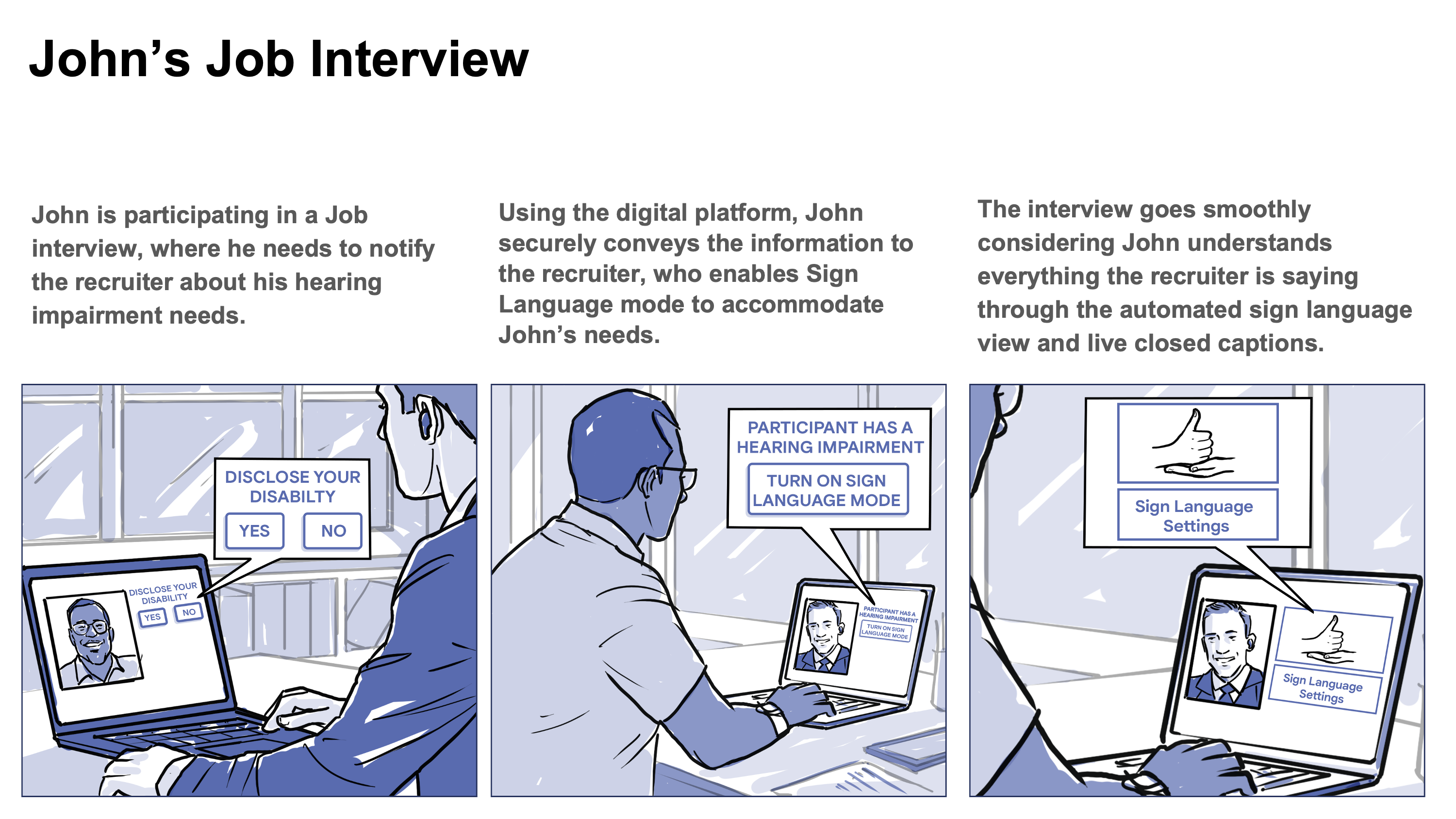
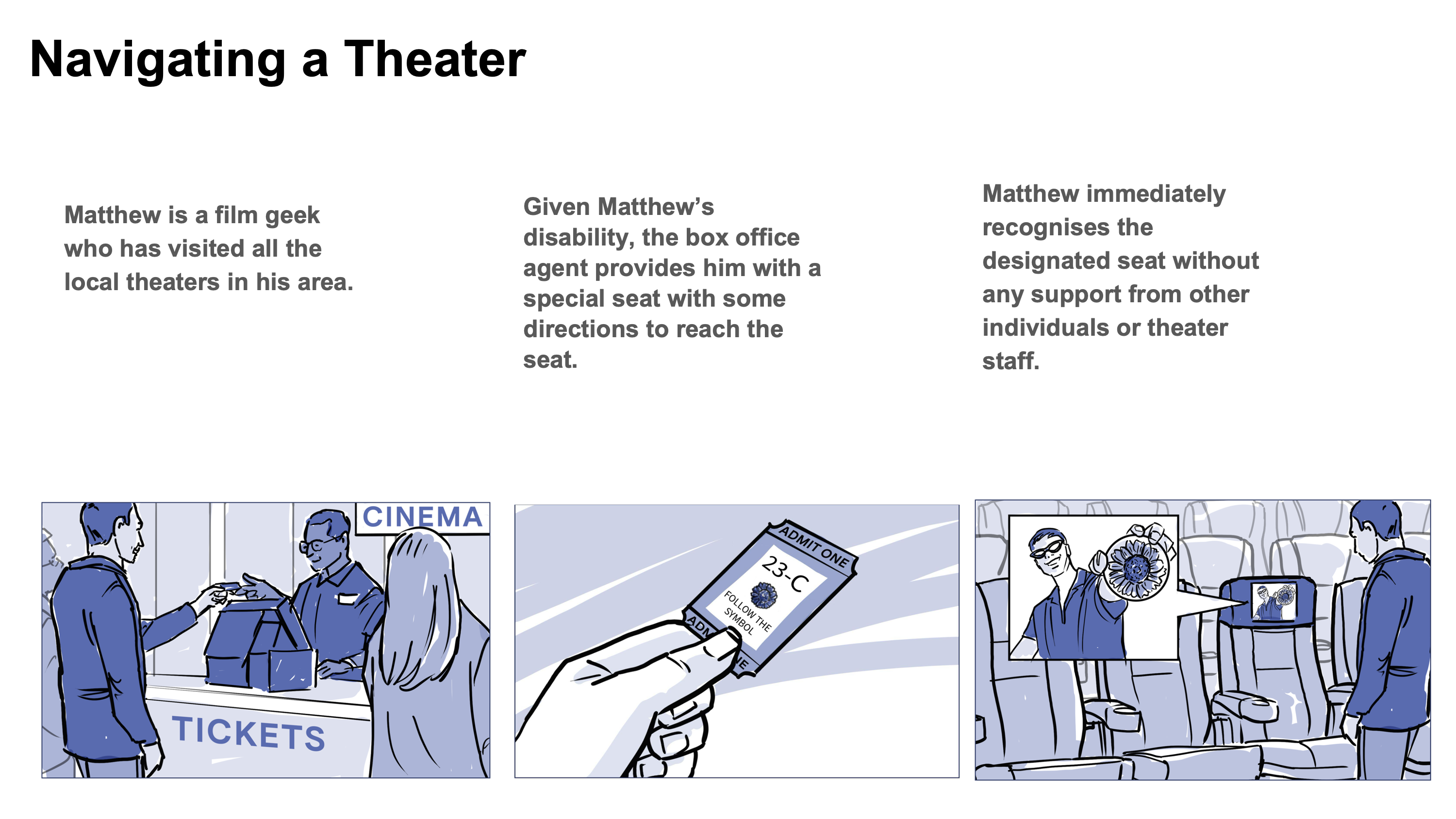
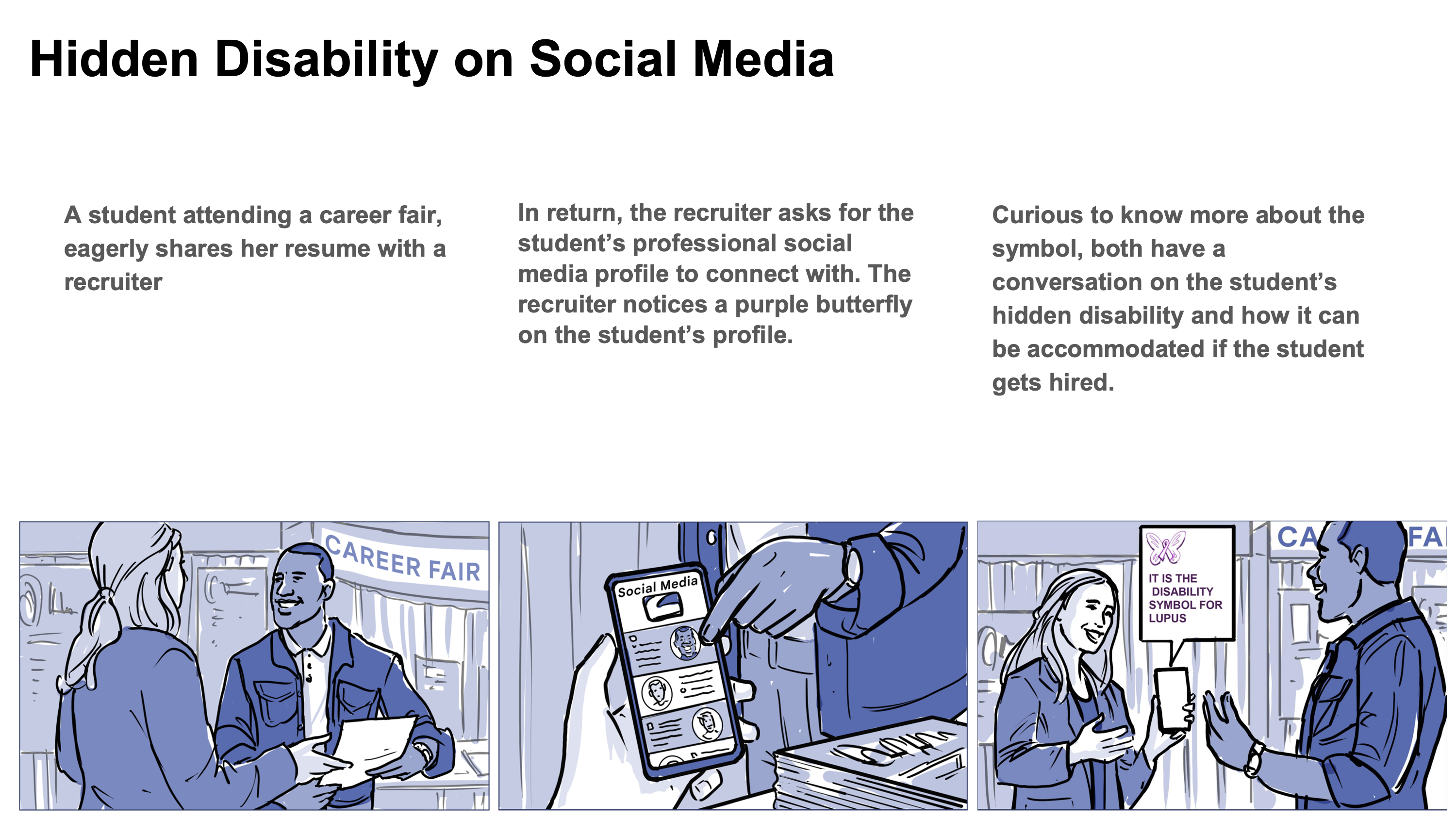
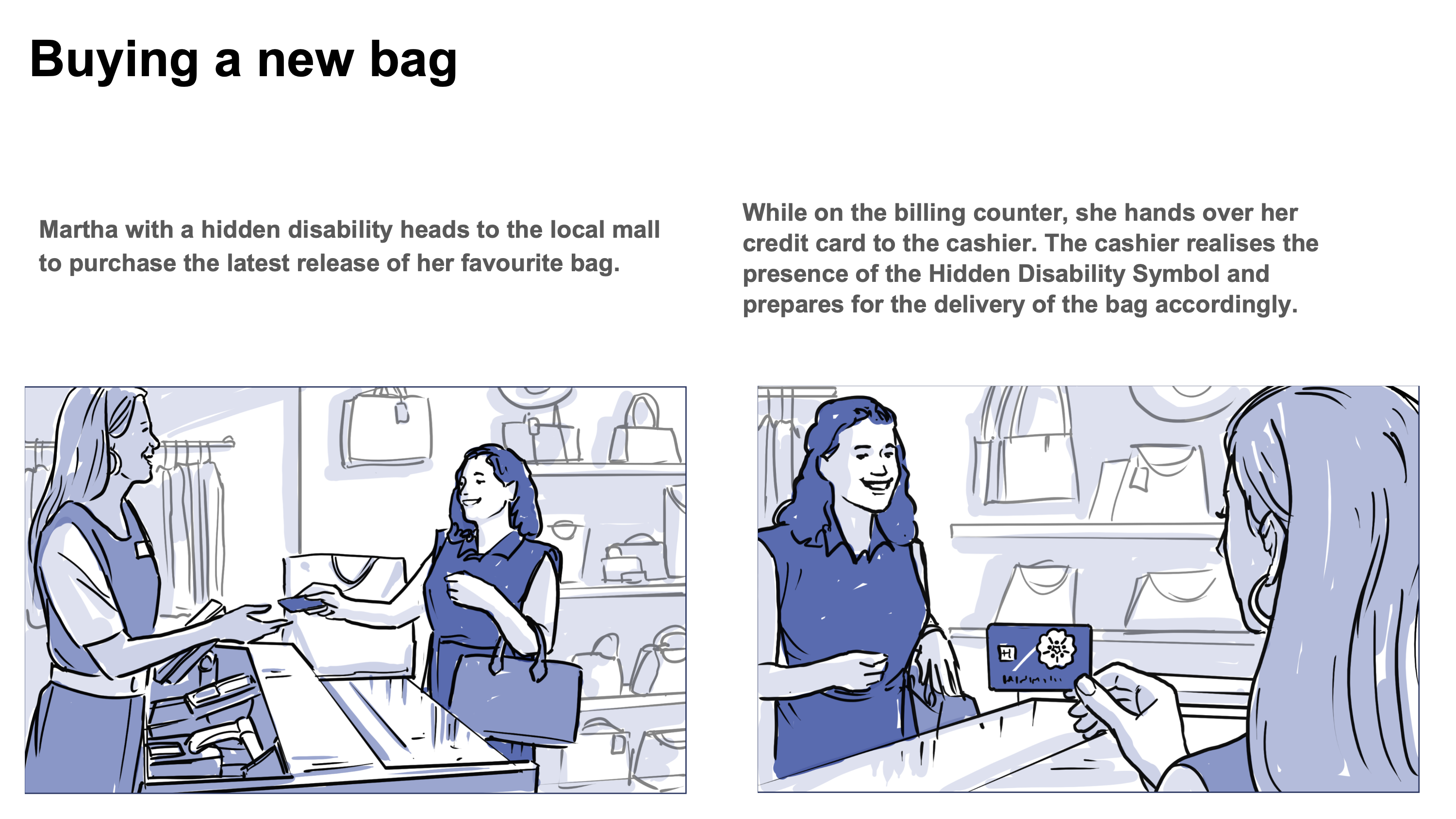
Figure 3: Storyboard 1—speculative probe of a digital/social scenario where symbol-based identity is toggled for online identity management.
Theoretical Abstraction: Peircean Semiotics in Disability Disclosure
Applying Peirce's semiotic triad (representamen, object, interpretant), the authors demonstrate that disability symbols only encode identity and access needs (object) through a composite process involving:
- Representamen: Not merely the image, but the full symbol-carrier assemblage—e.g., wearables, UIs, XR overlays.
- Interpretant: The audience’s constructed meaning, which is highly volatile in low-awareness, stereotype-rich, or technologically mediated situations.
- Object: Both the diagnosed disability and a customizable set of pragmatic access needs or accommodation requests, made explicit (or optional) by the device or modality.
Crucially, the study formalizes the "cloud of context" variable—encompassing setting, audience, institutional regime, and device mediation—as the primary determinant of interpretant reliability. Without context-aware controls and affordances for user-driven disclosure, symbolic representation is subject to drift, misinterpretation, and, in the case of public XR, potentially harmful automation/bias.
Design Implications and Risks
The research makes multiple evidence-backed design claims, emphasizing the need to:
- Discard one-size-fits-all symbol systems in favor of layered, adaptable disclosure platforms.
- Prioritize agency by embedding user control over visibility and granularity at the symbol-carrier interface level.
- Anticipate and mitigate interpretant drift through optional explanatory metadata (e.g., scannable links, QR codes, dynamic output on demand).
- Enable selective, context-specific information release, especially where the social or institutional context introduces specific risks (e.g., forced workplace or public disclosure).
Community-based co-design is positioned as a precondition for legitimacy and interpretability, suggesting systematic inclusion of target groups in both graphical and technological symbol infrastructure development.
Practical and Theoretical Implications
Practically, this work supplies a conceptual and empirical basis for next-generation assistive technologies and inclusion frameworks:
- Symbol-enabled systems must move beyond signage towards semiotically rich, contextually managed, adaptive, and user-driven “disclosure ecosystems.”
- XR/AR/MR and ubiquitous computing interfaces should implement privacy-preserving, consent-based, and context-aware affordances for access signification.
- Risks of stereotype propagation, forced labeling, and interpretant drift are not peripheral but core technical and socio-ethical constraints in assistive informatics.
Theoretically, the integration of Peirce’s semiotic architecture, situated artifact critique, and design justice frames advances a model for understanding disability disclosure as a negotiation of meaning, agency, and technology across situated contexts. This model generalizes beyond accessibility signage to broader domains of digital identity, privacy signaling, and socio-technical mediation of marginalized identities.
Future Directions
The findings open obvious trajectories for future research in:
- Real-world deployment and field evaluation of configurable, wearable-enabled symbol systems, with closed-loop measurement of interpretant fidelity and user control effects.
- Scaling co-creation and participatory evaluation within specific disability communities, to quantify interpretant stability and design for drift resilience.
- Cross-cultural testing and adaptation of symbol sets given findings on interpretant variability by audience, context, and medium.
Furthermore, as AI/ML-driven platforms and XR become primary channels for interpersonal and organizational interaction, the necessity of technical affordances for situated, consensual, and context-reflexive identity signaling will only grow.
Conclusion
This work defines the agenda for symbol-enabled accessibility as a socio-technical, semiotic, and participatory design problem. The data-driven claim that effective disclosure is never reducible to the symbol alone—rather, it is constructed in the interaction between symbol, carrier, user agency, and context—must be treated as a fundamental axiom in inclusive systems research. The translation of symbol design into adaptive, privacy- and autonomy-centric computational infrastructure is essential for realizing truly inclusive environments for both visible and invisible disabilities.
(2604.08514)