- The paper introduces immersed boundary-conformal IGA techniques that reduce geometric preprocessing and enable efficient multi-material magnetostatic simulations.
- It employs Nitsche’s method for weakly imposing interface constraints and demonstrates optimal error convergence using union-based approaches.
- Numerical benchmarks on coaxial cables, horseshoe magnets, and permanent magnet assemblies validate the framework's accuracy and efficiency.
Introduction and Motivation
The paper "Immersed boundary-conformal isogeometric methods for magnetostatics" (2604.07155) advances the numerical simulation of magnetostatic problems by integrating immersed boundary techniques with isogeometric analysis (IGA). The aim is to improve the treatment of complex, multi-material geometries that pose fundamental challenges to conventional conformal multi-patch IGA due to geometric preprocessing overhead and conformity constraints.
The authors focus on scenarios prevalent in electric machine simulation, where material interfaces and domain complexity make patch-generation effort non-trivial. They introduce three discretization strategies—fully immersed IGA, the union with non-conformal patches, and the union with conformal layers—all unified through high-order, boundary-conformal quadrature and patch coupling via Nitsche’s method. These strategies aim to achieve comparable accuracy to standard conformal IGA but with drastically reduced geometric meshing effort and increased automation potential.
Methodological Framework
The magnetostatic problem is formulated using the vector potential Az for two-dimensional domains, with possible remanence contributions (permanent magnets), discontinuous material parameters, and nontrivial current sources. The weak form, essential for both FEM and IGA, becomes substantially more involved in the presence of multiple subdomains and non-matching discretizations. The authors employ Nitsche’s method for the weak imposition of both Dirichlet boundary conditions and interface constraints between non-conformal patches, which avoids explicit Lagrange multipliers and preserves symmetry and consistency.
Isogeometric Analysis and Spline Discretization
The computational geometry and the solution space are both represented using NURBS/B-splines. The IGA discretization supports high-order continuity within patches, with geometric representation and solution fields sharing common basis functions. For trimmed and immersed settings, detailed element classification and integration strategies are crucial, with the authors employing a high-precision, boundary-conformal quadrature scheme leveraging B-rep slicing and cell reparametrization.
Immersed and Union Approaches
- Fully Immersed IGA: All domain components are represented as immersed B-reps within a larger background patch, with the solution defined over a single spline space restricted to physical regions via trimming. Quadrature accuracy is addressed via local boundary-conformal integration.
- Union with Non-Conformal Patches (Union NC): Each material domain, if possible, is parameterized as an independent B-spline patch, embedded in and weakly coupled to the background via Nitsche’s method. This decouples the discretization spaces and improves interfacial accuracy, allowing for the strong imposition of boundary conditions on conformal patch boundaries.
- Union with Conformal Layers (Union CL): Selected interfaces between patches are further refined via the introduction of conformal boundary layers—specially parameterized patches that geometrically match critical interfaces. This enables superior resolution of interface fields, strong boundary condition imposition in key regions, and better suppression of nonphysical oscillations in the presence of field gradient discontinuities.
Numerical Results and Technical Analysis
Benchmark: Coaxial Cable
Fully immersed and union NC methods were validated on a canonical coaxial cable benchmark with analytical solutions. The union NC method achieves optimal convergence rates in both L2 and H1 norms and accurately resolves flux discontinuities at material interfaces. The fully immersed variant exhibits only pre-asymptotic convergence for higher degrees due to enforced smoothness over subdomain boundaries, which precludes proper representation of solution gradient discontinuities.
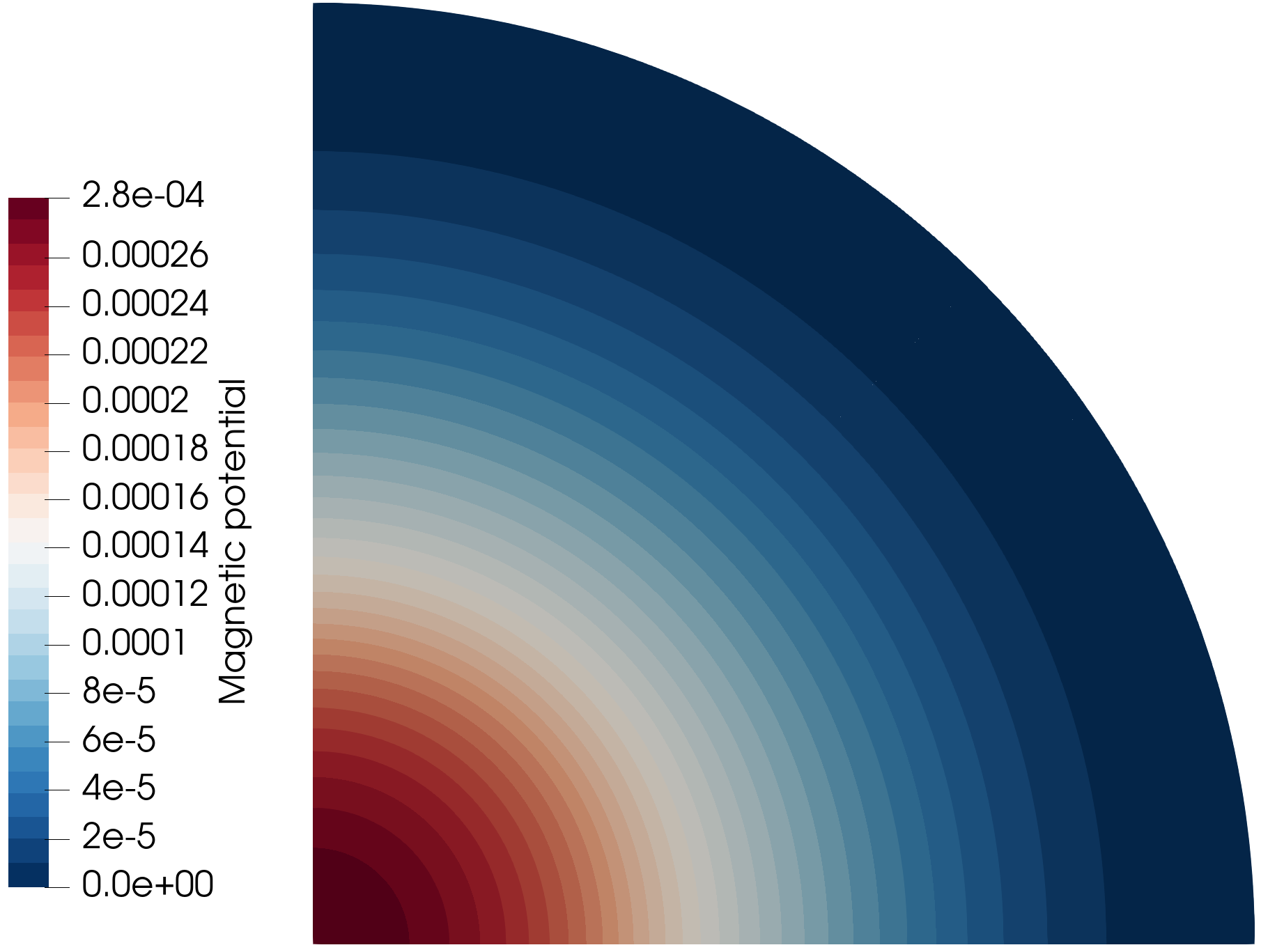
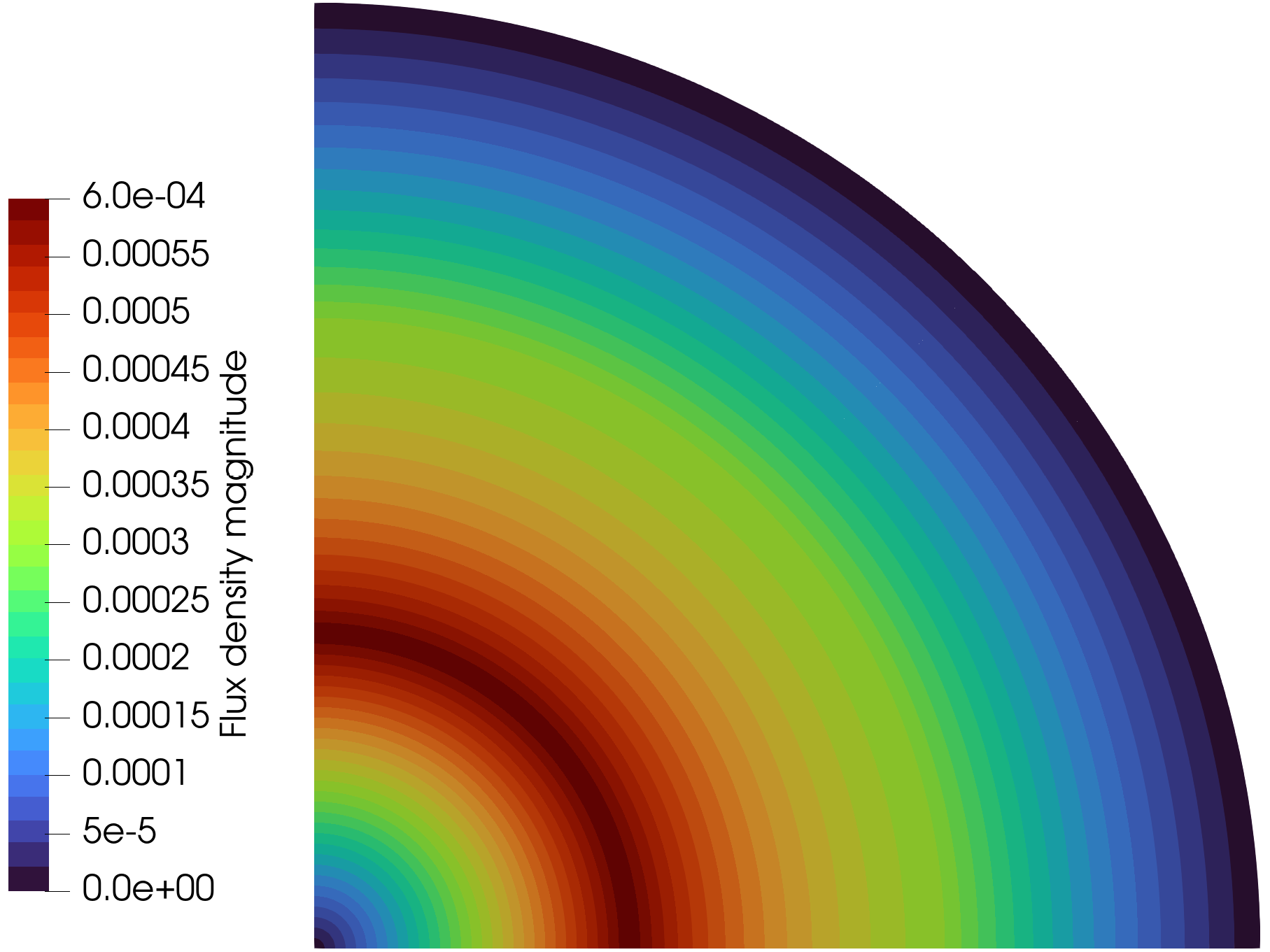
Figure 2: Contours of the scalar potential Az computed with the union NC approach, showing accurate resolution of potential lines around interfaces.
Benchmark: Horseshoe Magnet
The challenge in this benchmark is the presence of discontinuous material coefficients and strong field singularities at reentrant corners. Fully immersed IGA with k-refinement displays Gibbs-type artifacts near interfaces, particularly at high continuity, as field discontinuities cannot be reconciled with highly smooth basis functions. Reducing continuity (C0-refinement) mitigates, but does not eliminate, oscillatory errors if discontinuities do not align with element edges. Union NC eliminates most interface oscillations but requires local refinement to resolve field singularities. The union CL method, by introducing conformal layers at critical regions, enables higher-fidelity capture of singular fields and strong gradient jumps, outperforming the other methods in both L2- and H1-error metrics.
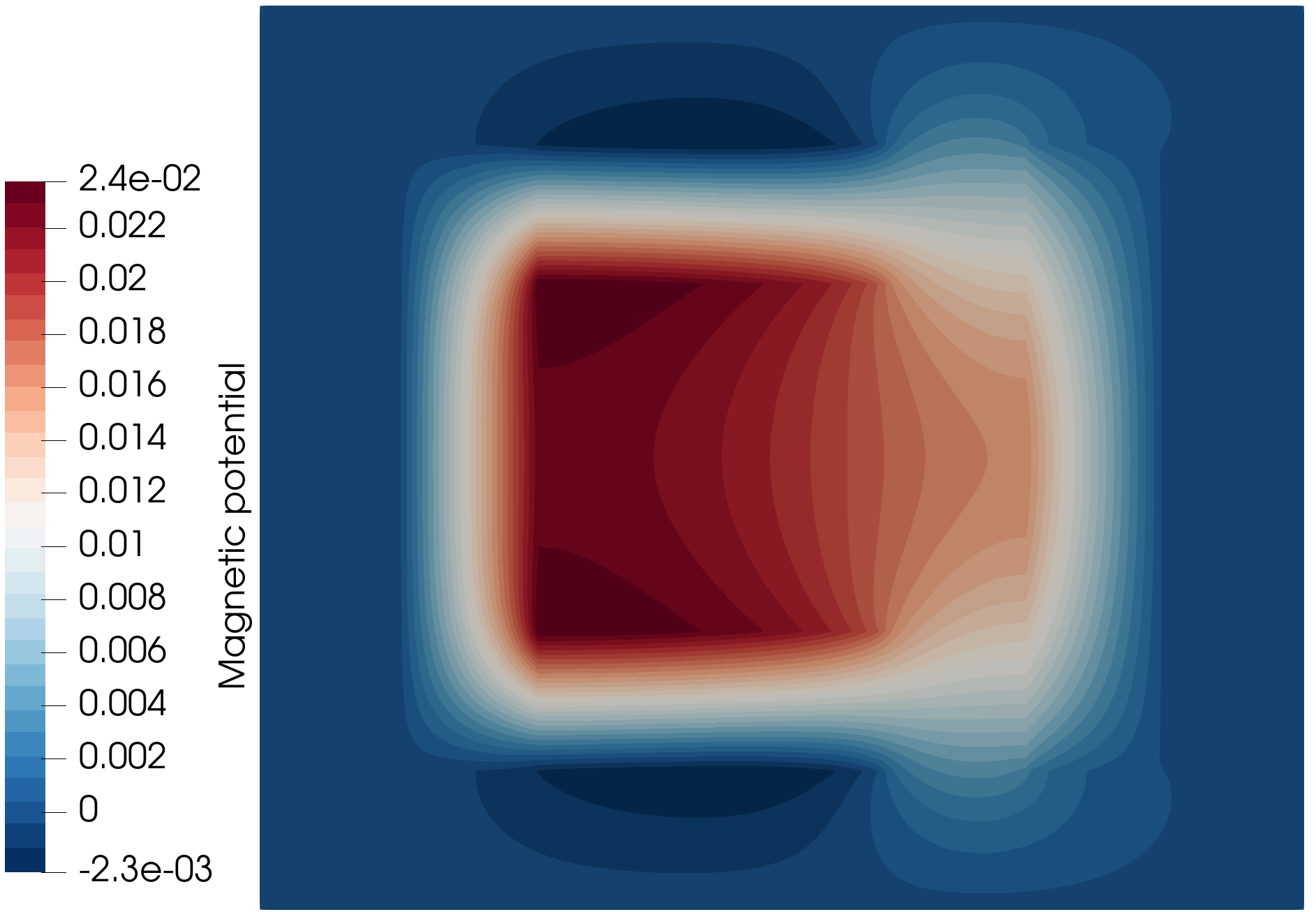
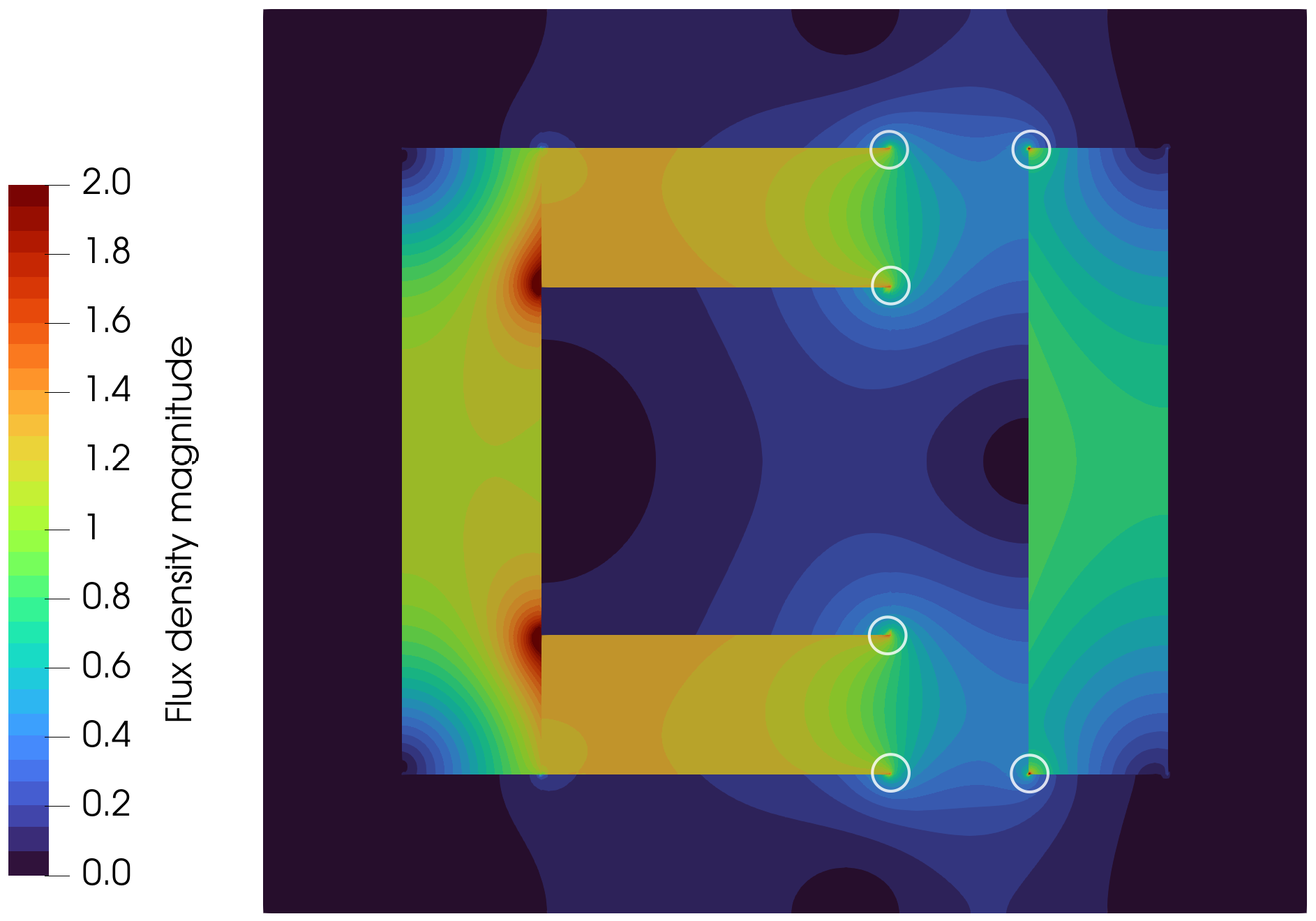
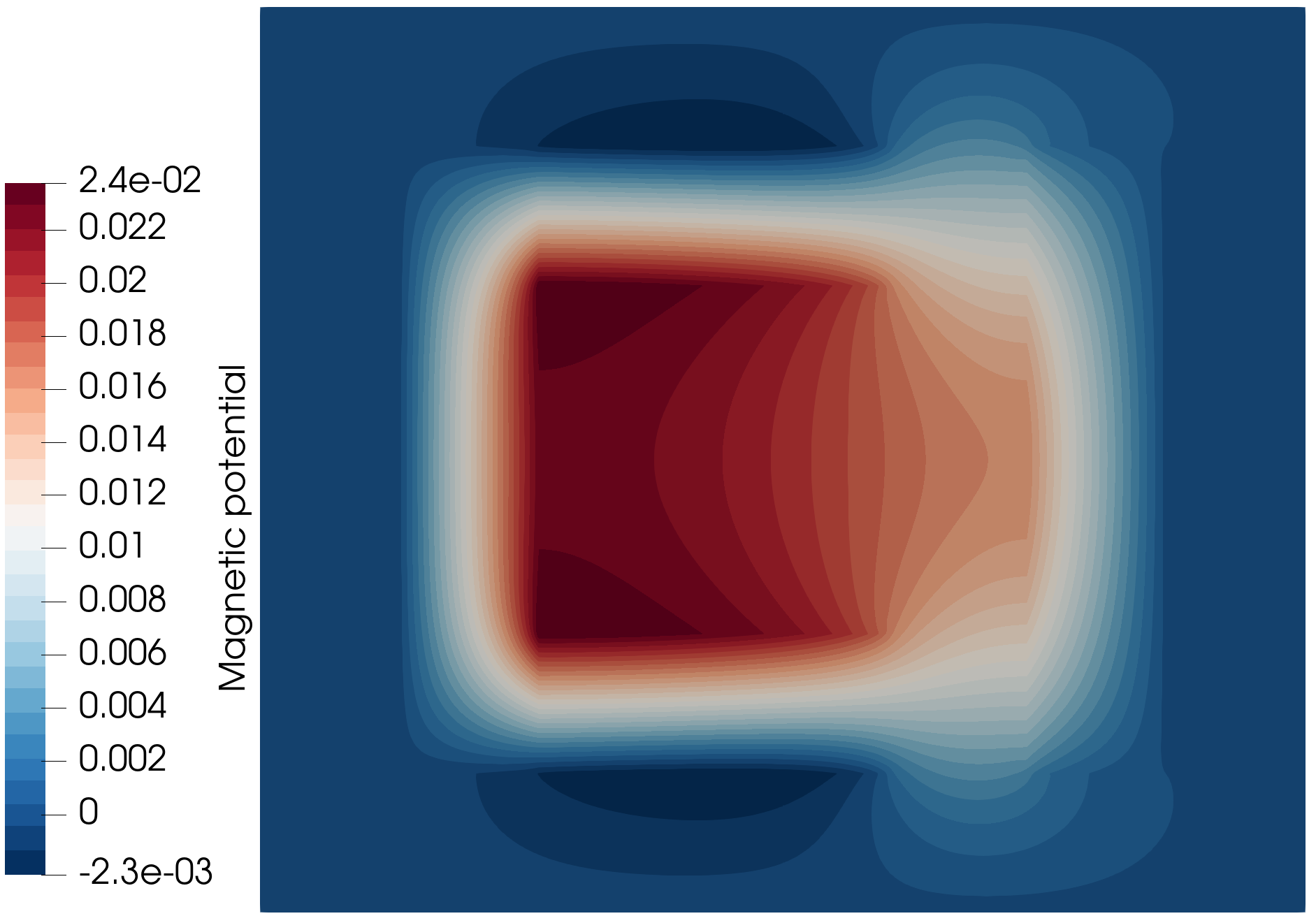
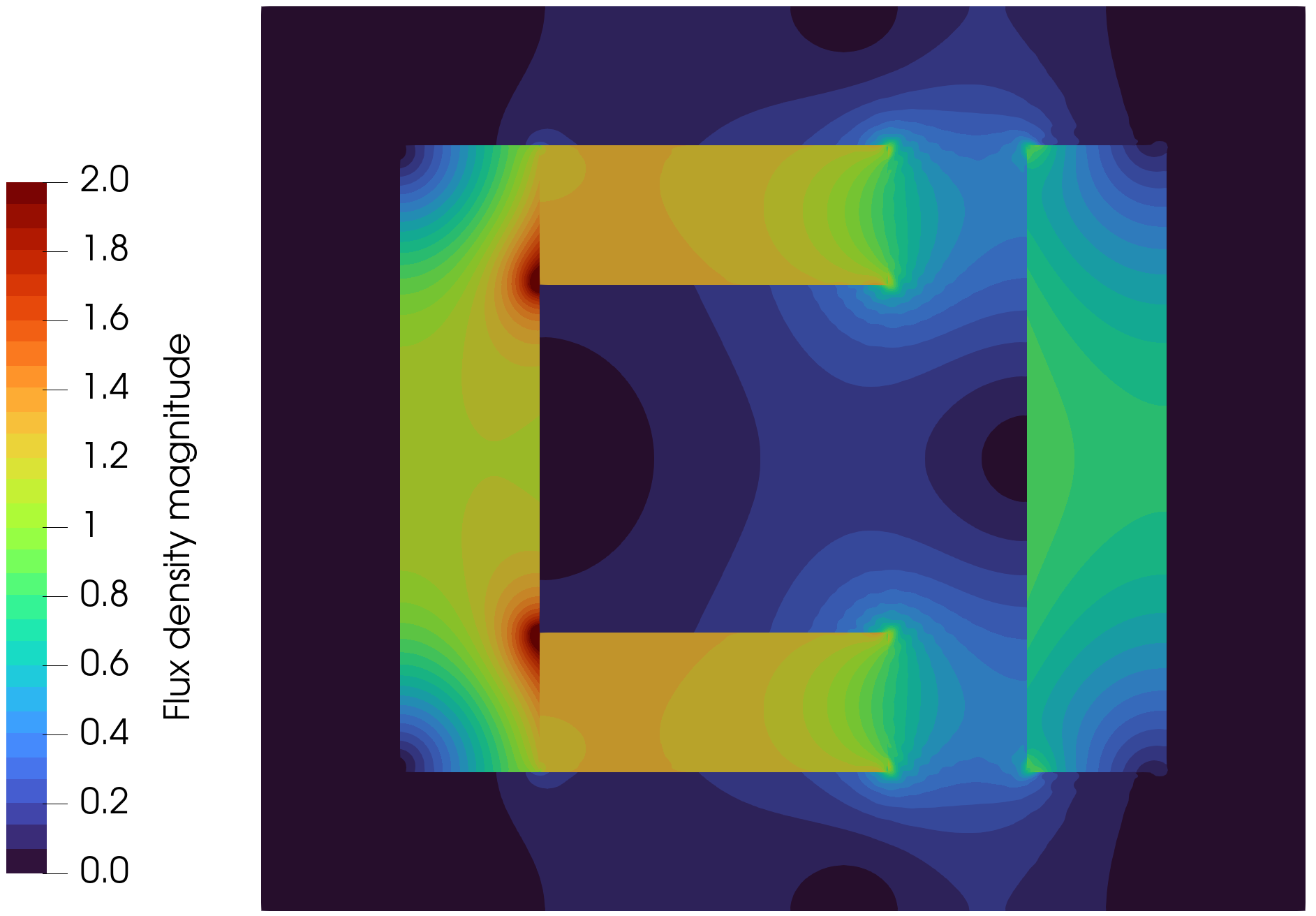
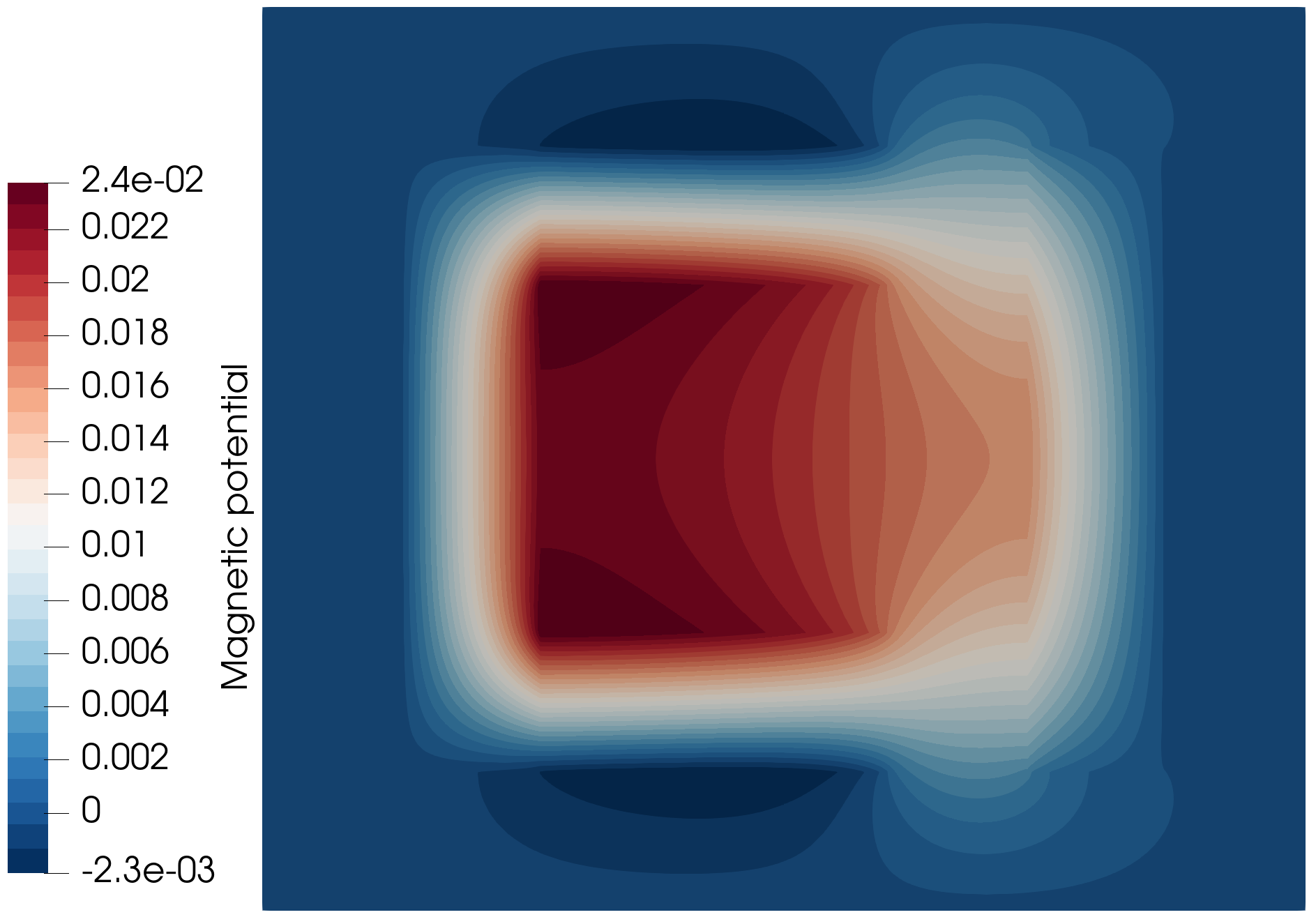
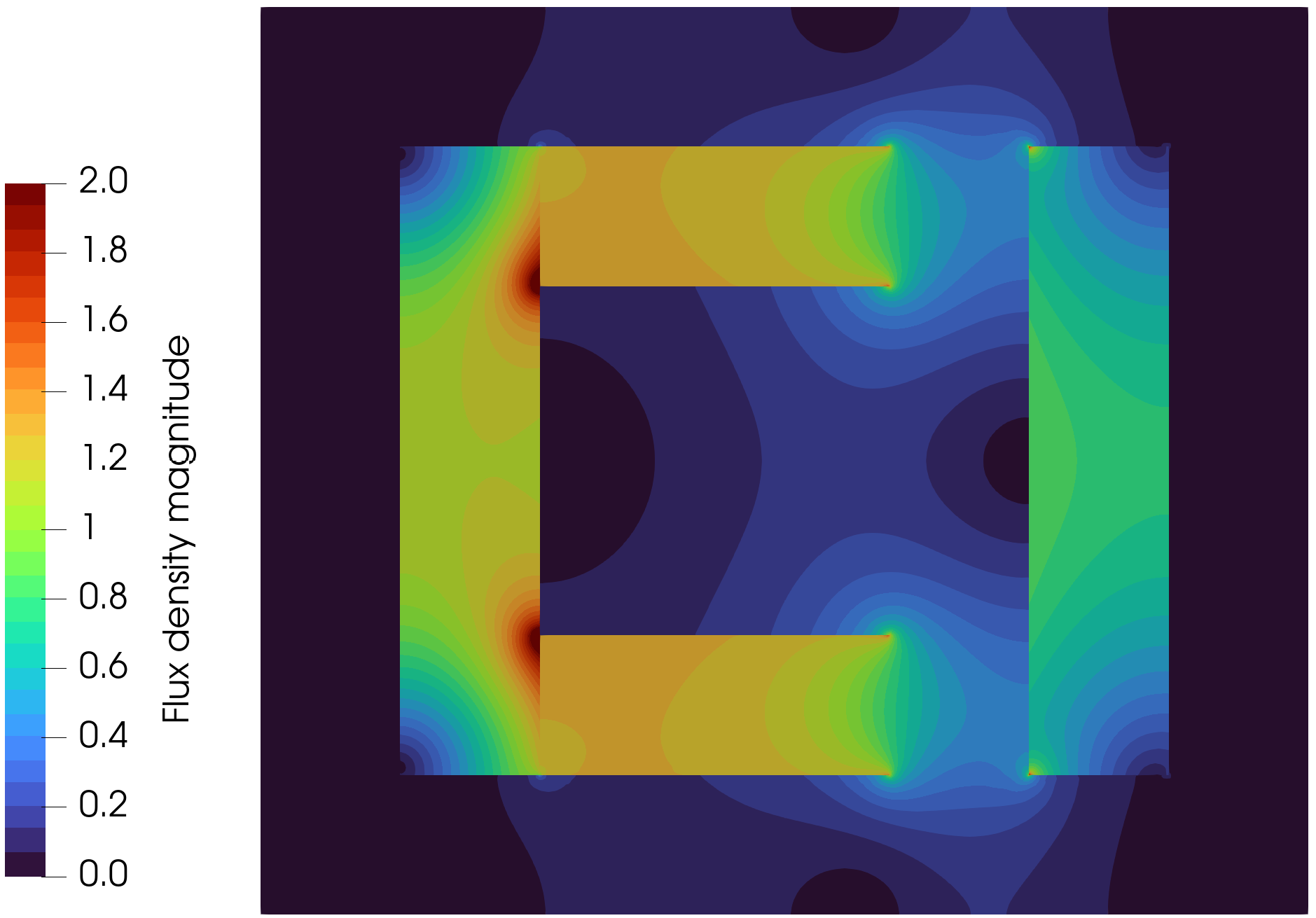
Figure 4: Scalar potential Az field for the reference multi-patch IGA solution, demonstrating excellent interface resolution and localized singularity capture.
Benchmark: Permanent Magnet Assembly for Magnetocaloric Cooling
This industrially relevant problem features a complex geometry comprising rotors, stators, and air gaps. The union NC approach slightly overestimates peak field in high-flux regions and underestimates elsewhere in the air gap; these errors diminish with mesh refinement but highlight limitations without conformal interface treatment. Both configurations of the union CL method demonstrate near-perfect agreement with conformal multi-patch IGA reference solutions, even with fewer degrees of freedom, again illustrating the efficacy of strategically placed conformal layers for critical regions.
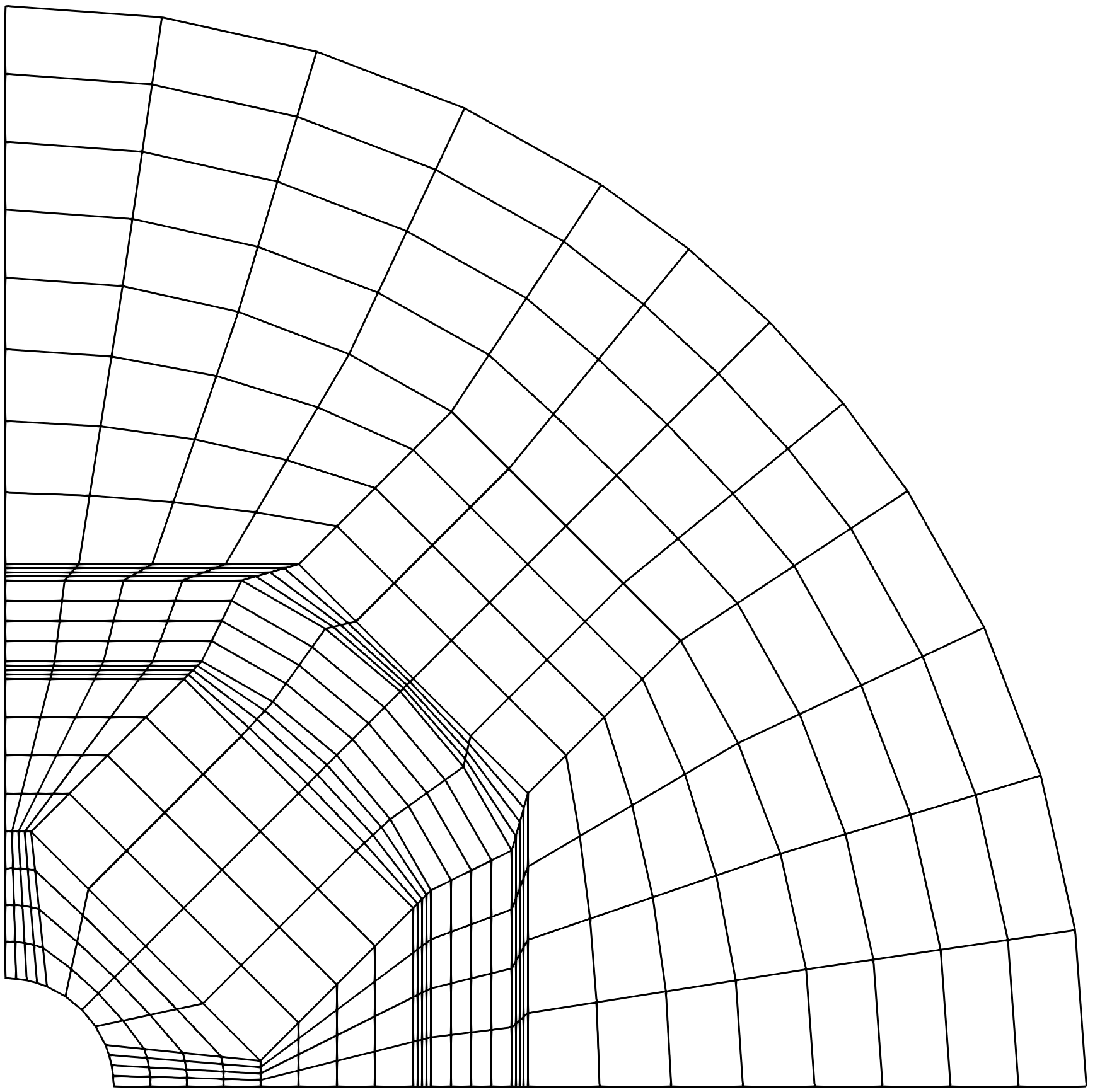
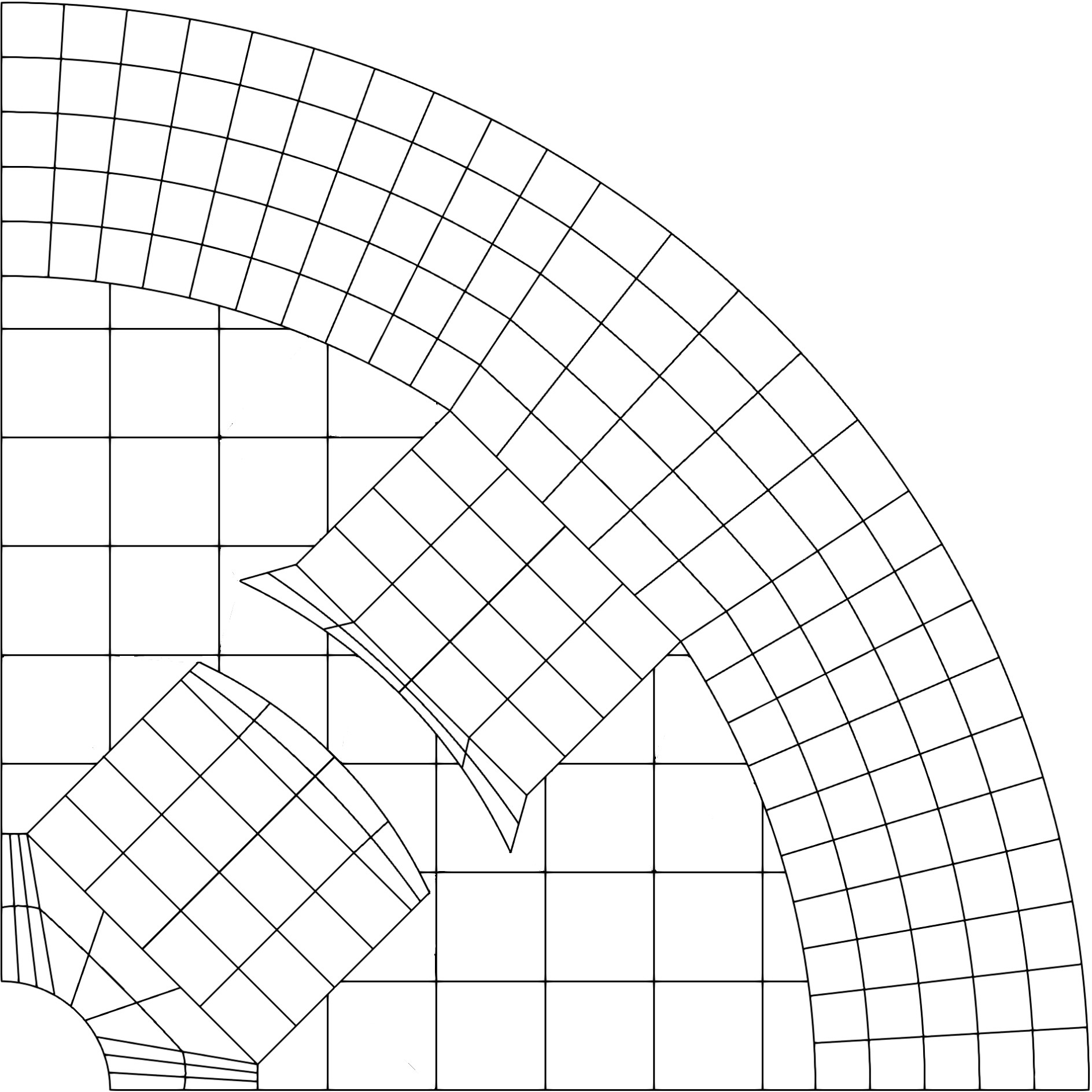
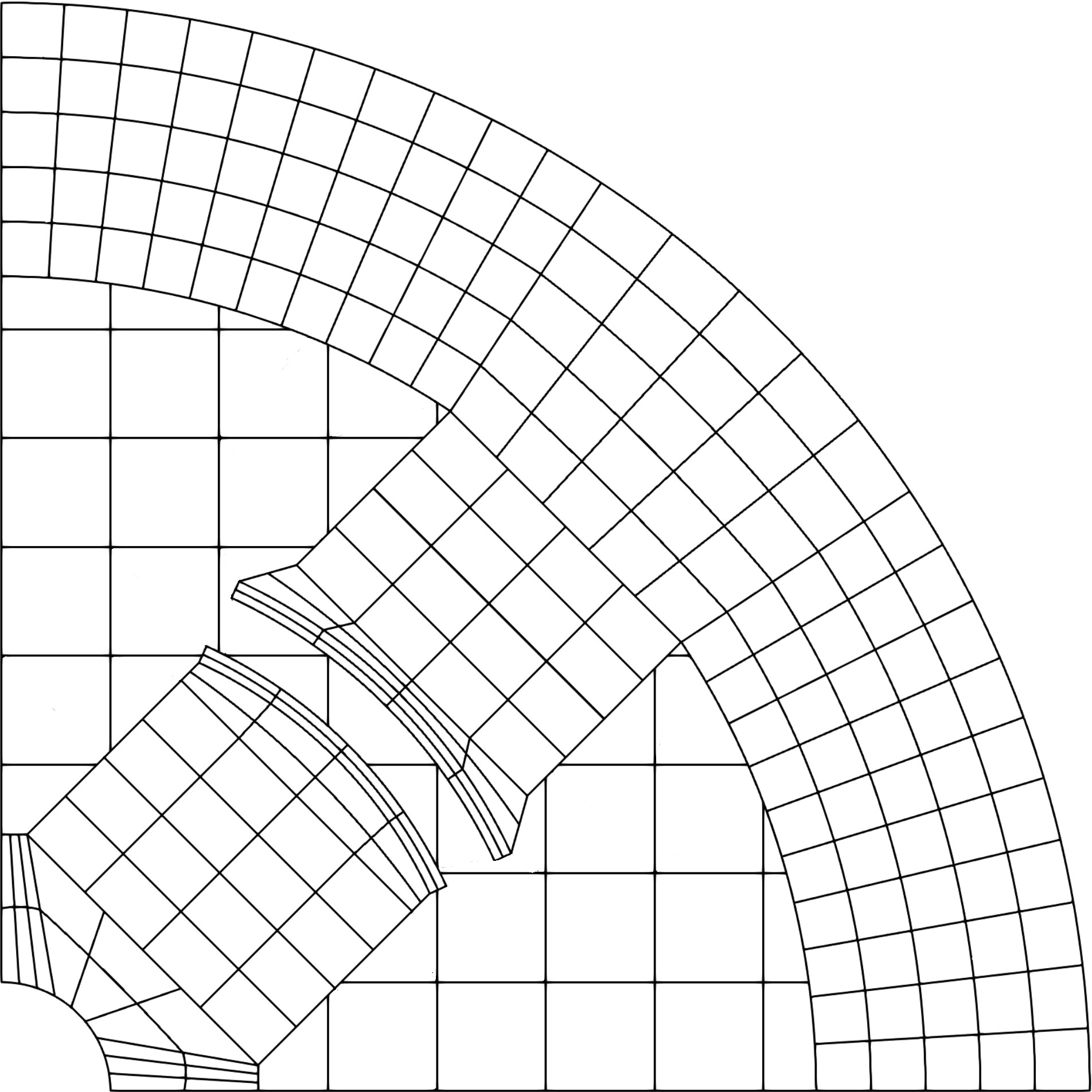
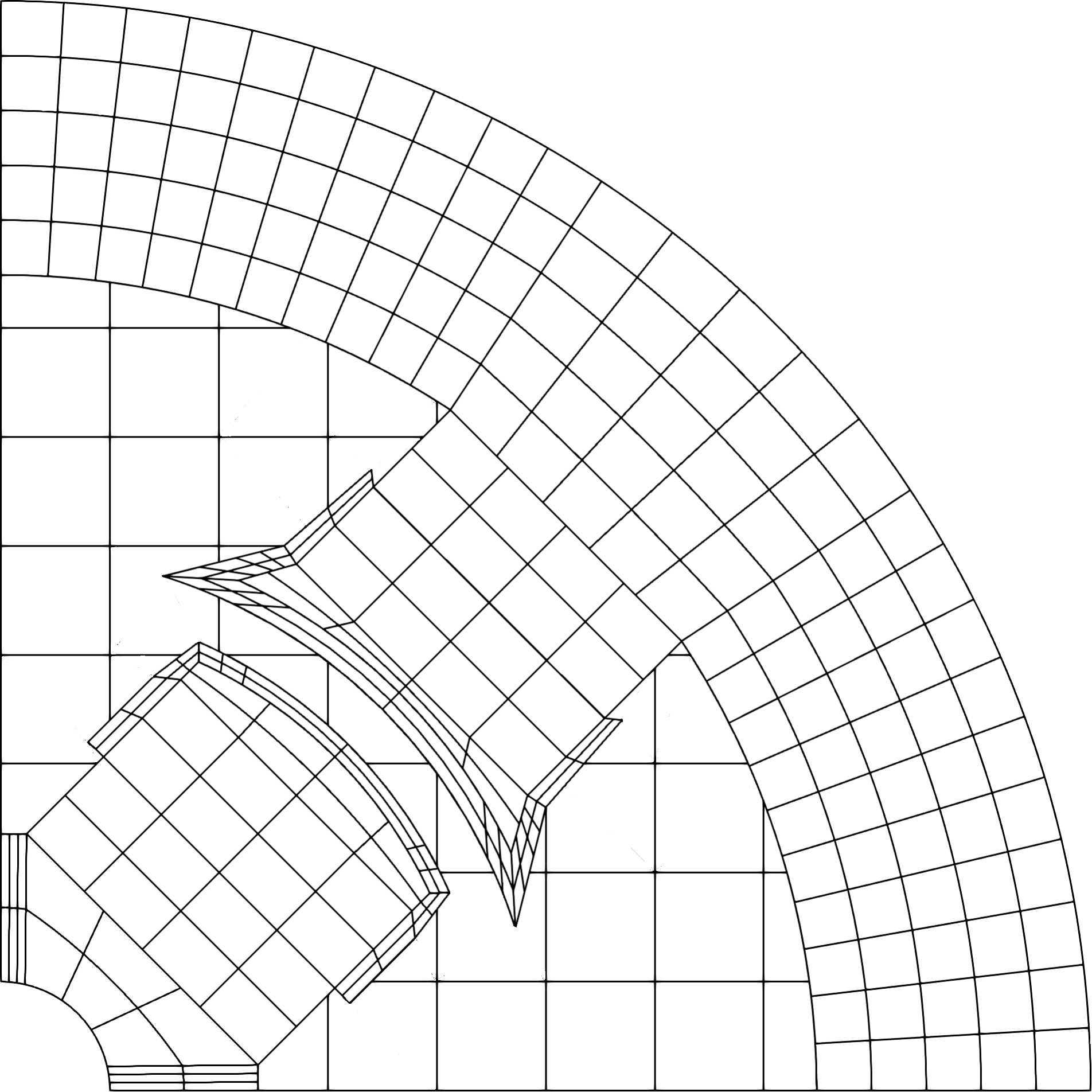
Figure 6: Multi-patch IGA discretization for the complex rotor-stator configuration, illustrating the high patch count and geometric decomposition required in conventional approaches.
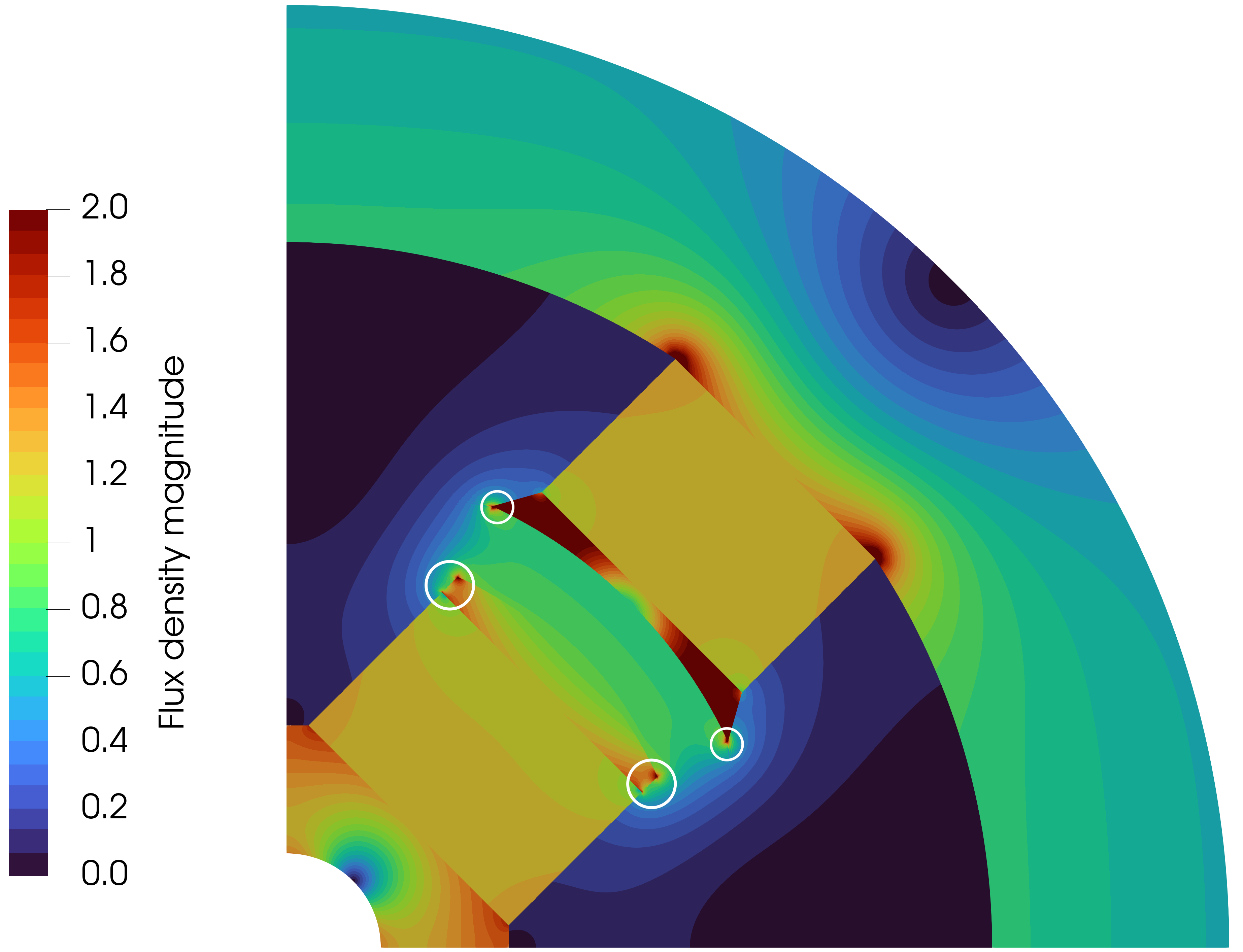
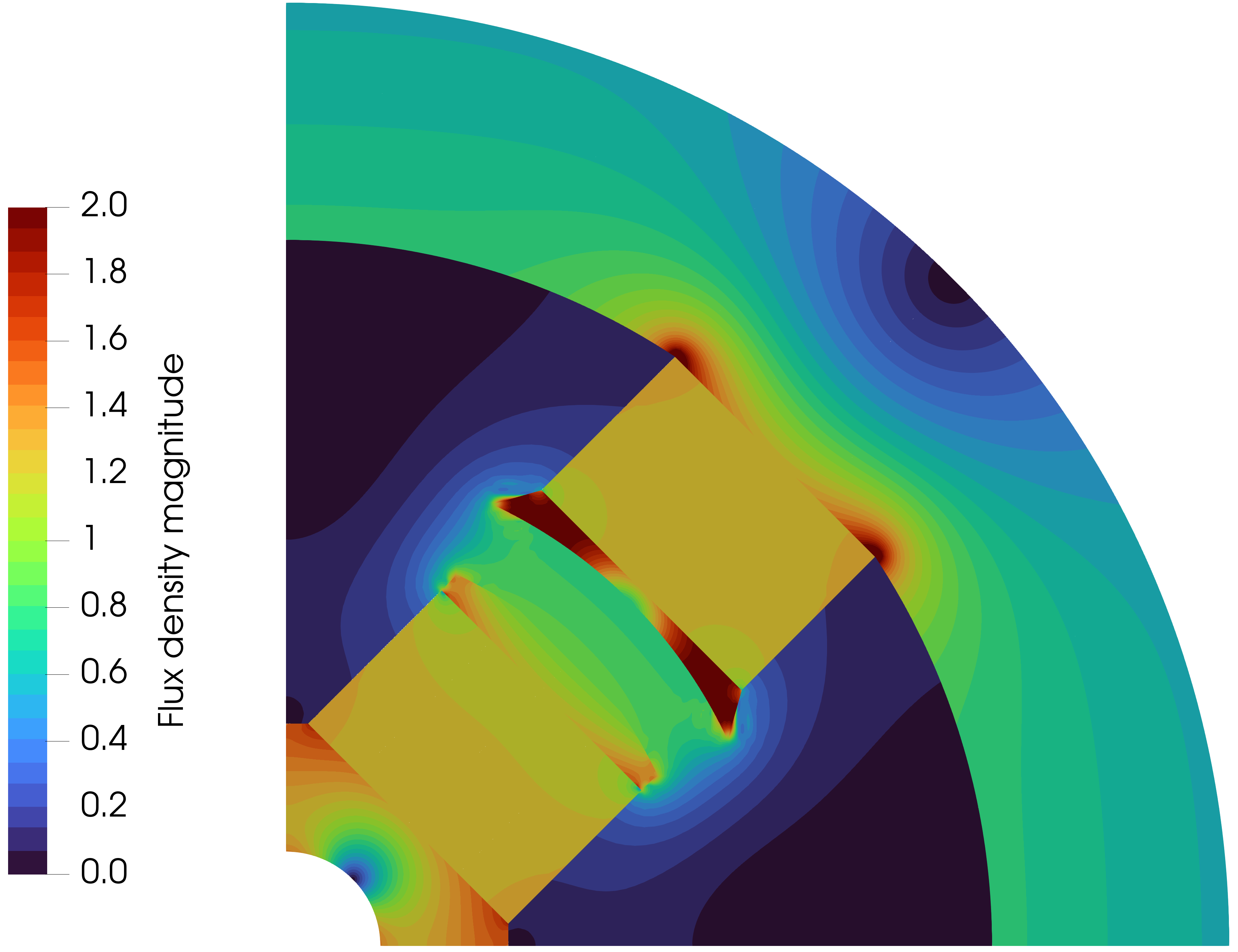
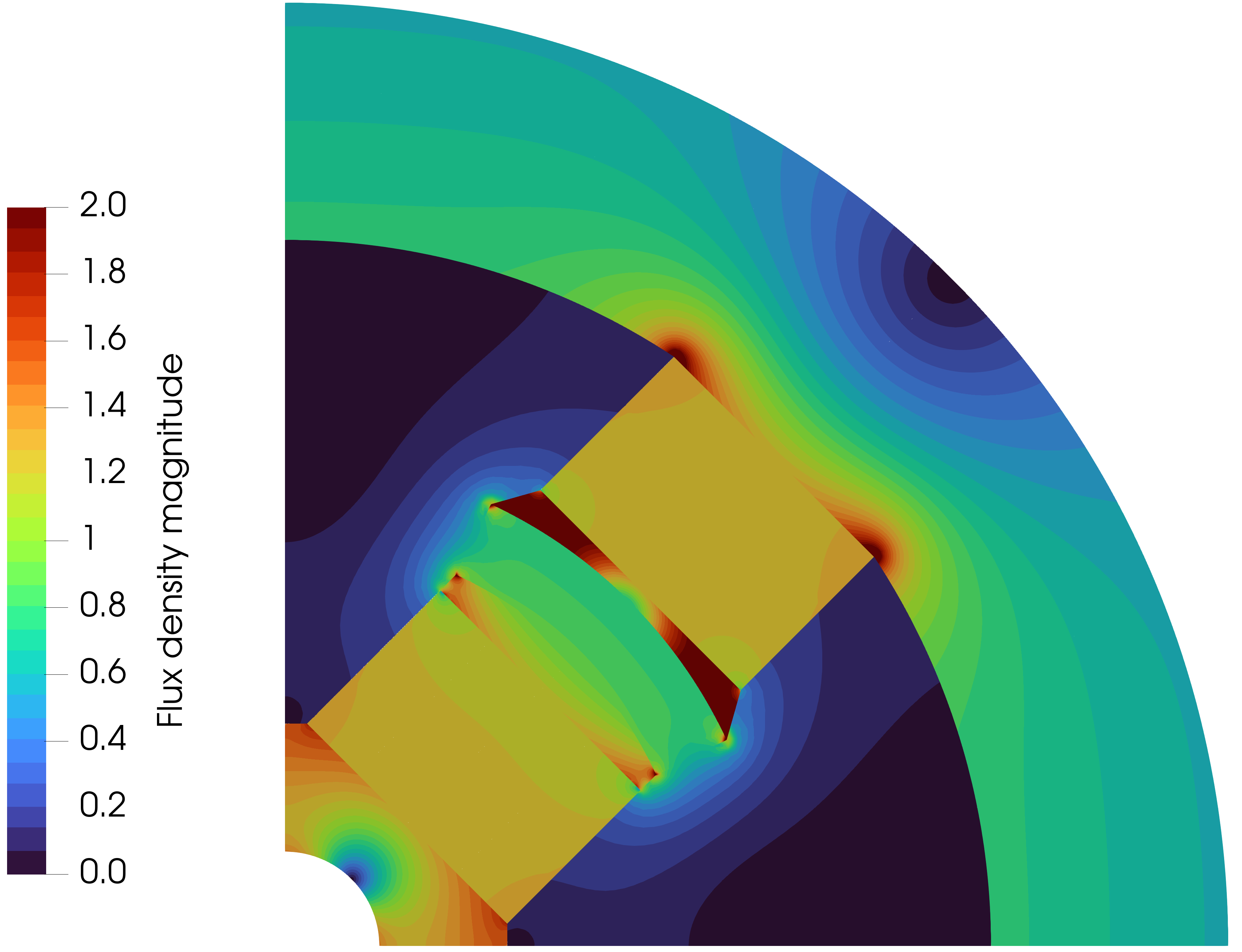
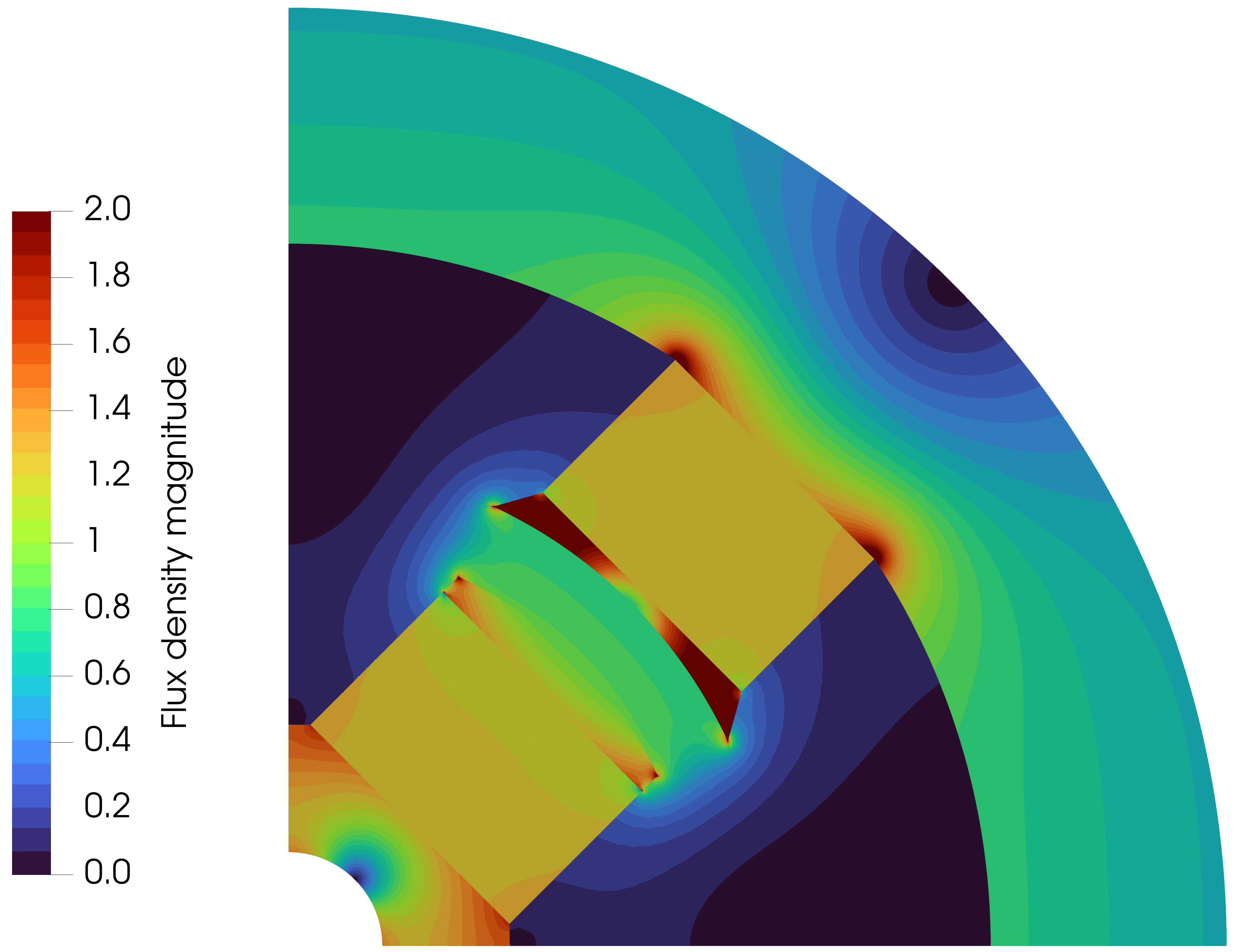
Figure 8: Conformal multi-patch IGA reference solution, used as a benchmark for assessing immersed boundary-conformal methods with industrial complexity.
Implications and Discussion
The numerical results establish that union-based approaches, especially with conformal layers, provide accuracy comparable to standard conformal IGA while drastically reducing geometric preprocessing and patch count (e.g., from 30 to 5 in the horseshoe magnet, 21 to 7 in the magnetocaloric assembly). The framework eliminates the need for Lagrange multipliers, enables strong or weak imposition of Dirichlet conditions according to geometric alignment, and leverages stable Nitsche-type coupling utilizing untrimmed patches as master domains—found to be sufficient for stability and conditioning without specialized stabilization or ghost-penalty strategies.
The contradictory finding that higher continuity in fully immersed IGA can be detrimental when representing multi-material interfaces is strongly established by the presence of nonphysical artifacts and loss of optimal convergence rates, especially in field gradient errors.
Practically, the framework paves the way for automated, robust, and accurate electromagnetic device modeling directly from CAD B-reps, increasing applicability to industrial workflows and integrating seamlessly with modern agent-based CAE systems. The reduction in modeling overhead and the elimination of patch conformity bottlenecks dramatically lower barriers for complex multi-material simulations.
Future Directions
The paper suggests several avenues for further development:
- Local adaptive refinement (e.g., truncated hierarchical B-splines): To concentrate resolution in regions of interest and minimize the need for conformal layers, reducing computational cost.
- Extension to three-dimensional problems: The methods developed here are directly extensible, with additional geometric and integration complexities to be addressed.
- Broader application to electric machine optimization and design, leveraging the enhanced automation and geometric flexibility of the immersed boundary-conformal paradigm.
Conclusion
This work delivers a rigorous, computationally efficient framework for handling complex, multi-material magnetostatic problems within IGA by integrating immersed boundary techniques, non-conformal patch unions, and conformal boundary layers, all coupled seamlessly via Nitsche’s method. The framework achieves high solution accuracy with minimal geometric preprocessing effort and is robust against typical stability and conditioning issues endemic to immersed methods. Theoretical advancements are strongly validated through challenging benchmarks, confirming the suitability of these methods for current and future electromagnetic simulation tasks. The approach offers significant promise for future integration into automated simulation pipelines and industrial-scale multiphysics applications.

